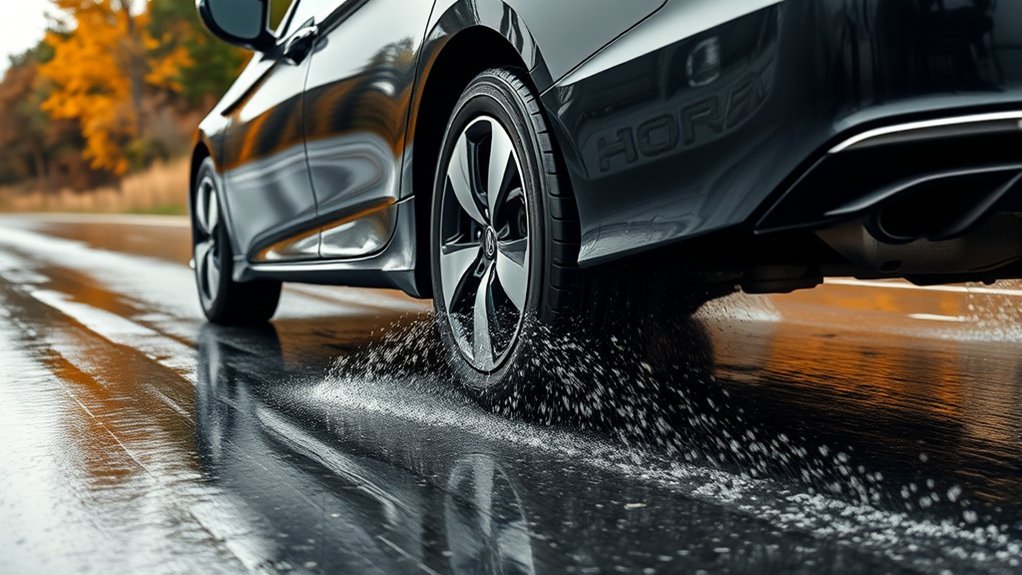
All-season tires can be a smart everyday choice for a Honda Accord because they balance dry-road comfort, wet-road grip, tread life, and light-snow capability in one tire. They are not the best answer for every climate, though. If you regularly drive through deep snow, packed ice, freezing rain, or mountain passes, dedicated winter tires or severe-snow-rated all-weather tires are usually safer choices.
Quick Answer
All-season tires are good for most Honda Accord drivers in mild or mixed climates. They offer dependable dry and wet handling, long tread life, and acceptable light-snow traction. Choose winter tires for frequent snow or ice, and always match the tire size, load rating, and speed rating on your Accord’s door-jamb placard.
Key Takeaways
- All-season tires are best for everyday Accord driving in dry, wet, and occasional light-snow conditions.
- Winter tires are the better choice for frequent snow, deep slush, packed ice, or long periods below freezing.
- For the 2026 U.S. Accord, Honda lists 225/50 R17 on LX and EX-L Hybrid trims, and 235/40 R19 on SE, Sport Hybrid, Sport-L Hybrid, and Touring Hybrid trims.
- Proper tire pressure matters for safety, tread life, and fuel economy; check the door-jamb label, not the tire sidewall, for the correct cold PSI.
- Replace tires at 2/32 inch at the latest, and start planning earlier if wet traction is fading or tread is near 4/32 inch.
Key Benefits of All-Season Tires for Honda Accord Owners

All-season tires work well on the Honda Accord because the Accord is a daily-driver sedan, not a heavy off-road vehicle or high-clearance SUV. A good grand-touring all-season tire can keep the ride quiet, steering predictable, and braking confident in normal commuting weather.
The biggest benefit is convenience. Instead of changing tires every spring and fall, most drivers can use one set year-round if their winters are mild. Many all-season touring tires also come with long mileage warranties, although the exact coverage depends on the tire model, size, speed rating, and manufacturer terms. For example, the Michelin Defender T+H is listed by Michelin with an 80,000-mile treadwear warranty, while the Continental ProContact TX is listed as a premium all-season touring tire with balanced year-round traction and up to a 65,000-mile limited warranty.
Note: A tire’s mileage warranty is not a promise that every driver will get that many miles. Alignment, inflation pressure, rotation schedule, road surface, driving style, and climate all affect tread life.
Comparing All-Season Tires With Winter and All-Weather Tires
All-season tires are built for broad use, but they are a compromise. They are not the same as winter tires, and they are not always the same as all-weather tires. Knowing the difference helps you choose the right tire for your Accord and your local roads.
| Tire Type | Best For | Main Limitation |
| All-season | Daily commuting, dry roads, rain, and occasional light snow | Not ideal for deep snow, ice, or long periods of severe cold |
| All-weather | Drivers who want one year-round tire with stronger snow capability | May be louder, cost more, or wear faster than some touring all-season tires |
| Winter | Frequent snow, ice, slush, and freezing temperatures | Not meant for warm-weather use and requires seasonal storage or changeovers |
[Products Worth Considering]

Steelman white tire marking crayons provide high-contrast, semi-permanent marks for repairing and inspecting tires and equipment. They write on wet or dry, smooth or coarse surfaces including rubber, metal, glass, and wood, making them ideal for puncture location and damage outlining. The lead- and zinc-free crayons resist weather and fading yet wipe away when you no longer need the marks.

Keep your tires properly inflated with this analog VONDIOR tire pressure gauge, designed for fast, easy readings without batteries. The swiveling, two-axis hose and large glow dial help you measure at any tire angle with instant visibility. Built with a protective rubber shield, it supports durable, low-maintenance use for cars and trucks.

Monitor tire tread wear with a smart, color-coded depth gauge that shows clear condition ranges at a glance. The bar is range marked for fast, easy readings, helping you maintain safer traction and performance. Each gauge is portable with a pocket clip, and the set includes 20 units for daily use and sharing.
Performance in Snow Conditions
All-season tires can handle occasional light snow, but they are not a substitute for winter tires in harsh winter areas. Winter tires use cold-weather compounds and tread designs made for snow, ice, and slush. Tire Rack’s winter testing notes that all-season tires may be enough for areas with only occasional light snow, but dedicated winter/snow tires are the better choice for deep or frequent slush, snow, or ice.
Warning: Stability control, traction control, and careful driving cannot create grip if the tire does not have enough traction. If your Accord slides, struggles to start, or takes too long to stop in winter weather, the tires are the first upgrade to consider.
Tread Life Comparison
All-season tires usually last longer than winter tires when used in mild weather because they use compounds designed for broader temperature ranges. Winter tires are softer in cold conditions, which helps grip but can wear quickly if driven through warm months.
For Accord owners who drive mostly on pavement in mild climates, a quality all-season touring tire can offer a strong balance of comfort and durability. If you live where winters are severe, using winter tires only in winter and switching back to all-season tires in spring can help both sets last longer.
Cost Efficiency Analysis
All-season tires can be cost-efficient because you avoid seasonal tire swaps and second-wheel storage. That does not automatically make them the safest or cheapest choice for every driver. A driver in Minnesota, Colorado mountain towns, or upstate New York may spend more upfront on winter tires but gain safer winter braking and better control. A driver in Texas, Georgia, or coastal California may never need a dedicated winter set.
Performance in Varying Weather Conditions
All-season tires are designed to stay useful across warm, cool, dry, and rainy conditions. On a Honda Accord, that usually means predictable steering, comfortable highway manners, and good wet-road stability when the tread is healthy.
Wet-road performance depends heavily on tread depth. Circumferential grooves and sipes help move water away from the contact patch, but worn tires lose that advantage. If your Accord begins to hydroplane more easily, takes longer to stop in rain, or feels loose in standing water, do not wait for the tread to reach the legal minimum before shopping for replacements.
The tire matters more than the badge on the trunk. A Honda Accord with worn or poorly matched tires will feel less secure than the same car on properly sized, well-maintained tires.
Longevity and Tread Life Expectations
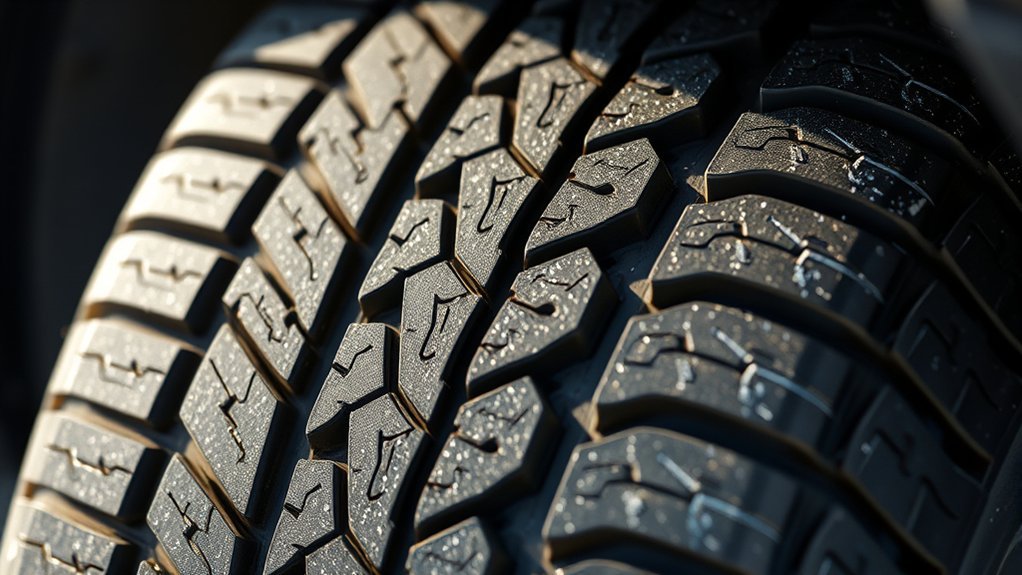
Many touring all-season tires are built for long tread life, but there is no single mileage number that applies to every Accord tire. Some models may carry warranties around 50,000 to 80,000 miles, while performance-oriented all-season tires may have shorter coverage. Always check the warranty for the exact tire name, size, load rating, and speed rating you are buying.
To maximize tread life on your Accord:
- Check cold tire pressure monthly. Use the PSI listed on the driver-side door-jamb label.
- Rotate tires on schedule. Many drivers use a 5,000- to 7,500-mile interval, but your owner’s manual and tire shop guidance should be the final reference.
- Fix alignment problems early. Feathering, one-sided wear, or a steering wheel that sits off-center can shorten tire life.
- Inspect for damage. Look for cuts, sidewall bubbles, cracks, nails, and uneven wear.
- Measure tread depth. Use a tread-depth gauge when possible, not only a quick visual check.
Fuel Efficiency Benefits of All-Season Tires
All-season tires can support good fuel economy when they are properly inflated, correctly sized, and designed with reasonable rolling resistance. The main fuel-saving habit, however, is tire maintenance. FuelEconomy.gov says keeping tires inflated to the proper pressure can improve gas mileage by 0.6% on average and up to 3% in some cases.
Improved Rolling Resistance
Rolling resistance is the energy your Accord uses to keep the tires moving. A tire with lower rolling resistance can help efficiency, but it still needs enough wet traction, braking ability, and tread life for your driving conditions. Do not choose a tire only because it promises better mileage; choose one that balances efficiency with safety.
Enhanced Fuel Economy
Correct tire pressure is the easiest fuel-economy win. Underinflated tires flex more, build heat, wear unevenly, and make the engine or hybrid system work harder. Check pressure when the tires are cold, ideally before driving or after the car has been parked for several hours.
Pro Tip: Do not inflate your Accord tires to the maximum PSI printed on the tire sidewall unless that number matches the vehicle placard. The sidewall number is a tire limit, not the recommended pressure for your car.
Extended Tread Life
Proper inflation also helps the tire wear evenly. Low pressure can wear the shoulders faster, while too much pressure can increase center wear. Rotation, balance, and alignment complete the picture. A well-maintained all-season tire will usually feel quieter, last longer, and perform better in rain than a neglected tire with the same brand name.
Choosing the Right Size for Your All-Season Tires
The right tire size is not optional. It affects steering, braking, ride comfort, speedometer accuracy, ABS behavior, and clearance around the fenders and suspension.
For the 2026 U.S. Honda Accord, Honda lists these factory all-season tire sizes:
- 225/50 R17: LX and EX-L Hybrid
- 235/40 R19: SE, Sport Hybrid, Sport-L Hybrid, and Touring Hybrid
For older Accord model years or non-U.S. models, the size may be different. The safest method is to check the Tire and Loading Information Label on the driver-side door edge or door jamb. NHTSA also recommends checking the owner’s manual or the Tire and Loading Information Label for the correct tire size.
When shopping, match more than the size. Confirm the load index, speed rating, wheel diameter, and whether the tire is approved for your Accord’s wheel width. If you change wheel size, keep the overall tire diameter close to the original size and confirm clearance with a qualified tire professional.
[Products Worth Considering]

Measure tire tread depth quickly and accurately with this LUMITECO dial gauge that reads in 1/32" increments up to 14/32". The color-coded green/yellow/red zones make it easy to judge tire wear and know when replacement is needed. A rugged, compact design with a protective pouch helps keep the gauge ready for use on cars, trucks, motorcycles, and more.

TIRESHIELD PRO RV tire covers in a set of four deliver year-round protection against UV rays, cracking, fading, water, and snow. The StormLock-System helps keep the covers securely fastened through high wind, while heavy-duty, double-stitched construction supports long-lasting performance. Designed for universal fit, they’re intended for RV, camper, truck, car, and trailer tires within the 26–28.75 inch diameter range, with easy wipe-clean care and storage in the included bag.

Accurately measure tire tread depth with a calibrated gauge marked from 0 to 1 inch in 1/32 inch increments. The color-coded bar helps you quickly identify tread condition ranges, supporting safe driving for trucks, motorcycles, automobiles, and passenger vehicles.
Maintenance Tips for Maximizing All-Season Tire Performance

All-season tires perform best when they are maintained consistently. Use this simple routine for your Accord:
- Check pressure monthly. Pressure changes with temperature, so check more often during major weather swings.
- Rotate tires regularly. Front-wheel-drive cars like the Accord can wear front tires faster because the front tires handle steering, braking, and drive power.
- Use a tread-depth gauge. The penny test can show when tread is near 2/32 inch, but a gauge gives a clearer reading.
- Plan before the legal minimum. If tread is near 4/32 inch and rain performance is fading, start shopping before the tire becomes unsafe.
- Inspect the sidewalls. Replace tires with bulges, exposed cords, deep cracks, or repeated air loss.
- Rebalance when needed. Vibration at highway speed can point to balance issues, tire damage, bent wheels, or suspension wear.
Common Issues With All-Season Tires and Solutions
All-season tires are practical, but they still have limits. Here are the most common issues Accord owners may notice:
- Poor snow grip: If the car struggles in snow, switch to winter tires or severe-snow-rated all-weather tires.
- Hydroplaning: Check tread depth, slow down in standing water, and replace worn tires early.
- Road noise: Rotate tires, check for cupping, and inspect alignment and suspension parts.
- Uneven wear: Correct inflation, rotate on schedule, and get an alignment check.
- Short tread life: Confirm pressure, driving habits, load, alignment, and whether the tire model fits your climate.
- Flat spotting after parking: Mild flat spotting can fade after the tires warm up, but persistent vibration needs inspection.
Note: If one tire is damaged and the other three are partly worn, ask a tire professional whether one replacement is safe or whether the axle pair should be replaced together.
[Products Worth Considering]

The Kurgo Seasonal Tire Tote helps protect your car interior, clothes, and garage from tire grime, brake dust, and residue during seasonal tire changes. Its universal design fits most passenger tires between 22" and 31" in diameter, making storage and transport simpler with less mess. Built for rugged, repeated use, it’s machine washable for easy care and comes with a lifetime warranty.

These aluminum alloy tire valve stem caps protect the valve core from corrosion and help prevent air leakage for more stable tire pressure. The rubber ring design helps support a secure, safe seal while adding a stylish look to your Honda wheels. Easy to install by hand, these caps are ideal for everyday driving and weather exposure.

The SAFELIFE dial tire tread depth gauge measures tread depth in 1/32 inch increments with clear, easy-to-read 2-inch dial face. Color zones using a traffic light system help you quickly judge whether tread is low, marginal, or ample for safer driving. Built with a durable zinc cast body and a metal detect probe for precise, comfortable use across cars, motorcycles, trucks, and buses.
What Accord Owners Usually Notice After Switching to New All-Season Tires
Instead of relying on unsourced testimonials, look for repeatable signs during your own test drive. After replacing worn tires with quality all-season tires, many Accord drivers notice quieter highway cruising, better rain confidence, smoother steering response, and less vibration. The improvement is often most obvious when the old tires were worn, mismatched, underinflated, or cupped.
When comparing tire models, read recent reviews from owners with the same tire size and similar driving conditions. A tire that works well on a warm-climate commuter Accord may not be the best match for a driver who faces icy hills every winter morning.
Frequently Asked Questions
Does the Honda Accord have Snow mode?
Many current Accord models do not have a dedicated Snow mode. For example, Honda’s 2026 Accord Hybrid 4-mode system includes Normal, Sport, ECON, and Individual modes. In snow, use gentle throttle, increase following distance, avoid sudden steering or braking, and choose tires suited to the conditions.
Are all-season tires good enough for a Honda Accord in winter?
They can be good enough for occasional light snow and mostly cleared roads. If you regularly drive on packed snow, ice, steep hills, or untreated roads, winter tires are a safer choice.
What tire size does a Honda Accord use?
It depends on model year, trim, and wheel package. For the 2026 U.S. Accord, Honda lists 225/50 R17 on LX and EX-L Hybrid trims and 235/40 R19 on SE, Sport Hybrid, Sport-L Hybrid, and Touring Hybrid trims. Always confirm your own door-jamb tire label before buying.
When should I replace all-season tires on my Accord?
Replace them at 2/32 inch of tread at the latest, or sooner if wet traction, braking, vibration, cracking, or uneven wear becomes a concern. Many drivers start planning replacement around 4/32 inch for better wet-weather confidence.
Are all-weather tires better than all-season tires?
All-weather tires can be better if you want one set of tires for the full year but need stronger winter traction than a standard all-season tire provides. The tradeoff may be more road noise, higher cost, or shorter tread life depending on the model.
Conclusion
All-season tires are a strong match for many Honda Accord owners because they offer comfort, wet-road confidence, long tread life, and simple year-round use. The key is choosing the right tire for your climate and confirming the exact size and ratings for your Accord. If your winter driving is limited to cold rain and occasional light snow, a quality touring all-season tire can work well. If you face frequent snow, ice, or slush, do not expect all-season tires to perform like winter tires.
Sources
- Honda Info Center — 2026 Accord Wheels and Tires — current U.S. Accord trim tire sizes.
- Honda Info Center — 2026 Accord 4-Mode Drive System — Accord Hybrid drive-mode information.
- Michelin USA — Defender T+H — all-season classification and 80,000-mile warranty listing.
- NHTSA TireWise — tire sizing, maintenance, inflation, and safety guidance.
- FuelEconomy.gov — Gas Mileage Tips — tire inflation and fuel-economy data.
- Tire Rack — All-Season vs. Winter Tire Test — winter tire performance comparison guidance.