Honda’s recommended pressure for the Civic depends on the tire size, and the sportier trims use a higher front figure than the rear. Here are the published pressures for current and recent Civics, plus a few tips that keep the indirect TPMS happy.
Quick Answer
Published placard data for the 2025 Civic lists 32 psi front and rear on the LX’s 215/55R16 tires and 35 psi front / 33 psi rear on the 235/40R18 tires used by Sport and hybrid trims. The Type R (265/30R19) is listed at 35/33 psi. Most 2016-2021 Civics use 32 psi. Confirm on your door placard.
Key Takeaways
- Civic pressures range from about 32 to 35 psi depending on size and trim.
- 18-inch trims and the Type R use a higher front pressure than the rear.
- The compact spare, where fitted, takes 60 psi.
- After adjusting pressures, calibrate the TPMS.
Civic Tire Pressure by Size
| Model years | Tire size | Front | Rear | Typical trims |
|---|---|---|---|---|
| 2022-2025 | 215/55R16 | 32 psi | 32 psi | LX |
| 2022-2025 | 235/40R18 | 35 psi | 33 psi | Sport, Si, Sport Hybrid, Sport Touring Hybrid |
| 2023-2025 | 265/30R19 | 35 psi | 33 psi | Type R |
| 2016-2021 | 16-18 inch sizes | 32 psi | 32 psi | Most trims |
| Compact spare | T125 or T135 | 60 psi | 60 psi | Spare only |
Use the tire and loading label on the driver’s door jamb as the final word. For sizes by trim see our 2026 Civic tire size guide.
Products Worth Considering

Milton S-921 pencil tire pressure gauge helps you maintain optimal tire pressure for passenger cars with accurate readings in PSI and kPa. It features a built-in deflator valve for convenient pressure adjustments, plus a single chuck head and nylon indicator bar for easy use on the go. Built from durable plated brass and designed for reliable performance, it’s a practical road trip and cold-weather maintenance tool.

AstroAI’s calibrated digital tire pressure gauge delivers precise readings across a 0–150 PSI range, with high clarity from a backlit LCD. Built for everyday road use, it features one-button operation, an anti-slip ergonomic grip, and support for multiple pressure units plus auto shutoff. Powered by AAA batteries, it’s an all-weather essential for checking tire health and TPMS warnings.
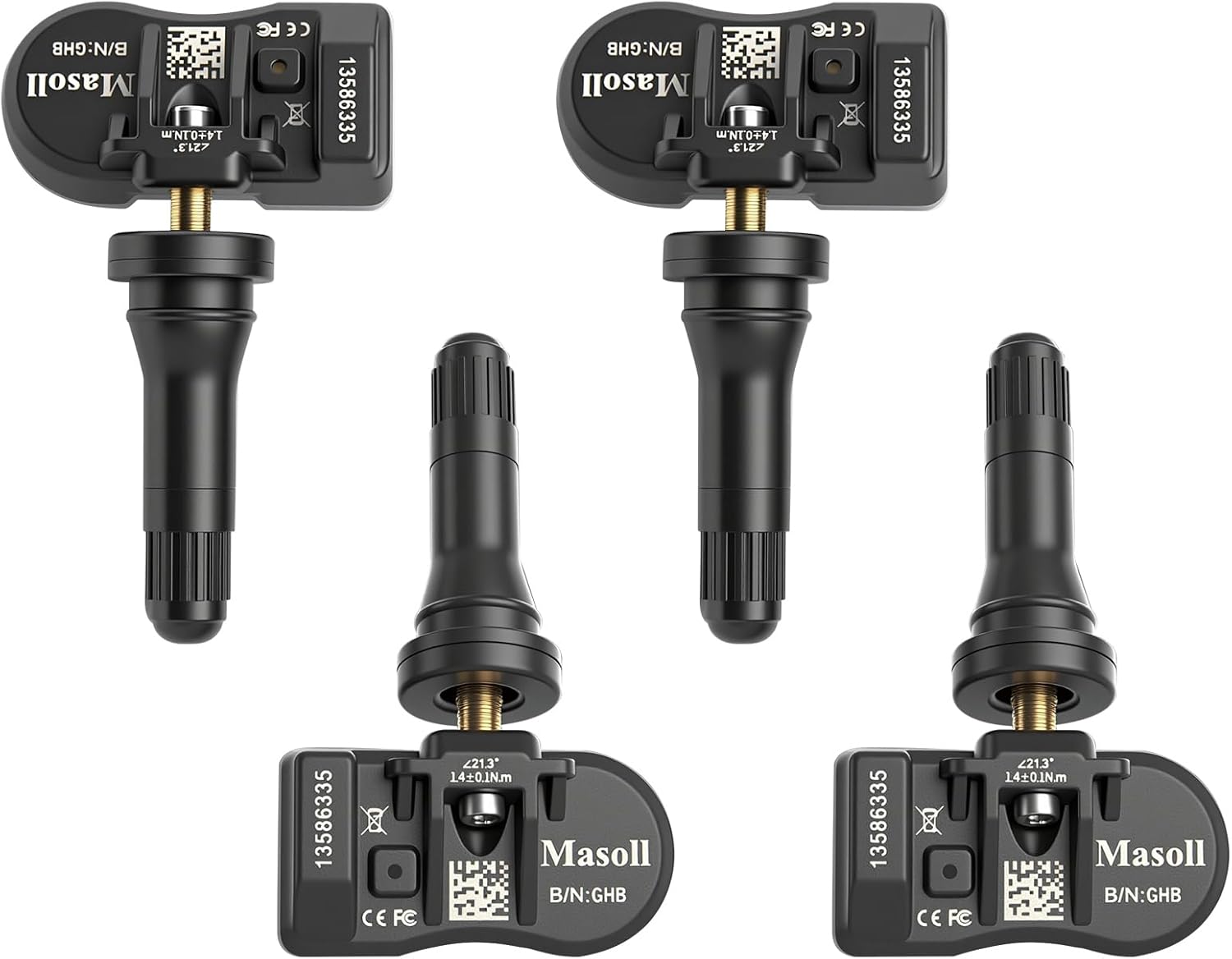
Masoll TPMS sensors are designed for most GM vehicles after 2006, helping you clear tire pressure warnings with OEM-level 315/433MHz compatibility. The 4-pack includes pre-programmed sensors, but re-learning is required after installation using a GM TPMS relearn tool or scan tool. Built with a dual-antenna design and a long-life CR2050 battery, these sensors deliver reliable performance in extreme temperatures with corrosion-resistant valve construction.
How to Check and Adjust
- Check cold, before driving or after the car has sat for three hours.
- Press a gauge onto each valve and compare with the label.
- Add or release air to match, front and rear separately.
- Check the compact spare if your Civic has one.
- Calibrate the TPMS after any adjustment; see Civic TPMS reset.
Pro tip: Honda’s TPMS compares wheel speeds rather than measuring pressure, so it can only warn you once a tire is well below the others. A monthly gauge check is the only way to keep pressures exact.
Performance Trims and Track Use
The Si and Type R run low-profile tires that are more sensitive to pressure. Honda’s placard values are for road use; owners who track their cars often adjust pressures hot at the track, but you should return to the placard values, measured cold, for daily driving. The Type R usually carries a tire repair kit rather than a spare.
Warning: Never exceed the maximum pressure molded on the tire sidewall, and do not run a low-profile tire underinflated; it is more easily damaged by potholes.
Products Worth Considering

The Airmoto portable tire inflator quickly and accurately fills car, truck, SUV, motorcycle, and bicycle tires up to 120 PSI with auto shut-off when your target pressure is reached. Its large LCD, multi-unit pressure display, and digital gauge make it easy to dial in settings and verify readings, while the built-in LED flashlight helps in low light. The included polyurethane hard carrying case and storage mesh pocket keep the inflator and accessories protected and organized.
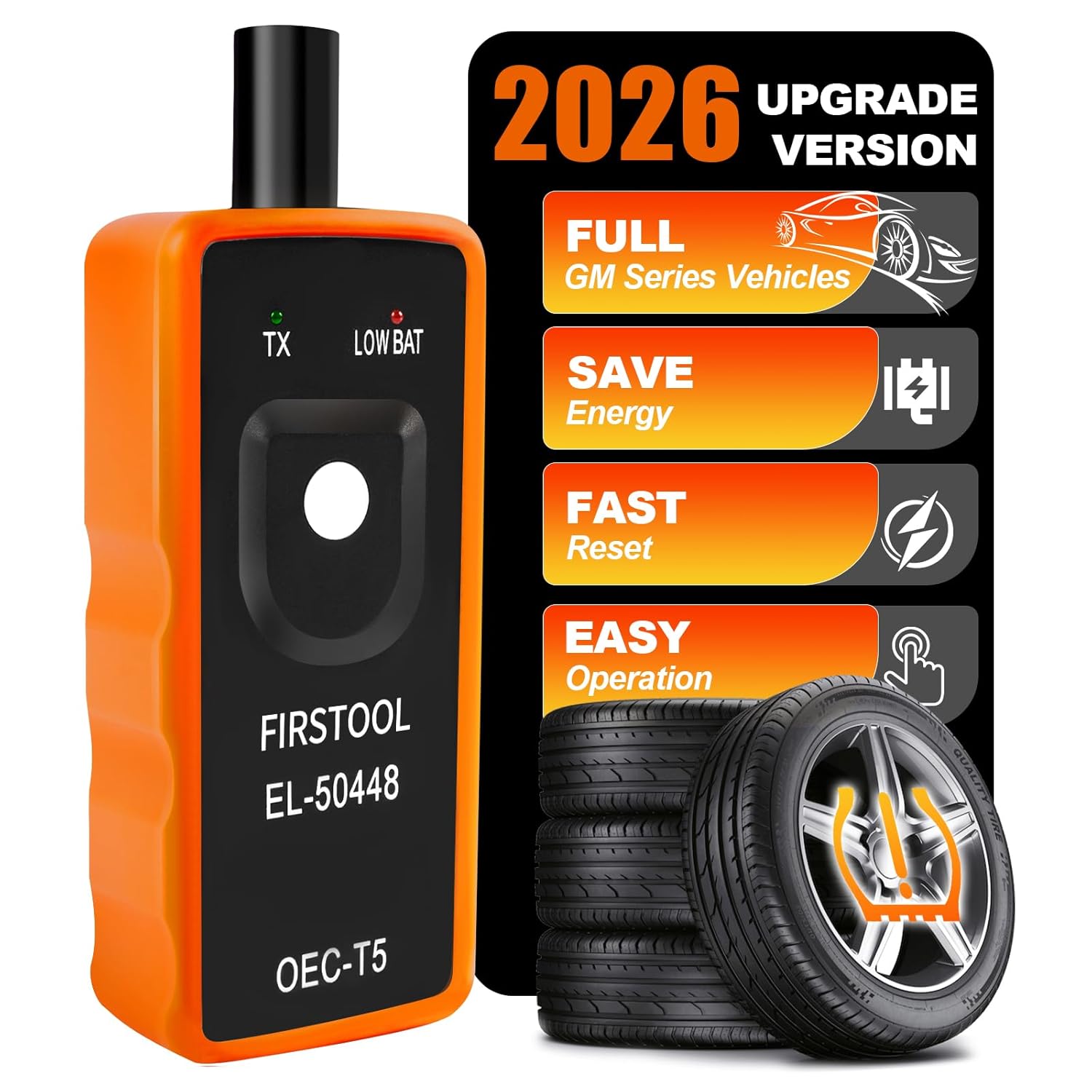
This TPMS relearn tool helps you quickly activate, match, and reset GM tire pressure sensors to keep the vehicle monitoring system working properly. It clears tire pressure alarms and dashboard warning lights after sensor replacement or tire rotation, and supports learning for common 315/433 MHz TPMS sensors. Designed for simple one-button operation, it can help you avoid unnecessary trips to repair shops.

This TPMS sensor training and relearn reset tool is customized for Ford, Lincoln, and Mercury vehicles to help activate tire pressure programming after sensor replacement or tire rotation. It can activate individual tire pressure sensors with one-button operation, helping prevent TPMS warning light illumination. It is not a sensor programming tool and cannot program replacement sensors—use it to trigger/activate sensors only.
Seasonal Changes
Cold weather lowers tire pressure, which can trigger the low-pressure light on frosty mornings. Re-check and adjust as temperatures change; see what tire pressure should be in winter.
Frequently Asked Questions
What tire pressure does a 2025 Honda Civic need?
Published data lists 32 psi front and rear for the LX’s 215/55R16 tires and 35 psi front, 33 psi rear for 235/40R18 tires. Check the door label to confirm.
What is the Civic Type R tire pressure?
Published data for the Type R’s 265/30R19 tires lists 35 psi front and 33 psi rear for road use.
Is 32 psi correct for a Honda Civic?
It is correct for many Civics, including the 2022-2025 LX and most 2016-2021 models, but 18-inch trims use 35 psi front and 33 psi rear.
Do I need to calibrate the TPMS after adding air?
Yes. Honda says to start TPMS calibration every time you adjust tire pressure, rotate or replace tires.
Sources
- TirePressure.com: 2025 Honda Civic tire pressure
- TirePressure.com: 2024 Honda Civic tire pressure
- TirePressure.com: Honda Civic tire pressure by year
- Honda owner’s information: TPMS calibration
Products Worth Considering

ETENWOLF’s tire pressure gauge helps you quickly and accurately check tire PSI across cars, trucks, motorcycles, bikes, and more. It’s manually calibrated to ANSI B40.1 Grade A for reliable readings, includes a large glow dial for easy nighttime viewing, and features a 360-degree swivel chuck for use at any valve angle. The gauge also works consistently in extreme hot or cold weather.

AstroAI’s tire pressure gauge with inflator helps you check and adjust car tire pressure accurately for safer, smoother driving. It offers 3-in-1 operation to inflate, deflate, or measure pressure, with an easy-to-read 2.5-inch glow dial and a heavy-duty air chuck for convenient use. Universal compatibility supports Schrader-valve tires and quick-connect 1/4" NPT air compressors for quick maintenance.
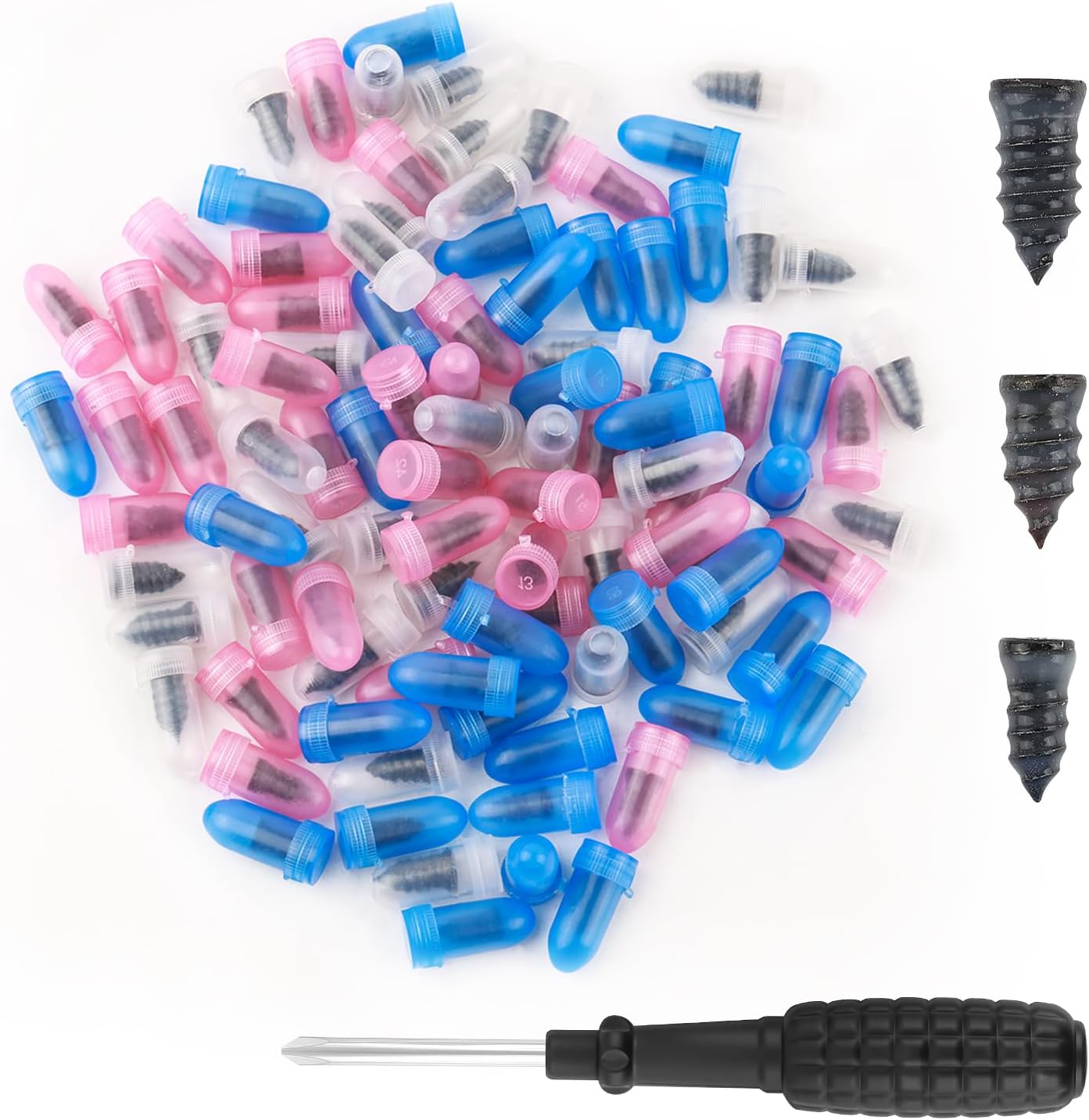
This 100-piece tire repair screw plug kit provides a fast, self-service solution for punctures on the road. Choose the correct plug size, insert it into the break, and screw it in to help seal the puncture and temporarily restore tire pressure. Thickened threads and rubber-wrapped plugs improve bite and sealing while remaining compact and easy to carry.