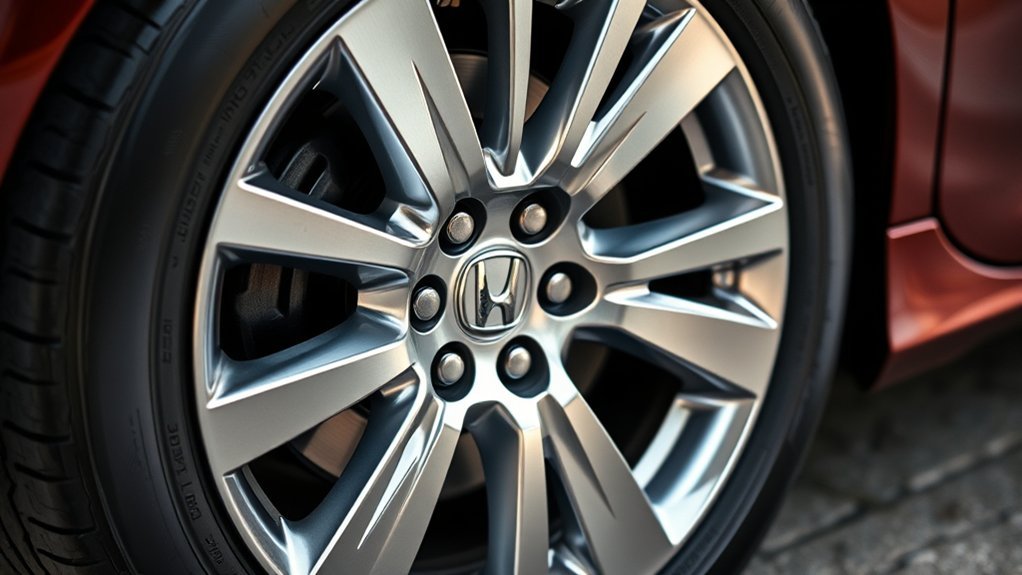
Honda Accord wheel and tire specs are not one-size-fits-all. The right setup depends on the model year, trim, market, wheel diameter, tire size, bolt pattern, hub bore, offset, load rating, and speed rating. Modern Accords are usually easy to fit because many share similar specs, but older generations can be very different. Use this guide as a practical starting point, then confirm the exact size on your driver-side door label, owner’s manual, or VIN-specific Honda information before buying wheels or tires.
Quick Answer
Most late-model Honda Accords use 17- or 19-inch OEM wheels, with common tire sizes such as 225/50R17 and 235/40R19 on recent U.S. models. Modern Accords commonly use a 5×114.3 bolt pattern and 64.1 mm hub bore, but older Accords used different bolt patterns, so always verify by year and trim.
Key Takeaways
- Current U.S. 2026 Accord trims use either 17 x 7.5J wheels with 225/50R17 tires or 19 x 8.5J wheels with 235/40R19 tires.
- Do not assume every Accord uses 5×114.3; early generations used different bolt patterns.
- When replacing tires, match the size, load index, speed rating, and cold tire pressure recommendation shown in the owner’s manual or door-jamb label.
- Aftermarket wheels must clear the brakes and suspension and should stay close to the original offset and rolling diameter.
- Check tire pressure monthly when cold, replace tires at or before 2/32 inch tread depth, and recalibrate TPMS when required after rotation or service.
At a Glance
| Time Required | 10–20 minutes to verify your current size, door label, and owner’s manual before shopping |
| Difficulty | Easy for tire-size verification; moderate if comparing aftermarket wheel width and offset |
| Tools Needed | Owner’s manual, driver-side door label, tire pressure gauge, tread-depth gauge or penny, and a torque wrench if wheels are removed |
| Cost | Free to verify; tire and wheel costs vary by size, brand, season rating, and installation |
Understanding Honda Accord Wheel and Tire Fitment
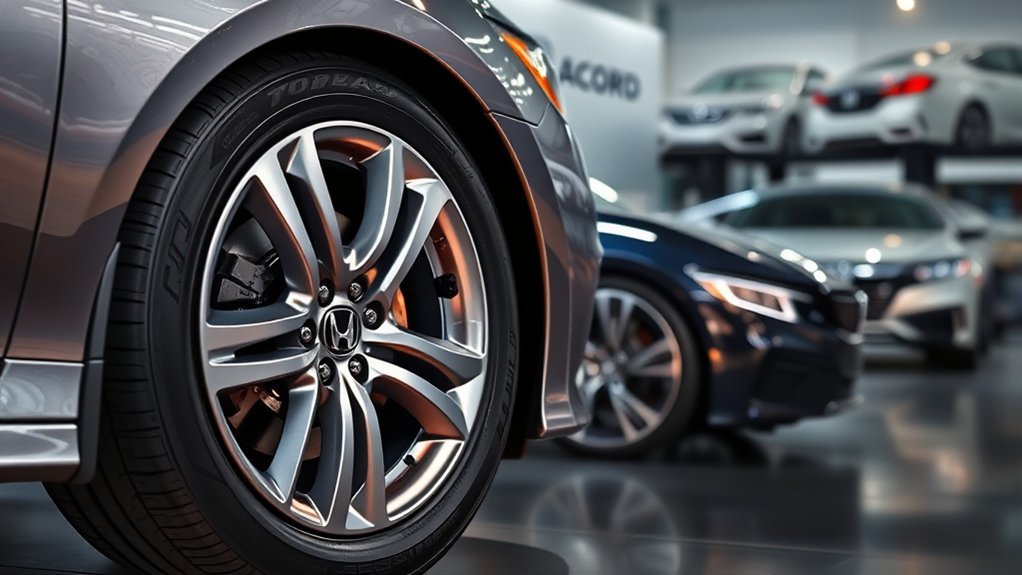
The Honda Accord has been sold since the 1970s, and its wheel specs have changed a lot over time. Early models used small wheels and four-lug patterns. Modern models use larger alloy wheels, wider tires, and five-lug hubs. That is why “Honda Accord wheels” can mean very different things depending on whether you own a 1980s sedan, a 2007 V6 coupe, a 2017 Touring, or a 2026 hybrid.
The most important rule is simple: match your exact model year and trim. A wheel that fits one Accord generation may not fit another if the bolt pattern, hub bore, offset, brake clearance, or tire diameter is different.
Note: The door-jamb Tire and Loading Information Label is the best quick reference for your factory tire size and cold tire pressure. For wheel size, torque, and replacement rules, use the owner’s manual or Honda service information for your exact year and trim.
Honda Accord OEM Wheel Sizes by Generation
The table below gives a practical overview of common U.S.-market Accord wheel and tire ranges. Exact sizes can vary by sedan, coupe, hybrid, engine, trim, accessory wheel, and market.
| Generation / Years | Common OEM Wheel Sizes | Common OEM Tire Sizes | Fitment Notes |
|---|---|---|---|
| 11th gen, 2023–2026 | 17 x 7.5J, 19 x 8.5J | 225/50R17, 235/40R19 | Modern 5-lug Accord fitment; verify trim and market. |
| 10th gen, 2018–2022 | 17 and 19 inches | 225/50R17, 235/40R19 | Sport and Touring trims commonly used 19-inch wheels. |
| 9th gen, 2013–2017 | 16, 17, and 18 inches; some accessory 19-inch wheels | 205/65R16, 215/55R17, 235/45R18 | Sedan and coupe trims can differ. |
| 8th gen, 2008–2012 | 16, 17, and 18 inches | 215/60R16, 225/50R17, 235/45R18 | V6 and coupe trims may use wider/larger setups. |
| 7th gen, 2003–2007 | 15, 16, and 17 inches | 195/65R15, 205/60R16, 215/50R17 | Common modern 5-lug fitment, but verify trim. |
| 6th gen and older, 1976–2002 | Mostly 12–16 inches depending on year | Varies widely by year and body style | Older Accords used several four-lug patterns; do not assume modern fitment. |
2023–2026 Honda Accord OEM Tire and Wheel Specs
For the latest U.S.-market Accord, Honda’s published 2026 specifications list the following factory wheel and all-season tire combinations. These are useful for 11th-generation owners because they show the current OEM direction for the Accord lineup.
| Trim | OEM Wheel | OEM Tire |
|---|---|---|
| LX | 17 x 7.5J | 225/50R17 94V |
| SE | 19 x 8.5J | 235/40R19 96V |
| Sport Hybrid | 19 x 8.5J | 235/40R19 96V |
| EX-L Hybrid | 17 x 7.5J | 225/50R17 94V |
| Sport-L Hybrid | 19 x 8.5J | 235/40R19 96V |
| Touring Hybrid | 19 x 8.5J | 235/40R19 96V |
Honda’s 2023 Accord owner information also lists a regular 225/50R17 94V tire with a 17 x 7 1/2J wheel for applicable models, along with a compact spare size of T135/90D16 102M. See the official Honda Accord specifications page for the exact manual entry.
[Products Worth Considering]

Replace your worn or missing TPMS sensors with pre-programmed, direct-fit sensors for compatible Ford, Lincoln, and select Mazda models. Each sensor comes ready to activate with a scan tool, helping restore accurate tire pressure monitoring and trouble-free installation. Built with a long-life CR2032 battery and tested before factory release, this set provides dependable performance with a one-year warranty.

Upgrade your wheels with MIKKUPPA closed-end lug nuts designed for reliable fit and corrosion resistance. The one-piece, cold-forged and heat-treated steel construction helps resist rust and stripping, while the integrated finish delivers a durable black appearance. Built to OEM standards with a conical 60-degree seat, these nuts provide a secure solution for compatible Ford, Honda, Jeep, and Chevrolet models.

These M14x1.5 closed-end chrome lug nuts are a one-piece replacement designed for secure fitment on compatible GM, Ford, and select Chrysler/Dodge models. Featuring a 60-degree conical seat and anti-rust chrome plating, they help resist corrosion and maintain a bright look for everyday driving. Built for long-term durability, they include OEM-style part references and are backed by 12 months of support.
Key Wheel Specifications: Bolt Pattern, Hub Bore, Offset, and Torque
Wheel size is only one part of fitment. Before installing any OEM replacement or aftermarket wheel, confirm these specs:
| Specification | What It Means | Why It Matters |
|---|---|---|
| Bolt pattern | Number of lugs and bolt-circle diameter, such as 5×114.3 | The wheel will not mount safely if this does not match. |
| Hub bore | Center hole diameter that fits over the vehicle hub | A poor hub fit can cause vibration or unsafe mounting. |
| Offset | How far the mounting face sits from the wheel centerline | Too much or too little offset can cause rubbing, poor handling, or bearing stress. |
| Width | Wheel width, such as 7.5J or 8.5J | The tire must be approved for the wheel width. |
| Load rating | Weight capacity of the tire and wheel | Underrated tires or wheels are unsafe. |
| Wheel nut torque | Tightening force for lug nuts | Recent Accord owner information lists 80 lbf-ft for standard-equipped wheels, but confirm your exact year. |
Warning: Honda warns that using tires of a different size or construction can cause systems such as ABS and Vehicle Stability Assist to work incorrectly. Always use the tire size and type recommended in the owner’s manual unless a qualified tire professional confirms the alternative fitment is safe.
Honda Accord Bolt Pattern by Era
Many modern Accord owners will see 5×114.3 listed as the common bolt pattern, but that does not apply to every Accord ever built. Earlier Accords used several four-lug layouts, and some transition years can vary by engine, body style, or market.
- Modern Accord models: commonly 5×114.3, often with a 64.1 mm hub bore on many later Honda applications.
- Late 1980s through early 2000s: many models used 4×114.3, with some variants moving to 5×114.3.
- 1980s models: many used 4×100.
- Early Accord models: some used 4×120.
Because these ranges overlap by market and trim, do not buy wheels based on generation alone. Check the exact model year, trim, and current wheel before ordering.
Popular Aftermarket Wheel Sizes and Trends
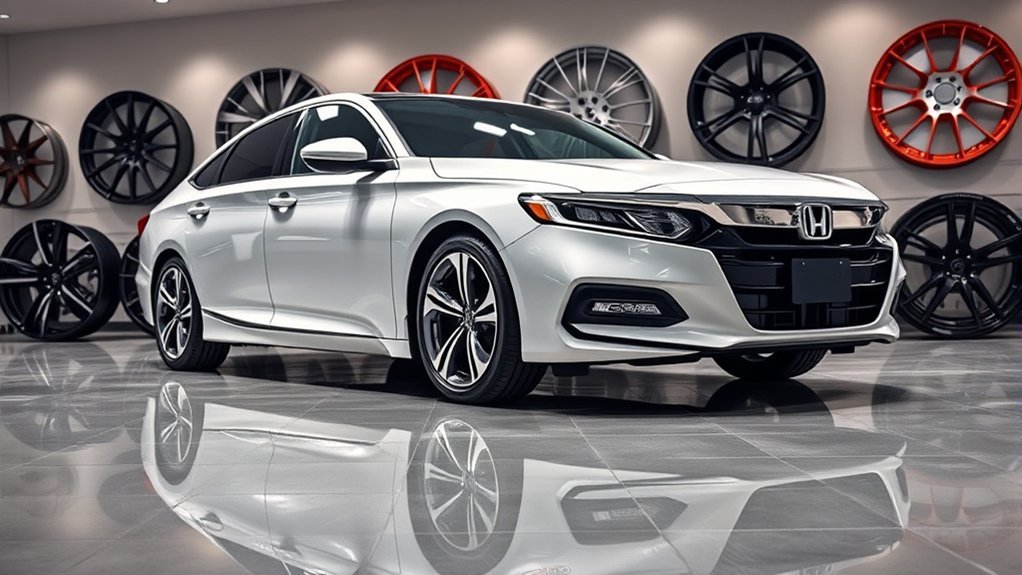
Aftermarket Accord wheels are popular because they can change the car’s stance, steering feel, and appearance. The safest upgrades stay close to the original tire diameter, use the correct bolt pattern and hub bore, and keep offset within a sensible range for brake and suspension clearance.
- 17-inch wheels: practical for comfort, lower tire cost, and pothole resistance.
- 18-inch wheels: a balanced upgrade for many older and mid-generation Accords when properly sized.
- 19-inch wheels: common on 10th- and 11th-generation Sport, Sport-L, Touring, and related trims.
- 20-inch wheels: possible on some custom builds, but they require careful offset, width, tire-load, and rubbing checks. They should not be presented as OEM unless Honda lists them for that specific model.
Pro Tip: When upsizing wheels, compare overall tire diameter, not just rim diameter. A larger wheel usually needs a lower-profile tire to keep the speedometer, gearing, ABS, and traction systems working as intended.
[Products Worth Considering]

Adam’s Pro Tire Hex Grip applicators are molded foam sponges designed for precise, even tire dressing application. The ergonomic grip helps you spread product without overapplying, reducing sling that can splash onto paint and helping keep your hands clean during wheel and trim detailing. They’re durable, washable, and reusable for repeated detailing sessions.

The JACO FlowPro Tire Inflator measures, inflates, and airs down tires up to 100 PSI with battery-free operation and ±2% accuracy after calibration. It features a glowing pressure dial for night visibility, a heavy-duty steel build with a hybrid hose, and a precision push-to-inflate thumb trigger. The patented Lightning Air Chuck locks on for a secure seal, and the kit includes quick-connect hardware for easy inline use with your air compressor.
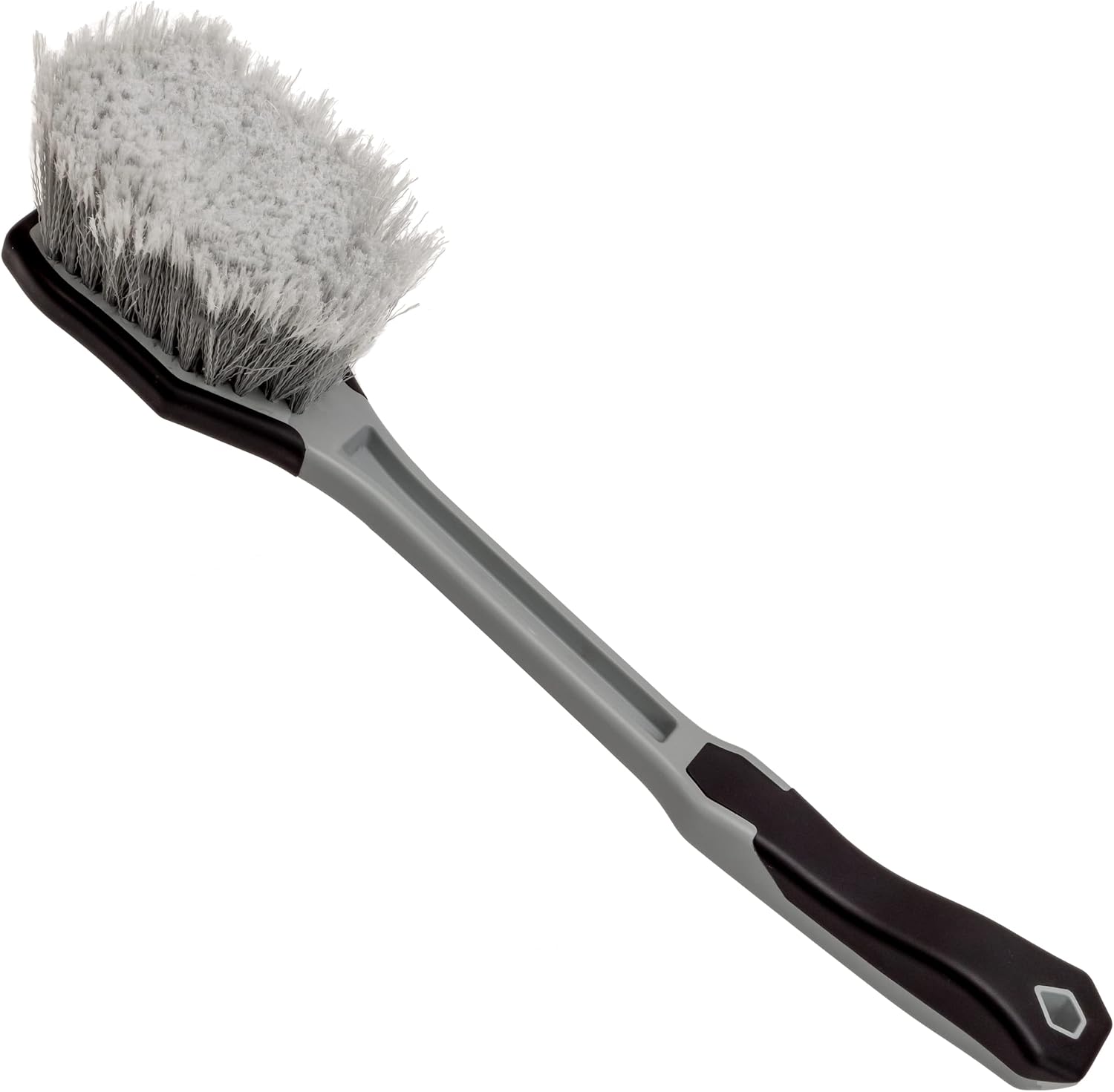
Clean grills, fenders, fender flares, bumpers, and wheel wells with a long-handled brush built for detailed car washing. The soft, triple-flagged bristles and dense scrub coverage help lift dirt gently while making coverage fast and easy. Use it with your favorite car wash soap for tires and exterior surfaces, and it also works for bike, motorcycle, boat, or RV cleaning.
Honda Accord Tire Sizes by Model
Honda Accord tire sizes vary by generation and trim. On recent Accords, the two most common factory sizes are 225/50R17 and 235/40R19. Older Accords may use 15-, 16-, 17-, or 18-inch tires depending on the trim.
Here is how to read a common Accord tire size such as 235/40R19 96V:
- 235 is the tire width in millimeters.
- 40 is the aspect ratio, meaning the sidewall height is 40% of the tire width.
- R means radial construction.
- 19 is the wheel diameter in inches.
- 96 is the load index.
- V is the speed rating.
When replacing tires, Honda advises using radials of the same size, load range, speed rating, and maximum cold tire pressure rating shown on the tire sidewall and recommended in the owner’s manual. See Honda’s official Tire and Wheel Replacement guidance for the safety warning.
How to Choose the Right Tires for a Honda Accord
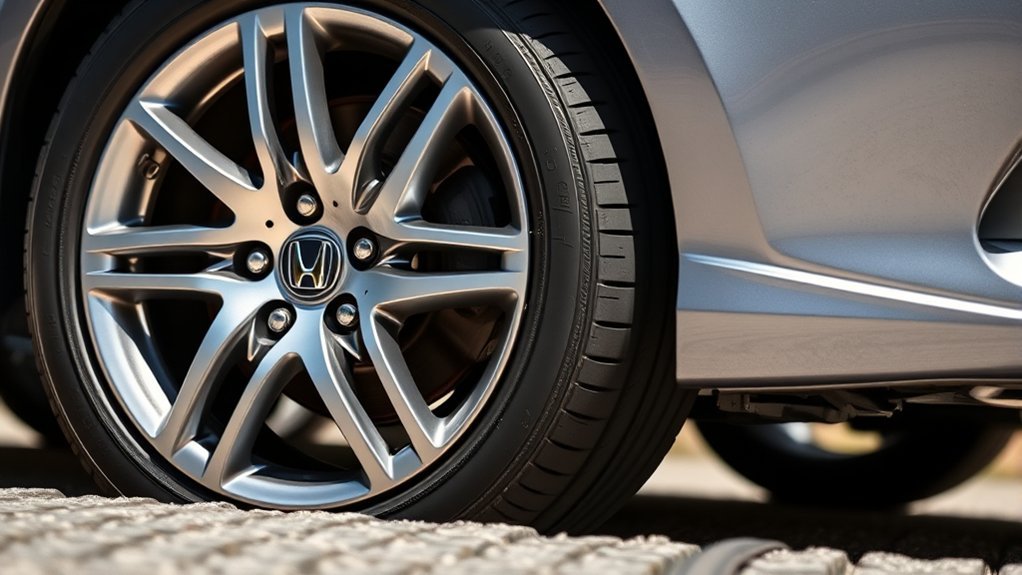
The right tire depends on your climate, driving style, and factory size. Start with the tire size on the door label, then choose the tire category that matches your daily use.
[Products Worth Considering]

Measure tyre tread depth precisely with a digital gauge that reads in both MM and inches, helping you monitor safe driving conditions. The large LCD screen is easy to operate, and the compact tool fits for cars, trucks, and motorcycles. It provides high accuracy with a 0-25.4mm range and includes a 1-year warranty for added peace of mind.

This professional wheel and rim cleaning brush set lifts brake dust, grime, and dirt with soft, scratch-free microfiber and synthetic wool fibers. The rim brush bends up to 360 degrees for easy access to hard-to-reach areas around spokes, lips, and faces. Ideal for thorough cleaning of car, truck, motorcycle, bicycle, RV, and more wheel and tire surfaces.

Black Magic Tire Wet delivers a deep wet-look shine that makes tires appear dark, rich, and freshly detailed. Its long-lasting formula helps resist rain, dust, and road grime for weeks of glossy protection, not days. Apply by spraying onto clean, dry tires—no buffing or wiping required—with a low-sling design to reduce splatter on paint and wheels.
Tire Type Selection
- Touring all-season tires: best for most Accord drivers who want quiet ride quality, long tread life, and year-round convenience.
- Performance all-season tires: better steering response and grip, often at the cost of shorter tread life or a firmer ride.
- Summer performance tires: strong warm-weather grip, but not suitable for freezing temperatures, snow, or ice.
- Winter tires: best for repeated snow, ice, and cold-weather driving. They outperform all-season tires in deep snow and freezing conditions.
Fitment Checklist Before Buying
- Find the factory tire size on the driver-side door label.
- Confirm the wheel size and tire options in the owner’s manual.
- Match or exceed the factory load index and speed rating.
- Keep the overall tire diameter close to stock if changing wheel size.
- Check brake clearance, suspension clearance, and fender clearance.
- Use the correct lug nuts and torque specification.
- Recalibrate TPMS if your Accord requires it after tire rotation or service.
Signs It Is Time to Replace Honda Accord Tires
Tires are your Accord’s only contact with the road, so replacement timing matters. Watch for these signs:
- Low tread depth: Replace tires when they reach 2/32 inch tread depth. Consider replacing earlier if you often drive in heavy rain or winter weather.
- Sidewall cracks or bulges: Damage on the sidewall can lead to sudden failure.
- Uneven wear: Feathering, cupping, or one-edge wear can point to alignment, balance, suspension, or pressure problems.
- Repeated pressure loss: Slow leaks may come from punctures, valve stems, bead leaks, or wheel damage.
- Vibration or pulling: Have the tires, wheels, alignment, and suspension inspected.
- Age-related cracking: Even tires with usable tread can age out. Check the DOT date code and follow tire manufacturer and vehicle guidance.
NHTSA reported 511 U.S. traffic fatalities in tire-related crashes in 2024, which is a reminder that pressure, tread, age, and fitment checks are safety tasks, not just maintenance chores.
Tire Pressure, Rotation, and TPMS Maintenance
Use the pressure shown on the Tire and Loading Information Label, not the maximum PSI molded into the tire sidewall. Tire pressure should be checked at least once a month when the tires are cold, including the spare if equipped. NHTSA’s TireWise guidance also recommends checking tread and following the owner’s manual for rotation intervals.
| Maintenance Item | Recommended Practice |
|---|---|
| Tire pressure | Check monthly when cold and before long trips. |
| Tread depth | Check monthly; replace at or before 2/32 inch. |
| Rotation | Follow the Honda Maintenance Minder or owner’s manual. A general interval is often 5,000–8,000 miles when rotation is recommended. |
| TPMS | Recalibrate after rotation or tire service when your Accord’s system requires it. |
| Wheel torque | Recent Accord guidance lists 80 lbf-ft for standard-equipped wheels, but always confirm your year and trim before tightening. |
Honda’s tire rotation guidance notes that directional tires should only be rotated front to back and that TPMS calibration may be required after rotation. See the official Honda Accord Tire Rotation page for the current procedure example.
Common Fitment Mistakes to Avoid
- Buying by diameter only: A 19-inch wheel is not automatically correct just because your Accord offered 19-inch wheels on another trim.
- Ignoring offset: Incorrect offset can cause rubbing, poor steering feel, or extra stress on suspension parts.
- Using the wrong hub bore: If the wheel center bore is larger than the hub, use proper hub-centric rings when appropriate.
- Mixing tire sizes on the same axle: Tires on the same axle should match in size, construction, and wear level.
- Dropping load index: Never choose a tire with a lower load index than the factory requirement.
- Skipping torque checks: Lug nuts should be tightened with a torque wrench, not just an impact gun.
Common Tire Questions for Honda Accord Owners
For most owners, the safest answer is to stay with the factory tire size or a manufacturer-approved alternative. If you want a different look, start with OEM upgrade sizes from the same generation before considering aggressive aftermarket widths or offsets.
Also remember that tire choice changes ride quality. A 17-inch setup usually rides softer and costs less to replace. A 19-inch setup usually looks sportier and responds more sharply, but the lower-profile tire can ride firmer and be more vulnerable to pothole damage.
Maintenance Tips for Extended Tire Life
Good tire life comes from consistent maintenance, not just buying a premium tire. Keep pressures correct, rotate when recommended, maintain alignment, and inspect the tread regularly. If your Accord begins pulling, vibrating, or wearing one tire faster than the others, have it checked before the wear becomes permanent.
- Check pressure monthly when tires are cold.
- Inspect tread depth and sidewalls during the same check.
- Rotate according to the Maintenance Minder or owner’s manual.
- Balance tires when installing new tires or when vibration appears.
- Align the vehicle if wear is uneven or the car pulls on a straight road.
- Replace tires in sets of four when possible; if not, replace them in axle pairs.
Frequently Asked Questions
What wheels does the Honda Accord use?
Recent Honda Accords commonly use 17- or 19-inch alloy wheels. For example, the 2026 U.S. Accord lineup lists 17 x 7.5J wheels on LX and EX-L Hybrid trims and 19 x 8.5J wheels on SE, Sport Hybrid, Sport-L Hybrid, and Touring Hybrid trims. Older Accords used smaller wheels, so verify by year and trim.
What are OEM Honda Accord wheels made of?
Most modern OEM Honda Accord wheels are aluminum alloy wheels. Older base trims and some earlier generations may have used steel wheels with wheel covers. Alloy wheels are popular because they balance strength, weight, corrosion resistance, and styling.
What is the Honda Accord bolt pattern?
Many modern Accords use a 5×114.3 bolt pattern, but older Accords used different patterns such as 4×120, 4×100, and 4×114.3 depending on year and model. Always confirm the exact bolt pattern before buying wheels.
Can I put 19-inch wheels on an Accord that came with 17-inch wheels?
Sometimes, yes, especially when the same generation offered a 19-inch OEM option. However, you must match the bolt pattern, hub bore, offset, wheel width, tire diameter, load rating, and brake clearance. Use a tire size close to the factory overall diameter and confirm fitment before installation.
What tire pressure should I use on a Honda Accord?
Use the cold tire pressure on the driver-side door label or in the owner’s manual for your exact model. Do not use the maximum PSI printed on the tire sidewall as your normal inflation target.
How often should Honda Accord tires be rotated?
Follow the Honda Maintenance Minder or your owner’s manual. As a general tire-industry guideline, rotation is often done around every 5,000–8,000 miles when the vehicle manufacturer recommends it. Directional tires and staggered setups may require a different pattern or may limit rotation options.
Conclusion
Getting Honda Accord OEM wheel and tire specs right is about more than appearance. The correct size protects ride quality, braking, handling, ABS/VSA operation, TPMS accuracy, and tire life. For newer Accords, 17- and 19-inch OEM setups are common, but older generations vary widely. Before buying replacement tires or aftermarket wheels, confirm the tire size, wheel size, bolt pattern, hub bore, offset, load index, speed rating, pressure, and torque for your exact Accord.
Sources
- Honda Automobiles — 2026 Accord Sedan Features & Specs — current Accord trim wheel and tire sizes
- Honda Owner Information — 2023 Accord Specifications — tire size, pressure, spare tire, and wheel size example
- Honda Owner Information — Tire and Wheel Replacement — replacement tire safety guidance
- Honda Owner Information — Tire Rotation — rotation, TPMS calibration, and wheel nut torque example
- NHTSA TireWise — tire pressure, tread depth, tire ratings, maintenance, and tire safety guidance