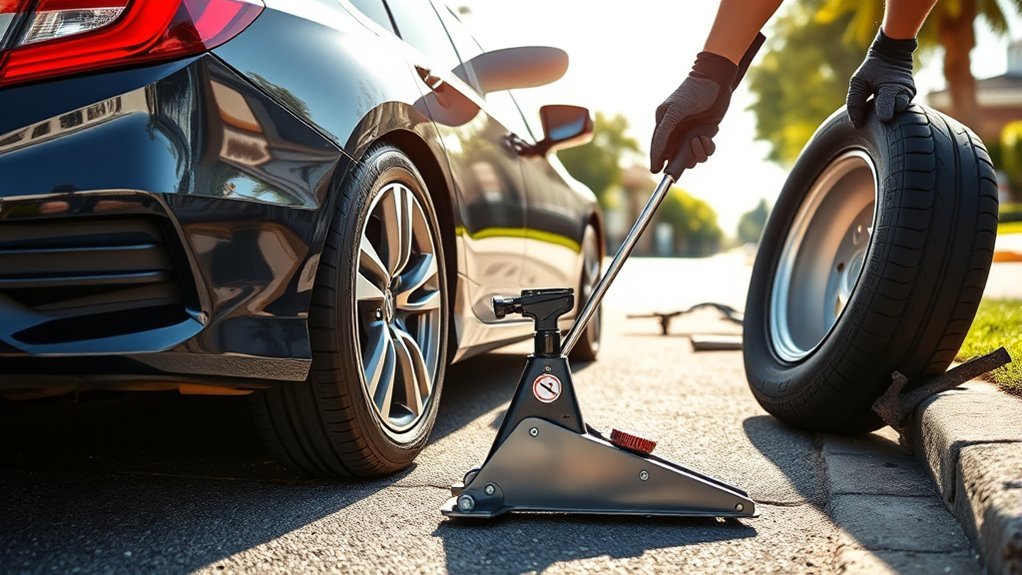
A flat tire on your Honda Accord is stressful, but the safest fix starts with one decision: use the tire repair kit, install the spare, or call for a tow. A repair kit is only for certain small tread punctures. A compact spare is temporary. If the tire has sidewall damage, a blowout, a bent wheel, or the car feels unstable, do not keep driving.
Quick Answer
To handle a Honda Accord flat tire, pull over safely, turn on the hazards, set the parking brake, and inspect the damage. Use the tire repair kit only for a small tread puncture, or install the spare if your Accord has one. After either fix, check pressure and drive to a tire shop.
Key Takeaways
- Use a Honda tire repair kit only when the puncture is small, located in the tread, and allowed by your owner’s manual.
- Do not use sealant on sidewall cuts, blowouts, large holes, wheel damage, or a tire that was driven flat for more than a very short distance.
- If you install a compact spare, treat it as temporary and replace it with a repaired or full-size tire as soon as possible.
- Check the driver-door tire placard for the correct cold tire pressure because Accord pressure specs vary by year, trim, and tire size.
- After inflation, repair, rotation, or tire replacement, follow your Honda manual for TPMS calibration or reset instructions.
At a Glance
| Time Required | 15 to 30 minutes for a tire repair kit; 20 to 45 minutes for a spare tire change |
| Difficulty | Easy to moderate if you are parked on a firm, level, safe surface |
| Tools Needed | Honda tire repair kit or spare tire, jack, wheel nut wrench, tire pressure gauge, gloves, flashlight, and wheel chock if available |
| Cost | Usually $0 roadside if your kit or spare is complete; tire shop repair or replacement cost varies by damage and tire size |
Before You Start: Repair Kit, Spare, or Tow?
First, move your Accord as far from traffic as you safely can. Choose a firm, level surface, shift to Park, set the parking brake, turn on the hazard lights, and keep passengers away from traffic. If you are on a narrow shoulder, in bad weather, or near fast traffic, calling roadside assistance is usually safer than repairing the tire yourself.
Warning: Never crawl under a Honda Accord supported only by the factory jack. The jack is for changing a wheel, not for working under the vehicle.
Use the tire repair kit only if the tire damage meets all of these conditions:
- The puncture is in the tread area, not the sidewall or shoulder.
- The hole is small and there is no visible tear, bulge, or exposed cord.
- The wheel is not cracked or bent.
- The tire did not come apart and was not driven flat for a long distance.
- Your Honda owner’s manual allows kit use for that tire condition.
Install the spare tire if your Accord has one and the spare, jack, and wheel nut wrench are available. Call for a tow if the tire has sidewall damage, the rim is damaged, the vehicle is not stable, the jack point is damaged, the kit is missing or expired, or you cannot work safely.
Before using a tire repair kit, check your VIN for open recalls through NHTSA’s recall lookup or Honda’s owner resources. Tire repair kit designs and service campaigns can be model-year specific, so the safest instructions are the ones tied to your exact Accord.
[Products Worth Considering]

Yieokei Tesla jack pads are molded rubber lifting pucks designed for 2016-2026 Model 3/Y/S/X, including Juniper, to fit securely in the jack hole. They cushion the underframe and help position the jack precisely at the factory jack points to reduce risk of battery, paint, or chassis damage. The set also includes a tire repair tool kit for emergency roadside fixes and comes with a portable storage case to keep everything organized.
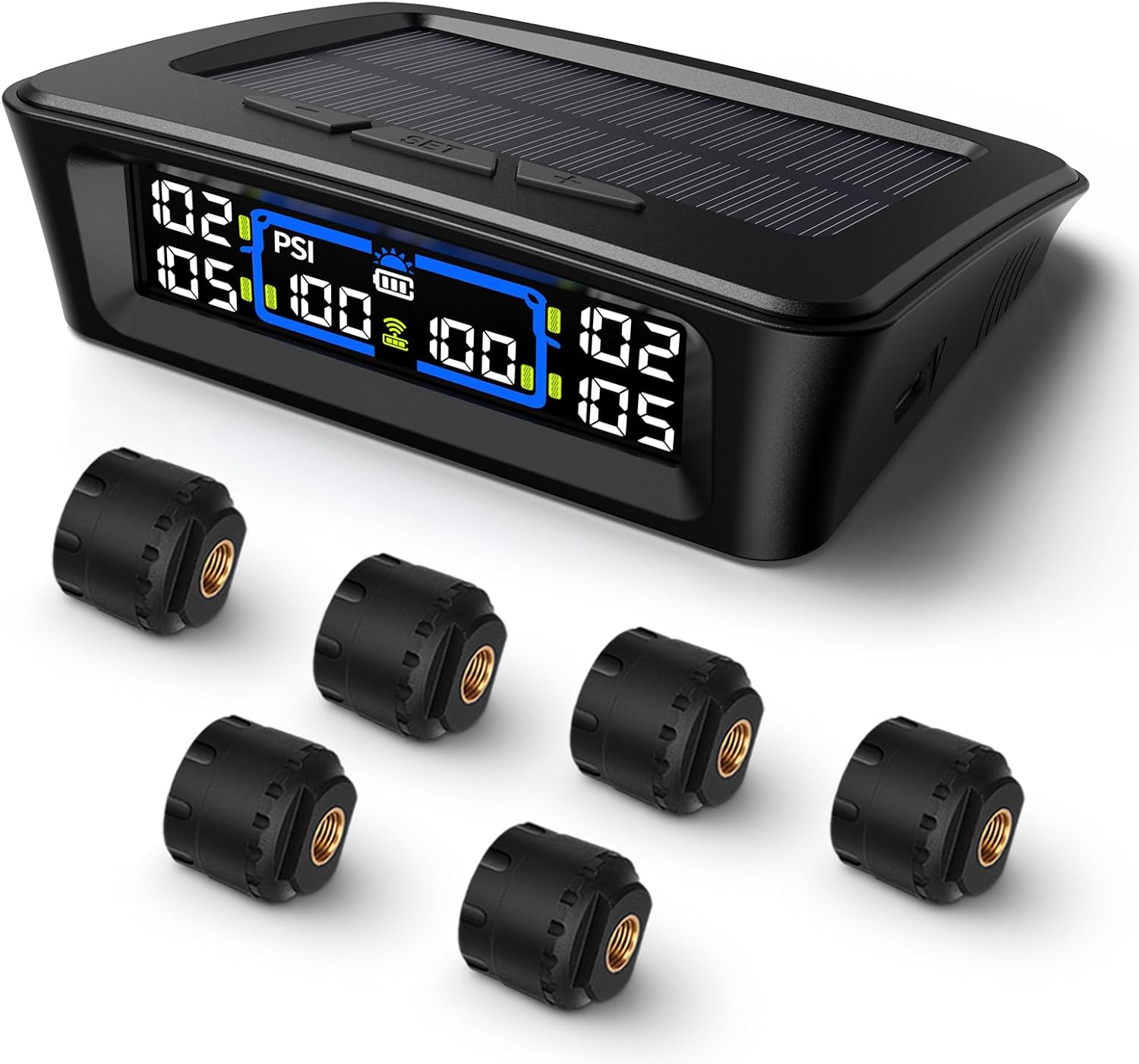
The Tymate TM12 RV TPMS delivers real-time tire pressure and temperature monitoring with a stable 433Hz display for safer long-distance driving. It supports simultaneous monitoring across vehicle and trailer zones, includes six alarm modes for pressure, temperature, leakage, battery, and signal loss, and features easy DIY installation with auto calibration. Power is supplied via USB-C charging or solar recharging, with a wide 0–144 PSI range and up to 50 ft signal coverage for RVs and towable trailers.

This 4-in-1 tire valve core removal tool helps you deflate, unblock, and remove or install valve cores quickly for easier tire repair. The multifunction design also supports re-taping damaged threads and reaming inside the valve stem for smoother service. Included as a 2-pack, it’s compact for convenient carry and works for cars, bicycles, and motorcycles.
Step-By-Step Guide to Using Your Tire Repair Kit
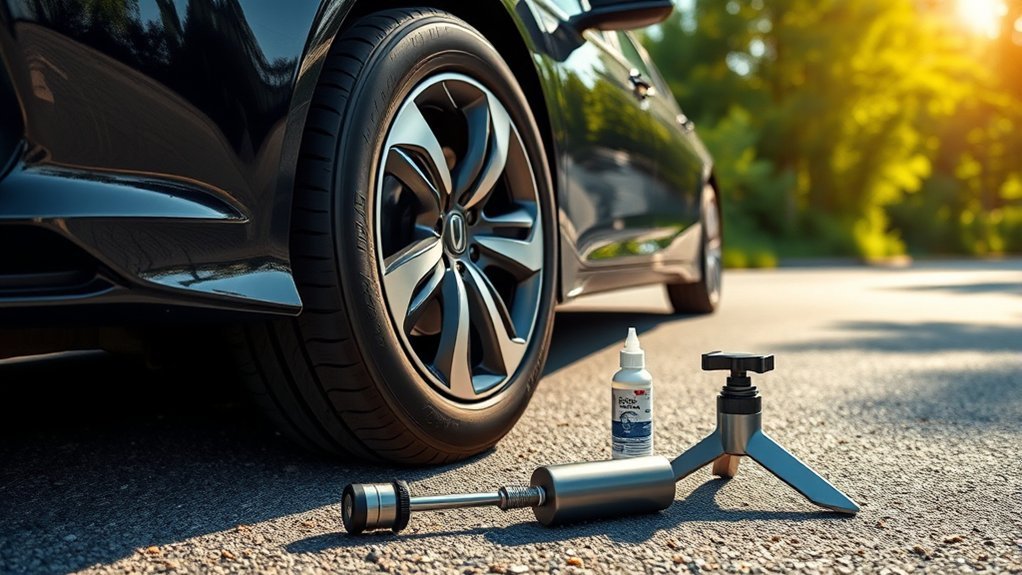
If your Accord came with a tire repair kit instead of a spare, the kit usually includes sealant and a small compressor. Read the label on the kit first because the hose layout and switch positions can vary by model year.
- Park safely and inspect the tire. Do not remove the object from the tread unless your Honda kit instructions tell you to.
- Check the kit condition. Make sure the sealant bottle is not expired, damaged, leaking, or subject to an open recall for your VIN.
- Remove the valve cap. Keep the cap in a safe spot so it does not roll away.
- Attach the sealant hose securely. Thread or press the hose onto the valve stem exactly as the kit label shows.
- Power the compressor. Plug it into the Accord’s accessory power socket and keep the vehicle power mode in the position required by your manual.
- Inject sealant and air. Turn on the compressor and watch the pressure gauge. Stop if the hose leaks, the bottle swells, the compressor overheats, or the tire will not hold pressure.
- Inflate to the door-placard pressure. Some Accord tire sizes may list around 33 psi or 35 psi cold, but your driver-door placard is the source to follow.
- Drive briefly to spread the sealant. Follow the kit label for the short circulation drive. Keep speed low and avoid hard braking or sharp steering.
- Recheck pressure. Stop in a safe place, attach the air hose again, and confirm the tire still holds pressure.
- Go to a tire shop. Sealant is temporary. Tell the technician that sealant was used so the tire, valve stem, TPMS components, and wheel can be cleaned and inspected.
Pro Tip: Keep a small tire pressure gauge in the glove box. The compressor gauge is helpful, but a separate gauge makes it easier to confirm the final cold pressure later.
[Products Worth Considering]

Rhino USA’s 86-piece tire repair kit provides everything you need for quick, emergency flat repairs, including a reamer and plug insertion tool plus 60 reusable tire plugs. The heavy-duty, metal-handled design helps you fix punctures from nails and screws on tubeless tires for cars, trucks, motorcycles, ATVs, UTVs, and more. A high-visibility compact case stores easily for on-the-go use, with illustrated instructions to help you complete repairs with confidence.

This AUTOWN flat tire repair kit is designed for quick, reliable puncture repairs using a plug kit and spiral probe tool to simplify installation. Built for durability and safe handling, it offers strong adhesion and flexibility to help maintain tire air tightness. With a portable storage case and a multi-vehicle approach, it’s suitable for cars, motorcycles, ATVs, tractors, lawn mowers, RVs, jeeps, and trucks.
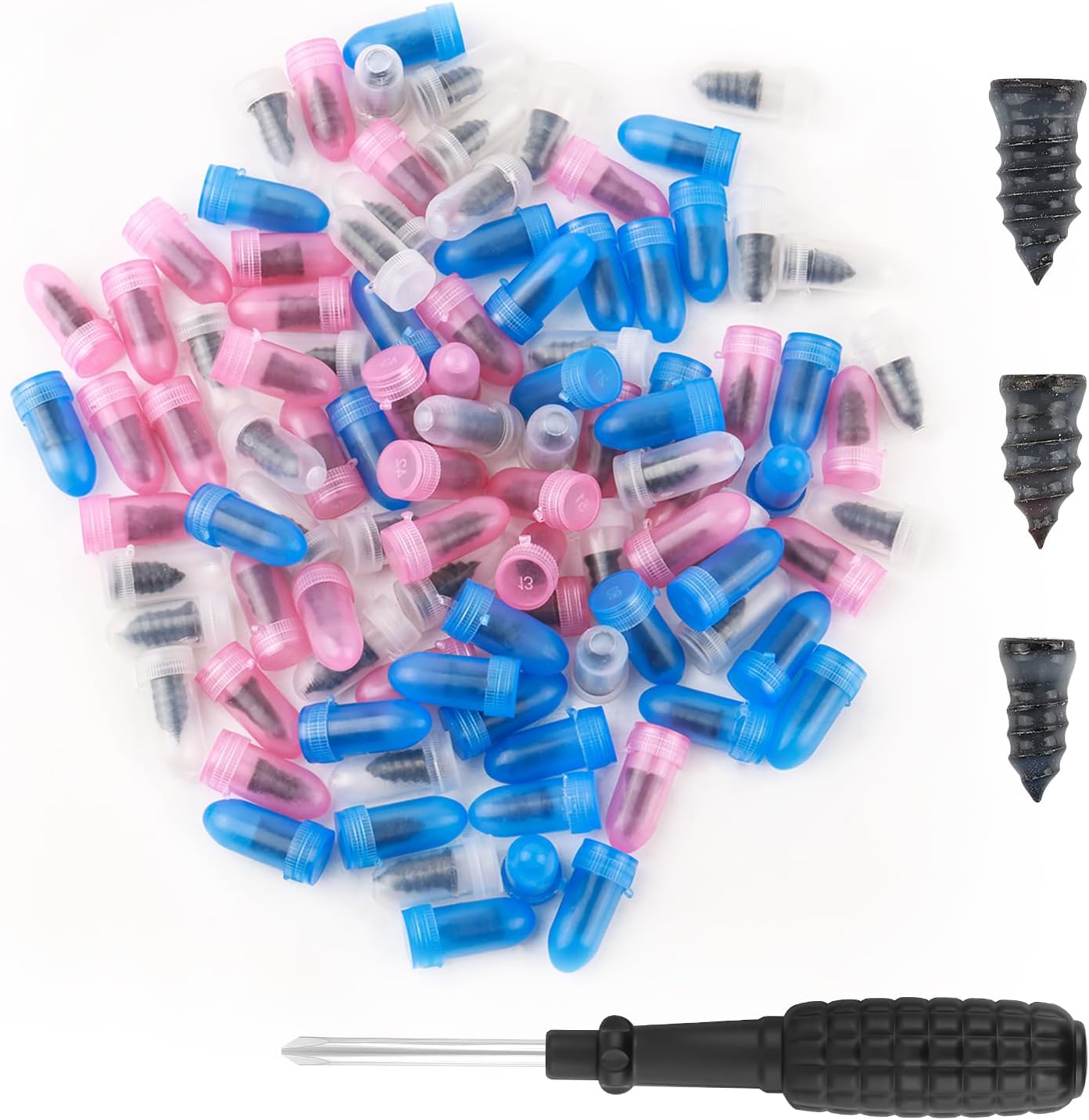
This 100-piece tire repair screw plug kit provides a fast, self-service solution for punctures on the road. Choose the correct plug size, insert it into the break, and screw it in to help seal the puncture and temporarily restore tire pressure. Thickened threads and rubber-wrapped plugs improve bite and sealing while remaining compact and easy to carry.
Replacing Your Flat Tire Safely: Here’s How
Some Honda Accord models have a compact spare instead of a sealant kit, while others may have no spare from the factory. If your Accord has a spare, use the factory jack only at the approved jacking point listed in your owner’s manual.
- Secure the vehicle. Park on a firm, level surface, turn on the hazards, set the parking brake, and place a wheel chock behind the tire diagonally opposite the flat if you have one.
- Loosen the wheel nuts before lifting. Use the wheel nut wrench to break each nut loose about half a turn. Do not remove them yet.
- Position the jack correctly. Place it only at the Honda-approved jacking point near the flat tire.
- Lift the Accord. Raise the car only high enough for the flat tire to clear the ground.
- Remove the flat tire. Finish removing the wheel nuts, then pull the tire straight off the hub.
- Clean the mounting face. Wipe away dirt, rust flakes, or debris from the hub face so the spare sits flat.
- Mount the spare. Line up the holes, push the spare onto the hub, and hand-start every nut.
- Snug the nuts in a crisscross pattern. Tighten them lightly while the spare is still off the ground.
- Lower the car and torque the nuts. Many Honda Accord applications use 80 lbf-ft, but use the torque listed in your owner’s manual for your exact year and wheel. Tighten in a star or crisscross pattern.
- Store everything securely. Place the flat tire, jack, wrench, and cargo floor pieces back in the trunk so they cannot move while driving.
Note: A compact spare is not a normal tire. Drive gently, avoid high speeds, and replace it with a repaired or full-size tire as soon as possible.
[Products Worth Considering]

The Gurduenon scissor car jack tire changing kit is designed for quick flat-tire replacement with a lifting capacity of 2.5 tons and a scissor-lift range sized for many vehicles. The complete emergency set includes a ratchet wrench, lug wrench, gloves, a pencil tire pressure gauge, and a storage bag for convenient trunk or garage use. Universal compatibility makes it suitable for cars, SUVs, and other vehicles roadside assistance needs.

This compact capsule-style tire repair kit helps you quickly fix punctures and plug flats with minimal effort. The rugged stainless steel shell protects the contents for reliable roadside use, while the simple plug assembly makes repairs fast and tool-free. Suitable for motorcycles, cars, ATVs, UTVs, and even mountain bikes.

Get back on the road fast with this compact tire plug repair kit for tubeless tires. It includes self-vulcanizing rubber plugs, T-handle rasp and insert tools, and a storage box that fits in your glove compartment for easy access. Also included are a 4-way valve steam tool set with valve cores and caps for added roadside convenience.
Essential Tire Maintenance Tips to Prevent Flats
Regular tire maintenance lowers the chance of a flat and helps your Accord ride, brake, and steer correctly. The federal TPMS owner-manual language says each tire should be checked monthly when cold and inflated to the vehicle placard pressure. It also warns that TPMS is not a substitute for proper tire maintenance.
- Check tire pressure monthly. Use the driver-door placard, not the maximum pressure molded on the tire sidewall.
- Inspect tread and sidewalls. Look for nails, screws, cuts, bubbles, cracks, uneven wear, and exposed cords.
- Measure tread depth. Replace tires at 2/32 inch tread depth or sooner if wet traction is poor, damage is visible, or your tire shop recommends replacement.
- Rotate tires on schedule. Many drivers rotate around every 5,000 to 7,500 miles, but the best interval is the one in your Honda maintenance schedule.
- Fix alignment or balance problems early. Pulling, vibration, cupping, and uneven edge wear can shorten tire life and raise flat-tire risk.
- Check the spare or kit. If your Accord has a spare, keep it inflated. If it has a kit, check the sealant expiration date and recall status.
For broader tire safety guidance, see the NHTSA tire safety resource.
Understanding Your TPMS: Key Features and Benefits

Your Tire Pressure Monitoring System, or TPMS, warns you when one or more tires are significantly underinflated. Under the federal TPMS standard, a compliant system must warn the driver when tire pressure reaches the required low-pressure threshold, which is tied to the vehicle placard pressure.
When the TPMS light comes on, do not ignore it. Pull over when safe, check all four tires with a gauge, and inflate them to the cold pressure on the driver-door placard. If the light flashes before staying on, the TPMS may have a malfunction or may not be reading correctly.
After adjusting pressure, rotating tires, replacing a tire, repairing a flat, or installing a spare, follow your Accord owner’s manual for TPMS calibration or reset. Some systems need a drive cycle after calibration before the warning clears.
Quick Troubleshooting for Common Tire Issues
If something still feels wrong after using the kit or spare, use these quick checks before driving farther.
- The repaired tire loses pressure again: Do not add more sealant repeatedly. Inflate only if safe, then drive slowly to a tire shop or call for a tow.
- You hear air leaking: Spray soapy water around the tread puncture, valve stem, and bead area. Bubbles show where air is escaping.
- The tire will not inflate: Stop. The puncture may be too large, the sidewall may be damaged, the bead may be unseated, or the wheel may be damaged.
- The car shakes after installing the spare: Pull over safely and check that the spare is seated flat and the wheel nuts are snug. If shaking continues, call for service.
- The TPMS light stays on: Recheck pressure when the tires are cold, then follow the Honda calibration/reset steps for your model year.
- The spare feels unstable: Slow down, avoid sudden steering, and drive only to a safe service location.
Warning: Do not keep driving on a tire that is smoking, shredding, thumping, pulling the car hard to one side, or losing pressure quickly. Stop safely and call for a tow.
Frequently Asked Questions
Can I use a tire repair kit on any Honda Accord tire?
No. Use the kit only for a small tread puncture when your Honda manual allows it. Do not use sealant on sidewall cuts, blowouts, large holes, cracked wheels, tires with exposed cords, or a tire that has been driven flat for too long.
How long can I drive on a tire repaired with sealant?
Drive only as far as needed to reach a tire shop, and follow the speed and distance limits printed on your Honda repair kit. Sealant is temporary, and the tire still needs professional inspection.
What tools are essential for changing a flat tire?
You need a spare tire, jack, wheel nut wrench, and tire pressure gauge. Gloves, a flashlight, reflective triangle, and wheel chock are also useful. If your Accord has no spare, you need the tire repair kit and compressor instead.
Is it safe to drive on a spare tire long-term?
No. A compact spare is for temporary emergency use. It can affect braking, handling, traction control, and ride quality. Replace it with a repaired or full-size tire as soon as possible.
How do I know when to replace my tires?
Replace tires when tread depth reaches 2/32 inch, when wear bars are flush with the tread, or when you see cracking, bulges, exposed cords, sidewall damage, repeated leaks, or severe uneven wear.
What tire pressure should a Honda Accord have?
Use the cold tire pressure on the driver-door placard. Some Accord trims and tire sizes may list around 33 psi or 35 psi, but the placard for your exact year, trim, and tire size is the correct source.
Will tire sealant damage TPMS sensors?
It can create extra cleanup and may affect some valve or sensor components if left inside the tire. Tell the tire shop that sealant was used so the wheel, valve stem, and TPMS parts can be inspected and cleaned.
Why did my TPMS light stay on after I fixed the tire?
The tire may still be low, the spare may not be monitored, the system may need calibration, or there may be a TPMS fault. Recheck cold pressure first, then follow your Accord manual for calibration or service.
Conclusion
Handling a Honda Accord flat tire is mainly about choosing the safest option. Use the tire repair kit only for a small repairable tread puncture, install the spare only on safe ground with the correct jack points, and call for a tow when the damage or location makes roadside work risky. After any temporary fix, check pressure, watch the TPMS light, and have the tire inspected by a professional as soon as possible.
Sources
- Honda Owners Vehicle Information — official owner resources and model-specific manual lookup.
- NHTSA Recalls — VIN-specific recall lookup before relying on tire repair equipment.
- 49 CFR § 571.138, Tire Pressure Monitoring Systems — federal TPMS warning and owner-manual language.
- NHTSA Tire Safety — tire pressure, tread, inspection, and safety guidance.