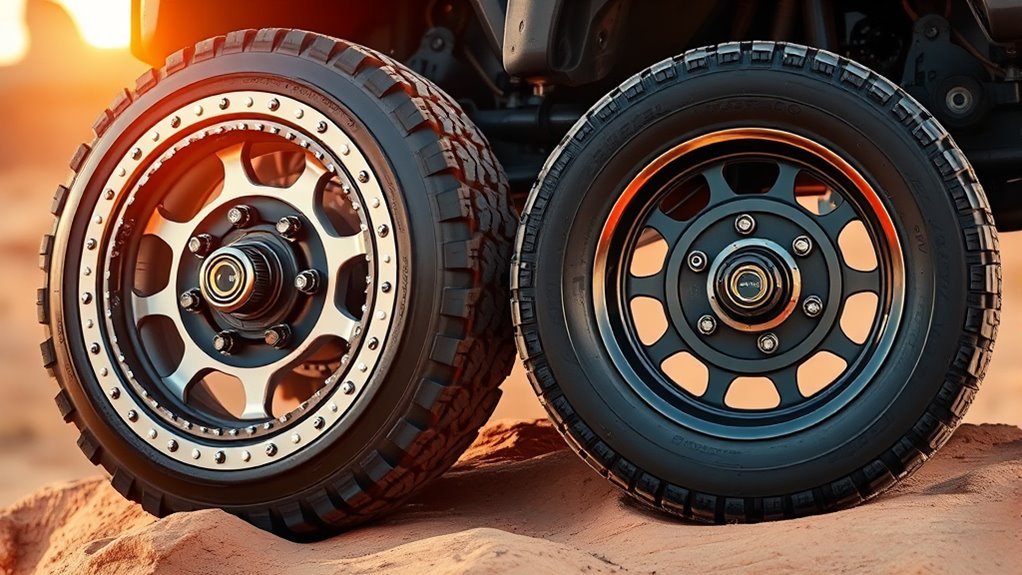
If you’re choosing between beadlock wheels and standard off-road wheels, start with how you actually drive. Beadlocks are not just a tougher-looking wheel style. They solve a specific problem: keeping the tire bead clamped to the rim when you run very low air pressure on hard terrain, deep sand, or race-speed desert sections.
Quick Answer
You need beadlock wheels only if you regularly air down into single-digit or low-teen PSI for rock crawling, deep sand, or desert racing. For most trail driving, standard wheels or bead grip wheels at safer moderate pressures offer enough traction with less cost, weight, maintenance, and road-use complexity.
Key Takeaways
- Beadlocks mechanically clamp the tire bead, which helps when you run very low tire pressure off-road.
- Most daily drivers and weekend trail rigs do not need true beadlock wheels.
- Standard wheels usually work well for gravel roads, mild trails, and moderate airing down.
- Bead grip wheels improve bead retention without an external clamping ring, but they are not the same as true beadlocks.
- Street legality depends on the specific wheel, markings, manufacturer guidance, and local road rules.
- Always reinflate before highway driving and follow your tire and wheel manufacturer’s pressure limits.
Beadlock vs. Non-Beadlock: Which Wheel Type Fits Your Off-Roading?
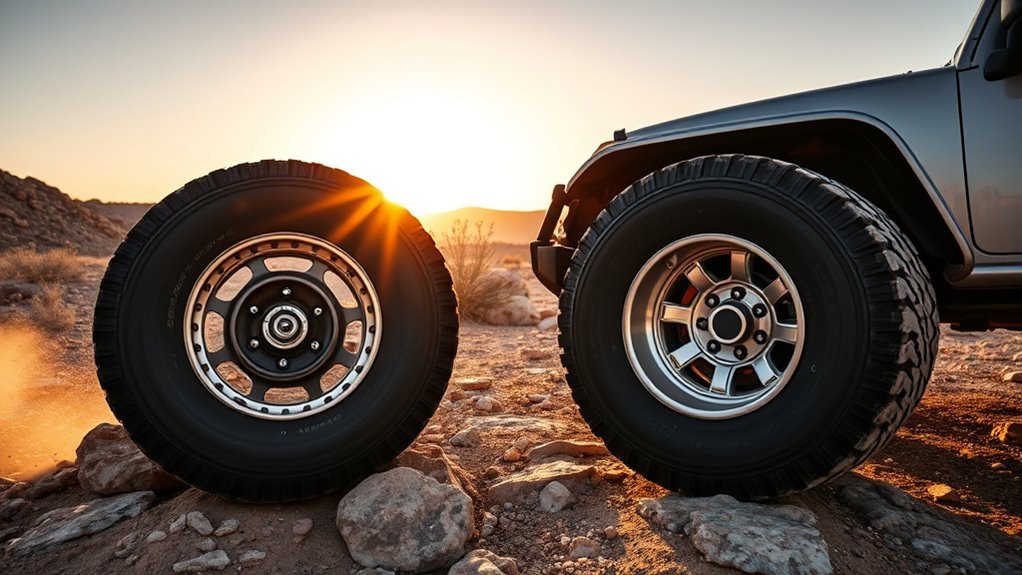
The biggest difference between beadlock and non-beadlock wheels is how the tire bead stays attached to the rim when air pressure drops.
True beadlock wheels use a bolted ring to clamp the outer tire bead against the wheel. This helps prevent the tire from peeling away from the rim when the sidewall flexes hard at very low PSI. That extra retention matters most in rock crawling, desert racing, deep sand, and other high-load off-road situations.
Standard wheels rely on air pressure, tire bead shape, and rim design to keep the tire seated. They are lighter, simpler, easier to service, and better suited for daily drivers that only air down moderately.
Bead grip wheels sit between those two options. For example, Method Race Wheels describes its Bead Grip Technology as a bridge between a conventional street wheel and a beadlock. The design uses bead-seat grooves and a more aggressive safety hump to help the tire bead hold better under lower pressure and side load.
Wheel Type Comparison
| Wheel Type | Best For | Main Trade-Off |
| Standard off-road wheel | Daily driving, gravel, forest roads, mild trails, and moderate airing down. | Higher risk of bead unseating if you go too low or load the sidewall hard. |
| Bead grip wheel | Overlanding, weekend trail use, and drivers who want better bead retention without a clamping ring. | Improves retention, but does not fully replace a mechanical beadlock at extreme low PSI. |
| True beadlock wheel | Rock crawling, deep sand, desert racing, and regular single-digit PSI use. | More weight, more cost, more maintenance, and possible road-use limitations. |
| Simulated beadlock | Drivers who want the beadlock look only. | The outer ring is cosmetic and does not clamp the tire bead. |
[Products Worth Considering]

Malco tire mounting and demounting lubricant is a ready-to-use tire lube formulated to reduce friction during tire installation for passenger cars, light trucks, farm tires, and heavy-duty equipment. It provides rust-inhibiting protection to help reduce corrosion on rims and wheels, and helps support proper tire bead seating during inflation to reduce air leakage. The silicone-free, soap-free formula is whitewall safe to help prevent discoloration on whitewall tires and sensitive sidewall markings.

The Trivd Frol 1/2" air impact wrench delivers high performance torque up to 1500 ft-lbs with a twin hammer impact mechanism for strong, balanced blows. It features an ergonomic grip, compact lightweight design, and quick-stop control with 3 forward speeds up to 8000 RPM plus a reverse speed. Built for demanding automotive repair and tire shop work, the rear exhaust helps keep debris away from the surface.
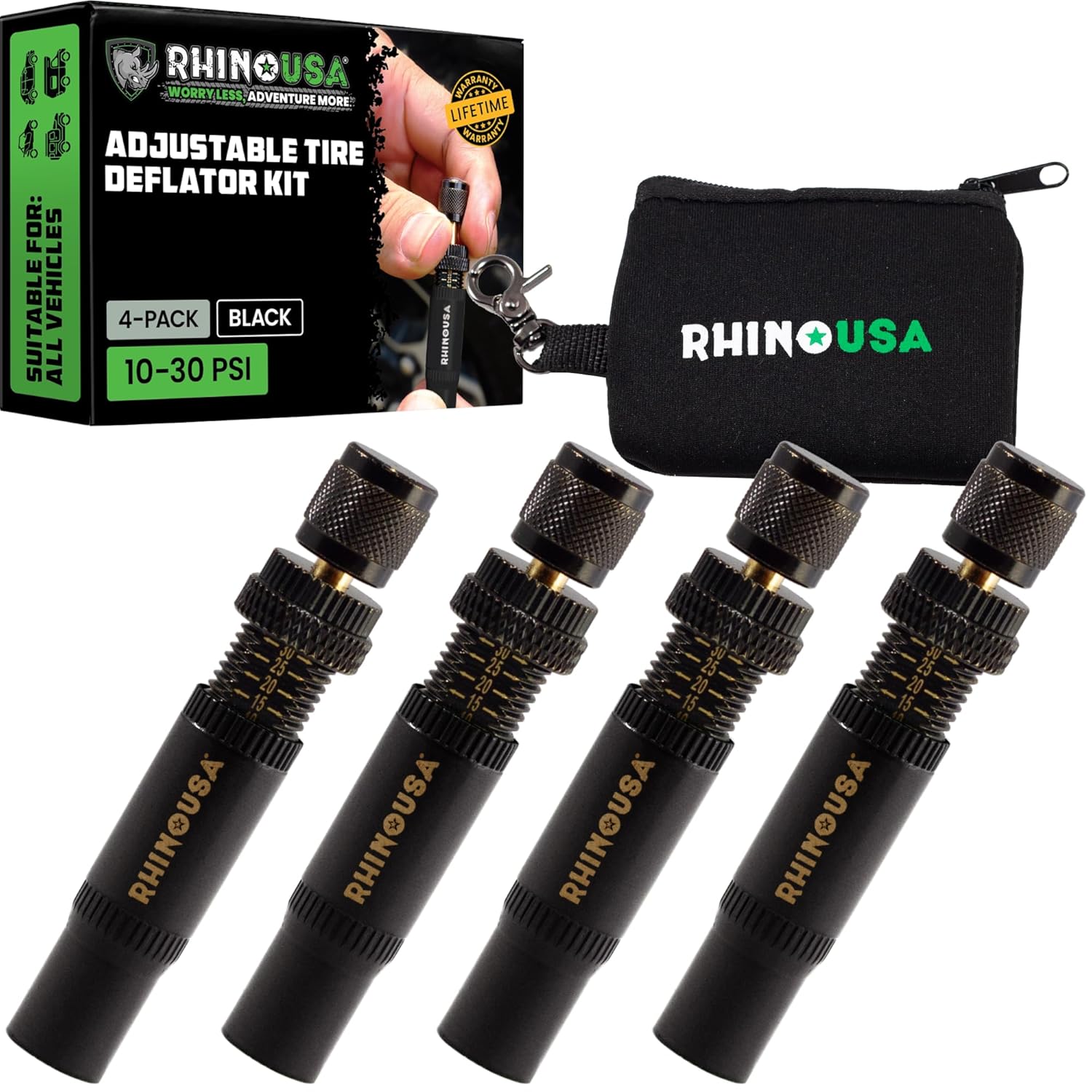
Use the Rhino USA adjustable tire deflators to air down all four tires at once by screwing one deflator onto each valve stem, letting you step away while the tires reach your preset pressure. Each deflator independently adjusts across a 10–30 PSI range with laser-etched indicators for quick setup and verification, making it ideal for beach, sand, and rocky off-road trails.
Safe Airing Down Limits Without Beadlock Wheels
Air pressure is where most beadlock confusion starts. Lower pressure can improve grip and ride comfort off-road, but too little pressure can let the tire unseat from the rim. BFGoodrich warns that too little pressure can unseat the tire and says beadlocks can help if you air down often or to very low levels.
Note: Tire size, sidewall strength, rim width, vehicle weight, load, speed, and terrain all affect safe air-down limits. Treat the ranges below as general trail guidance, not fixed rules.
- Highway driving: Use the vehicle placard pressure or the tire and wheel manufacturer’s guidance.
- Gravel roads and washboard roads: Mild airing down may improve comfort, but avoid running too soft at speed.
- Light trails: Many drivers stay in the 25–30 PSI range.
- Rocky terrain: Many trail rigs use roughly 15–22 PSI, depending on tire size and vehicle weight.
- Sand and snow: Lower pressure can increase flotation, often around 12–18 PSI for many setups.
- Extreme crawling or racing: Single-digit to low-teen PSI is where true beadlocks become much more useful.
BFGoodrich’s off-road pressure guidance also stresses that load, temperature, terrain, and accurate pressure measurement all matter. A heavy truck with gear, water, armor, and a roof tent usually needs more pressure than a lighter vehicle on the same trail.
Warning: Do not drive highway speeds on trail pressure. Reinflate before pavement, check pressure when the tires are cool when possible, and stop if you feel vibration, sidewall roll, or steering instability.
Beadlock Problems That Make Daily Drivers Think Twice
Beadlock wheels work well for their intended purpose, but they add responsibilities that most daily drivers do not want.
The biggest drawback is maintenance. A beadlock ring uses many small fasteners, and they must be tightened evenly to the manufacturer’s exact specification. WELD Racing’s beadlock mounting instructions show staged tightening and a crisscross pattern before final torque. Trail-Gear’s beadlock instructions also tell users to recheck beadlock ring screw torque and lug nut torque after initial driving and before off-road trips.
Weight is another issue. True beadlocks usually weigh more than comparable standard wheels because of the ring, hardware, and reinforced design. That added unsprung weight can affect ride quality, braking feel, acceleration, and suspension response.
Service access can also become harder. Some tire shops may not mount, balance, rotate, or repair beadlock wheels because the installation process is different and liability is higher. Before buying beadlocks, ask your local tire shop whether they service that exact wheel type.
Pro Tip: If you buy beadlocks, keep the wheel manual in your glove box or recovery kit. You need the exact torque spec, tightening pattern, and inspection interval for your wheel, not a random number from a forum.
[Products Worth Considering]
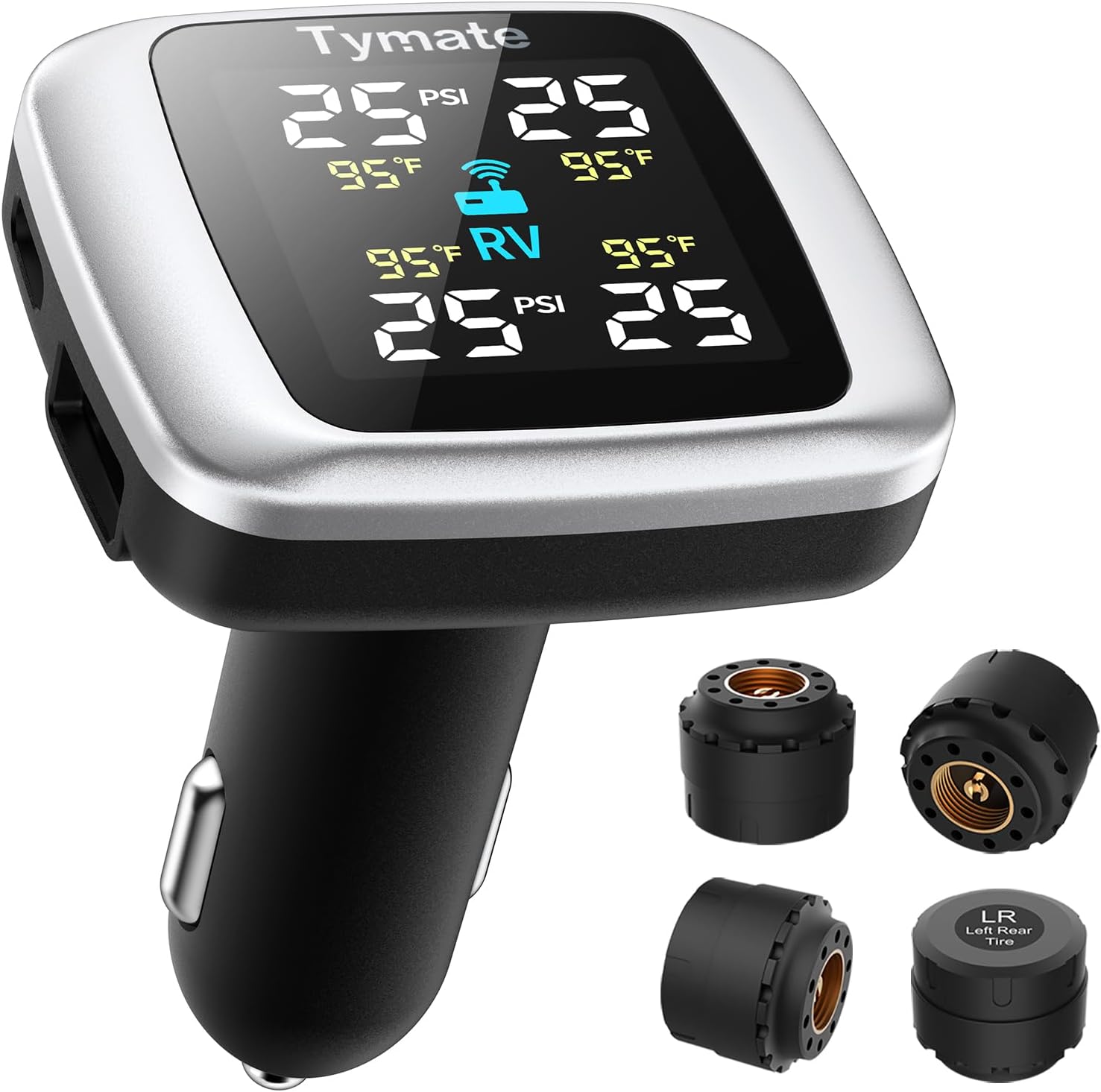
Tymate TM7 is a wireless tire pressure monitoring system that delivers real-time pressure and temperature readings for safer driving. It includes four external sensors, a bright color LCD display with adjustable backlight, and six alarm modes for high/low pressure, fast leakage, high temperature, and sensor signal or battery issues. The system covers a wide 0–144 PSI range and plugs into your vehicle’s cigarette lighter socket for quick DIY setup.

ETENWOLF T300 is a calibrated digital tire pressure gauge for accurate readings from 3 to 200 PSI across light and heavy-duty vehicles. It includes thermal compensation for reliable performance in extreme cold or heat, with an auto shut-off to extend battery life and an LED for easier reading. The sturdy design supports rugged everyday use, making it ideal for pickups, RVs, and industrial applications.
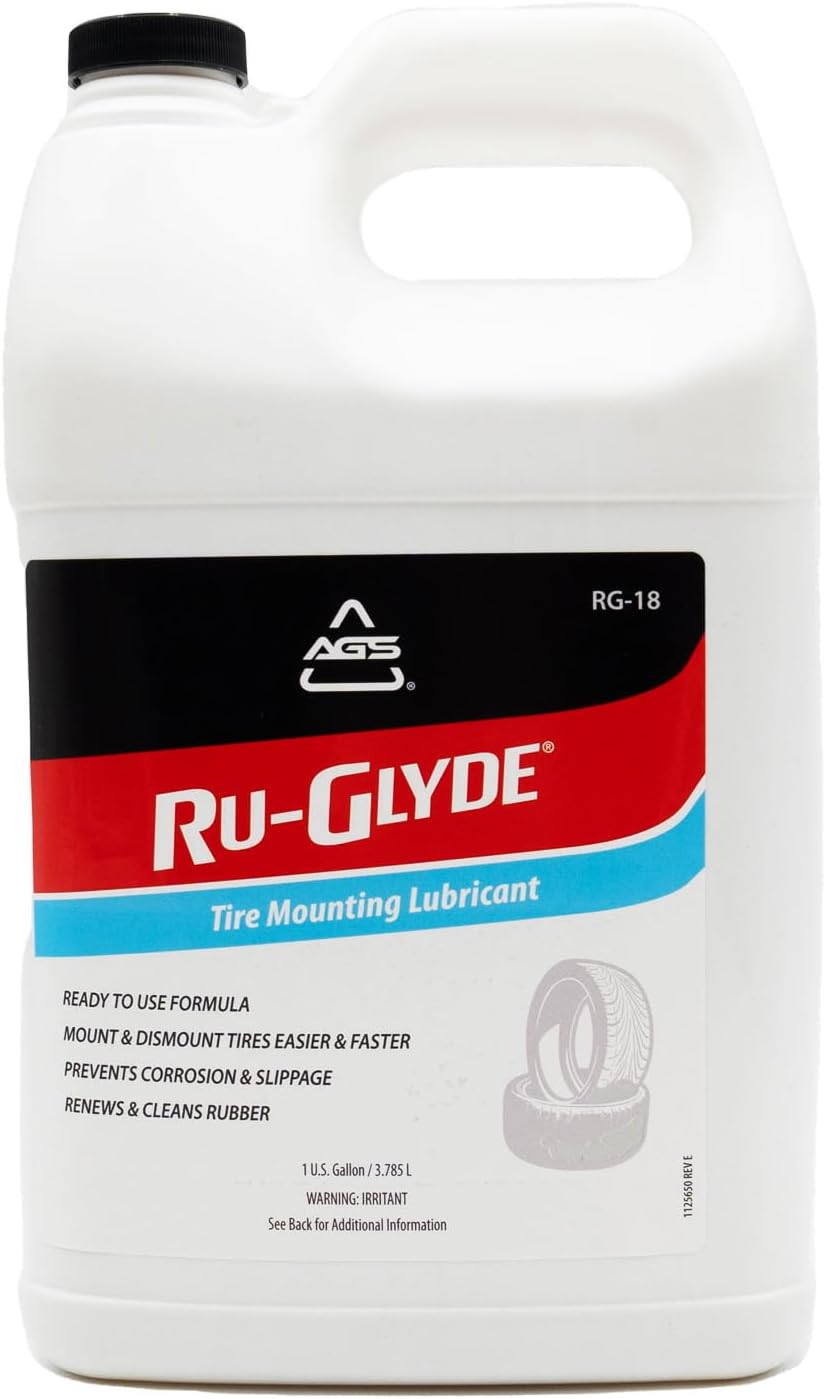
Ru-Glyde tire mounting lubricant from AGS seats tire beads smoothly on the first try with a thick, stay-put formula. It is ready to use with no mixing or dilution, helps prevent rim rust, and dries completely without causing bead slip residue. The water-based formula also conditions aged rubber, making it useful for sidewalls, gaskets, and door seals while remaining safe for tire, wheel, and technicians.
Basic Beadlock Maintenance Checklist
- Use the wheel manufacturer’s torque spec, not a generic beadlock torque number.
- Tighten ring bolts gradually and evenly in the pattern the manufacturer specifies.
- Recheck beadlock ring bolts after initial driving or after the first trail trip.
- Inspect for slow leaks, missing bolts, cracked rings, corrosion, and damaged bead seats.
- Replace damaged hardware instead of reusing questionable bolts or washers.
- Check torque before difficult off-road trips, especially if you run very low pressure.
Bead Grip Technology: Your DOT-Legal Beadlock Alternative
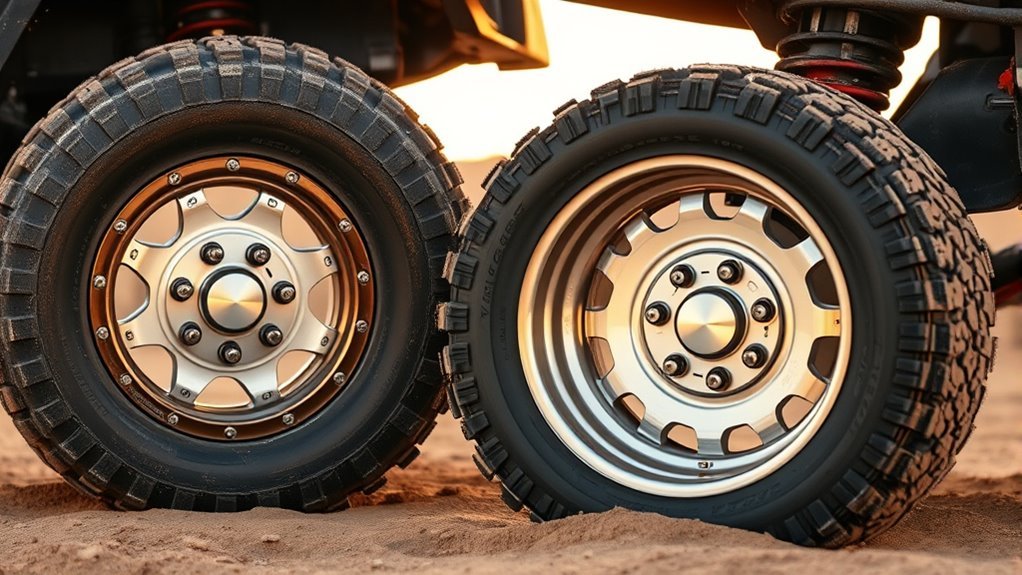
Bead grip wheels are a smart middle ground for many off-road drivers. They do not clamp the tire bead with an external ring. Instead, they use bead-seat shape, grooves, and safety-hump design to help resist de-beading under lower pressure and side load.
That makes bead grip wheels useful for overland builds, trail SUVs, and trucks that still spend most of their time on the road. Compared with true beadlocks, they are usually easier to mount, easier to service, and lower maintenance.
Still, bead grip is not magic. It improves bead retention, but it does not turn a standard wheel into a mechanical beadlock. If you plan to crawl on rocks at single-digit PSI or race through desert whoops at very low pressure, a true beadlock may still be the better tool.
[Products Worth Considering]

This ALL-TOP auto-stop tire deflator valve kit lets you air down off-road tires quickly without watching pressure, automatically stopping when your preset PSI is reached. Each valve is individually calibrated for reliable performance with an acceptable +/- 2 PSI tolerance. The adjustable deflator range covers 10 to 30 PSI and includes four valves plus valve caps and a zipper pouch for easy setup on trucks, SUVs, RVs, UTVs, and powersports.

The Big Rig Defense Tire Thumper is a truck tire pressure checker that lets you quickly check multiple tires by giving them a firm whack. Listen for a reassuring thump and feel the stick bounce when a tire is fully inflated, helping you get back on the road safely. It features a comfortable, glove-friendly handle and a secure wrist strap for confident use on busy routes.
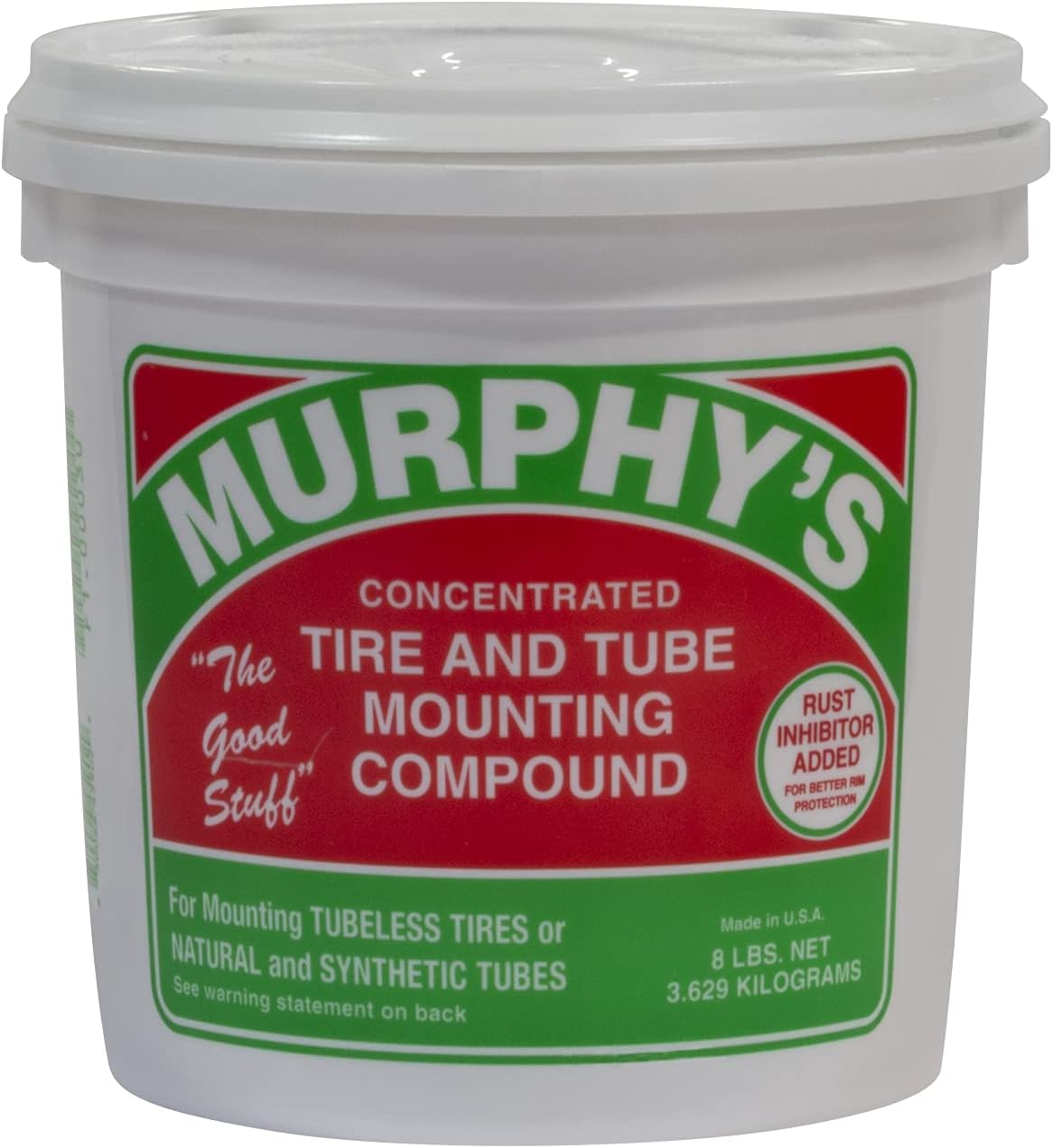
A concentrated tire and tube mounting compound designed to help simplify mounting rubber tires and tubes on passenger, semi truck, construction, and OTR applications. Its ultra-thick formula packs beads effectively and includes rust inhibitors to help protect against corrosion during use.
Are Beadlock Wheels Street Legal?
This is where you should avoid blanket answers. Some beadlock-style wheels are sold for off-road use only. Some wheels are marked and marketed for road use. Some internal beadlock systems are designed differently from common external-ring beadlocks. Your answer depends on the exact wheel, certification, vehicle use, and local laws.
The safest wording is this: do not assume a wheel is street legal just because it fits your truck. Check the wheel manufacturer’s documentation, the rim markings, your tire shop’s policy, and your state or local rules. NHTSA has stated that federal motor vehicle safety standards apply to wheel rims, and separate NHTSA guidance explains that DOT marking represents the manufacturer’s certification of compliance where the applicable standard applies.
Note: “DOT-approved” is often used casually in off-road discussions. For a real purchase, look for the wheel maker’s official road-use statement and required markings, then confirm the rules where you drive.
Do You Actually Need Beadlocks? Terrain-by-Terrain Decisions
Your terrain and tire pressure habits matter more than wheel appearance.
- Forest roads and mild trails: Standard off-road wheels are usually enough.
- Overlanding with mixed road and trail use: Standard or bead grip wheels usually make more sense than true beadlocks.
- Rock crawling: Beadlocks become useful when you regularly need very low pressure and heavy sidewall flex.
- Deep sand: Beadlocks can help if you run very low pressure for flotation, especially on heavy vehicles.
- Desert racing: Beadlocks can be necessary because low pressure, heat, impact loads, and speed stress the tire bead hard.
- Daily driving with occasional off-road use: Standard wheels or bead grip wheels are usually the better balance.
The best wheel is not the most aggressive-looking one. It is the one that matches your tire pressure, terrain, vehicle weight, and maintenance habits.
Choose Standard Wheels If…
- You use your vehicle as a daily driver.
- You mostly drive gravel, forest roads, beaches, snow, or moderate trails.
- You rarely air down below the mid-teens.
- You want easier tire service and lower maintenance.
- You care about ride quality, weight, and simple ownership.
Choose Beadlocks If…
- You regularly run single-digit or low-teen tire pressure off-road.
- You crawl rocks where the tire sidewall folds hard against obstacles.
- You race or drive fast in rough desert terrain.
- You understand the extra torque checks, inspections, and hardware maintenance.
- You have confirmed the wheel’s road-use status for your vehicle and location.
Frequently Asked Questions
Can beadlock wheels be used on the highway?
Sometimes, but you need to verify the exact wheel. Some beadlocks are intended for off-road or race use only, while some wheel systems are designed and marked for road use. Check the manufacturer’s documentation, wheel markings, tire-shop policy, and local rules before highway driving.
What PSI is safe without beadlocks?
Many drivers use moderate off-road pressures in the 15–25 PSI range without beadlocks, but safe pressure depends on tire size, sidewall strength, rim width, vehicle weight, speed, and terrain. Going lower increases the risk of bead unseating, especially during sharp turns or heavy side loads.
Are bead grip wheels as strong as beadlocks?
No. Bead grip wheels improve bead retention through rim design, but they do not mechanically clamp the bead like true beadlocks. They are a strong option for many trail and overland vehicles, but they are not a full replacement for beadlocks in extreme low-pressure driving.
Do beadlocks require special maintenance?
Yes. Beadlock ring bolts need proper staged tightening, periodic torque checks, and visual inspection. You should also check for leaks, cracked rings, damaged hardware, corrosion, and bead-seat damage after hard off-road use.
Are simulated beadlocks functional?
No. Simulated beadlocks only copy the look of a beadlock ring. They do not clamp the tire bead and do not let you safely run the same low pressures as a true beadlock wheel.
Do beadlock wheels need balancing?
Yes. Beadlock wheel and tire assemblies should still be balanced if they will be driven at speed. They can be harder to balance because of extra hardware and added weight, so use a shop that understands beadlock wheels.
Conclusion
You probably do not need beadlocks unless your driving regularly demands very low tire pressure and high bead-retention strength. For most off-road enthusiasts, standard wheels or bead grip wheels offer the better daily balance of traction, safety, serviceability, and cost.
Choose beadlocks for rock crawling, racing, and repeated single-digit or low-teen PSI use. Choose standard or bead grip wheels if your vehicle still spends most of its life on pavement, gravel roads, beaches, snow, or moderate trails.
Sources
- Method Race Wheels – Bead Grip Technology — supports bead grip design, bead-seat grooves, safety hump, and lower-pressure bead retention claims.
- BFGoodrich USA – Off-Road Tire Selection Guide — supports low-pressure bead-unseating risk and beadlock use for frequent or very low airing down.
- BFGoodrich Australia – Off-Road Tyre Pressure Guide — supports terrain, load, temperature, and pressure-measurement guidance.
- NHTSA Interpretation 86-1.39 — supports the statement that federal motor vehicle safety standards apply to wheel rims.
- NHTSA Interpretation 8326 — supports DOT marking and manufacturer certification context for rims.
- WELD Racing – Beadlock Tire Mounting Instructions — supports staged beadlock bolt tightening and crisscross-pattern installation guidance.