Fuel-efficient tires can reduce the energy your vehicle needs to keep rolling, but the savings are usually incremental rather than dramatic. The real value depends on how much lower the tire’s rolling resistance is than the tire you’re replacing, how many miles you drive, fuel or electricity costs, proper inflation, and whether the tire also meets your needs for wet grip, tread life, comfort, load capacity, and weather performance.
Quick Answer
Fuel-efficient tires can be worth it, especially for high-mileage drivers and EV owners, but don’t expect a huge MPG jump. NHTSA estimates that reducing tire rolling resistance by 10% can improve vehicle fuel economy by about 1% to 2%. Compare total installed cost, wet traction, tread life, and rolling resistance before buying.
Key Takeaways
- NHTSA estimates that a 10% reduction in tire rolling resistance can improve vehicle fuel economy by roughly 1% to 2%.
- Actual savings depend on the specific tires being compared; an “eco” or “fuel-efficient” label alone does not guarantee a particular MPG increase.
- High annual mileage makes small efficiency gains more valuable because you have more miles over which to recover any price premium.
- Low rolling resistance does not automatically mean poor wet grip or short tread life. Compare the complete performance of each tire model.
- Keep tires at the vehicle manufacturer’s recommended cold pressure. Underinflation wastes energy, while overinflating beyond the specified pressure is not a safe MPG strategy.
- EV owners should pay particular attention to rolling resistance, tire size, load capacity, and OEM specifications because replacement tires can affect driving range.
What Fuel-Efficient Tires Do
Fuel-efficient tires, often called low-rolling-resistance tires, are designed to reduce the energy lost as a tire flexes, deforms, and returns to shape while rolling.
That energy loss is called rolling resistance. Less rolling resistance means a gasoline vehicle can use slightly less fuel to travel the same distance, while an electric vehicle can use slightly less battery energy.
Tire engineers can reduce these losses through tread compounds, casing construction, tire geometry, tread design, and other changes. NHTSA explains that tire materials, construction, and tread design influence not only rolling resistance but also durability, wet and dry traction, handling, and ride comfort.
For current consumer guidance, see NHTSA TireWise.
Lower energy consumption can also reduce emissions from gasoline or diesel vehicles because less fuel is burned over the same distance. For EVs, improved tire efficiency can contribute to additional range between charges.
Note: “Fuel-efficient,” “eco,” and similar marketing terms are not enough by themselves to tell you how a tire will perform. Compare the specific tire’s rolling resistance, wet traction, tread life, size, load rating, warranty, and independent test results.
How Fuel-Efficient Tires Improve MPG
A rolling tire continually changes shape where the tread meets the pavement. Some of the energy used to deform the rubber becomes heat instead of forward motion. Reducing that loss means the engine or electric motor needs slightly less energy to maintain the same trip.
| Factor | What It Changes | Efficiency Effect |
|---|---|---|
| Lower rolling resistance | Reduces energy lost as the tire deforms | Can improve fuel economy or EV range |
| Low-hysteresis compounds | Reduce energy converted to heat | Can lower rolling losses |
| Tire construction and tread design | Change deformation, weight, traction, and heat generation | Varies by tire model |
| Correct inflation | Keeps the tire operating near its intended shape | Helps preserve efficiency and tire life |
The relationship is measurable but not one-to-one. NHTSA estimates that a 10% reduction in tire rolling resistance can improve vehicle fuel economy by about 1% to 2%.
A 10% reduction in tire rolling resistance is estimated to improve overall vehicle fuel economy by roughly 1% to 2%, according to NHTSA.
That is why the exact tires being compared matter. Replacing a high-rolling-resistance tire with a particularly efficient model can produce a larger change than replacing one efficient tire with another efficient tire.
How Much MPG You Can Expect
There is no single MPG increase that applies to every fuel-efficient tire. Tire-to-tire differences, vehicle weight, aerodynamics, speed, temperature, inflation, alignment, load, tread depth, pavement, and driving pattern all influence the result.
A more defensible expectation is to start with NHTSA’s relationship between rolling resistance and overall fuel economy instead of assuming every low-rolling-resistance tire will add a fixed number of MPG.
Typical MPG Increase
If a new tire reduces rolling resistance by 10% compared with the tire being replaced, NHTSA estimates an overall fuel-economy improvement of about 1% to 2%. A vehicle averaging 30 MPG would therefore see roughly 30.3 to 30.6 MPG if everything else stayed equal.
Larger differences are possible when the tires being compared have very different rolling resistance, but you should not assume an advertised “fuel-efficient” tire automatically produces a 3% or 4% gain.
DOE fleet guidance similarly notes that replacement-tire efficiency varies substantially and cites an estimate that a 5% reduction in rolling resistance can raise overall vehicle efficiency by roughly 1.3% to 1.7%. See the U.S. Department of Energy fleet-management guidance.
City Vs Highway Gains
Low rolling resistance helps in both city and highway driving, but there is no reliable rule that says city drivers always gain more or highway drivers always gain more.
Stop-and-go driving adds acceleration, braking, idling, traffic, and speed changes that can hide a small tire-efficiency improvement. At highway speeds, rolling resistance remains important, although aerodynamic drag becomes a major energy demand.
| Driving Type | What to Expect |
|---|---|
| Stop-and-go city | LRR tires still help, but acceleration, braking, congestion, and idling can dominate total fuel use |
| Steady highway | Rolling-resistance differences can be easier to measure, although aerodynamic drag is also substantial |
| Mixed driving | Benefit depends on the mix of speeds, traffic, road surface, and the tires being compared |
| EV driving | Lower rolling resistance can help range, but temperature, speed, HVAC use, wheel size, and tire construction also matter |
The practical takeaway is to evaluate your annual mileage and the specific tires rather than choosing them solely because you drive mostly in a city or mostly on a highway.
Factors Affecting Savings
Your real-world savings depend on:
- Difference in rolling resistance: A small difference between two efficient tires produces a smaller benefit than a large difference between tire designs.
- Inflation pressure: Underinflation increases rolling resistance and can reduce fuel economy.
- Vehicle weight and load: Added load increases the work required to move the vehicle.
- Alignment: Poor alignment can increase tire scrub and cause irregular wear.
- Speed: Higher speed sharply increases aerodynamic drag, which can overwhelm small tire-related savings.
- Temperature: Cold weather can reduce tire pressure and vehicle efficiency.
- Tread depth: New and worn tires can have different rolling resistance.
- Road surface: Rough pavement can require more energy than a smooth surface.
- Driving habits: Hard acceleration, unnecessary speed, and frequent braking can consume far more energy than an efficient tire saves.
Pro Tip: If you want to measure the change after installing new tires, compare several full tanks of fuel or several weeks of EV energy use rather than one trip. Weather, traffic, wind, temperature, and driving speed can easily overwhelm a 1% to 2% tire-related difference on a single journey.
What Fuel-Efficient Tires Cost
There is no dependable universal price range for fuel-efficient tires because tire size, load rating, speed rating, brand, vehicle type, warranty, season, and performance category have a much larger effect on price than the “fuel-efficient” label alone.
Some low-rolling-resistance tires cost more than comparable alternatives; others do not. The useful comparison is the total installed cost of tires that fit the same vehicle and meet the same performance requirements.
[Products Worth Considering]

Replace your worn or missing TPMS sensors with pre-programmed, direct-fit sensors for compatible Ford, Lincoln, and select Mazda models. Each sensor comes ready to activate with a scan tool, helping restore accurate tire pressure monitoring and trouble-free installation. Built with a long-life CR2032 battery and tested before factory release, this set provides dependable performance with a one-year warranty.

Measure tire tread depth quickly and accurately with this LUMITECO dial gauge that reads in 1/32" increments up to 14/32". The color-coded green/yellow/red zones make it easy to judge tire wear and know when replacement is needed. A rugged, compact design with a protective pouch helps keep the gauge ready for use on cars, trucks, motorcycles, and more.

Monitor tire tread wear with a smart, color-coded depth gauge that shows clear condition ranges at a glance. The bar is range marked for fast, easy readings, helping you maintain safer traction and performance. Each gauge is portable with a pocket clip, and the set includes 20 units for daily use and sharing.
Tire Price Range
Instead of relying on a broad dollar range that may not apply to your vehicle, compare several tires in your exact OEM-approved size and specification.
| Cost Item | What to Compare | Why It Matters |
|---|---|---|
| Tire price | Same size, load index, speed rating, and category | Creates a fair comparison |
| Expected tread life | Warranty plus independent testing | A cheaper tire may cost more per mile if it wears quickly |
| Rolling resistance | Independent tests or credible manufacturer data | Determines potential energy savings |
| Wet and winter performance | Tests appropriate to your climate | Efficiency should not override necessary traction |
For most buyers, the important number is not the price of one tire. It is the total cost per mile after installation, expected tread life, fuel or electricity use, and any meaningful performance differences are considered.
Installation And Fees
Your installed price may include mounting, balancing, new valve-service parts, TPMS service, disposal fees, taxes, road-hazard coverage, and sometimes alignment.
Ask for or compare the complete installed price rather than the tire-only price. A tire that is $10 cheaper online may not remain cheaper after shipping and installation.
Alignment is not automatically required every time tires are replaced, but it should be checked when the vehicle pulls, the steering wheel is off-center, the old tires show irregular wear, or the vehicle has recently experienced a hard pothole or curb impact.
Calculate Whether Fuel-Efficient Tires Pay Off
You can estimate the financial benefit with a simple calculation.
Annual fuel cost = annual miles ÷ current MPG × fuel price.
For a small MPG improvement, multiplying that annual fuel cost by the expected percentage efficiency gain gives a useful approximation of annual savings.
For example, consider a vehicle driven 12,000 miles per year that averages 30 MPG with gasoline at $3.50 per gallon:
- 12,000 ÷ 30 = 400 gallons per year.
- 400 × $3.50 = $1,400 in annual fuel cost.
- A roughly 2% efficiency improvement is worth about $28 per year.
- Over four years, that is roughly $112 if mileage, fuel price, and efficiency remain similar.
If the more efficient set costs $80 more installed, an estimated $28 annual fuel saving would recover that difference in just under three years. If the two sets cost the same, there is no price premium to recover.
This also explains why high-mileage drivers tend to benefit more financially: a small percentage applies to a larger annual fuel bill.
When Fuel-Efficient Tires Make Sense
Fuel-efficient tires are most compelling when they meet your traction and durability requirements without a large price premium.
They can make particular sense when:
- You drive many miles each year.
- You plan to keep the vehicle long enough to use most of the tire’s tread life.
- You have a hybrid or EV where reducing tire energy loss can help preserve efficiency or range.
- You are replacing unusually high-rolling-resistance tires.
- Two otherwise suitable tires perform similarly and one has clearly lower rolling resistance.
- You operate a fleet where small percentage savings are multiplied across many vehicles and miles.
EPA’s SmartWay program demonstrates how important low-rolling-resistance tires can be in high-mileage commercial applications. EPA says verified LRR tire technologies can reduce costs and emissions in long-haul Class 8 trucking, although those heavy-truck figures should not be applied directly to a passenger car. See EPA SmartWay’s low-rolling-resistance tire guidance.
When Fuel-Efficient Tires Don’t Pay Off
A fuel-efficient tire is less compelling when the efficiency advantage is tiny, the price premium is large, or another tire is substantially better suited to your safety and operating needs.
- Low annual mileage: Fewer miles mean fewer opportunities to recover a price premium.
- A very small rolling-resistance difference: Replacing an already efficient OEM tire with a similar tire may produce little measurable change.
- Severe winter or off-road requirements: Appropriate snow, all-terrain, load, or durability performance may matter more than the lowest possible rolling resistance.
- Short remaining ownership period: You may sell the vehicle before the fuel savings recover a meaningful price difference.
- Poor overall performance: An efficient tire is not a good value if its wet grip, snow performance, durability, load capacity, or other characteristics do not fit your vehicle and driving conditions.
Do not assume low-rolling-resistance tires automatically wear faster. Tread life varies by model, compound, alignment, inflation, vehicle weight, driving style, road conditions, and maintenance. NHTSA notes that low-rolling-resistance designs can have lower tread life, but that is not a universal result.
How Driving Style Affects Tire Savings
Your driving style does not change a tire’s basic design, but it strongly affects total vehicle energy consumption. Smooth acceleration, moderate speeds, anticipating traffic, and gradual braking can save far more energy than aggressive driving.
Low-rolling-resistance tires reduce one source of energy loss; efficient driving reduces several sources at once.
Hard acceleration requires more power. Late braking wastes momentum. High highway speed raises aerodynamic drag rapidly. Heavy loads and unnecessary cargo add work. Poor alignment can create additional tire scrub.
Inflation pressure is especially important. The U.S. Department of Energy notes that properly inflated tires improve fuel efficiency and cites an average improvement of about 0.6%, with larger benefits possible when correcting significant underinflation.
Warning: Do not overinflate tires to chase better MPG. Check pressure when the tires are cold and use the pressure specified on the vehicle’s Tire and Loading Information label or in the owner’s manual. The pressure molded on a tire sidewall is not the vehicle’s normal recommended inflation pressure.
OEM Vs Replacement Fuel-Efficient Tires
Many new vehicles leave the factory on tires selected partly for low rolling resistance because automakers have strong incentives to optimize certified vehicle efficiency.
That creates an important replacement-tire issue: your original tire may already be highly efficient. Installing another tire marketed as “eco” does not necessarily improve fuel economy compared with the OEM tire.
Conversely, changing from an efficient OEM tire to a replacement tire designed primarily for aggressive grip, off-road use, snow traction, or another performance goal can increase energy consumption.
Match the replacement tire to the size and specifications approved by the vehicle manufacturer. NHTSA recommends using the original tire size or another size specifically recommended by the manufacturer.
[Products Worth Considering]

Milton S-921 pencil tire pressure gauge helps you maintain optimal tire pressure for passenger cars with accurate readings in PSI and kPa. It features a built-in deflator valve for convenient pressure adjustments, plus a single chuck head and nylon indicator bar for easy use on the go. Built from durable plated brass and designed for reliable performance, it’s a practical road trip and cold-weather maintenance tool.

The SAFELIFE dial tire tread depth gauge measures tread depth in 1/32 inch increments with clear, easy-to-read 2-inch dial face. Color zones using a traffic light system help you quickly judge whether tread is low, marginal, or ample for safer driving. Built with a durable zinc cast body and a metal detect probe for precise, comfortable use across cars, motorcycles, trucks, and buses.

Keep your tires properly inflated with this analog VONDIOR tire pressure gauge, designed for fast, easy readings without batteries. The swiveling, two-axis hose and large glow dial help you measure at any tire angle with instant visibility. Built with a protective rubber shield, it supports durable, low-maintenance use for cars and trucks.
Why New Tires Can Change MPG or EV Range
Drivers sometimes notice lower MPG or EV range immediately after installing new tires. That does not necessarily mean the new tires are defective.
A new tire has full tread depth, while the tire it replaced may have been significantly worn. Tread depth, compound, construction, diameter, inflation, and rolling resistance can all change energy consumption.
This effect is particularly noticeable to some EV owners because the vehicle displays range or energy consumption directly. A 2024 Oak Ridge National Laboratory study of EV replacement tires examined differences among OEM, replacement, and worn tires and found that tire replacement can change estimated EV range.
For an EV, also verify the correct tire size, load index, speed rating, and any vehicle-manufacturer requirements. EVs can be heavy and deliver strong instant torque, so tire load capacity and durability matter alongside efficiency.
How to Choose the Right Tire
Choose tires by balancing efficiency with safety, durability, climate, comfort, and cost rather than buying solely on an MPG claim.
- Start with the correct fitment. Match the vehicle manufacturer’s approved tire size, load capacity, and appropriate speed rating.
- Compare rolling resistance. Use trustworthy independent testing or credible manufacturer data where available.
- Check wet traction. Wet braking and hydroplaning resistance matter more than a small fuel saving if you regularly drive in rain.
- Consider winter needs. Drivers facing regular snow and ice may need winter performance that takes priority over minimum rolling resistance.
- Compare tread life. Look at treadwear information, warranty terms, and independent durability tests rather than assuming efficient tires last longer or shorter.
- Consider noise and comfort separately. A low-rolling-resistance tire is not automatically quieter or harsher; those characteristics depend on the individual design.
- Compare installed cost. Include mounting, balancing, TPMS-related service, taxes, disposal charges, and other applicable fees.
- Estimate payback. Compare the additional installed cost with realistic annual fuel or electricity savings.
NHTSA’s Uniform Tire Quality Grading information can help compare treadwear, wet traction, and temperature resistance. However, these ratings do not replace complete tire testing and do not by themselves tell you everything about rolling resistance, hydroplaning, snow grip, noise, comfort, or handling.
[Products Worth Considering]
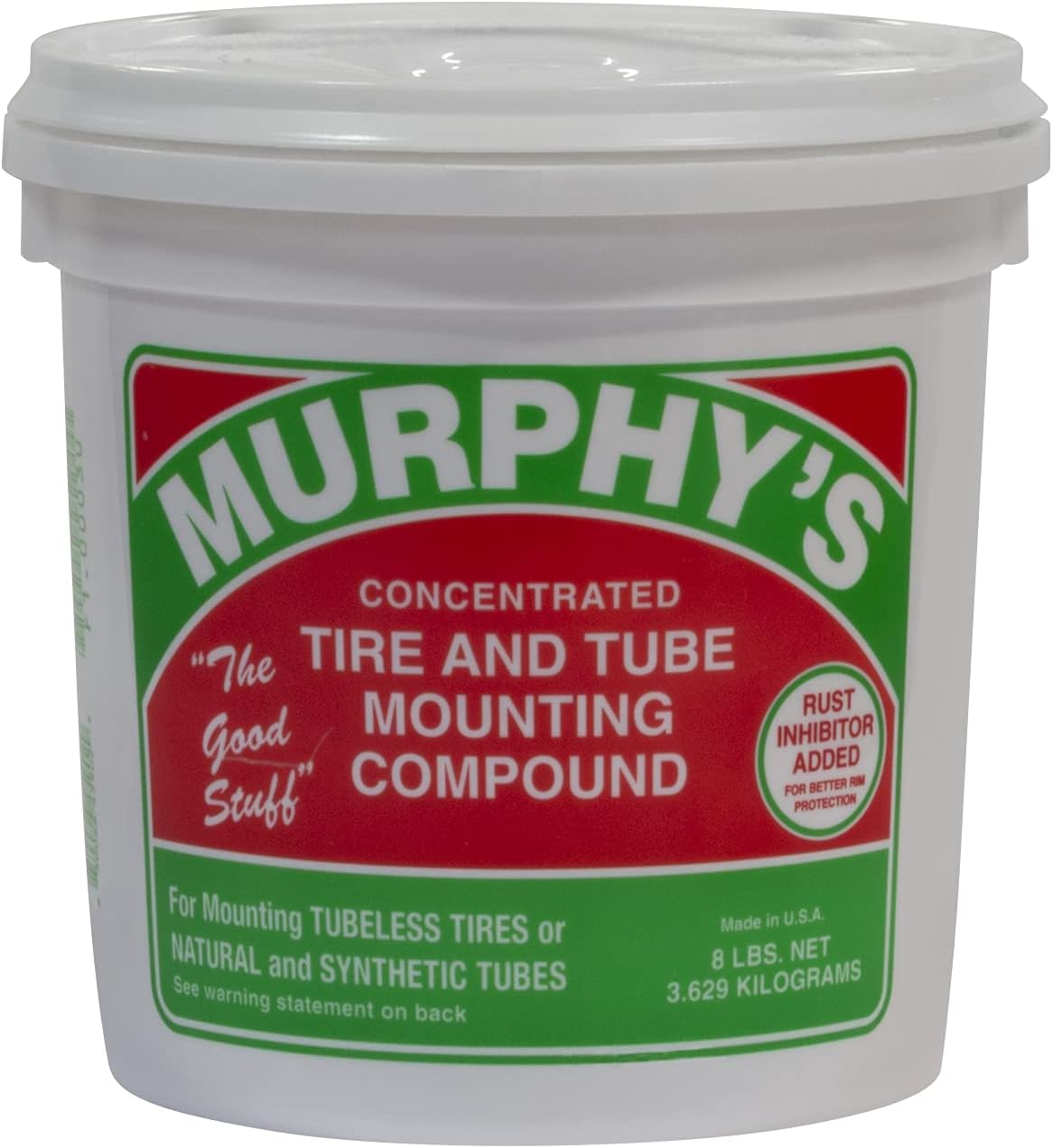
A concentrated tire and tube mounting compound designed to help simplify mounting rubber tires and tubes on passenger, semi truck, construction, and OTR applications. Its ultra-thick formula packs beads effectively and includes rust inhibitors to help protect against corrosion during use.

Accurately measure tire tread depth with a calibrated gauge marked from 0 to 1 inch in 1/32 inch increments. The color-coded bar helps you quickly identify tread condition ranges, supporting safe driving for trucks, motorcycles, automobiles, and passenger vehicles.

Replace worn or missing TPMS sensors with a pre-programmed 4-pack designed for compatible GM vehicles. These 315MHz sensors provide real-time tire pressure monitoring and alert you if pressure is too high, too low, or if a rapid air leak occurs. Most installations are ready with minimal relearn effort after mounting, helping improve safety and driving confidence.
Maintain the Tires to Protect the Savings
Even an efficient tire cannot deliver its intended performance when it is poorly maintained.
- Check pressure at least monthly: NHTSA recommends checking when tires are cold, generally after the vehicle has been parked for at least three hours.
- Use the vehicle placard pressure: Do not use the maximum pressure molded into the tire sidewall as your normal target.
- Rotate when applicable: Follow the owner’s manual. NHTSA notes that, when recommended by the vehicle manufacturer, a common interval is 5,000 to 8,000 miles or sooner if irregular wear develops.
- Watch for irregular wear: Uneven tread can indicate pressure, alignment, suspension, or rotation issues.
- Balance new tires: Proper balancing helps prevent vibration and irregular wear.
- Check alignment when symptoms appear: Pulling, an off-center steering wheel, or abnormal tread wear deserves inspection.
Some vehicles use different front and rear tire sizes or other configurations that limit normal rotation patterns, so the vehicle manual takes priority over a generic mileage interval.
Sources
- National Highway Traffic Safety Administration — TireWise — rolling resistance, fuel efficiency, tire pressure, rotation, sizing, wet traction, treadwear, and tire safety guidance.
- U.S. Department of Energy — Fleet Management Best Practices — tire inflation, rolling resistance, and vehicle-efficiency guidance.
- U.S. Environmental Protection Agency — SmartWay Low Rolling Resistance Tires — verified LRR technology information for high-mileage commercial vehicles.
- Oak Ridge National Laboratory — Study of Electric Vehicle Range Loss Associated with Replacement Tires — 2024 research on OEM, replacement, and worn tires and EV range.
- National Academies — Tires and Passenger Vehicle Fuel Economy — technical relationship between rolling resistance and passenger-vehicle fuel consumption.
Frequently Asked Questions
Do Fuel-Efficient Tires Affect Braking Distance in Wet Conditions?
Not necessarily. Rolling resistance and wet traction are different tire characteristics. Tire engineering can involve tradeoffs, but modern compounds and construction can deliver both low rolling resistance and strong wet performance. Compare the specific model’s wet-braking, traction, and hydroplaning test results instead of assuming every fuel-efficient tire stops farther in the rain.
How Do Fuel-Efficient Tires Compare With All-Season Tires for Noise?
There is no category-wide rule. Some low-rolling-resistance tires are very quiet, while others are not. Road noise depends on tread pattern, casing design, tire size, vehicle insulation, pavement, tread wear, and inflation. Compare noise testing for the specific tires you are considering.
Can Fuel-Efficient Tires Improve EV Range as Well as MPG?
Yes. Lower rolling resistance can reduce the battery energy needed to move an EV and can therefore improve efficiency or driving range. The size of the change depends on the tire, vehicle, speed, temperature, wheel size, inflation, and driving conditions. Battery-electric vehicles are normally compared using range, MPGe, or energy consumption rather than gasoline MPG.
How Often Should Fuel-Efficient Tires Be Rotated for Best Savings?
Follow your vehicle owner’s manual and tire manufacturer’s instructions. NHTSA says that, when rotation is recommended by the vehicle manufacturer, 5,000 to 8,000 miles is a common interval, or sooner if irregular wear develops. Some staggered or directional tire setups require different patterns or may limit rotation.
Do Fuel-Efficient Tires Wear Out Faster Than Standard Tires?
Not automatically. Tread life varies by tire model, compound, vehicle weight, alignment, inflation, rotation, road surface, and driving style. Some low-rolling-resistance designs may trade some tread life for efficiency, while others provide competitive durability. Compare warranty information and independent treadwear testing for the exact tire.
Will Fuel-Efficient Tires Save Enough Money to Pay for Themselves?
Sometimes. The answer depends on the price difference, annual mileage, current fuel economy, fuel price, tread life, and actual rolling-resistance improvement. High-mileage drivers recover a price premium faster. If an efficient tire costs about the same as an otherwise comparable tire, even modest energy savings can improve its lifetime operating cost.
Should I Increase Tire Pressure to Get Better MPG?
No. Keep the tires at the vehicle manufacturer’s recommended cold pressure shown on the Tire and Loading Information label or in the owner’s manual. Underinflation hurts efficiency, but deliberately overinflating beyond the specified pressure can adversely affect ride, tire wear, grip, and vehicle behavior.
Conclusion
Fuel-efficient tires are worth considering when they lower rolling resistance without giving up the traction, load capacity, durability, weather performance, and comfort your vehicle needs. The MPG improvement is normally modest: NHTSA estimates roughly a 1% to 2% fuel-economy improvement for a 10% reduction in rolling resistance.
The best buying decision is therefore not simply “fuel-efficient versus standard.” Compare suitable tires in your exact size, look at wet performance and tread life, calculate the total installed cost, and estimate how much your annual mileage lets you save. If two tires meet your needs at similar prices, lower rolling resistance can be a useful advantage for gasoline, hybrid, and electric vehicles.