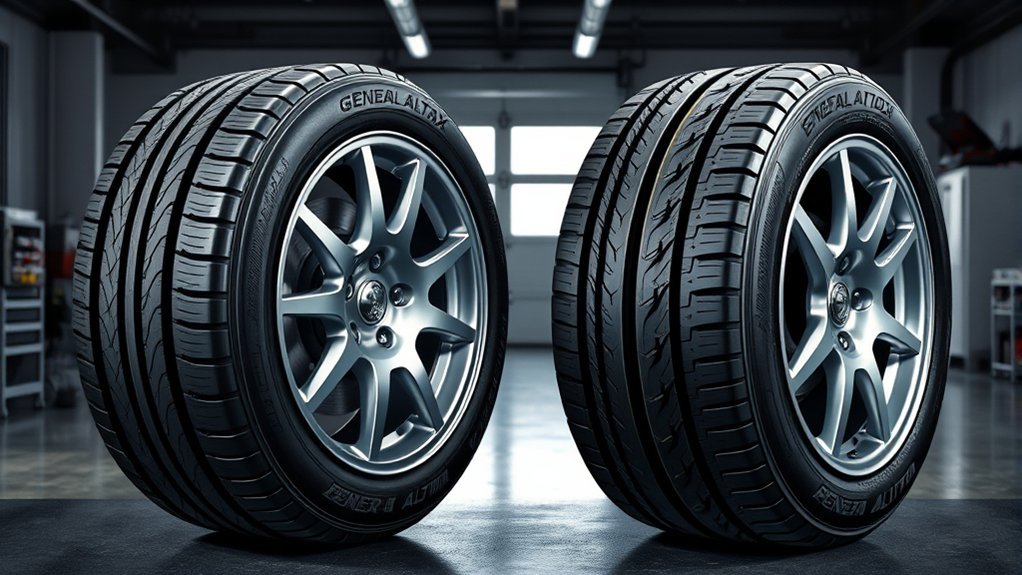
The General AltiMAX RT45 is the newer successor to the RT43, keeping the same basic touring-tire mission while updating tread wear, size coverage, and wet-road performance. General says the RT45 delivers about 10% more wear than the RT43 in its internal comparison test, but several features often described as RT45 upgrades—including the Replacement Tire Monitor and Visual Alignment Indicators—were already available on the RT43.
Quick Answer
The AltiMAX RT45 is General Tire’s newer touring model and the more practical current choice for most buyers. Its main documented upgrade is roughly 10% better wear in General’s internal testing, plus a large modern fitment range. The RT43 remains a capable older design, but its warranty, wear-monitor technology, and tread specifications are often misstated in comparisons.
Key Takeaways
- General launched the AltiMAX RT45 in July 2022 as the newer generation of its all-season touring line.
- General reports about a 10% wear improvement over the RT43, based on internal testing of 215/55R17 tires; real-world results can vary.
- Both the RT43 and RT45 use General’s Replacement Tire Monitor and Visual Alignment Indicators.
- The RT43 carried a 75,000-mile limited treadwear warranty on T-rated sizes and 65,000 miles on H- and V-rated sizes. The current RT45 is advertised with up to a 75,000-mile limited warranty.
- The RT45 is marketed for reliable wet braking, responsive wet/dry handling, light-snow traction, low road noise, and long treadwear, but it remains an all-season tire rather than a dedicated winter tire.
AltiMAX RT43 vs RT45: Key Differences
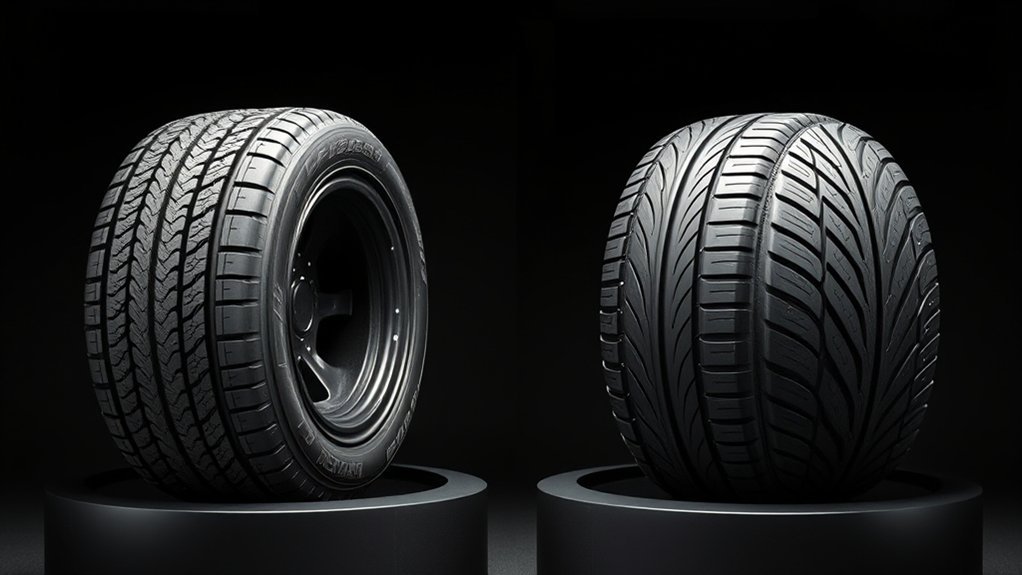
The biggest documented change from the General AltiMAX RT43 to the RT45 is tread wear. In its RT45 launch announcement, General Tire reported a 10% increase in wear compared with the RT43.
Note: General’s 10% wear figure came from internal testing comparing 215/55R17 RT45 and RT43 tires. General specifically notes that on-road results may vary, so the figure should not be treated as a guaranteed 10% increase for every size, vehicle, or driving style.
| Feature | AltiMAX RT43 | AltiMAX RT45 |
| Generation | Older touring model | Newer model launched July 1, 2022 |
| Wear | Baseline in General’s comparison | About 10% more wear in General’s internal 215/55R17 test |
| RTM wear monitor | Yes | Yes |
| VAI alignment indicators | Yes | Yes |
| Limited treadwear warranty | 75,000 miles for T-rated sizes; 65,000 miles for H/V-rated sizes | Up to 75,000 miles; verify the exact tire and current warranty terms |
| Speed ratings | T, H and V depending on size | T, H and V depending on size |
| Size coverage | Older range; availability now varies | 136 sizes from 14- to 20-inch rim diameters at launch |
The RT45 also received a revised tread contour and was launched in 136 sizes covering more than 85% of the touring segment. General markets it for reliable wet braking, responsive wet and dry handling, light-snow traction, low road noise, and long treadwear.
What the RT45 did not introduce is General’s wear-monitoring system. The official RT43 product flyer confirms that the RT43 already used both the Replacement Tire Monitor and Visual Alignment Indicators.
The RT45’s clearest documented advantage is its manufacturer-reported improvement in wear—not the addition of wear indicators that were already present on the RT43.
RT43 vs RT45 Tread Design
Both tires use a symmetric all-season touring tread, but the RT45 uses an updated contour intended to spread contact pressure more evenly and reduce edge wear. General credits that change with the RT45’s roughly 10% wear improvement in its internal comparison.
The original article described both tires as having the same 11/32-inch tread depth. That is too broad. Current RT45 specifications commonly list 11/32-inch tread depth, while General’s archived RT43 specification sheet shows that RT43 tread depth can vary by size and speed rating.
For example, General lists different tread depths for different RT43 versions of the same nominal tire size. That makes the exact SKU more useful than a single model-wide tread-depth number.
Both models also use tread features designed to support year-round traction. The RT45’s current specifications and product information emphasize water evacuation, wet-road braking, light-snow traction, and responsive handling.
Wet Grip And Snow Traction
Wet performance was an important target when General developed the RT45. The manufacturer specifically lists reliable braking on wet roads and responsive wet/dry handling among the tire’s key features.
That supports describing the RT45 as an updated wet-weather design, but it is better to avoid claiming a specific braking-distance advantage over the RT43 unless you have a comparable public test using the same size, vehicle, conditions, and tread state.
Wet Braking Gains
The RT45 uses a symmetric tread pattern with channels, lateral voids, and siping intended to move water away from the contact patch and maintain biting edges on wet pavement.
General markets the tire for reliable wet braking, while industry coverage of the RT45 launch reported that wet grip and wear were two major development priorities over the RT43.
For a buyer, the practical takeaway is that the RT45 was engineered as an evolution of the RT43 rather than a completely different type of tire. Its focus remains balanced touring performance, with particular attention paid to wet-road behavior and tread life.
Hydroplaning Resistance
Water evacuation matters because a tire needs open channels to move standing water away from the tread contact area. The RT45’s circumferential grooves, lateral voids, and siping support wet traction and hydroplaning resistance.
Actual hydroplaning performance still depends on far more than tread pattern. Tread depth, water depth, speed, inflation pressure, vehicle load, and pavement conditions all affect how soon a tire can lose contact with the road.
Pro Tip: When comparing an older RT43 with a new RT45, compare tread depth and condition as well as the model name. A worn tire cannot be fairly judged against a full-depth new tire in heavy rain.
Light Snow Traction
General describes the RT45 as providing optimal traction in light snow. The RT43 was also an all-season touring tire designed for year-round use, so neither model should be treated as a dedicated severe-winter tire simply because it can handle occasional snow.
The RT45’s tread provides numerous biting edges for slippery conditions, which can help in light snow. However, snow and ice performance depends heavily on temperature, compound behavior, tread depth, and the severity of the conditions.
Warning: An all-season tire is not a substitute for a dedicated winter tire in severe winter conditions. The U.S. National Highway Traffic Safety Administration notes that winter tires are more effective than all-season tires in deep snow.
Ride Comfort, Noise, And Handling
Both AltiMAX models were designed as touring tires, so comfort, predictable handling, and low noise are central to their purpose. General described the RT43 as providing a quiet, comfortable ride and currently promotes the RT45 for low road noise and responsive handling.
The RT45’s flatter contour is primarily documented as a wear improvement, particularly for reducing edge wear. It can also support consistent contact across the tread, but claims that it is universally quieter or more comfortable than the RT43 should be treated cautiously unless the two tires are tested back-to-back under matching conditions.
If cabin noise matters to you, tire condition is also important. Uneven wear, poor alignment, incorrect pressure, or cupping can make an otherwise quiet touring tire noisy as it ages.
Tread Life, Wear, And Warranty
Tread life is the RT45’s strongest documented improvement. General says the RT45 delivered a 10% increase in wear compared with the RT43 in its internal 215/55R17 test.
The warranty comparison is more nuanced than the original article suggested. The RT43 did not simply have a 60,000-mile warranty. General’s official RT43 literature lists:
- T-rated RT43: 75,000-mile limited treadwear warranty.
- H- and V-rated RT43: 65,000-mile limited treadwear warranty.
The current RT45 is advertised by General with an up to 75,000-mile limited warranty. Warranty coverage can depend on the exact tire and applicable terms, so confirm the specification for the exact size and speed rating you plan to buy rather than assuming one mileage figure applies to every RT45.
Both generations also include the Replacement Tire Monitor (RTM). On the RT43, General describes the indicator as changing to show “REPLACE TIRE” at 2/32-inch tread depth. Both generations also use Visual Alignment Indicators (VAI), which can help reveal uneven wear associated with alignment problems.
Sizes, Speed Ratings, And Fitment
General launched the RT45 in 136 sizes covering 14- to 20-inch rim diameters, representing more than 85% of the touring segment at the time of launch. T, H, and V speed-rated versions are available depending on tire size.
The RT43 was also offered in T-, H-, and V-rated configurations, but its dimensions, load indexes, tread depths, and other specifications vary by individual size. That means moving from an RT43 to an RT45 should be based on your vehicle’s exact requirements—not simply on the fact that both tires have the AltiMAX name.
Warning: Do not choose a replacement tire by model name alone. Match the tire size, load capacity, and appropriate speed rating required by the vehicle manufacturer. Check the driver-door Tire and Loading Information label and owner’s manual, or have a qualified tire professional confirm the fitment.
The U.S. Tire Manufacturers Association recommends replacement tires with the size, load index, and speed-rating designation specified by the vehicle or tire manufacturer and warns against using a smaller size or lower load-carrying capacity than specified.
Which AltiMAX Tire Fits You Best?
For most current purchases, the RT45 is the easier model to shop because it is the newer AltiMAX touring tire, has broad fitment coverage, and carries General’s documented wear improvements.
An RT43 can still make sense when you find the correct size in unused inventory at an attractive price, but check more than the price tag. Confirm its manufacture date, condition, warranty eligibility, and vehicle fitment before buying.
NHTSA notes that tires become more prone to failure as they age and that some vehicle and tire manufacturers recommend replacement after six to ten years regardless of treadwear. The last four digits of the DOT Tire Identification Number indicate the week and year a tire was manufactured.
RT43 Vs RT45 Fit
The RT45 launched with an especially broad size range, but that does not automatically mean every RT43 installation can use any RT45 version. Compare the complete tire specification.
- Tire size: Match the size specified for your vehicle unless an approved alternative fitment is being used.
- Load index: The replacement must have enough load-carrying capacity for the vehicle.
- Speed rating: Follow your vehicle and tire manufacturer’s requirements rather than choosing solely by maximum speed.
- Wheel width and load range: Verify that the specific tire is approved for the wheel and vehicle application.
- Tread depth and warranty: Compare the exact RT43 or RT45 SKU because specifications can vary within a model line.
Choosing By Driving Needs
If your priorities are long tread life, current availability, and an updated touring design, the RT45 has the clearest documented advantages. General’s internal testing reported approximately 10% more wear than the RT43, and the company launched the RT45 with extensive passenger-car and crossover coverage.
If you drive frequently in rain, the RT45 is specifically marketed for reliable wet braking and responsive wet-road handling. If your winters involve only occasional light snow, General also positions it for light-snow traction.
If you regularly face deep snow, packed snow, or ice, tire category matters more than choosing between these two AltiMAX generations. A dedicated winter tire can offer a more appropriate cold-weather design than a conventional all-season touring tire.
If you are considering an RT43 because it is discounted, make sure savings are not coming from unusually old inventory. Check the DOT manufacture date and confirm that the tire is eligible for the warranty you expect.
Frequently Asked Questions
Did General AltiMAX RT45 replace RT43?
The RT45 is the newer AltiMAX touring model introduced in July 2022 and was developed as the successor to the RT43. General’s current passenger-tire lineup focuses on the RT45, although older RT43 inventory may still appear at some retailers.
Is the General AltiMAX RT43 discontinued?
The RT43 is the older generation and has been succeeded by the RT45 in General’s current touring lineup. Remaining RT43 stock can still exist, so retailer availability does not necessarily mean the model is still in regular production. Check the DOT manufacture date when considering older inventory.
Is the General AltiMAX RT45 any good?
The RT45 is designed as a long-lasting all-season touring tire for passenger cars and crossovers. General markets it for reliable wet braking, responsive wet/dry handling, light-snow traction, low road noise, and long treadwear. General also reports about 10% more wear than the RT43 in its internal 215/55R17 comparison test.
Are General AltiMAX RT43 tires good?
The RT43 was a touring all-season tire built around long tread life, year-round traction, and a quiet, comfortable ride. It also included the same RTM replacement indicator and VAI alignment-monitoring concept found on the RT45. Its main drawback today is that it is an older generation with less predictable retail availability.
Does the RT45 have wear indicators that the RT43 did not have?
No. Both models use General’s Replacement Tire Monitor and Visual Alignment Indicators. The RT45’s major documented changes are its updated design, broader launch coverage, and manufacturer-reported improvement in wear rather than the introduction of those indicators.
Is the AltiMAX RT45 a winter tire?
No. It is an all-season touring tire that General markets for light-snow traction. Drivers who regularly encounter severe snow and ice should consider a tire designed specifically for winter conditions rather than relying on light-snow capability alone.
Conclusion
The General AltiMAX RT45 is an evolution of the RT43 rather than a complete redesign of the touring-tire formula. Its clearest documented advantage is General’s manufacturer-reported 10% improvement in wear, supported by an updated contour and a large modern fitment range. It is also marketed for reliable wet braking, light-snow traction, responsive handling, and low road noise.
The RT43 still deserves credit for features sometimes mistakenly attributed only to the RT45. It already had the Replacement Tire Monitor and Visual Alignment Indicators, and its warranty reached 75,000 miles on T-rated versions and 65,000 miles on H- and V-rated versions.
For a current purchase, compare the exact tire size, load index, speed rating, warranty, manufacture date, and price rather than relying only on the RT43 or RT45 model name. That gives you a more useful comparison than broad claims about one tire being universally better in every condition.
Sources
- General Tire — AltiMAX RT45 launch release — launch date, 136-size coverage, 10% wear claim, test limitation, wet/light-snow/noise positioning, and warranty overview.
- General Tire — AltiMAX RT45 product page — current product positioning, RTM, VAI, warranty, handling, wet-road and light-snow claims.
- General Tire — AltiMAX RT45 specifications — tire sizes, speed ratings, load indexes, tread depth, and other size-specific specifications.
- General Tire — AltiMAX RT43 product flyer — RTM, VAI, RT43 warranty, and original product features.
- NHTSA TireWise — tire sizing, tread, tire age, all-season versus winter-tire guidance, and general tire safety.
- U.S. Tire Manufacturers Association — Replacing Tires — replacement size, load index, speed rating, and fitment guidance.