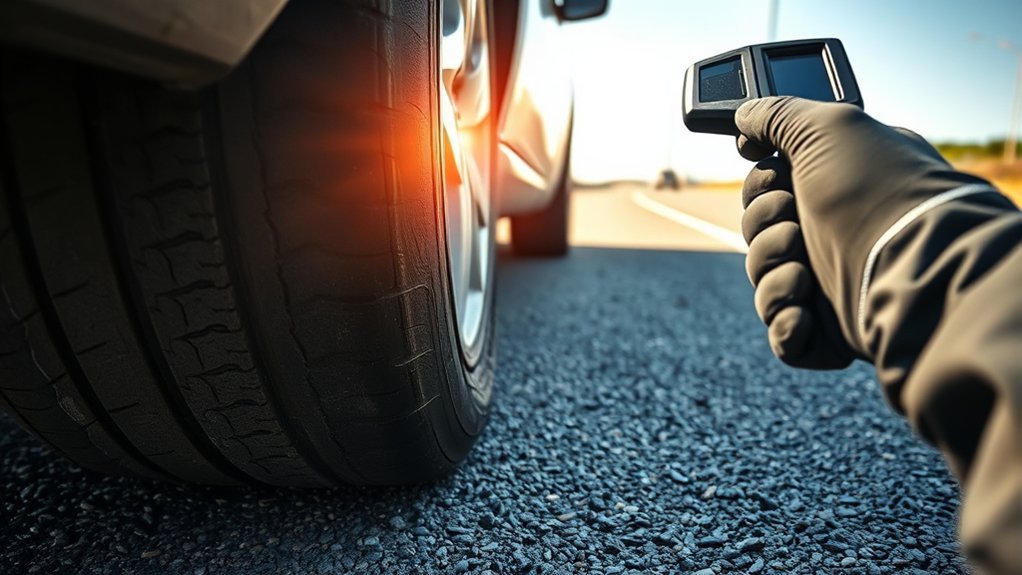
Yes, tires can overheat. Underinflation, excessive loads, sustained high speeds, hot weather, tire damage, and long periods of demanding driving can make a tire generate more heat than it can safely manage. Excessive heat can weaken internal components and contribute to tread separation or tire failure. The safest prevention is correct cold inflation, proper loading, regular inspections, and sensible driving.
Quick Answer
Tires can overheat when underinflation, overloading, high speed, hot weather, or existing damage causes excessive flexing and heat buildup. A warm tire normally has higher pressure, so pressure rise alone does not prove overheating. Check pressure cold, inspect for damage, respect load limits, and stop driving if a tire is bulging, separating, losing air, or causing severe vibration.
Key Takeaways
- Underinflation is one of the biggest tire-heat risks because it increases casing and sidewall flex.
- A tire normally warms and gains pressure while driving; a higher warm reading by itself does not mean the tire is overheating.
- Check and adjust pressure when tires are cold, using the vehicle placard or owner’s manual rather than the maximum pressure molded on the tire.
- Heavy loads, sustained speed, hot weather, aging, and existing tire damage can reduce the safety margin.
- If you see a bulge, tread separation, exposed cords, serious cracking, repeated pressure loss, or severe vibration, stop using the tire and have it professionally inspected.
Can Tires Overheat?

Yes. Tires generate heat whenever they roll because the rubber and internal structure repeatedly deform as the tread enters and leaves the contact patch. More speed, more load, or insufficient inflation increases the work the tire has to do and can increase heat generation.
The National Highway Traffic Safety Administration notes that sustained high temperature can cause tire materials to deteriorate and may contribute to blowouts or tread separation. NHTSA’s tire temperature grades—A, B, and C—indicate a passenger tire’s resistance to heat under standardized test conditions.
Underinflation, excessive loading, speed, and sustained heat can work together to increase tire flex, internal temperature, and the risk of structural damage.
Hot weather adds another source of thermal stress. Sunlight and long-term environmental exposure can also contribute to tire damage, especially as rubber ages.
That does not mean every warm tire is overheating. Tires are designed to warm during normal driving, and their internal pressure normally increases as temperature rises. The important questions are whether the tire began the trip at the correct cold pressure, is carrying an appropriate load, is in good physical condition, and is being operated within its intended limits.
Normal Tire Heat vs. Overheating
A tire that feels warm after highway driving is not automatically unsafe. Driving naturally raises tire temperature and pressure. According to the U.S. Tire Manufacturers Association, inflation pressure can change roughly 1–2 psi for every 10°F of temperature change.
Warning: Do not bleed air from a properly inflated tire simply because its pressure is higher after driving. Warm-pressure rise is normal. Removing that air can leave the tire underinflated after it cools, increasing flex and heat generation on the next drive.
For an accurate baseline, check pressure when the tires are cold—generally before driving or after the vehicle has been parked for several hours—and compare the reading with the vehicle manufacturer’s specification.
What Tire Temperature Is Too Hot?
There is no single consumer temperature number that defines overheating for every passenger tire. Tire construction, inflation pressure, load, speed rating, vehicle weight, ambient temperature, and operating conditions all affect temperature.
For normal road use, do not rely on a hand-touch test or an arbitrary infrared-thermometer threshold. Instead, use the vehicle’s pressure specification, watch for abnormal pressure loss or physical damage, follow any tire-temperature warnings provided by the vehicle or monitoring system, and have a tire inspected if its behavior changes unexpectedly.
Signs Your Tires Are Too Hot
Because tires normally warm while driving, heat alone is difficult to diagnose from the driver’s seat. More useful warning signs are physical damage, recurring pressure loss, new vibration, abnormal noise, or a major change in vehicle handling.
Visible damage such as bulges, deep cracking, exposed cords, tread separation, or severe irregular wear requires attention regardless of whether heat caused it.
Heat Damage Warning Signs
Inspect the tread and sidewalls for changes that could indicate structural damage. NHTSA recommends checking tires for cuts, punctures, bulges, scrapes, cracks, bumps, and irregular wear.
| Indicator | What It May Mean |
|---|---|
| Bulge or bubble | Possible internal structural damage; the tire should be professionally inspected and normally should not remain in service. |
| Tread lifting or separation | Serious structural failure risk; stop using the tire. |
| Tread tearing or chunking | Physical tread damage that needs inspection; it does not by itself prove overheating. |
| Repeated pressure loss | Possible puncture, valve leak, wheel problem, or tire damage. |
| New vibration or noise | Possible tire, wheel, alignment, balance, or structural problem that deserves inspection. |
Surface discoloration alone is not a reliable overheating test. If discoloration appears together with tread damage, cracking, deformation, smoke, unusual odor, or abnormal vehicle behavior, stop safely and inspect the tire.
Pressure And Handling Changes
Tire pressure normally rises while driving because the air inside the tire warms. That normal increase should not be confused with dangerous overinflation.
A more concerning sign is a tire that repeatedly loses pressure after it returns to a cold condition. Compare its cold reading with the pressure listed on the driver’s-door tire placard or in the owner’s manual.
If the vehicle suddenly feels unstable, develops strong vibration, pulls unexpectedly, or handles differently, reduce speed smoothly and find a safe place to stop. Those symptoms can come from several tire, wheel, suspension, or alignment problems and should not be diagnosed solely as overheating.
Pro Tip: Record each tire’s cold pressure before a long trip. If you later suspect a problem, you will have a useful baseline instead of trying to judge safety from a normal warm-pressure increase.
What Causes Tire Overheating?
The major controllable causes of excessive tire heat are incorrect inflation, excessive loading, demanding speed, and continued operation with a damaged tire. High ambient temperatures can increase the thermal load further.
[Products Worth Considering]

The SAFELIFE dial tire tread depth gauge measures tread depth in 1/32 inch increments with clear, easy-to-read 2-inch dial face. Color zones using a traffic light system help you quickly judge whether tread is low, marginal, or ample for safer driving. Built with a durable zinc cast body and a metal detect probe for precise, comfortable use across cars, motorcycles, trucks, and buses.

Milton S-921 pencil tire pressure gauge helps you maintain optimal tire pressure for passenger cars with accurate readings in PSI and kPa. It features a built-in deflator valve for convenient pressure adjustments, plus a single chuck head and nylon indicator bar for easy use on the go. Built from durable plated brass and designed for reliable performance, it’s a practical road trip and cold-weather maintenance tool.

Measure tire tread depth quickly and accurately with this LUMITECO dial gauge that reads in 1/32" increments up to 14/32". The color-coded green/yellow/red zones make it easy to judge tire wear and know when replacement is needed. A rugged, compact design with a protective pouch helps keep the gauge ready for use on cars, trucks, motorcycles, and more.
High Speed Driving
As speed increases, a tire goes through more deformation cycles each minute. That raises heat generation, particularly when the tire is underinflated, overloaded, worn, or damaged.
Sustained highway driving can therefore be more demanding than low-speed city use. Michelin’s current highway guidance notes that an underinflated tire builds heat faster than a correctly inflated tire at the same highway speed.
A tire’s speed rating also should not be treated as a recommended driving speed. The rating represents standardized laboratory performance under specified conditions. Actual capability depends on pressure, load, tire condition, weather, road conditions, and other factors.
Obey posted speed limits, keep the tire correctly inflated, and make sure replacement tires meet the size, load-index, and speed-rating requirements specified for the vehicle.
Underinflation Risks
Underinflation is one of the most important overheating risks because a soft tire flexes more with every rotation. That repeated deformation creates additional heat, raises rolling resistance, and can damage the tire internally.
NHTSA identifies underinflation as a leading cause of tire failure, while USTMA warns that it can cause excessive heat buildup and internal structural damage.
- Check tire pressure at least monthly and before long trips.
- Measure pressure when the tires are cold whenever possible.
- Use the vehicle placard or owner’s manual for the recommended cold PSI.
- Investigate a tire that repeatedly needs air instead of continually topping it up without finding the leak.
- Do not rely on TPMS as your only pressure check.
TPMS is an important warning system, but it does not replace a tire gauge. A warning may occur only after substantial pressure loss has already taken place.
Underinflation also wastes energy. The U.S. Department of Energy reports that properly inflated tires can improve fuel economy by about 0.6% on average and potentially as much as 3%, while average tire-pressure loss can reduce fuel economy by roughly 0.2% for each 1 psi drop.
Heavy Load Stress
Extra weight increases the load a tire must carry. When load, speed, and insufficient inflation occur together, the tire can flex excessively and generate more heat.
| Factor | Effect | Main Concern |
|---|---|---|
| Excess vehicle weight | Higher tire loading | Heat and structural stress |
| Underinflation | More casing flex | Internal heat and damage |
| High speed with a heavy load | More deformation cycles under load | Reduced safety margin |
| Uneven loading | Unequal load across tires | Irregular wear and handling issues |
| Long-distance hauling | Sustained tire workload | Greater importance of correct pressure and load control |
Do not assume that carrying more weight means you should arbitrarily add air. Check the vehicle’s Tire and Loading Information label and owner’s manual. If the manufacturer specifies a different cold pressure for fully loaded operation or towing, follow that specification without exceeding tire or wheel limits.
Hot Weather, Tire Age, and Existing Damage
High ambient temperatures and hot pavement add to the heat produced during driving. Older or damaged tires may also have less structural margin than newer tires in good condition.
NHTSA notes that tire aging is influenced by service, storage, environmental conditions, heat exposure, and maintenance. Some vehicle and tire manufacturers recommend replacement based partly on age even when usable tread remains, so follow the applicable vehicle and tire manufacturer’s service-life guidance.
Before a hot-weather road trip, inspect each tire—including the spare—for pressure, cuts, cracking, bulges, unusual wear, and adequate tread depth.
How Does Overheating Damage Tires?
Excessive heat can weaken rubber compounds and internal tire components. Over time or under severe conditions, that damage can contribute to belt or tread separation and sudden pressure loss.
Heat-related damage is especially concerning when combined with underinflation or overload because those conditions increase tire deformation at the same time the structure is being stressed.
- Excessive flex generates additional internal heat.
- Prolonged heat can weaken structural components.
- Damaged components may produce bulging, separation, irregular wear, vibration, or pressure loss.
- A severely compromised tire may fail suddenly.
Do not use the normal pressure increase during driving as evidence that the tire has become dangerously overinflated. If the tire was set correctly when cold, allow it to cool before making a final pressure adjustment.
How to Prevent Tire Overheating?
Preventing tire overheating starts with keeping each tire within the pressure, load, speed, and service conditions it was designed to handle.
Check cold pressure regularly. Use an accurate gauge at least monthly and before long trips. Inflate to the vehicle manufacturer’s recommended cold PSI rather than the maximum number molded on the tire sidewall.
Stay within vehicle load limits. Check the Tire and Loading Information label and owner’s manual before carrying heavy cargo or towing.
Inspect tread and sidewalls. Look for punctures, cuts, bulges, cracking, unusual wear, exposed cords, or separation. A tire that repeatedly loses pressure needs diagnosis rather than repeated inflation alone.
Rotate tires as recommended. Rotation helps distribute tread wear more evenly. Also correct alignment or suspension problems when irregular wear develops.
Control speed and driving inputs. Sustained high speed, hard cornering, aggressive acceleration, and heavy braking place greater demands on tires and other vehicle components.
Watch tire age and condition. Even tires with adequate tread can deteriorate with time and environmental exposure.
Pay attention to TPMS—but still use a gauge. TPMS provides an important low-pressure warning but is not a substitute for preventive pressure checks.
Note: For U.S. passenger tires, the UTQG temperature grade shown on the sidewall is A, B, or C, with A representing the highest heat-resistance performance in the standardized test. The grade does not override correct inflation, load limits, road conditions, or safe driving speeds.
[Products Worth Considering]

Keep your tires properly inflated with this analog VONDIOR tire pressure gauge, designed for fast, easy readings without batteries. The swiveling, two-axis hose and large glow dial help you measure at any tire angle with instant visibility. Built with a protective rubber shield, it supports durable, low-maintenance use for cars and trucks.

Monitor tire tread wear with a smart, color-coded depth gauge that shows clear condition ranges at a glance. The bar is range marked for fast, easy readings, helping you maintain safer traction and performance. Each gauge is portable with a pocket clip, and the set includes 20 units for daily use and sharing.

The TYAMATE TM8 solar-powered wireless TPMS delivers real-time tire pressure and temperature monitoring with six alarm modes for safer driving. A vibrant color LCD display shows readings clearly while windshield mounting keeps it hands-free and easy to read. With a wide 0–87 PSI range, strong 433.92 MHz signal transmission, and quick sensor pairing, it’s ideal for RV, sedan, SUV, MPV, and truck use.
What to Do After a Tire Overheats?
If you suspect a tire has become dangerously hot or has suffered heat-related damage, reduce speed smoothly and pull over in a safe location. Stopping the vehicle ends the repeated tire flexing created by driving.
Allow the tire to cool before performing a close inspection. Avoid touching very hot wheel, brake, or tire components unnecessarily.
- Inspect the tread and sidewall for bulges, cracking, separation, exposed cords, or other visible damage.
- After the tire has cooled, compare its pressure with the vehicle manufacturer’s recommended cold PSI.
- Do not bleed air simply because the tire showed a higher pressure while hot.
- Check whether the tire repeatedly loses pressure after cooling.
- If visible damage, severe vibration, continuing pressure loss, or recurring excessive heat is present, do not continue normal driving on the tire; arrange professional inspection or roadside assistance as appropriate.
Uneven wear may point to alignment, inflation, suspension, or loading problems. Repeated problems deserve a complete inspection of the tire, wheel, and related vehicle components rather than another pressure adjustment alone.
[Products Worth Considering]
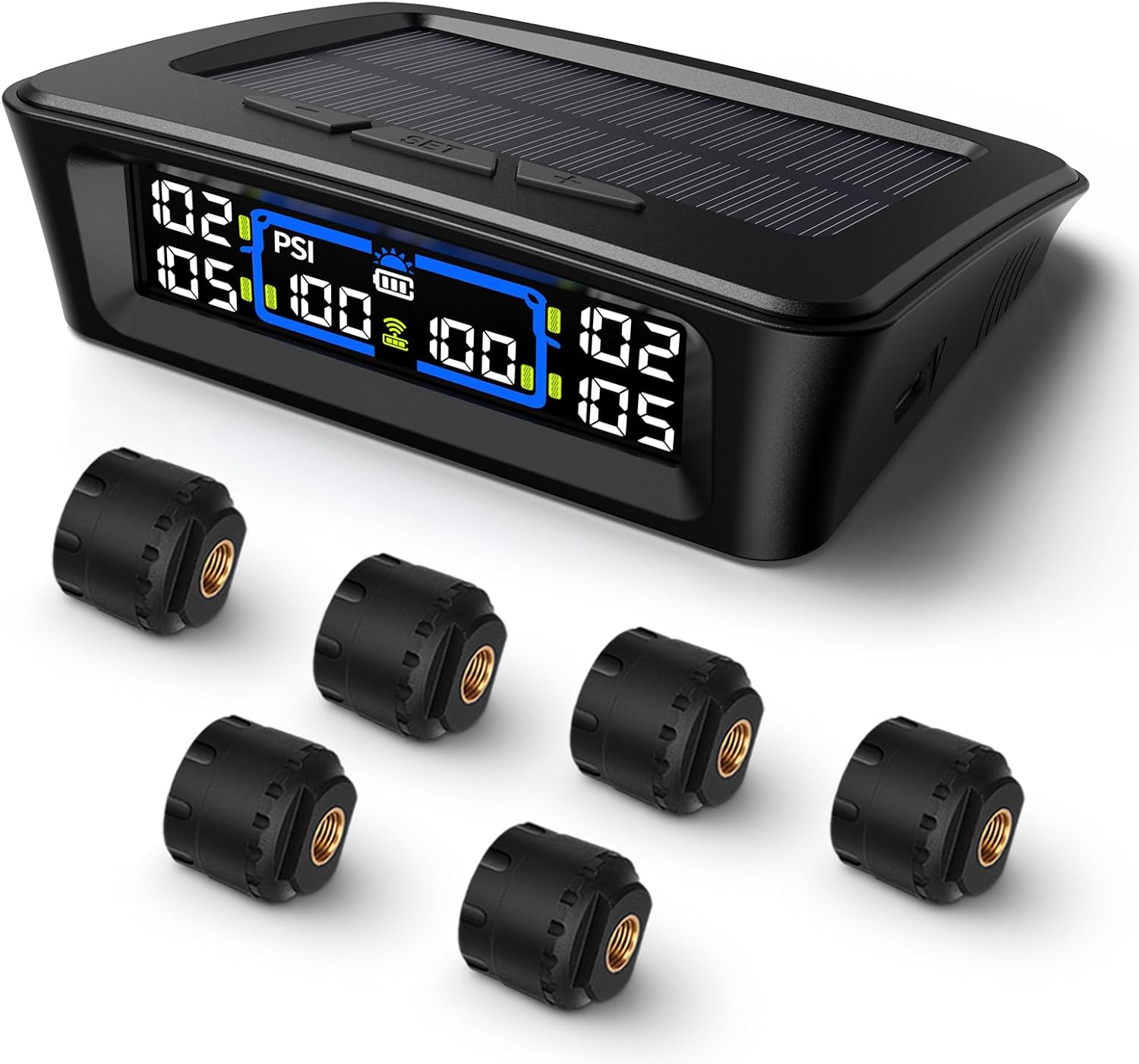
The Tymate TM12 RV TPMS delivers real-time tire pressure and temperature monitoring with a stable 433Hz display for safer long-distance driving. It supports simultaneous monitoring across vehicle and trailer zones, includes six alarm modes for pressure, temperature, leakage, battery, and signal loss, and features easy DIY installation with auto calibration. Power is supplied via USB-C charging or solar recharging, with a wide 0–144 PSI range and up to 50 ft signal coverage for RVs and towable trailers.

Accurately measure tire tread depth with a calibrated gauge marked from 0 to 1 inch in 1/32 inch increments. The color-coded bar helps you quickly identify tread condition ranges, supporting safe driving for trucks, motorcycles, automobiles, and passenger vehicles.
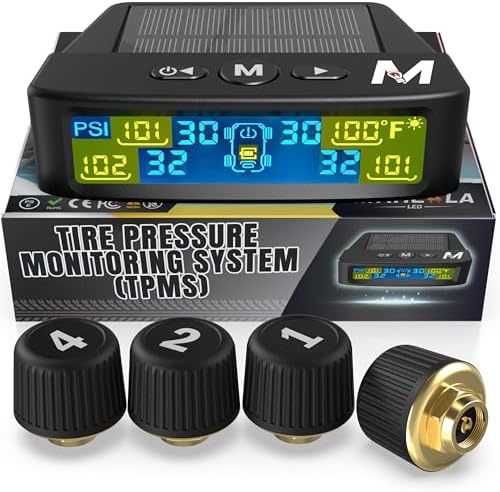
Marcala’s TPMS set of four sensors helps you monitor tire pressure and temperature in real time while driving, with updates every second. The bright color LCD uses auto-dimming for easy viewing, powered by dual solar and USB charging, and offers six alarm modes. Built for trailers, RVs, campers, trucks, and towing setups, the sensors support monitoring 1-4 wheels up to 98 PSI with IP67 waterproof protection.
What if a Tire Blows Out While Driving?
If a tire fails suddenly, NHTSA’s blowout guidance emphasizes keeping the vehicle stable instead of making abrupt inputs. Hold the steering wheel firmly, avoid slamming on the brakes, gradually release the accelerator, correct the steering as needed, and pull off the road once the vehicle is stable and it is safe to do so.
Frequently Asked Questions
How Do You Know if Your Tires Are Overheating?
You cannot reliably diagnose dangerous overheating just because a tire feels warm or its pressure rises during driving. Look instead for recurring pressure loss, bulges, tread separation, serious cracking, unusual vibration, abnormal noise, or other physical damage. If those signs appear, stop safely and have the tire inspected.
What Is the #1 Cause of Problems With Tires?
NHTSA identifies underinflation as a leading cause of tire failure. An underinflated tire flexes more, generates additional heat, increases rolling resistance, and can suffer internal structural damage. Correct cold inflation is therefore one of the most important tire-safety checks.
What Should Be Done if an Overheated Tire Is Found?
Pull over safely and let the tire cool. Inspect it for bulges, separation, cracking, exposed cords, or other damage, then check pressure against the vehicle’s cold-pressure specification after cooling. Do not bleed a correctly inflated hot tire merely because its warm pressure is higher. Have a damaged or repeatedly overheating tire professionally inspected.
What Happens if Tires Overheat?
Excessive sustained heat can degrade tire materials and contribute to internal structural damage, tread or belt separation, and sudden tire failure. The risk increases when excessive heat occurs together with underinflation, overloading, high speed, aging, or existing damage.
Is It Normal for Tire Pressure to Rise While Driving?
Yes. Tires warm during normal driving, so their pressure normally rises. Do not release air just to bring a warm tire back to its cold-pressure specification. Check and make the final adjustment when the tire is cold.
Can TPMS Warn You Before a Tire Overheats?
Standard TPMS primarily warns about significant pressure loss, not every form of overheating or tire damage. Some vehicles or aftermarket systems can also report temperature, but TPMS should not replace regular pressure checks and visual inspections.
Conclusion
Tires can overheat when underinflation, heavy loading, sustained speed, hot conditions, or existing damage makes them work beyond a safe operating margin. The most useful prevention steps are simple: maintain the correct cold pressure, respect vehicle load limits, inspect tires regularly, address recurring air loss, and avoid continuing to drive on a damaged tire.
Remember that a warm tire and a higher pressure reading after driving are normally expected. Do not bleed that pressure away simply because the tire is hot. When physical damage, severe vibration, repeated pressure loss, or other abnormal behavior appears, stop safely and have the tire inspected before returning it to normal service.
Sources
- National Highway Traffic Safety Administration — TireWise — tire pressure, temperature grades, tire aging, inspection, and blowout safety guidance.
- National Highway Traffic Safety Administration — Summer Driving Tips — cold tire pressure, underinflation, tread inspection, and hot-weather tire safety.
- U.S. Tire Manufacturers Association — Tire Care Essentials — inflation, temperature-related pressure change, TPMS, tread depth, and maintenance guidance.
- U.S. Department of Energy — Summer Driving Fuel-Economy Guidance — fuel-economy effects of correct tire inflation.
- Michelin — How to Properly Inflate Your Tires — underinflation heat risk, cold-pressure checks, and hot-tire pressure guidance.