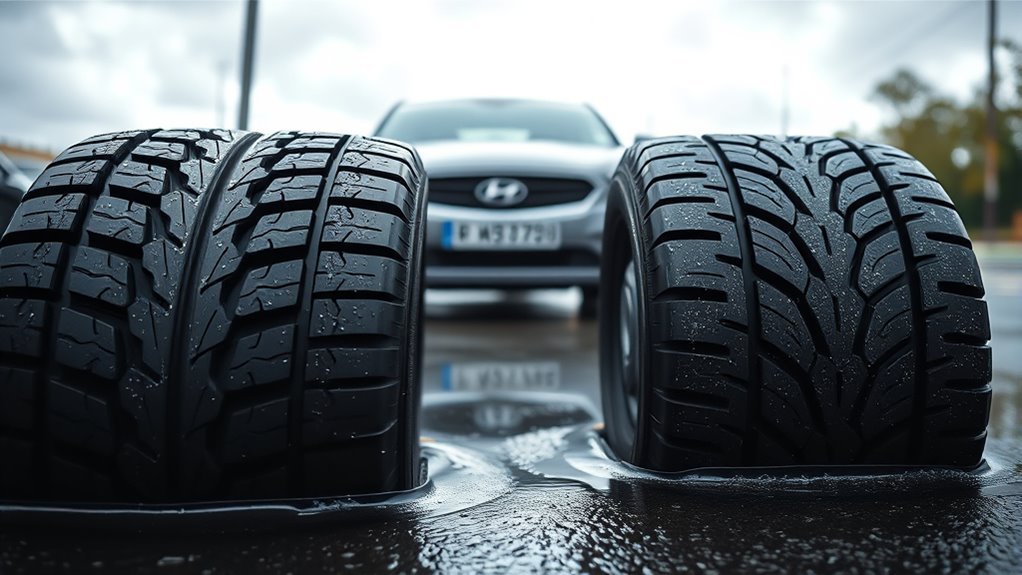
Choosing between all-weather and all-season tires for your Hyundai Sonata comes down to one question: how much real winter driving do you face? All-season tires work well for mild weather, rain, and occasional light snow, but all-weather tires with the Three-Peak Mountain Snowflake symbol give you stronger cold-weather confidence without needing a seasonal tire swap.
Quick Answer
For most Hyundai Sonata drivers who see cold temperatures, slush, or regular light-to-moderate snow, all-weather tires are the better year-round choice. If you live in a mild climate with rare snow, all-season tires are usually enough. For deep snow, frequent ice, or mountain winter driving, dedicated winter tires are still the safest option.
Key Takeaways
- Choose all-weather tires if your Sonata regularly sees temperatures below 7°C / 45°F, slush, or light-to-moderate snow.
- Choose all-season tires if you mostly drive in dry, wet, and mild conditions with only rare winter weather.
- Look for the Three-Peak Mountain Snowflake (3PMSF) symbol if winter traction matters.
- Dedicated winter tires remain the better choice for severe ice, deep snow, steep grades, or long winter highway trips.
- Before buying, confirm your Sonata’s tire size, load rating, speed rating, and cold PSI on the driver-side door placard or owner’s manual.
What Are All-Weather Tires and Their Benefits?
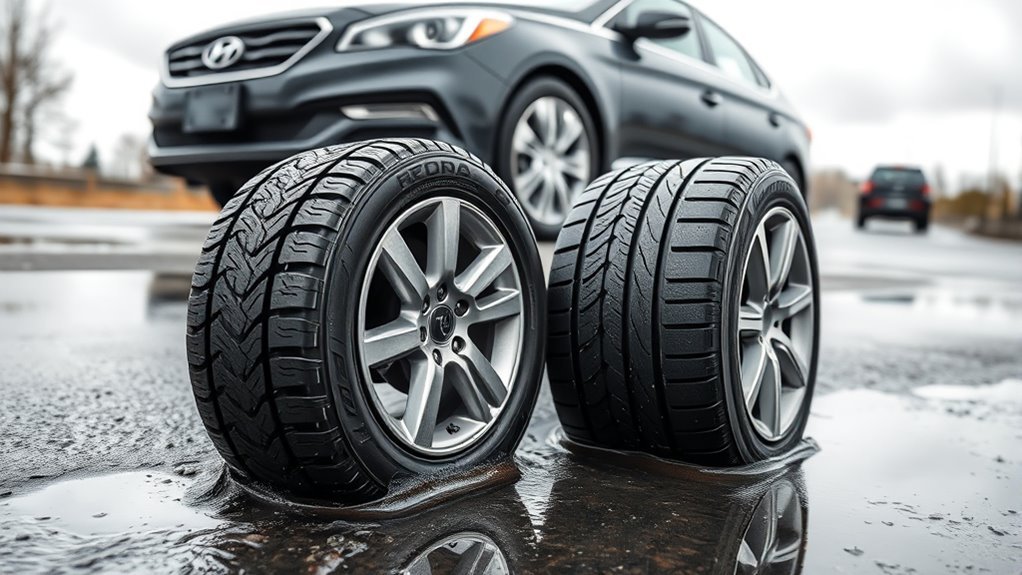
All-weather tires are designed to bridge the gap between all-season tires and dedicated winter tires. The key thing to check is the Three-Peak Mountain Snowflake (3PMSF) symbol, which shows that the tire meets specific snow traction performance requirements.
For a Hyundai Sonata, all-weather tires make the most sense if you want one set of tires for the full year and you drive through cold rain, slush, and occasional snow. Compared with standard all-season tires, they usually use a colder-weather rubber compound, more siping, and a tread pattern designed to bite into snow and evacuate slush.
Note: “All-weather” is not the same as “winter tire.” A 3PMSF all-weather tire is a strong year-round compromise, but a dedicated winter tire is still better for heavy snow, packed ice, repeated subfreezing highway trips, and steep mountain roads.
All-Weather vs All-Season Tires: Key Differences for a Hyundai Sonata
The biggest difference is cold-weather performance. According to Transport Canada, all-season and summer tires begin to lose elasticity below 7°C / 45°F, which can reduce traction. Winter-rated tires are built to stay more flexible in cold conditions.
| Feature | All-Season Tires | All-Weather Tires |
| Best use | Mild climates, rain, dry roads, and occasional light snow | Year-round driving with colder temperatures, slush, and light-to-moderate snow |
| Winter symbol | Usually M+S only, not always 3PMSF | Should carry the 3PMSF symbol if sold as winter-rated all-weather |
| Cold-weather grip | Can harden as temperatures fall, reducing grip | Stays more flexible and provides stronger snow traction |
| Convenience | One set for mild regions | One set for regions with moderate winter weather |
| Main limitation | Not ideal for repeated snow, slush, or cold-weather braking | Not as capable as dedicated winter tires in severe ice or deep snow |
The 3PMSF symbol is the easiest visual clue that a tire has met a snow-traction performance requirement. It is not a promise that the tire will match a dedicated winter tire on ice, deep snow, or steep winter roads.
[Products Worth Considering]

Monitor tire tread wear with a smart, color-coded depth gauge that shows clear condition ranges at a glance. The bar is range marked for fast, easy readings, helping you maintain safer traction and performance. Each gauge is portable with a pocket clip, and the set includes 20 units for daily use and sharing.

The TYAMATE TM8 solar-powered wireless TPMS delivers real-time tire pressure and temperature monitoring with six alarm modes for safer driving. A vibrant color LCD display shows readings clearly while windshield mounting keeps it hands-free and easy to read. With a wide 0–87 PSI range, strong 433.92 MHz signal transmission, and quick sensor pairing, it’s ideal for RV, sedan, SUV, MPV, and truck use.
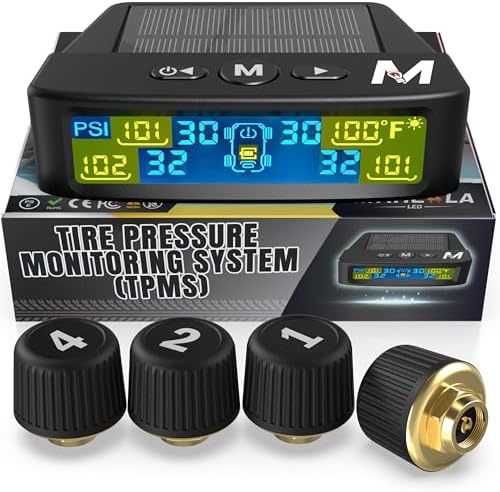
Marcala’s TPMS set of four sensors helps you monitor tire pressure and temperature in real time while driving, with updates every second. The bright color LCD uses auto-dimming for easy viewing, powered by dual solar and USB charging, and offers six alarm modes. Built for trailers, RVs, campers, trucks, and towing setups, the sensors support monitoring 1-4 wheels up to 98 PSI with IP67 waterproof protection.
What Tire Type Suits Your Hyundai Sonata for Various Conditions?
Use your local winter conditions as the deciding factor. Your Sonata’s drivetrain, trim, and tire size matter, but climate matters most when choosing between all-weather and all-season tires.
[Products Worth Considering]

Measure tire tread depth quickly and accurately with this LUMITECO dial gauge that reads in 1/32" increments up to 14/32". The color-coded green/yellow/red zones make it easy to judge tire wear and know when replacement is needed. A rugged, compact design with a protective pouch helps keep the gauge ready for use on cars, trucks, motorcycles, and more.
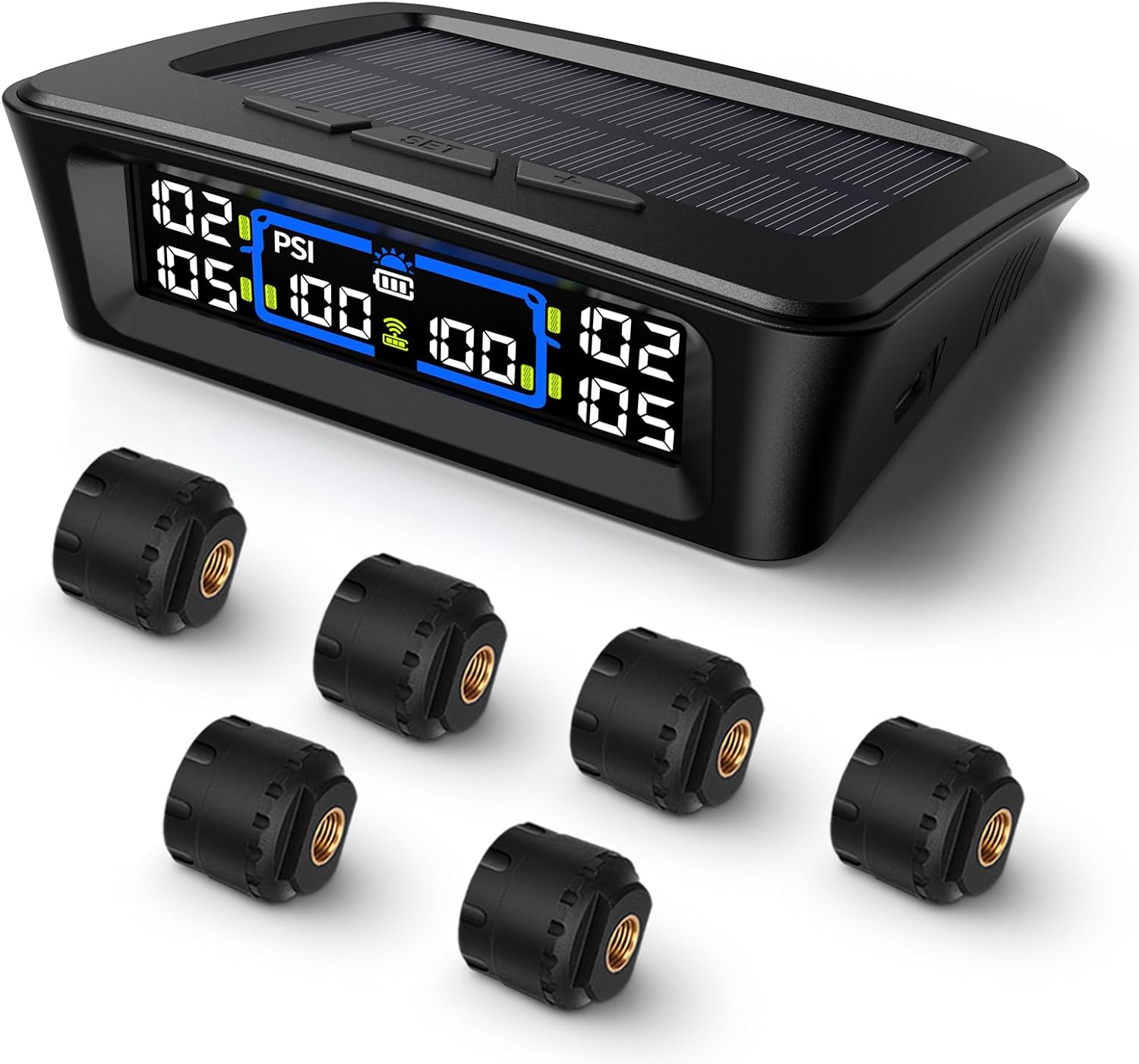
The Tymate TM12 RV TPMS delivers real-time tire pressure and temperature monitoring with a stable 433Hz display for safer long-distance driving. It supports simultaneous monitoring across vehicle and trailer zones, includes six alarm modes for pressure, temperature, leakage, battery, and signal loss, and features easy DIY installation with auto calibration. Power is supplied via USB-C charging or solar recharging, with a wide 0–144 PSI range and up to 50 ft signal coverage for RVs and towable trailers.

Measure tyre tread depth precisely with a digital gauge that reads in both MM and inches, helping you monitor safe driving conditions. The large LCD screen is easy to operate, and the compact tool fits for cars, trucks, and motorcycles. It provides high accuracy with a 0-25.4mm range and includes a 1-year warranty for added peace of mind.
Mild climate with rare snow
If your winter is mostly rain, dry roads, and a few cold mornings, all-season tires are usually the practical choice. They tend to ride quietly, wear well, and perform comfortably in the conditions most Sonata drivers see day to day.
Cold climate with slush or light-to-moderate snow
If temperatures often drop below 7°C / 45°F and you regularly see slush or light snow, choose all-weather tires with the 3PMSF symbol. This is the best one-set solution for many Hyundai Sonata owners who do not want to switch between winter and summer tires.
Severe winter, ice, or mountain roads
If you drive on packed snow, frequent ice, steep roads, or long winter highway routes, choose dedicated winter tires. A Sonata can feel stable and comfortable, but tire grip is still the main connection between the car and the road.
Warning: Do not mix all-weather and all-season tires on the same Hyundai Sonata. Use four matching tires with the same size, load index, speed rating, construction type, and similar tread depth to help maintain stable braking and handling.
Key Factors to Weigh When Selecting Tires for Your Hyundai Sonata
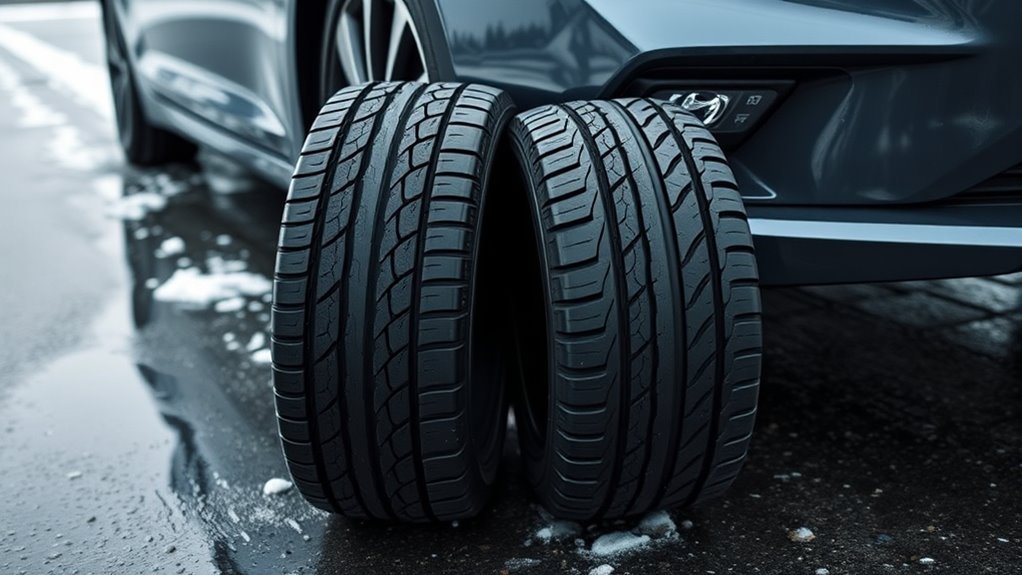
Before buying tires, do not rely on the tire category alone. A great all-weather tire in the wrong size or load rating is still the wrong tire for your Sonata.
- Check the tire placard first: Use the driver-side door jamb placard or your Hyundai owner’s manual for the correct tire size and cold tire pressure.
- Match the original specs: Choose tires that match the factory size and meet or exceed the original load index and speed rating.
- Look for 3PMSF if winter matters: The U.S. Tire Manufacturers Association severe snow guidance explains the snow-service marking used on winter-rated tires.
- Do not buy by brand alone: Hyundai Sonata original-equipment tire brands can vary by model year, trim, market, and supplier. Fitment and performance category matter more than the badge on the sidewall.
- Consider road noise and ride comfort: Some all-weather tires have more aggressive tread blocks, which can create slightly more road noise than touring all-season tires.
- Think about tread life: All-weather tires may trade some warm-weather wear life for better cold-weather grip. Check the manufacturer warranty and independent test data before buying.
Pro Tip: When shopping online or in a tire store, look at the tire sidewall or product listing for the mountain-and-snowflake symbol. “M+S” alone is not the same as a 3PMSF winter-rated tire.
[Products Worth Considering]

The SAFELIFE dial tire tread depth gauge measures tread depth in 1/32 inch increments with clear, easy-to-read 2-inch dial face. Color zones using a traffic light system help you quickly judge whether tread is low, marginal, or ample for safer driving. Built with a durable zinc cast body and a metal detect probe for precise, comfortable use across cars, motorcycles, trucks, and buses.

Accurately measure tire tread depth with a calibrated gauge marked from 0 to 1 inch in 1/32 inch increments. The color-coded bar helps you quickly identify tread condition ranges, supporting safe driving for trucks, motorcycles, automobiles, and passenger vehicles.

The Kurgo Seasonal Tire Tote helps protect your car interior, clothes, and garage from tire grime, brake dust, and residue during seasonal tire changes. Its universal design fits most passenger tires between 22" and 31" in diameter, making storage and transport simpler with less mess. Built for rugged, repeated use, it’s machine washable for easy care and comes with a lifetime warranty.
Tips for Keeping Your Tires in Top Shape
The best tire choice will not help much if the tires are underinflated, worn out, or unevenly rotated. Good maintenance keeps your Hyundai Sonata safer, quieter, and more efficient.
- Check tire pressure monthly: Use a tire gauge when the tires are cold. The USTMA tire-care guidance recommends checking at least once a month and before long trips.
- Do not rely only on TPMS: A tire pressure monitoring system is helpful, but it is not a replacement for regular pressure checks with a gauge.
- Rotate on Hyundai’s schedule: Hyundai recommends rotating tires every 12,000 km / 7,500 miles, or sooner if irregular wear appears.
- Inspect tread depth: For snow-covered roads, Transport Canada advises against using tires worn close to 4 mm / 5/32 inch tread depth.
- Watch for damage: Replace a tire if you see bulges, exposed cord, deep cuts, or repeated air loss.
- Check alignment when needed: Schedule an alignment check if the Sonata pulls to one side, the steering wheel is off-center, or the tread is wearing unevenly.
Frequently Asked Questions
Is it better to get all-season tires or all-weather tires for a Hyundai Sonata?
All-weather tires are better if your Sonata regularly sees cold temperatures, slush, or snow. All-season tires are better if you live in a mild climate and mostly drive on dry or wet roads with rare winter weather.
Do all-weather tires replace winter tires?
All-weather tires can replace winter tires for some drivers in mild-to-moderate winter climates. They should not be treated as a full replacement for dedicated winter tires if you face frequent ice, deep snow, steep roads, or long winter highway trips.
What brand of tires does the Hyundai Sonata use?
Hyundai Sonata tire brands can vary by year, trim, market, and factory supplier. Instead of choosing by brand alone, match the tire size, load index, speed rating, rim size, and cold PSI shown on your Sonata’s driver-side door placard or owner’s manual.
What are the best tires for a Hyundai Sonata?
The best tires depend on your climate and driving style. Touring all-season tires suit mild regions and highway comfort. 3PMSF all-weather tires suit year-round driving with cold rain and moderate snow. Dedicated winter tires are best for severe winter roads.
Can I use all-weather tires year-round on a Hyundai Sonata?
Yes, all-weather tires are made for year-round use. They are a good option if you want winter-rated traction without swapping tires each season. However, they may not ride as quietly or last as long in warm weather as some touring all-season tires.
How often should I rotate Hyundai Sonata tires?
Hyundai recommends rotating Sonata tires every 12,000 km / 7,500 miles, or sooner if uneven wear appears. After rotation, set the front and rear tire pressures to the correct specification.
Conclusion
If your Hyundai Sonata spends most of its time in a mild climate, quality all-season tires are usually enough. If your winters bring regular cold temperatures, slush, or light-to-moderate snow, all-weather tires with the 3PMSF symbol are the stronger one-set choice. For harsh winter roads, do not compromise: dedicated winter tires still offer the best cold-weather safety margin. Whatever you choose, match your Sonata’s placard specs, keep the tires properly inflated, and rotate them on schedule.
Sources
- Transport Canada — Using winter tires — supports the 7°C cold-weather traction guidance, 3PMSF meaning, and winter tread-depth caution.
- U.S. Tire Manufacturers Association — Severe Snow Conditions tire definition — supports the 3PMSF severe-snow-use marking explanation.
- ASTM F1805-20 — supports the standardized snow and ice traction test context.
- NHTSA TireWise — supports tire safety, tire buying, tire labeling, and tire maintenance guidance.
- USTMA Tire Care Essentials — supports monthly cold tire-pressure checks, tread-depth checks, rotation, and alignment guidance.
- Hyundai Owner’s Manual — Tire rotation — supports the 12,000 km / 7,500 mile tire-rotation interval.