Can You Run Mismatched Tire Sizes on a Toyota Tacoma
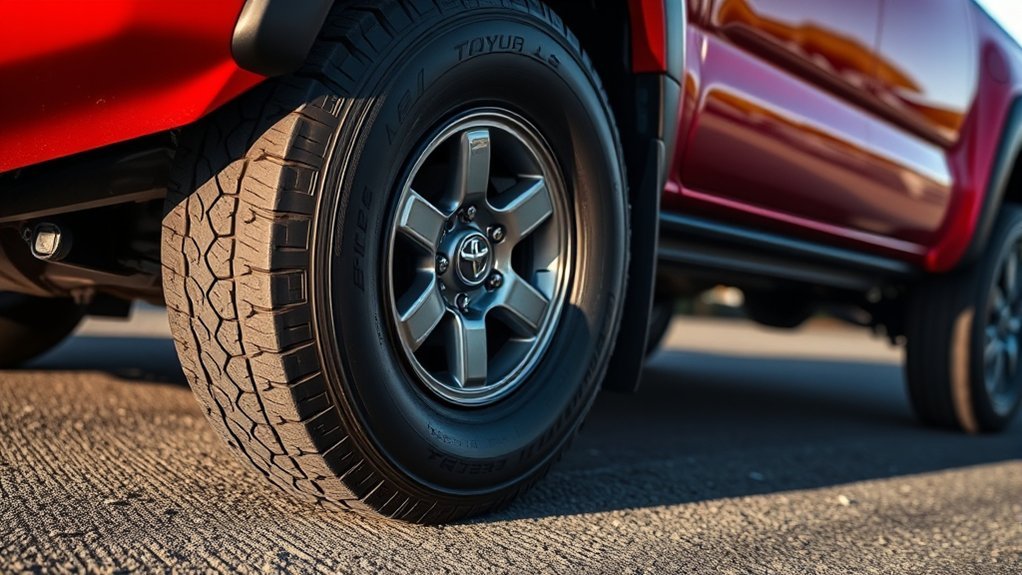
Running mismatched tire sizes on your Toyota Tacoma can lead to significant risks, including drivetrain damage and compromised safety systems. Even a small diameter difference can cause handling issues and uneven tire wear. It’s crucial to match tire sizes to maintain stability and guarantee your vehicle performs at its best. Ignoring these guidelines can result in costly repairs and safety hazards. To understand better how to maintain your tires and avoid problems, explore our detailed insights on tire care.
The Risks of Mismatched Tire Sizes on Your Tacoma
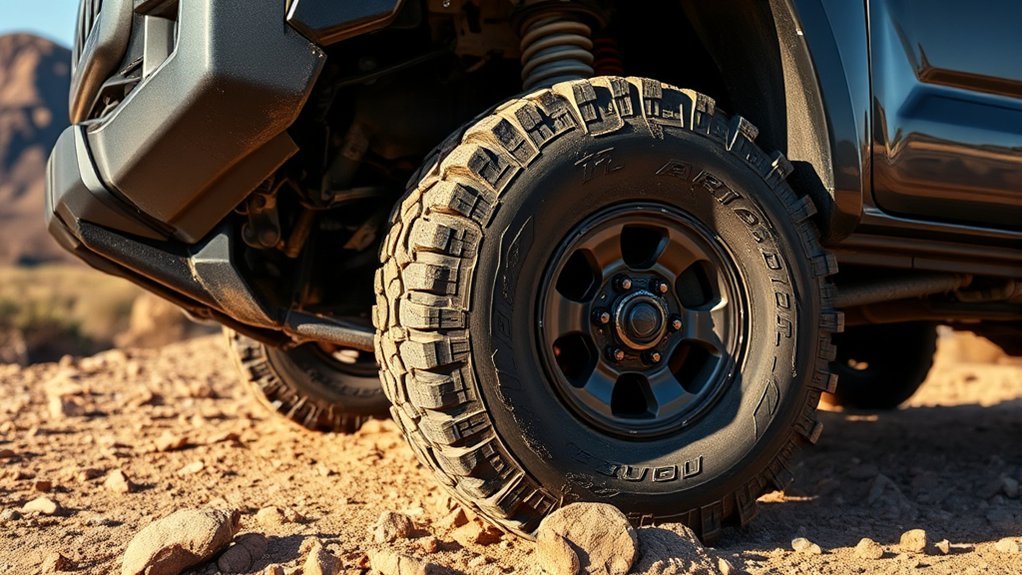
When you drive a Toyota Tacoma with mismatched tire sizes, you considerably increase the risk of damaging your vehicle’s drivetrain. The Tacoma’s drivetrain is engineered for uniform tire rotation, and any size comparison that exceeds a one-inch diameter difference can lead to unpredictable handling, particularly during turns. This discrepancy can trigger the ABS and traction control systems to malfunction, jeopardizing your safety and vehicle stability.
Moreover, the Tacoma’s 4WD system relies on consistent tire sizes across all positions to avoid undue stress on the drivetrain. Ignoring manufacturer guidelines can result in costly repairs down the line. By maintaining uniform tire sizes, you guarantee peak performance and minimize risks. Regular tire rotation helps preserve balanced traction, ensuring your Tacoma operates smoothly and safely. Embracing this knowledge liberates you from potential hazards, allowing you to drive with confidence and peace of mind. Prioritize the integrity of your Tacoma by adhering to proper tire specifications.
Understanding How Tire Size Affects Performance
Mismatched tire sizes not only risk drivetrain damage but also greatly affect your Tacoma’s overall performance. When you mix tire sizes, you introduce inconsistencies that can compromise handling and stability. Here’s how tire size impacts your driving experience:
- Differential strain: Inconsistent rotation speeds create excessive wear and potential differential damage.
- Handling and stability: Variations can lead to loss of control, especially during sharp turns.
- Braking performance: Confusion in the ABS and traction control systems may occur, affecting your stopping power.
- Tire pressure and load capacity: Mismatched sizes can alter the way your tires manage pressure and load, risking blowouts or uneven wear. Additionally, maintaining OEM-equivalent diameter is crucial to ensure compatibility and performance.
Toyota recommends sticking to the specified tire sizes to maintain peak performance and safety. By following these guidelines, you guarantee your Tacoma operates smoothly, giving you the freedom to tackle any terrain with confidence.
Safe Practices for Using a Spare Tire
Though using a spare tire may be necessary in emergencies, it’s vital to prioritize safety and vehicle integrity. First, confirm your spare matches the size of your original tires to maintain handling and stability. If the spare differs, limit your driving to short distances—ideally under 50 miles—and avoid using 4×4 mode to prevent unnecessary strain on your drivetrain.
Before hitting the road, conduct thorough tire pressure checks; under-inflation compromises safety and performance. Proper spare tire maintenance is important for reliability. If you find yourself with a notably mismatched spare, consider using it solely to reach a tire shop for a proper replacement. Additionally, ensure that your tire pressure remains within the recommended range to enhance fuel efficiency and traction.
What Do Manufacturers Say About Tire Uniformity?
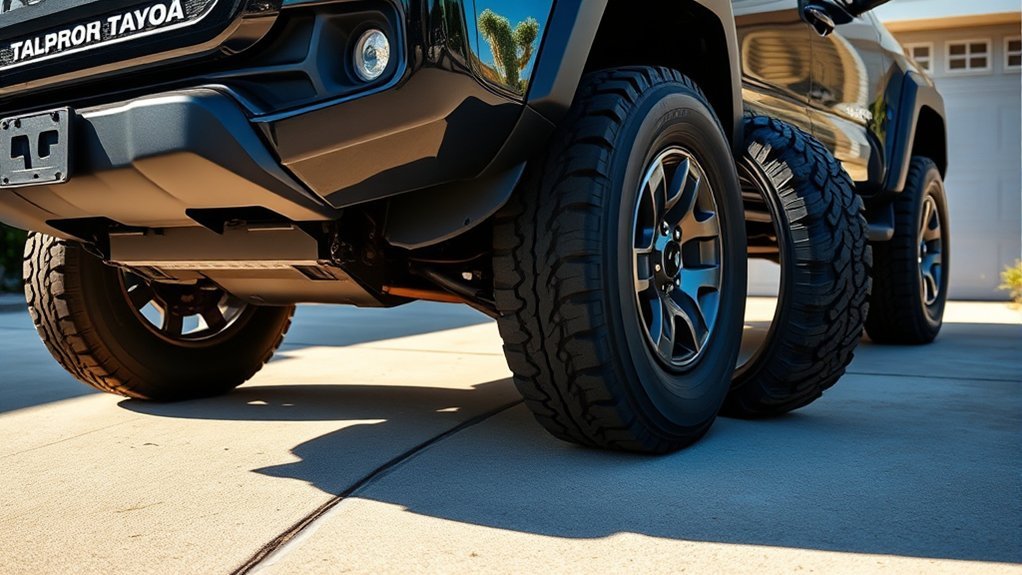
Manufacturers emphasize the importance of maintaining uniform tire sizes to optimize your Toyota Tacoma’s performance and safety. Even slight variations can affect handling, stability, and the functionality of vital systems like ABS and VSC. To guarantee compliance and safety, always consult your owner’s manual for the recommended tire specifications. Additionally, using tires with different load capacities can significantly impact vehicle performance and safety.
Recommended Tire Specifications
Ensuring that your tires match in size, type, and tread pattern is essential for maintaining your Toyota Tacoma’s performance and safety. Adhering to the Tacoma guidelines not only optimizes handling but also protects vital components. Here are some key tire specifications to keep in mind:
- Mismatched sizes can damage differential systems, especially in 4WD/AWD.
- Size variations should not exceed 3/8 inch to prevent handling issues.
- Uniform tires are important for effective traction control systems like ABS and VSC.
- Refer to the door jamb label and owner’s manual for precise specifications.
Impact on Vehicle Performance
When it comes to vehicle performance, uniform tire sizes are essential for the Toyota Tacoma. Manufacturers recommend maintaining identical tires to guarantee peak handling, traction, and stability. Mismatched sizes can lead to differential damage and increased wear on suspension components, severely affecting performance. Toyota specifically advises that differences in tire diameter should be minimal—ideally within 3/8 inch—to prevent issues with traction control and anti-lock brake systems. In 4WD, mismatched tires force the drivetrain to work harder, risking costly repairs. Additionally, discrepancies in tread depth and tire pressure can result in unpredictable handling, especially during turns. Maintaining uniformity not only enhances performance but also promotes vehicle longevity.
Safety Guidelines and Considerations
To maintain safety and performance, it’s vital to adhere to manufacturers’ guidelines regarding tire uniformity on your Toyota Tacoma. Mismatched tire sizes can disrupt the vehicle’s dynamics, impacting handling and increasing the risk of drivetrain damage. To guarantee peak operation, consider the following:
- Maintain uniform tire sizes across all four wheels.
- Monitor tire pressure regularly to avoid performance issues.
- Perform alignment checks to confirm stability.
- Consult your owner’s manual for specific size recommendations.
Using different tire sizes, particularly on a 4WD Tacoma, can strain the differential, leading to costly repairs. Keeping discrepancies within 3/8 inch is important for maintaining vehicle stability and performance. Your safety depends on following these guidelines diligently.
How to Spot Problems Caused by Mismatched Tires
You’ll notice handling and stability issues if your Tacoma has mismatched tires, especially during turns. Uneven tire wear is another clear sign, as it affects traction and performance. Additionally, pay attention to the functionality of your ABS and traction control systems, as they may not operate effectively, increasing safety risks. Regular wheel alignment checks can help mitigate some of these issues caused by mismatched sizes.
Handling and Stability Issues
Mismatched tire sizes can lead to noticeable handling and stability issues in a Toyota Tacoma, making it essential to spot these problems early. You might experience:
- Uneven handling, with the vehicle pulling to one side during acceleration or braking.
- A height difference of even 3/8 inch, considerably impacting stability and traction.
- Confusion in the traction control system, causing unexpected activation in slippery conditions.
- Premature wear on suspension components and increased strain on the drivetrain.
Monitoring your tire alignment and regularly checking for these signs can help maintain ideal handling dynamics. Addressing mismatched tires promptly can safeguard your Tacoma’s performance and longevity, ensuring a smoother, safer ride.
Uneven Tire Wear
When tire sizes differ, uneven tread wear becomes a significant concern for your Toyota Tacoma. Mismatched tires can lead to variations in rotation speed, causing some tires to wear down faster than others. To spot uneven wear, regularly check for discrepancies in tread depth and surface wear patterns. Look for signs like scalloping or bald spots, which indicate that one tire is bearing more load. If the diameter difference exceeds 3/8 inch, you might also exacerbate wear on suspension and drivetrain components. A thorough visual inspection can reveal these irregularities, signaling the need for immediate replacement or adjustment. Addressing these issues promptly can prevent further damage and guarantee your Tacoma operates efficiently.
Safety System Malfunctions
While driving your Toyota Tacoma, you might not realize that mismatched tire sizes can compromise essential safety systems. The implications can be severe, affecting both braking efficiency and traction control. Here’s how to spot potential problems:
- Warning lights may illuminate on your dashboard, signaling ABS or VSC issues.
- You might experience decreased braking performance, leading to longer stopping distances.
- The VSC system could struggle, causing loss of traction in adverse conditions.
- If the diameter difference exceeds 3/8 inch, erratic traction control responses may occur.
Addressing these discrepancies promptly is vital for your safety. Mismatched tires not only affect performance but can also lead to premature wear on your Tacoma’s differential and drivetrain components.
What Are the Best Practices for Tire Maintenance?
Maintaining your tires is essential for safety and performance, and following best practices can greatly extend their lifespan. Start by regularly checking tire pressure; keeping it at the recommended PSI not only enhances fuel efficiency but also minimizes uneven wear. Rotate your tires every 5,000 to 7,500 miles to guarantee even tread wear, further prolonging their life.
Use wear bars to inspect tread depth, and replace tires when they reach 2/32 of an inch for better safety and handling. Cleaning your tires regularly removes debris that can impact traction and wear patterns; opt for a cleaner suitable for your tire type. If you’re storing seasonal tires, keep them in a cool, dry place, away from direct sunlight and extreme temperatures, to prevent deterioration. Additionally, be mindful of tire age as it can significantly affect safety and performance. By adhering to these practices, you empower yourself with the knowledge needed for peak tire maintenance.
Learn From Others: Community Insights on Tire Sizes
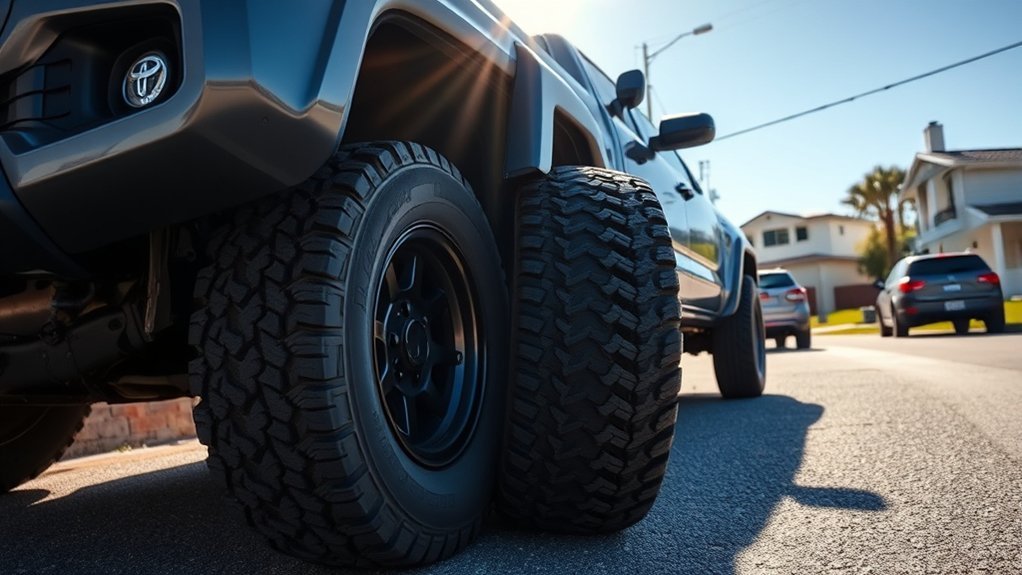
Understanding the implications of mismatched tire sizes is critical for Tacoma owners, especially those who rely on their vehicles for off-road and 4WD capabilities. Community experiences reveal that maintaining tire size compatibility is essential for safe driving. Here are key insights from fellow Tacoma drivers:
- Mismatched tires can lead to significant handling issues, particularly in 4WD.
- A diameter difference of even one inch can cause unpredictable behavior during cornering or under load.
- There’s a heightened risk of differential damage when using uneven tire sizes.
- Some recommend placing mismatched tires on non-driven axles, but this isn’t a best practice.
Regularly monitoring tire wear and performance can mitigate risks associated with mismatched sizes, ensuring your Tacoma remains safe and reliable. Additionally, understanding the benefits of all-season tires can help you make an informed decision about tire selection. By learning from others in the community, you can make informed decisions that enhance both your vehicle’s performance and your driving experience.
Frequently Asked Questions
Will a 265 70 17 Fit on a Toyota Tacoma?
Yes, a 265/70/17 tire can fit your Toyota Tacoma, but you must consider tire compatibility and size differences. Confirm the overall diameter remains within 3% of stock sizes for peak performance and safety.
Conclusion
In summary, running mismatched tire sizes on your Toyota Tacoma is like driving with one foot on the gas and the other on the brake—it disrupts performance and safety. To guarantee your vehicle operates smoothly and efficiently, always stick to uniform tire sizes. Regular maintenance and vigilance can prevent potential issues, keeping your Tacoma roadworthy. Don’t gamble with your safety; prioritize tire uniformity for a seamless driving experience.

Related Articles
How To Choose Wheel Offset for a Lifted Toyota Tacoma
Wondering how to choose the perfect wheel offset for your lifted Toyota Tacoma? Discover the key factors that can transform your ride's performance.
Read More
Toyota Tacoma Speedometer Correction for Oversized Tires
Get accurate speed readings on your Toyota Tacoma with speedometer correction for oversized tires—discover how to maintain performance and avoid costly issues.
Read More
Effect of Tire Size on Toyota Tacoma Gear Ratio
See how upgrading your Toyota Tacoma's tire size can impact gear ratios and performance—discover the critical adjustments you need to make.
Read More