Disclosure: As an Amazon Associate, we earn from qualifying purchases. If you click a link on this page and make a purchase, we may receive a small commission at no extra cost to you.
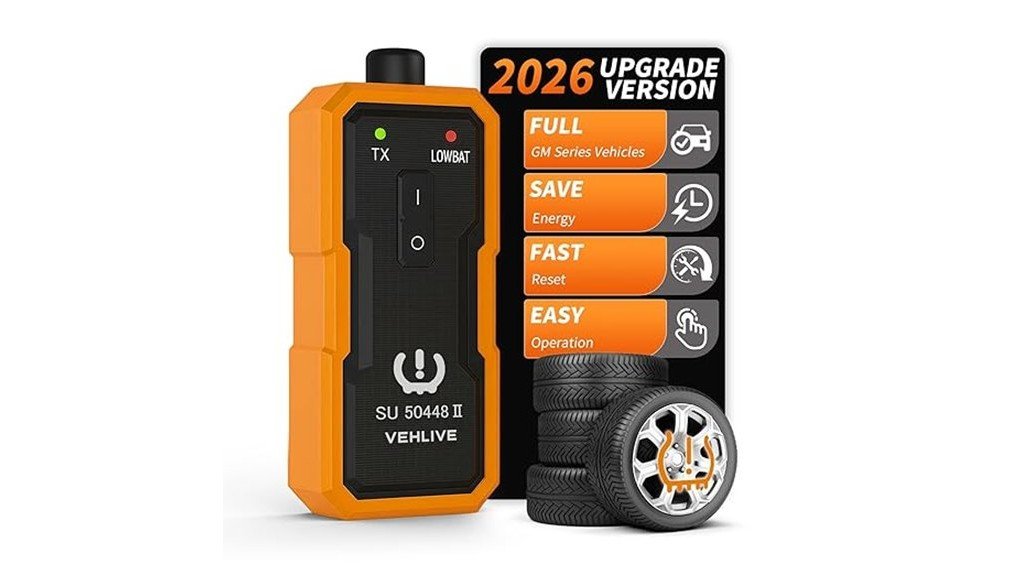
A tire rotation or seasonal wheel swap can leave a GM vehicle showing the wrong tire positions until the sensors are relearned. The VEHLIVE SU-50448 II TPMS Relearn Tool is a compact activation tool designed to handle that matching process without a shop visit. Its main strengths are simple two-button operation, a light ABS housing, and support for many GM applications. Its main limitation is equally important: it activates existing sensors, but it does not program blank sensors or diagnose every TPMS fault.
Quick Verdict
Rating: 7/10, recommended with compatibility caveats
Best For: GM owners who rotate tires or swap compatible wheel sets at home
Bottom Line: The SU-50448 II can make routine sensor matching quick and inexpensive when your exact vehicle supports the procedure. You should skip it if you need sensor programming, full diagnostics, or confirmed support for a truck that is not clearly listed.
Key Takeaways
- The VEHLIVE SU-50448 II is an activation and relearn tool, not a TPMS sensor programmer or full diagnostic scanner.
- The listing markets it for many Chevrolet, Buick, Cadillac, GMC, and Opel applications from 2006 to 2026, but exact model and year fit must be checked.
- It is listed for vehicles using 315 MHz or 433 MHz TPMS systems and requires one 9V battery.
- The typical GM matching order is driver-front, passenger-front, passenger-rear, then driver-rear.
- It offers the most value to owners who rotate tires, change seasonal wheel sets, or maintain more than one compatible GM vehicle.
| Specification | Detail |
|---|---|
| Brand | VEHLIVE |
| Model | SU-50448 II |
| Product type | Handheld TPMS sensor activation and relearn tool |
| Controls | Two-button design |
| Housing | ABS plastic |
| Listed system coverage | Compatible GM applications using 315 MHz or 433 MHz TPMS sensors |
| Power | One 9V battery required |
| Item weight | About 109 g (0.11 kg) |
| Parcel dimensions | 12.6 x 5.89 x 2.21 cm |
| Included components | One TPMS relearn tool and one user manual |
| Listing variants | With Battery and No Battery options may be offered |
| Main limitation | Does not program new sensors or provide full TPMS diagnostics |
What Is the VEHLIVE SU-50448 II?
The SU-50448 II is a handheld tool that wakes a compatible TPMS sensor while the vehicle is in learn mode. The vehicle then records that sensor’s identification code for a specific wheel position. This is useful after a tire rotation, after replacing a sensor, or when changing between summer and winter wheel sets.
The tool does not measure tire pressure on its own, repair a damaged sensor, or program a blank universal sensor. Its job is narrower: it triggers a working, compatible sensor so the vehicle can complete its own matching process.
Before You Buy: Confirm your exact make, model, year, sensor type, and relearn procedure. The listing claims broad GM coverage but also warns that some trucks are not supported, so a Chevrolet or GMC badge alone does not guarantee compatibility.
Who Should Buy It?
Best For
- Owners who rotate tires on a compatible GM vehicle at home
- Drivers who switch between summer and winter wheel sets
- Households maintaining several confirmed-compatible GM vehicles
Skip If
- You need to program a new or blank TPMS sensor
- You need sensor IDs, pressure readings, battery status, or fault diagnosis
- Your truck or newer GM model is not confirmed on the compatibility information
[Products Worth Considering]

The UYYE TPMS relearn tool helps activate and relearn tire pressure monitor sensors quickly, typically in minutes. It supports TPMS learn mode resetting using a simple three-step process: enter learn mode, position the tool near the valve stem, and press the learn button. Designed for specific GM models, it streamlines sensor programming and reduces trips to dealers or tire shops.

The VEHLIVE SU-50448 II TPMS relearn tool provides a fast activation reset to restore accurate tire pressure monitoring after sensor replacement or tire rotation. It supports 315 MHz and 433 MHz GM series sensors and helps clear dashboard pressure warnings. With simple two-button operation and horn-confirmed relearning order, you can reprogram sensors conveniently at home.
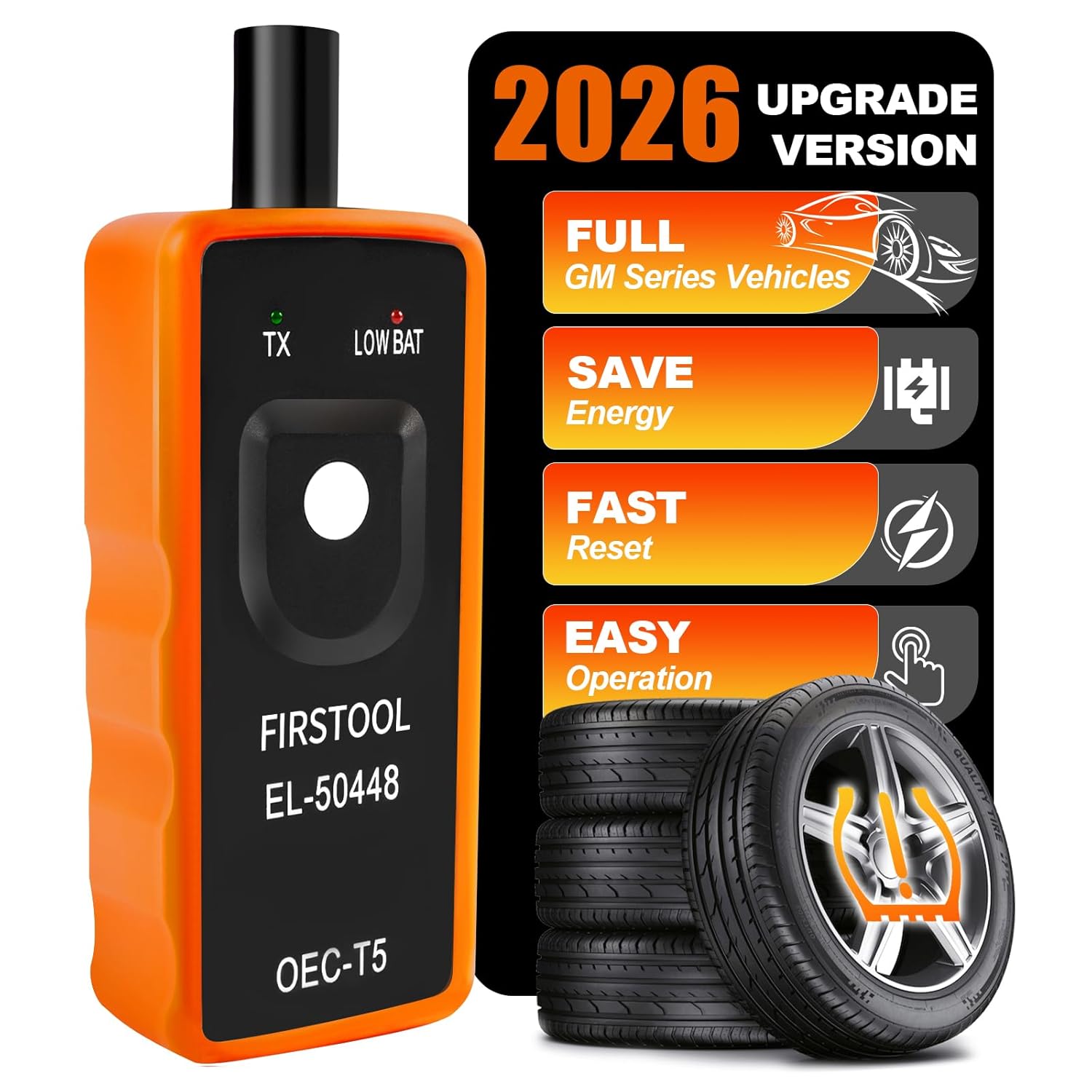
This TPMS relearn tool helps you quickly activate, match, and reset GM tire pressure sensors to keep the vehicle monitoring system working properly. It clears tire pressure alarms and dashboard warning lights after sensor replacement or tire rotation, and supports learning for common 315/433 MHz TPMS sensors. Designed for simple one-button operation, it can help you avoid unnecessary trips to repair shops.
Fit and Compatibility
VEHLIVE markets this model for many Chevrolet, Cadillac, Buick, GMC, and Opel vehicles from 2006 to 2026. The listing also refers to support for TPMS systems using 315 MHz and 433 MHz sensors. Those claims describe potential coverage, not guaranteed fit for every vehicle in that date range.
Compatibility can change by model year, trim, market, sensor type, and the relearn method built into the vehicle. Some GM vehicles use a manual sensor-matching process, while others may use a different procedure or require more capable service equipment. Check the tire pressure monitor section of your owner’s manual before ordering.
Pro Tip: Before buying, send the seller your vehicle’s year, make, model, trim, and market. Also confirm whether your installed sensors are original equipment, direct replacements, or programmable universal sensors.
Design and Build Quality
The SU-50448 II uses a compact ABS plastic housing and weighs about 109 grams. That makes it easy to store in a glove box, tire-service tote, or garage drawer. The listing describes the shell as resistant to dust and splashing water, but it should not be treated as waterproof or left exposed to rain.
The two-button layout is simpler than a screen-based diagnostic tool. That simplicity helps with routine relearns, but it also means you do not get an on-screen vehicle menu, sensor data, battery condition, or troubleshooting codes.
Power and Package Contents
The tool requires one 9V battery. Amazon may show both With Battery and No Battery options, so check the selected variant before placing your order. The listed package includes the tool and a user manual.
A fresh battery matters because weak voltage can reduce activation reliability. If you plan to store the tool for a long period, remove the battery to reduce the risk of leakage and corrosion inside the housing.
How Do You Use the SU-50448 II?
The exact way to enter TPMS learn mode varies by vehicle, so start with your owner’s manual. Many GM procedures use the following wheel order: driver-front, passenger-front, passenger-rear, then driver-rear. A horn chirp usually confirms each successful match, with a double chirp or message change confirming completion.
- Park on a safe, level surface, set the parking brake, and place the vehicle in the required ignition or service mode.
- Use the vehicle controls to start the TPMS sensor-matching procedure.
- Begin at the driver-front tire.
- Place the tool against the tire sidewall near the valve stem.
- Press the activation button and hold the tool steady until the vehicle confirms the sensor.
- Repeat at the passenger-front, passenger-rear, and driver-rear tires.
- Exit learn mode as directed by the vehicle manual.
- Set all tires to the cold pressure shown on the vehicle’s Tire and Loading Information label.
Some GM manuals set time limits for the first sensor and the complete sequence. Work in order and avoid long delays between wheels. If the process times out, restart learn mode rather than continuing from the middle.
Common Mistakes to Avoid
- Skipping learn mode: The tool cannot assign wheel positions unless the vehicle is ready to learn sensor IDs.
- Using the wrong wheel order: A successful chirp at the wrong corner can assign the pressure display to the wrong tire.
- Holding the tool too far from the valve stem: Keep it close to the sidewall where the sensor is mounted.
- Assuming a new sensor is already programmed: Universal sensors may need programming before this tool can relearn them.
- Using a weak 9V battery: Replace the battery before blaming the sensor or vehicle.
- Ignoring the included manual: The listing gives mixed wording about the cancel or off button, so follow the instructions supplied with your exact unit.
How It Performs in Real Use
After a Tire Rotation
This is the clearest use case. Once the tires move to new corners, the vehicle may still display each sensor under its old position. A successful relearn updates those locations so the dashboard corresponds to the correct wheel.
During Seasonal Wheel Changes
The tool can be useful when you install a second set of wheels with already programmed, compatible sensors. It cannot create or clone sensor IDs, but it may help the vehicle recognize the installed set after you enter learn mode.
After Sensor Replacement
A replacement sensor must be compatible, installed correctly, powered, and programmed when programming is required. The SU-50448 II can then activate it during the matching process. It cannot turn an unprogrammed universal sensor into a vehicle-ready sensor.
When Troubleshooting a No-Chirp Condition
No horn response can point to the wrong learn mode, poor tool placement, a weak tool battery, an unsupported vehicle, radio interference, or a failed sensor. Because this tool has no display, it cannot tell you which cause is responsible. Persistent failures call for a sensor-reading tool or professional diagnosis.
Compatibility and Safety
Perform the relearn away from traffic, set the parking brake, and keep the vehicle secure throughout the process. Do not crawl under a vehicle, loosen a valve stem, or remove a tire to use this tool. Keep the housing dry, avoid submersion, and stop using it if the case or battery contacts are damaged.
A relearn tool does not replace a reliable tire-pressure gauge. TPMS warns you about pressure problems, but you should still check cold tire pressure and inflate each tire to the value on the vehicle label, not the maximum pressure printed on the tire sidewall.
Pros and Cons
Pros
- Simple two-button layout for routine sensor matching
- Compact 109 g body is easy to store and carry
- ABS housing is suited to normal garage use
- Useful after rotations and compatible seasonal wheel swaps
- One tool may cover several confirmed-compatible GM vehicles
Cons
- Does not program blank sensors or provide diagnostic data
- Compatibility requires careful model-year verification, especially for trucks
- Battery inclusion depends on the selected listing variant
Is It Worth the Price?
The SU-50448 II sits in the budget end of the TPMS tool market. It offers strong value when you only need to activate compatible GM sensors during a relearn. One successful home tire rotation or seasonal wheel change may justify keeping it in your garage.
The value drops if you need broad multi-brand coverage, sensor programming, live sensor data, or fault diagnosis. In that case, spending more on a screen-based TPMS reader is more practical than buying a basic activator and then paying for additional service.
[Products Worth Considering]

The AICEL TPMS relearn tool helps you quickly reset or relearn tire pressure sensors after replacement, tire rotation, or resolving tire pressure alarms. It provides an activation reset function so your vehicle’s TPMS can operate optimally, saving time and money on frequent visits to an auto shop. Designed for easy use on most vehicles, it works by placing the tool near the valve stem and using the learn button.

Replace worn or malfunctioning GM TPMS sensors with this 433MHz pre-programmed sensor set designed for compatibility with many Chevrolet, Buick, GMC, and Cadillac models. It includes guidance for proper OBDII relearning/pairing after installation and supports reliable long-term operation with a high-performance CR2032 battery. Quality tested for durability and performance to help restore accurate tire pressure monitoring.

This GM TPMS relearn and reset tool (EL-50448) helps you activate and reset OE/OEM compatible tire pressure sensors for many Chevrolet, GMC, Buick, and Cadillac vehicles. It includes a pre-installed 9V alkaline battery for ready-to-use performance and features a one-button design for quick DIY TPMS relearn. Use it to clear the TPMS warning light, set the correct dashboard tire pressure, and test sensor operation.
How It Compares to Alternatives
A basic VXDAS EL-50448 is the closest type of alternative and may suit you if you want another low-cost GM activator. The ATEQ VT31 costs more but adds a display, make-model-year selection, and sensor data reading. A professional tool such as the Autel MaxiTPMS TS508WF goes further with diagnostics and sensor programming support, but it is excessive for an occasional GM tire rotation.
The VEHLIVE model makes the most sense when low cost and simple activation matter more than advanced information or shop-level functions.
[Products Worth Considering]
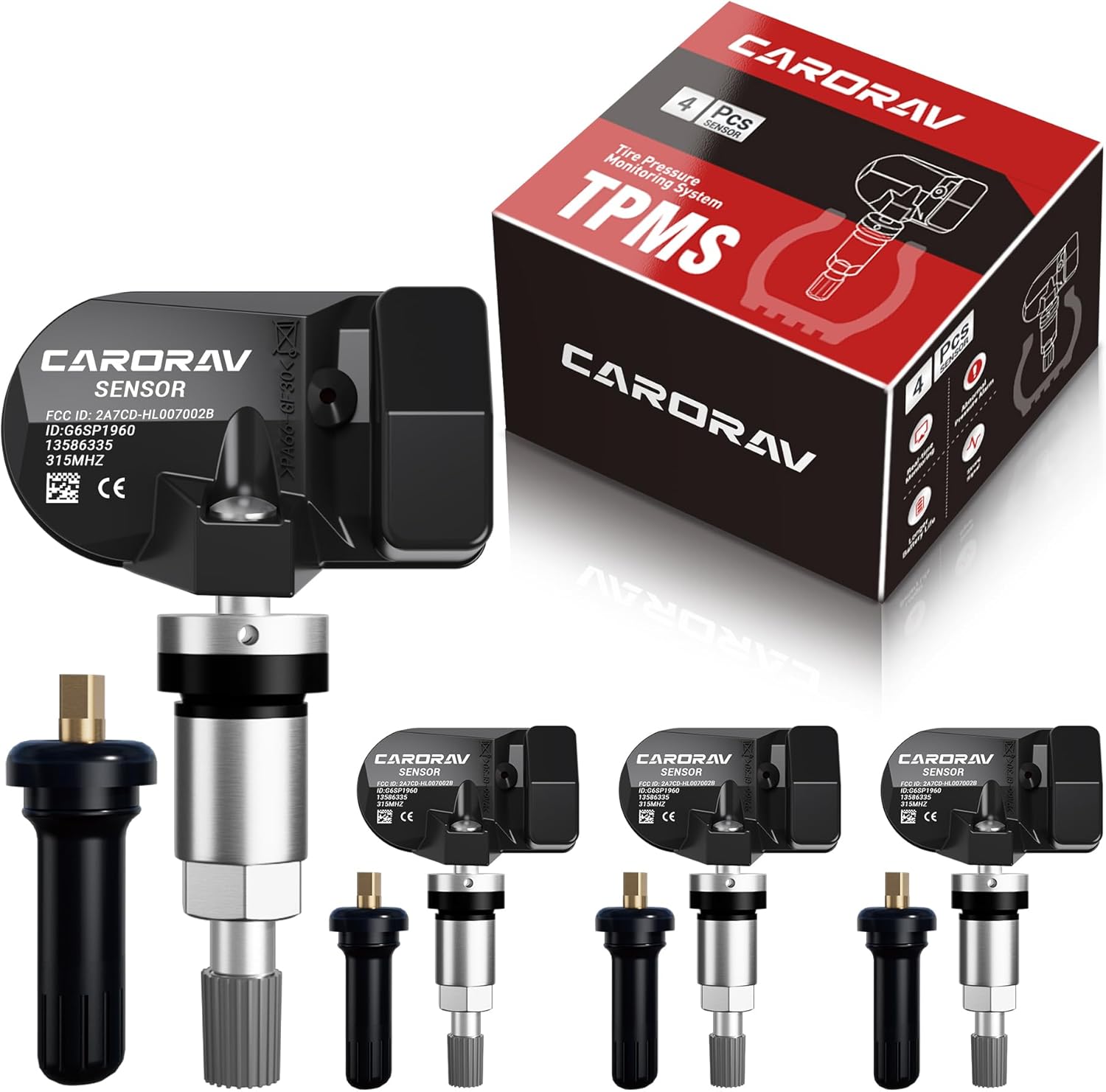
Replace worn or missing TPMS sensors with CARORAV pre-programmed GM-compatible sensors for a smoother installation experience. These 315MHz replacement sensors help monitor tire pressure in real time with long battery life, and they are designed to withstand harsh temperatures. Manual or OBDII relearn may be required to reset the system for proper recognition.

This TPMS sensor training and relearn reset tool is customized for Ford, Lincoln, and Mercury vehicles to help activate tire pressure programming after sensor replacement or tire rotation. It can activate individual tire pressure sensors with one-button operation, helping prevent TPMS warning light illumination. It is not a sensor programming tool and cannot program replacement sensors—use it to trigger/activate sensors only.

Masoll Gen 2 external TPMS sensors are a DIY replacement set of 4 for select GM vehicles made after 2006, helping you shut off the TPMS warning light quickly. Simply screw the sensors onto the tire valves and sync to your car ECU using the included EL-50448 relearn tool. Dual-frequency 315/433 MHz design provides OEM-level performance with accurate readings and replaceable batteries for about two years.
Frequently Asked Questions
Does the SU-50448 II program new TPMS sensors?
No. It activates compatible sensors during the vehicle’s relearn process. A blank or programmable universal sensor may need separate programming equipment before this tool can help match it to a wheel position.
Will it work on every Chevrolet, Buick, Cadillac, or GMC from 2006 to 2026?
No universal guarantee is possible. Coverage depends on the exact model, year, trim, market, sensor, and relearn method. Verify your owner’s manual and the seller’s compatibility information before ordering.
Does it work with aftermarket TPMS sensors?
It may work with aftermarket sensors that are compatible, functioning, and already programmed for your vehicle. The tool cannot correct the wrong sensor protocol or program a blank universal sensor.
What battery does the tool use?
It requires one 9V battery. Check whether you selected the With Battery or No Battery option, and remove the battery before long-term storage to reduce leakage risk.
What should you do if the horn does not chirp?
Confirm that the vehicle is in learn mode, move the tool closer to the valve stem, and try a fresh 9V battery. If the sensor still does not respond, check compatibility and have the sensor tested for battery or hardware failure.
Can the tool clear a TPMS warning light?
A successful relearn may clear a warning caused by unmatched wheel positions. It will not fix low pressure, a dead sensor, damaged wiring, an incompatible wheel, or another system fault.
Is it safe to use in wet conditions?
The ABS housing is described as resistant to splashing, but the tool is not listed as waterproof. Keep your hands and the battery compartment dry, and do not use or store it in standing water.
Who should choose a more advanced TPMS tool?
Choose a screen-based reader or programmer if you service several brands, need to read sensor IDs and battery status, or install programmable sensors. The SU-50448 II is best for a narrower activation task.
The Bottom Line
The VEHLIVE SU-50448 II is worth considering for a compatible GM owner who wants a small, low-cost tool for tire rotations and seasonal wheel changes. Its simple controls and compact body are useful, but its narrow function and uncertain fit on some vehicles mean you should verify compatibility before buying. Skip it when you need sensor programming, diagnostic data, or professional multi-brand coverage.
Ready to Buy?
Check the latest price, selected battery option, and vehicle compatibility before you decide.