
Toyota Hilux Lug Nut Torque Guide: Specs & Safety
Toyota Hilux Lug Nut Torque Guide
A loose wheel nut can turn a routine drive into a serious safety risk. Too much force can also damage studs, threads, wheels, or brake parts. This guide explains why lug nut torque matters on your Toyota Hilux, how to tighten wheel nuts safely, and when to recheck them.
Quick Answer
Toyota Hilux lug nut torque depends on the model year, wheel type, and market. Check your owner’s manual or the wheel service label for the exact figure, then tighten each nut with a calibrated torque wrench in a star pattern. Recheck the torque after the first 50 to 100 miles after wheel service.
Key Takeaways
- Use your Toyota Hilux owner’s manual as the final source for the correct wheel nut torque.
- Tighten lug nuts with a calibrated torque wrench, not an impact gun alone.
- Use a star pattern so the wheel seats evenly against the hub.
- Recheck torque after wheel installation, tire rotation, or a long trip on rough roads.
- Stop driving and inspect the wheel area if you hear knocking or feel new vibration.
The Risks of Incorrect Lug Nut Torque
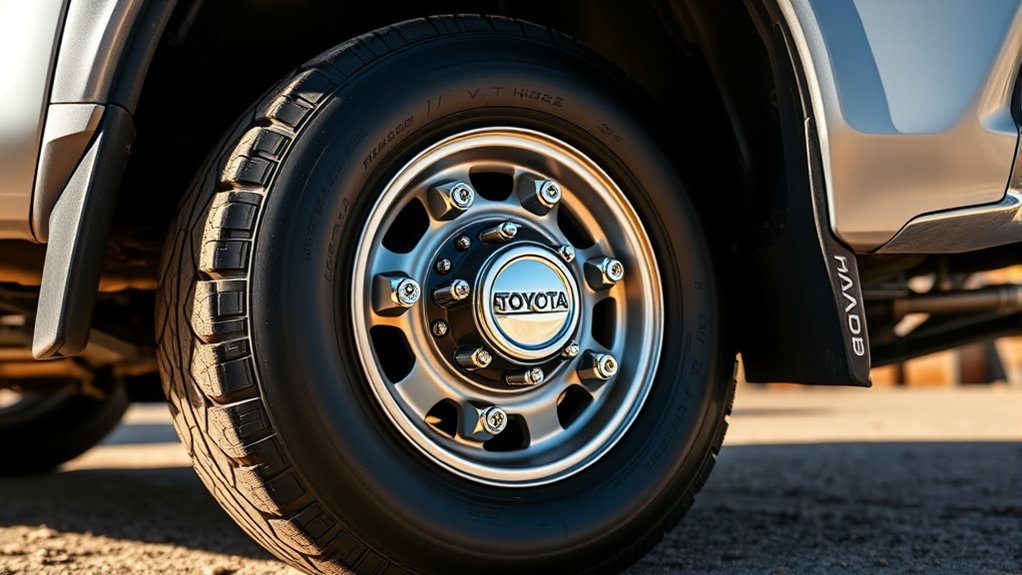
When you don’t torque lug nuts correctly, you increase the risk of serious safety issues. Under-torqued nuts can loosen as the wheel moves and vibrates. If you ignore the problem, the wheel can shift on the hub or detach.
Over-torqued nuts create a different risk. Too much force can stretch wheel studs, damage threads, deform alloy wheels, or make a roadside tire change much harder. It can also place uneven stress on brake and wheel parts.
Warning: Don’t drive a Hilux if you suspect a loose wheel, because the damage can get worse fast.
The right torque specification helps the wheel clamp evenly to the hub. That clamping force supports stable steering, smooth braking, and safer tire wear. Use the correct tools and recheck the nuts after wheel service.
How to Properly Torque Your Toyota Hilux Lug Nuts
To keep your Toyota Hilux wheels secure, follow a clear tightening process. Start with clean studs, clean nut seats, and the torque value from your owner’s manual. Dirt, rust, grease, or damaged threads can change how the nut tightens.
Use this basic process:
- Inspect the studs and nuts. Look for rust, damaged threads, cracks, or missing taper seats.
- Seat the wheel by hand. Fit the wheel flat against the hub before you tighten any nut.
- Hand-tighten each nut. Turn each nut by hand first so you avoid cross-threading.
- Use a star pattern. Tighten opposite nuts in sequence so the wheel seats evenly.
- Apply torque in stages. Snug the nuts first, then tighten them to the final specified torque.
- Recheck after driving. Check the torque again after 50 to 100 miles of normal driving.
A calibrated torque wrench gives you the best control. An impact wrench can help remove nuts, but it should not replace the final torque check. Set the wrench to the correct specification and stop when it clicks.
Pro tip: Keep a written torque record after tire rotations, wheel swaps, or brake work.
Signs Your Lug Nuts May Be Too Loose or Too Tight
Properly torqued lug nuts are essential for vehicle safety, but you also need to spot warning signs early. Loose lug nuts may cause rhythmic knocking, clicking, steering vibration, or a wobble that changes with speed. You may also see shiny movement marks around the lug holes.
Loose nuts can back off faster on rough roads, gravel tracks, or after a wheel change. Stop in a safe place if the steering feel changes after tire service. Check the wheel nuts before you keep driving.
Overtightened nuts often show up during the next repair. You may struggle to remove the wheel, find damaged threads, or see cracks near alloy wheel seats. A technician may also find stretched studs or distorted mounting surfaces.
Proper Torque Values for Various Toyota Hilux Models
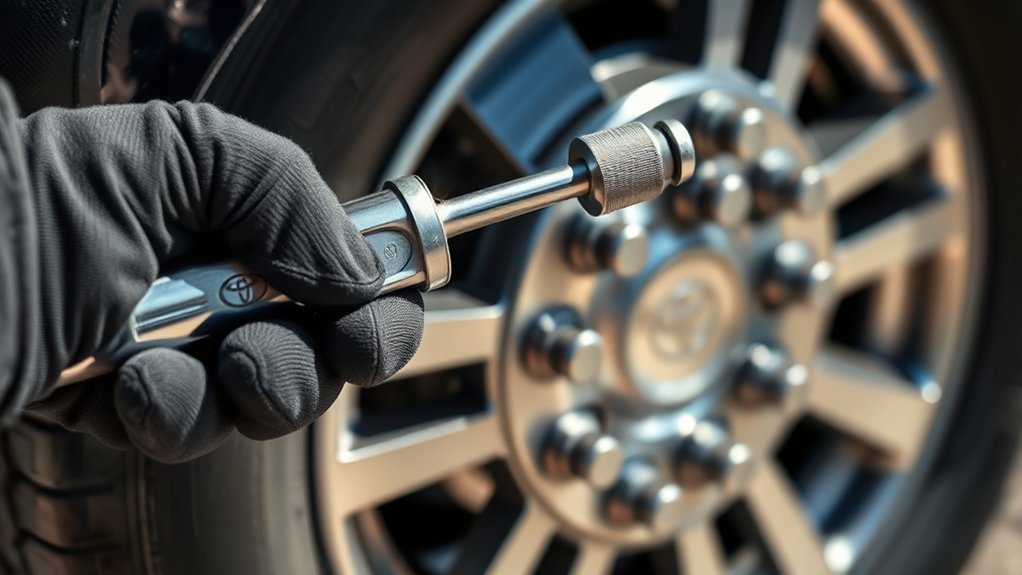
Toyota Hilux wheel nut torque can vary by model year, wheel design, stud size, and market. Many guides give general ranges, but your owner’s manual should guide the final setting. Use the manual, a factory service source, or a qualified Toyota technician when you need an exact number.
Avoid guessing based only on vehicle size. Two Hilux models can look similar but still use different wheel hardware. Aftermarket wheels can also require different nut styles or service steps.
Compact and Mid-Size Models
For compact and mid-size Hilux variants, confirm the specification before you tighten the nuts. Some service references list values in Newton-metres, while others use foot-pounds. Convert the unit carefully before setting your wrench.
Use the same torque process on every wheel. Hand-start each nut, tighten in a star pattern, and bring the nuts up to final torque in stages. This keeps the wheel face seated flat against the hub.
Full-Size and Heavy-Duty Models
For work-focused or heavy-duty Hilux setups, proper torque matters even more. Heavier loads, towing, rough roads, and larger tires can place more stress on wheel hardware. Still, you should not increase torque beyond the correct specification without a verified service source.
Keep these checks in mind:
- Confirm the exact specification. Use the owner’s manual or factory service data for your model.
- Check the wheel hardware. Make sure the nut seat matches the wheel design.
- Recheck after service. Inspect torque again after tire work, brake work, or heavy use.
Using the correct torque helps protect studs, wheels, brake parts, and tires. It also helps your Hilux stay stable under load.
Foot-Pounds vs Newton-Metres: What the Units Mean
Torque specs may appear as foot-pounds (ft-lb) or Newton-metres (N·m). Both units measure twisting force. Your torque wrench must match the unit in the service specification, or you must convert it correctly.
As a simple rule, 1 ft-lb equals about 1.356 N·m. If your manual lists N·m and your wrench uses ft-lb, convert before you start. Don’t round too far, because wheel hardware needs even clamping force.
When to Check Your Lug Nut Torque?
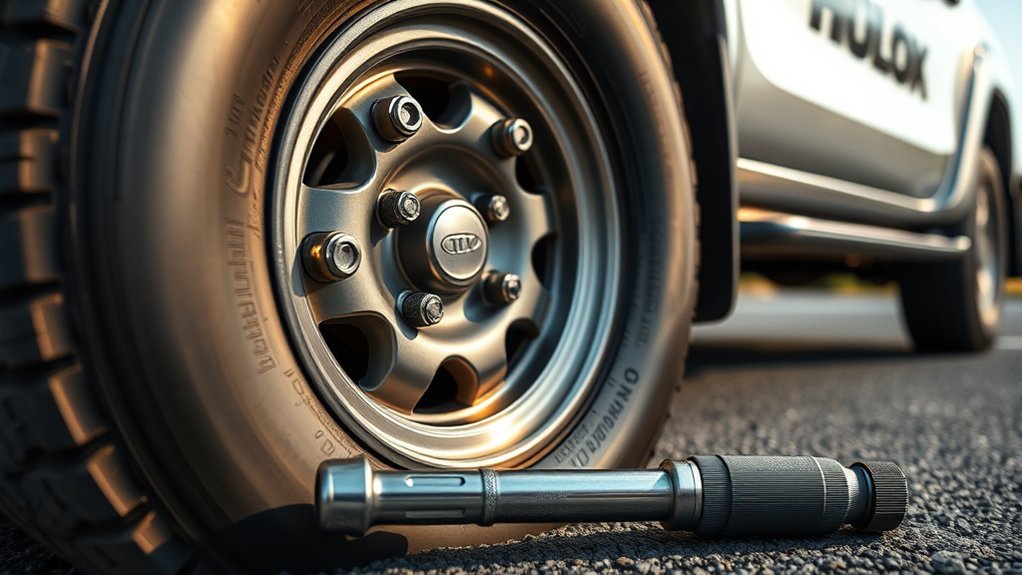
Check your lug nut torque after you install new tires, rotate wheels, repair brakes, or change a flat tire. These checks help confirm the wheel still sits firmly against the hub. They also reduce the chance of hidden looseness after service.
Recheck torque after the first 50 to 100 miles of driving after wheel installation. You should also check before long trips, after hard off-road use, or after hitting a pothole. Add the check to your normal maintenance routine if your Hilux carries loads or drives on rough roads.
Don’t add grease or oil to wheel studs unless your manual specifically tells you to. Lubricated threads can change the clamping force and lead to overtightening. Clean, dry threads give the most predictable result for most wheel nut service.
Why Getting Your Torque Checked by Pros Matters
You can torque lug nuts yourself if you have the right tool and the correct specification. A professional check still adds value when you notice damage, vibration, rust, or uneven tire wear. Trained technicians can inspect the wheel, studs, nuts, hub face, and brake parts at the same time.
Professional service helps you avoid three common problems:
- Loose wheels. A technician can confirm the nuts hold the wheel with the right clamping force.
- Damaged hardware. A shop can spot stretched studs, stripped threads, or wrong nut seats.
- Uneven seating. A technician can clean corrosion and confirm the wheel sits flat.
Ask the shop to finish the job with a calibrated torque wrench. That final check matters more than how quickly the nuts were tightened.
Common Torque Specs for Different Toyota Hilux Models
General Toyota Hilux lug nut torque specs often appear in service charts, tire shop guides, and owner discussions. Treat those numbers as a starting point only. Your model year and wheel setup should decide the final setting.
If your Hilux uses factory wheels, check the owner’s manual first. If it uses aftermarket wheels, confirm the wheel maker’s instructions and the correct nut type. A wrong nut seat can loosen even when the wrench shows the right torque.
After installation or maintenance, recheck the torque after the first 50 to 100 miles. This small step helps confirm the wheel stayed seated after real road vibration. It also gives you a chance to catch problems before they become dangerous.
Common Lug Nut Torque Mistakes to Avoid
Small mistakes can cause big wheel problems. Avoid these habits when you service your Hilux wheels:
- Using an impact wrench for final tightening without a torque wrench check.
- Tightening nuts in a circle instead of a star pattern.
- Guessing the torque based on another vehicle.
- Ignoring rust, dirt, or damaged threads.
- Mixing factory wheels with the wrong aftermarket lug nuts.
Good wheel service takes only a few extra minutes. It can save you from damaged studs, uneven wheel seating, and unsafe driving.
Frequently Asked Questions
What Should Toyota Hilux Wheel Nuts Be Torqued To?
Your Toyota Hilux wheel nuts should be torqued to the specification listed for your exact model. Check the owner’s manual, factory service data, or a Toyota service department before you set the wrench. Don’t rely on a single general range for every Hilux.
How Important Is It to Torque Lug Nuts to Spec?
Correct torque helps keep the wheel clamped firmly to the hub. Too little torque can let the nuts loosen, while too much torque can damage studs or threads. Both problems can reduce safety and increase repair costs.
How Much Torque Can Toyota Lug Nuts Really Handle?
Toyota lug nuts should only handle the torque specified for the vehicle and wheel hardware. The safe limit depends on stud size, nut design, wheel type, and thread condition. Don’t exceed the factory specification to make the nuts feel tighter.
What Is the Torque on a Hilux Tire?
The torque applies to the wheel nuts, not the tire itself. For a Hilux, use the wheel nut torque listed for your model year and wheel setup. Recheck the nuts after 50 to 100 miles when you install or rotate wheels.
Can I Drive With One Loose Lug Nut?
You should not keep driving if you know a lug nut is loose. Stop safely, inspect the wheel, and tighten the nut to the correct specification if the hardware looks sound. If any stud or nut looks damaged, call a professional.
Safety Disclaimer: This article is for informational purposes only and does not replace your Toyota owner’s manual or professional vehicle service. Always use verified specifications for your exact Hilux model and ask a qualified technician to inspect damaged wheel hardware.
Conclusion
Correct lug nut torque helps keep your Toyota Hilux stable, safe, and ready for the road. Use the exact specification for your model, tighten the nuts in a star pattern, and recheck them after wheel service. If you hear knocking, feel vibration, or see damaged hardware, stop and inspect the wheel area before you drive farther. A careful torque check gives you more confidence every time your Hilux leaves the driveway.

Related Articles

Toyota Hilux Run-Flat Tires: What You Need to Know
Take control of your safety with Toyota Hilux run-flat tires; discover their benefits and hidden costs that could change your driving experience forever.
Read More
Effects of Underinflated Tires on the Toyota Hilux
Inadequate tire pressure in your Toyota Hilux can lead to serious safety issues and costly repairs; discover how to avoid these pitfalls.
Read More
The Risks of Overinflating Toyota Hilux Tires
Overinflating your Toyota Hilux tires can lead to dangerous blowouts and uneven wear, but understanding the risks is crucial for your safety.
Read More