Tire Balancing vs Alignment: What’s the Difference and When You Need Each
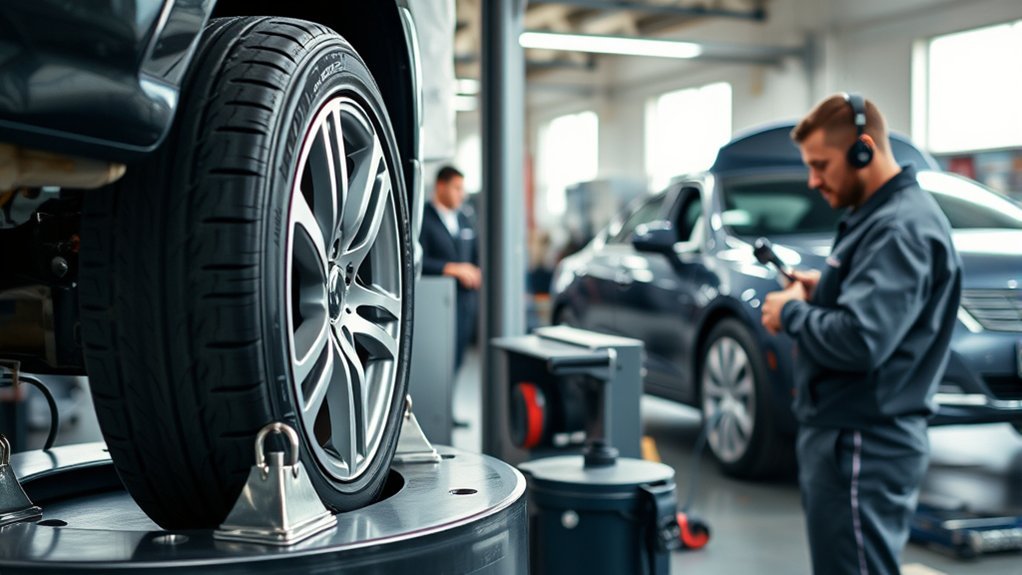
Tire balancing corrects uneven weight distribution in your tires, enhancing ride comfort and extending tire life. You should schedule it every 5,000 to 6,000 miles, especially after new installs. Wheel alignment, on the other hand, adjusts the angles of your wheels to guarantee they meet manufacturer specifications, improving handling and safety. Regular checks are recommended every 6,000 miles or after major impacts. Understanding these differences can help you maintain peak vehicle performance, so let’s explore more details.
What Is Tire Balancing?
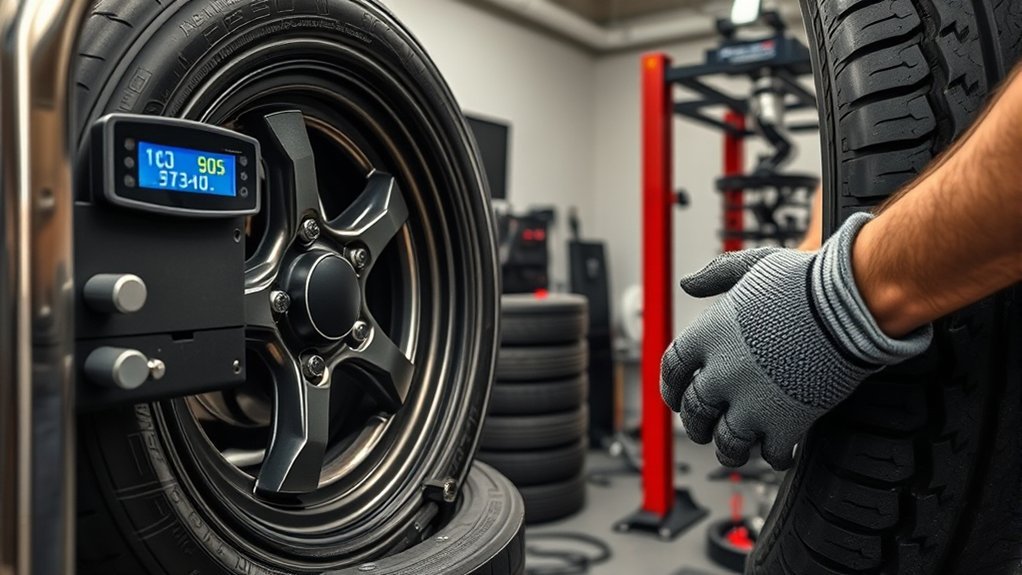
Tire balancing is essential for ensuring a smooth driving experience, as it corrects uneven weight distribution within tire and wheel assemblies. This process uses a tire balancing machine to identify imbalances and adjust them with metal weights. Proper tire maintenance is vital; without it, you may notice vibrations in the steering wheel, floorboard, or seat, and experience uneven tire wear. Regularly balancing your tires every 5,000 to 6,000 miles or during tire rotations can greatly enhance ride comfort and stability. Balance benefits extend beyond just comfort; they also promote even wear across the tire surface, ultimately extending tire life. By addressing imbalances promptly, you not only improve driving performance but also contribute to safer, more efficient driving. Embracing tire balancing as part of your maintenance routine empowers you to take control of your vehicle’s performance and longevity.
What Is Wheel Alignment?
Proper wheel alignment is vital for maintaining vehicle performance and safety. It involves adjusting the angles of your wheels to meet manufacturer specifications, guaranteeing optimal road contact and handling. The three primary angles adjusted during alignment are camber, caster, and toe. Camber adjustment affects how your tires make contact with the road; too much tilt can lead to uneven tire wear. The caster angle, which influences steering stability, ensures your wheels return to the center after turning. When your vehicle’s alignment is off, you may notice a crooked steering wheel, uneven tire wear, or your car pulling to one side. Regular checks, ideally every 6,000 miles or after significant impacts like hitting potholes, are essential for sustaining tire longevity and enhancing driving comfort. By staying proactive about alignment, you can unlock your vehicle’s full potential on the road.
How to Spot When Your Tires Need Balancing?
How can you tell if your tires need balancing? Watch for consistent vibrations in your steering wheel, floorboard, or seat. These vibration causes often indicate an imbalance. Additionally, inspect your tires for uneven tread wear; this can signal that your tires aren’t making proper contact with the road due to imbalance. If you notice a noticeable wobbling sensation at certain speeds, it’s another clear sign that your tires may need balancing. Flat spots, which develop from prolonged parking, can also disrupt even weight distribution, requiring your attention. Finally, remember to balance your tires after any new installations or repairs. This practice is essential for ideal tire maintenance and performance, reducing vibrations and enhancing your driving experience. Addressing these issues promptly can liberate your ride from discomfort and potential safety hazards.
How to Recognize Wheel Alignment Needs?
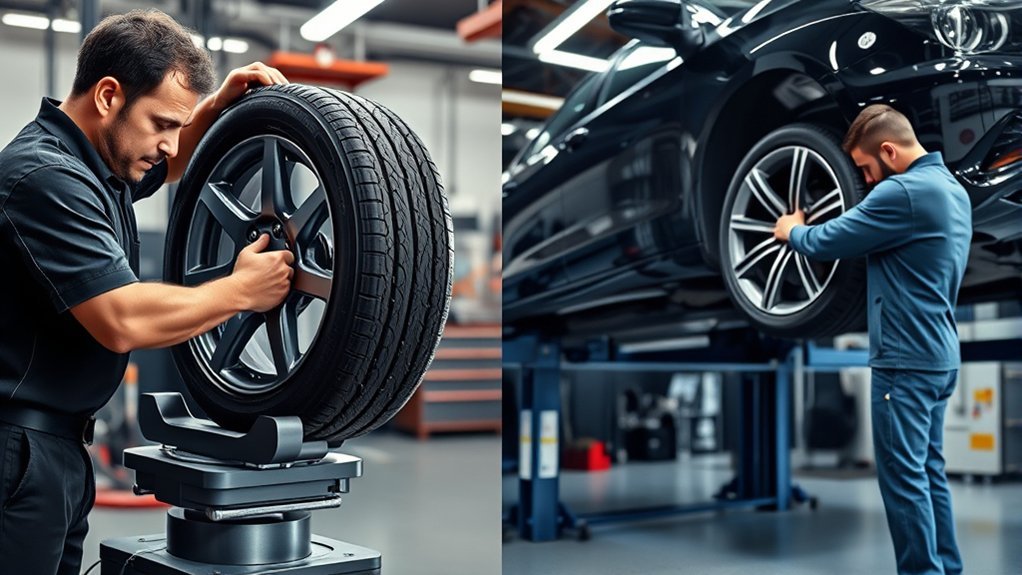
Ever wondered why your vehicle seems to drift to one side while driving straight? This is one of the most common alignment symptoms you should never ignore. Recognizing when your wheels need alignment is essential for safety and performance. Look out for these key indicators:
- Your car pulls to one side.
- Uneven or rapid tire wear, especially on one side.
- An off-center steering wheel, where the logo isn’t aligned.
- Squealing tires during turns, particularly if paired with uneven wear.
- Difficulty in steering or a feeling of looseness in the wheel.
Addressing these steering issues promptly can prevent further damage and enhance your driving experience. Regular checks every 6,000 miles can help maintain peak vehicle performance, ensuring you enjoy the liberation of a smooth ride. Don’t let misalignment hold you back!
When to Schedule Balancing and Alignment Services?
When should you consider scheduling tire balancing and alignment services? It’s vital to balance your tires every 5,000 to 6,000 miles, especially after installing new tires or rotating them. If you notice vibrations, it’s a clear sign to get this service done. For wheel alignment, check every 6,000 miles or twice a year. Pay attention if your car pulls to one side or if you spot uneven tire wear. Both services are important after hitting potholes or curbs to guarantee peak performance. Regularly monitoring symptoms like steering wheel vibrations for balancing and off-center steering for alignment can help you catch issues early. Incorporating these tire maintenance tips into your routine not only boosts vehicle handling but also extends tire life, ultimately preventing costly repairs down the line. Prioritize these services to maintain your vehicle’s freedom on the road.
Frequently Asked Questions
How Do I Know if I Need a Balance or Alignment?
If you notice uneven tire wear or your vehicle pulls to one side, it’s time for an alignment. For vibrations while driving, check tire balance. Prioritize these adjustments for ideal driving comfort and safety.
How Much Should a Full Alignment Cost?
A full alignment typically costs between $75 and $150, influenced by alignment cost factors like vehicle type. Watch for tire wear signs; regular checks can prevent costly issues and enhance your vehicle’s performance.
Does a Jeep Wrangler Need an Alignment?
Your Jeep Wrangler needs an alignment after off-roading adventures, like a ship adjusting its sails against turbulent seas. Regular checks optimize handling and prolong tire life, ensuring you navigate both trails and roads smoothly.
Which Is More Important, Alignment or Balancing?
Balancing’s essential for ride comfort, but alignment’s more important for preventing tire wear and steering issues. Prioritize alignment to enhance driving safety, as misalignment can considerably impact your vehicle’s performance and overall longevity.
Conclusion
Understanding the difference between tire balancing and wheel alignment is essential for your vehicle’s performance. While you might think these services are a hassle, neglecting them can lead to uneven tire wear and compromised handling. By scheduling regular checks, you not only enhance your safety but also extend the life of your tires. Investing a little time in these services now can save you from costly repairs down the road, ensuring a smoother, safer ride every time you hit the road.

Related Articles

Benefits of Nitrogen in Tires for a Toyota Tundra: Fact vs Hype
Maximize your Toyota Tundra's tire performance with nitrogen—discover the real benefits and whether the hype holds true. What will you find out?
Read More
How to Maintain TPMS Sensors During Tire Changes: Avoiding Costly Damage
Comprehensive care for TPMS sensors during tire changes can prevent costly damage—discover essential steps to ensure optimal performance and safety.
Read More
How Often to Check Tire Pressure on a Tundra: A Simple Schedule
Discover the essential schedule for checking your Tundra's tire pressure to ensure safety and performance—don’t let improper inflation jeopardize your next adventure!
Read More