
Understanding Tire Date Codes: A 4Runner Owner Guide

Your 4Runner’s tire date code is stamped on the sidewall after “DOT”—check the final four digits, where “1319” means week 13 of 2019. Rubber degrades dangerously after 5-7 years regardless of tread depth, so you must replace aging tires before hidden cracking causes failure. Always verify freshness when purchasing new tires, and document dates for your records. Your vehicle’s safety depends on monitoring this often-overlooked detail, and there’s more you should know about protecting your investment.
Where to Find Your 4Runner’s Tire Date Code
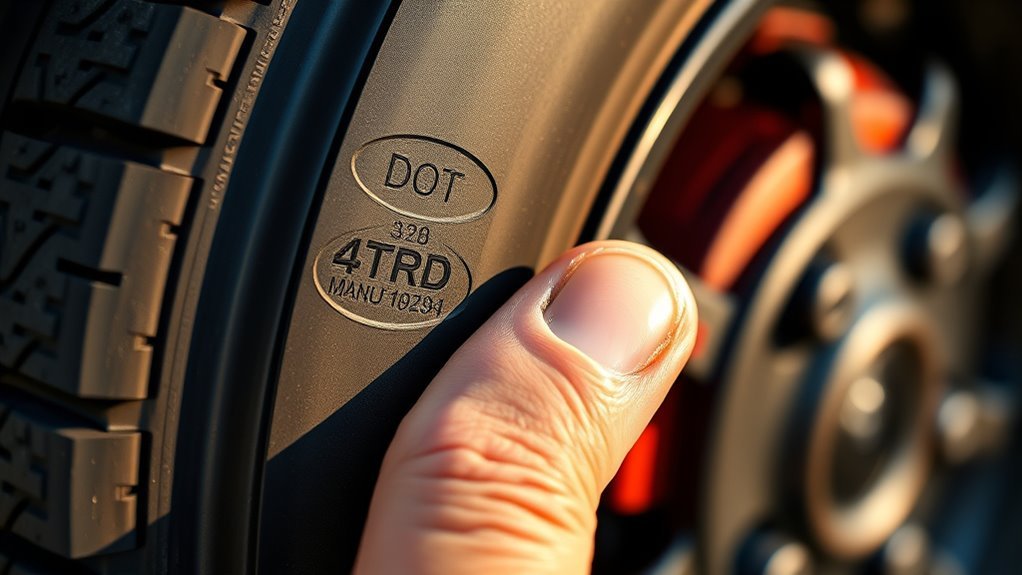
Your 4Runner’s tires carry a critical safety marker you’ll want to locate immediately: the Tire Identification Number (TIN). You’ll find this stamped on the sidewall, beginning with “DOT” followed by alphanumeric characters. The final four digits reveal your tire’s birthdate—week and year of manufacture.
Don’t stop at one glance. Employ thorough visual inspection techniques by checking both sidewalls of each tire. Manufacturers often stamp date codes on only one side, so flipping your inspection prevents dangerous oversight.
Master these tire maintenance tips: crouch to eye level, rotate slowly, and photograph codes for your records. For older rubber, watch for three-digit codes denoting pre-2000 production—”229″ signals the 22nd week of 1999.
You’re liberating yourself from uncertainty. Knowledge replaces guesswork. Spot that code, decode your tire’s age, and reclaim control over your 4Runner’s roadworthiness.
What If Your DOT Code Is Missing or Faded?
When the DOT code has worn away or faded beyond recognition, you’re facing a significant safety blind spot that demands immediate attention. Start your DOT code alternatives search by examining every sidewall surface under bright light—codes sometimes hide in recessed areas. For pre-2000 tires, hunt for three-digit remnants indicating week and year without decade markers.
Deploy systematic tire inspection techniques: measure tread depth across multiple points, probe for dry rot, sidewall cracking, and uneven wear patterns. These degradation indicators reveal age regardless of missing documentation.
Consult professional tire specialists equipped with magnification tools and manufacturer databases. They’ll cross-reference construction features—tread patterns, compound characteristics, internal construction—to estimate production windows.
Maintain meticulous purchase records. Your receipts become critical DOT code alternatives when physical markings vanish. Document installation dates, rotation schedules, and mileage logs.
Never gamble with unidentified rubber. If age verification proves impossible, replace the tire. Your liberation from uncertainty starts with decisive action—unverified tires compromise your 4Runner’s reliability and your safety.
Why Tire Age Matters More Than Tread Depth
Although your tread depth gauges might read 6/32″ or better, you’re potentially riding on compromised rubber that’s silently surrendered its structural integrity to time’s relentless assault. Tire deterioration accelerates through UV exposure and ozone infiltration, attacking compounds you can’t see until failure strikes.
| Age Range | Visible Condition | Safety Implications |
|---|---|---|
| 5-7 years | Tread may appear adequate | Structural bonds weakening; replacement window opens |
| 7-12 years | Sidewall cracking likely hidden | Catastrophic failure risk elevates considerably |
| 12+ years | Hazardous regardless of appearance | Blowout probability demands immediate removal |
You’re chasing freedom on trails and highways, but aged tires imprison you to unpredictability. That DOT date code reveals manufacture week and year—your liberation tool against invisible degradation. Don’t let superficial tread depth deceive you; the rubber beneath carries expiration dates written in chemistry, not convenience. Inspect. Decode. Replace. Your next adventure depends on it.
How to Read 4-Digit Date Codes (2000 and Newer)
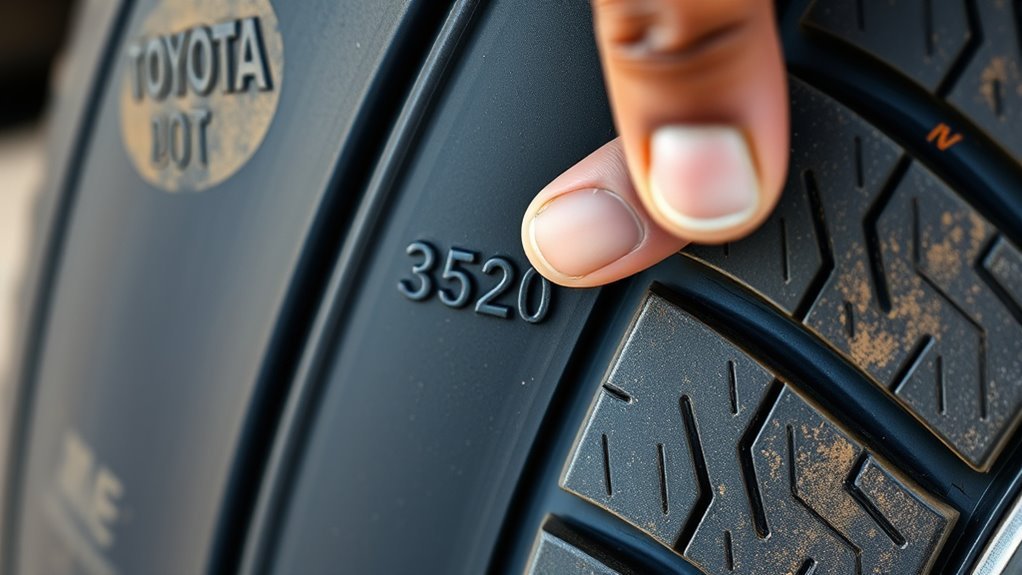
Four digits separate a sound tire from a silent threat. You locate the DOT code on your tire’s sidewall—check both sides, as manufacturers don’t always stamp both. The code starts with “DOT” followed by up to thirteen characters. Focus on the final four digits: the first pair reveals the manufacturing week, the second pair the year. “1319” means you mounted rubber born in the 13th week of 2019.
You integrate this reading into your tire maintenance routine. During safety inspections, you verify these codes across all four tires plus your spare. Rubber degrades regardless of appearances; knowing exactly when your tire left the factory empowers you to replace it before invisible aging compromises your traction. You refuse to guess. You decode, you track, you act—transforming a cryptic stamp into decisive knowledge that keeps your 4Runner gripping the terrain you choose to conquer.
How to Read 3-Digit Codes on Pre-2000 Tires
You’ll encounter 3-digit DOT codes on tires manufactured before January 2000, where the first two digits indicate the week and the final digit represents only the last digit of the year—creating decade ambiguity that demands additional context to pinpoint manufacture date. Inspect the sidewall for a triangle symbol, as its presence clarifies the production week and helps resolve year uncertainty. Replace any tire bearing a 3-digit code immediately; these components exceed 20 years of age and present critical safety hazards from rubber degradation and structural failure.
Decoding Old Format
The three-digit date code stamped on pre-2000 tires demands careful interpretation, as this older format encodes manufacturing information differently than modern standards. You must examine the sidewall to locate this code, reading the first two digits as the week of manufacture and the final digit as the year within its decade. Historical manufacturing practices created ambiguity here—you cannot immediately distinguish whether “229” indicates 1989 or 1999. Look for a triangle symbol adjacent to the code; its presence confirms 1990-1999 production, liberating you from decade-guessing uncertainty.
Tire longevity factors demand your attention regardless of apparent tread condition. Rubber compounds degrade through oxidation and thermal cycling, creating invisible structural failures. You should replace any three-digit coded tire immediately. Your safety depends on rejecting outdated rubber, not preserving it.
Decade Ambiguity Issues
Pre-2000 tires confront you with a fundamental decoding challenge: their three-digit date codes compress time into an ambiguous format that conceals the manufacturing decade. You face decade confusion when reading codes like “229”—you cannot distinguish 1989 from 1999. This uncertainty creates serious safety implications for your 4Runner.
Consider these critical points:
- Week precision, year mystery: The first two digits reveal exact production week; the final digit only shows the year ending digit.
- Age degradation risk: Rubber compounds deteriorate regardless of tread depth, making thirty-year-old tires hazardous.
- Replacement imperative: You must replace these tires immediately—no exceptions, no visual inspections suffice.
Your liberation demands rejecting ambiguity. Demand complete manufacturing transparency. Verify tire age through documentation or replace pre-2000 rubber entirely. You control your vehicle’s safety destiny.
Safety Replacement Guidelines
Since you’re now equipped to spot the decade ambiguity lurking in three-digit codes, you must act decisively: any tire bearing this format demands immediate removal from service. These tires exceed twenty years of age, shattering modern tire longevity expectations and violating contemporary safety standards.
You cannot determine whether “229” indicates 1990 or 1999, but you know either year renders the rubber compound dangerously degraded. Age-triggered oxidation hardens sidewalls, creating catastrophic failure risks regardless of remaining tread depth.
Discard every pre-2000 tire immediately. Twelve years marks the absolute ceiling for safe operation; three-digit codes guarantee you’ve surpassed this threshold. Inspect your 4Runner’s rubber monthly. Your liberation from mechanical failure starts with this uncompromising vigilance. Replace aged tires before they strand you—or worse.
How Old Is Too Old for 4Runner Tires?
You should replace your 4Runner’s tires every 5 to 7 years regardless of tread depth, as rubber compounds degrade over time and compromise structural integrity. Tires exceeding 12 years pose severe safety risks from age-related deterioration, including sidewall cracking and internal belt separation. Inspect your DOT date codes regularly and prioritize replacement schedules over apparent tread condition to maintain safe operation.
Age Thresholds
Although tread depth often grabs your attention, it’s the tire’s age that’ll quietly compromise your 4Runner’s safety. Tire material undergoes inevitable degradation effects over time, regardless of visual condition.
Follow these age thresholds to maintain your freedom on the road:
- 5–7 years: Replace tires proactively to preserve performance and safety margins
- 10 years maximum: Absolute ceiling for service, even with adequate tread
- 12+ years: Immediate discard—rubber compound breakdown creates catastrophic failure risk
Decode the sidewall date code: four digits indicate week and year of manufacture. Pre-2000 three-digit codes signal immediate replacement necessity. Inspect frequently for sidewall cracking—age-related damage hides beneath seemingly intact surfaces. Your 4Runner demands vigilant tire stewardship; compromised rubber forfeits your control and independence.
Safety Risks
While your 4Runner’s tires might look road-ready, age-related degradation operates invisibly beneath the surface, transforming reliable rubber into a liability. Tire aging effects accelerate through UV radiation and ozone exposure, creating micro-cracks you cannot detect until failure occurs. Even pristine tread depth masks compromised structural integrity in tires exceeding five to seven years.
You must decode the DOT manufacturing date—check both sidewalls, as date stamps appear on only one side. Tires surpassing twelve years demand immediate replacement regardless of appearance. Safety inspection importance cannot be overstated: your 4Runner’s off-road capability means nothing if aged sidewalls rupture under load. Schedule quarterly examinations. Freedom demands reliable equipment. Replace aging tires proactively; your adventures depend on it.
When to Replace: Age Limits vs. Mileage
Since tire degradation depends on both time and use, you’ll need to balance age limits against mileage when deciding on replacement. Tire wear isn’t always visible, and replacement timing demands attention to both factors.
Tire degradation is invisible: balance age against mileage, because looks deceive and safety demands vigilance.
Your tires face a countdown from manufacture. Here’s what governs your decision:
- The 5-7 year rule: Replace regardless of tread depth to maintain safety margins
- The 12-year absolute limit: Never operate tires beyond this threshold—structural failure risk becomes unacceptable
- Environmental exposure: Sunlight and ozone accelerate degradation, demanding earlier replacement in harsh climates
Decode your DOT code‘s final four digits to establish manufacture date. A tire with ample tread but six years of age requires replacement. Similarly, low-mileage garage queens aren’t exempt—rubber compounds harden and crack with time.
Your liberation from roadside failure starts with disciplined age-based replacement. Inspect quarterly. Replace proactively. Your 4Runner’s performance and your safety depend on rejecting the “looks fine” fallacy.
Always Check Date Codes Before Buying New Tires

Before you hand over payment for new rubber, you’ll decode the DOT code stamped on the sidewall—because “new” at the counter doesn’t guarantee fresh from the factory. You’ll locate the last four digits: positions three and four reveal the week, five and six the year. “1319” marks the 13th week of 2019. Spot a three-digit code? Walk away—that tire predates 2000 and its tire lifespan expired decades ago.
Check both sidewalls; manufacturers don’t always stamp both sides. When buying a full set, match dates within a few months to confirm uniform aging and handling characteristics. Mismatched manufacture dates create unpredictable performance—exactly what you don’t want when you’re carving remote trails or evacuating fast.
These purchase tips protect your freedom to roam safely. Expired rubber degrades internally regardless of pristine tread depth. You’ll reject anything over a year old, demand current production, and never let inventory age compromise your vehicle’s only contact with earth.
How to Document Tire Age for Resale Value
When you’re ready to move on from your current setup, the documentation you’ve maintained becomes your negotiating leverage—so you’ll want to capture every detail of your tires’ provenance from day one.
Your resale documentation strategy should include:
- Photograph the DOT codes—capture the last four digits revealing week and year of manufacture, plus tread depth measurements and sidewall condition.
- Log tire maintenance—record purchase dates, rotation schedules, alignment checks, and replacement intervals to establish verifiable history.
- Archive TIN records—preserve tire identification numbers specifying manufacturing plant and specifications for technical validation.
This systematic approach transforms routine tire maintenance into tangible asset protection. You’re not merely preserving rubber—you’re building an evidence trail that demonstrates safety consciousness and mechanical integrity. Potential buyers gain confidence; you retain commanding position in negotiations. Document diligently. Your future freedom depends on today’s precision.
Frequently Asked Questions
Should Tires With a 3-Digit Date Code Be Discarded?
Yes, you must discard tires with 3-digit date codes immediately. Tire safety demands you prioritize aging tires’ risks over appearance. Follow replacement guidelines: these pre-2000 tires exceed safe service life regardless of tread.
How to Read a 3 Digit Dot Code?
Decode digits diligently: first two reveal the week, final figure flags the year within that decade. You’ll grasp tire safety swiftly once you grasp date code significance—liberation from uncertainty starts with precise knowledge.
Conclusion
You’ve now mastered reading your 4Runner’s tire date codes—a skill that could literally save your life. Remember: NHTSA data shows tires over six years old are three times more likely to fail catastrophically. Don’t gamble with degraded rubber compounds hiding behind deep tread. Check those DOT stamps monthly, document everything, and replace on age, not just wear. Your 4Runner deserves fresh, reliable boots for every trail ahead. Stay safe out there.

Related Articles

Why 4Runner Tires Are Noisy on the Highway and How to Fix It
Discover the surprising reasons your 4Runner tires are noisy on the highway and learn effective solutions to restore your driving comfort.
Read More
Why Tire Sidewall Strength Matters on a 4Runner
Tire sidewall strength separates the 4Runners that finish the trail from those that don't—here's what most drivers miss.
Read More
When to Switch to Winter Tires on Your 4Runner
The best time to switch to winter tires on your 4Runner is crucial for safety; discover essential tips for choosing the right tires!
Read More