
Road Force Balance vs Standard Balance for a 4Runner
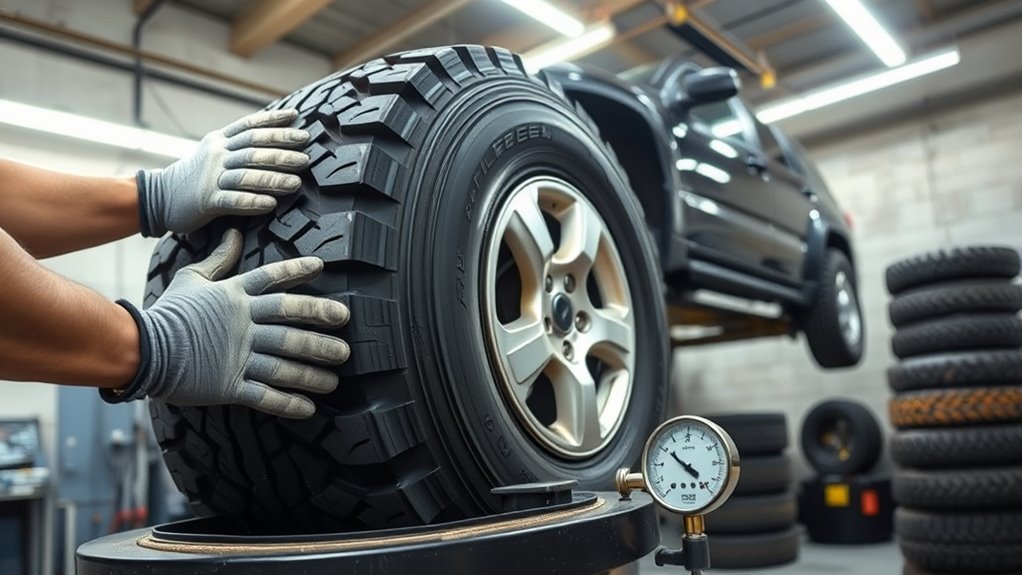
If your 4Runner’s steering wheel shakes at highway speeds despite recent standard balancing, road force balancing targets the radial force variation and runout that spin balancing misses—especially critical when you’ve upsized to 33s or 35s with lower-profile sidewalls. Standard balancing only corrects weight distribution, while road force simulates actual road loads to expose hidden tire and wheel deformities from potholes or mounting mismatches. You’ll want to verify your shop uses Hunter GSP9700 equipment and match-mounting protocols before paying the premium. For daily drivers without vibration complaints, standard balancing remains cost-effective. The details below break down exactly when each method pays off for your specific setup.
Vibration Symptoms That Mean You Need Road Force Balancing
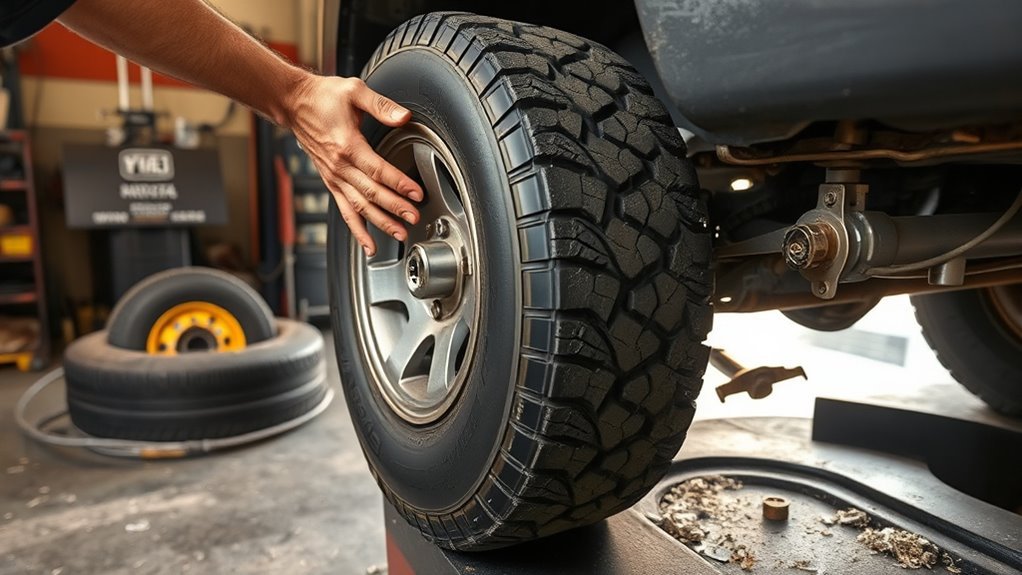
Although standard balancing addresses most vibration issues, you’ll know it’s time for road force balancing when your steering wheel shakes at highway speeds—typically between 60 and 75 mph—despite having recently balanced tires. This persistent shaking signals deeper vibration causes that static methods can’t detect.
You can’t ignore these symptoms. Your 4Runner’s larger wheels and lower-profile tires amplify even minor imperfections. When potholes strike, they create hidden tire and wheel deformities invisible to standard equipment. That’s where diagnostic importance becomes clear: road force balancing simulates actual road loads, revealing non-uniformity exceeding 12 lbs that ordinary balancing misses.
You’ll distinguish alignment problems from balance issues by noting direction. Pulling left or right with uneven wear? That’s alignment. Pure vibration without directional drift? That’s your cue for advanced balancing. Don’t accept compromised ride quality. Precision diagnosis liberates you from persistent discomfort, restoring the smooth, controlled driving experience your 4Runner demands.
Why Road Force Balancing Beats Standard Balancing for 4Runners
| Issue | Standard Balance | Road Force Balance |
|---|---|---|
| Detects | Static/dynamic weight only | Radial force variation + runout |
| Solves | Basic vibration | Vibration reduction at all speeds |
| Best for | Stock setups | Modified 4Runners, off-road builds |
Your 4Runner’s off-road capability depends on handling precision that standard balancing compromises. Road force technology simulates actual road load, exposing mounting mismatches invisible to conventional methods. You’ll eliminate stubborn steering wheel shake, extend tire life, and reduce suspension stress. The diagnostic depth protects your investment—whether crawling trails or cruising highways, you’re commanding peak performance without compromise.
4Runner Setups That Actually Need Road Force Balancing
Since you’ve already invested in a 4Runner, you’re likely pushing it beyond factory specifications—whether that’s upsizing to 33s or 35s, dropping to a 55-series sidewall, or mounting aggressive mud-terrain treads. These 4Runner modifications demand road force balancing. Larger wheels with lower-profile tires amplify every imperfection—standard balancing won’t catch radial force variations that ruin highway stability.
New tire installations on modified setups require road force balancing from day one to maximize tire performance. Aggressive tread blocks wear unevenly and generate vibrations road force machines isolate and correct. If you’ve hit potholes or curbs hard, hidden damage creates balance issues only road force detection reveals.
When vibrations persist above 65 mph after standard balancing, your setup needs this deeper diagnostic. Don’t accept compromised ride quality—invest in precision that matches your build’s capability.
Questions to Ask Your Tire Shop Before Paying for Road Force Balancing
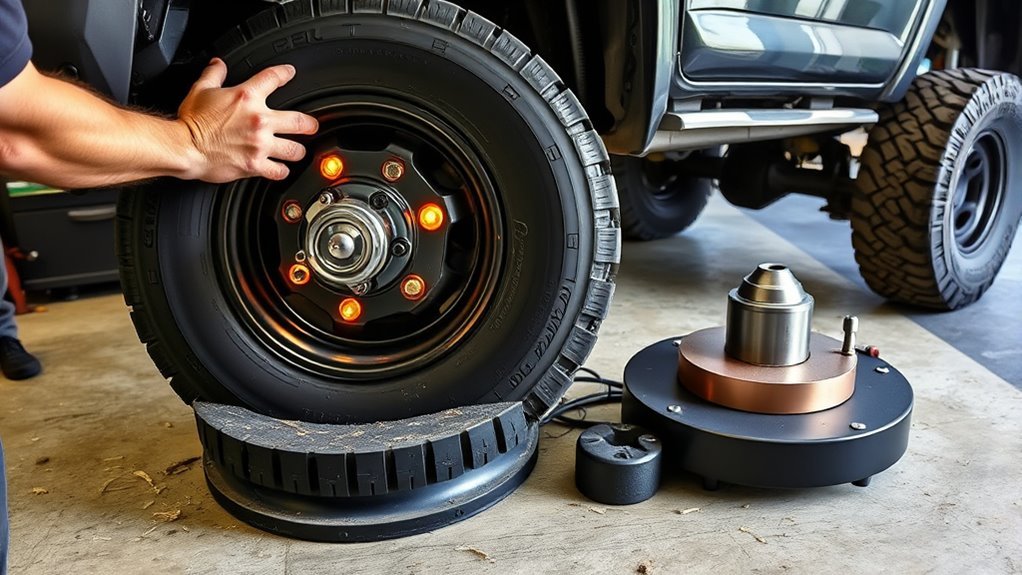
Where exactly does road force balancing fit into your 4Runner’s maintenance workflow, and how do you verify your tire shop can deliver results worth the premium?
Before committing, interrogate their capabilities directly:
Interrogate their capabilities directly—confirm equipment, scrutinize techniques, verify expertise, inspect protocols. Demand competence, not assumptions.
- Confirm equipment availability – Do they operate a Hunter GSP9700 or equivalent road force balancer, not just a standard spin balancer?
- Scrutinize measurement techniques – How will they quantify radial force variation and correct runout? Demand specifics on their diagnostic thresholds.
- Verify wheel expertise – Have they balanced 17–18 inch wheels with 55–65 series tires? Larger, lower-profile setups demand precision.
- Inspect match-mounting protocols – Will they align the tire’s stiff spot with the wheel’s low point? This mechanical marriage eliminates harmonic vibrations.
Articulate your symptoms—highway-speed steering shake, seat vibration—so they tailor the procedure. You’re not paying for a service; you’re buying diagnostic rigor. Demand competence, not assumptions.
Standard Tire Balancing: When It’s Actually Enough for Your 4Runner
While road force balancing grabs the spotlight for stubborn vibration issues, you’ll find standard spin balancing handles the bulk of your 4Runner’s maintenance needs without the premium price tag. This method corrects static weight distribution by mounting weights to counteract heavy spots, delivering smooth rotation for daily driving scenarios.
You’ll maximize standard balancing benefits by matching tires properly and maintaining consistent pressure. When your 4Runner shows no highway-speed steering wheel shake or handling complaints, this approach suffices. It serves as your quick re-balance solution after minor imbalances develop, keeping you mobile without shop delays.
Apply these tire maintenance tips: inspect tread wear patterns regularly, rotate every 5,000-7,000 miles, and address vibrations promptly before they escalate. For proven tire performance on well-maintained 4Runners, standard balancing liberates you from unnecessary costs while maintaining ride quality. Reserve advanced methods only when persistent dynamic imbalances defy conventional correction.
Frequently Asked Questions
Is Road Force Balance the Same as Alignment?
No, road force balance and alignment are not the same. You must overcome common alignment misconceptions: balancing techniques address tire-wheel imbalances under load, while alignment corrects your suspension geometry. They’re distinct, complementary services.
What Does a Road Force Balancer Do?
Road force technology applies controlled pressure to your rotating tire and wheel assembly, measuring radial force variation that standard balancers miss. You’ll gain balancing benefits: smoother rides, reduced vibrations, and ideal tire-wheel matching for your freedom on any terrain.
Conclusion
You’ve got the full picture now—road force balancing isn’t just throwing money at the wall to see what sticks. For your 4Runner, it separates the wheat from the chaff when vibrations persist or you’re running aggressive setups. Match the method to your symptoms and usage, ask your shop the right questions, and you’ll nail down whether standard balancing cuts it or you need the heavy artillery. Your ride quality hangs in the balance.

Related Articles
4Runner Wobble at Low Speed: Could It Be the Tires
Got a mysterious 4Runner wobble under 25 mph? The culprit might surprise you.
Read More
4Runner Wheel Width Guide: Matching Tires to Rim Sizes
The ultimate guide to choosing the perfect wheel width for your 4Runner awaits—discover how the right fit can transform your off-road experience!
Read More
4Runner Tires Overinflated From the Dealer: What to Do
Just discovered your 4Runner's tires are dangerously overinflated from the dealer, but the fix is simpler than you think.
Read More