
How to Check Tire Tread Depth on Your 4Runner at Home
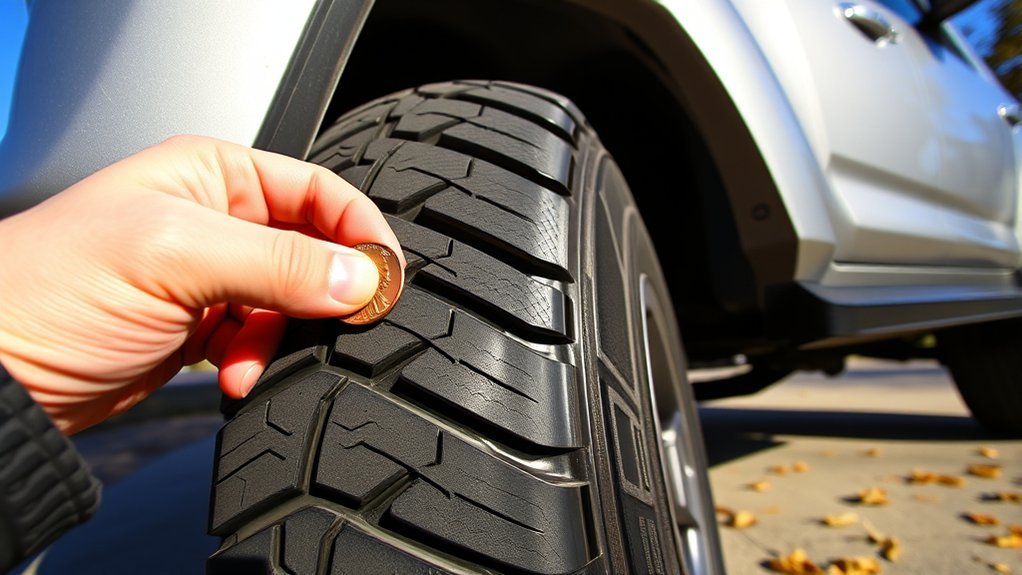
You can easily check your 4Runner’s tire tread depth at home using a ruler or a tire tread depth gauge. Measure at multiple points across each tire to guarantee accuracy. An easy method is the penny test: insert a penny with Lincoln’s head facing down; if you see all of his head, it’s time for replacement. Regular monitoring helps prevent issues like hydroplaning and guarantees peak performance. There are more effective strategies to keep your tires in top shape.
Why Tire Tread Depth Matters for Your 4Runner
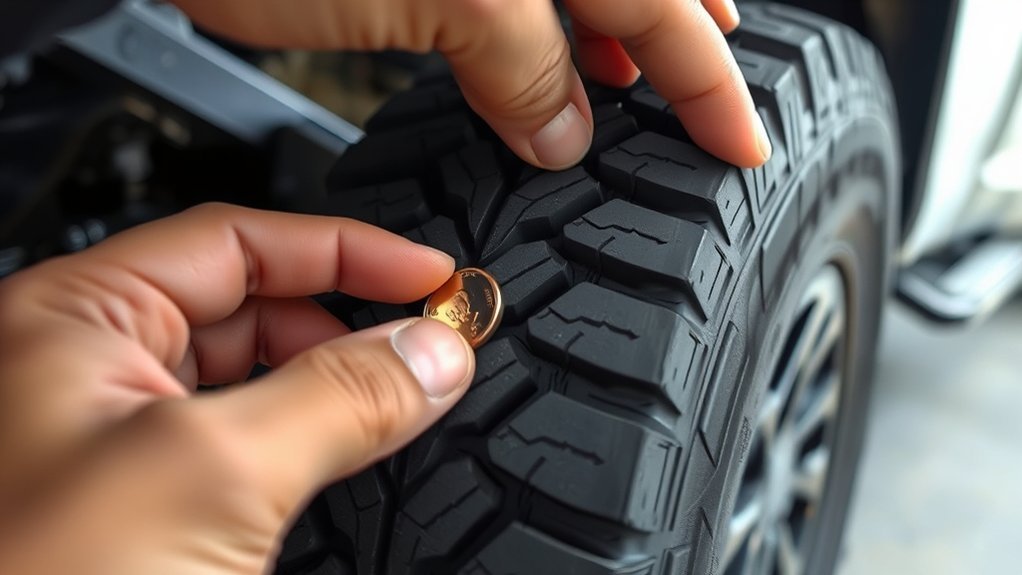
When it comes to your 4Runner, understanding tire tread depth is vital for maintaining peak performance and safety. Adequate tread depth, ideally a minimum of 12/32 inches, guarantees your vehicle grips the road effectively, especially in off-road conditions. Worn tires can compromise stability, increasing the risk of hydroplaning on wet surfaces. Regularly checking tread patterns not only helps you avoid accidents but also promotes even tire wear, enhancing handling and fuel efficiency.
You can easily gauge tread depth at home using the penny test—if Lincoln’s head is visible, it’s time to think about replacements. Monitoring tread depth also helps extend your tires’ life, which can keep you within your tire warranty and save you money in the long run. Keeping a close eye on this vital aspect of your 4Runner empowers you to drive with confidence and freedom.
When Should You Replace Your Tires Based on Tread Depth?
Tire replacement becomes critical as tread depth diminishes, directly impacting your vehicle’s safety and performance. To guarantee your 4Runner operates at peak performance, pay attention to these key tread depth indicators:
- Replace tires when tread depth reaches 2/32 of an inch, the minimum legal limit for safe driving.
- For enhanced safety, replace tires when tread depth falls below 4/32 of an inch, especially in wet conditions.
- Regularly measure tread depth using a gauge or the penny test to assess tire lifespan.
- Watch for uneven tread wear, which may signal alignment or suspension issues, warranting immediate replacement.
Simple Methods to Measure Tire Tread Depth
Measuring tire tread depth is vital for maintaining your vehicle’s safety and performance. You can use a ruler or a tire tread depth gauge for precise measurement techniques. Check the depth at multiple locations across each tire to guarantee accuracy, as uneven tread wear can indicate larger issues.
Regularly measuring your tread depth is important, with a minimum of 12/32 inches recommended for safe driving conditions. If you’re looking for a quick assessment, consider the penny test: place a penny upside down in the tread; if Lincoln’s head is visible, it’s time for a replacement. Alternatively, the quarter test can also be employed; if George Washington’s head is fully visible, prepare to replace your tires soon. By regularly checking your tread depth, you enhance your vehicle’s traction and handling, especially in adverse weather, promoting a safer driving experience.
Perform the Penny Test for Quick Assessments
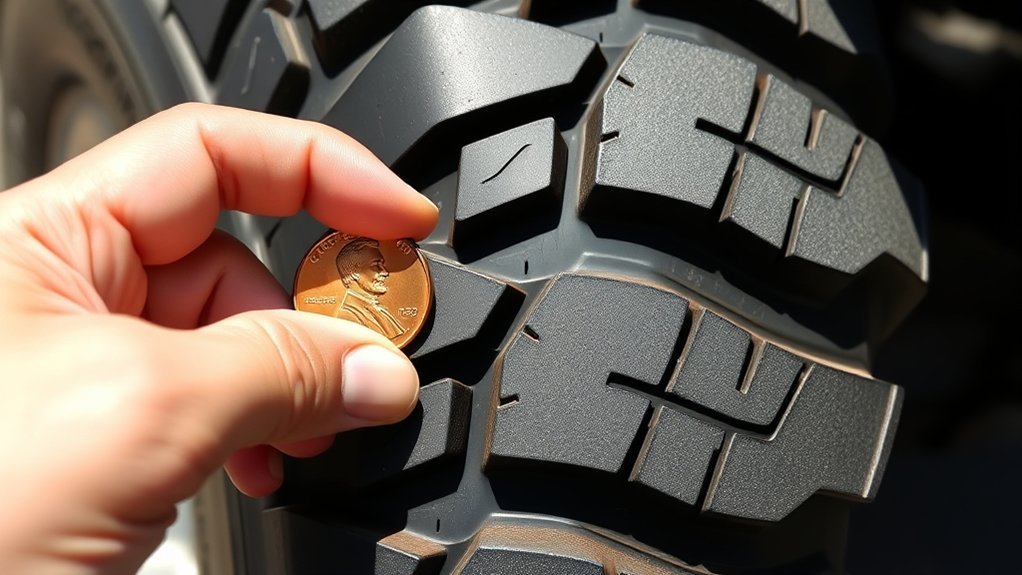
A quick way to assess your tire tread depth is by performing the penny test. This method offers a straightforward visual check to determine if your tread depth is adequate for safe driving. Here’s how to do it effectively:
- Insert a penny upside down into the tire tread.
- Check the penny placement; if you can see all of Lincoln’s head, your tread visibility indicates it’s time for replacement.
- Conduct the test at multiple points across each tire for a thorough view of tread wear.
- Regular assessments can enhance safety, especially for off-road driving in your 4Runner.
While the penny test is a useful initial gauge, consider supplementing it with a tread depth gauge for precise measurements. Maintaining adequate tread depth is essential for peak vehicle performance and safety on various terrains.
Using Your Tire Tread Depth Gauge
Using a tire tread depth gauge provides a reliable method for checking the condition of your 4Runner’s tires. To guarantee gauge accuracy, insert the gauge into the tread grooves at multiple locations across each tire. Press it firmly down to the bottom of the tread groove for the most accurate reading. Ideally, you want a tread depth of 12/32 of an inch or more for peak performance and safety. If your measurements fall below this threshold, it’s time to contemplate replacing your tires.
Regular checks with the gauge can also help you identify any uneven wear patterns that could impact handling. After recording your readings, compare them against the manufacturer’s recommendations to confirm your tires are in good shape for both on-road and off-road adventures. Keeping track of your tread depth not only enhances safety but also liberates you from unexpected tire issues down the road.
Understanding the Impact of Worn Tread on Performance
Worn tread greatly impacts your vehicle’s performance, leading to reduced traction and grip, especially in wet conditions. As tread depth decreases, you’re also at a higher risk of hydroplaning, which can compromise your safety. Additionally, uneven wear can create handling and stability issues, making your vehicle harder to control.
Traction and Grip Loss
When tire tread becomes insufficient, you can experience a significant loss of traction, especially in adverse conditions like rain or off-road environments. This traction loss isn’t just a minor inconvenience; it can lead to serious handling issues.
Consider the following impacts of worn tread:
- Increased grip reduction during cornering, making turns riskier
- Longer stopping distances, especially on wet surfaces
- Compromised vehicle control during sudden maneuvers
- Reduced ability to channel water away, heightening slip risk
Regularly checking your tread depth guarantees peak performance and minimizes dangerous driving conditions. Keep your tires above the recommended 12/32 inches to maintain safety and enhance your 4Runner’s longevity on various terrains.
Hydroplaning Risk Increase
As tire tread depth decreases, the risk of hydroplaning considerably increases, especially in wet conditions. When tread depth falls below 4/32 of an inch, your tires lose essential grip on slippery surfaces, making hydroplaning more likely. This phenomenon occurs when water accumulates between the tire and the road, leading to a dangerous loss of steering control. Effective tread is important for channeling water away; shallower treads struggle to disperse it properly. Studies indicate that maintaining a tread depth of at least 5/32 of an inch greatly reduces hydroplaning risks. Regular tread maintenance is crucial for safe driving in rainy weather, ensuring you’re equipped for hydroplaning prevention and enhancing your overall driving safety.
Handling and Stability Issues
Tire tread depth plays a critical role in your vehicle’s handling and stability; insufficient tread can dramatically reduce traction, particularly in wet or off-road conditions. Worn tread can lead to various performance issues, including:
- Longer stopping distances, increasing accident risk
- Poor steering response due to tire alignment issues
- Unpredictable vehicle behavior from imbalanced tread depth
- Compromised stability, especially during sharp turns
Regularly checking tread depth helps identify tread wear patterns before they escalate, ensuring your 4Runner maintains peak handling. When tread depth drops below the recommended 12/32 inches, it’s time to act. Balanced tread across all tires is essential for effective vehicle control, so don’t underestimate the importance of proper maintenance in safeguarding your driving experience.
Essential Tips for Keeping Your Tires in Optimal Condition

Maintaining your tires in peak condition is essential for safety and performance. Start by regularly checking your tire tread depth using the penny test. If Lincoln’s head is visible when the penny is upside down, it’s time for a replacement. For precise measurements, utilize a tread depth gauge to guarantee your tires stay above the recommended 12/32 inches.
Inspect the tread pattern for uneven wear, which can indicate misalignment or improper inflation. Address these issues promptly to maintain superior performance. Regular tire rotation helps promote even wear, extending the lifespan of your tires.
Consult your owner’s manual for the correct tire pressure, as maintaining proper inflation enhances both safety and durability. Finally, conduct visual inspections to identify any cracks, bulges, or punctures. Replace damaged tires immediately to avoid hazards on the road. Taking these steps will keep your 4Runner’s tires in top condition, guaranteeing a safer driving experience.
Where to Find Tire Maintenance Resources for Your 4Runner
Wondering where to find reliable tire maintenance resources for your 4Runner? You’ve got several excellent options to guarantee your tires remain in top condition. Start with the owner’s manual, which details your vehicle’s tire pressure and maintenance schedule. Online forums are another great resource, where fellow 4Runner owners share experiences and tips. Additionally, local tire shops often provide free inspections, helping you assess tread depth and overall tire health.
Here’s where to look:
- Owner’s Manual: Guidelines for tire maintenance, including pressure settings.
- Online Forums: Community insights on common tire issues and solutions.
- Local Tire Shops: Free inspections and expert advice.
- Tire Manufacturer Websites: Educational resources and product recommendations.
Utilizing these resources will empower you to maintain your 4Runner’s tires effectively.
Frequently Asked Questions
Is 5/32 Tire Tread Ok for Winter?
5/32 tread wear isn’t preferable for winter safety. While it may suffice, you risk reduced traction on snow and ice. Aim for at least 6/32 inches for superior performance and to enhance your winter driving safety.
Conclusion
Checking your tire tread depth is like regularly tuning your 4Runner’s engine; it guarantees peak performance and safety on the road. Just as a well-tuned engine runs smoothly, tires with adequate tread grip the road and handle better. By frequently measuring tread depth and maintaining your tires, you’re investing in your vehicle’s longevity and your safety. Don’t wait until it’s too late—stay proactive and keep your 4Runner ready for any adventure.

Related Articles

Nitrogen vs Air in 4Runner Tires: Is There a Real Benefit
Most 4Runner owners wonder if nitrogen tires are worth the hype—and the answer might surprise you.
Read More
How to Reset the TPMS Light on a Toyota 4Runner
Master the simple steps to reset the TPMS light on your Toyota 4Runner and discover what to do if the light remains on.
Read More
4Runner Lug Nut Torque Spec: What You Need to Know
Know the exact torque spec that could save your 4Runner's wheels from catastrophic failure?
Read More