
How Often Should You Balance 4Runner Tires
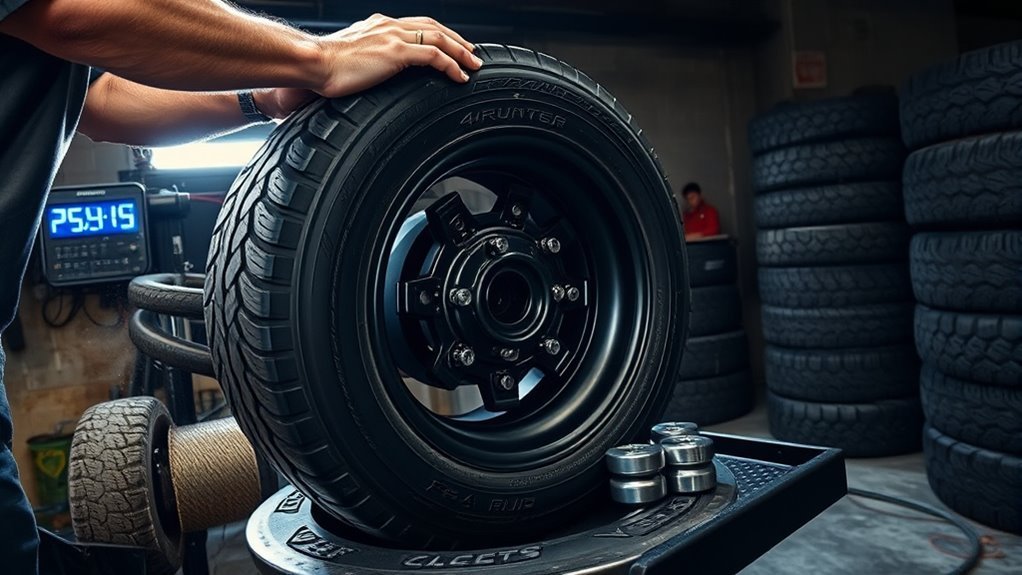
You should balance your 4Runner’s tires every 3,000 to 6,000 miles during routine rotations. Off-road driving demands more frequent attention—check every 3,000 to 5,000 miles since dirt buildup and impacts shift weight distribution faster. New tires require rebalancing at 500 miles to address settling irregularities. Rough terrain or aggressive driving pushes that interval to 1,500–2,000 miles. Following these schedules prevents vibration and uneven wear, though several factors determine whether standard balancing suffices or advanced methods become necessary.
Why Your 4Runner’s Steering Wheel Shakes at 60mph
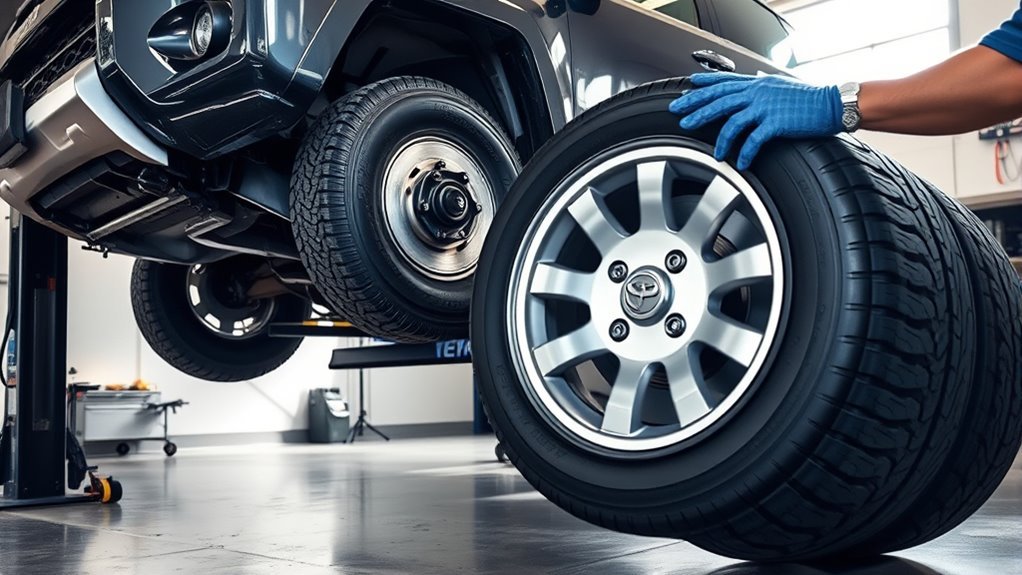
When you’re cruising at 60 mph and your 4Runner’s steering wheel starts vibrating, you’re likely dealing with tire imbalance—a condition where uneven weight distribution across the wheel assembly creates centrifugal forces that amplify at specific rotational speeds. You can resolve this through proper tire balancing techniques.
Your vibrations may also stem from tire pressure inconsistencies or alignment issues, both of which compound imbalance effects. Check your Road Force numbers; readings exceeding 20 indicate a faulty tire requiring replacement.
You maintain control by rotating tires every 5,000 miles, preserving balance and preventing shake recurrence. For precision diagnostics, you’ll want a Hunter’s Road Force Balance Machine—it identifies imperfections standard balancers miss.
If you’ve driven off-road, inspect for dirt buildup on wheels. This debris shifts weight distribution, creating imbalance. Clean thoroughly before balancing.
Address these factors systematically. You eliminate vibration sources, reclaim smooth operation, and restore your 4Runner’s highway stability through methodical maintenance.
How Often Should You Balance 4Runner Tires?
Toyota recommends balancing your 4Runner’s tires every 3,000 to 6,000 miles, typically during routine rotations. You’ll need to monitor for warning signs like steering wheel vibration or uneven wear, particularly after driving on rough terrain. Adjust your balancing schedule based on your specific driving conditions—frequent highway use or off-roading demands more frequent attention.
Manufacturer Recommendations
While you’re following a maintenance schedule for your 4Runner, you’ll want to balance the tires every 5,000 to 6,000 miles—Toyota aligns this interval with routine tire rotations to maintain peak performance and even wear across all four corners. Consult your owner’s manual for precise tire maintenance protocols specific to your model year. Toyota engineers designed these balancing techniques to optimize weight distribution and minimize drivetrain stress. If you install new tires or wheels, schedule a rebalance at 500 miles to correct any settling irregularities. Don’t ignore vibration signals from your steering wheel or uneven tread patterns—these demand immediate attention regardless of mileage intervals. Off-road enthusiasts should inspect more frequently; terrain abuse accelerates imbalance through debris accumulation and impact damage.
Warning Signs
You’ll notice imbalance through specific sensory and performance indicators that demand immediate attention regardless of your maintenance schedule. A vibrating steering wheel—particularly at highway speeds—signals weight distribution problems that compromise handling stability and accelerate tire lifespan degradation. Uneven tread wear patterns, visible through circumferential scalloping or cupping, indicate chronic imbalance requiring immediate correction. Decreased fuel efficiency manifests when your 4Runner works harder to maintain momentum against improperly distributed rotational mass. Post-repair vibrations following tire rotations, puncture fixes, or new installations reveal inadequate balancing procedures. Rough-road driving intensifies these symptoms; you’ll feel persistent shimmy through the chassis and steering column. Address these warning signs immediately—delayed response destroys tire lifespan and erodes handling stability, transforming minor imbalances into costly replacements and safety compromises.
Driving Conditions
Because your 4Runner encounters varying terrain demands, you’ll adjust balancing intervals based on actual driving stressors rather than adhering to rigid mileage benchmarks. Rough, unpaved driving surfaces accelerate imbalance through dirt accumulation and impact damage from rocks or potholes. You’ll inspect balance every 1,500–2,000 miles when traversing gravel, mud, or construction zones.
Terrain impacts compound when you push high-performance limits. Aggressive cornering, rapid acceleration, and sustained off-road crawling generate heat cycles and sidewall stress that redistribute wheel weights. You’ll schedule pre-emptive checks before expeditions and immediate verification afterward.
Monitor steering feedback continuously. Vibration through the wheel or chassis signals terrain-induced imbalance regardless of elapsed mileage. You’ll prioritize tactile response over calendar schedules—liberating your maintenance routine from arbitrary constraints while preserving precise handling dynamics your 4Runner demands.
Steering Shake and 3 Other Signs You Need Rebalancing Now
You’ll feel a vibrating steering wheel—especially near 60 mph—when your 4Runner’s tires require immediate rebalancing. Inspect your tread for uneven wear patterns and monitor your fuel efficiency, as both indicate imbalance-related rolling resistance. Address these symptoms promptly to restore stability and prevent accelerated component wear.
Vibrating Steering Wheel
One unmistakable sign that your 4Runner’s tires need rebalancing is a vibrating steering wheel—particularly when you’re cruising at highway speeds around 60 mph. These steering vibrations signal uneven weight distribution across your tires, forcing your suspension to compensate and compromising driving safety.
You’ll feel the tremor intensify through your hands, demanding immediate attention. Don’t ignore this warning—unbalanced tires create excessive rolling resistance that strains your vehicle and degrades handling precision. The imbalance worsens with every mile, amplifying wear patterns and reducing your control.
Check your balance history. Recent rotations, repairs, or frequent rough road driving accelerate this condition. Schedule rebalancing promptly to restore smooth operation and reclaim confident command of your 4Runner.
Uneven Tread Wear
Vibrations aren’t always confined to your steering wheel. You can detect imbalance through systematic tread inspection across all four tires. Run your hand across each tire’s surface; you’ll feel cupping, scalloping, or flat spots that signal uneven load distribution. These irregular wear patterns force specific tread sections to bear disproportionate weight, creating harmonic oscillations that intensify at highway speeds.
Your 4Runner’s suspension geometry amplifies these effects. When imbalance persists, you’ll notice accelerated wear on individual tread blocks rather than uniform degradation. This compromises traction and shortens tire lifespan considerably.
Integrate tread inspection into your tire maintenance routine every 3,000 miles. Catch imbalance early and you reclaim control—preventing costly replacements and preserving your vehicle’s capability. Freedom demands vigilance; inspect thoroughly, balance promptly, drive confidently.
Decreased Fuel Efficiency
Fuel efficiency rarely degrades dramatically; instead, it erodes gradually as tire imbalance intensifies rolling resistance. You feel this theft at the pump—every gallon stretches fewer miles, every commute costs more freedom. Imbalanced tires force your 4Runner’s engine to labor harder, burning fuel to overcome uneven weight distribution. You reclaim control through vigilance: maintain proper tire pressure, balance every 3,000–6,000 miles, and inspect after any service. These procedural steps yield measurable fuel savings. You liberate yourself from unnecessary stops, from budget strain, from mechanical waste. Precision matters. Balance your tires; reclaim your efficiency.
Off-Roading Demands More Frequent Tire Balancing: Here’s the Schedule

Because off-roading subjects your 4Runner’s tires to uneven terrain, sudden impacts, and accumulated debris, you’ll need to balance them every 3,000 to 5,000 miles—roughly twice as often as standard highway driving requires. Off road conditions accelerate wear patterns and create dynamic imbalances that compromise handling precision. Inspect and balance immediately after aggressive trail use, particularly when vibrations or steering wheel shake manifest. These symptoms indicate shifted weight distribution demanding correction.
Integrate tire maintenance into your post-excursion protocol: remove packed mud, clean wheel surfaces thoroughly, and verify balance before highway transit. Dirt accumulation alters rotational dynamics measurably. Schedule balance checks concurrent with 5,000-mile rotations to maintain uniform tread wear. This procedural discipline preserves suspension integrity, optimizes traction, and prevents premature component fatigue. Your liberation depends on mechanical reliability—neglecting these intervals invites instability when you need control most.
Road Force Balancing: When Regular Balancing Fails Your 4Runner
Standard spin balancing sometimes leaves you chasing ghosts—persistent shimmies that surface at 60 mph despite your technician’s best efforts. You need road force balancing when standard methods fail to deliver vibration solutions that actually stick.
Chasing ghosts at 60 mph? When standard balancing fails, road force delivers vibration solutions that actually stick.
A Hunter Road Force Balance Machine measures how your tire performs under load, revealing imperfections spin balancers miss. You want road force numbers between 5-14 for ideal tire performance; anything higher signals trouble. Run out readings above 20 mean you replace that tire—no exceptions.
You schedule this service when highway vibrations persist after conventional balancing, or when you’ve upgraded to aggressive all-terrain tires that demand precision. Rebalance every 3,000-6,000 miles after rotations or hard off-road sessions.
Find technicians who’ve mastered this equipment. Their expertise transforms your 4Runner’s highway manners, eliminating the shimmy that steals your confidence at speed. You reclaim smooth, controlled travel—exactly what your rig deserves.
Match Mounting and Adapter Plate Techniques That Last
When you’re chasing that perfect balance on your 4Runner, match mounting becomes your secret weapon—aligning the high point of your tire with the low point of your wheel to cancel out radial runout before you even spin the assembly. You’ll mark each component, marry the heavy and light spots, and eliminate vibration at its source. This technique demands precision balancing equipment and your attention to detail.
Swap cone adapters for adapter plates—finger plates grip your wheels securely, maintaining true centering throughout the spin cycle. You’ll achieve repeatable accuracy that cone methods simply cannot deliver. Request Smart Weight deactivation; automatic rounding algorithms compromise your results when you’re pursuing perfection.
Inspect every tire’s runout measurement. Reject anything exceeding twenty thousandths—compromise here guarantees failure. Clean mounting surfaces thoroughly before applying adhesive weights; contamination destroys bond integrity. Master these match mounting and adapter plate protocols, and you’ll liberate your 4Runner from persistent vibration, achieving tire alignment that endures.
How to Find Shops With Hunter Road Force Equipment
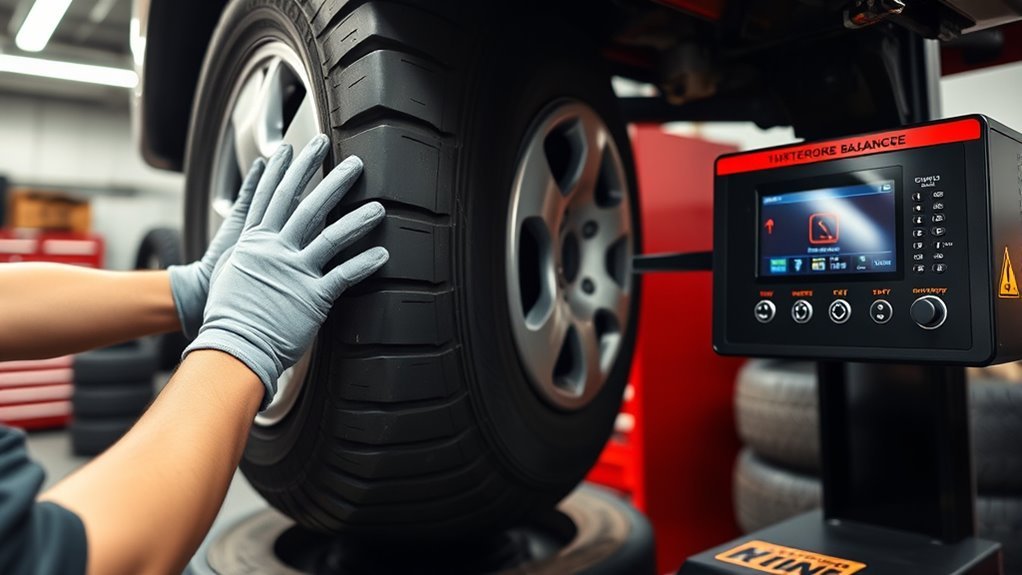
Where exactly do you locate a shop equipped to deliver the precision your 4Runner demands? Start by searching local tire service centers that explicitly advertise Hunter Road Force balancing technology on their websites or storefront signage. Many off-road vehicle dealerships invest in this equipment for precise balancing services.
Scan online review platforms to identify shops with proven reputations for advanced balancing technology. Filter results by mentions of Hunter equipment specifically. Contact prospective shops directly—ask whether they operate Hunter machines and if they provide match mounting services for ideal performance.
Verify professional automotive association memberships. Certified shops typically prioritize high-quality equipment like Hunter Road Force machines to maintain accreditation standards. This commitment signals technical competence.
Cross-reference multiple sources. Combine digital searches with direct verification calls. You’re seeking liberation from vibration issues, uneven wear, and compromised handling. Precision demands diligence in your selection process. Target facilities that demonstrate investment in industry-leading balancing technology rather than settling for conventional equipment.
Free Lifetime Balancing vs. Road Force: What 4Runner Owners Should Know
Once you’ve located a shop with Hunter Road Force capability, you’ll face a decision at the service counter: accept the free lifetime balancing included with your tire purchase, or pay extra for road-force service. Most tire shops include free balancing with new tires, covering standard spin balancing for the life of your tires. This suffices for routine tire maintenance and normal driving conditions. However, if you’re experiencing persistent vibrations that standard balancing won’t resolve, you’ll need road-force balancing. This procedure simulates actual road pressure to detect subtle imperfections and costs approximately $8 per wheel. For your 4Runner, schedule standard balancing every 5,000–6,000 miles alongside rotations, or immediately after aggressive off-roading when debris accumulation disrupts wheel balance. Monitor steering wheel vibration or uneven wear patterns—these signal immediate rebalancing needs. Choose road-force only when symptoms persist after standard service, ensuring you invest precisely where performance demands.
Frequently Asked Questions
How Often Should I Balance My 4runner Tires?
Balance your 4Runner tires every 3,000 to 6,000 miles, adjusting for aggressive driving habits that accelerate tire wear. Inspect sooner if vibrations occur, and always balance after off-road excursions or tire service.
How Often Should I Do Alignment on My 4runner?
“An ounce of prevention beats a pound of cure.” Align your 4Runner every 6,000 miles with rotations. Watch for alignment signs like pulling or uneven wear. Reap alignment benefits: extended tire life, fuel efficiency, and liberated performance.
Conclusion
Your 4Runner’s tire balance isn’t a “set it and forget it” checkpoint—it’s the rhythm keeping your drivetrain humming in harmony. Treat rebalancing like changing oil: every 5,000–8,000 miles for pavement pounders, half that for trail warriors. Skip it, and you’ll shake components loose like a jackhammer on asphalt. Find a shop wielding Hunter Road Force equipment, demand adapter plates, and you’ll silence that steering wheel ghost before it rattles your teeth loose.

Related Articles

How to Air Down Tires for Off-Road Driving on a 4Runner
Wondering how to maximize your 4Runner's off-road performance? Discover the best tire pressures for various terrains and enhance your adventure.
Read More
Should You Include the Spare in 4Runner Tire Rotation
Most 4Runner owners skip this crucial step—should you?
Read More
How to Change a Flat Tire on a Toyota 4Runner Safely
Learn the essential steps to safely change a flat tire on your Toyota 4Runner, and discover tips to prevent future issues. Don't miss out!
Read More