
How to Air Down Tires for Off-Road Driving on a 4Runner
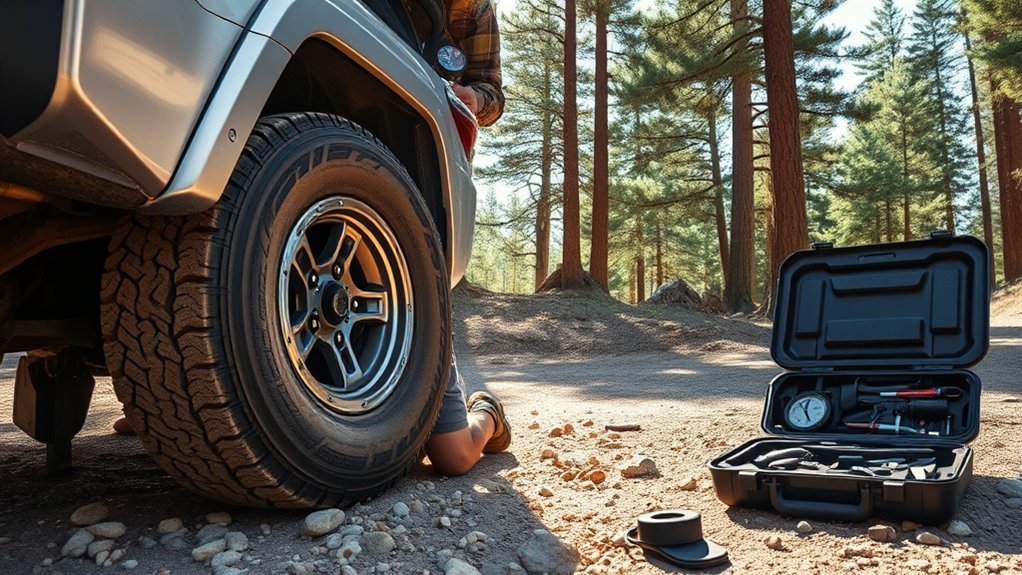
To air down your 4Runner tires for off-roading, start by checking the current pressure with a tire gauge. Reduce the pressure to 15-18 PSI for rocky terrain or 10-15 PSI for sandy conditions to enhance traction and improve flotation. Use a tire deflator for accuracy and monitor the pressure throughout. Be cautious not to over-deflate, as it can increase blowout risks. By following these steps, you can effectively optimize your off-road performance and enjoy better handling.
Understanding the Importance of Airing Down for Off-Roading
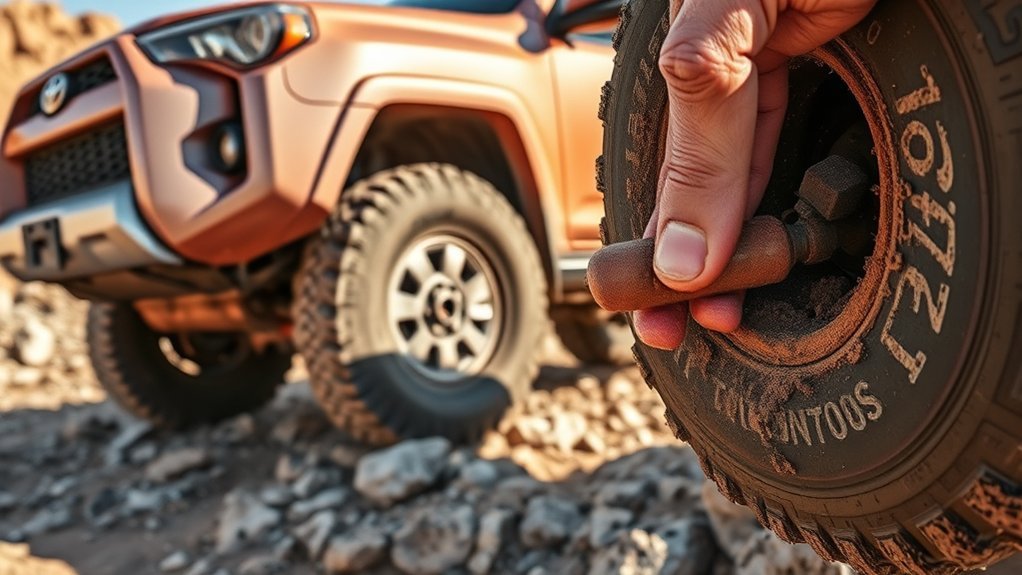
Airing down your tires is a vital step for enhancing off-road performance. By lowering your tire pressure, you can increase traction control by up to 250% on loose surfaces like sand and mud. This adjustment enhances the contact patch, allowing your tires to conform to obstacles while reducing the risk of punctures and sidewall damage. For peak performance, aim for 10–15 PSI in sandy conditions and 15–18 PSI in rocky or muddy terrains. Besides improving grip, airing down also boosts ride comfort by softening impacts and lessening stress on suspension components during rough driving. Remember, managing tire pressure is essential; always re-inflate your tires to recommended levels before hitting paved roads. This guarantees tire durability and safe handling, empowering you to conquer diverse terrains with confidence.
When to Air Down Tires for Optimal Traction?
Airing down your tires is essential as you shift to specific off-road terrains like sand, mud, or snow. Timing is key; deflate your tires before hitting these surfaces to maximize traction and stability. Adjust your tire pressure based on the terrain type and vehicle load for best performance.
Terrain-Specific Conditions
When traversing diverse terrains, adjusting tire pressure is essential for maximizing traction and vehicle performance. For sandy landscapes, air down to 10-15 PSI to increase your tire footprint and prevent sinking. In rocky conditions, a pressure of 15-18 PSI enhances traction and allows your tires to conform better to obstacles. For snowy surfaces, lowering to 12-16 PSI helps maintain grip and stability. If you’re steering through muddy trails, aim for 15-18 PSI to balance traction while minimizing tire damage from excessive spinning. Always consider your vehicle’s weight and tire type; heavier vehicles may require lower pressures for peak performance across different terrains. Proper pressure adjustments are key to a successful off-road experience.
Timing for Off-Roading
To maximize traction on off-road terrains, it’s crucial to air down your tires right after you leave paved roads. Implementing effective timing strategies guarantees peak performance based on your terrain analysis.
Consider these factors:
- Terrain Type: Sand requires 10-15 PSI; rocky areas need 15-18 PSI.
- Current Conditions: Adjust pressures according to the specific terrain you’re traversing.
- Vehicle Weight: Heavier vehicles may need lower pressures for better ground contact.
- Tire Size: Larger tires can affect the necessary air pressure.
- Reinflation: Always return to highway pressures before hitting paved roads for safety.
Following these guidelines will enhance your off-road experience and keep your 4Runner responsive and stable.
Ideal Tire Pressures for Different Off-Road Conditions
How do you determine the ideal tire pressures for various off-road conditions? For rocky terrain, aim for 15–18 PSI to enhance traction while minimizing tire wear and the risk of punctures. In sandy conditions, lower your pressure to 10–15 PSI; this increases the tire’s footprint, preventing sinking and improving flotation. When traversing snow, a range of 12–16 PSI is ideal, as it offers better grip and stability on slippery surfaces. In muddy conditions, maintaining pressure at 15–18 PSI guarantees adequate traction while helping you avoid getting bogged down. Always consider your vehicle’s load and tire size, as heavier vehicles or larger tires might need different PSI settings for best off-road performance. By fine-tuning your tire pressure, you can maximize your 4Runner’s capabilities and enjoy a more liberated off-roading experience.
Step-by-Step Guide to Deflating Tires Safely
To deflate your tires safely, you’ll need a reliable tire gauge and a tire deflator. Start by checking the initial pressure and then reduce it to the recommended PSI levels for your terrain, like 15 PSI for rocky trails. Keeping an eye on the pressure throughout guarantees you achieve the ideal balance for traction and stability.
Necessary Tools Required
A reliable tire pressure gauge is crucial for safely deflating your tires before off-road driving. It helps you check your starting PSI, making sure you know your baseline for effective tire maintenance. To facilitate the deflation process, gather these necessary tools:
- Tire deflator tool for quick, precise pressure reduction
- Portable air compressor for reinflating tires after your adventure
- Tire deflator kit that connects to all four tires simultaneously
- Pressure monitoring device to guarantee accuracy throughout deflation
- Safety gloves to protect your hands during the process
Keeping a close eye on pressure is important; adjust according to terrain type, such as 10-15 PSI for sand or 15-18 PSI for rocky conditions.
Recommended PSI Levels
Understanding the ideal PSI levels for your tires is essential for maximizing traction and performance during off-road driving. For sand, aim for 10-15 PSI to enhance flotation; for rocks and mud, target 15-18 PSI to improve grip. In snowy conditions, deflate to 12-16 PSI for maximum maneuverability.
Start by checking your initial tire pressure with a reliable gauge to establish a baseline. Use a tire deflator tool to evenly reduce tire pressure, monitoring each tire to achieve the desired PSI uniformly. It’s best to deflate shortly after leaving pavement to prevent unnecessary tire wear and guarantee peak off-road performance. Always verify post-deflation pressure with a gauge to maintain safety and efficiency before tackling challenging terrains.
Essential Tools for Airing Down and Reinflating Tires
Equipping yourself with essential tools for airing down and reinflating tires can greatly enhance your off-road experience. Effective tire maintenance begins with the right equipment, ensuring proper pressure calibration for ideal performance on rugged terrains. Here’s what you need:
- Tire deflator kit: Quickly and accurately lowers tire pressure, ensuring uniformity across all tires.
- High-performance air compressor: Devices like the ARB Twin Compressor deliver fast inflation, making it easy to restore tire pressure post-adventure.
- Tire pressure gauge: Vital for monitoring PSI accurately, allowing for adjustments based on terrain conditions.
- Portable tire inflator: Tools like the Morrflate TenSix PSI Pro Kit quickly reinflate tires, offering convenience during outings.
- Quality tire management tools: Investing in these enhances off-road performance, ensuring safety and improved traction.
Having these tools on hand will help you tackle various off-road challenges with confidence and efficiency.
Risks of Over Deflation and How to Avoid Them
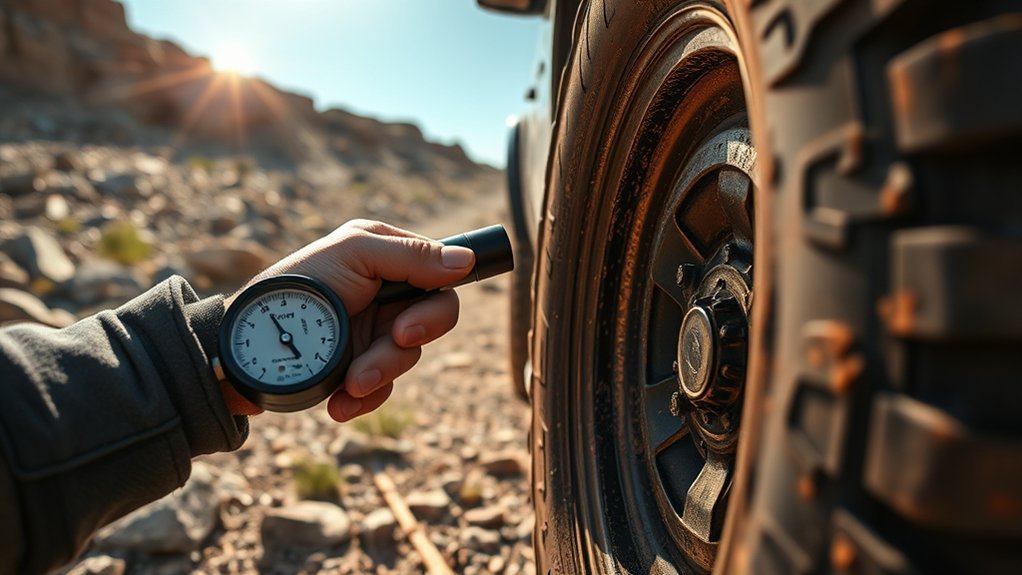
While airing down tires can enhance traction in off-road conditions, over deflation poses considerable risks that every driver should be aware of. Excessively low tire pressure can lead to tire unseating during sharp turns, greatly increasing the risk of a blowout and loss of vehicle control. Additionally, tires with inadequate pressure are more susceptible to sidewall damage from sharp rocks or obstacles, putting your safety at further risk.
Driving on under-inflated tires also results in poor handling, especially when moving back to paved roads, making it vital to maintain proper tire pressure. Over time, accelerated tire wear can occur, shortening tire lifespan and escalating replacement costs. To avoid these issues, always monitor tire pressure using a reliable gauge and stick to the recommended PSI for the terrain you’re tackling. Keeping your tires at the right pressure guarantees a safer, more enjoyable off-road experience.
How to Adjust Tire Pressure for Off-Roading
Airing down your tires for off-roading is essential for enhancing traction and stability on various terrains. To adjust tire pressure effectively, follow these steps:
- Start by checking your initial tire pressure with a reliable gauge.
- For rocky terrains, aim for 15-18 PSI; for sandy conditions, lower to 10-15 PSI.
- Use tire deflators to quickly and accurately lower tire pressure, ensuring consistency across all tires.
- Always re-inflate your tires to the manufacturer’s recommended pressure, typically around 30 PSI, before hitting paved roads for ideal handling and off-road safety.
- Remember that factors like vehicle weight, tire type, and terrain can impact your ideal tire pressure, so adjust accordingly.
Best Practices for Monitoring Tire Pressure During Off-Roading
Monitoring tire pressure during off-roading is crucial for maintaining ideal vehicle performance and safety. Start by regularly checking tire pressure before and after your adventure using a reliable gauge. This guarantees you’re set for maximum traction and handling. While driving, stay alert for any changes in vehicle response; these can indicate a need for immediate re-adjustment. Implementing a tire pressure monitoring system (TPMS) provides real-time updates, giving you peace of mind on rough terrains. Always keep a portable tire inflator and deflator handy to adapt your tire pressure based on trail conditions. It’s also beneficial to record tire pressures across different terrains. This helps establish a baseline for future trips, allowing you to refine your off-road techniques for improved traction and ride quality. With attentive monitoring, you’ll enhance your off-roading experience while guaranteeing safety and performance.
Tips From Fellow 4runner Off-Roaders
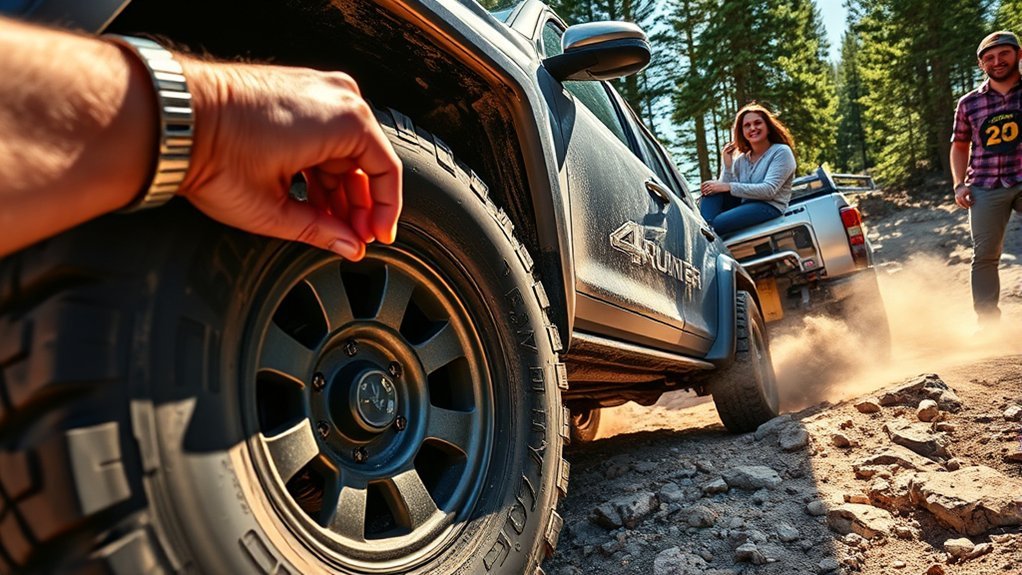
Many 4Runner off-roaders recommend specific tire pressures to optimize performance across various terrains. Effective pressure management is essential for terrain adaptability, allowing you to tackle diverse conditions confidently. Here are some tips from fellow enthusiasts:
- Air down to around 15 PSI for sand; it balances traction and minimizes bead loss risks.
- For rocky terrains, 18 PSI is often ideal, enhancing grip without sacrificing handling.
- A reliable tire deflator kit can streamline adjustments, making them quick and hassle-free on the trail.
- Experiment with pressures; some drivers find success at 12-13 PSI in soft conditions like deep sand.
- Always re-inflate to street pressure (30-35 PSI) before hitting paved roads to guarantee safe handling.
Frequently Asked Questions
Why and When Should You Air Down Your Tires for a 4runner?
You should air down your tires to improve traction benefits, handling, and puncture resistance on various terrain types. Lower tire pressure enhances performance under off-road conditions, making it easier to navigate challenging surfaces effectively.
Conclusion
Airing down your tires is like releasing a hidden gear in your 4Runner, granting you the traction needed to conquer rugged terrains. By understanding when and how to adjust tire pressure, you can navigate obstacles with confidence. Remember, it’s not just about deflating; it’s about finding that sweet spot for peak performance. Stay vigilant, monitor your pressure, and embrace the adventure—your 4Runner is ready to dance over the trails.

Related Articles
Should You Include the Spare in 4Runner Tire Rotation
Most 4Runner owners skip this crucial step—should you?
Read More
How to Change a Flat Tire on a Toyota 4Runner Safely
Learn the essential steps to safely change a flat tire on your Toyota 4Runner, and discover tips to prevent future issues. Don't miss out!
Read More
How to Store Seasonal Tires for Your Toyota 4Runner
Uncover the hidden storage mistakes that could ruin your 4Runner's tires before next season.
Read More