Toyota Camry Tire Grip on Wet Pavement: What Factors Actually Matter
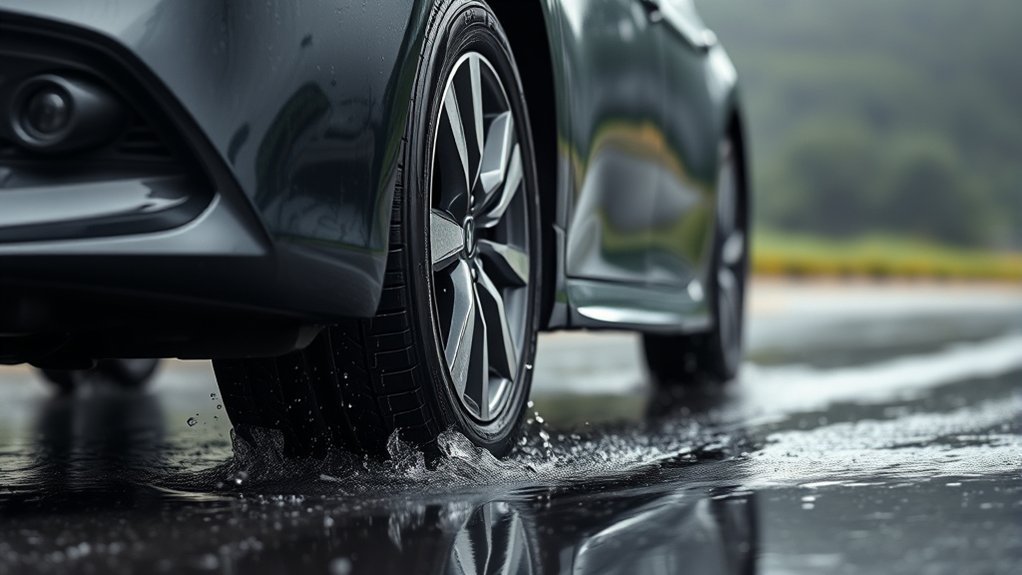
To guarantee your Toyota Camry maintains ideal tire grip on wet pavement, focus on three key factors: tread depth, tire type, and pressure. Adequate tread depth of at least 2/32 inches is vital for water evacuation and reducing hydroplaning risk. Choose tires designed for wet conditions and maintain proper pressure, ideally around 30 psi when cold. Slowing down is also important; it makes a significant difference in control. There’s more to learn about keeping your tires in top shape and enhancing safety.
Understanding Tire Tread and Its Importance for Grip
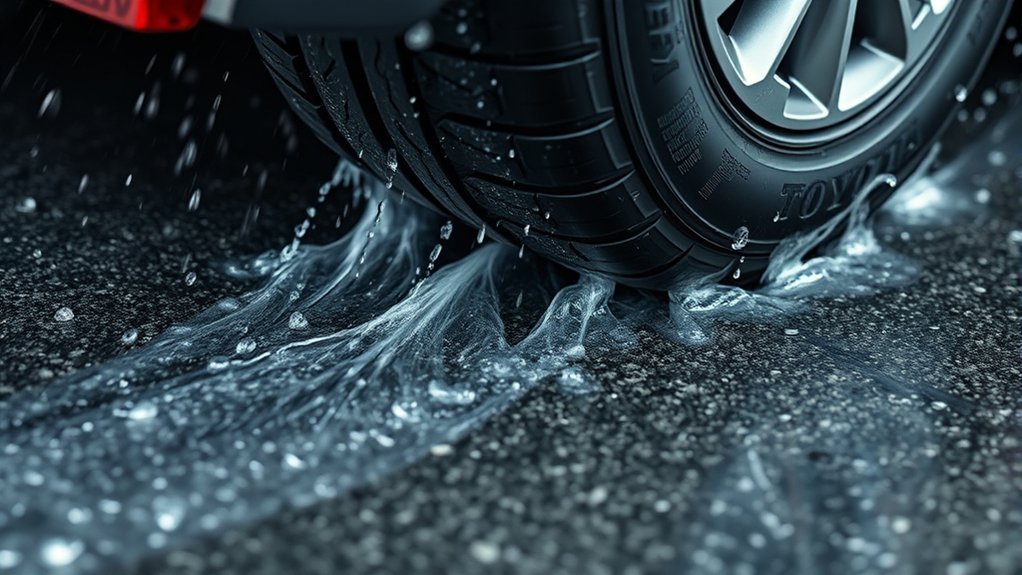
Tire tread is the unsung hero of your vehicle’s performance, especially when it comes to gripping wet pavement. It channels water away from the contact surface, dramatically reducing the risk of hydroplaning. To maintain effective water evacuation, your tires need a minimum tread depth of 2/32 inches; anything less can compromise your safety.
Pay attention to specialized tread patterns designed for various conditions, as they enhance grip on slick surfaces through deeper channels and sipes. Regular tire maintenance is vital; worn tires with shallow tread can lead to control issues during rainfall, making your drive less liberating.
Don’t overlook tire pressure either. Keeping it around 30 psi when cold guarantees peak performance and grip. By understanding the importance of tire tread and maintaining it, you empower yourself to navigate wet roads with confidence and safety.
How Tread Depth Affects Performance on Wet Roads
Tread depth is essential for your Toyota Camry’s performance on wet roads, directly influencing how effectively tires can channel water away. With deeper treads, you’ll experience better grip and a reduced risk of hydroplaning, especially in challenging conditions. Regularly checking your tire depth can make a significant difference in your safety and control when driving in the rain.
Tread Depth Impact
When driving on wet roads, the depth of your tires’ grooves plays an essential role in maintaining control and safety. Adequate tread depth is critical for effective water evacuation and grip, especially when conditions get slippery. Here’s what you should know:
- Tread depth below 2/32 of an inch increases hydroplaning risk.
- New tires can evacuate about 30 liters of water per second at 50 mph.
- Deeper tread patterns enhance road contact and traction.
- Regular tread checks, like the penny test, are fundamental for tire maintenance.
For peak wet performance, maintain a minimum tread depth of 4/32 of an inch. This helps guarantee steering control and braking efficiency, allowing you to drive confidently, even in the rain.
Water Evacuation Efficiency
Effective water evacuation is crucial for maintaining traction on wet roads, and it largely hinges on the depth of your tires’ grooves. A minimum tread depth of 2/32 inches can greatly increase the risk of hydroplaning. New tires can channel about 30 liters of water per second at 50 mph, enhancing grip and reducing traction loss. Shallow treads impair water dispersion, raising hydroplaning risks even in light rain. Regular tire maintenance, including tread checks, guarantees ideal water evacuation capabilities.
| Tread Depth (inches) | Water Evacuation Rate (liters/second) | Traction Level |
|---|---|---|
| 10/32 | 30 | High |
| 4/32 | 15 | Moderate |
| 2/32 | 5 | Low |
Hydroplaning Risk Factors
Consider these key points:
- Tread depth below 2/32 of an inch heightens hydroplaning risks.
- Hydroplaning can happen in just 1/12 inch of standing water.
- Well-maintained tires can displace around 30 liters of water per second at 50 mph.
- Regularly check your tire tread depth using the penny test; tire age and tread pattern greatly affect performance.
Staying vigilant about tread depth not only enhances safety but also empowers you to navigate wet conditions with confidence.
Best Tire Types for Wet Weather Traction
When it comes to wet weather traction, the design of your tires plays an essential role in maintaining grip on slick surfaces. You’ll want to take into account specialized tread patterns that channel water effectively, while also paying attention to your tire pressure, ideally around 30 psi. Together, these factors can greatly enhance your Toyota Camry’s performance in rainy conditions.
Tread Design Importance
Tread design plays a pivotal role in ensuring your Toyota Camry maintains maximum grip on wet pavement. The right combination of groove design and tread patterns can drastically enhance your vehicle’s wet handling capabilities. Here are some key factors to contemplate:
- Water channels: Effective water evacuation reduces hydroplaning risk.
- Grip types: Specialized tread patterns improve traction on slippery surfaces.
- Tire compounds: Softer rubber blends increase flexibility, boosting overall grip.
- Performance tires: These often feature advanced traction features tailored for wet conditions.
Tire Pressure Considerations
To maximize wet weather traction on your Toyota Camry, maintaining the correct tire pressure is essential. Aim for around 30 psi when cold; under-inflated tires can reduce road contact and heighten hydroplaning risks. Regular tire maintenance includes pressure monitoring, especially as temperatures fluctuate. Choose tire types designed for wet conditions—touring or performance tires—with deeper treads and specialized grooves that channel water effectively, enhancing grip. Verify your tires have a tread depth above 2/32 of an inch to minimize hydroplaning. Wider tires with the right tread patterns further improve water dispersion, giving you better traction on slick roads. By keeping close tabs on pressure and selecting the right tires, you’ll enjoy a safer driving experience in wet weather.
How Proper Tire Pressure Improves Safety
Maintaining proper tire pressure is essential for enhancing safety on wet pavement, as it directly influences your vehicle’s grip and stability. When your tires are inflated to around 30 psi when cold, they can effectively channel water away, reducing the risk of hydroplaning. Under-inflated tires struggle in these conditions, compromising your control.
Consider these key points about tire pressure:
- Proper inflation improves traction on slick surfaces.
- Regular pressure monitoring is vital, especially with changing weather.
- Correctly inflated tires enhance maneuverability and reduce stopping distances.
- Good tire maintenance prolongs tire lifespan and boosts fuel efficiency.
Why Slowing Down Matters on Wet Roads
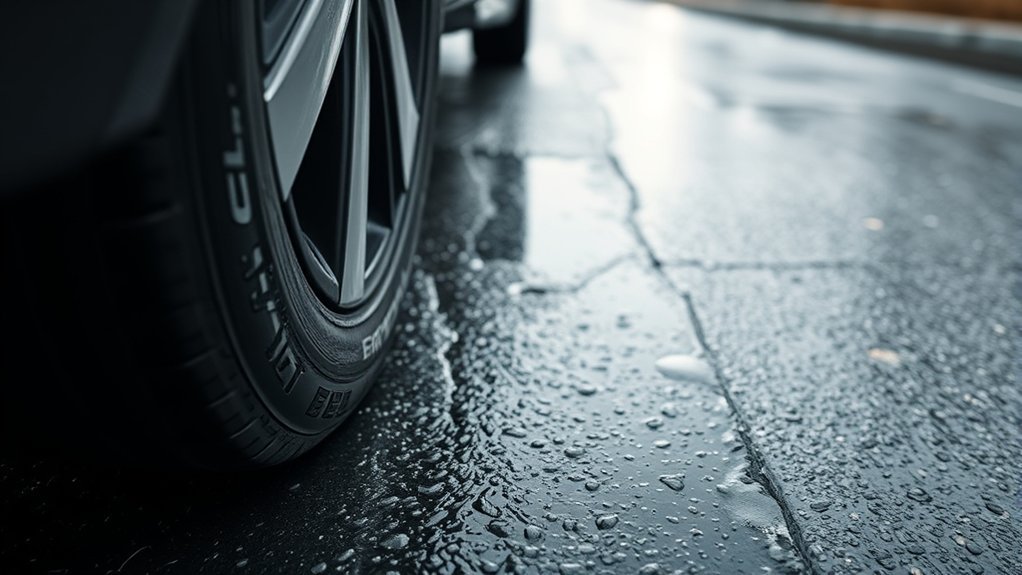
When it rains, slowing down can be your best defense against hydroplaning and loss of control. Reducing your speed by just 5 to 10 mph helps tires maintain traction, especially on slick surfaces where water can quickly build up. Remember, the first few minutes of rain create a dangerous layer of oil and debris, making it essential to adjust your speed for safety.
Reduced Speed Benefits
Slowing down on wet roads isn’t just a suggestion; it’s an essential safety measure that can greatly reduce your risk of hydroplaning. By making simple speed adjustments, you can enhance your control and safety. Here’s why slowing down matters:
- Reducing speed by 5 to 10 mph dramatically decreases hydroplaning risks.
- It’s vital to keep below 35 mph, especially during the first 10 to 15 minutes of rain.
- Steady speeds allow tires to channel water more effectively, improving traction.
- Slower speeds lead to safer stopping distances, minimizing accident risks.
Incorporating these driving techniques not only keeps you safe but empowers you to navigate wet roads with confidence. Embrace the freedom that comes from mastering your vehicle in challenging conditions!
Enhanced Tire Control
Driving at a reduced speed on wet roads not only enhances your safety but also greatly improves your tire control. Slowing down by just 5 to 10 mph can markedly lower your risk of hydroplaning, allowing your tires to effectively channel water away. Remember, hydroplaning can occur at speeds as low as 35 mph, so adjusting your speed is essential.
| Factor | Impact on Tire Control |
|---|---|
| Tread Depth ≥ 2/32″ | Better water evacuation |
| Proper Tire Pressure | Enhances grip, reduces risks |
| Smooth Driving Habits | Increases stability |
Common Signs of Worn Tires and Their Impacts
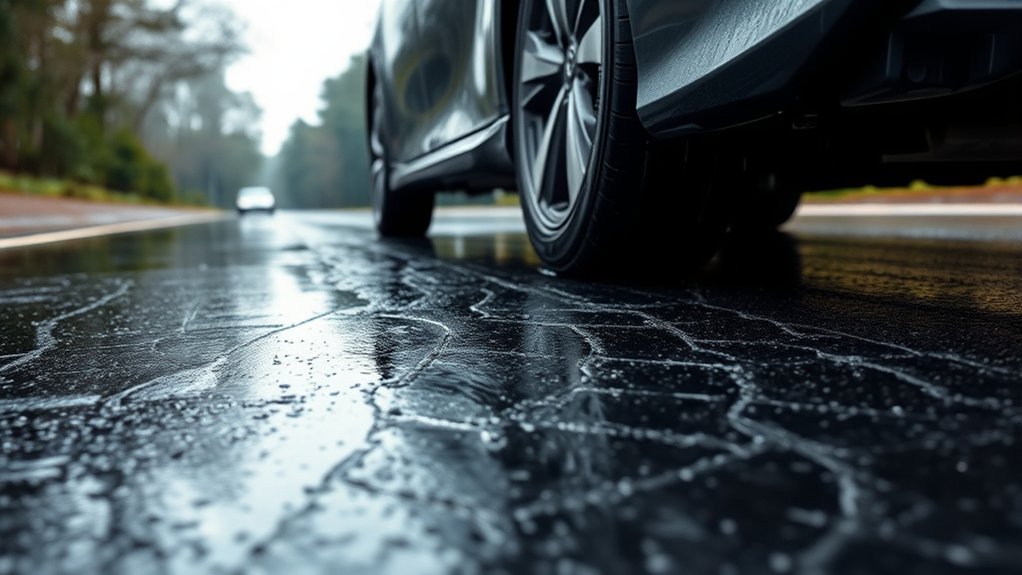
Tires are your car’s only contact with the road, making their condition crucial for safety and performance. Recognizing the signs of worn tires is essential for effective tire maintenance and ensuring maximum grip, especially on wet pavement.
- Look for visible cracks and uneven tread wear.
- Check for bald patches that indicate insufficient tread visibility.
- Use the penny test: if Lincoln’s head shows, it’s time for a replacement.
- Remember that under-inflated tires can lead to premature wear and decreased performance metrics.
Driving habits and seasonal changes can also affect tire longevity. Even tires with decent tread can lose grip due to hardening and cracking over time. Regular inspections help you evaluate tire condition, ensuring you maintain the performance metrics necessary for safe driving. Ignoring these signs can put you at risk, especially during wet conditions where hydroplaning becomes a concern.
What to Do If Your Tires Are Worn
Once you notice signs of wear on your tires, taking immediate action is essential to guarantee your safety on the road. Utilize tread wear indicators and the penny test to assess your tire’s condition. If tread depth falls below 2/32 of an inch or you see cracks, it’s time for tire replacement options.
Here’s a quick guide to help you decide:
| Action | What to Look For | Next Steps |
|---|---|---|
| Check Tread Depth | Use a penny; Lincoln’s head should be covered. | Replace if less than 2/32″. |
| Inspect for Cracks | Look for visible damage on the sidewalls. | Replace immediately. |
| Rotate Tires | Follow the owner’s manual schedule. | Extend lifespan and improve wear. |
| Check Inflation | Maintain around 30 psi when cold. | Inflate as needed. |
| Invest in Quality Tires | Consider wet-condition designs. | Select based on driving needs. |
Act promptly to maintain ideal traction and safety!
How Seasonal Conditions Affect Tire Performance
When temperatures drop or rain begins to fall, the performance of your vehicle’s tires can change dramatically. Understanding how seasonal conditions affect tire performance is vital for your safety and driving experience.
- Tire Material: Different compounds harden in cold weather, reducing traction.
- Seasonal Patterns: All-season or winter tires feature tread designs tailored for wet or icy conditions.
- Temperature Effects: Cold weather can decrease tire flexibility, impacting grip on wet surfaces.
- Weather Adaptability: Regular maintenance, like checking tread depth and inflation, guarantees peak performance.
In the first 10-15 minutes of rainfall, surfaces can become especially slick due to oil and debris. Adjusting your driving behavior—like reducing speed—can greatly lower the risk of hydroplaning. By choosing the right tires and staying vigilant about maintenance, you can enhance your Toyota Camry‘s grip and safety on wet pavement.
Choosing Tires for Your Toyota Camry
Selecting the right tires for your Toyota Camry can greatly enhance your driving experience, especially in wet conditions. Start by prioritizing tread depth; a minimum of 2/32 inches is essential for traction and reducing hydroplaning risk. Look for tire brands that specialize in all-season or touring tires designed for wet weather performance. Effective tread patterns with deep channels improve water dispersion, keeping you connected to the road.
Don’t forget about tire pressure—maintaining around 30 psi when cold is vital for grip and handling. As seasonal changes occur, adjust your tire choice accordingly. Regularly inspecting and rotating your tires guarantees even wear, optimizing performance. Also, consider tire warranties for peace of mind. By aligning your driving habits with the right tire specifications, you can navigate wet roads confidently, enhancing both safety and enjoyment on every drive.
Tips for Driving Safely in Wet Conditions
Driving in wet conditions can be challenging, but following a few key tips can greatly enhance your safety and control. By honing your driving techniques and embracing weather awareness, you can navigate slippery roads with confidence.
- Reduce your speed by 5 to 10 mph to lower the risk of hydroplaning.
- Regularly check your tire tread depth, ensuring it’s above 2/32 inches for ideal traction.
- Keep your tires inflated to around 30 psi when cold to maintain grip.
- Choose tires designed for wet conditions that efficiently channel water away.
Avoid sudden movements and abrupt braking; smooth driving habits help maintain control and reduce skidding. By implementing these strategies, you not only protect yourself but also contribute to safer roads for everyone. Stay alert, drive smart, and enjoy the liberation that comes with confidence behind the wheel, even in rain.
Frequently Asked Questions
Which Factor Most Affects Tire Grip?
Tire composition and tread design most affect grip. You must consider weather conditions, inflation pressure, driving speed, and road texture. Each element plays a crucial role in ensuring your safety on wet surfaces. Stay aware!
Conclusion
In summary, understanding how tire grip works on wet pavement is essential for your safety. For example, imagine driving your Toyota Camry during a rainstorm with worn tires. You might struggle to brake effectively, leading to a near-miss accident. By choosing the right tires, maintaining proper tread depth, and ensuring correct pressure, you greatly enhance your grip. Remember, your tires are the only contact between you and the road—investing in them pays off in safety and performance.

Related Articles

Toyota Camry Summer Tire Guide: Benefits, Limits & When to Use Them
Unlock the secrets to optimizing your Toyota Camry's performance with summer tires, but what do you need to watch out for? Discover more inside!
Read More
Toyota Camry Winter Tire Guide: Everything You Need to Know for Cold Weather
Get ready for winter driving with our comprehensive Toyota Camry Winter Tire Guide—learn how to maximize safety and performance in cold weather!
Read More
All-Season vs. Winter Tires on a Toyota Camry: When to Use Each
On the fence about all-season versus winter tires for your Toyota Camry? Discover which option truly enhances your safety and performance this winter.
Read More