
Toyota Camry Wheel Offset Explained: What It Means and Why It Matters

Wheel offset is the distance between your wheel’s centerline and the hub mounting surface. For your Toyota Camry, the typical offset ranges from +35 to +50 mm, ensuring stability and proper alignment. A positive offset enhances cornering performance, while a negative offset can improve traction. Deviating too much from factory specs can lead to handling issues and uneven tire wear. Curious about how to measure it or choose the right aftermarket wheels? There’s more to discover!
What Is Wheel Offset and How Is It Measured?

When it comes to understanding your Toyota Camry’s wheels, wheel offset is an essential factor to take into account. Wheel offset refers to the distance between the wheel’s centerline and the hub mounting surface, measured in millimeters. It can be positive, negative, or zero. Positive offset pulls the wheel inward, while negative offset extends it outward. Zero offset aligns the mounting surface with the centerline.
To measure wheel offset, first determine the wheel width and find the centerline by dividing this width. Then, measure the distance from the mounting surface to the inner lip of the wheel. You’ll often find this offset marked on the wheel as “ET” followed by a number (e.g., ET35). Understanding wheel offset is essential for ensuring proper fitment, which helps maintain wheel alignment and prevents issues like tire rubbing that can compromise your handling and tire clearance.
Why Wheel Offset Matters for Your Toyota Camry?
Why does wheel offset matter for your Toyota Camry? It’s essential for ensuring proper wheel alignment and maintaining suspension geometry. The Camry typically features a factory wheel offset of +35 to +50 mm, allowing for ideal clearance around braking and fender components. When the offset is correct, it enhances stability during cornering and minimizes the risk of tire rubbing against the fenders or suspension parts.
Choosing aftermarket wheels with an offset that deviates more than 15-20 mm from the factory specs can lead to steering response issues and affect your vehicle’s overall dynamics. This misalignment can result in uneven tire wear and handling problems, jeopardizing your safety on the road. By sticking to the recommended offset, you preserve your Camry’s alignment, ensuring a smoother driving experience while contributing to the longevity of your tires and suspension components.
Understanding Positive, Negative, and Zero Wheel Offset
Understanding wheel offset is essential for achieving the best performance out of your Toyota Camry. Grasping offset terminology helps you choose the right wheels and avoid costly mistakes.
| Offset Type | Description |
|---|---|
| Positive Offset | Mounting surface is street-side of centerline; enhances stability and aesthetics. |
| Negative Offset | Mounting surface is behind centerline; widens stance for improved traction. |
| Zero Offset | Mounting surface aligns with centerline; offers balanced positioning for towing. |
Offset implications are significant; a Camry with a +35 mm factory offset needs aftermarket wheels within 15-20 mm of this to guarantee proper fitment. Incorrect offset choices can lead to tire rubbing against fenders or suspension components, which compromises safety and performance. By understanding these offsets, you empower yourself to make informed decisions, liberating your driving experience.
Impact of Wheel Offset on Performance
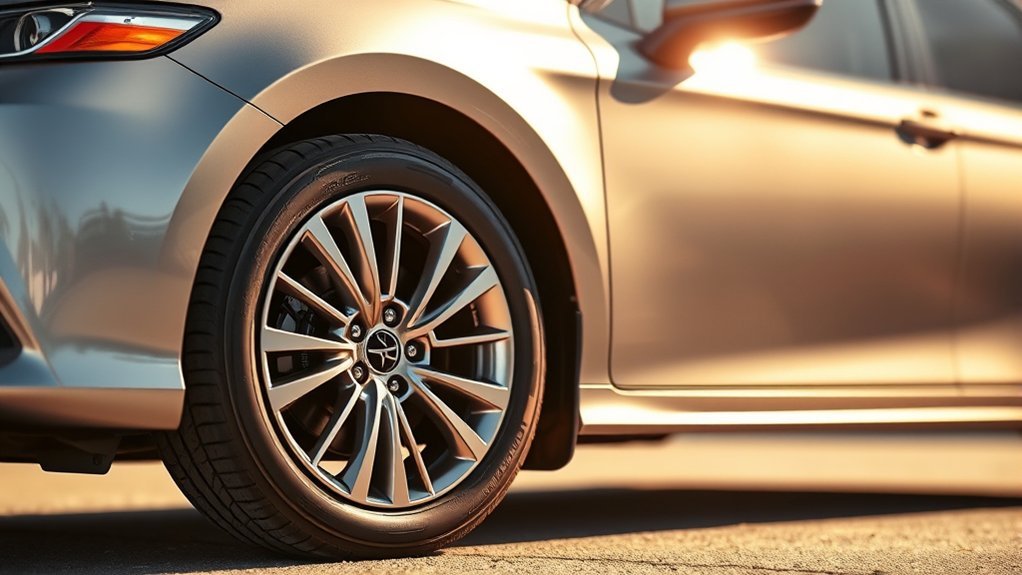
When you adjust your Toyota Camry’s wheel offset, you’re not just changing the aesthetics; it directly impacts handling stability and tire wear patterns. A positive offset can enhance cornering stability, while an incorrect offset might lead to uneven tire wear or even rubbing issues. Understanding these effects is vital for optimizing your vehicle’s performance and ensuring a smooth ride.
Handling Stability Improvements
Proper wheel offset plays an essential role in enhancing the handling stability of your Toyota Camry, as it directly affects the vehicle’s track width and cornering dynamics. A positive wheel offset positions the wheels closer to the centerline, improving steering response and stability, especially at higher speeds. This adjustment can greatly boost cornering grip, reducing body roll during sharp turns. Staying within 15-20mm of the factory offset maintains ideal suspension dynamics, preventing understeer or oversteer that can compromise performance. An incorrect offset misaligns suspension geometry, leading to uneven tire wear and diminished handling, particularly in sporty driving conditions. Ultimately, the right offset not only enhances cornering but also improves braking performance, ensuring stability during hard stops.
Tire Wear Patterns
Tire wear patterns can reveal a lot about your Toyota Camry’s wheel offset, especially if you’re noticing uneven wear. If your tires exhibit excessive wear on one edge, it might indicate an incorrect offset. A positive offset can push the wheels inward, causing inner edges to wear out faster due to suspension clearance issues. Conversely, a negative offset can lead to outer edge wear as tires protrude, risking fender rubbing during sharp turns. To combat this, regular tire rotation is essential to promote even tread patterns and extend tire life. Keeping within the factory-recommended offset is vital for peak performance; even a 5mm deviation can greatly affect handling and longevity. Monitor those wear patterns closely to preserve your driving experience!
Aesthetic Considerations
Uneven tire wear isn’t just a performance issue; it can also affect the overall aesthetic of your Toyota Camry. The right wheel offset dramatically influences your car’s stance and visual appeal. Positive offsets tuck the wheels inward, lending an elegant, streamlined look, while negative offsets create a wider, more aggressive stance. This choice isn’t purely cosmetic; it enhances cornering stability, improving grip and reducing body roll. However, straying from the factory offset range of +35 mm to +50 mm can lead to tires rubbing against fenders, compromising both aesthetics and performance. By selecting the correct offset, you can achieve a customized wheel design that balances a striking appearance with the driving characteristics your Camry was engineered for.
Debunking Common Myths About Wheel Offset
How well do you understand the complexities of wheel offset? Many drivers fall victim to offset misconceptions that can jeopardize performance and safety. For instance, not every wheel offset suits your vehicle. A common belief is that a negative offset always enhances performance, but it can actually cause steering instability if mismatched. Simply increasing wheel width won’t fix poor offset choices; it might worsen clearance issues.
Here’s a quick overview:
| Myth | Reality | Impact |
|---|---|---|
| Any offset works | Each car has a specific offset | Affects handling and safety |
| Negative offset boosts performance | Can lead to instability | Poor control |
| Wider wheels compensate for bad offset | Can exacerbate clearance issues | Increased wear on components |
Maintaining a close range to factory offset is crucial to avoid excessive wear on suspension parts.
Steps to Measure and Determine the Right Wheel Offset for Your Camry
When you’re ready to find the right wheel offset for your Toyota Camry, it’s crucial to take precise measurements for peak performance. Start by measuring the overall wheel width from bead seat to bead seat and divide that number by two to determine the centerline. Next, measure the distance from the mounting surface to the inner lip of the wheel. Subtract the centerline measurement from this distance to calculate the offset in millimeters.
Factory offsets for the Camry typically range from +35 mm to +45 mm, depending on the model year. Verify your measurements align with these specifications, staying within 15-20 mm of the factory offset to prevent issues like tire rubbing or suspension interference. For ideal wheel alignment and to maintain proper suspension geometry, consult your owner’s manual or a trusted resource for your specific model’s offset information.
Understanding Wheel Offset and Its Relation to Backspacing

Understanding wheel offset and its relationship to backspacing is vital for achieving the right fitment for your Toyota Camry. These measurements directly affect your vehicle’s wheel alignment and suspension geometry. Here’s what you need to know:
- Offset: This measures the distance from the wheel’s centerline to the mounting surface, influencing how the wheel sits in relation to the fender.
- Backspacing: This is the distance from the inner lip of the wheel to the mounting surface, which varies with wheel width and affects clearance.
- Fitment Impact: A positive offset, like +35 mm on a Camry, may enhance fender clearance, while a negative offset broadens the vehicle’s stance but could lead to rubbing.
Getting these measurements right is essential. Miscalculating can lead to handling issues and increased wear on suspension components, so precision is key to maintaining ideal performance.
Identifying Symptoms of Incorrect Wheel Offset
Incorrect wheel offset can greatly impact your driving experience and vehicle performance. If you notice steering vibrations, your Camry might be suffering from alignment issues due to improper offset. You could also find yourself pulling to one side, a clear sign that offset troubleshooting is necessary. Another symptom is uneven tire wear, indicating that your tires are not properly aligned with the vehicle’s body.
A positive offset that’s too high can push wheels inward, causing clearance problems with brake calipers and suspension components, which can severely affect braking performance. On the flip side, excessive negative offset can create a wider stance, leading to increased steering kick-back and reduced stability during cornering. Keep an ear out for unusual noises or vibrations; these can be early indicators of potential issues. Addressing these symptoms promptly can prevent further damage and guarantee a smoother, safer ride in your Camry.
Tips for Choosing Aftermarket Wheels for Your Camry
When you’re choosing aftermarket wheels for your Toyota Camry, understanding wheel size compatibility and offset specifications is essential for performance and safety. Stick to the recommended offset range and verify your wheel width aligns with your tire size for ideal handling. Don’t hesitate to consult fitment experts to guarantee a perfect match, especially if you’ve made any suspension modifications.
Wheel Size Compatibility
Choosing the right aftermarket wheels for your Toyota Camry can considerably enhance both aesthetics and performance. To guarantee ideal wheel size compatibility, keep these points in mind:
- Diameter: Match the wheel size with factory specs, typically ranging from 16 to 19 inches, depending on your model year and trim.
- Width: Aim for a wheel width between 7 to 8 inches, which maintains proper fitment and handling characteristics.
- Bolt Pattern: Confirm the bolt pattern is 5×114.3 mm to avoid the need for adapters.
Always verify tire compatibility with your chosen wheels, as common sizes like 215/60R16 or 235/45R18 can affect performance. Making informed choices guarantees your Camry drives smoothly and looks fantastic.
Understanding Offset Specifications
Offset specifications play a pivotal role in your Toyota Camry’s wheel performance and aesthetics. The factory offset of +35 mm is essential for proper wheel positioning, preventing clearance issues. When choosing aftermarket wheels, aim for an offset within 15-20 mm of this specification to maintain compatibility and avoid tire rubbing or suspension interference. Pay attention to offset terminology; wider wheels may require adjustments to guarantee the same clearance from suspension components and fenders. Always consider the wheel width alongside offset, as this impacts backspacing and overall fitment in the wheel well. To achieve your desired aesthetic and performance goals, consult fitment guidelines or use a wheel fitment calculator to make informed decisions.
Consult Fitment Experts
How can you guarantee your aftermarket wheels fit perfectly on your Toyota Camry? The key is to consult fitment experts who provide essential aftermarket guidance. They’ll help you avoid common pitfalls like tire rubbing and suspension interference. Here are three important steps to take into account:
- Understand Factory Offset: Know that your Camry’s offset typically ranges from +35 mm to +45 mm.
- Get Ideal Specs: Fitment experts can advise on backspacing and wheel width that enhance your car’s stance while guaranteeing compatibility with braking and suspension.
- Research Local Regulations: Maneuvering local laws on wheel modifications can prevent legal issues regarding tire and wheel stance.
Choosing wisely guarantees a successful upgrade and keeps your ride performing at its best.
Frequently Asked Questions
What Does +35 Offset Mean on a Rim?
A +35 offset means the wheel’s mounting surface is 35 millimeters in front of the centerline, impacting wheel alignment and rim compatibility. This offset optimizes clearance, enhancing performance without compromising your vehicle’s stance or safety.
What Does +25 Offset Mean for Wheels?
A +25 offset means your wheel’s pushed out 25 mm, enhancing stability and tire performance. Just remember, perfect wheel alignment’s essential; too much change might lead to rubbing or handling issues. Enjoy the ride!
Conclusion
In the world of wheels, offset is the unsung hero of performance and aesthetics. Choosing the right offset for your Toyota Camry isn’t just about looks; it’s essential for safety and handling. By understanding how offset influences your ride, you can avoid pitfalls and enhance your driving experience. So, before you hit the pavement with new wheels, make certain you’ve got the right offset locked down—your Camry will thank you for it!

Related Articles
Run-Flat vs. Regular Tires on Toyota Camry: Pros, Cons and Key Differences
Choosing between Camry run-flat and regular tires affects comfort, cost, and peace of mind—discover which tradeoff suits your drive best.
Read More
Toyota Camry Wheel Bolt Pattern: Specs for Every Generation Explained
Get the essential specs of the Toyota Camry's wheel bolt pattern across generations and uncover tips that will elevate your driving experience.
Read More
17-Inch vs. 18-Inch Tires on Toyota Camry: Handling and Comfort Trade-offs
Smooth ride or sharper handling—discover why Camry tire size changes everything and which option might surprise you.
Read More