
How to Install Snow Chains on a Toyota Camry: Step-by-Step Winter Guide

Installing snow chains on a Toyota Camry is not hard, but it must be done carefully. The safest approach is to confirm your exact tire size and model-year chain rules first, install the chains on the correct tires, tighten them evenly, then stop after a short distance to recheck the fit.
Quick Answer
To install snow chains on a Toyota Camry, park safely, set the parking brake, lay the chains flat, place them on the tires specified in your owner’s manual, connect the inside and outside fasteners, tighten the tensioner, drive forward briefly, and recheck the fit before continuing.
Key Takeaways
- Check your Camry owner’s manual before buying chains because approved chain use can vary by model year, tire size, wheel size, and drivetrain.
- Most front-wheel-drive Camrys use chains on the front tires, but AWD models and local chain-control rules may have different requirements.
- Drive slowly with chains installed, usually about 20–30 mph or the lower posted/manufacturer limit.
- Stop if you hear slapping, banging, or scraping. A loose or broken chain can damage the tire, wheel well, brake lines, or bodywork.
At a Glance
| Time Required | 10–20 minutes the first time; faster after practice |
| Difficulty | Easy to moderate, depending on weather, chain style, and wheel-well clearance |
| Tools Needed | Correct-size chains or cables, waterproof gloves, flashlight or headlamp, kneeling pad or mat, and the chain instructions |
| Cost | Usually about $40–$200+ depending on chain type, tire size, and low-clearance design |
Warning: Never install chains in a traffic lane. Pull completely off the road, turn on your hazard lights, set the parking brake, and follow posted chain-control signs. If the chain manufacturer or your Toyota owner’s manual says not to use chains on your tire/wheel package, do not force them on.
Check Your Toyota Camry Manual Before Buying Snow Chains
Before you install anything, confirm that your exact Camry can use snow chains or cables. Toyota’s general guidance is to refer to the official Toyota owner’s manual page for model-year details and to install tire chains or cables according to the manual’s drive-wheel instructions. Toyota also notes that chains or cables generally go on the vehicle’s drive wheels, which means the front wheels for a front-wheel-drive vehicle.
Check these four items before purchase:
- Tire size: Read the size printed on the tire sidewall, such as 205/65R16, 215/55R17, or another size listed for your trim. The chain package must match the tire size exactly.
- Wheel size and clearance: Some Camry tire and wheel combinations may require low-clearance cables or may not permit conventional chains. Always follow the owner’s manual and the chain maker’s fit guide.
- Drivetrain: Most front-wheel-drive Camrys use chains on the front tires. If your Camry is AWD, check the manual and the chain maker’s instructions before deciding which axle to chain.
- Local rules: Chain-control rules are posted by road and weather condition. In California, for example, Caltrans says drivers must install chains when signs require them and should remove them only after the end of chain control in a safe pull-off area.

[Products Worth Considering]

This car emergency kit keeps essential roadside tools organized in a durable, portable bag so you can respond quickly during common driving emergencies. It includes battery jumper cables, a bright LED headlight, first aid supplies, a tire pressure gauge, and safety essentials like gloves and an emergency poncho. Designed for trunk or storage use, it helps you be prepared for dead batteries, minor malfunctions, and unexpected roadside issues.

This roadside assistance kit helps drivers and passengers in urgent situations after an accident or breakdown, providing practical support while waiting for help. It includes a lightweight, compact tire inflator for fast inflation of standard vehicle tires, plus reinforced jumper cable protection for safer handling. Ideal for winter weather, road trips, camping, and travel, with everything stowed neatly in a trunk bag.

Upgrade your Toyota’s wheels with durable aluminum alloy valve stem caps that help protect valve cores from corrosion and direct exposure to road grime, clay, water, and snow. Rubber rings improve sealing to help prevent air leakage and maintain stable tire pressure for safer driving. These caps are easy to install or remove without tools and add a unique, stylish look to your car.
Why Snow Chains Help on a Toyota Camry
Snow chains and tire cables help your Camry’s tires bite into packed snow and ice instead of spinning on top of it. They are most useful on steep, compacted, snowy, or icy roads where standard all-season tires may struggle.
That said, chains are not a magic fix. They reduce your safe driving speed, change the way the car steers and brakes, and can damage your Camry if they are loose, broken, or used on dry pavement. They should be treated as temporary traction devices for specific winter road conditions, not as a substitute for careful winter driving.
Independent winter-driving guidance reports that chains can greatly improve traction on snow and ice, but the exact gain depends on tire size, chain design, vehicle type, and road surface. Use chains for control, not speed.
Selecting the Right Snow Chains or Cables for Your Camry
The best snow chains for a Toyota Camry are the ones that fit your tire size, clear the wheel wells, comply with your owner’s manual, and meet the chain-control rules where you drive. Do not buy chains based only on the vehicle name; buy by tire size and clearance requirement.
| Type | Best For | Camry Notes |
|---|---|---|
| Cable chains | Occasional use and lower-clearance passenger cars | Often easier to fit in tight wheel wells, but may wear faster than heavy chains. |
| Diamond-pattern chains | Smoother grip and lateral stability | Good option when approved for your tire size and clearance. |
| Twist-link chains | Frequent snow use and stronger bite | Can provide strong traction, but may be heavier, rougher, and less suitable for tight-clearance cars. |
| Snow socks | Approved alternative traction device use | Only use if your route, state rules, and vehicle manual allow them where chains are required. |
Note: Keep the printed chain instructions in a waterproof bag with the chains. Practice once at home before you need them in snow, darkness, or freezing rain.
Preparing for Installation
Good preparation makes the job much easier. Before winter travel, unpack the chains, untangle them, and test-fit them on a dry driveway. This confirms the size, shows you how the fasteners work, and prevents surprises during a storm.
| Item | Purpose | Notes |
|---|---|---|
| Correct-size chains or cables | Provide winter traction | Match the tire sidewall size exactly |
| Waterproof gloves | Protect hands from cold metal | Keep a spare dry pair in the trunk |
| Headlamp or flashlight | Improves visibility | Use fresh batteries before a mountain trip |
| Kneeling mat or towel | Keeps knees dry | A small rubber floor mat works well |
Step-by-Step Guide to Installing Snow Chains on a Toyota Camry
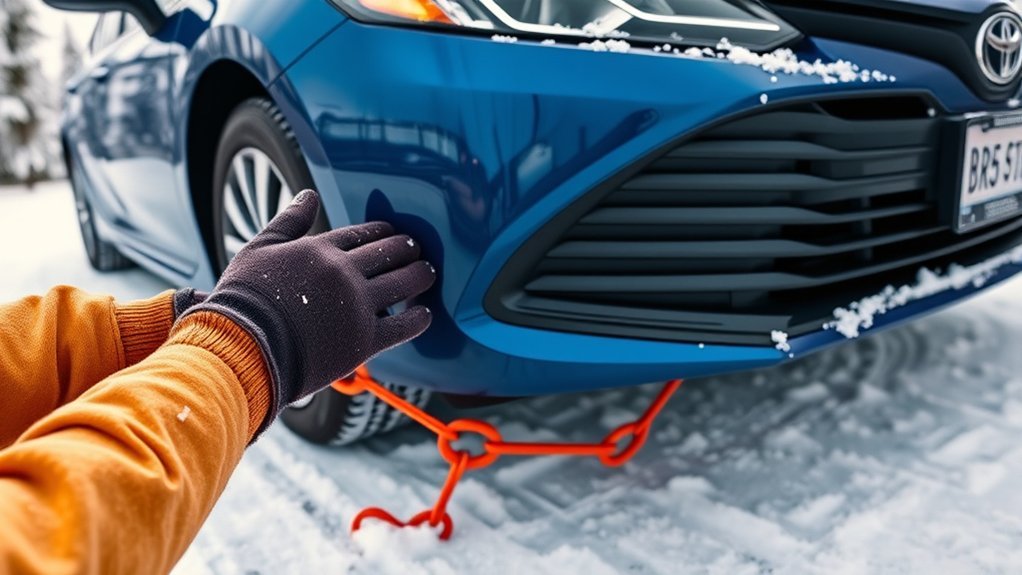
These steps apply to many passenger-car chains and cable sets, but your chain manufacturer’s instructions come first. Some designs use a drive-on method; others drape over the tire and connect behind the wheel.
- Pull over safely. Use a designated chain-up area or a wide turnout. Turn on hazard lights, shift to Park, and set the parking brake.
- Identify the correct tires. For many front-wheel-drive Camrys, chains go on the front tires. If your Camry is AWD or your manual says otherwise, follow the manual.
- Lay the chains flat. Untangle each chain and make sure the hooks, sharp edges, or fastener openings face away from the tire sidewall.
- Position the chain on the tire. Center the chain across the tread. The chain should hang evenly over both sides of the tire.
- Connect the inside fastener first. Reach behind the tire and connect the inner cable, hook, or clasp according to the instructions.
- Connect the outside fastener. Pull the chain snug on the front side of the tire and connect the outer hook, clasp, or tensioning cable.
- Tighten the tensioner. Use the built-in cam, rubber adjuster, bungee, or draw chain supplied with the set. The chain should be snug, not dangling.
- Move the Camry forward slowly. Drive one car length or about 30–100 feet, then stop safely and recheck both chains. Retighten any loose sections before continuing.
- Check again after a short drive. After another few minutes, stop in a safe area and inspect the chains. If you hear slapping, banging, or scraping, stop immediately.
Pro Tip: Keep the chain label, size chart, and instructions in the storage case. When it is cold and wet, guessing which side faces the tire is the easiest way to install chains backward.
Securing the Chains for Optimal Fit
A secure fit is the difference between safe traction and expensive damage. After installation, the chains should sit centered over the tire tread, with no large loose loops and no metal rubbing the tire sidewall, brake components, or wheel well.
Proper Chain Alignment
For diamond-pattern chains, the pattern should sit evenly across the tread, not shifted toward the inner or outer sidewall. For ladder-style chains or cables, the cross sections should run straight across the tread. If the chain is crooked, remove it and reinstall it rather than trying to drive it into place.
Tightening Techniques
Use only the tensioning system supplied or recommended by the chain manufacturer. Many sets use a rubber tensioner, cam lock, or draw chain. Tighten evenly on both tires so the Camry does not pull to one side. Never use improvised metal hooks or loose straps that could hit the brake lines or suspension.
Troubleshooting After the First 100 Feet
- Slapping sound: Stop and tighten the chain. A loose cross chain may be hitting the wheel well.
- Scraping sound: Stop immediately. The chain may be contacting the body, suspension, or brake components.
- Car pulls to one side: One chain may be tighter or better centered than the other.
- Chain will not tighten: Confirm the tire size and chain size match. Do not drive on an oversized chain.
- Broken link or cable: Remove the chain and treat it as a roadside emergency. Do not continue with a broken traction device.
Drive Safely With Your Snow Chains
Once the chains are installed, drive like traction is limited, because it still is. AAA recommends slow, steady driving with chains or cables, and Caltrans says chain-control speed limits are commonly 25 or 30 mph when chains are required. Follow the lower of the posted limit, the chain manufacturer’s limit, or the road-condition limit.
- Keep speed low. Most chain driving should stay around 20–30 mph or lower if signs, traffic, or the chain instructions require it.
- Accelerate gently. Hard throttle can spin the front tires and loosen the chains.
- Brake early. Leave extra following distance and avoid sudden stops.
- Turn smoothly. Sharp steering can reduce control and shift the chains.
- Avoid bare pavement when possible. Chains wear quickly on dry roads and can damage the road surface, the chains, and the vehicle.
Warning: If the chains begin banging against the car, pull over as soon as it is safe. Continuing to drive with a loose or broken chain can damage the tire, fender liner, brake line, ABS wiring, or body panel.
[Products Worth Considering]
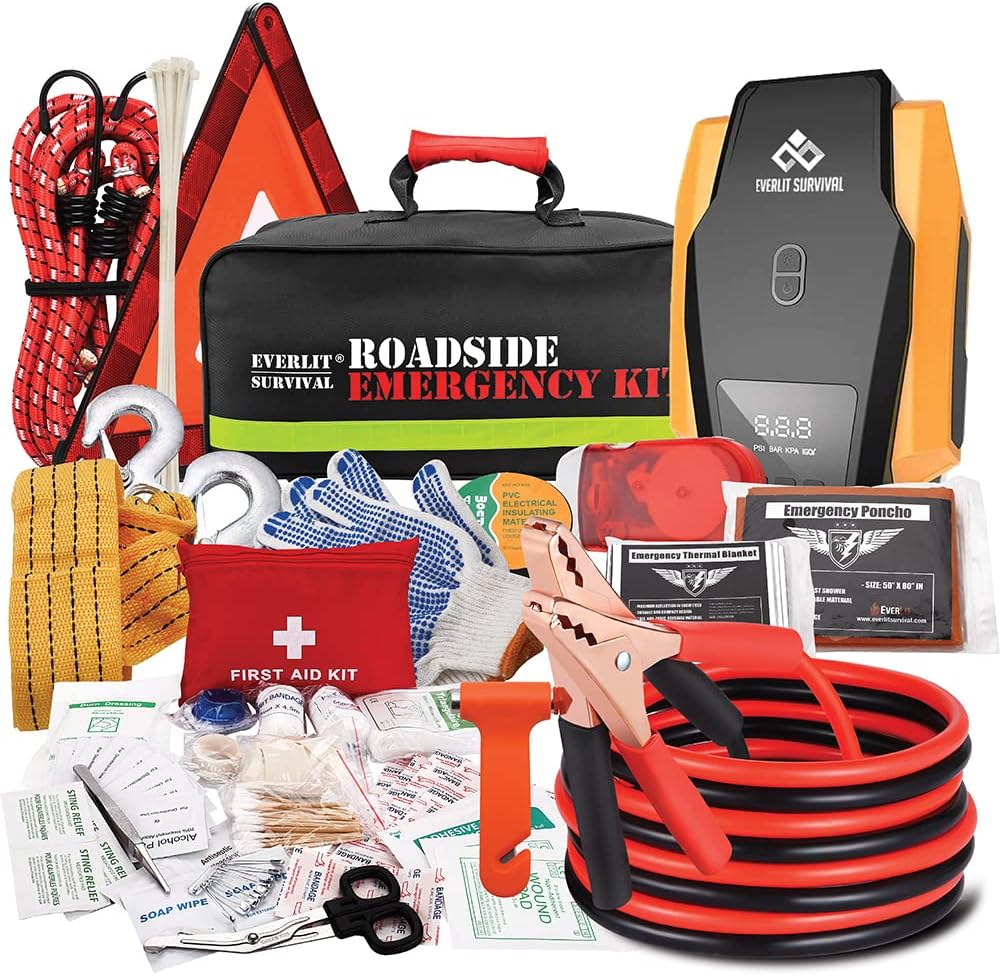
The Everlit Road Guardian emergency kit is designed for roadside breakdowns, combining essential safety gear and roadside tools in one compact bag. It includes a digital 12V auto tire inflator with preset and auto shutoff, plus 12-foot 8-gauge jumper cables to get you moving again. You also get a full 108-piece first aid kit, reflective warning tools, safety gloves, and emergency convenience items for safer travel.

This 3-piece wheel brush set makes it easy to clean wheels and tires with soft, scratch-free brushes designed for lifting brake dust and grime. The flexible rim brush bends up to 360 degrees to reach hard-to-access areas for a thorough clean, while the comfortable grip helps control during detailing. A dedicated detailing brush supports gentle cleaning for sensitive surfaces, including interior use.

This professional wheel and rim cleaning brush set lifts brake dust, grime, and dirt with soft, scratch-free microfiber and synthetic wool fibers. The rim brush bends up to 360 degrees for easy access to hard-to-reach areas around spokes, lips, and faces. Ideal for thorough cleaning of car, truck, motorcycle, bicycle, RV, and more wheel and tire surfaces.
When to Safely Remove Your Snow Chains
Remove snow chains when chain-control signs end, the road is plowed and mostly clear, or the chain manufacturer’s instructions say conditions are no longer suitable. Do not stop in the road to remove them. Continue to a safe turnout, parking area, or designated removal zone.
Before taking them off, look ahead. If another snowy or icy stretch is only a short distance away, it may be safer to keep them on at low speed until the road is consistently clear. If the road is dry, remove them promptly to reduce wear and prevent damage.
Tips for Maintaining Your Snow Chains

Snow chains last longer when they are cleaned, dried, inspected, and stored correctly. Road salt and moisture can cause corrosion, while bent hooks or stretched cables can make the next installation unsafe.
Proper Storage Techniques
- Dry them first. Never pack wet chains into a sealed plastic bag for long-term storage.
- Use the original case. Store the chains, instructions, rubber tensioners, gloves, and flashlight together.
- Keep them accessible. Do not bury chains under luggage if you are driving into chain-control areas.
Regular Inspection Guidelines
Inspect the chains before each winter trip. Look for broken links, kinked cables, missing rubber tensioners, bent hooks, worn cross chains, and rust. Replace damaged chains before travel; do not wait until you are already in snow.
Cleaning After Use
After driving in snow, rinse the chains with fresh water to remove road salt, wipe them dry, and let them air-dry fully before storing. If the manufacturer recommends a light protective lubricant, apply it only after the chains are clean and dry.
Don’t Make These Common Mistakes When Installing
- Buying by vehicle name only: “Toyota Camry chains” is not enough. Match your exact tire size and clearance requirement.
- Ignoring the owner’s manual: Some tire/wheel packages may require low-clearance cables or may not allow chains.
- Installing on the wrong tires: Confirm whether your Camry needs chains on the front tires, rear tires, or another setup specified by the manual and local rules.
- Leaving hooks facing inward: Sharp or open fasteners can damage the tire sidewall.
- Skipping the retighten step: Chains settle after the tire rotates. Always stop and recheck after a short distance.
- Driving too fast: Higher speeds increase the chance of chain failure and vehicle damage.
- Using chains on dry pavement: Remove them once the road is clear and it is safe to pull over.
Resources for Further Assistance and Learning
If you are unsure about fitment or installation, use reliable sources before your trip. Start with Toyota’s owner manuals, then check the chain manufacturer’s printed instructions and your state transportation department’s chain-control page.
Recommended Online Tutorials
Use videos from your chain manufacturer, Toyota owner resources, or established roadside-safety organizations. Avoid relying on a generic video if the chain style does not match the set in your trunk.
Local Mechanic Assistance
A tire shop, Toyota service department, or local mechanic can test-fit chains before winter travel. This is especially helpful if your Camry has larger wheels, low-profile tires, or limited wheel-well clearance.
Winter Driving Safety Tips
- Check road conditions before leaving and again before climbing into mountain passes.
- Carry warm clothing, water, snacks, a phone charger, a small shovel, and a flashlight.
- Keep the gas tank or battery charge comfortably above the minimum needed for the trip.
- Leave extra following distance and avoid sudden steering, braking, or acceleration.
- Do not assume AWD removes the need to carry chains; some chain-control areas still require them to be carried or installed.
Frequently Asked Questions
Can I install snow chains myself?
Yes. Most drivers can install snow chains themselves if the chains are the correct size and they practice first in a dry, safe place. Read the chain instructions, wear gloves, and always recheck the tension after driving a short distance.
Do snow chains go on the front or rear tires of a Toyota Camry?
For many front-wheel-drive Toyota Camrys, chains go on the front tires because those are the drive tires. However, you should always confirm in your model-year owner’s manual, especially if your Camry has AWD or a tire/wheel package with special clearance limits.
Do I need snow chains on all four tires or just two?
Most front-wheel-drive passenger cars use one pair of chains on the front tires. AWD and 4WD rules can vary by vehicle manual, chain-control signs, and state law. Check your Camry manual and the rules for the road you are driving.
Can I use snow chains on a Camry with 18-inch or 19-inch wheels?
Do not assume you can. Some larger wheel and low-profile tire setups have limited clearance and may not allow conventional chains. Check the Toyota owner’s manual for your exact year and trim, then confirm fit with the chain manufacturer.
How fast can I drive with snow chains on?
Drive slowly. A safe range is often about 20–30 mph, but you must follow the lowest limit from posted chain-control signs, the chain manufacturer’s instructions, and current road conditions.
What is the best pattern for snow chains?
Diamond-pattern chains often provide smoother contact and better side-to-side stability than basic ladder patterns, but the best choice is the chain or cable style approved for your Camry’s tire size, clearance, and local chain-control rules.
Are snow socks or cables okay instead of chains?
Sometimes. Cables may be a good low-clearance option, and snow socks may be accepted as alternative traction devices in some areas. Confirm that your route allows them when chains are required and that Toyota permits them for your tire setup.
Conclusion
Installing snow chains on a Toyota Camry is mainly about preparation: buy the correct size, confirm your owner’s manual allows them, install them on the correct tires, tighten them evenly, and recheck them after the first short roll. Drive slowly, avoid bare pavement, and remove the chains when the road is safely clear. With the right fit and careful use, your Camry will be much better prepared for snow-covered roads and chain-control areas.
Sources
- Toyota Owners Manuals and Warranties — official model-year manual lookup for Toyota Camry owners.
- Toyota Support: Which Tires Do I Put Snow Chains/Cables On? — general Toyota guidance to follow the owner’s manual and install traction devices on drive wheels.
- Caltrans Chain Controls and Chain Installation — official California chain-control rules, speed guidance, and installation/removal safety.
- AAA: How to Install and Drive with Snow Chains and Tire Cables — roadside safety, installation, retightening, speed, and removal guidance.
- Haynes: How to Install Tire Chains for Winter Snow — chain types, traction discussion, and installation practice tips.
- Washington Administrative Code 204-24-050 — example of state rules for chains and approved alternative traction devices.
[Products Worth Considering]

These aluminum alloy tire valve stem caps with an O-ring seal help protect valve stems from corrosion while adding a clean, stylish look to your vehicle. The universal fit works across cars, trucks, motorcycles, bicycles, and more, making them an easy upgrade for everyday driving and off-road use. Installation is quick, and the included four-pack keeps all your tires dressed and protected.

Black Magic Intense Foam Wheel & Tire Cleaner uses a high-foaming action to lift away dirt, grime, and brake dust without scrubbing. The color-changing formula helps show contaminants being dissolved as foam turns from white to brown. Safe for all wheel types and even wheel wells, it leaves a like-new, slick finish with a fresh cherry scent.

Monitor tire tread wear with a smart, color-coded depth gauge that shows clear condition ranges at a glance. The bar is range marked for fast, easy readings, helping you maintain safer traction and performance. Each gauge is portable with a pocket clip, and the set includes 20 units for daily use and sharing.

Related Articles

Toyota Camry All-Season Tires Explained: What They Can and Can’t Do
In exploring Toyota Camry all-season tires, discover their benefits and limitations—are they really the right choice for your driving needs?
Read More
Toyota Camry Tire Traction in Ice and Snow: A Practical Winter Driving Guide
Learn essential tips for maximizing tire traction on ice and snow in your Toyota Camry, ensuring your winter driving is safe and confident. Discover more now!
Read More
Do Toyota Camry Tires Need Snow Chains? When They Help and When They Don’t
How do snow chains enhance your Toyota Camry's winter driving safety, and when should you avoid using them? Discover the essential details inside!
Read More