
Should You Put Snow Tires on a Hyundai Sonata? Honest Answer
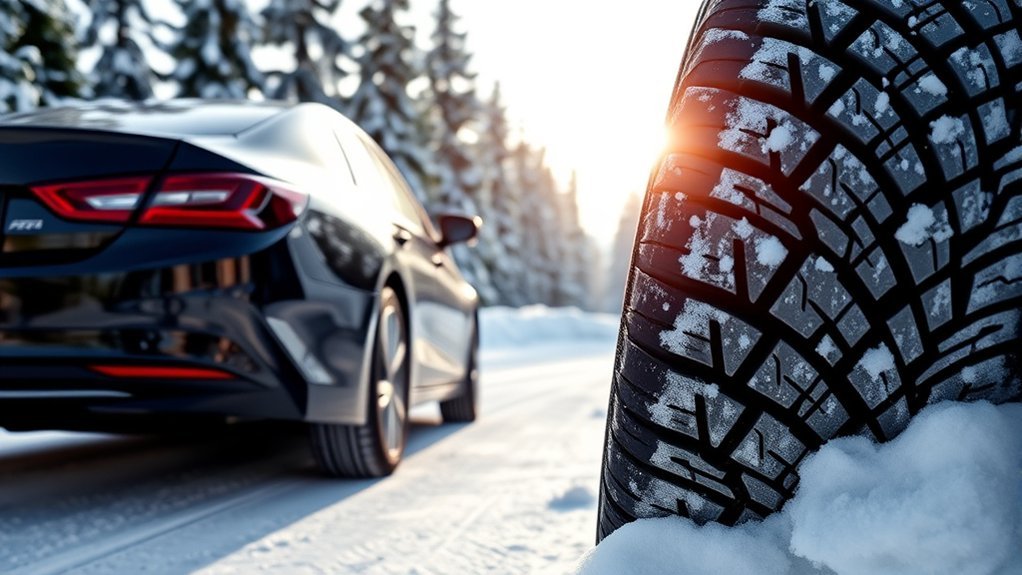
Yes, you should put winter tires, often called snow tires, on your Hyundai Sonata if you regularly drive in temperatures below 45°F (7°C), snow, ice, slush, or freezing rain. A Sonata can handle mild winter weather on good all-season tires, but dedicated winter tires give the car more grip for starting, steering, and braking when roads turn cold and slippery.
Quick Answer
Put winter tires on your Hyundai Sonata if winter roads are a regular part of your driving. Choose a full set of four tires that match your Sonata’s factory size, load rating, and speed rating, and look for the 3PMSF winter symbol for severe snow traction.
Key Takeaways
- Winter tires are the best choice for a Hyundai Sonata if you often drive below 45°F (7°C), especially on snow, ice, slush, or freezing pavement.
- Install winter tires on all four wheels, not just the front, to keep braking, steering, and cornering balanced.
- Use the tire size and cold tire pressure listed on your Sonata’s driver-door placard or in the owner’s manual.
- Snow Mode, if your Sonata has it, helps manage power delivery, but it cannot replace the grip of proper winter tires.
- Remove winter tires when temperatures stay consistently above 45°F (7°C) to reduce premature wear.
At a Glance
| Time Required | 30–90 minutes at a tire shop; longer if mounting tires onto wheels for the first time |
| Difficulty | Easy if a shop installs them; moderate if you swap a mounted wheel-and-tire set at home |
| Tools Needed | Tire-pressure gauge, tread-depth gauge, torque wrench if swapping wheels, and the Sonata’s tire placard or owner’s manual |
| Cost | Usually several hundred dollars for four winter tires; extra if you add a dedicated wheel set, TPMS sensors, mounting, balancing, or seasonal storage |
Why Winter Tires Are Essential for Your Hyundai Sonata
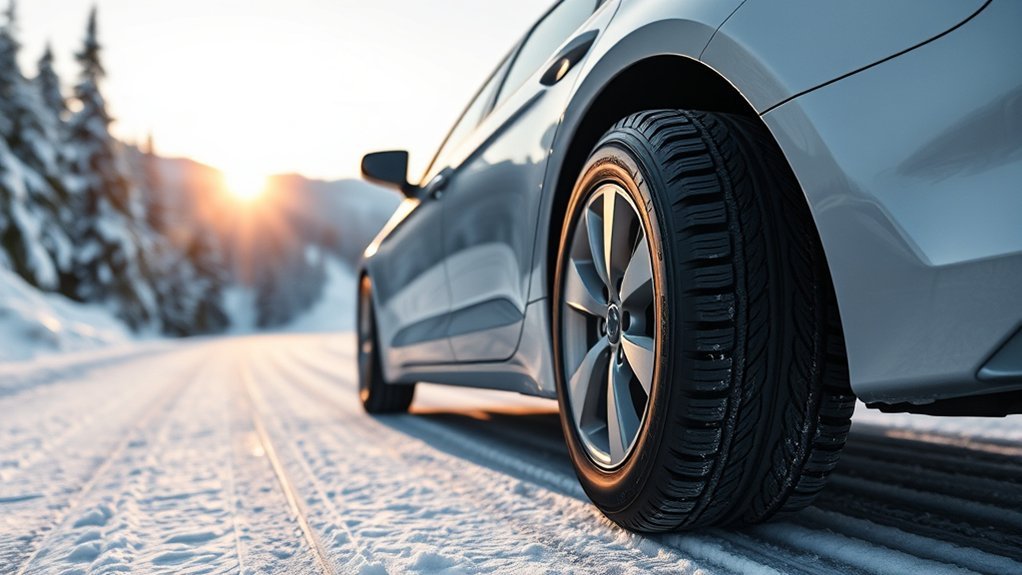
A Hyundai Sonata is a front-wheel-drive sedan in many model years and trims, so its front tires must handle steering, acceleration, and much of the braking load. That helps in light snow, but it does not overcome the limits of the tire itself. Once roads are cold, slick, or snow-covered, tire compound and tread design matter more than the badge on the trunk.
The Hyundai owner’s manual winter-driving guidance says snow tires may be needed for deep snow and that snow tires should be equivalent in size and type to the vehicle’s standard tires. Hyundai also says to use snow tires when road temperature is below 45°F (7°C), keep the same inflation pressure as the original tires, and mount snow tires on all four wheels.
That four-tire rule is important. Installing winter tires only on the front of a Sonata can make the rear of the car more likely to slide during braking or cornering. Installing them only on the rear can reduce steering grip. A matched set of four gives the car more predictable handling.
Warning: Do not mix two winter tires with two all-season tires on a Sonata for normal winter driving. Mixed grip can make the car harder to control during emergency braking, sharp turns, or icy lane changes.
[Products Worth Considering]

Measure tire tread depth quickly and accurately with this LUMITECO dial gauge that reads in 1/32" increments up to 14/32". The color-coded green/yellow/red zones make it easy to judge tire wear and know when replacement is needed. A rugged, compact design with a protective pouch helps keep the gauge ready for use on cars, trucks, motorcycles, and more.

Replace worn or missing TPMS sensors with a pre-programmed 4-pack designed for compatible GM vehicles. These 315MHz sensors provide real-time tire pressure monitoring and alert you if pressure is too high, too low, or if a rapid air leak occurs. Most installations are ready with minimal relearn effort after mounting, helping improve safety and driving confidence.

The SAFELIFE dial tire tread depth gauge measures tread depth in 1/32 inch increments with clear, easy-to-read 2-inch dial face. Color zones using a traffic light system help you quickly judge whether tread is low, marginal, or ample for safer driving. Built with a durable zinc cast body and a metal detect probe for precise, comfortable use across cars, motorcycles, trucks, and buses.
What Users Say About Sonata Performance in Snow
Many Sonata owners find that the car is manageable in light snow when the tires are healthy and the driver is gentle with the throttle and brakes. The weak point is usually not the Sonata itself; it is the tire. Factory all-season tires are built as a compromise for dry, wet, and mild winter conditions. They are not the best tool for repeated snow, packed ice, slush, or freezing rain.
With dedicated winter tires, the Sonata usually feels more confident when pulling away from a stop, climbing a snowy driveway, braking at intersections, and steering through slush. That does not mean you can drive at normal dry-road speeds. It means the tires give the car more usable grip before traction control, ABS, or stability control has to intervene.
Winter tires do not make ice safe; they give your Sonata a better chance to grip when all-season tires start to harden, slide, or spin.
How Winter Tires Improve Performance and Safety
Winter tires improve cold-weather performance in two main ways: softer cold-weather rubber and more aggressive tread design. Michelin’s winter tire guide explains that winter tires stay flexible below 45°F (7°C), while all-season tires are mainly designed for moderate climates and light snow. Bridgestone’s winter tire guide also notes that winter tires use deeper tread patterns, more slots, and sipes that help create biting edges on ice and snow.
For a Hyundai Sonata, that can translate into better starting traction, shorter winter stopping distances, and more predictable steering on snow or slush. It also helps the car’s electronic safety systems work better because those systems still depend on the tires’ contact with the road.
Winter tires are most useful when you regularly face:
- Snow-covered roads or unplowed side streets
- Freezing rain or black ice risk
- Cold morning commutes below 45°F (7°C)
- Hills, bridges, rural roads, or long highway drives in winter weather
- Stop-and-go city traffic where braking grip matters at intersections
If your area only gets a few light dustings each year and temperatures rarely stay below freezing, a high-quality all-season or all-weather tire may be enough. If you commute through real winter weather, dedicated winter tires are the safer choice.
Key Factors for Selecting the Best Winter Tires for Your Sonata
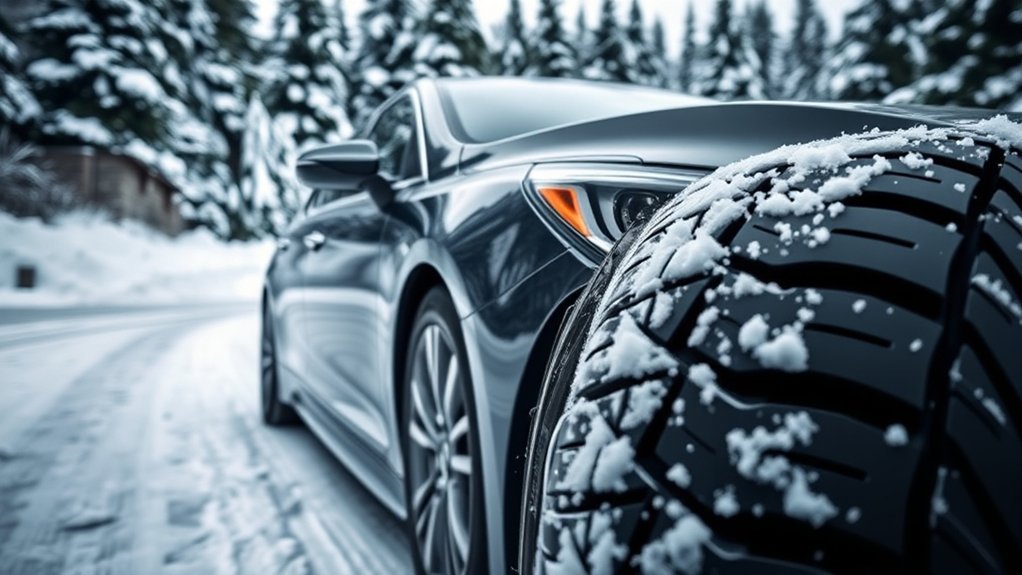
Choosing the right winter tires for your Hyundai Sonata starts with fitment, not brand hype. Check the tire size on the driver-side door placard or in the owner’s manual, then choose tires that match the required size, load rating, and speed rating. The National Highway Traffic Safety Administration also advises drivers to use the owner’s manual or Tire and Loading Information Label to confirm the correct tire size.
1. Look for the 3PMSF winter symbol
For true winter performance, look for the Three-Peak Mountain Snowflake symbol, often shortened to 3PMSF. This marking shows that the tire meets a severe-snow traction standard. M+S, or Mud and Snow, can appear on some all-season tires, but it is not the same as a dedicated winter tire rating.
2. Match the Sonata’s tire size and ratings
Do not guess based on another Sonata owner’s setup. Tire size can vary by model year, trim, wheel package, and market. Use your specific car’s placard. If you move to a smaller winter wheel size, have a tire professional confirm that the wheel clears the brakes and that the tire’s overall diameter, load rating, and TPMS setup are correct.
3. Choose the tire type for your roads
- Studless winter tires: Best all-around choice for most Sonata owners who drive on snow, slush, cold pavement, and occasional ice.
- Performance winter tires: Better for dry and wet cold roads, but usually less aggressive in deep snow than studless ice-and-snow tires.
- Studded winter tires: Helpful on frequent ice, but noisy, rougher on pavement, and restricted or banned in some locations.
- All-weather tires: A compromise option for mild-to-moderate winters if you want one tire set year-round and choose a model with 3PMSF marking.
4. Consider a second set of wheels
A second wheel set costs more upfront, but it can make seasonal swaps faster and reduce repeated mounting and balancing. If your Sonata uses tire-pressure monitoring sensors, ask the shop whether the winter wheel set needs TPMS sensors and programming.
Pro Tip: Buy winter tires before the first major storm. Tire shops get busy when snow appears in the forecast, and popular Sonata sizes can sell out quickly.
When Is the Best Time to Switch to Winter Tires?
The best time to switch is before the first real winter storm, once temperatures are consistently near or below 45°F (7°C). Waiting until roads are already icy can leave you fighting appointment backlogs, limited inventory, and a less safe commute.
Remove winter tires when temperatures consistently stay above 45°F (7°C). Winter tires are made from softer compounds that help in cold weather, but those same compounds can wear faster on warm, dry pavement.
Local laws also matter. For example, the Gouvernement du Québec requires most vehicles registered in Québec to be winter-ready from December 1 to March 15. Studded tire rules, chain rules, and winter equipment laws vary by state, province, and municipality, so check local requirements before buying studded tires or chains.
Note: Tire chains are not a substitute for choosing the right winter tires. Hyundai warns that improper tire-chain use can damage vehicle components, and chains should be used only as the owner’s manual and local laws allow.
[Products Worth Considering]

The 22800 wheel stud installer makes replacing wheel studs quick and secure, saving time and effort during tire service. It uses a ratchet or impact wrench to pull new studs firmly into place, helping when existing studs are too long. Compatible with most automotive wheels and light-duty truck wheel studs, it’s designed for easy, tool-assisted installation.

Monitor tire tread wear with a smart, color-coded depth gauge that shows clear condition ranges at a glance. The bar is range marked for fast, easy readings, helping you maintain safer traction and performance. Each gauge is portable with a pocket clip, and the set includes 20 units for daily use and sharing.

Accurately measure tire tread depth with a calibrated gauge marked from 0 to 1 inch in 1/32 inch increments. The color-coded bar helps you quickly identify tread condition ranges, supporting safe driving for trucks, motorcycles, automobiles, and passenger vehicles.
Does Hyundai Snow Mode Replace Winter Tires?
No. Snow Mode can help, but it does not replace winter tires. If your Sonata is equipped with Snow Mode, Hyundai says it adjusts left and right wheel-slip control, engine torque, and shift patterns to optimize available traction in adverse conditions. That helps the car use available grip more smoothly, but it cannot create grip that the tires do not have.
Think of Snow Mode as a control strategy and winter tires as the physical grip. The best setup in harsh winter weather is gentle driving, correct tire pressure, a full set of winter tires, and Snow Mode if your Sonata has it.
Winter Tire Maintenance Checklist
Winter tires still need regular care. A good set can perform poorly if it is underinflated, worn out, mismatched, or stored badly.
- Check cold tire pressure monthly. NHTSA recommends checking tire pressure when tires are cold and using the vehicle manufacturer’s recommended pressure, not the maximum pressure printed on the tire sidewall.
- Check tread depth before winter starts. Winter traction drops as tread wears down, especially in slush and deep snow.
- Rotate tires on schedule. This helps even out wear, especially on a front-wheel-drive Sonata.
- Inspect for cracks, bulges, or uneven wear. Damage can reduce safety even when tread depth looks acceptable.
- Store off-season tires properly. Keep them clean, dry, cool, and away from direct sunlight, motors, chemicals, and heat sources.
- Re-torque wheels after installation if your shop recommends it. This is especially useful after swapping a separate wheel set.
Frequently Asked Questions
Is a Hyundai Sonata good in the snow?
A Hyundai Sonata can be good in light snow when the tires are in good condition and the driver is smooth with steering, braking, and acceleration. In deeper snow, packed snow, ice, or repeated freezing weather, winter tires make a much bigger difference than the car itself.
Is it worth putting snow tires on a Hyundai Sonata?
Yes, it is worth it if you regularly drive in winter weather. Snow tires improve cold-weather grip, braking, and control. They are especially worthwhile for commuting, hills, rural roads, unplowed streets, and areas where temperatures stay below 45°F (7°C).
Is Hyundai Snow Mode good?
Hyundai Snow Mode is helpful if your Sonata has it because it can adjust torque, shifting, and wheel-slip control for slippery roads. It is not a replacement for winter tires. Snow Mode manages available traction; winter tires increase the traction available in the first place.
Do I need four winter tires or just two on the front?
Use four winter tires. Hyundai recommends mounting snow tires on all four wheels to balance handling. Two winter tires can create a traction imbalance that makes the Sonata less predictable when braking or cornering on snow and ice.
What winter tire size does a Hyundai Sonata need?
Use the tire size listed on your Sonata’s driver-door tire placard or in the owner’s manual. Tire size can vary by model year, trim, and wheel package, so do not rely on a generic Sonata size without checking your specific car.
When should I remove winter tires from my Sonata?
Remove winter tires when temperatures consistently stay above 45°F (7°C). Using winter tires in warm weather can wear them faster and reduce the value of the tire set.
Conclusion
Putting winter tires on your Hyundai Sonata is a smart move if your winter includes regular cold temperatures, snow, ice, slush, or freezing rain. The best setup is a matched set of four winter tires in the correct Sonata size, inflated to the proper cold pressure, installed before the first major storm, and removed once warm weather returns.
All-season tires may be fine for mild climates and occasional flurries, but they are not the best choice for severe winter roads. If winter driving is part of your normal routine, snow tires give your Sonata the grip it needs to start, stop, and steer with more confidence.
Sources
- Hyundai Owner’s Manual — Snow or Icy Conditions — backs up Hyundai’s snow tire, tire pressure, four-wheel installation, and tire-chain guidance.
- Hyundai Owner’s Manual — Snow Mode — explains what Snow Mode adjusts when equipped.
- NHTSA TireWise — supports tire size, tire pressure, tire maintenance, and tire safety guidance.
- Michelin Winter Tire Buying Guide — supports the 45°F / 7°C winter tire threshold and winter tire selection guidance.
- Bridgestone Winter and Snow Tires Guide — supports winter tire compound, tread, sipes, and four-tire installation guidance.
- Gouvernement du Québec Winter Tire Requirements — supports the December 1 to March 15 winter tire requirement in Québec.
[Products Worth Considering]

The Trivd Frol 1/2" air impact wrench delivers high performance torque up to 1500 ft-lbs with a twin hammer impact mechanism for strong, balanced blows. It features an ergonomic grip, compact lightweight design, and quick-stop control with 3 forward speeds up to 8000 RPM plus a reverse speed. Built for demanding automotive repair and tire shop work, the rear exhaust helps keep debris away from the surface.

Marsflex brand TPMS replacement sensors help restore tire pressure monitoring for compatible Toyota, Lexus, Scion, and Pontiac models. Each sensor is pre-programmed for the vehicle application and includes a long-life battery for up to 8 years of normal use. Designed to replace common OE numbers and requires relearning using a TPMS scan tool after installation.

Autel MX TPMS sensors combine 315MHz and 433MHz in a single easy-to-install press-in design for faster tire service. They support wireless programming with strong signal performance, and the sensors are clone-able for streamlined replacement. Built for reliability and tested to SAE standards, each sensor includes a series number for quality control.

Related Articles

Danger of Using Summer Tires in Winter on a Hyundai Sonata
Potentially perilous, using summer tires in winter on your Hyundai Sonata can compromise safety—discover the hidden dangers that await you on icy roads.
Read More
Can You Mix Nitrogen and Air in Hyundai Sonata Tires? Answered
Discover the implications of mixing nitrogen and air in your Hyundai Sonata tires—are the benefits worth the risks? Explore the answer inside!
Read More
How to Tell If Hyundai Sonata Tires Are Too Old to Use Safely
Understand how to assess the age of your Hyundai Sonata tires and discover crucial signs of deterioration that could compromise your safety on the road.
Read More