
Hyundai Sonata Tire Traction Rating Explained: AA, A, B & C
Your Sonata’s UTQG traction grade helps you compare how a passenger tire performs in a controlled wet-stopping test. For most Hyundai Sonata drivers, an A traction grade is the practical minimum to shop for, while AA is worth prioritizing if you often drive in heavy rain. The grade is useful, but it does not replace checking the correct tire size, load rating, speed rating, tread depth, tire age, and inflation pressure.
Quick Answer
For a Hyundai Sonata, choose AA if wet braking is a top priority or you drive in frequent rain. Choose A for most mixed-climate daily driving. Avoid B or C unless the tire is otherwise correct for your Sonata and your driving is mostly dry.
Key Takeaways
- AA is the highest UTQG traction grade, followed by A, B, and C.
- UTQG traction measures controlled wet-stopping traction; it does not directly rate hydroplaning resistance, cornering grip, snow traction, or ride comfort.
- A is a strong everyday choice for most Sonata drivers; AA is best when wet-road safety is the main concern.
- Always verify the tire size, load index, speed rating, DOT date code, and UTQG code before buying.
At a Glance
| Time Required | 5–10 minutes per tire listing |
| Difficulty | Easy |
| Tools Needed | Sonata door-jamb tire label, tire sidewall photo, tire model name, DOT date code, and NHTSA/DOT tire-rating lookup |
| Cost | Free to verify; tire price varies by brand, size, and performance category |
What UTQG Traction Grades Mean for Your Sonata
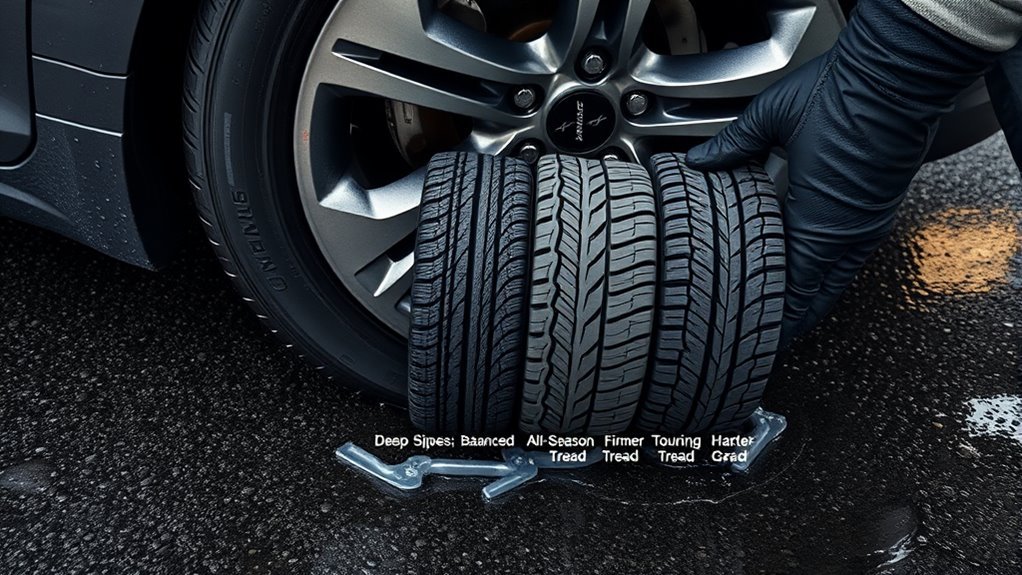
The National Highway Traffic Safety Administration describes UTQG traction grades as an indication of a tire’s ability to stop on wet pavement. The grades run from highest to lowest: AA, A, B, and C.
For your Sonata, that means the traction grade is a useful shopping filter when comparing tires in the same size and category. A higher grade should generally provide better wet-stopping performance under the UTQG test conditions than a lower grade. It is not a promise that one tire will always stop shorter on every road, with every driver, or after the tire is worn.
Note: UTQG applies to many passenger-car tires sold in the United States, but the federal rule excludes some tires, including deep-tread winter-type snow tires, temporary spares, certain small-rim tires, and limited-production tires.
[Products Worth Considering]

Measure tire tread depth quickly and accurately with this LUMITECO dial gauge that reads in 1/32" increments up to 14/32". The color-coded green/yellow/red zones make it easy to judge tire wear and know when replacement is needed. A rugged, compact design with a protective pouch helps keep the gauge ready for use on cars, trucks, motorcycles, and more.

Keep your tires properly inflated with this analog VONDIOR tire pressure gauge, designed for fast, easy readings without batteries. The swiveling, two-axis hose and large glow dial help you measure at any tire angle with instant visibility. Built with a protective rubber shield, it supports durable, low-maintenance use for cars and trucks.

Measure tyre tread depth precisely with a digital gauge that reads in both MM and inches, helping you monitor safe driving conditions. The large LCD screen is easy to operate, and the compact tool fits for cars, trucks, and motorcycles. It provides high accuracy with a 0-25.4mm range and includes a 1-year warranty for added peace of mind.
What UTQG Traction Actually Measures
UTQG traction is based on controlled testing on wet asphalt and wet concrete surfaces. Under 49 CFR §575.104, the tire earns its traction grade by meeting specific adjusted traction-coefficient thresholds.
| Traction Grade | What It Means | Best Use on a Sonata |
|---|---|---|
| AA | Highest UTQG wet-stopping traction category | Frequent rain, highway commuting, or wet-road safety priority |
| A | Strong wet-stopping category and the most common practical choice | Most mixed-climate daily driving |
| B | Moderate wet-stopping category | Mostly dry driving only, if the tire is otherwise correct |
| C | Lowest UTQG wet-stopping category | Avoid for normal Sonata replacement shopping when A or AA options are available |
NHTSA’s current TireWise data shows most tire lines are rated A for traction, while a smaller share are AA and very few are C.
What UTQG Traction Does Not Tell You
UTQG traction is helpful, but it is narrow. It does not directly rate:
- Hydroplaning resistance, which depends heavily on tread depth, tread pattern, water depth, speed, and tire pressure.
- Cornering grip or emergency lane-change behavior.
- Snow or ice traction. If you drive in winter conditions, compare winter or all-weather tire ratings separately.
- Ride comfort, road noise, or fuel economy.
- Real-world performance after wear. An old, worn, underinflated, or damaged tire can perform poorly even if it started with an AA or A grade.
Warning: Do not buy a tire for your Sonata based on traction grade alone. The tire must also match the size, load index, speed rating, and pressure requirements shown on the driver-side tire label or in the owner’s manual.
Which Traction Grade to Buy for Your Sonata by Climate
Use your local weather and driving pattern to choose the right minimum traction grade. For most Sonata owners, A is the safest baseline to shop from. Move up to AA when wet braking matters more than price or treadwear claims.
- Choose AA if you drive in frequent rain, on fast highways, or through areas with standing water risk.
- Choose A if your area gets seasonal rain but most driving is normal commuting, errands, and highway use.
- Consider B only carefully if you drive mostly in dry weather and the tire has the correct Sonata size, load index, and speed rating.
- Avoid C for normal replacement shopping unless there is a specific reason and you understand the wet-stopping compromise.
Pro Tip: If two tires both fit your Sonata and have similar price, warranty, treadwear, and reviews, choose the one with the higher traction grade for better wet-stopping margin.
How Traction Grade Affects Wet-Weather Braking on a Sonata
A higher UTQG traction grade should help a tire stop in a shorter distance on wet pavement than a lower grade under the government test method. On your Sonata, that matters most during sudden braking in rain, highway slowdowns, and stop-and-go traffic on wet roads.
However, the grade does not work by itself. A properly inflated A-rated tire with healthy tread can be safer than an old, underinflated AA-rated tire with worn tread. For real-world wet-road safety, combine a strong traction grade with correct pressure, adequate tread depth, and proper alignment.
| Factor | Why It Matters |
|---|---|
| UTQG traction grade | Compares controlled wet-stopping traction from AA to C |
| Tread depth | Worn tread reduces water evacuation and wet-road grip |
| Inflation pressure | Incorrect pressure can reduce contact patch stability and tire life |
| Tire age and condition | Cracking, repairs, uneven wear, or aged rubber can reduce real-world safety |
Trade-Offs: Traction vs. Treadwear, Heat Resistance, and Ride Comfort
Traction grade is only one part of the UTQG code. The full sidewall marking usually looks like this: TREADWEAR 500 TRACTION A TEMPERATURE A. Read all three parts before you decide.
- Treadwear is a relative wear-rate number. A higher number generally suggests longer wear compared with the control tire, but it is not a guaranteed mileage promise.
- Traction is the wet-stopping grade: AA, A, B, or C.
- Temperature is the tire’s heat-resistance grade: A, B, or C.
Some high-grip tires use softer compounds that may wear faster or ride firmer, but the UTQG traction letter alone does not prove a tire will be noisy, stiff, or short-lived. Compare the full tire model, warranty, category, treadwear grade, and owner reviews before buying.
[Products Worth Considering]

The SAFELIFE dial tire tread depth gauge measures tread depth in 1/32 inch increments with clear, easy-to-read 2-inch dial face. Color zones using a traffic light system help you quickly judge whether tread is low, marginal, or ample for safer driving. Built with a durable zinc cast body and a metal detect probe for precise, comfortable use across cars, motorcycles, trucks, and buses.

The Continental Grand Prix 5000 is an allround road bike tire engineered for faster rolling, improved ride comfort, and enhanced puncture protection. It features a Vectran Breaker cut-protection layer, Lazer Grip micro-profile tread for confident cornering control, and Active Comfort Technology to damp vibration for smoother rides. BlackChili compound optimizes grip and speed for everyday performance and long-lasting confidence.

Monitor tire tread wear with a smart, color-coded depth gauge that shows clear condition ranges at a glance. The bar is range marked for fast, easy readings, helping you maintain safer traction and performance. Each gauge is portable with a pocket clip, and the set includes 20 units for daily use and sharing.
How to Find and Verify Your Sonata’s Tire Traction Rating Before You Buy
Before buying tires online or in person, verify both the fitment and the UTQG traction grade. Use this checklist:
- Check your Sonata’s required tire size. Look at the Tire and Loading Information Label on the driver-side door edge or door post, or use the official Hyundai manuals and warranties resource for your model year.
- Match the tire size exactly unless a qualified tire professional confirms an approved alternate size.
- Confirm the load index and speed rating. Do not install a tire below the vehicle’s required load or speed capability.
- Find the UTQG code on the sidewall or listing. Look for wording such as TREADWEAR 500 TRACTION A TEMPERATURE A.
- Verify the tire line in the DOT UTQGS Tire Rating Lookup. Search by brand, tire line, and size when available.
- Ask the seller for a current sidewall photo. The photo should show tire size, UTQG, DOT date code, and model name.
- Check the DOT date code. Avoid old stock if you want maximum service life from the rubber.
- Inspect the tire before installation. Reject tires with cracks, bulges, uneven wear, missing labels, or mismatched specifications.
Note: If the seller’s listing, sidewall photo, manufacturer page, and DOT/NHTSA lookup do not agree, pause the purchase and confirm with the tire manufacturer or a reputable tire shop.
Maintenance Matters More Than the Letter Alone
A high traction grade cannot save a poorly maintained tire. NHTSA recommends checking tire pressure at least once a month when the tires are cold and replacing tires when tread is worn down to 2/32 inch. For your Sonata, also rotate tires on the schedule in your owner’s manual, correct alignment problems, and inspect for uneven wear.
Wet-road safety depends on the whole package: the right tire, the right grade, the right pressure, and enough tread to move water away from the contact patch.
Frequently Asked Questions
What is better, traction A or B?
Traction A is better than traction B for UTQG wet-stopping performance. For a Sonata used in normal commuting, rain, and highway driving, A is the better minimum target.
Are B-temperature tires good?
A B temperature grade can be acceptable for everyday driving if the tire matches your Sonata’s size, load index, speed rating, and usage. Temperature A is the higher heat-resistance grade, so it is usually preferred for sustained highway speeds, hot climates, or heavier use.
What does traction AA mean on tires?
Traction AA is the highest UTQG wet-stopping traction grade. It means the tire met the highest traction-coefficient category in the controlled UTQG wet asphalt and wet concrete test.
What do A and B mean on tires?
In the UTQG traction rating, A means stronger wet-stopping traction than B. In the temperature rating, A means higher heat resistance than B. Always read the words before the letter: “TRACTION A” and “TEMPERATURE A” describe different things.
Is AA always the best tire choice for a Hyundai Sonata?
Not always. AA is best for UTQG wet-stopping traction, but the best Sonata tire must also fit correctly, carry the right load, match the proper speed rating, suit your climate, and meet your treadwear, noise, comfort, and budget needs.
Does UTQG traction measure hydroplaning resistance?
No. UTQG traction compares wet-stopping traction under controlled test conditions. Hydroplaning resistance depends on tread depth, tread design, water depth, speed, tire pressure, and road surface.
Conclusion
You’ve learned what UTQG traction grades mean for Hyundai Sonata tires and how to use them without overreading the label. Choose AA when wet braking is your top priority, choose A for most daily driving, and be cautious with B or C tires. Before buying, confirm the correct Sonata tire size, load index, speed rating, UTQG code, DOT date, and sidewall markings. The best tire choice is not just the highest letter; it is the right tire, in the right size, maintained the right way.
Sources
- NHTSA TireWise: Tire Safety Ratings and Awareness — backs UTQG traction, treadwear, temperature, tire-size, pressure, and tread-depth guidance.
- 49 CFR §575.104 Uniform Tire Quality Grading Standards — backs the legal UTQG definitions, traction-grade thresholds, and testing conditions.
- DOT UTQGS Tire Rating Lookup — supports verifying tire-line UTQG ratings before purchase.
- Hyundai Manuals & Warranties — supports checking the correct owner information for your Sonata model year.
[Products Worth Considering]

Replace worn pool cleaner tires with this all-purpose C10 tire set made to fit compatible Polaris automatic pool cleaners. The tires are designed for maximum traction while helping protect your pool finish, and they match Polaris OEM size and material. Each pack includes three new tires in sealed bags.

Vigorder rubber cement glue delivers superior adhesion and cures quickly within about 30 seconds for seamless rubber bonding. Once cured, it helps provide a strong, durable, waterproof seal that holds up to vehicle weight, pressure, and heat. Suitable for cars, motorcycles, trucks, bicycles, and off-road tires, it’s designed for emergency patch and maintenance repairs.

The Trivd Frol 1/2" air impact wrench delivers high performance torque up to 1500 ft-lbs with a twin hammer impact mechanism for strong, balanced blows. It features an ergonomic grip, compact lightweight design, and quick-stop control with 3 forward speeds up to 8000 RPM plus a reverse speed. Built for demanding automotive repair and tire shop work, the rear exhaust helps keep debris away from the surface.

Related Articles
Danger of Using Summer Tires in Winter on a Hyundai Sonata
Potentially perilous, using summer tires in winter on your Hyundai Sonata can compromise safety—discover the hidden dangers that await you on icy roads.
Read More
Can You Mix Nitrogen and Air in Hyundai Sonata Tires? Answered
Discover the implications of mixing nitrogen and air in your Hyundai Sonata tires—are the benefits worth the risks? Explore the answer inside!
Read More
How to Tell If Hyundai Sonata Tires Are Too Old to Use Safely
Understand how to assess the age of your Hyundai Sonata tires and discover crucial signs of deterioration that could compromise your safety on the road.
Read More