
How Tire Pressure Affects Fuel Economy in a RAV4
Keeping your RAV4 tires at the correct cold pressure is one of the easiest ways to protect fuel economy, tire life, handling, and braking performance. The key is not guessing a universal number. Use the tire and loading information label on your driver’s door jamb, check the tires when they are cold, and adjust them before small pressure losses turn into extra rolling resistance.
Quick Answer
Tire pressure affects RAV4 fuel economy because low pressure makes the tires flex more and increases rolling resistance. According to FuelEconomy.gov, properly inflated tires can improve gas mileage by 0.6% on average and up to 3% in some cases. Always use your RAV4’s door-jamb PSI, not the tire sidewall maximum.
Key Takeaways
- The correct RAV4 tire pressure is the cold PSI printed on your tire and loading information label, usually on the driver’s door jamb.
- FuelEconomy.gov says under-inflated tires can lower gas mileage by about 0.2% for every 1 PSI drop in the average pressure of all tires.
- Check tire pressure at least monthly, before long trips, and when temperatures swing sharply.
- Do not use the maximum PSI on the tire sidewall as your normal driving pressure.
- TPMS is helpful, but it is not a replacement for a manual gauge check.
At a Glance
| Time Required | 5–10 minutes |
| Difficulty | Easy |
| Tools Needed | Tire pressure gauge, air compressor or tire inflator, valve caps |
| Cost | Usually free if you already have a gauge; a basic gauge is inexpensive |
Why Proper Tire Pressure Matters for RAV4 Fuel Economy
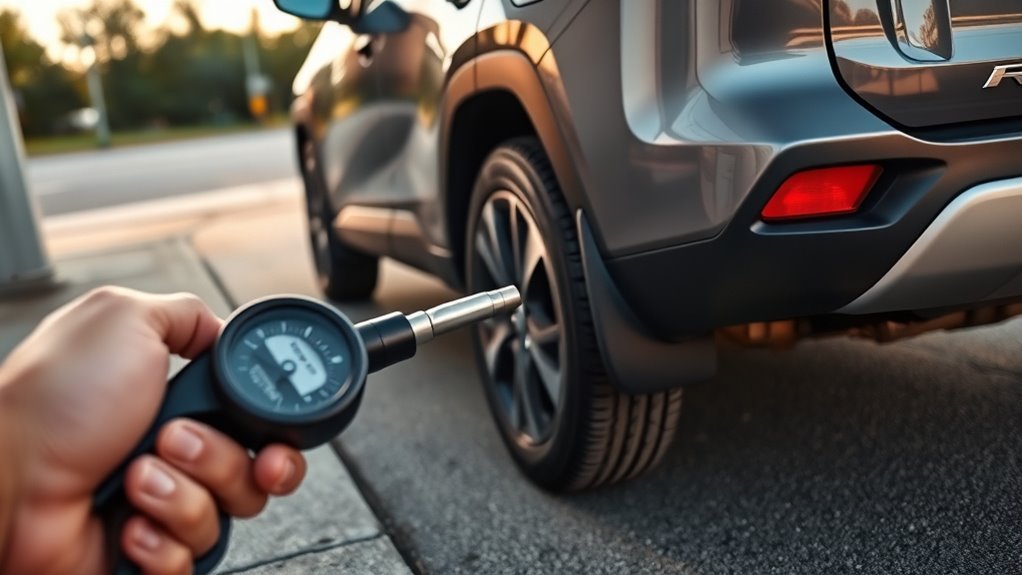
Proper tire pressure helps your RAV4 roll with less wasted energy. When a tire is low, the sidewall flexes more, the tread does not hold its intended shape, and the engine has to work harder to keep the vehicle moving. That extra effort shows up as lower fuel economy, more heat in the tire, and faster wear.
The fuel-economy impact is real, but it should be stated accurately. FuelEconomy.gov says properly inflated tires can improve gas mileage by 0.6% on average and up to 3% in some cases. It also says under-inflated tires can lower gas mileage by about 0.2% for every 1 PSI drop in the average pressure of all tires.
Small PSI losses may not feel dramatic from the driver’s seat, but they add up across all four tires through extra rolling resistance, uneven wear, and more frequent fuel stops.
[Products Worth Considering]

The JACO FlowPro Tire Inflator measures, inflates, and airs down tires up to 100 PSI with battery-free operation and ±2% accuracy after calibration. It features a glowing pressure dial for night visibility, a heavy-duty steel build with a hybrid hose, and a precision push-to-inflate thumb trigger. The patented Lightning Air Chuck locks on for a secure seal, and the kit includes quick-connect hardware for easy inline use with your air compressor.

This portable cordless tire inflator delivers up to 160 PSI with fast 17 L/min airflow to help you quickly top up tires and get back on the road. It features dual power mode, running on a 21V rechargeable battery or a 12V DC adapter for convenient roadside use. An automatic shut-off with digital pressure gauge helps prevent overinflation, and a built-in LED light improves visibility in low-light conditions.

EVOULTES heavy duty tire inflator with an integrated gauge delivers accurate pressure readings from 10–120 PSI, helping you inflate, deflate, and check tires in one tool. The 16.5-inch extended dual-head air chuck with swivel base reaches hard-to-access dual wheel valves on trucks and RVs. A brass trigger core and side-mounted air release valve make operation smooth, with standard 1/4" NPT threading and quick-connect compatibility for easy setup.
Find the Correct RAV4 Tire Pressure First
The correct RAV4 tire pressure is not the largest number printed on the tire. It is the recommended cold inflation pressure chosen by Toyota for your exact vehicle setup. You will usually find it on the tire and loading information label on the driver’s side door jamb. You can also confirm it in the owner’s manual or Toyota’s owner resources.
Many RAV4 models use pressures in the low-to-mid 30s PSI range, and some wheel/tire packages may list a different front or rear value. That is why “just use 36 PSI” is not reliable for every RAV4. Your door-jamb placard wins every time.
Warning: Do not inflate your RAV4 tires to the maximum PSI printed on the tire sidewall for normal driving. That number is a tire limit, not your vehicle’s recommended cold pressure.
How Tire Pressure Directly Affects RAV4 MPG
Tire pressure affects MPG mainly through rolling resistance. When pressure is too low, more of the tire deforms as it rolls. That deformation creates heat and drag, so your RAV4 uses more energy to travel the same distance.
Here is the practical takeaway: a tire that is 1 PSI low will not usually destroy your MPG overnight, but several tires running several PSI low can create a measurable loss. Keeping all four tires at the placard pressure helps preserve the fuel economy Toyota designed into the vehicle.
Note: Fuel economy also depends on speed, traffic, roof racks, cargo weight, tire type, alignment, weather, and driving style. Tire pressure is only one factor, but it is one of the easiest to control.
How Temperature Affects Tire Pressure Maintenance
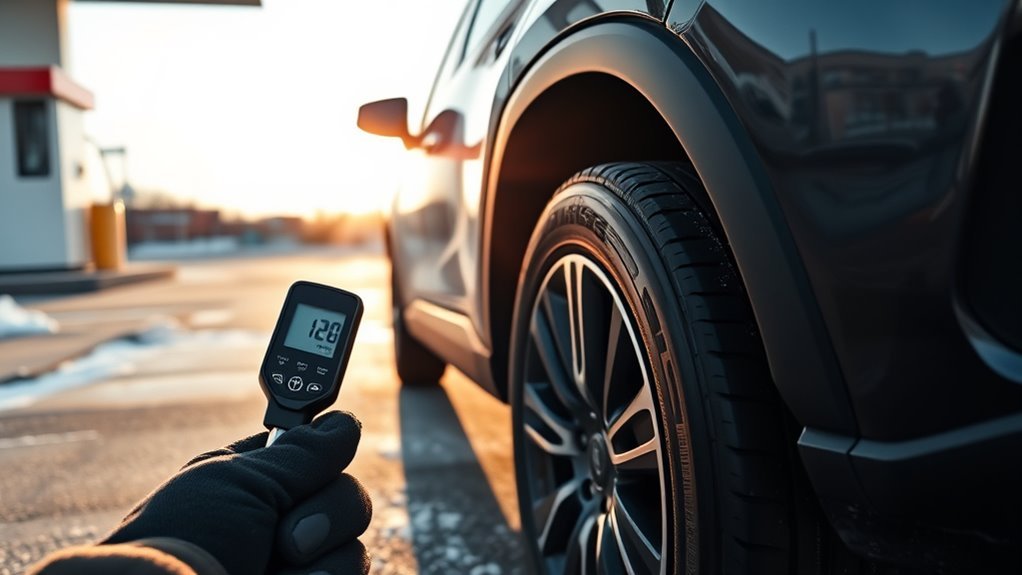
Temperature changes can make your RAV4 tire pressure rise or fall even when the tire is not leaking. As a useful rule of thumb, Bridgestone notes that tire pressure changes by about 1 PSI for every 10°F change in ambient temperature.
Temperature’s Impact on Pressure
Cold weather makes air contract, so pressure drops. Hot weather and driving heat can raise pressure temporarily. That is why pressure should be checked when the tires are cold, meaning the vehicle has not been driven for at least three hours, as explained in the NHTSA Tire Safety booklet.
| Temperature Change | Approximate PSI Change | What to Do |
|---|---|---|
| -10°F | About -1 PSI | Check cold pressure and add air if below placard PSI |
| +10°F | About +1 PSI | Recheck cold before releasing air |
| -30°F seasonal drop | About -3 PSI | Expect TPMS alerts to become more common |
Seasonal Adjustments Needed
Do not automatically add 2 or 3 PSI above the placard just because it is winter. Instead, check the pressure in the morning before driving and inflate each tire to the cold PSI listed for your RAV4. If you park in a warm garage and then drive into freezing weather, recheck outside after the tires have cooled.
Monitoring for Safety
Seasonal checks matter because low pressure can be hard to see by eye. The NHTSA recommends checking tire pressure at least once a month because tires can naturally lose air over time and may lose air suddenly after pothole or curb impacts.
What Happens When Your Tires Are Under-Inflated?
Under-inflated tires create more flex, more heat, and more rolling resistance. That affects fuel use, tire wear, handling, and safety. The NHTSA TPMS evaluation report notes that underinflation can contribute to decreased fuel economy, sluggish handling, longer stopping distances, heat buildup, and tire failure.
Increased Fuel Consumption
When pressure is low, your RAV4 has to overcome more drag from the tires. FuelEconomy.gov estimates that under-inflated tires can lower gas mileage by about 0.2% for every 1 PSI drop in the average pressure of all tires. The exact MPG change depends on how low the tires are, road speed, tire type, load, and driving conditions.
| Average Pressure Drop Across All Tires | Approximate Fuel Economy Effect | Best Action |
|---|---|---|
| 1 PSI low | About 0.2% lower MPG | Top off during your next check |
| 3 PSI low | About 0.6% lower MPG | Inflate to placard PSI cold |
| 5 PSI low | About 1.0% lower MPG | Check for leaks if it keeps returning |
Reduced Tire Lifespan
Low pressure can make the tire shoulders work harder than intended. Over time, that can cause uneven tread wear and more heat buildup. Keeping the tire at the correct cold PSI helps the tread sit flatter on the road and can help the tire wear more evenly.
Compromised Vehicle Handling
Under-inflation can make steering feel less precise and can reduce stability during quick maneuvers. It can also increase heat buildup inside the tire. That is why tire pressure is a safety check, not just a fuel-economy habit.
Risks of Over-Inflating Your Tires
Over-inflating your RAV4 tires is not a smart shortcut for better MPG. A tire that is above the recommended cold pressure may ride harshly, wear more in the center of the tread, and have less ideal contact with the road. Severe overinflation may also reduce traction and make the tire more vulnerable to pothole damage.
- Uneven wear: Too much pressure can concentrate wear near the center of the tread.
- Harsh ride: The tire absorbs less road impact, making the RAV4 feel rougher over bumps.
- Reduced safety margin: The tire may not maintain the contact patch Toyota intended for braking and handling.
Pro Tip: If your tire reads slightly high after highway driving, do not bleed air immediately. Let the tire cool and recheck it cold first.
How to Maintain Ideal Tire Pressure for Best Results
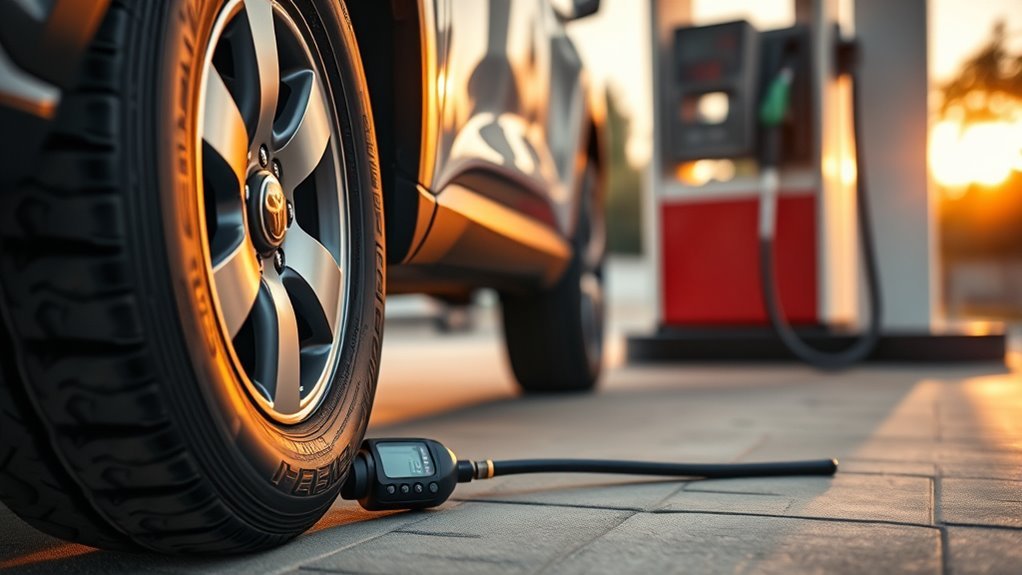
The best tire-pressure routine is simple: use the placard pressure, check cold, adjust carefully, and watch for repeated pressure loss. This takes only a few minutes and can prevent MPG loss, uneven wear, and surprise TPMS alerts.
[Products Worth Considering]

The Fanttik X10 Pro is a cordless portable tire inflator that reaches up to 150 PSI and can inflate an R15 tire in about 35 seconds for quick roadside or home top-ups. With AccuInFlate auto-stop and smart start/stop controls, it helps maintain accurate pressure and frees your hands once the target is reached. A high-visibility digital display and preset modes make it easy to set and monitor inflation for cars, motorcycles, bikes, and balls.
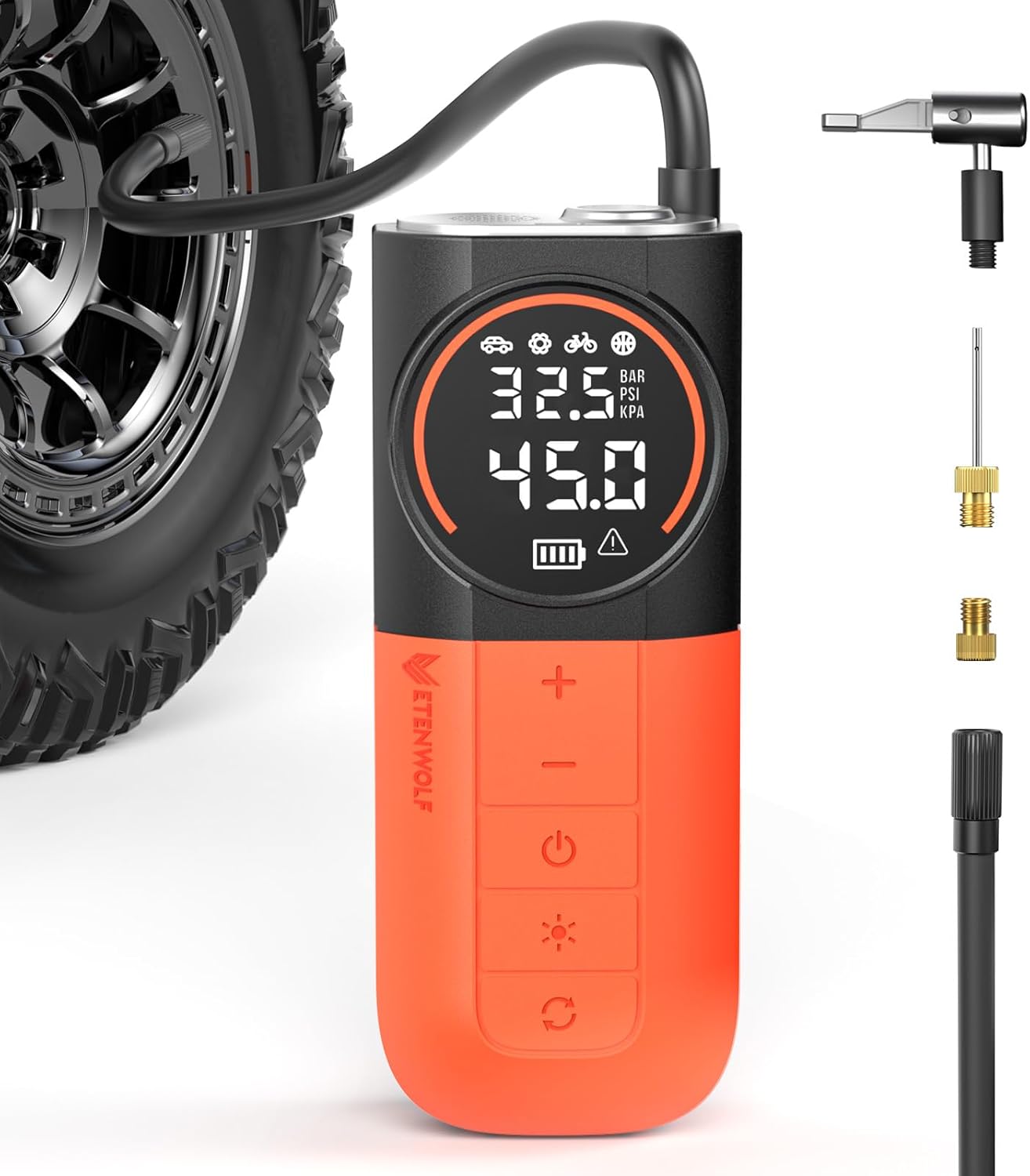
The ETENWOLF S1 cordless tire inflator delivers ultra-fast inflation with up to 160 PSI and a 20 L/min airflow for quicker tire top-offs. Its 5200mAh battery and cooling system support inflating many tires and sports balls on a single charge, while the digital pressure gauge and multi-unit display help you reach the right pressure accurately. With preset modes, pressure memory, an auto-stop feature, and an LED flashlight, it’s built for easy roadside and everyday use.
Step-by-Step: Check and Adjust RAV4 Tire Pressure
- Find the correct PSI. Open the driver’s door and read the tire and loading information label. Use the front and rear PSI shown there.
- Check when cold. Measure pressure before driving, or after the RAV4 has been parked for at least three hours.
- Remove the valve cap. Keep it in your pocket so it does not roll away.
- Press the gauge straight onto the valve stem. A brief hiss is normal, but a long hiss means the gauge is not seated squarely.
- Add or release air. Inflate to the placard PSI. If you add too much, release small amounts and recheck.
- Reinstall the valve cap. It helps keep dirt and moisture out of the valve.
- Repeat for all four tires. Check the spare tire too if your RAV4 is equipped with one.
- Reset or initialize TPMS only if needed. Follow your owner’s manual after all tires are set correctly.
What to Do When the RAV4 Tire Pressure Light Comes On
A TPMS warning means one or more tires may be significantly low, but it does not tell the whole story. Some systems warn only after pressure falls well below the recommended level, so a monthly gauge check is still important.
- If the light comes on in cold weather: Check all tires cold and inflate to the placard PSI.
- If one tire is much lower than the others: Inspect for a nail, valve leak, rim leak, or sidewall damage.
- If the light stays on after inflation: Drive a short distance if your manual allows, then recheck pressure and follow the TPMS initialization procedure.
- If the warning flashes or returns quickly: Have the tire or TPMS sensor checked by a qualified technician.
The Effect of Different Tire Types on Fuel Economy
Tire type can also influence RAV4 fuel economy. Tires with higher rolling resistance generally require more energy to keep moving, while low-rolling-resistance designs are built to reduce energy loss. The U.S. Department of Energy notes that reducing rolling resistance can reduce fuel expenditures for typical vehicles.
That does not mean every RAV4 owner should buy the lowest-rolling-resistance tire available. You still need the correct size, load rating, speed rating, weather performance, braking performance, and ride comfort. If you tow, drive on rough roads, or use winter tires, fuel economy is only one part of the decision.
Tire Pressure’s Role in Ensuring RAV4 Safety
Proper inflation helps your RAV4 maintain the tire contact patch, load capacity, steering response, and braking behavior intended by the vehicle manufacturer. NHTSA’s tire safety guidance says properly maintained tires can improve handling, fuel economy, and tire life while helping reduce tire-failure risk.
Think of tire pressure as a monthly safety habit. It is quick, inexpensive, and easier than replacing tires early because they wore unevenly. It also gives you a chance to spot tread wear, sidewall bulges, punctures, missing valve caps, or uneven wear patterns that may point to an alignment or suspension issue.
Frequently Asked Questions
Is 37 PSI too high for a RAV4?
It depends on your door-jamb placard and whether the tire was checked cold. If your placard says 36 PSI, a cold reading of 37 PSI is only slightly high, but it should still be adjusted to the listed pressure. If your placard says 33 or 35 PSI, 37 PSI cold is above the recommendation.
What PSI should my RAV4 tires be?
Use the cold tire pressure printed on the tire and loading information label on the driver’s door jamb. Do not rely on a universal RAV4 number because the correct PSI can vary by model year, trim, tire size, and wheel package.
How often should I check RAV4 tire pressure?
Check tire pressure at least once a month, before long trips, and after major temperature changes. Always check when the tires are cold for the most accurate reading.
Can low tire pressure really reduce MPG?
Yes. FuelEconomy.gov says under-inflated tires can lower gas mileage by about 0.2% for every 1 PSI drop in the average pressure of all tires. The loss is usually small for a single PSI, but it becomes more noticeable when several tires are low.
Should I add extra PSI in winter?
Do not add extra PSI above the placard as a blanket rule. Instead, check the tires cold in the colder conditions and inflate them to the placard value. Tire pressure often drops in cold weather, so winter checks are especially important.
Does nitrogen improve RAV4 fuel economy?
Nitrogen can slow pressure loss in some situations, but it is not a magic MPG upgrade. Regular air is already mostly nitrogen. The important part is checking pressure regularly and keeping every tire at the correct cold PSI.
Conclusion
Proper tire pressure helps your RAV4 deliver the fuel economy, handling, ride comfort, and tire life it was designed to provide. The safest approach is simple: read the PSI on your driver’s door placard, check all tires cold with a reliable gauge, adjust them at least monthly, and investigate any tire that keeps losing air. A few minutes of tire care can save fuel, reduce wear, and make every drive feel more controlled.
Sources
- Toyota Owners — RAV4 Hybrid Tire Inflation Pressure — supports using the vehicle tire/loading label and owner guidance for correct PSI.
- FuelEconomy.gov — Gas Mileage Tips — supports the 0.6% average, up to 3% fuel-economy benefit and 0.2% per PSI under-inflation figure.
- NHTSA — Tire Safety: Everything Rides On It — supports cold-tire checking, monthly pressure checks, placard guidance, and safety basics.
- NHTSA — Evaluation of TPMS in Proper Tire Pressure Maintenance — supports underinflation and overinflation safety effects.
- U.S. Department of Energy — Fuel-Efficient Tires — supports the link between rolling resistance and fuel use.

Related Articles

Toyota RAV4 TPMS Reset: Easy Steps That Work
Unlock the secrets to resetting your Toyota RAV4's TPMS effortlessly—discover the essential steps to ensure your tires are always safe.
Read More
Toyota RAV4 Tire Rotation: DIY Steps & Pattern
Take control of your Toyota RAV4's tire maintenance with our simple DIY rotation guide—discover the best steps for optimal performance and longevity!
Read More
Mix Tire Brands on a Toyota RAV4? Expert Guide
Keeping your RAV4 safe? Learn when mixing tire brands risks traction, ABS/TCS and AWD damage — and what exact matches you must insist on.
Read More