
Pros and Cons of Run-Flat Tires for a RAV4: Are They Right for You?
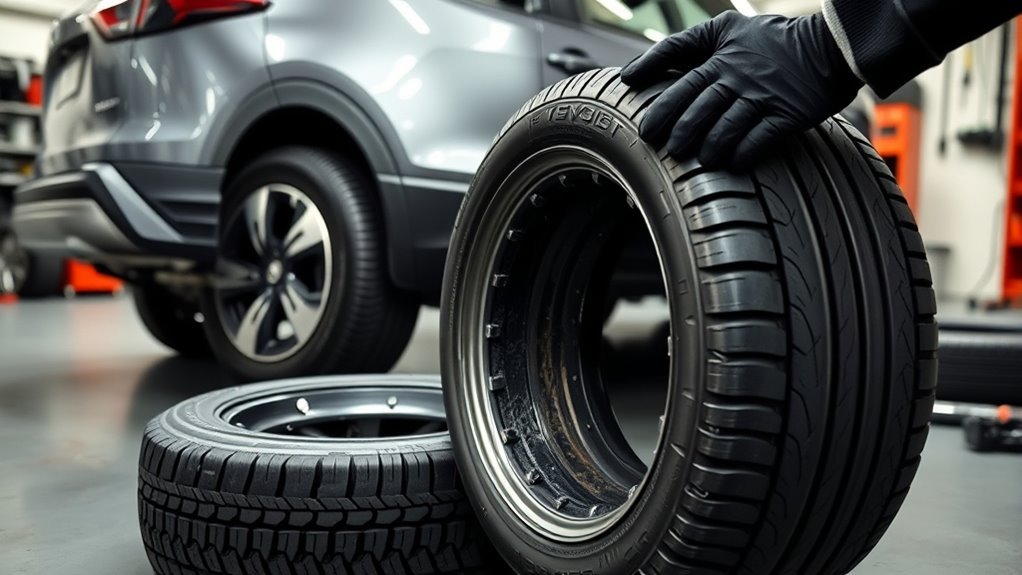
Run-flat tires can be a smart upgrade for some Toyota RAV4 drivers, but they are not automatically the best choice for every RAV4. They add emergency mobility after a puncture, yet they usually cost more, ride firmer, offer fewer replacement choices, and may need special inspection after any low-pressure event.
Quick Answer
Run-flat tires are worth considering for a RAV4 if you value being able to keep driving briefly after a puncture instead of stopping roadside. They are less ideal if you prioritize ride comfort, lower replacement cost, easy repairs, or wider tire choices. Always match your RAV4’s size, load rating, speed rating, TPMS, and wheel requirements.
Key Takeaways
- Many run-flat tires can be driven for a limited distance after pressure loss, often up to 50 miles at up to 50 mph, but you must follow the tire manufacturer’s exact limit.
- A working Tire Pressure Monitoring System (TPMS) is essential because a run-flat tire may not look flat after losing air.
- Run-flats can improve emergency convenience, but they often cost more, ride firmer, and may be harder to repair or replace quickly.
- Many RAV4 models already include a temporary spare, so run-flats do not automatically create extra cargo space unless you change how you carry emergency tire equipment.
- For most RAV4 owners, high-quality standard, all-weather, or season-specific tires plus a spare or roadside plan may be the better everyday setup.
What Are Run-Flat Tires and How Do They Work?
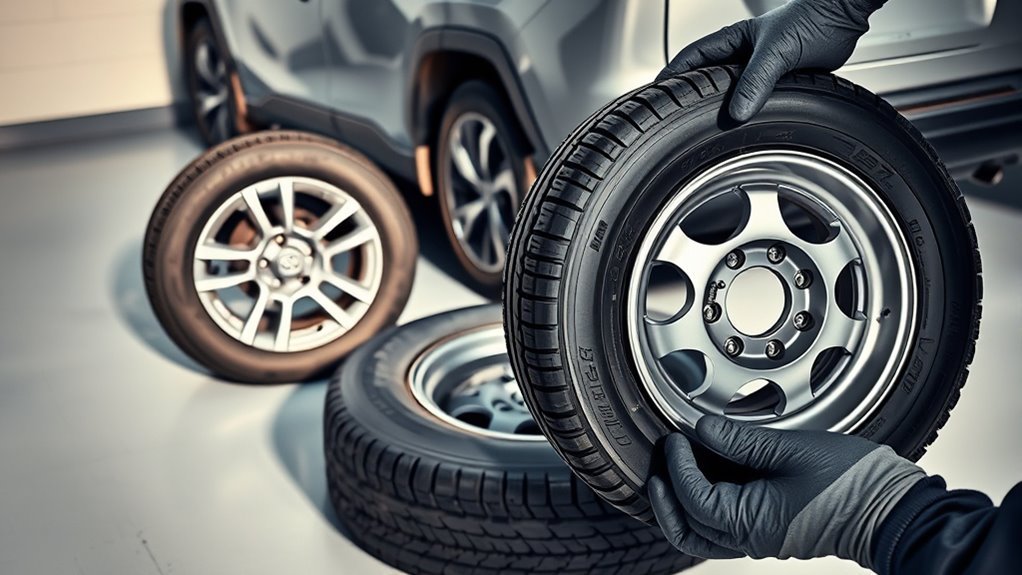
Run-flat tires are designed to support the vehicle for a short time after a puncture or sudden pressure loss. Most passenger-vehicle run-flats use reinforced sidewalls that help carry the vehicle’s weight even when air pressure drops. Bridgestone describes its run-flat technology as allowing continued driving for up to 50 miles at up to 50 mph after a puncture under specified conditions.
That “50 miles at 50 mph” rule is not a free pass to keep driving normally. It is an emergency limit, not a comfort or performance rating. After a TPMS warning or suspected puncture, slow down, avoid hard braking or sharp steering, and drive only as far as needed to reach a safe place or tire professional.
Warning: Never ignore a TPMS warning on run-flat tires. A run-flat may still look normal after losing air, but internal sidewall damage can occur if it is driven too far, too fast, or while overloaded.
Run-flat tires usually fall into two broad designs:
- Self-supporting run-flat tires: These use stronger sidewalls to support the vehicle temporarily after air loss. This is the most common type for passenger vehicles and crossovers.
- Support-ring systems: These use an internal support ring mounted to the wheel. They are less common and may require special wheels or service equipment.
A RAV4 with run-flat tires still needs a working TPMS. Federal Motor Vehicle Safety Standard No. 138 defines TPMS as a system that detects significant underinflation and warns the driver, but TPMS is not a substitute for checking tire pressure with a gauge.
[Products Worth Considering]
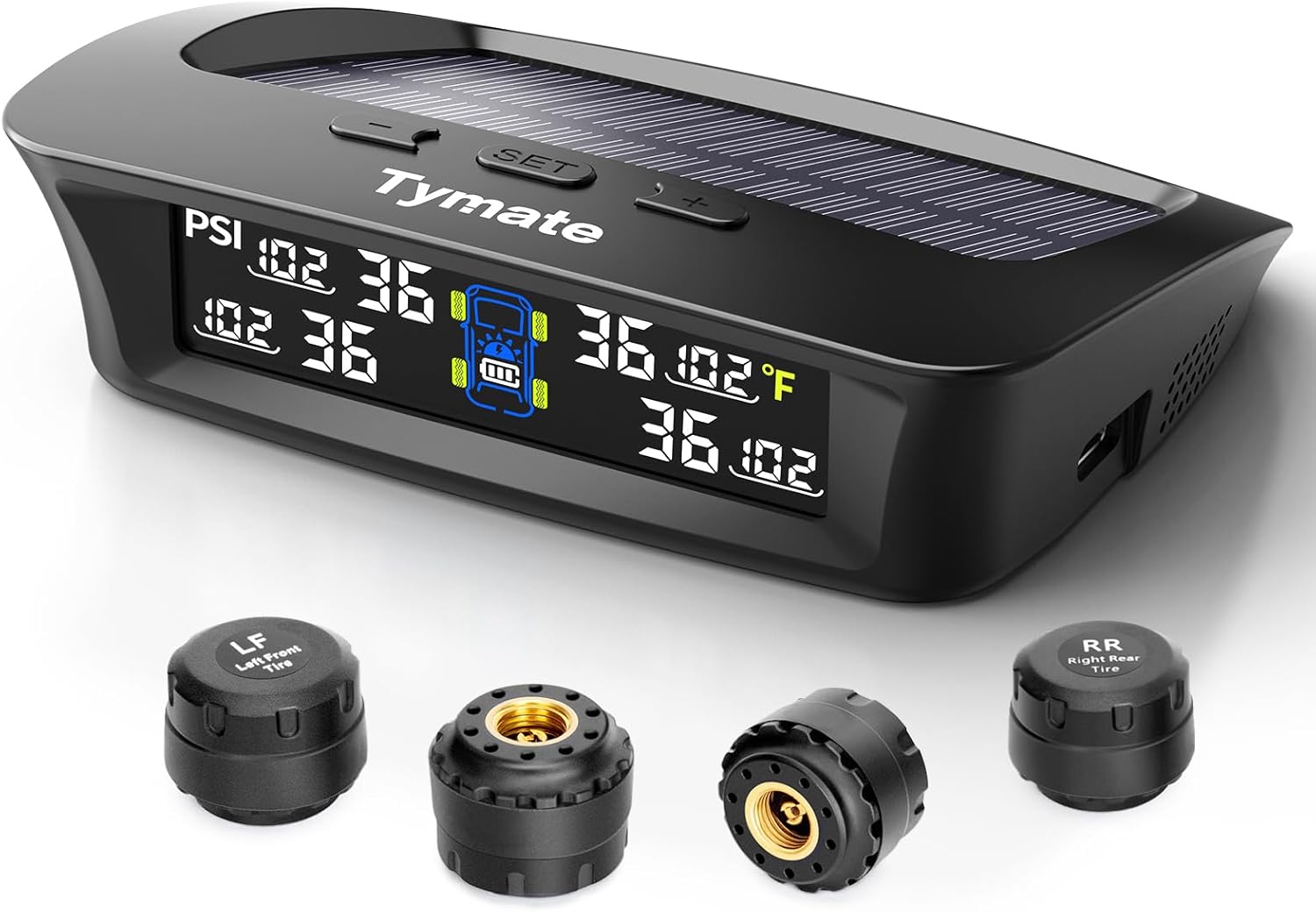
The Tymate TM3 RV TPMS delivers real-time tire pressure monitoring from 0 to 144 PSI with accurate readings and dependable wireless communication. It includes four external sensors with pre-pairing, six alarm modes for rapid leak, pressure extremes, temperature, and signal loss, plus an easy-reference setup for alert thresholds. Solar and USB-C charging help keep the display powered, while the color LCD and adaptive backlight improve visibility for safer driving and towing.

Keep RV, trailer, or truck dual-axle tires protected with waterproof, UV-resistant covers that help guard against sunlight, snow, rust, and dirt. The dual tire covers are easy to install with a rope/bungee fastener for a stable fit that won’t easily slip. Designed for 27–30 inch diameter wheels, they help maintain tire condition through harsh weather.
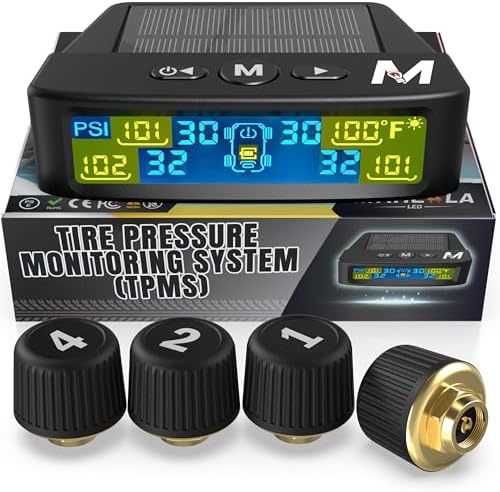
Marcala’s TPMS set of four sensors helps you monitor tire pressure and temperature in real time while driving, with updates every second. The bright color LCD uses auto-dimming for easy viewing, powered by dual solar and USB charging, and offers six alarm modes. Built for trailers, RVs, campers, trucks, and towing setups, the sensors support monitoring 1-4 wheels up to 98 PSI with IP67 waterproof protection.
Run-Flat vs. Standard Tires: Which Should You Choose?
The best tire for your RAV4 depends on where you drive, how much you value emergency mobility, how sensitive you are to ride comfort, and whether you already have a spare tire or roadside assistance plan.
| Category | Run-Flat Tires | Standard Tires |
| After a puncture | Can usually be driven a limited distance at reduced speed. | Usually requires stopping, installing a spare, using a repair kit, or calling roadside assistance. |
| Ride comfort | Often firmer because of reinforced sidewalls. | Often smoother and quieter, depending on the tire model. |
| Cost | Usually more expensive to buy and sometimes harder to find in stock. | Usually cheaper with more brands, tread patterns, and price points. |
| Repair options | Depends on manufacturer policy and internal inspection after pressure loss. | More commonly repairable when puncture damage is small and limited to the tread area. |
| Best for | Drivers who prioritize emergency mobility and dislike roadside tire changes. | Drivers who prioritize comfort, value, availability, and simple service. |
Performance Differences
Run-flat tires can help you maintain control long enough to get off the road after a puncture, but they do not perform exactly like fully inflated tires. Steering, braking, ride quality, and stability can all change after pressure loss. Once the TPMS warning appears, treat the tire as compromised until it is inspected.
Standard tires usually give RAV4 owners a wider range of touring, all-weather, all-terrain, winter, and low-rolling-resistance choices. That flexibility matters if you want a quieter highway ride, better snow traction, or a specific treadwear warranty.
Cost Considerations
Run-flat tires typically cost more than comparable standard tires. They may also cost more over time if a puncture leads to replacement instead of repair. The exact price difference depends on brand, size, load rating, speed rating, and local availability.
Standard tires are usually easier to price-shop and replace quickly. For many RAV4 owners, the money saved on standard tires can go toward a quality portable inflator, tire plug kit for temporary emergencies, roadside assistance plan, or a better seasonal tire setup.
Benefits of Run-Flat Tires for RAV4 Owners
For the right driver, run-flat tires offer real advantages. The main benefit is not having to stop immediately on the shoulder of a highway, in bad weather, or in an unsafe area. Instead, you can usually continue at reduced speed for a limited distance and reach a safer location.
Run-flat tires may be useful for RAV4 drivers who:
- Often drive alone at night or in remote areas.
- Want to avoid changing a tire on the roadside.
- Drive on busy highways where stopping on the shoulder is risky.
- Have physical limitations that make installing a spare difficult.
- Prefer a tire setup that gives extra time to reach a repair shop after a puncture.
They can also reduce the need to use a spare tire. However, many RAV4 models already include a temporary spare, so the benefit is not always extra cargo room. Before removing any factory spare or emergency equipment, consider how you will handle a damaged tire that cannot be driven or repaired.
Pro Tip: Before buying run-flats, check your driver-door tire placard and match the tire size, load index, speed rating, and inflation pressure requirements. For AWD RAV4 models, keep tire type, size, and tread depth closely matched across all four wheels.
What to Watch Out for With Run-Flat Tires
Run-flat tires solve one problem but introduce a few trade-offs. For a RAV4, the biggest concerns are fitment, ride comfort, replacement availability, repair policy, and what happens after a pressure-loss event.
Availability and Compatibility Issues
Not every tire size and trim-specific fitment has many run-flat options. Before you buy, confirm that the tire matches your RAV4’s original size, load rating, speed rating, wheel diameter, and overall diameter. Do not choose a run-flat simply because the rim diameter matches.
You should also confirm that your wheels are approved for the run-flat tire you plan to install. Some run-flat systems need specific wheel designs or mounting procedures. If you are using aftermarket wheels, ask the tire installer to verify compatibility before mounting.
A working TPMS is essential. Michelin notes that because a run-flat tire may not look flat, TPMS is the way you know pressure has dropped. If your TPMS light is on because of a malfunction, fix it before relying on run-flat tires.
Cost and Repair Limitations
Run-flat tires can be more expensive to replace, and some shops may not stock your size. That matters on road trips because you may be able to keep driving after a puncture, but still struggle to find the same tire quickly.
Repair is not guaranteed. USTMA repair guidance says repairs must be limited to the tread area, the puncture must be no larger than 1/4 inch (6mm), the tire must be removed from the wheel for internal inspection, and repair limits depend on the tire manufacturer’s policy and tire type. Tire Industry Association guidance also says plug-only or patch-only repairs are not proper permanent repairs.
RAV4 Run-Flat Compatibility Checklist
Use this checklist before installing run-flat tires on your RAV4:
- Confirm the exact tire size: Use the driver-door placard, owner’s manual, or current tire sidewall. Do not guess by trim name alone.
- Match load index and speed rating: The replacement tire must meet or exceed Toyota’s requirements for your RAV4.
- Verify TPMS function: Do not rely on run-flats if the TPMS warning system is malfunctioning.
- Check wheel compatibility: Ask whether your factory or aftermarket wheels are approved for the run-flat tire being installed.
- Plan for the spare: If your RAV4 already has a temporary spare, decide whether you will keep it, remove it, or replace it with another emergency plan.
- Keep all four tires matched: This is especially important on AWD models, where mismatched tire diameter or tread depth can affect drivetrain behavior.
- Ask about repair policy: Before buying, ask the tire shop whether that specific run-flat model can ever be repaired and what inspection is required.
Are Run-Flats Worth the Cost?
Run-flats are worth the cost if the emergency-mobility benefit matters more to you than price, comfort, and service simplicity. They make the most sense for drivers who strongly want to avoid roadside tire changes and who are comfortable paying more for that convenience.
They may not be worth it if your RAV4 already has a spare tire, you mostly drive locally, you want the quietest ride possible, or you prefer lower-cost replacement tires. In that case, a high-quality standard tire plus a maintained spare and roadside assistance may be the better setup.
Think of run-flats as a safety-convenience upgrade, not a performance upgrade. They help you manage a puncture, but they do not remove the need for tire maintenance, careful driving after a warning light, or professional inspection.
Driving Experience With Run-Flat Tires: Comfort vs. Safety

Run-flat tires often feel firmer than standard touring tires because the reinforced sidewall is built to support the vehicle after pressure loss. On smooth roads, the difference may be minor. On broken pavement, potholes, expansion joints, or gravel roads, the ride can feel harsher and more direct.
Ride Quality Comparison
If comfort is your top priority, compare tire reviews carefully before choosing run-flats. Some newer run-flat models are more comfortable than older designs, but a standard touring tire still often has the advantage for softness, road noise, and price.
For RAV4 owners who drive long commutes, carry passengers often, or spend time on rough roads, ride quality may be the biggest downside. Test-driving a similar vehicle with run-flats can help before you commit.
Handling During Deflation
During a pressure-loss event, run-flat tires are designed to keep the tire from collapsing immediately. That can help with stability, but your RAV4 will not handle like normal. Slow down, turn gently, avoid sudden braking, and head to the nearest safe service option.
Do not keep driving just because the tire still looks round. Internal damage can be hidden, especially in the sidewall. After a run-flat event, the tire should be removed from the wheel and inspected by a qualified tire professional.
Safety Benefits Overview
The safety benefit of run-flat tires is extra time and control after a puncture. That can reduce the need to stop in dangerous roadside conditions. The trade-off is that you must pay closer attention to TPMS warnings and follow the tire’s run-flat limits exactly.
Run-flat tires are not “drive forever” tires. They are temporary emergency-mobility tires designed to help you reach a safe location or tire service center.
What to Do After a Puncture or TPMS Warning
If your RAV4’s TPMS warning comes on or you suspect a puncture, follow these steps:
- Stay calm and reduce speed. Avoid sudden steering, hard braking, and aggressive lane changes.
- Move to a safer route or location. If possible, avoid high-speed highways once you know the tire has lost pressure.
- Check the tire only when it is safe. Do not inspect a tire on the traffic side of the vehicle or on a narrow shoulder.
- Follow the tire maker’s limit. Do not exceed the tire’s stated speed, distance, or load limits after pressure loss.
- Go to a tire professional. Ask for the tire to be demounted and inspected internally before repair or reuse is considered.
- Replace when required. If the tire was driven beyond limits, has sidewall damage, has internal damage, or violates the manufacturer’s repair policy, replace it.
Note: TPMS usually warns after pressure is significantly low. It does not replace monthly pressure checks with a gauge, and it may not prevent damage if you keep driving after the warning.
[Products Worth Considering]

Blackline Blackout is a water-based trim and tire dressing that restores rubber, vinyl, and plastic with a rich satin, blackout look. Its no-sling formula dries quickly and helps prevent messy transfer onto paint. The coating repels water and offers UV protection to help prevent fading, cracking, and discoloration for a clean, long-lasting finish.
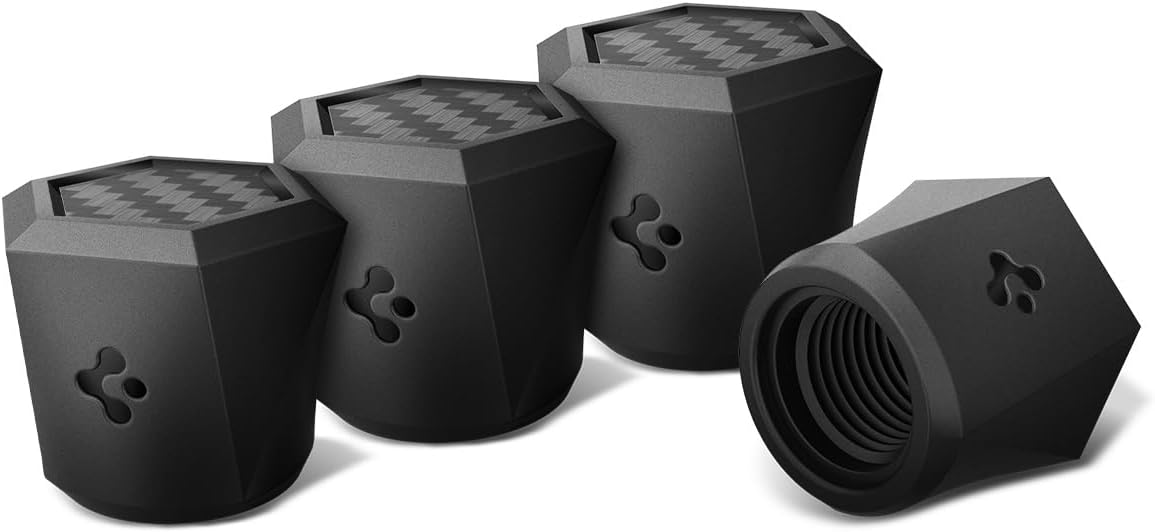
Spigen magnetic tire valve caps attach securely to metal surfaces so you never have to search for lost caps. Designed for Schrader valve stems, they install quickly, help protect against air leakage and corrosion, and feature a light magnet that won’t interfere with TPMS signals.
Essential Maintenance Tips for Run-Flat Tires
Run-flat tires need the same basic care as standard tires, plus extra attention after any impact or pressure-loss event.
- Check pressure monthly: Use a tire gauge when the tires are cold. USTMA recommends monthly pressure checks and checking before long trips, heavy loads, or towing.
- Do not rely only on TPMS: TPMS is a warning system, not a maintenance schedule.
- Inspect tread and sidewalls: Look for cracks, cuts, bulges, uneven wear, nails, or impact damage.
- Replace worn tires: Tires should be replaced when tread reaches 2/32 inch, and earlier may be wise for wet or winter driving.
- Rotate on schedule: Follow Toyota’s owner’s manual. If no interval is specified, USTMA recommends rotating every 5,000 to 8,000 miles.
- Check alignment and balance: Pothole impacts and curbs can create uneven wear. Correct alignment problems quickly.
- Inspect after impacts: Because run-flat sidewalls are stiff, hidden damage after potholes or curb hits should be taken seriously.
Understanding Repair Options for Run-Flat Tires
Run-flat tire repair depends on the tire brand, model, damage location, damage size, and whether the tire was driven while underinflated. Some manufacturers allow limited repairs after inspection. Others recommend replacement after a zero-pressure event.
A proper repair is never a quick outside plug while the tire remains mounted. Industry repair guidance says the tire should be removed from the wheel, inspected inside and outside, repaired only in the approved tread area, and fixed with a repair method that fills the puncture and seals the inner liner.
A run-flat tire usually should be replaced if:
- The puncture is in the shoulder or sidewall.
- The puncture is larger than 1/4 inch (6mm).
- The tire was driven beyond the manufacturer’s run-flat distance or speed limit.
- The internal liner, cords, or sidewall show damage.
- The tire has previous improper repairs.
- The manufacturer’s repair policy says replacement is required.
Warning: Do not assume a run-flat tire is safe because it looks fine from the outside. Internal sidewall damage can be hidden and may only be found after the tire is removed from the wheel.
Alternatives to Run-Flat Tires for Your RAV4
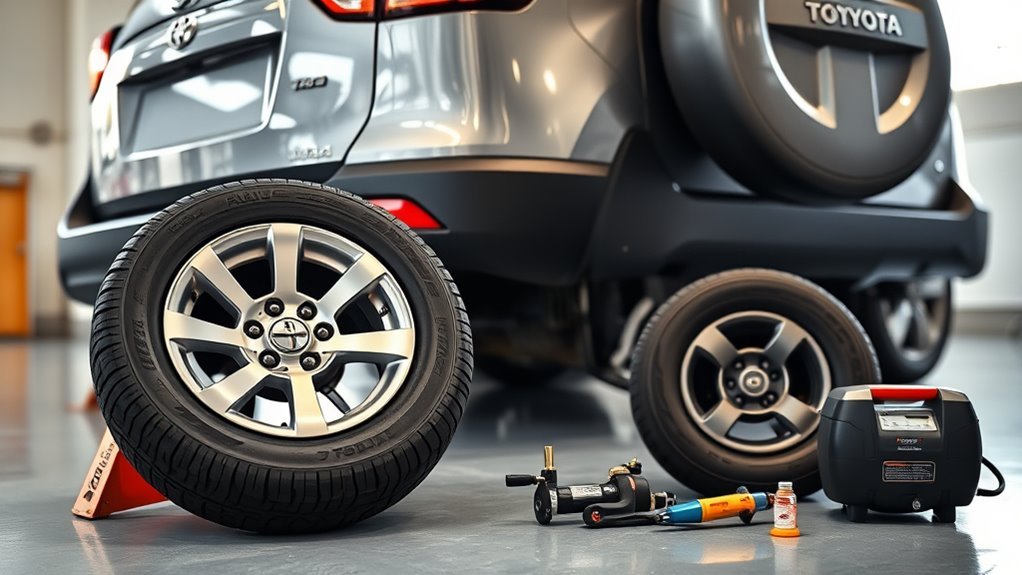
If run-flats do not fit your priorities, you still have strong options for your RAV4.
- Standard touring tires: Best for comfort, quietness, value, and everyday commuting.
- All-weather tires: Good for drivers who want one tire set for rain, light snow, and changing seasons. Look for the three-peak mountain snowflake symbol if winter traction matters.
- Dedicated winter tires: Best for snow, ice, and cold-weather braking if you live in a severe winter area.
- All-terrain tires: Useful for gravel, trails, and rugged roads, but may add noise or reduce fuel economy.
- Temporary spare tire: Many RAV4 models include one. Keep it inflated and know its speed and distance limits.
- Portable inflator and sealant kit: Helpful for minor punctures, but sealant is temporary and may not work on sidewall damage or large punctures.
- Roadside assistance: A practical backup if you do not want to change a tire yourself.
For many RAV4 owners, the best alternative is not one single product. It is a complete plan: quality standard tires, monthly pressure checks, a properly inflated spare, a portable inflator, and roadside assistance.
Making the Right Choice: Selecting the Best Tire for Your Needs
Choose run-flat tires for your RAV4 if emergency mobility is your top concern and you accept the cost, comfort, and service trade-offs. Choose standard tires if you want more tire choices, lower prices, better ride comfort, and easier repair options.
Before buying, ask your tire shop these questions:
- Does this run-flat tire come in my exact RAV4 size, load index, and speed rating?
- Is it approved for my factory or aftermarket wheels?
- What is the manufacturer’s run-flat distance and speed limit?
- Can this specific tire ever be repaired after a puncture?
- Will you demount and inspect it internally after a pressure-loss event?
- Do you normally stock replacements in this size?
- Should I keep my temporary spare or change my emergency plan?
If the answers are unclear, standard tires may be the safer and simpler choice. A tire that fits your driving conditions, budget, and maintenance habits will serve your RAV4 better than a technology upgrade that creates more inconvenience than confidence.
Frequently Asked Questions
Do I have to tell my insurance if I change from run-flat tyres?
You may need to tell your insurer if changing from run-flats to standard tires changes the vehicle from its factory specification or affects your emergency equipment. Rules vary by insurer and location, so check your policy or ask your insurance provider before making the change.
How long do run-flat tires last?
Run-flat tire life depends on the tire model, treadwear rating, driving style, alignment, road conditions, load, inflation pressure, and rotation schedule. Do not rely on a single mileage number. Check tread depth monthly and follow the tire manufacturer’s warranty and replacement guidance.
Can I put run-flat tires on a RAV4 that came with standard tires?
Sometimes, but only if the run-flat tire matches your RAV4’s required size, load rating, speed rating, wheel compatibility, and TPMS needs. Ask a qualified tire professional to confirm fitment before buying.
Can a run-flat tire be repaired?
Maybe. Some run-flat tires can be repaired only if the puncture is small, located in the repairable tread area, and the tire passes a full internal inspection. Other run-flat tires must be replaced after pressure loss. Always follow the tire manufacturer’s repair policy.
Can I mix run-flat and regular tires on my RAV4?
Mixing run-flat and standard tires is not recommended because they can have different sidewall stiffness, handling, and emergency behavior. For AWD RAV4 models, mismatched tires can also create drivetrain concerns. Use four matching tires whenever possible.
Why aren’t run-flat tires more popular?
Run-flats are less popular because they usually cost more, can ride firmer, may be harder to repair, and are not available in as many sizes or tread types as standard tires. Many drivers prefer standard tires with a spare, inflator, or roadside assistance plan.
Conclusion
Run-flat tires can make a RAV4 feel more prepared for punctures, especially if you drive alone, travel at night, or want to avoid roadside tire changes. Their biggest advantage is temporary mobility after pressure loss. Their biggest drawbacks are cost, ride comfort, limited availability, and repair complexity.
If you choose run-flats, keep your TPMS working, follow the tire maker’s run-flat limits, and get the tire inspected after any pressure-loss event. If you choose standard tires, maintain your spare or emergency kit and check pressure monthly. Either setup can work well when it fits your driving habits and is maintained properly.
Sources
- Bridgestone Run-Flat Tire Technology — supports the limited-distance run-flat capability and reinforced-sidewall explanation.
- Michelin Run-Flat Tires: How They Work, Benefits, and Proper Care — supports TPMS importance, inspection after pressure loss, replacement considerations, and run-flat trade-offs.
- 49 CFR § 571.138 — Tire Pressure Monitoring Systems — supports TPMS purpose and federal TPMS performance requirements.
- U.S. Tire Manufacturers Association Tire Repair Basics — supports puncture repair limits, internal inspection, and manufacturer-policy guidance.
- Tire Industry Association Tire Repair — supports proper repair procedures and cautions against plug-only or on-wheel repairs as permanent fixes.
- U.S. Tire Manufacturers Association Tire Care Essentials — supports monthly pressure checks, tread-depth guidance, rotation intervals, and alignment advice.

Related Articles

Toyota RAV4 TPMS Reset: Easy Steps That Work
Unlock the secrets to resetting your Toyota RAV4's TPMS effortlessly—discover the essential steps to ensure your tires are always safe.
Read More
Toyota RAV4 Tire Rotation: DIY Steps & Pattern
Take control of your Toyota RAV4's tire maintenance with our simple DIY rotation guide—discover the best steps for optimal performance and longevity!
Read More
Mix Tire Brands on a Toyota RAV4? Expert Guide
Keeping your RAV4 safe? Learn when mixing tire brands risks traction, ABS/TCS and AWD damage — and what exact matches you must insist on.
Read More