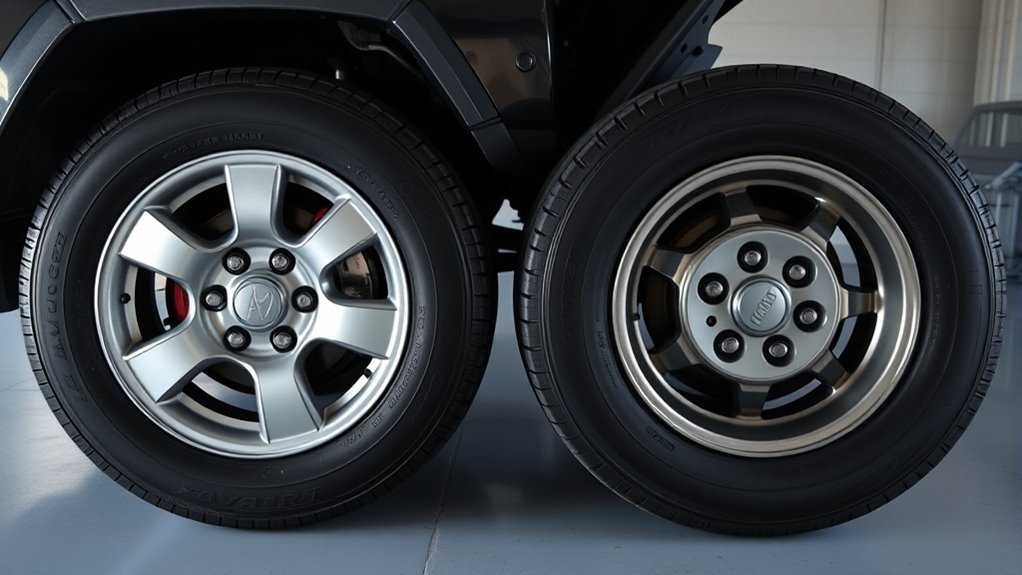
Choosing between run-flat and regular tires for your Toyota RAV4 comes down to one main trade-off: emergency mobility versus everyday comfort, cost, and repair flexibility. Run-flat tires can help you keep moving after certain punctures, but they are not a universal upgrade for every RAV4. Before buying, confirm the correct tire size, load rating, speed rating, wheel compatibility, and TPMS support for your exact model year and trim.
Quick Answer
Run-flat tires are worth considering for a Toyota RAV4 if you prioritize getting to a safe place after a puncture and your vehicle has a working TPMS. Regular tires are usually the better choice if you want a smoother ride, wider tire selection, easier repairs, and lower replacement costs.
Key Takeaways
- Many self-supporting run-flat tires allow limited driving after air loss, often up to about 50 miles at up to 50 mph, but the exact limit depends on the tire maker.
- A working tire pressure monitoring system is essential because run-flats can hide the usual signs of a flat tire.
- Regular tires usually offer better ride comfort, more choices, simpler repair options, and lower replacement costs.
- For a RAV4, never choose a tire by size alone. Match the load index, speed rating, wheel size, and Toyota’s tire placard requirements.
Understanding Tire Options for Your Toyota RAV4: Run-Flat vs. Regular
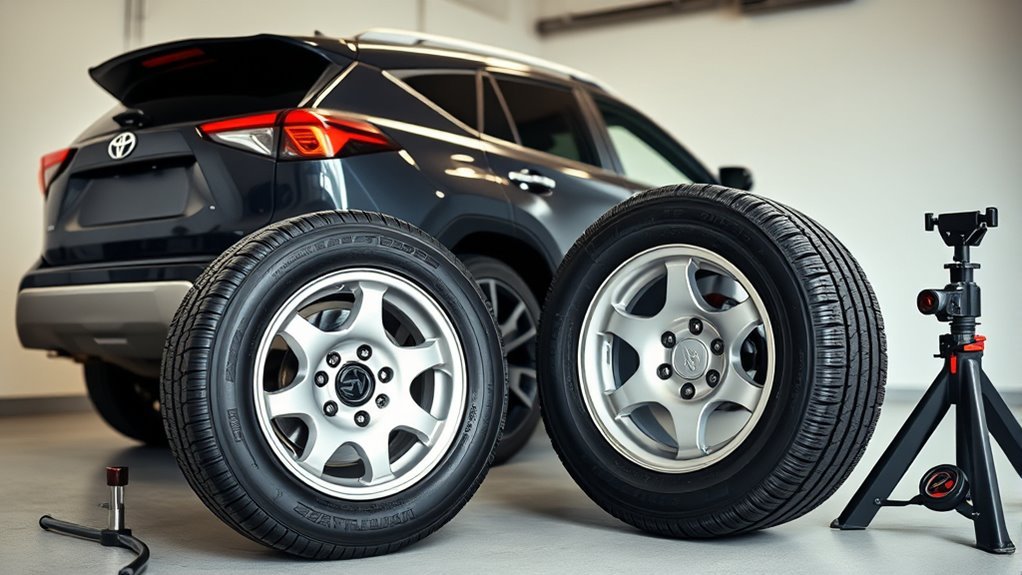
Run-flat tires and regular tires can both work well on a Toyota RAV4 when they are correctly matched to the vehicle. The right choice depends on how you drive, where you drive, and how much you value emergency convenience compared with comfort and long-term cost.
Run-flat tires are built to support the vehicle temporarily after certain air-loss events. Many self-supporting run-flat tires use reinforced sidewalls that help carry the vehicle after a puncture. For example, Continental says its self-supporting run-flat tires can continue for 50 miles at a maximum speed of 50 mph after a puncture, and Bridgestone describes its run-flat tires as providing up to 50 miles of continued mobility after a puncture. Always follow the limit printed by the tire manufacturer, not a general rule of thumb.
Regular tires do not support the vehicle once they lose enough air. If a regular tire goes flat, you generally need to stop, install a spare, use a tire repair kit if appropriate, or call roadside assistance. Their advantage is that they typically provide a smoother ride, a wider product selection, and more straightforward repair and replacement options.
Run-Flat vs. Regular Tires: Quick Comparison
| Feature | Run-Flat Tires | Regular Tires |
| After a puncture | May allow limited driving to a safe place, depending on the tire maker’s speed and distance limits. | Usually requires stopping, changing to a spare, using a repair kit, or calling roadside help. |
| Ride comfort | Can feel firmer because of stronger sidewall construction. | Usually smoother and quieter for everyday RAV4 driving. |
| Repair options | May be repairable only in limited cases. Many shops replace them after a loss-of-pressure event. | Often easier and cheaper to inspect, patch, or replace when the damage is repairable. |
| Best for | Drivers who often travel at night, on highways, or in areas where stopping for a flat is unsafe. | Drivers who prioritize comfort, value, tire choice, and simple maintenance. |
[Products Worth Considering]

The Dr.Roc spare tire tool kit helps you release, lower, or raise your spare tire with reliable extension tools and a lug nut wrench. It is made from rustproof automotive-grade steel and includes an organized carry case for convenient storage. Designed for compatibility with select GM models from the late 1990s through 2019, it uses upgraded extension components to install and remove spare tires with less hassle.

This AUTOWN flat tire repair kit is designed for quick, reliable puncture repairs using a plug kit and spiral probe tool to simplify installation. Built for durability and safe handling, it offers strong adhesion and flexibility to help maintain tire air tightness. With a portable storage case and a multi-vehicle approach, it’s suitable for cars, motorcycles, ATVs, tractors, lawn mowers, RVs, jeeps, and trucks.

Upgrade your Toyota’s wheels with durable aluminum alloy valve stem caps that help protect valve cores from corrosion and direct exposure to road grime, clay, water, and snow. Rubber rings improve sealing to help prevent air leakage and maintain stable tire pressure for safer driving. These caps are easy to install or remove without tools and add a unique, stylish look to your car.
What Are Run-Flat Tires and How Do They Work?
Run-flat tires are designed to provide temporary mobility after certain types of air loss. The most common type is the self-supporting run-flat tire, which uses reinforced sidewalls to help support the vehicle when air pressure drops. Continental explains that this sidewall design helps prevent the sidewall from being crushed between the rim and the road after a puncture.
Tire Rack identifies several mobility technologies, including self-supporting tires, self-sealing tires, and auxiliary-supported systems. These are not all the same. A self-sealing tire may seal some tread punctures, while a self-supporting run-flat is built to carry the vehicle temporarily after losing air.
Note: Run-flat tires are not “drive forever” tires. After a puncture or TPMS warning, slow down, avoid hard braking and sharp steering, and go directly to a safe inspection or repair location.
Will Run-Flat Tires Fit a Toyota RAV4?
Some RAV4 owners may be able to buy run-flat tires in a compatible size, but fitment is more than matching the numbers on the sidewall. Before installing run-flats, confirm all of the following:
- Tire size: Match the size listed on the driver-side door placard or owner’s manual for your exact RAV4 year and trim.
- Load index: The tire must be able to carry the RAV4’s required load.
- Speed rating: Use a rating appropriate for the vehicle and your driving conditions.
- Wheel compatibility: Confirm the run-flat tire is approved for your wheel size and type.
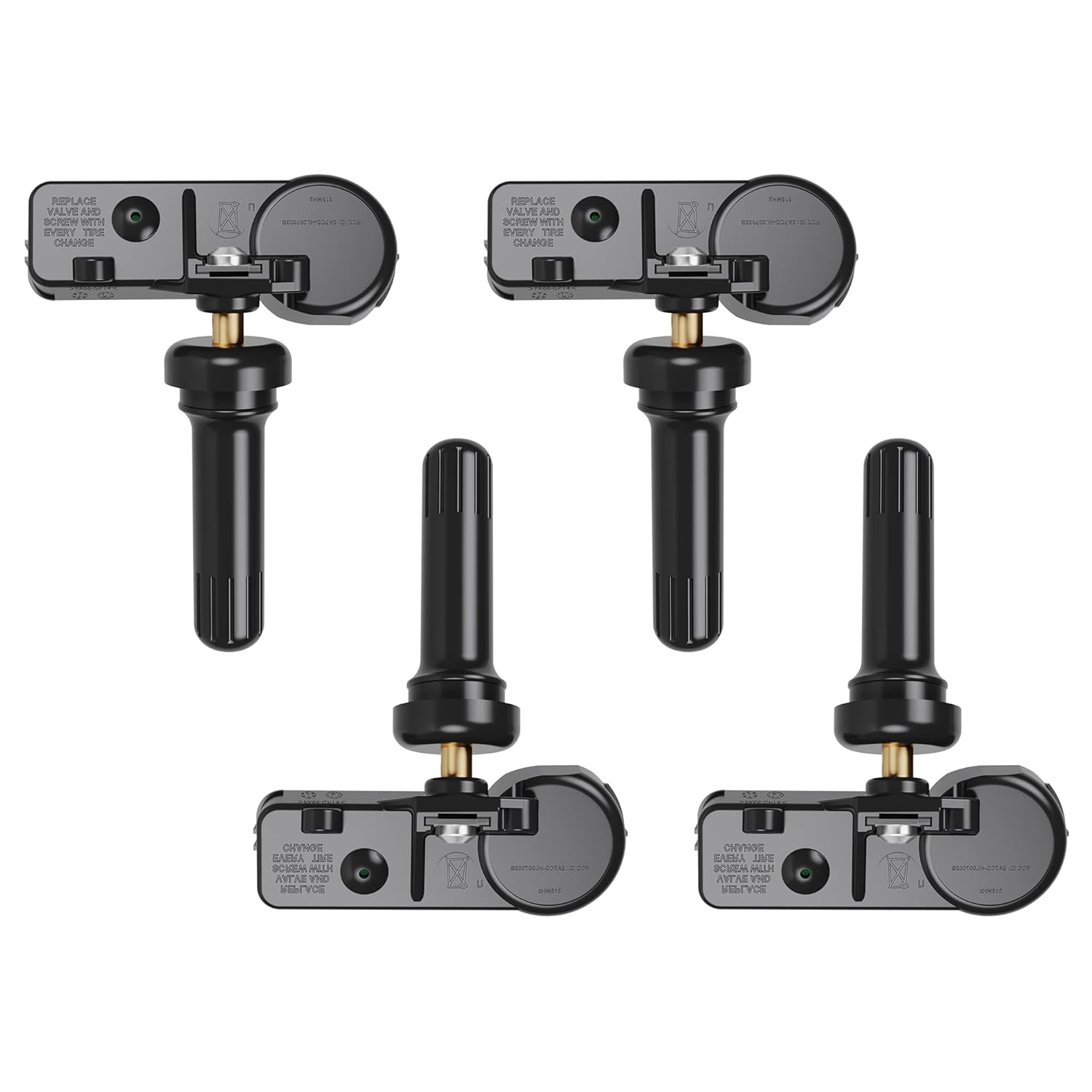
- TPMS compatibility: A working tire pressure monitoring system is especially important with run-flats.
- AWD tire matching: If your RAV4 has AWD, keep all four tires closely matched in size, tread depth, and type to avoid drivetrain stress.
Toyota’s owner information also warns that tire pressure warning valves and transmitters can be damaged when removing or fitting wheels and tires, so careful installation matters. If you are switching from regular tires to run-flats, ask a Toyota dealer or qualified tire installer to confirm compatibility first.
Warning: Do not mix run-flat and regular tires on the same RAV4 for normal driving unless the vehicle manufacturer or tire manufacturer specifically allows it. Mixed tire construction can affect handling, braking, traction control, and AWD operation.
[Products Worth Considering]
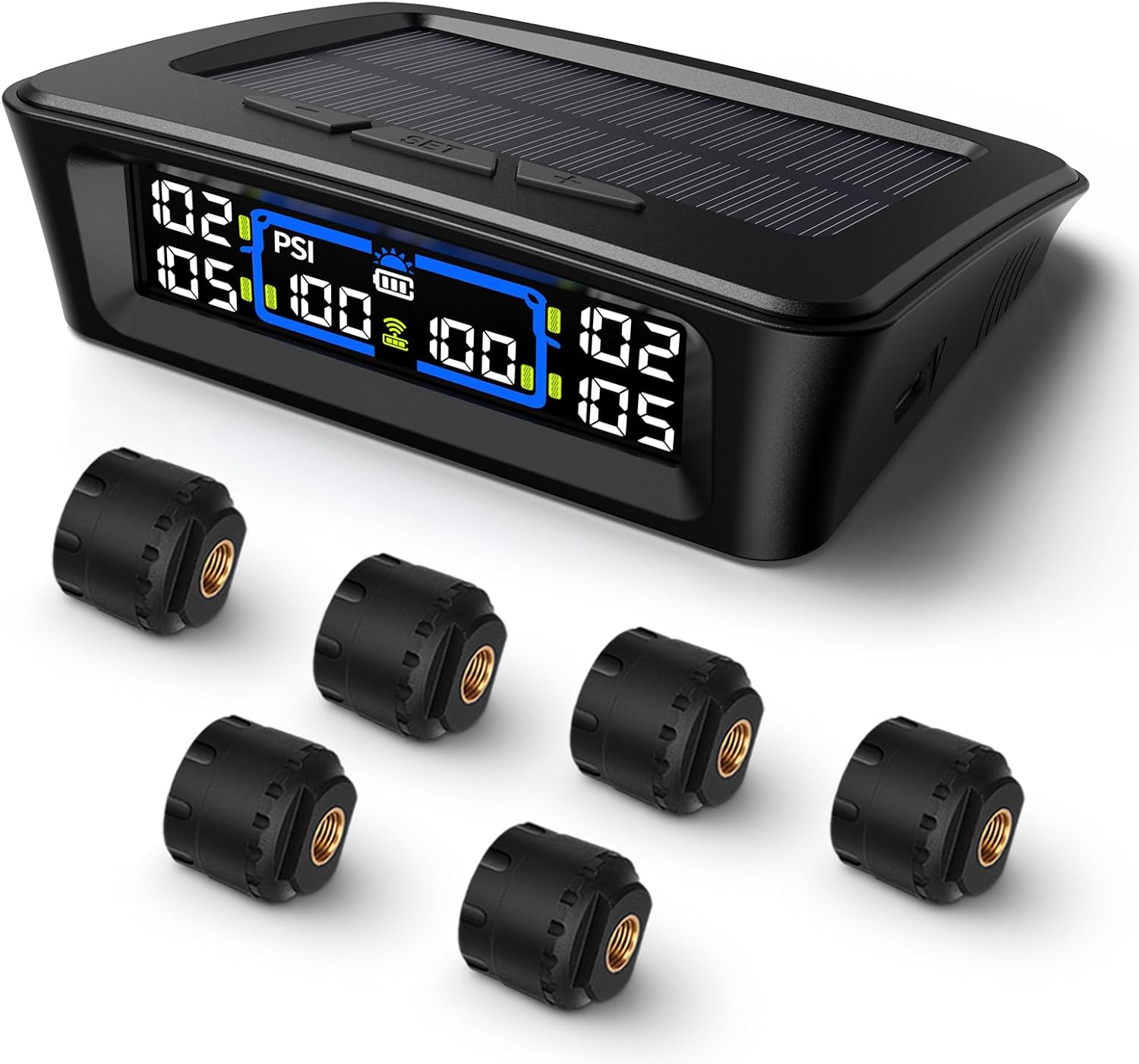
The Tymate TM12 RV TPMS delivers real-time tire pressure and temperature monitoring with a stable 433Hz display for safer long-distance driving. It supports simultaneous monitoring across vehicle and trailer zones, includes six alarm modes for pressure, temperature, leakage, battery, and signal loss, and features easy DIY installation with auto calibration. Power is supplied via USB-C charging or solar recharging, with a wide 0–144 PSI range and up to 50 ft signal coverage for RVs and towable trailers.

This TPMS relearn tool helps you quickly activate, match, and reset GM tire pressure sensors to keep the vehicle monitoring system working properly. It clears tire pressure alarms and dashboard warning lights after sensor replacement or tire rotation, and supports learning for common 315/433 MHz TPMS sensors. Designed for simple one-button operation, it can help you avoid unnecessary trips to repair shops.

Yieokei Tesla jack pads are molded rubber lifting pucks designed for 2016-2026 Model 3/Y/S/X, including Juniper, to fit securely in the jack hole. They cushion the underframe and help position the jack precisely at the factory jack points to reduce risk of battery, paint, or chassis damage. The set also includes a tire repair tool kit for emergency roadside fixes and comes with a portable storage case to keep everything organized.
Top Advantages of Run-Flat Tires for Your RAV4
Enhanced Safety After Air Loss
The biggest advantage of run-flat tires is that they may help you avoid stopping immediately on the shoulder of a busy highway, in bad weather, or in an unsafe area. Instead of changing a tire on the roadside, you may be able to drive slowly to a safer location within the tire maker’s limit.
Less Dependence on Roadside Tire Changes
Run-flat tires can reduce the chance that a puncture turns into an immediate roadside emergency. This is helpful if you regularly drive long highway routes, commute at night, or travel with children or passengers who make roadside stops more stressful.
Possible Cargo Space Benefit
Some vehicles use run-flat tires instead of a spare tire to save space or weight. For a RAV4, this depends on the model year, trim, and equipment. Do not assume your RAV4 has no spare or that run-flats let you remove the spare safely. Check your cargo area and owner’s manual so you know exactly what emergency equipment your vehicle has.
Disadvantages of Run-Flat Tires for Your RAV4
- Firmer ride: Run-flat tires can feel stiffer because the sidewalls are built to support the vehicle after pressure loss.
- Higher replacement cost: Run-flats usually cost more than comparable regular tires, and installation options may be more limited.
- Limited repairability: After a run-flat has been driven with low or no pressure, the internal structure may be damaged even if the outside looks fine.
- Availability issues: Not every shop stocks RAV4-compatible run-flat tires, especially during road trips or in rural areas.
- TPMS dependence: Because run-flats can mask the usual feel of a flat tire, you need a working TPMS and should never ignore the warning light.
Pro Tip: Before buying run-flats, price a full installed set in your RAV4’s exact size. Also ask whether local shops can replace that tire quickly if you get a puncture away from home.
Performance Comparison: Run-Flat vs. Regular Tires
Performance After a Puncture
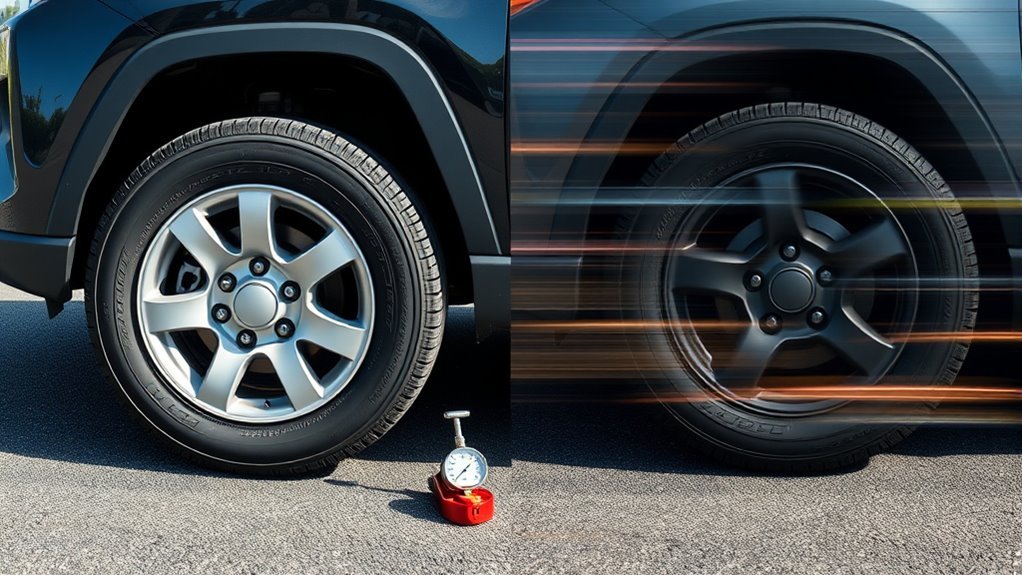
Run-flats have the advantage after certain punctures because they can keep the vehicle mobile for a limited distance. That does not mean you should keep driving normally. Reduce speed, avoid sudden maneuvers, and head to a safe service location.
Regular tires usually lose drivability quickly once pressure drops. If the tire is flat, continuing to drive can damage the tire, wheel, and vehicle. The safer choice is to stop where it is safe and use the spare, repair kit, or roadside assistance.
Handling and Comfort
On normal roads, regular tires often feel smoother because their sidewalls are not designed to carry the vehicle without air. Run-flats can feel more precise in some situations, but on rough pavement they may transmit more bumps and road noise into the cabin.
Durability and Tread Life
Run-flat tires do not all wear out at the same rate, and regular tires do not all last longer. Tread life depends on the tire model, treadwear rating, alignment, tire pressure, rotation schedule, driving style, road surface, and load. Compare warranties and owner reviews for the specific tire you are considering.
Fuel Economy and Weight
The fuel-economy difference between run-flat and regular tires depends on tire weight, rolling resistance, tread design, and whether the vehicle carries a spare. Do not buy run-flats expecting a guaranteed MPG improvement. If fuel economy is a priority, compare rolling-resistance ratings and choose the correct size and pressure for your RAV4.
What to Do If a Run-Flat Tire Loses Pressure
- Take the TPMS warning seriously. Do not assume the tire is fine because the vehicle still feels stable.
- Slow down safely. Follow the tire maker’s speed limit for run-flat operation.
- Avoid hard cornering or braking. Treat the tire as damaged until inspected.
- Drive only as far as necessary. Go to a safe tire shop, dealer, or repair location within the tire’s rated distance.
- Have the tire removed and inspected. Internal damage may not be visible from outside.
A run-flat tire buys time and distance after some punctures. It does not turn a damaged tire into a normal tire.
[Products Worth Considering]

These aluminum alloy tire valve stem caps with an O-ring seal help protect valve stems from corrosion while adding a clean, stylish look to your vehicle. The universal fit works across cars, trucks, motorcycles, bicycles, and more, making them an easy upgrade for everyday driving and off-road use. Installation is quick, and the included four-pack keeps all your tires dressed and protected.

This ETENWOLF tire plug repair kit helps you quickly fix punctures for reliable rides. It includes two plug sizes to match different damage widths, plus essential tools and lubricant for a smoother repair process. Designed for tubeless tires, it’s a convenient on-the-go solution for cars, motorcycles, ATVs, trucks, jeeps, and tractors.

This 100-piece tire repair screw plug kit provides a fast, self-service solution for punctures on the road. Choose the correct plug size, insert it into the break, and screw it in to help seal the puncture and temporarily restore tire pressure. Thickened threads and rubber-wrapped plugs improve bite and sealing while remaining compact and easy to carry.
Are Run-Flat Tires Worth It?
Run-flat tires can be worth it for a Toyota RAV4 if you care most about avoiding immediate roadside tire changes. They make the most sense for drivers who spend a lot of time on highways, drive at night, travel in remote areas, or want extra confidence after a puncture.
Regular tires are usually the better choice if your top priorities are ride comfort, price, selection, repairability, and easy replacement. Many RAV4 owners will be happier with a high-quality regular all-season, touring, all-weather, or all-terrain tire that matches their climate and driving style.
Choose run-flat tires if:
- You want limited mobility after some punctures.
- Your RAV4 has a working TPMS.
- You are comfortable with a firmer ride and higher replacement cost.
- You can find compatible run-flats from a reputable tire maker.
Choose regular tires if:
- You want the smoothest ride for daily driving.
- You want more tire choices and price ranges.
- You prefer easier repair and replacement options.
- You already carry a usable spare or tire repair kit and know how to use it.
User Experiences With Run-Flat Tires
RAV4 drivers who like run-flats usually value convenience. They appreciate being able to get off the road safely instead of changing a tire in traffic, rain, darkness, or an unfamiliar area.
Drivers who dislike run-flats usually mention the firmer ride, higher replacement cost, and limited availability. Some also dislike that a run-flat may need replacement after being driven with low pressure, even if the puncture would have been repairable on a regular tire.
The most balanced approach is to decide based on your real driving pattern. A city driver with short commutes and easy roadside assistance may not need run-flats. A highway commuter or long-distance traveler may find the added emergency mobility worth the trade-offs.
Frequently Asked Questions
Do I have to tell my insurance if I change from run-flat tires to regular tires?
It depends on your policy and location. If you are replacing tires with the same approved size, load index, and speed rating, many insurers will not treat it as a major modification. Still, if your RAV4 came with run-flats from the factory or you are changing tire type, size, or performance rating, contact your insurer and keep the installation receipt.
Why aren’t run-flat tires more popular?
Run-flat tires solve one problem but create trade-offs. They can help after a puncture, but they often cost more, may ride firmer, can be harder to find in some sizes, and may have more limited repair options. Many drivers prefer the comfort and value of regular tires.
Do run-flat tires wear out faster?
Not automatically. Tread life depends on the exact tire model, treadwear rating, alignment, pressure, rotation schedule, road conditions, and driving style. However, a run-flat that has been driven with low or no pressure may need replacement even if the tread still looks usable.
Can I put run-flat tires on any Toyota RAV4?
No. You need tires that match your RAV4’s required size, load index, speed rating, wheel size, and TPMS setup. Ask a qualified tire installer or Toyota dealer to confirm compatibility before switching from regular tires to run-flats.
Can I mix run-flat and regular tires on my RAV4?
For normal driving, avoid mixing run-flat and regular tires unless Toyota or the tire manufacturer specifically approves it. Mixing tire construction can affect handling, braking, traction control, and AWD operation. If one tire is damaged, replace it with a matching tire whenever possible.
Do run-flat tires mean I no longer need a spare tire?
Not always. Run-flats provide limited mobility after certain punctures, but they do not help in every tire failure. Sidewall damage, severe impact damage, or driving beyond the tire’s limit can still leave you needing a tow. Check what emergency equipment your RAV4 includes and keep roadside assistance information handy.
Conclusion
Run-flat tires can make sense for a Toyota RAV4 if your top priority is staying mobile after certain punctures. They are most useful for highway driving, night driving, bad-weather travel, and areas where stopping for a flat tire could be unsafe.
For most everyday RAV4 drivers, regular tires remain the more comfortable, affordable, and flexible choice. Before switching either way, check your tire placard, confirm TPMS compatibility, avoid mixing tire types, and choose a tire that matches your driving conditions—not just the promise of extra convenience.
Sources
- Bridgestone Run-Flat Tires — supports the limited-mobility benefit of run-flat tires.
- Continental Self Supporting Runflat Tires — supports reinforced sidewall design, TPMS need, and 50-mile/50-mph guidance for Continental SSR tires.
- Tire Rack: What Are Run-Flat Tires? — supports the explanation of self-supporting, self-sealing, and auxiliary-supported tire technologies.
- eCFR 49 CFR 571.138 — supports TPMS purpose and under-inflation warning requirements.
- Toyota Owners: If You Have a Flat Tire — supports RAV4 tire and TPMS service caution.