
How to Release Air From a Car Tire: Fast & Easy Deflation
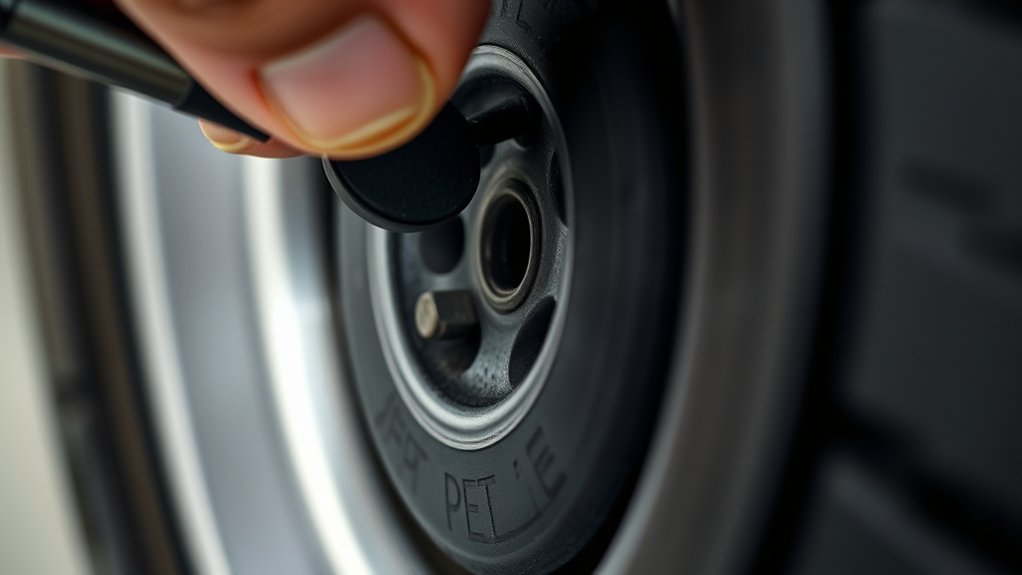
To release air from a car tire quickly, park on a flat surface, set the brake, and remove the valve cap. Press the valve pin with a small tool for a controlled bleed, or use a valve core tool to remove the core for faster deflation. Check PSI every few seconds so you don’t over-deflate. Reinstall the cap when you reach your target pressure. Keep going, and you’ll see the safest ways to fine-tune it.
Key Takeaways
- Park on a flat surface, set the parking brake, and check the tire’s current PSI before deflating.
- Remove the valve cap, then press the valve pin with a screwdriver or valve tool to release air.
- For faster deflation, carefully remove the valve core using a valve core removal tool.
- Check tire pressure every 5 to 10 seconds and stop at your target PSI, usually within the safe recommended range.
- Replace the valve cap and reinflate with a compressor if you lower the pressure too much.
What You Need to Deflate a Tire
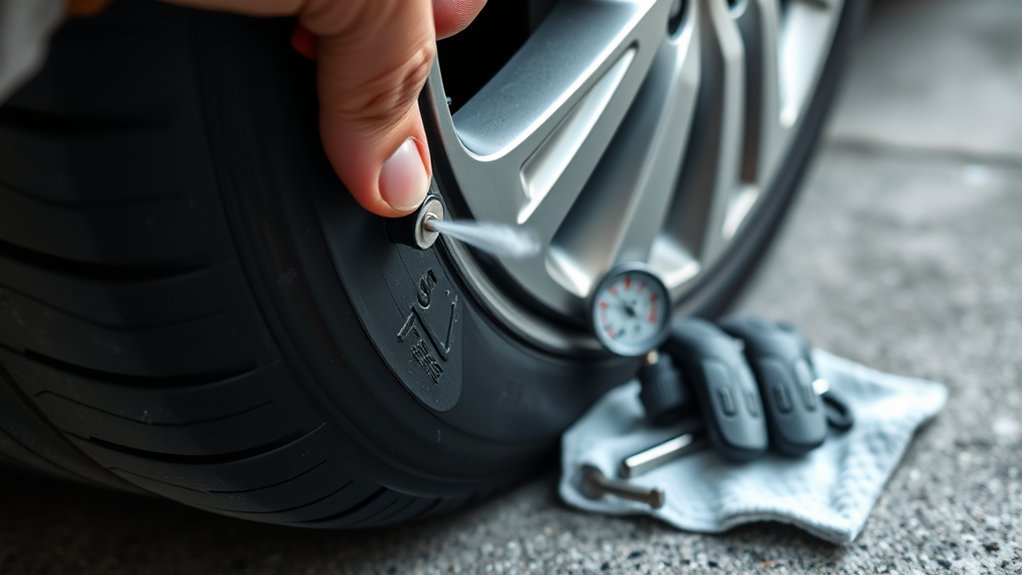
Before you start, gather a tire pressure gauge, a valve core removal tool or flathead screwdriver, and a valve cap so you can control and monitor the deflation safely. You’ll use the tire pressure gauge to check PSI before, during, and after you release air, so you don’t overshoot your target. Keep the vehicle on a flat, stable surface and set the parking brake to prevent movement while you work. The tool lets you press the valve core pin in a controlled way, which reduces pressure without damaging the stem. Keep the valve cap nearby to shield the valve stem from dirt and moisture when you pause. If you let out too much air, a portable air compressor gives you a quick way to restore the tire to the desired pressure. With these basics ready, you can manage the process precisely and keep your options open while staying in control. Additionally, ensure you are aware of the UTQG ratings of your tires, as this can help you understand their wear and performance characteristics.
How to Let Air Out of a Tire Manually
To let air out of a tire manually, locate the valve stem on the wheel and remove the valve cap to expose the valve pin. Then press the pin with a flathead screwdriver, key, or valve core tool to release air in a controlled stream. Keep your hand steady and watch the tire pressure gauge every 5 to 10 seconds so you don’t over-deflate. If you need faster reduction, you can remove the valve stem core entirely, but that’ll let air out quickly, so use caution and stay focused. This method gives you direct control and helps you free up the tire to the exact level you want. Once you’ve reached target tire pressure, stop deflating and reinstall the valve cap securely. That cap protects the valve from dirt and moisture, preserving reliability after adjustment. Additionally, maintaining proper tire inflation is crucial for optimal performance and safety.
How to Use a Tire Deflator
A tire deflator gives you faster, more precise control when you need to lower tire pressure for off-road traction or terrain-specific setups. Attach the tire deflator to the valve stem, then let air escape until you hit your target. Most models use adjustable settings, so you can select the PSI you want for sand, mud, or snow without constant manual intervention. Some units drop pressure at about 1 PSI per second or faster, which frees you from slow hand bleeding and keeps your setup efficient.
- Set your target PSI first
- Thread the tire deflator onto the valve stem
- Let air flow automatically
- Watch the pressure with a gauge
- Stop at the chosen level
Use the deflator as a controlled release tool, not a guesswork shortcut. If you over-lower pressure, you risk tire damage and unstable handling. With the right setting, you gain quicker trail-ready freedom and cleaner control. Additionally, using a tire deflator can enhance your all-terrain tire performance, ensuring better grip and stability on challenging surfaces.
How to Check Tire Pressure While Deflating
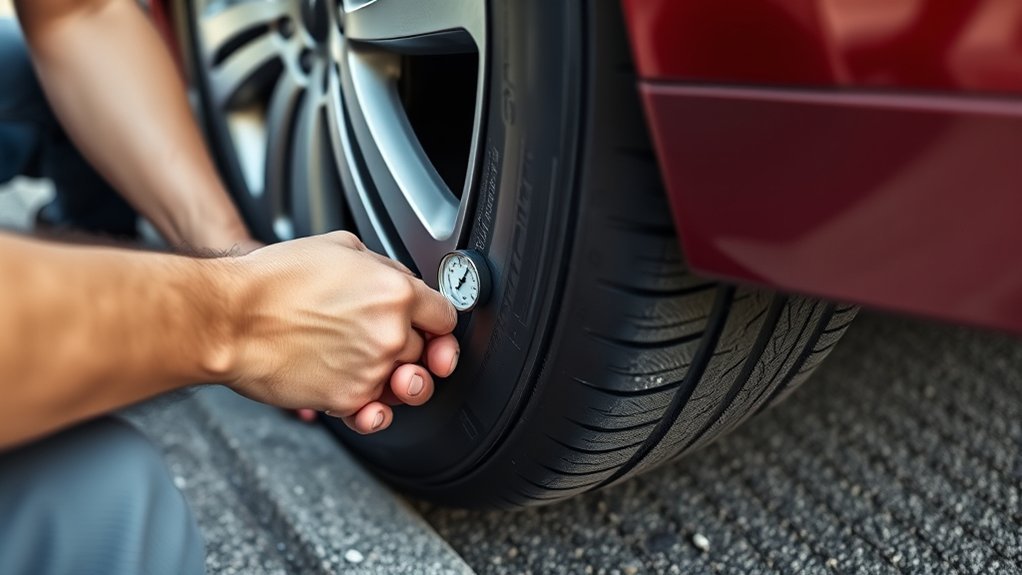
Use a tire pressure gauge to check PSI every 5 to 10 seconds as you deflate the tire, so you can make precise adjustments without over-reducing pressure. Either a digital or analog gauge works well, as long as you read each measurement accurately. Aim for a target range of about 12 to 25 PSI, then adjust based on the terrain or task, such as off-roading or tire plug installation. This process is similar to maintaining tire longevity and performance, which is crucial for safe driving.
Gauge Checks During Deflation
Check tire pressure with a gauge as you release air so you can keep the PSI within your target range. During gauge checks, pause every 5 to 10 seconds and read the pressure before you deflate tires farther. A digital gauge gives fast, exact feedback; an analog gauge works too if you prefer a simpler tool. Keep the gauge within reach so you can correct pressure immediately if you overshoot. For most passenger vehicles, the recommended tire pressure is usually 30 to 35 PSI, while off-road setups often sit lower, around 12 to 25 PSI.
- Check often
- Read PSI cleanly
- Adjust in small steps
- Recover from over-deflation
- Match pressure to terrain
Safe PSI Targets
To keep tire deflation safe and controlled, watch PSI closely with a tire pressure gauge and stop before you drop below the vehicle’s recommended minimum. Check pressure every 5 to 10 seconds as you bleed air, so you can hold the safe PSI target for your terrain. Use the driver’s door jamb or owner’s manual to confirm the factory spec.
| Terrain | PSI Range | Action |
|---|---|---|
| Sand | 12-15 | Deflate gradually |
| Dirt | 16-20 | Recheck often |
| Rock | 20-25 | Stop at target |
Stay above the minimum to prevent uneven tire wear and blowouts. If you’re airing down for traction, precision gives you freedom without sacrificing control. Keep the gauge handy, release air in short bursts, and verify each reading before you move on.
How Much Air to Let Out of a Tire?
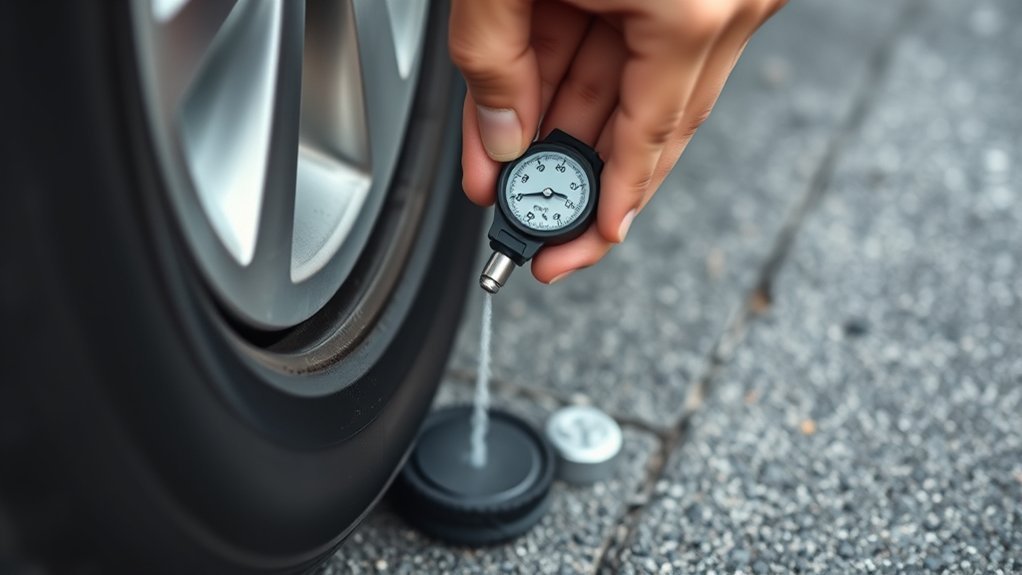
You should set a target PSI before you release air, since most passenger tires sit around 30 to 35 PSI, while snow traction may improve with a 2 to 3 PSI drop and off-road use may call for 15 to 20 PSI. Check the pressure after each small release so you can stay within the intended range, typically about 12 to 25 PSI depending on terrain. Don’t go below the tire maker’s minimum safe pressure, or you’ll increase the risk of uneven wear, rim damage, and blowouts. Proper tire maintenance is crucial for ensuring reliable wet traction and overall safety.
Target PSI Levels
How much air you let out depends on the driving conditions and your tire’s safe operating range. Use target psi levels as a controlled adjustment, not a guess. On uneven surfaces, off-road setups usually work best at 12–20 PSI for better flex and traction. In snow or ice, dropping pressure by 2–3 PSI can sharpen grip. For normal street use, keep passenger tires near 30–35 PSI. Check the tire sidewall for the minimum safe pressure before you release air.
- Match pressure to terrain
- Preserve sidewall integrity
- Improve traction on uneven surfaces
- Avoid over-deflation
- Use short air-release bursts
Check Pressure Often
As you release air, check tire pressure with a gauge every 5 to 10 seconds so you can track the drop accurately and stop at your target PSI.
Use short bursts, then pause. The small pin inside the valve opens fast, so don’t guess. Check pressure often to stay within range and keep control.
| PSI | Use |
|---|---|
| 12-25 | off-road traction |
| 2-3 less | snow or ice |
| sidewall min | never cross |
| safe speed | protect the tire |
If you’re tuning for terrain, stop before you hit the sidewall minimum. For snow, a slight 2-3 PSI drop can help. Too much air loss risks rim damage, uneven wear, and blowouts. Stay precise, stay free, and let the tire work at a safe speed.
When to Deflate Tires for Better Traction
- Uneven off-road surfaces
- Snow and ice
- Sandy terrain
- Low-speed trail driving
- Situations needing more stability
- Deflating tires can enhance deep off-road traction, allowing for better grip in challenging conditions.
What Happens If You Let Out Too Much Air?
If you let out too much air, the tire becomes under-inflated and starts to lose proper handling, traction, and stability. As air escapes, the contact patch shifts and the sidewalls flex more than designed, which can overheat the tire and stress the rim.
| Effect | Result |
|---|---|
| Low pressure | Poor cornering and braking |
| Excess flex | Rim damage and heat buildup |
| Under-inflation | Uneven wear and shorter tire life |
You’ll notice the vehicle feels vague on wet, slippery, or uneven surfaces, where grip matters most. Severe pressure loss also raises blowout risk, especially at speed or under load. Check PSI often and keep it within the manufacturer’s recommended range. That small habit protects performance, preserves control, and keeps your setup ready for the road you choose. Additionally, maintaining proper tire pressure can enhance tread life and improve overall performance, ensuring a safer driving experience.
How to Reinflate a Tire After Deflating It
To reinflate a tire after deflating it, connect a portable air compressor to your vehicle’s 12V outlet or use a gas station air pump, then add air in short bursts. Check the tire size and the pressure spec on the driver’s door jamb before you start. Use a gauge often; don’t guess. If the valve stem still leaks, press the small pin briefly to bleed a trace of pressure, then recheck. Add air in small increments until you reach the recommended PSI, not beyond it. That keeps handling sharp, fuel use efficient, and wear controlled.
Add air in short bursts, checking PSI often until you reach the recommended pressure.
- Locate the factory PSI label
- Attach the chuck firmly
- Inflate in short cycles
- Measure pressure after each cycle
- Stop at the specified pressure
If you let out too much, restore only what’s needed. You’re in charge of the setup, so keep the process deliberate and precise. Additionally, maintaining the correct tire pressure can enhance overall tire performance and prolong the lifespan of your tires.
Tire Deflation Tools That Save Time
Sure! Here’s the revised content following your instructions:
—
| Tool | Best use |
|---|---|
| Valve core removal tool | Fast full deflation |
| Tire deflators | Controlled pressure reduction |
| Portable tire deflation kits | On-the-go tire management |
| Flathead screwdriver or key | Manual pin pressing |
If you don’t have specialty gear, you can still press the valve pin with a flathead screwdriver or key. Long needle nose pliers also work, but use them carefully to avoid sudden air loss. Choose the tool that matches your tempo: quick release, precise control, or field-ready convenience. Having a reliable spare tire kit can also enhance your roadside assistance options.
—
Let me know if you need anything else!
Frequently Asked Questions
How to Let Air Out of a Tire Quickly?
You can let air out fast by removing the valve cap, then pressing the valve stem pin with a valve core tool or small screwdriver. For even faster results, use a tire deflator tool or remove the core completely. Check tire pressure every 5–10 seconds so you don’t overdeflate. Follow safety precautions, and adjust in small steps if you only need slight reduction for traction or off-road control.
What to Do if Tire PSI Is Too High?
If your tire PSI’s too high, let out air until you reach proper inflation. One useful stat: most passenger vehicles run best around 30–35 PSI. Check tire pressure with a gauge, then press the valve core pin briefly to release air. Recheck often to avoid safety concerns like blowouts, poor traction, and uneven wear. You’re in control when you adjust pressure precisely, confidently, and on your own terms.
How to Take Air Out of a Tire Without a Tool at Home?
You can take air out of a tire at home by pressing the valve stem pin with a sturdy key or pen tip, then letting air escape in short bursts. Check tire pressure with a gauge every 5 to 10 seconds to control deflation techniques. Follow safety precautions: don’t press too hard, and stop at your target PSI. If you overshoot, reinflate it. Replace the valve cap afterward.
How Long Does It Take to Let the Air Out of a Tire?
You can let air out in 20 to 60 seconds, yet a fast valve-core release may take only a few seconds. Short bursts of 5 to 10 seconds give you control and help you track tire pressure accurately. Different deflation methods change the pace, so check with a gauge after each burst. Follow safety precautions and avoid over-deflation, and you’ll keep the process precise, practical, and under your control.
Conclusion
You’ve now got the basics to release air from a tire safely and with control. Whether you’re easing pressure by hand or using a deflator, work in small steps and keep checking psi as the gauge needle falls. Picture the tire settling lower, its footprint widening for more grip on loose ground. Stop before you go too far, then reinflate to the right pressure when you’re done. Precision keeps you safe and keeps your ride ready.

Related Articles
How to Put Studs in a Tire: Step-by-Step Studding Guide
Tackle tire studding the right way with this step-by-step guide, and discover the crucial sizing and placement tips before you start.
Read More
How to Plant Potatoes in a Tire: Step-by-Step Garden Hack
Fresh, space-saving potato-growing in tires is easier than you think, but the secret step that boosts your harvest comes later.
Read More
How to Measure Tire Lug Pattern: Bolt Pattern Guide
Tired of guessing your wheel fitment? Learn how to measure tire lug patterns and decode bolt patterns before making a costly mistake.
Read More