
How to Hang a Tire Swing: Safe Step-by-Step Installation Guide
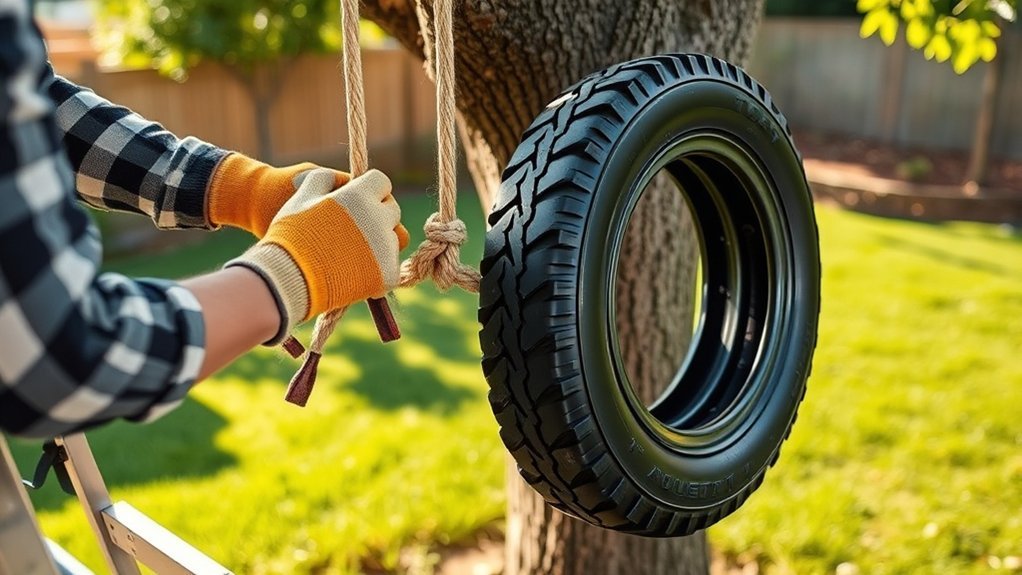
Choose a strong, healthy tree branch 8 to 10 feet high, and make sure the ground below is soft and clear. Pick a sturdy tire, then drill drainage holes in the bottom. Add rated eye bolts, S-hooks, and weather-resistant rope or chain. Hang the swing securely, leaving safe space around it. Test the height, weight, and hardware often so everyone can play with confidence, and you’ll find a few easy ways to make it even safer.
Key Takeaways
- Choose a healthy, sturdy tree branch 8–10 feet high, with a soft landing area and 12 feet of clearance.
- Use a sound tire and rated hardware, including eye bolts, washers, S-hooks, rope, or chain built for heavy loads.
- Drill drainage holes in the tire, then install three evenly spaced eye bolts securely with nuts and washers.
- Hang the swing from the branch with a secure knot or hardware, ensuring proper height and safe ground clearance.
- Inspect all parts regularly for wear, looseness, or damage, and stop using the swing if anything looks unsafe.
Pick a Safe Hanging Spot
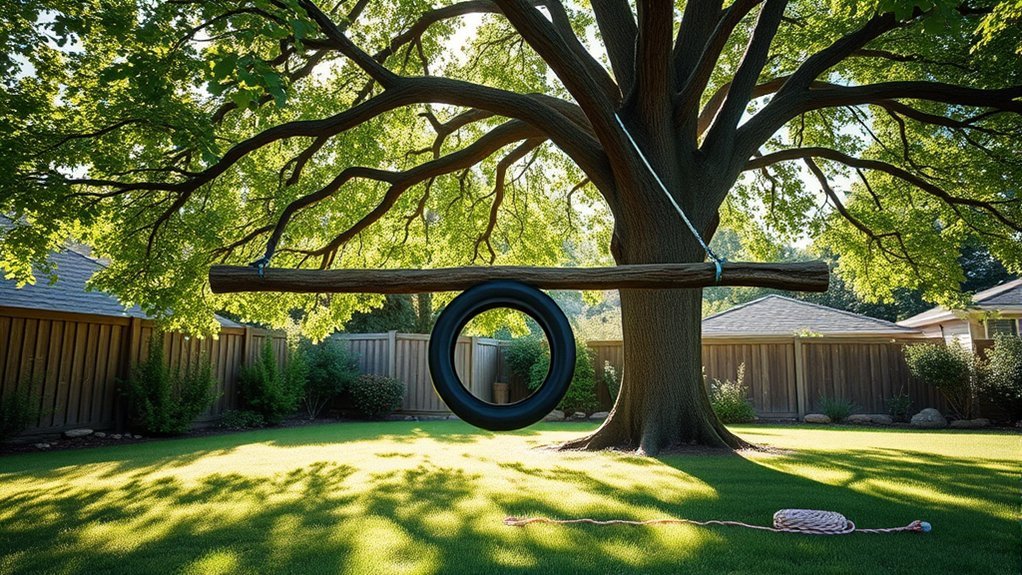
Pick a sturdy tree branch that’s at least 8 to 10 feet off the ground and wide enough—about 8 inches across—to safely hold the tire swing and anyone who uses it. You’ll want a healthy tree branch, not one with cracks, rot, or weak spots, so your swing can feel secure and free. Choose a branch that runs out at least 3 to 4 feet, giving the tire room to hang without bumping the trunk or nearby tree branches. Look around the ground below and pick a soft place with grass or mulch, not concrete or rocks, so little bodies have a gentler landing. Then scan the space all around the swing’s path. You need about 12 feet in every direction from the lowest point of the swing, so you can move, play, and explore without hitting anything. A safe spot helps you relax and enjoy your swing with confidence. Additionally, consider the durability ratings of the tire if it will be used for more than just swinging.
Choose the Right Tire and Hardware
Next, choose a tire that fits the rider’s size and weight, since a smaller, sturdy tire is safer for little children than an oversized one. You can choose the right tire by checking for cracks, holes, and heavy wear so the swing feels steady and kind to the body. Pick high-quality hardware, like eye-bolts rated for at least 400 to 600 pounds, so every connection stays secure. Use strong, weather-resistant ropes or chains that can hold at least 500 pounds, giving your child freedom to move with confidence. If you’re reusing salvaged parts from an old swing set, make sure every piece matches and meets the needed weight rating. When you select safe materials, you create a supportive play space that helps children explore, build trust in their bodies, and enjoy joyful motion without worry. Additionally, ensure that the chosen tire has a predictable dry-road handling to provide a smooth and safe swinging experience.
Drill Drainage Holes in the Tire
Before you hang the tire, give it a way to drain so it stays dry and safe for play. You’ll drill holes in the bottom sidewall with a 1/2 inch drill bit, letting rainwater escape before it can pool, grow mold, or weigh down your tire swing. Use the tread pattern as your guide and space the holes evenly so each one helps the next. Aim for at least four drill holes to support steady runoff while keeping the tire strong. Drill from the inside out, which protects the outer look and still makes each opening big enough for drainage. Take your time, breathe, and keep your hands steady; careful work builds trust in your body and your tools. After you finish, check the holes now and then so they stay clear. A clean, draining tire swing lasts longer, feels better, and stays welcoming for joyful, free play. Additionally, ensuring proper drainage helps maintain the tread life of the tire, preventing premature wear and tear.
Install the Eye Bolts and S-Hooks
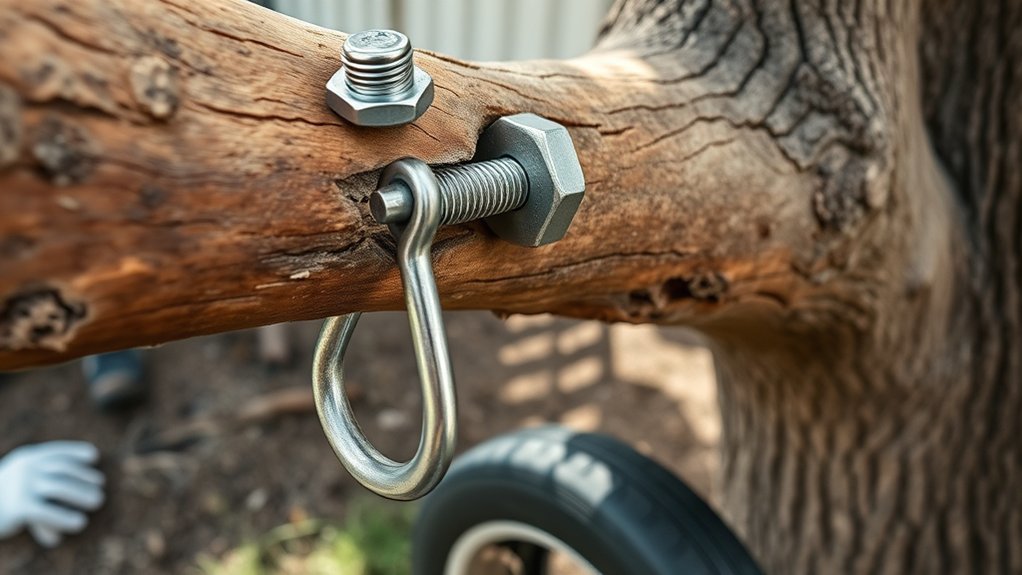
Now place three eye bolts around the tire’s sidewall, spaced evenly so the swing can hold weight safely and feel balanced. Mark each spot, then drill holes with a bit that matches the eye-bolts shaft for a snug fit. Slide each bolt through, add a nut and fender washer, then a second fender washer, lock washer, and nut. Tighten gently but firmly, so your tire swing stays steady and free. Additionally, using a reliable spare tire kit can ensure you’re prepared for unexpected situations.
| Check | What to do |
|---|---|
| Spacing | Keep all three points equal |
| Fit | Use a tight drilled hole |
| Hardware | Choose rated eye-bolts and S-hooks |
| Safety | Aim for 400–600+ pounds total |
Next, put an S-hook through each eye-bolt and close it with Vice Grip pliers so it can’t pop open. You’re building a playful place that welcomes safe movement, confidence, and joy.
Attach the Chains and Top Connector
Now you’ll slip an S-hook through each eye-bolt and attach chains that are strong enough to hold up to 500 pounds. Next, you’ll join the tops of the three chains with a fourth S-hook, and a heavy-duty swivel can help the swing move smoothly. Then you can use a connector link and clip hook to set the tire at a safe, comfy height. Additionally, ensure the chains are made from high-quality materials to prevent wear and tear over time.
Chain Attachment Steps
Start by attaching an S-hook through each eye-bolt on the tire, and use Vice Grip pliers to close each hook tightly so the connection stays secure. These chain attachment steps help you make a tire swing with care and confidence. Then connect one strong chain to each hook; choose durable, 500-pound-rated chain so your swing can hold steady.
| Check | What you want |
|---|---|
| Hook fit | Closed tight |
| Chain strength | 500+ lb rating |
| Load margin | 100-200 lb extra |
| Movement | Smooth and free |
Add a fourth S-hook to join the three chain tops, and include a swivel so the swing turns gently. Finish by double-checking every link. Your safe setup supports joyful, liberating play.
Top Connector Setup
With the tire and side chains ready, you can bring them together at the top. Clip one S-hook onto each eye-bolt, then close each hook tightly with Vice Grip pliers so it won’t pop open. Next, attach a strong chain to every S-hook, and choose chains rated for at least 500 pounds. Now gather the three chains and add a fourth S-hook as the top connector, making one shared lift point for your metal swing. If you include a swivel here, the swing can move freely and won’t twist up. Use a connector link and clip hook to fine-tune the height, and keep the swing at least 12 feet above the ground for open, safe, joyful play.
Secure Load Connections
Attach the chains to the tire’s eye-bolts with S-hooks, and squeeze each hook shut with Vice Grip pliers so it can’t open while you play. Choose chains rated for at least 500 pounds, and keep them the right length for a comfy swing height. Then add a fourth S-hook at the tops of all three chains to make a calm, centered suspension point. A heavy-duty tire swing swivel there helps you move freely and eases stress on the hardware. These secure load connections support safe, joyful motion.
- Check each eye-bolt and hook for a snug fit.
- Test the swing with a careful weight load first.
- Make sure every part feels steady and free.
Hang the Tire Swing on the Branch
Lift the swing onto the chosen branch and make sure it sits on a sturdy limb that’s at least 8 to 10 feet high and strong enough to hold 500 pounds or more. When you hang the tire swing, guide the rope or chain so the tree swing rests evenly and feels calm, not twisted. Leave at least 2 feet of clear space above the ground so little legs can move freely and safely. Tie the rope with a bowline or double figure-eight knot, and check that it grips the tire firmly. If you add a heavy-duty swivel, your swing can turn smoothly and feel more joyful. Take your time, breathe, and trust your careful hands. You’re creating a place for play, confidence, and freedom. After the tire is set, look at the branch, rope, and knots often so your child can keep enjoying the swing with peace of mind. Additionally, ensure that the swing’s setup matches safety standards for optimal enjoyment and security.
Test Weight, Height, and Wear
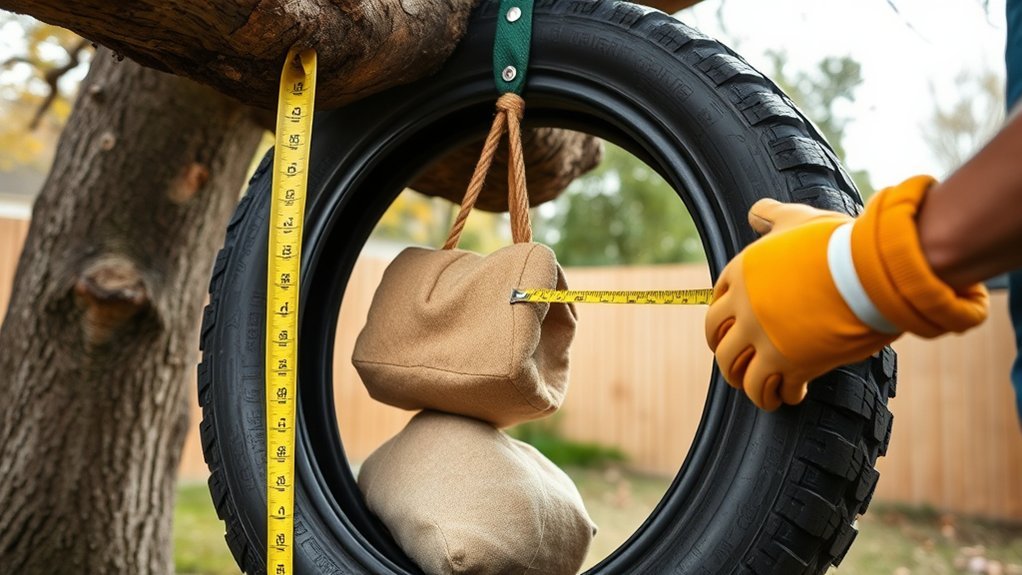
Now you’ll test the swing’s strength to make sure every part can hold at least 400–600 pounds. You’ll also check that it hangs high enough, with plenty of space below and around it so you can swing safely. As you use it, you’ll keep an eye on the chains, eye-bolts, and S-hooks for wear, and you’ll replace anything that looks tired or worn out. Additionally, ensure that the swing’s installation meets safety and performance standards to prevent accidents during use.
Test Weight Capacity
Before anyone hops on, test every part of the tire swing to make sure it can safely hold at least 400 to 600 pounds. You’ll protect kids and grown-ups by checking the test weight capacity of the tire swings’ rope, chain, tire, and knots. Then give the swing a gentle trial with a load that matches your heaviest expected rider or riders. This helps you feel confident, calm, and in charge of safety.
- Press on the seat and attachment points.
- Watch for shifting, slipping, or strain.
- Stop if anything feels weak or loose.
When you test carefully, you create a space where play can feel free, joyful, and secure.
Check Height And Wear
Check the swing’s height and wear so every ride stays safe and smooth. You can check height by making sure the tire hangs at least 12 feet above the ground and still leaves 2 feet of clear space beneath the arc. If it sits too low, adjust the ropes or chains until the swing feels easy and free. Look closely at wear and tear on the tire, attachment points, chains, and eye-bolts. Replace anything cracked, frayed, or bent. Keep all parts rated for 400-600 pounds, including S-hooks and chains, so the swing can hold steady. Then test it by adding weight slowly. This careful check helps you and your child enjoy movement with confidence, safety, and joy.
Frequently Asked Questions
How to Properly Hang a Tire Swing?
Choose a healthy limb 8–10 feet up that can hold 500 pounds or more, then drill ½ inch drainage holes in the tire. Use weather-resistant rope or chains rated for 500 pounds, and hang the swing with 12 feet of clear space around it. Check the tree, hardware, and rope often for wear. This swing safety and tire maintenance help kids play freely, securely, and joyfully.
How to Hang a Hanging Swing?
You can hang a hanging swing by choosing a strong support, then securing your swing with rated hardware and steady knots. First things first, check swing safety by clearing a wide, soft landing zone. Use ropes or chains that fit your child’s size and confidence. Add drainage holes for tire maintenance if needed, and inspect everything often. You’re building a freeing, joyful space where kids can move, play, and feel secure.
How High off the Ground Should a Tire Swing Be?
You should hang a tire swing at least 12 feet off the ground for tire swing safety, with 12 feet of clear space around the landing area. That ideal swing height helps you move freely and land safely. If younger children will use it, you can adjust lower for easier access, but keep full clearance. Check the height often as kids grow, and keep obstacles far away for joyful, confident play.
How Thick of a Branch to Hang a Swing?
Think of the branch like a sturdy hug for your swing. You should choose one that’s at least 8 to 10 inches thick, because branch thickness matters for swing stability and safety. You’ll want a healthy, unbroken branch that can hold at least 200 pounds, with 3 to 4 feet reaching out from the trunk. That gives you room to play, breathe, and feel free while you swing.
Conclusion
You’ve built a tire swing that’s ready for safe, happy play. Double-check the branch, hardware, and chain before every use, because a little care goes a long way. When you test the seat height and weight limits, you help keep kids secure and confident. If the tire shows cracks or wear, replace it right away. With steady checks and gentle supervision, you’ve set the stage for smiles, strength, and backyard fun.

Related Articles

How to Find the Year of a Tire: Read the DOT Date Code Easily
Just spot the DOT code and uncover your tire’s hidden birth date, then find out why that small detail could change everything.
Read More
How Tall Is a 315 75R16 Tire? Exact Height, Width & Dimensions
Beneath the specs, a 315 75R16 tire’s real size may surprise you—discover the exact height, width, and what changes its true measurement.
Read More
How Tall Is a 315 75 R16 Tire? Exact Height, Width & Dimensions
Beneath the numbers lies the true size of a 315/75R16 tire, and the exact fit details may surprise you.
Read More