
How Big Is an Airplane Tire? Size, Weight & Fun Facts
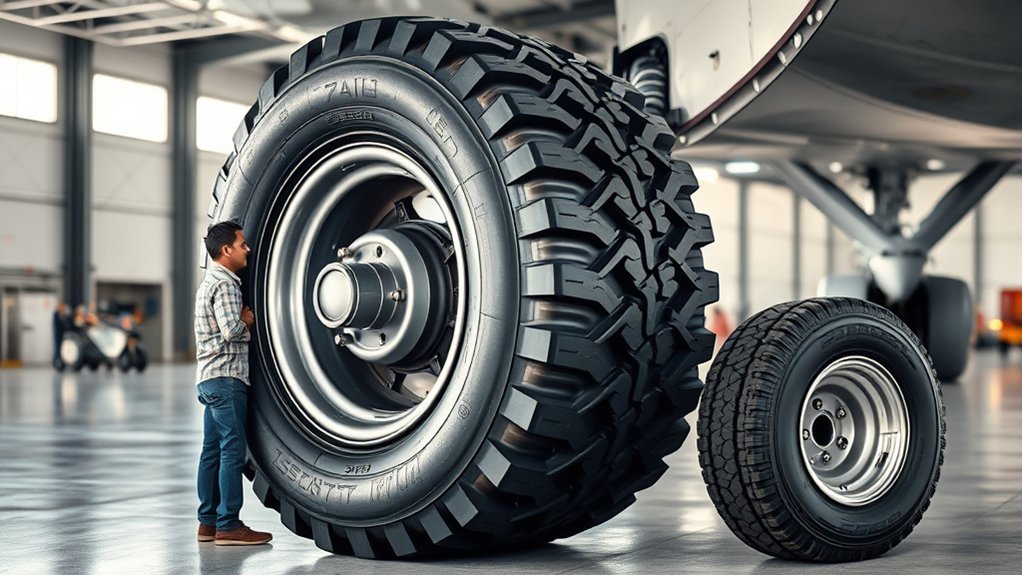
An airplane tire is bigger and tougher than it looks. On a Boeing 737, you’ll see a tire about 27 x 7.75 R15 inches, while an Airbus A380 can use tires over 40 inches in diameter. Depending on the aircraft, each tire may weigh 50 to more than 200 pounds and run near 200 psi. Strong cords, rib tread, and re-treading help them survive brutal landings and long service lives.
Key Takeaways
- Airplane tires vary widely, from about 27 inches on a Boeing 737 to over 40 inches on an Airbus A380.
- They are built for extreme loads, with many airline tires inflated to around 200 psi.
- A typical airplane tire weighs 50 to 100 pounds, while large jets can use tires over 200 pounds.
- Ribbed tread patterns help reduce hydroplaning and improve stability during landing and takeoff.
- Airplane tires can be retreaded several times and are regularly inspected for wear, cuts, and pressure loss.
How Big Is an Airplane Tire?
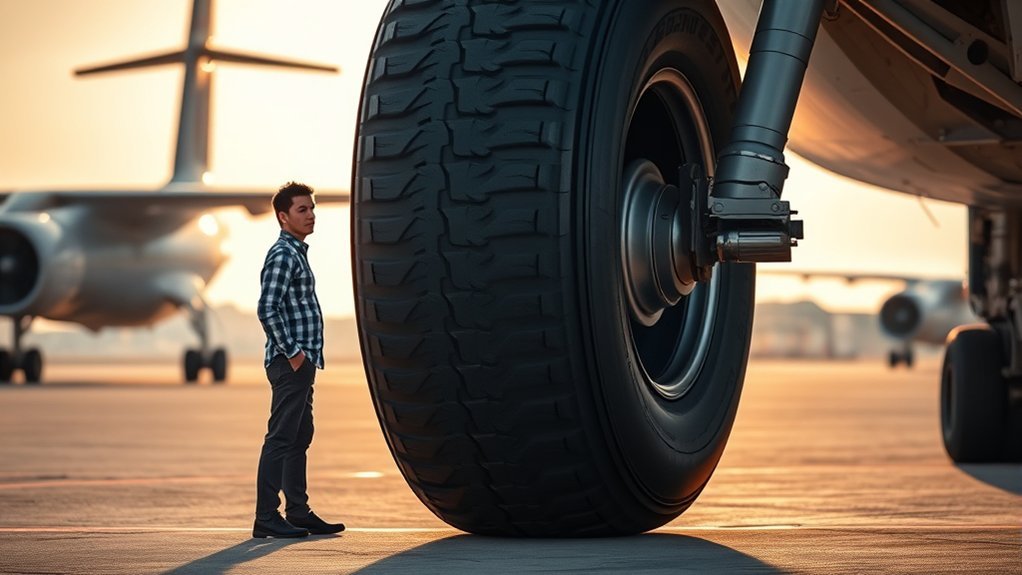
Airplane tire size varies widely, but a typical Boeing 737 tire measures about 27 x 7.75 R15 inches, while much larger aircraft such as the Airbus A380 can use tires more than 40 inches in diameter. You can treat aircraft tires as engineered load-bearing systems, not simple rubber circles. Their dimensions reflect weight, landing speed, and required shock absorption. Older Type I tires from the 1930s often reached 27 inches overall diameter, while Type III designs use broader section widths to improve cushioning at lower pressures. You’ll also see Three-Part Name sizing, which states outside diameter, section width, and wheel diameter, such as 15×6.00-6. These measurements let you compare tire envelopes precisely and understand why bigger airframes demand larger footprints. If you want operational freedom, learn the numbers: tire size tells you how much energy each landing can dissipate and how effectively the wheel can support the aircraft. Additionally, all-season tire performance is crucial for ensuring that tires can withstand varying conditions during takeoff and landing.
Airplane Tire Size by Aircraft Type
Tire dimensions vary by aircraft class, and you can read that difference directly in the way each platform is engineered to carry load and absorb landing energy. When you study airplane tire size by aircraft type, you’ll see a wide spread. A Boeing 737 typically uses 27×7.75 R15 tires, a compact package matched to its mission profile. General aviation aircraft often rely on Type III tires, with 6.00-6 being a common size for light machines. Older Type I standards, from the 1930s, sit near 27 inches in overall diameter. At the other extreme, an Airbus A380 can use tires exceeding 40 inches in diameter, reflecting the scale of the airframe. The Three-Part Name format, such as 15×6.00-6, tells you outside diameter, section width, and rim size, so you can compare options with precision and choose what fits your aircraft’s operating demands. Additionally, the tread design of airplane tires is crucial for performance, as it impacts grip during landings and takeoffs.
Why Airplane Tires Are So Strong
You’ll find that airplane tires stay strong because they operate at very high pressures, often around 200 psi and sometimes higher, which raises their load-bearing capacity. You’ll also see that their structure uses nylon or aramid reinforcing cords beneath the tread to handle landing stresses and resist deformation. That reinforced design helps you maintain traction during touchdown and reduces hydroplaning risk under demanding runway conditions. Additionally, these tires are designed with reinforced sidewalls to withstand the extreme forces experienced during takeoff and landing.
High-Pressure Construction
Built for extreme load-bearing and landing impact, these tires operate at very high internal pressures—typically around 200 psi on airliners, with some designs such as the Concorde reaching about 294 psi. You’re looking at high pressure engineering that turns rubber into a structural asset.
| Parameter | Value |
|---|---|
| Typical airline pressure | 200 psi |
| Concorde pressure | 294 psi |
| Water test limit | 800 psi |
That pressure works with nylon cords or aramid polymer layers to contain the load. Aviation rules push validation further: each tire must survive four times its rated pressure for three seconds. If heat spikes, fuses melt and let the tire deflate in a controlled way, not explode. This precise architecture gives you safer performance and more freedom in demanding flight operations.
Reinforced Landing Design
Those high pressures only work because airplane tires are built for brutal landing loads from the inside out. You rely on reinforced landing design to keep the carcass stable when the wheel hits the runway at high speed. Nylon or aramid cords lock the structure, so the tire can absorb shock without folding. In testing, reinforced tires can take four times their rated pressure for at least three seconds, which gives you a controlled margin during touchdown. The tread pattern isn’t decorative; it channels water, limits hydroplaning, and steadies you in crosswinds. After each cycle, technicians can re-tread the tire up to seven times, extending service life without surrendering performance. That’s engineered resilience, not waste.
How Much an Airplane Tire Weighs
An airplane tire typically weighs 50 to 100 pounds, though the exact mass depends on the aircraft type and tire size. When you examine airplane tires, you’ll see that a Boeing 737 tire weighs about 80 pounds, while larger versions, like those on an Airbus A380, can exceed 200 pounds. That mass isn’t arbitrary. You need robust construction to carry extreme loads and survive demanding landing forces, so the tire uses dense materials and layered reinforcement. The result is a careful balance: enough strength to protect you and the aircraft, but not so much weight that it drags down performance. In practical terms, tire weight affects fuel efficiency and landing dynamics, so every pound matters. Yet manufacturers engineer these tires for high strength-to-weight ratios, giving you durability without unnecessary mass. Additionally, the tread life ratings of these tires are crucial for maintaining safety and performance during operations.
Aircraft Tire Pressure and Inflation
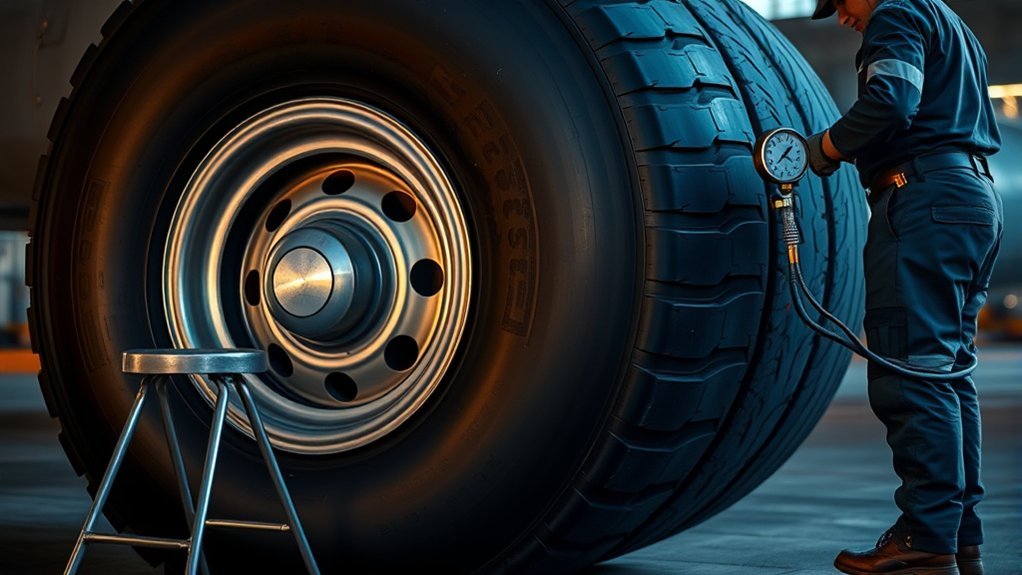
Aircraft tire inflation is engineered for extreme operating conditions, with most airliner tires running at roughly 200 psi and some, such as the Concorde’s main gear tires, reaching about 232 psi. When you evaluate aircraft tire pressure, you’re looking at a system built to carry immense loads with minimal flex.
- You’ll see dry nitrogen used for inflation because it limits thermal expansion and lowers ignition risk.
- During water-fill tests, tires can withstand up to 800 psi, proving exceptional structural margin.
- You should monitor pressure regularly; under-inflation raises heat, stress, and blowout risk, even if failures are rare.
You also benefit from built-in fuses that melt at high temperatures, venting pressure before an explosion can occur. That design supports operational freedom by reducing catastrophic failure modes. In practice, precise aircraft tire pressure management keeps you safer, extends service life, and helps maintain reliable performance under brutal landing conditions. Additionally, proper tire selection ensures optimal performance and safety, similar to how selecting the right tires for a vehicle enhances traction and durability.
Airplane Tire Tread Patterns
You’ll see that airplane tires use rib tread designs to balance wear resistance with directional stability during landing. These circumferential ribs can include water-channeling grooves that move moisture away from the contact patch and reduce hydroplaning risk. In crosswinds and at high touchdown speeds, those tread features help maintain grip and improve landing safety. Additionally, the design of airplane tires often mirrors that of mud terrain tires to enhance performance in adverse conditions.
Rib Tread Designs
Rib tread designs are engineered to improve wear resistance and water management, helping aircraft maintain safety during landings. When you examine rib tread designs, you see a disciplined geometry that supports directional control and efficiency without unnecessary complexity.
- Center Rib Tread (CB): Circumferential ribs boost stability and durability across many airframes.
- Rib Deflector Tread (CD): A center rib with deflector elements helps rear-engined jets manage wet-runway loads.
- Rib Deflector (RD): A central groove with deflectors sharpens traction and safety in wet conditions.
You benefit from these engineered patterns because they reduce hydroplaning risk, improve takeoff and landing performance, and let the tire work with precision. In practice, rib tread designs give you controlled motion, stronger wear life, and a freer margin of operational confidence.
Water-Channeling Grooves
Water-channeling grooves are a critical element in airplane tire tread patterns, directing water away from the contact patch to improve traction and reduce hydroplaning risk during wet landings. You can see how these water-channeling grooves work with rib deflector and center rib designs to control fluid movement while preserving stability. In a Rib Deflector Tread, the center rib and deflectors actively redirect water, helping you maintain control on slick runways. In a Center Rib Tread, circumferential ribs support wear resistance and steady handling during takeoff and landing. Engineers tune tread geometry for high-speed operation, crosswind tolerance, and directional stability. That precision gives you safer, more efficient tire performance and supports the freedom of reliable flight in demanding conditions.
How Airplane Tires Handle Landings?
During landing, airplane tires absorb one of the most severe loads in aviation, often touching down at speeds above 150 knots and briefly skidding before full rolling contact is established. You depend on the landing gear to transfer that shock into the airframe while the tire flexes, grips, and stabilizes the aircraft without losing control.
- Most wear happens at initial touchdown, when drag can create visible smoke and peak thermal stress.
- Regulations require the tire to withstand four times its rated pressure for at least three seconds, proving its structural margin.
- Large aircraft may use extra tires, like the Airbus A380, to spread load and preserve safety if one tire fails.
In practice, you’re riding a system built for disciplined violence: it accepts a brutal impact, then converts it into controlled deceleration. That’s what gives you the freedom to land hard, safely, and repeatedly. Notably, strong wet-weather traction is critical for tire performance during adverse conditions.
Aircraft Tire Maintenance and Re-Treading
Sure! Here’s the revised content following your instructions:
—
Although aircraft tires are built for extreme loads, you still have to monitor wear closely: after roughly 500 landings, many tires need re-treading, and a single casing can often be re-treaded up to seven times if inspections confirm it’s structurally sound. You should track tread depth, cut exposure, and sidewall integrity, then compare findings against manufacturer manuals from Goodyear or Michelin.
| Check | Purpose | Action |
|---|---|---|
| Visual inspection | Find damage | Remove any suspect tire |
| Pressure check | Control stress | Adjust to spec |
| Re-treading review | Extend service life | Approve only sound casings |
This maintenance discipline reduces material demand and cost while keeping performance within aviation safety rules. When you follow scheduled servicing, you preserve reliability, support compliance, and keep your operation freer from avoidable disruption. Re-treading isn’t a shortcut; it’s a controlled lifecycle strategy that lets you extract maximum value from each casing without compromising technical margins. Additionally, utilizing tire sealants can help maintain tire pressure and extend the life of aircraft tires.
—
Let me know if you need any further modifications!
Frequently Asked Questions
What Size Are Airplane Tires?
Airplane tires usually range from about 20 to 50 inches in diameter, depending on the aircraft, so you’ll see compact main-gear tires on a 737 and much larger ones on an A380. You can read the size in a three-part name like 27×7.75 R15. Tire Pressure matters because it directly shapes load capacity, heat, and stability. You’re not just looking at rubber; you’re examining engineered freedom under extreme forces.
Why Don’t Planes Fly Over 40,000 Feet?
You don’t fly much above 40,000 feet because the sky turns into a razor-thin desert of air. At those heights, your jet engines lose efficiency, cabin pressurization gets harder, and oxygen margins shrink fast. These Altitude Limitations force strict safety and performance ceilings. You’d need specialized systems, which raise costs and complexity. Staying lower lets you move freer, safer, and faster through more stable air and favorable jet streams.
How Big Are the Tires on a 777?
A Boeing 777’s main tires measure about 27 inches in diameter and 10 inches wide. You’ll find each tire inflated to roughly 200 psi and rated to carry around 38,000 pounds, so they’re built for extreme loads. You’ve got six main tires plus two nose tires. Tire Materials matter here: reinforced rubber and advanced cords help you push through hard landings with confidence and control.
How Big Is a 747 Airplane Tire?
A 747 tire is about 27 inches in diameter and 11 inches wide—almost the size of a small suitcase rolling past your feet. You’re looking at a Type III tire, weighing roughly 60 pounds and built to handle 205 psi. With 16 tires total, you get strong landing stability. For Tire Maintenance, you’ll track wear carefully, because each tire can last about 500 landings before re-treading.
Conclusion
So, when you look at airplane tires, you can see they’re far more than rubber circles. You now know their size varies by aircraft, their weight is substantial, and their strength comes from careful engineering, high pressure, and strict maintenance. From tread design to re-treading, every detail helps them absorb huge landing forces safely. Next time you watch a jet touch down, picture a blacksmith’s anvil meeting the runway—because that’s how hard these tires work.

Related Articles
How Does a Tire Get a Bubble? Causes & Why You Need to Act Fast
Diving into tire bubbles reveals the hidden damage behind them—and why ignoring one could leave you stranded.
Read More
Does Insurance Cover Tire Replacement? What’s Actually Covered
Tire replacement isn’t usually covered—unless your policy has a surprising exception worth knowing.
Read More
Why Put a Plastic Bottle on Your Tire? The Viral Trick Explained
A viral plastic bottle on your tire may signal more than you think, but does it actually protect you or warn of danger?
Read More