Are Fat Tire Bikes Harder to Pedal? Speed vs. Traction Compared

Yes, fat tire bikes are harder to pedal on pavement because their wide tires, lower pressure, and heavier frames create more rolling resistance and drag, so you use more energy to keep speed. You’ll notice they feel slower on smooth roads, but they give you much better traction, stability, and control on sand, snow, mud, and rough trails. E-bikes reduce that effort with motor assist, and the trade-off becomes clearer when you compare terrain-specific performance.
Key Takeaways
- Fat tire bikes are harder to pedal on pavement because wider tires create more rolling resistance and need extra effort.
- Lower tire pressure improves traction but increases friction, making pedaling feel heavier.
- They are usually slower on smooth roads because their design favors grip and stability over speed.
- Fat tires excel on snow, sand, mud, and rough trails by spreading weight and improving control.
- E-bikes reduce the pedaling burden, but proper tire pressure still matters for efficiency and battery life.
Are Fat Tire Bikes Harder to Pedal?
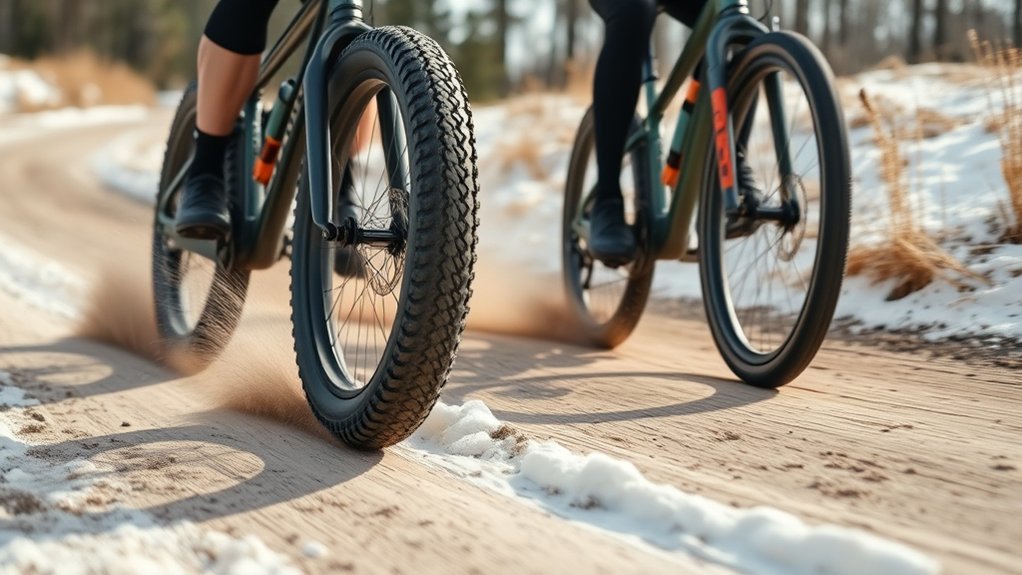
Yes—fat tire bikes are generally harder to pedal than standard bikes because their wider tires create more rolling resistance and a larger contact patch with the ground. That means you’ll notice fat tire bikes harder when you’re pedaling a fat bike on mixed terrain. The higher rolling resistance comes from lower pressures, which improve traction but also increase friction. You also have to move extra weight, often 70–90 lbs, so every acceleration demands more energy. On smooth surfaces, that load reduces speed and efficiency and can make long rides feel taxing, especially if you’re carrying momentum through repeated starts. If you want liberation without constant strain, an electric model’s motor assist can offset the work, especially on climbs or loose ground. In practice, you gain control and grip, but you pay with more effort at the pedals. Additionally, the puncture resistance of fat tire bikes plays a significant role in maintaining performance on rough trails.
Why Fat Tire Bikes Feel Slower on Pavement?
On pavement, fat tire bikes feel slower because their design trades speed efficiency for grip and comfort. You’re pushing wider tires, often 3.8 to 5 inches, and that extra contact patch raises rolling resistance on paved surfaces. The lower tire pressure that gives you plush compliance also increases friction, so each pedal stroke returns less speed. Add the bike’s weight—often 70 to 90 lbs—and you need more energy to accelerate and to hold momentum. At higher speeds, the upright position increases aerodynamic drag, so the bike asks more of you to maintain pace. These losses don’t mean fat tire bikes aren’t effective; they’re good for traction when you need traction on loose terrain. But on smooth roads, traction isn’t the limiting factor—efficiency is. You feel that mismatch as quicker fatigue and a slower, less liberated ride.
How Tire Pressure Changes Pedaling Effort?
When you run fat tires at low pressure, you increase the contact patch and rolling resistance, so each pedal stroke requires more effort. As you raise PSI, the tire deforms less, friction drops, and pedaling becomes easier. On hard, even surfaces, higher pressure usually gives you the most efficient transfer of power. Additionally, the large-volume design of fat tires helps enhance stability when riding on rough terrain.
Low Pressure, More Effort
Lower tire pressure increases a fat tire bike’s rolling resistance, so you have to put in more effort to keep it moving. With fat tires, 5-20 PSI expands the contact patch, boosting grip on soft surfaces but raising drivetrain load. You’ll feel that drag when you try to maintain speed, especially on hard ground where traditional tires roll more freely.
- Snow: wide prints biting into a fragile crust.
- Sand: a floating footprint that resists sinkage.
- Pavement: a squashed tire that steals momentum.
If you ride with pedal assist, low tire pressure can also pull more energy from the battery, so your range drops faster. For liberation through terrain, tune tire pressure to the surface, not to habit.
Higher PSI, Easier Pedaling
Higher tire pressure makes a fat tire bike easier to pedal on hard surfaces because it lowers rolling resistance and reduces the energy needed to keep the bike moving. When you raise tire pressure to about 25–30 PSI, your fat tires deform less, so you gain easier pedaling and can sustain higher speeds on paved surfaces. You sacrifice some traction, but on firm ground that tradeoff often improves efficiency. If you ride mixed terrain, 15–20 PSI usually gives you a better balance of control, comfort, and efficiency. Set tire pressure too low, and you’ll work harder; set it correctly, and you’ll free your legs from unnecessary drag. Proper tire pressure also helps limit battery drain on e-bikes.
Why Fat Tire Ebikes Feel Easier to Ride?
When you ride a fat tire e-bike, the motor assist cuts the torque you need to supply, so each pedal stroke feels mechanically easier. You’ll notice the bike’s extra mass less because the battery and motor offset that load during acceleration and cruising. On hills, the assist multiplies your input, which reduces climbing force requirements and makes steep sections far more manageable. This is similar to how a durable 6PR tubeless construction enhances performance and stability in off-road tires, making them easier to handle in rugged conditions.
Motor Assist Reduces Effort
Fat tire e-bikes feel easier to ride because the motor offsets the extra rolling resistance and mass of the wider tires. You get motor assist that cuts pedaling effort, so the fat tire e-bike stays responsive on climbs, rough paths, and soft ground. With electric assist, you can tune support levels to match terrain, conserving power while preserving control and riding efficiency. In throttle mode, you can move without pedaling, which helps when the weight of fat tires would otherwise demand more from you.
- A steep trail under your wheels
- A heavy bike gliding forward
- Your cadence staying smooth
Weight Feels Less Noticeable
Despite weighing roughly 70 to 90 pounds, fat tire e-bikes often feel easier to pedal because the motor offsets much of the load. On your ride, that means the weight feels less noticeable, especially when the electric bike is already carrying speed. Fat tires deliver a broad contact patch, so you get better traction and less wheel slip on loose or uneven ground. Their lower tire pressure, usually 5 to 20 PSI, adds shock absorption and smooths impacts before they reach you. That damping effect reduces micro-fatigue, so you can maintain momentum with less effort. Instead of fighting mass directly, you benefit from stability, grip, and assistance working together. The result is a controlled, efficient ride that can feel lighter than the scale suggests.
Hills Become Easier To Climb
Hills feel far less demanding on a fat tire e-bike because the motor can deliver 750W to 1000W of assist, reducing the torque you need to generate on steep grades. You keep momentum with electric assist while fat tires increase traction, so climbing stays controlled instead of punishing. Low pressures expand surface contact, which improves grip and stabilizes power transfer on loose pavement or dirt. The robust frame also carries load without flexing, letting you stay balanced under stress.
- A steep grade holds steady beneath your tires.
- Knobby fat tires bite into the incline.
- Your cadence rises while the motor does the heavy work.
That combination frees you from grinding effort and makes ascent feel efficient, measurable, and surprisingly calm.
Where Fat Tire Bikes Beat Standard Bikes?
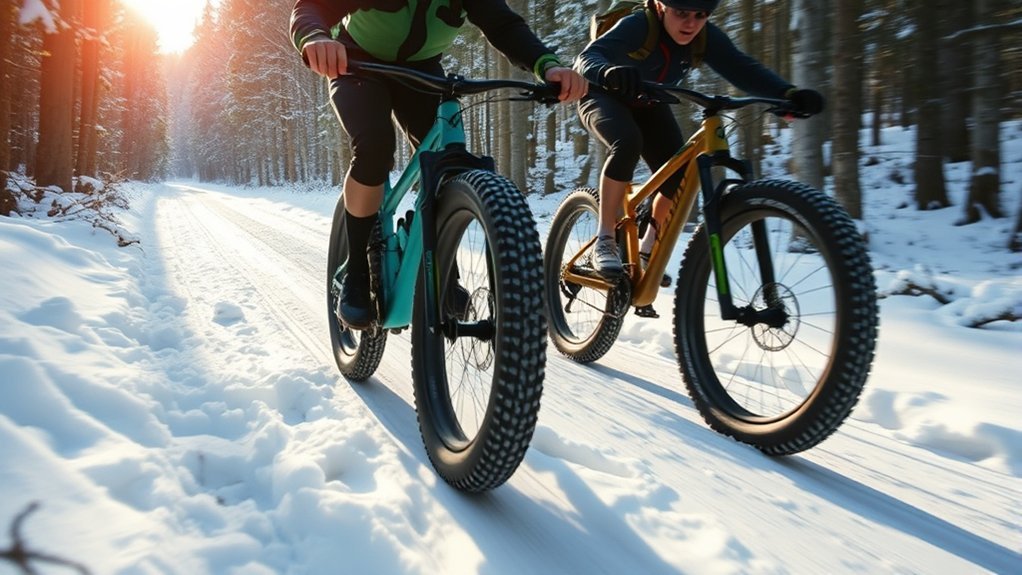
Where fat tire bikes outperform standard bikes is on loose and uneven terrain, where their wider contact patch improves traction and stability on snow, sand, and mud. You get more control because the fat tires distribute your weight over a larger area, so the wheel sinks less and keeps moving. On uneven surfaces, the extra air volume adds shock absorption, smoothing impacts from rocks, ruts, and potholes without relying on complex suspension. Lower pressure increases grip and lets you steer with precision when the ground shifts under you. Compared with standard bikes, you can carry heavier loads more confidently, since robust frames support substantial rider and cargo weight. On paved surfaces, rolling resistance rises, so speed drops, but that tradeoff buys freedom where standard bikes lose grip. If your route includes unstable terrain, these bikes give you practical advantage, mechanical resilience, and a more controlled ride. Additionally, they offer improved traction in various conditions, making them versatile for all types of adventures.
When Fat Tire Bikes Work Best?
Fat tire bikes work best when the surface is soft, unstable, or constantly changing. You get the most from fat tires in snow, sand, and mixed terrain, where the larger contact patch stops sinking and preserves traction. On rough trails, low pressure—often 5 to 15 PSI—improves shock absorption, so you can stay composed over roots, ruts, and broken edges.
Fat tires excel on soft, shifting ground, where low pressure boosts traction, comfort, and control.
- Snow under your wheels, with a stable track instead of deep cut-ins
- Sand ahead, where the bike floats rather than buries itself
- A cracked path with potholes, where grip stays predictable
You’ll notice more rolling resistance on paved surfaces, so speed drops compared with narrow tires. Even so, the payoff is control, comfort, and range. If you value freedom over efficiency, fat tires let you ride year-round across conditions that defeat ordinary bikes, while the frame can still carry heavy riders or cargo confidently. Additionally, tire performance is crucial for enhancing traction and handling in various terrains.
How to Choose a Fat Tire Bike?
When you choose a fat tire bike, start with the tire width and match it to the terrain you plan to ride most often. On sand or snow, wider fat tire bikes, around 4.5 to 5 inches, deliver more traction and stability; on mixed paths, 3.8 to 4.2 inches can feel faster and more efficient. Check weight capacity next: most frames handle 300 to 400 lbs, so you can carry cargo without compromising control. Prioritize adjustable tire pressure, because 5 to 30 PSI lets you tune grip, float, and comfort in real time. If your routes include climbs, choose motor support in the 750W to 1000W range to reduce pedal strain and keep momentum. Finally, inspect robust frames and welds; they preserve alignment under load and across rough terrain. The right setup gives you freedom to ride farther, with less resistance and more command over the trail. Additionally, consider the tread design of the tires, as it can significantly affect traction and performance on various surfaces.
Frequently Asked Questions
What Are the Disadvantages of Fat Bikes?
Fat bikes can be heavier, so you’ll feel worse weight distribution and slower speed variations on pavement. You’ll also face higher maintenance costs because oversized tires and parts cost more. If you don’t manage tire pressure carefully, you’ll lose efficiency and control. Their terrain adaptability improves traction, but that tradeoff can reduce riding comfort on long rides. Stability factors help in soft terrain, yet they don’t fully offset the extra effort.
How Much Harder Is It to Pedal a Fat Tire Bike?
A fat tire bike can feel 10–30% harder to pedal than a standard bike, sometimes more on pavement. You’ll notice the irony: better traction control and terrain adaptability cost you pedal efficiency. Wider tire width, low pressure, and heavier weight distribution raise rolling resistance, so your riding experience demands more energy expenditure. On climbs, you may work noticeably harder; on loose terrain, you’ll reclaim control and freedom.
Are Fat Bike Tires Harder to Pedal?
Yes, you’ll usually find fat bike tires harder to pedal on pavement because tire grip and terrain impact raise rolling resistance. Your bike weight also cuts pedal efficiency, especially at low tire pressure, where traction improves but drag rises. In practice, your rider experience depends on surface and gear ratio: soft ground feels easier, while smooth roads demand more effort. You can offset some loss with smarter gearing and cadence.
Is It Easier to Balance on a Fat Tire Bike?
Yes, you’ll usually find it easier to balance on a fat tire bike because its bike stability improves weight distribution across rough riding surfaces. You might worry the extra width feels clumsy, but its handling characteristics often reduce wobble on terrain challenges. With better traction and lower pressure, you can apply balance techniques more confidently, and your rider experience feels freer, steadier, and more controlled on uneven ground.
Conclusion
So, are fat tire bikes harder to pedal? Yes—especially on pavement, where their broad, soft contact patch creates more rolling resistance and can feel like dragging an anchor. But when you lower tire pressure, match the terrain, and use electric assist, they can glide over sand, snow, and loose trails like a tank with ballet shoes. You’ll trade speed for traction, but if conditions demand grip, a fat tire bike can pay off.

Related Articles
What Is a Steer Tire? Complete Guide & Best Options
Just what makes a steer tire different from the rest, and which options deliver the best control, grip, and durability?
Read More
What Does 98V Mean on a Tire? Load, Speed & Rating Guide
Most drivers see 98V on a tire and miss what it really means—discover the load and speed limits before choosing your next set.
Read More
What Does 107V Mean on a Tire? Load, Speed & Rating Guide
I’ll explain what 107V means on a tire so you can decode load and speed ratings and know exactly what to check next.
Read More