What Does 95W Mean on a Tire? Load, Speed & Rating Guide
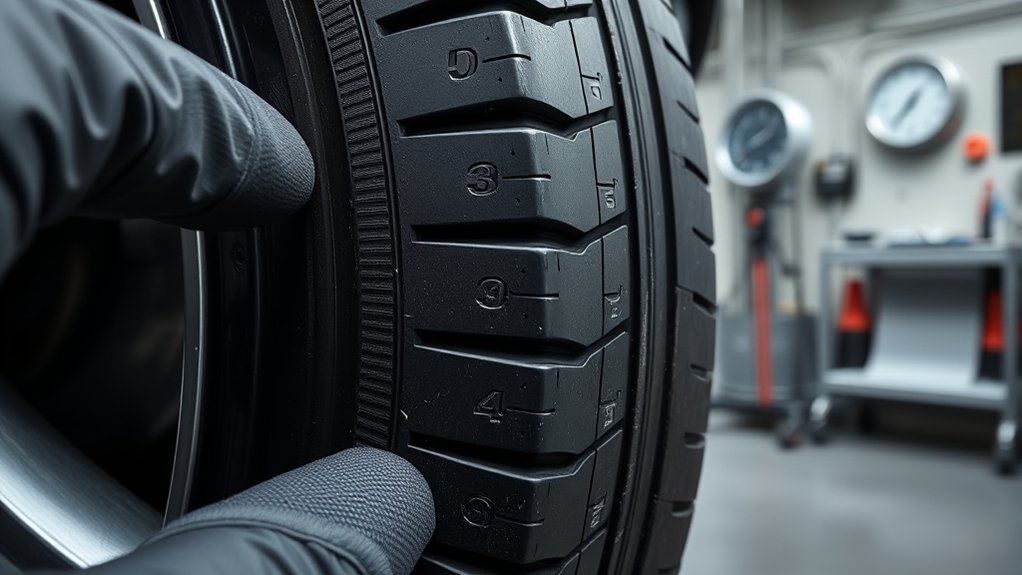
A tire marked 95W means the 95 load index and W speed rating. You can expect about 1,521 pounds of load capacity per tire when properly inflated, and a 168 mph sustained speed rating under ideal conditions. That combination suits performance-oriented vehicles, but you should always match your vehicle’s required load and speed specs. If you compare ratings and placement, you’ll see why the right tire code matters more than it first appears.
Key Takeaways
- 95W combines a load index of 95 and a W speed rating on a tire sidewall.
- 95 load index means the tire can carry about 1,521 pounds when properly inflated.
- W speed rating means the tire is rated for sustained speeds up to 168 mph under ideal conditions.
- Both ratings should meet or exceed your vehicle’s manufacturer specifications for safety and performance.
- Mixing different load or speed ratings can reduce handling, increase wear, and compromise safety.
What Does 95W Mean on a Tire?
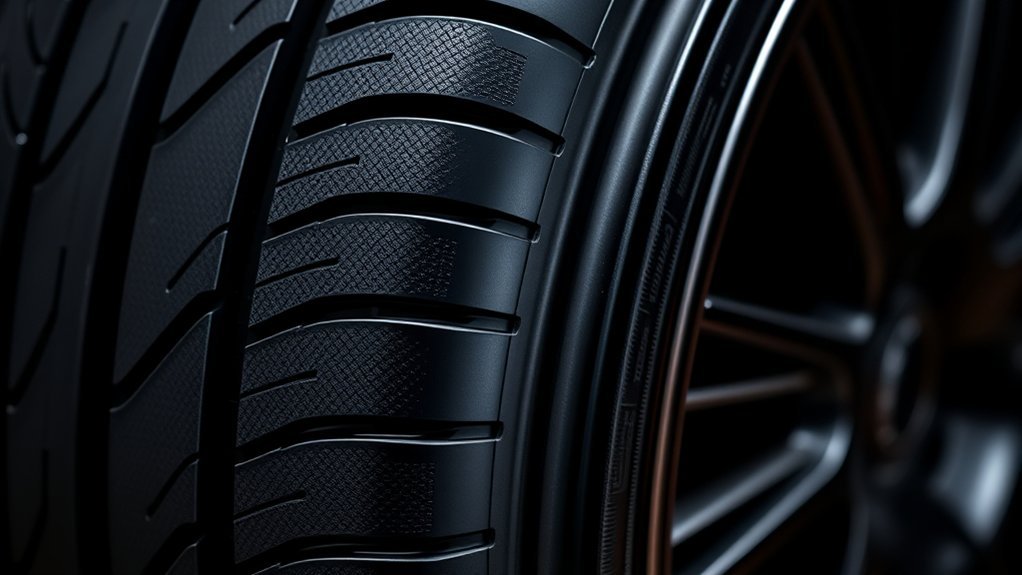
A tire marked 95W tells you two critical performance limits: 95 is the load index, meaning the tire can carry about 1,521 pounds when properly inflated, and W is the speed rating, indicating it’s rated for sustained speeds up to 168 mph under ideal conditions. You read this tire designation to verify that the tire matches your vehicle’s demands. The load index tells you the tire’s maximum load capacity, while the speed rating tells you the safe speeds it can sustain without excess stress. On many passenger vehicles, 95 is a practical rating, and W often appears on high-performance tires built for precise, fast driving. When you understand 95W, you protect vehicle safety and keep performance aligned with design. Choose tires with ratings that meet or exceed your real-world needs, so you stay in control and your machine answers your intent. Additionally, opting for tires with a higher UTQG rating can enhance overall durability and performance.
How the 95 Load Index Works
The 95 load index means your tire can carry up to about 1,521 pounds when it’s properly inflated. You need to match that capacity to your vehicle’s specified weight requirements, since a lower index can reduce safety and handling. In practice, the load index tells you whether the tire’s load rating is sufficient for reliable operation. Additionally, it’s important to consider the tire’s UTQG rating, which provides insight into treadwear and performance.
95 Load Capacity
When you see 95 in a tire load index, it means that tire can support about 1,521 pounds when it’s properly inflated. That load index translates to a specific load capacity, so you’re not guessing about maximum load. You can treat 95 as a precise weight rating for one tire under defined conditions. Because the index sits within the passenger range of 70 to 110, it helps you compare capacity with other ratings. Using the correct 95 rating supports safety by helping your vehicle carry its intended weight without overload. If you mix load indexes, you can compromise performance and create uneven wear. Read the number as a technical limit, not a suggestion.
Matching Vehicle Requirements
If your vehicle calls for a 95 load index, that rating tells you each tire can carry about 1,521 pounds when properly inflated, which makes it a practical fit for many passenger vehicles. You should match the 95 load index to the vehicle manufacturer’s tire size and speed rating specifications in your owner’s manual. This matching protects performance and safety by keeping the load within the chassis’ design limits. Because 95 sits mid-range in the 70 to 110 passenger-car scale, it often suits standard sedans and crossovers. Keep tire pressure at the specified level; underinflation reduces capacity and can overwork the casing. If you choose a lower load index, you risk handling loss, heat buildup, and shortened tire life.
Load Index Meaning
A 95 load index means each tire can safely support about 1,521 pounds at the correct inflation pressure, so it directly defines the tire’s maximum carrying capacity. When you read load index 95, you know your passenger vehicles need a tire rated for that weight to preserve safety and reliability. Load index numbers usually run from 70 to 110, and higher values mean greater capacity. If you choose replacement tires, match this specification exactly to keep peak performance and avoid handling issues. A lower load index can force the tire beyond its maximum load, accelerate tire wear, and create safety risks. By respecting the rating, you keep your vehicle stable, your load supported, and your driving freedom intact.
What the W Speed Rating Means
The W speed rating means a tire is engineered to safely sustain speeds up to 168 mph (270 kph) under favorable conditions. When you see a W speed rating, you’re reading a precise signal in the tire speed rating system, not a vague marketing claim. Manufacturers validate it through laboratory testing that simulates heat, stress, and force at the maximum speed. This rating usually suits high-performance vehicles, where grip and handling matter under load and at velocity. For you, that means better stability and safety when you drive hard, especially in sports cars built for controlled, aggressive use. Keep in mind that the W mark addresses speed capability only; your tire’s load index still determines how much weight it can carry. Under ideal conditions, the rating helps you choose tires that match your driving demands, giving you the freedom to exploit performance without exceeding the tire’s engineered envelope. Additionally, understanding tire load index is crucial for ensuring your tires can handle the weight of your vehicle effectively.
How 95W Compares to Other Tire Ratings
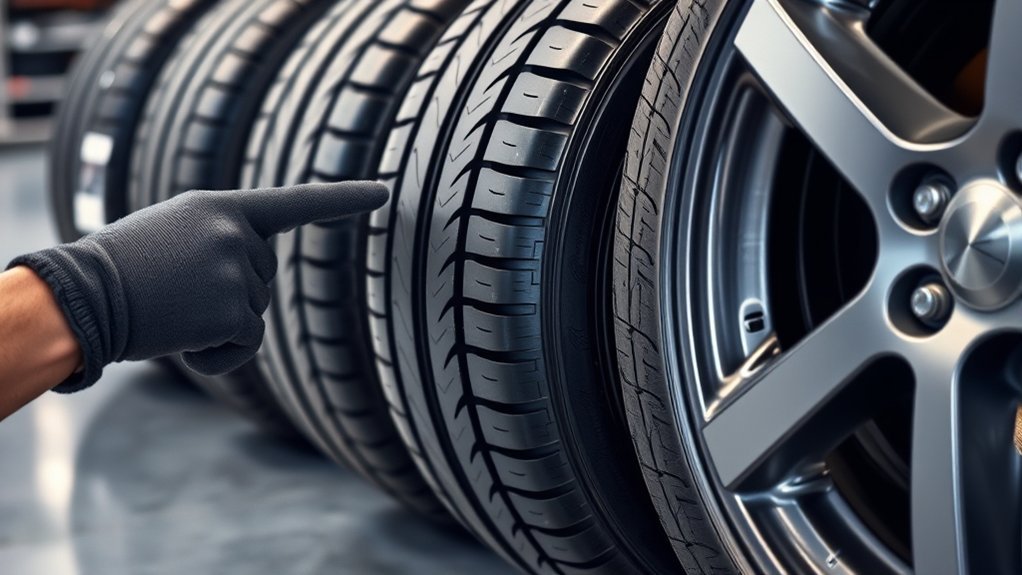
When you compare 95 to lower load indexes like 91, you get a higher load capacity, about 1,521 pounds versus 1,356 pounds, so the tire can handle more weight. The W speed rating also exceeds H and V, allowing sustained speeds up to 168 mph, which puts it in a higher performance category. In practice, you’re looking at a tire that balances stronger load support with faster-speed capability for sporty or high-performance vehicles. Additionally, this rating enhances traction features that are crucial for optimal performance in various driving conditions.
Load Index Comparison
A load index of 95 means the tire can carry up to about 1,521 pounds when properly inflated, which places it below a load index of 100, rated for about 1,764 pounds. In a load index comparison, the 95 load index gives you a precise maximum load capacity and a defined safe carrying weight for your vehicle’s setup. You should match tire specifications to vehicle weight so you don’t overtax the tire structure. Passenger-vehicle load indexes usually run from 70 to 110, and higher load indexes suit heavier loads. Tires with a 95 rating are common on mid-sized cars, while higher load indexes appear on SUVs and trucks. When you choose correctly, you protect performance on the road and keep your mobility under your control.
Speed Rating Differences
Compared with lower speed ratings like H and V, a W rating means the tire is built to sustain speeds up to 168 mph, so you get greater high-speed stability, heat resistance, and handling precision. In 95W, the load index 95 and W speed rating work together to match performance tires to your tire size and vehicle performance goals. H-rated tires top out at 130 mph, and V-rated tires reach 149 mph, so the speed rating differences are significant. When you choose 95W, you’re selecting a maximum speed capability that supports controlled response under load. Don’t mix ratings across an axle; mismatched tires can weaken safety and blur steering feel. If you want freedom at speed, keep all four tires aligned in spec.
Why Tire Load and Speed Ratings Matter

Tire load and speed ratings matter because they define the limits your tire can safely handle in real-world use. When you read a load index of 95, you know the tire supports a maximum load of about 1,521 pounds when properly inflated. A W speed rating tells you it can sustain 168 mph under controlled conditions. You need both values to match your vehicle’s performance requirements because tire performance depends on weight, speed, and driving conditions working together. If you choose mismatched ratings, handling can degrade, heat can build, and safety features may be overwhelmed. That’s why you should follow manufacturer recommendations instead of guessing. These ratings aren’t arbitrary labels; engineers verify them through rigorous laboratory testing that simulates real use. For you, that means better reliability, stronger control, and more freedom to drive confidently, especially during high-performance driving where margins matter most. Additionally, understanding all-season tire performance can help you select the right tires for your driving needs.
Where to Find Tire Size and Rating Information
You can usually find your tire size and rating information in a few reliable places, starting with the driver’s side door jamb, where a sticker lists the manufacturer’s recommended specifications. Check there first for tire size, load index, and speed rating. Your owner’s manual often repeats those numbers and explains tire compatibility for replacement tires.
| Location | What you’ll see |
|---|---|
| Driver’s side door jamb | Manufacturer’s specifications |
| Sidewall | Tire size information and code |
| Owner’s manual | Approved tire size, speed rating |
You can also read the sidewall on your current tire; the size code usually ends with the load index and speed rating. If you need a second check, use online lookup tools with your vehicle’s make and model. Cross-reference every source before you buy replacement tires. That simple audit helps you protect performance, preserve control, and keep your mobility on your terms. Additionally, ensuring that you choose tires with the appropriate load rating is crucial for safety and performance.
Can You Drive on a Different Tire Rating?
Can you run a vehicle on mixed tire speed ratings? You can, but you shouldn’t treat it as equivalent to matching tire ratings. When you mix tire ratings, the vehicle’s effective speed rating drops to the lowest tire, and that can compromise safety and handling. Mismatched speed ratings also increase wear and can reduce braking and cornering performance. If lower-rated tires sit on the front axle, you may trigger oversteer, which makes control less predictable at the limit. For liberation from guesswork, check your vehicle manual and tire specifications before you combine tire ratings. Manufacturers test for ideal performance with uniformity across all four tires, because consistent tire ratings support stable behavior under load, heat, and steering input. If you want the sharpest response and the most reliable safety margin, keep the tire ratings aligned and avoid mismatched speed ratings whenever possible for dependable handling on every drive. Additionally, a tire’s load index is crucial for ensuring it can support your vehicle’s weight, further emphasizing the importance of matching specifications.
How to Choose the Right Tire Rating for Your Vehicle?
Choosing the right tire rating starts with your vehicle’s required load index and speed rating, since both must meet or exceed the manufacturer’s specifications for safe operation. Check the owner manual or the driver’s-side door jamb sticker, then verify tire specifications before tire selection. If your vehicle calls for 95W, the 95 load index supports about 1,521 pounds per tire, while the W speed rating allows 168 mph. You don’t need more rating than required, but you mustn’t go lower. Higher speed ratings can improve grip, handling, and performance, yet they may reduce tread life. Choose based on how you drive, but keep safety first. Maintain uniformity across all four tires by matching load index and speed rating, because mixing ratings can disrupt balance, handling, and overall control. When you align the tire with the vehicle manufacturer’s limits, you preserve precise response and free the vehicle to perform as intended. Additionally, understanding tire performance in rain and snow can help you select the best tire for your driving conditions.
Frequently Asked Questions
Is W or V Better for Tires?
W is better if you prioritize tire performance, speed ratings, and high-speed stability; V suits less aggressive driving conditions. You should compare load capacity, tire durability, and weather suitability, since brand comparisons and tread patterns change results. Check inflation pressure and noise levels too, because they affect control and comfort. Choose the rating that matches your vehicle’s demands, not just the highest number, so you’re driving with precision and autonomy.
What’s the Difference Between 95Y and 95W Tires?
95Y and 95W share the same Tire Load, so you’re not giving up strength; 95Y simply carries a higher Speed Ratings limit than 95W. You’ll get more Tire Performance and a bit more margin in demanding Driving Conditions, but Tire Safety still depends on correct Tire Selection, Tire Maintenance, and Tire Compatibility. Tire Brands may vary, yet 95Y often trades some Tire Lifespan for sharper high-speed response.
What Is the Difference Between 95W and 95V Tyres?
You’ll get the same load capacity with 95W and 95V, but 95W has a higher speed rating, so it supports faster driving and often better tire performance. You’ll notice sharper handling characteristics, stronger temperature resistance, and sometimes improved road grip from its tread design. A 95V tire usually favors slightly better fuel efficiency, lower road noise, and adequate wear resistance. Match seasonal suitability to your vehicle’s specs.
What Is the Difference Between 95H and 95V?
The key difference is that 95H and 95V share the same load rating, but 95V delivers higher speed performance. You’ll see 95H rated to 130 mph, while 95V reaches 149 mph, so your tire specifications affect handling characteristics, tire safety, and tire maintenance. Choose proper tire inflation, tread patterns, and weather conditions carefully; V tires can slightly reduce fuel efficiency, but they’re built for freedom at speed.
Conclusion
So, what does 95W mean on a tire? It tells you your tire carries a load index of 95 and a W speed rating—numbers that matter more than they first appear. Like a finely tuned machine, your vehicle depends on the right match to perform safely and efficiently. When you check tire ratings, you’re not just reading code; you’re protecting handling, stability, and roadworthiness. Choose wisely, because the right rating isn’t optional.

Related Articles

What Does 99W Mean on a Tire? Load, Speed & Rating Guide
Curiouser than it looks, 99W reveals tire load and speed limits—and why choosing the right rating could matter more than you think.
Read More
What Is a Ev Compatible Tire? Complete Guide & Best Options
Keen to know what makes an EV compatible tire different—and which options actually boost range, comfort, and grip for your vehicle.
Read More
What Does 103T Mean on a Tire? Load, Speed & Rating Guide
Just what does 103T mean on a tire, and why does it matter for safety, performance, and your next tire choice?
Read More