
What Does 95V Mean on a Tire? Load, Speed & Rating Guide
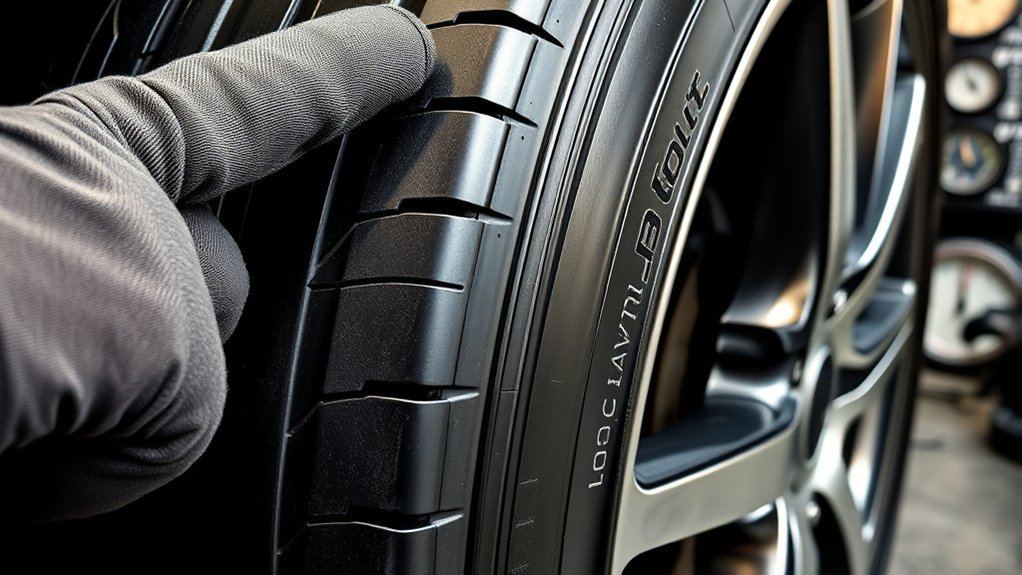
A 95V tire has a load index of 95 and a V speed rating. Load index 95 corresponds to a standardized maximum load capacity of 1,521 pounds (690 kg) per tire under the tire’s specified load and inflation conditions, while V is speed-rated up to 149 mph (240 km/h) under controlled test conditions. You’ll usually see the code at the end of the tire size, such as P215/65R15 95V.
Last updated: August 18, 2026
Quick Answer
A 95V tire has a load index of 95, corresponding to 1,521 pounds per tire, and a V speed rating, meaning it is rated up to 149 mph in controlled conditions. Before replacing tires, use the vehicle placard to confirm tire size and cold inflation pressure. Check the owner’s manual or manufacturer fitment information for the required load index and speed rating if those ratings are not shown on the placard.
Key Takeaways
- 95 is the tire’s load index, corresponding to a standardized maximum load of 1,521 pounds (690 kg) per tire under specified conditions.
- V is the speed rating, equal to 149 mph (240 km/h) under controlled test conditions.
- The code usually appears after the tire size, as in P215/65R15 95V.
- Use the vehicle’s door-jamb Tire and Loading Information Label to confirm tire size and cold inflation pressure, and check the owner’s manual or manufacturer information for required load and speed ratings.
- Do not use a lower load index or speed rating unless your vehicle manufacturer or a qualified tire professional confirms it is appropriate. Lower-speed-rated winter tires can be a special case when manufacturer guidance permits them.
What Does 95V Mean on a Tire?
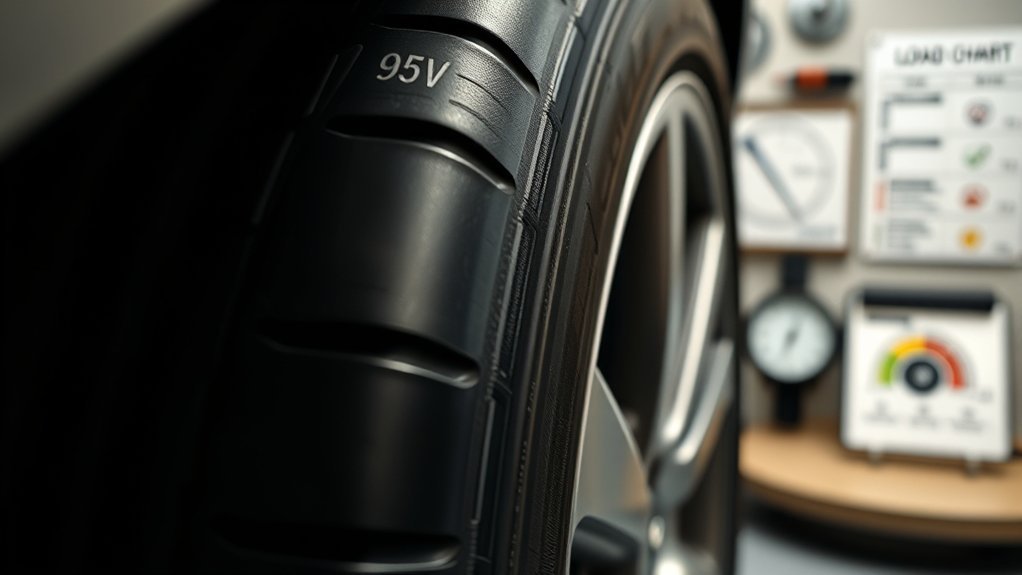
A tire marked 95V tells you two important specifications:
| Code | What It Means | Rating |
|---|---|---|
| 95 | Load index | 1,521 lb / 690 kg per tire |
| V | Speed rating | 149 mph / 240 km/h |
The load index and speed rating are part of the tire’s service description. They help you confirm whether a replacement tire can support the required load and meet the performance rating specified for the vehicle. Current Tire Rack load-index data lists 95 as 1,521 pounds (690 kg), while Goodyear’s speed-rating chart lists V at 149 mph (240 km/h).
Warning: A V speed rating is not a recommendation to drive 149 mph. It is a controlled rating for tire capability. Always follow posted speed limits, road conditions, and your vehicle manufacturer’s tire requirements.
How Does the 95 Load Index Work?
The 95 load index corresponds to a standardized maximum load capacity of 1,521 pounds (690 kg) per tire under the tire’s specified load and inflation conditions. The number applies to each tire, not to the whole vehicle.
For example, four tires with a 95 load index have a combined rated tire capacity of 6,084 pounds. That does not mean your car can safely carry that much weight. Your vehicle’s safe load limit depends on the manufacturer’s gross vehicle weight rating, axle ratings, suspension, brakes, tire specifications, and placard information.
Load Capacity Meaning
A tire’s load index is a standardized number that points to a maximum carrying capacity. A higher load index generally means a higher carrying capacity, but you should not choose tires by load number alone. The tire must also match the required size, construction, load rating, speed rating, and inflation requirements for your vehicle.
- Find the tire size and service description on your current tire sidewall.
- Check the driver’s side door-jamb label for the required tire size and cold inflation pressure, then check the owner’s manual or manufacturer fitment information for additional load or speed-rating requirements.
- Choose replacement tires that meet or exceed the required load index unless the vehicle manufacturer says otherwise.
Does 95V Mean Standard Load or XL?
No. The 95V service description identifies the load index and speed rating only. SL for Standard Load and XL for Extra Load are separate tire markings. Two tires can share a 95V service description while having different construction or inflation requirements, so check the complete size and load-range marking rather than choosing from 95V alone.
Note: The tire sidewall may also show terms such as SL for Standard Load or XL for Extra Load. Do not assume a 95V tire is correct just because the size fits the wheel. Match the complete tire specification.
What Is the Max Load of a 95V Tire?
A 95V tire has a standardized maximum load rating of 1,521 pounds (690 kg) per tire under its specified load and inflation conditions. The 95 determines the load-index capacity; the V identifies the speed rating.
- Use the vehicle placard and owner’s manual as the main references for fitment and inflation requirements.
- Do not overload the vehicle, even if the tire’s load index appears high enough.
- Keep tire pressure at the vehicle manufacturer’s recommended cold pressure unless the manufacturer provides different instructions for a specific operating condition.
Overloading a tire can increase heat buildup, reduce handling stability, damage the tire structure, and raise the risk of tire failure. Underinflation can also reduce the tire’s load-carrying capability and increase heat buildup even when the load index printed on the sidewall looks correct.
[Products Worth Considering]

Keep your tires properly inflated with this analog VONDIOR tire pressure gauge, designed for fast, easy readings without batteries. The swiveling, two-axis hose and large glow dial help you measure at any tire angle with instant visibility. Built with a protective rubber shield, it supports durable, low-maintenance use for cars and trucks.

Measure tyre tread depth precisely with a digital gauge that reads in both MM and inches, helping you monitor safe driving conditions. The large LCD screen is easy to operate, and the compact tool fits for cars, trucks, and motorcycles. It provides high accuracy with a 0-25.4mm range and includes a 1-year warranty for added peace of mind.

Measure tire tread depth quickly and accurately with this LUMITECO dial gauge that reads in 1/32" increments up to 14/32". The color-coded green/yellow/red zones make it easy to judge tire wear and know when replacement is needed. A rugged, compact design with a protective pouch helps keep the gauge ready for use on cars, trucks, motorcycles, and more.
What Does the V Speed Rating Mean?
The V speed rating means the tire is rated up to 149 mph (240 km/h) in controlled conditions when the tire is correctly loaded, properly inflated, and in good condition. It does not mean the tire will be safe at that speed when damaged, underinflated, overloaded, aged, or used on poor road surfaces.
| Rating | Max Speed | Typical Use |
|---|---|---|
| T | 118 mph | Touring / everyday driving |
| H | 130 mph | Sedans / sporty touring |
| V | 149 mph | Performance-oriented passenger vehicles |
| W | 168 mph | High-performance vehicles |
| Y | 186 mph | Ultra-high-performance vehicles |
A higher speed rating can be associated with performance-focused tire construction, but it does not automatically mean better tread life, quieter ride, better fuel economy, or better wet traction. Compare the specific tire model, UTQG rating where applicable, warranty, test results, and your vehicle’s required rating.
[Products Worth Considering]

The Topeak SmartGauge D2 delivers precise digital tire pressure readings for bikes, motorcycles, and sports equipment up to 250 psi (17 bar). Its rotating SmartHead works with both Presta and Schrader valves, so you can check pressure quickly without adapters. The LCD display makes it easy to read results in psi, bar, or kg/cm² with an included CR2032 battery for immediate use.

The SAFELIFE dial tire tread depth gauge measures tread depth in 1/32 inch increments with clear, easy-to-read 2-inch dial face. Color zones using a traffic light system help you quickly judge whether tread is low, marginal, or ample for safer driving. Built with a durable zinc cast body and a metal detect probe for precise, comfortable use across cars, motorcycles, trucks, and buses.

Monitor tire tread wear with a smart, color-coded depth gauge that shows clear condition ranges at a glance. The bar is range marked for fast, easy readings, helping you maintain safer traction and performance. Each gauge is portable with a pocket clip, and the set includes 20 units for daily use and sharing.
Why Does the V Rating Matter for Safety?
The V rating matters because your vehicle was engineered around a certain tire capability. If the vehicle manufacturer specifies V-rated tires, using a lower speed rating can reduce the vehicle’s rated tire-speed capability and may change tire response under demanding conditions.
A 95V marking combines a load index rated at 1,521 pounds per tire with a V speed rating of 149 mph, but the tire still must match your vehicle’s size, load-range, inflation, and service requirements.
- It helps confirm the tire can meet the vehicle’s required service description.
- It identifies the tire’s tested speed capability under specified conditions.
- It helps avoid mismatched tire behavior when replacing one or more tires.
If your vehicle calls for 95V tires, the safest replacement is usually the same size and rating, or a tire that meets or exceeds the vehicle manufacturer’s required load and speed ratings while also matching the required tire type and load range.
Where Can You Find 95V on the Tire Sidewall?
You’ll usually find the 95V marking near the end of the tire size code on the sidewall. For example:
P215/65R15 95V
In that example, 95 is the load index and V is the speed rating. The exact code may appear on the outer sidewall, inner sidewall, or both, depending on the tire.
Sidewall Code Location
Look around the tire’s sidewall for the long size string. It may include letters and numbers before the 95V code. You do not need special tools to read it, but a flashlight can help if the tire is dirty or the marking is on the inner side.
- Find the tire size code on the sidewall.
- Look for the number and letter after the size, such as 95V.
- Compare that service description with the vehicle manufacturer’s required tire specifications.
Reading the Size Marking
A code like P215/65R15 95V breaks down this way:
| Marking | Meaning |
|---|---|
| P | Passenger tire designation |
| 215 | Section width in millimeters |
| 65 | Aspect ratio |
| R | Radial construction |
| 15 | Wheel diameter in inches |
| 95 | Load index: 1,521 lb / 690 kg |
| V | Speed rating: 149 mph / 240 km/h |
Other Places to Check
Besides the sidewall, confirm the correct tire specification in these places:
- Driver’s side door-jamb label: This Tire and Loading Information Label lists the vehicle’s recommended tire size and cold inflation pressure.
- Owner’s manual or manufacturer fitment information: Use these sources to check any additional tire-size, load-index, speed-rating, load-range, or rotation requirements for the vehicle.
- Tire retailer or service professional: This is helpful if you are changing tire size, moving between SL and XL, fitting winter tires, or considering a different speed rating.
Pro Tip: The pressure molded on the tire sidewall is not the vehicle’s recommended daily pressure. Use the cold tire pressure listed on the vehicle placard or in the owner’s manual.
How Do You Read a 95V Tire Sidewall?
To read a 95V tire sidewall, start with the full size code and work from left to right. The numbers before 95V describe the tire’s dimensions and construction. The final service description tells you the load index and speed rating.
For replacement, do not stop at “95V.” You should confirm all of these match your vehicle:
- Tire size
- Load index
- Speed rating
- Load type, such as SL or XL
- Season/type, such as all-season, summer, winter, or all-terrain
- Vehicle manufacturer’s cold tire pressure
If your current tire says 95V but the vehicle manufacturer specifies a different requirement, follow the manufacturer’s fitment information or ask a qualified tire professional before buying replacements. The tire already installed on the vehicle is evidence of what is fitted now, not proof that it is the correct original specification.
Can You Use a Higher or Lower Rating Than 95V?
You can often use a tire with a higher load index or higher speed rating if the tire is the correct size, construction, load type, and fitment for your vehicle. A higher rating does not automatically make a tire better for comfort, cost, tread life, or ride quality.
You generally should not use a lower load index or lower speed rating than the vehicle manufacturer specifies unless the manufacturer or a qualified tire professional confirms it is acceptable. A lower load index reduces rated load capacity, while a lower speed rating reduces the tire’s rated speed capability.
| If 95V Is Required | General Guidance |
|---|---|
| 95W | Usually acceptable if the size, construction, load type, and vehicle fitment are correct. It keeps load index 95 and increases the speed rating. |
| 96V | The load index is higher while the V speed rating is retained, but the tire still must be approved for the vehicle’s size and load-range requirements. |
| 94V | Do not substitute it when load index 95 is required unless the vehicle manufacturer specifically approves the lower load rating. |
| 95H | Normally avoid it when V is required because H has a lower speed rating. A manufacturer-approved winter/snow tire application can be an exception. |
| 95V with different SL/XL marking | Do not decide from “95V” alone. Confirm the tire’s load-range marking, inflation requirements, size, and vehicle compatibility. |
Winter tire exception: U.S. Tire Manufacturers Association guidance says a winter/snow tire with a lower speed rating than the original-equipment tire can sometimes be used when the vehicle manufacturer permits it. In that situation, the vehicle must be operated within the lower replacement tire’s speed capability. Check the owner’s manual and any applicable local rules. See the USTMA winter/snow tire guidance.
[Products Worth Considering]

Vigorder rubber cement glue delivers superior adhesion and cures quickly within about 30 seconds for seamless rubber bonding. Once cured, it helps provide a strong, durable, waterproof seal that holds up to vehicle weight, pressure, and heat. Suitable for cars, motorcycles, trucks, bicycles, and off-road tires, it’s designed for emergency patch and maintenance repairs.

Make hard-to-reach areas easier to access with the MAXXHAUL truck tire service step featuring an adjustable width and height. The foldable design stores compactly, while the serrated non-slip platform provides secure footing for tire-related maintenance. It fits most stock tire sizes up to 31-inch diameter with a 300-lb capacity.

This tire inflator extension hose helps your air chuck quickly connect and disconnect from the tire nozzle with minimal leakage, supporting more accurate tire pressure. It uses a high-pressure resistant inflatable tube and durable brass chuck adapter for long-lasting performance. The quick-connect 90-degree thumb press chuck converts to a locking style and is easy to operate for car, motorcycle, and bicycle inflations.
Can You Mix Different Speed Ratings?
You can physically mount tires with different speed ratings in some situations, but it is not ideal. The safest setup is usually four matching tires with the same size, load index, speed rating, construction, and tread type.
If mixed ratings are unavoidable as a temporary situation, the vehicle’s tire-speed capability is limited by the lowest speed-rated tire. More importantly, mismatched tires can change how the vehicle brakes, turns, and responds in wet or emergency conditions.
- Match all four tires when possible.
- Never mix sizes, constructions, or load ratings unless the vehicle manufacturer allows it.
- Have a tire professional check placement if you must replace only one or two tires.
Warning: Do not mix tires simply to “use up” old tread on a performance vehicle. Uneven ratings, tread depths, or tire types can reduce stability, especially in wet weather or sudden maneuvers.
When Should You Replace 95V Tires?
You should replace 95V tires when the tread reaches 2/32 inch, when treadwear indicators are flush with the tread, or when the tire shows damage such as cracks, cuts, bulges, exposed cords, or irregular wear. NHTSA TireWise also recommends regular checks for tire pressure, damage, tread condition, and age.
Also replace or inspect the tire immediately if you notice:
- Air pressure loss that keeps returning
- Vibration, thumping, or new road noise
- Sidewall bubbles or bulges
- Uneven shoulder wear
- Dry cracking or weather checking
- Impact damage from potholes or curbs
Tire age matters too. The DOT Tire Identification Number on the sidewall includes the tire’s manufacture week and year. NHTSA notes that some vehicle and tire manufacturers recommend replacing tires after six to 10 years regardless of tread depth. Follow the recommendations from your vehicle and tire manufacturers rather than using age alone as the only replacement test.
How to Maintain 95V Tires
A 95V tire can only perform as designed if it is maintained correctly. Use these simple habits:
- Check pressure monthly when the tires are cold. NHTSA defines a useful cold check as before driving or after the vehicle has been parked for at least three hours.
- Use the vehicle placard pressure, not the maximum pressure printed on the tire sidewall.
- Check tread depth regularly and before long trips.
- Rotate tires according to the owner’s manual if your vehicle and tire setup allows rotation.
- Inspect for damage after pothole hits, curb impacts, or other significant impacts.
- Keep alignment and balance in check if you see uneven wear or feel vibration.
These maintenance steps help preserve safe load-carrying capability, handling, ride quality, and tire life.
Frequently Asked Questions
What’s the Difference Between 95T and 95V Tires?
95T and 95V tires have the same load index, so both correspond to 1,521 pounds per tire under their specified conditions. The difference is the speed rating. A T-rated tire is rated up to 118 mph, while a V-rated tire is rated up to 149 mph. Use the rating your vehicle manufacturer specifies.
What Is the Difference Between 95H and 95V?
95H and 95V tires share the same load index of 95, corresponding to 1,521 pounds per tire under specified conditions. The difference is speed capability: H is rated up to 130 mph, while V is rated up to 149 mph. If your vehicle specifies 95V, do not downgrade to 95H unless the vehicle manufacturer or a qualified tire professional confirms the change is appropriate.
What Is the Difference Between 95W and 95V Tyres?
95W and 95V tyres have the same load index of 95, so both correspond to 1,521 pounds per tire under specified conditions. The W speed rating is higher at 168 mph, while V is rated at 149 mph. A W-rated tyre is not automatically better for comfort or tread life; it has a higher speed rating.
Which Is Better, V or H Rated Tires?
Neither is automatically better. V-rated tires have a higher speed rating than H-rated tires, but the correct choice is the rating required for your vehicle and application. If your car requires V-rated tires, do not downgrade to H without manufacturer or professional confirmation.
Can I Replace 95V Tires With 95W Tires?
Usually yes, if the tire is the correct size, construction, load type, and fitment for your vehicle. A 95W tire has the same 95 load index and a higher speed rating than 95V. Still, check the owner’s manual or manufacturer fitment information because matching the service description alone does not guarantee the complete tire specification is correct.
Can I Replace 95V Tires With 94V Tires?
Do not use 94V tires if your vehicle requires 95V tires unless the vehicle manufacturer or a qualified tire professional confirms it is allowed. A 94 load index is lower than 95, so it has a lower rated load capacity.
Can I Use 95V Instead of 95H?
Usually, yes, if 95H is the vehicle’s required service description and the 95V tire is otherwise the correct size, construction, load type, and fitment. Both have load index 95, while V has a higher speed rating. Confirm the vehicle manufacturer’s requirements before changing tire specifications.
Does 95V Mean the Tire Is XL?
No. 95V identifies load index 95 and speed rating V. XL is a separate Extra Load marking. Check the complete sidewall specification, including the size and SL or XL marking, and compare it with your vehicle requirements.
Conclusion
When you see 95V on a tire, you’re reading two key specifications: 95 is the load index, corresponding to 1,521 pounds per tire under specified conditions, and V is the speed rating, rated up to 149 mph under controlled conditions. The safest replacement rule is to match the complete tire specification to the vehicle manufacturer’s requirements, not just the 95V code. Confirm tire size, load index, speed rating, SL or XL marking, and cold inflation pressure before buying replacements.
Sources
- Tire Rack — What Is Load Index? — supports load-index meaning and the 95 = 1,521 lb / 690 kg rating.
- Goodyear — Tire Speed Rating — supports speed-rating terminology and V = 149 mph / 240 km/h.
- NHTSA TireWise — supports tread depth, tire pressure, tire placard, tire aging, and tire maintenance guidance.
- U.S. Tire Manufacturers Association — Winter/Snow Tire Application Guidance — supports the lower-speed-rating exception for certain winter/snow tire applications.
- eCFR — 49 CFR 575.104 Uniform Tire Quality Grading Standards — supports UTQG terminology for treadwear, traction, and temperature resistance.

Related Articles

How to Break a Car Window in an Emergency Safely
After an emergency, a few simple moves can break a car window safely—but one crucial choice could change everything.
Read More
How to Buy Car Insurance: Coverage Guide for Beginners
Choose the right car insurance coverage and compare smarter to avoid costly gaps—discover the key details beginners often miss.
Read More
How to Get Cheap Car Insurance: 10 Ways to Cut Costs
Maximize savings on cheap car insurance with 10 smart cost-cutting moves, and discover the one strategy most drivers overlook.
Read More