What Does 100H Mean on a Tire? Load, Speed & Rating Guide
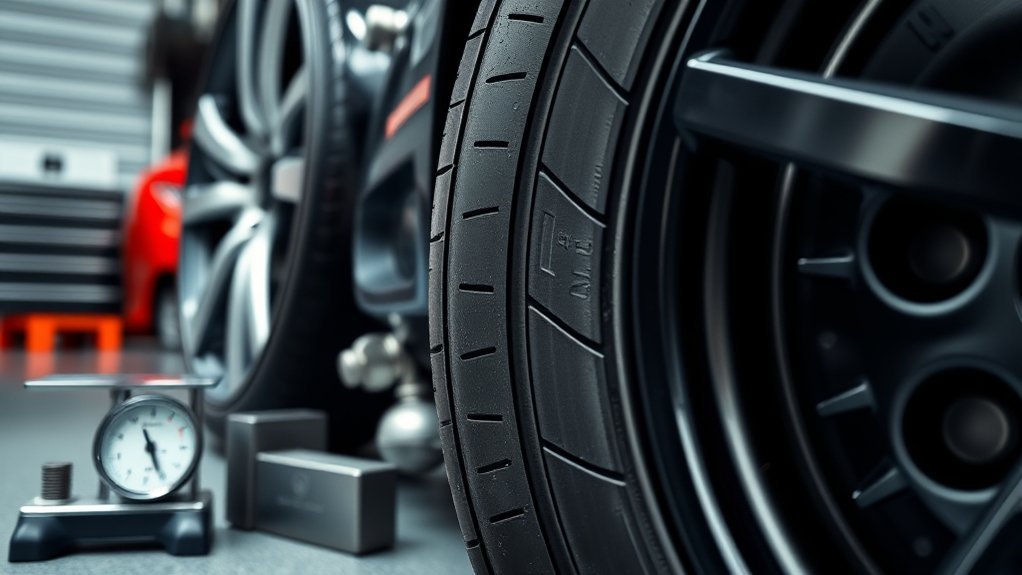
A tire marked 100H tells you two key specs: 100 is the load index, meaning it supports up to 1,764 pounds per tire, and H is the speed rating, meaning it’s approved for sustained speeds up to 130 mph (210 km/h). You should match both ratings to your vehicle’s requirements for safe load capacity, handling, and heat control. If you keep going, you’ll see how to check sidewall markings and fitment details.
Key Takeaways
- 100 is the tire’s load index, meaning it can support up to 1,764 pounds when properly inflated.
- H is the speed rating, indicating the tire is safe for sustained speeds up to 130 mph (210 km/h).
- 100H on the sidewall combines load capacity and speed capability in one tire specification.
- Check your owner’s manual or tire placard to ensure 100H matches your vehicle’s required ratings.
- Avoid mixing lower-rated tires, because mismatched load or speed ratings can reduce safety and handling.
What Does 100H Mean on a Tire?
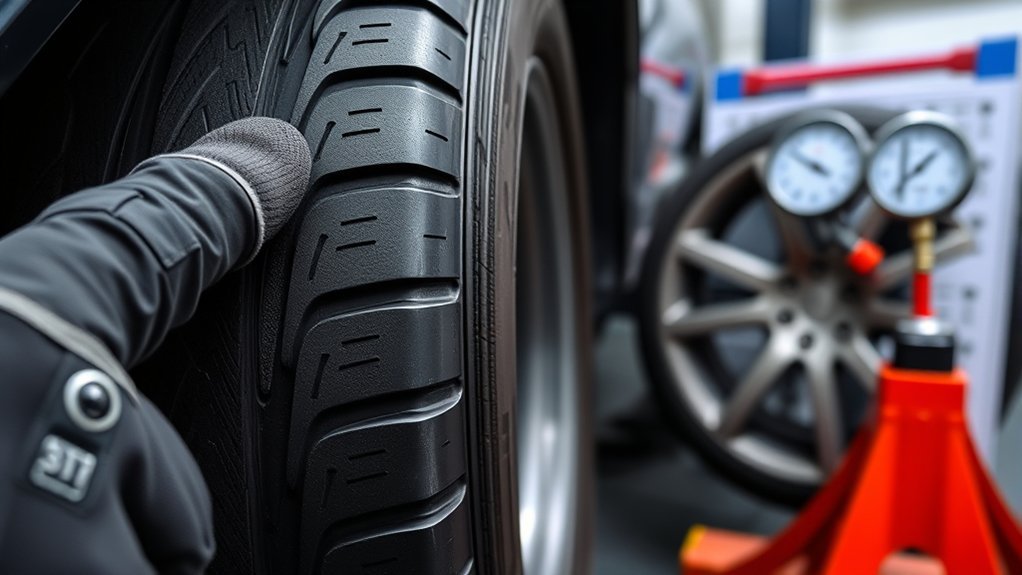
A tire marked 100H tells you two key things: 100 is the load index, meaning the tire can carry up to 1,764 pounds per tire, and H is the speed rating, indicating it can safely handle speeds up to 130 mph (210 km/h). You can read this code on the tire’s sidewall, where manufacturers print the load index and speed rating together. The load index shows the maximum load a single tire supports, while the speed rating shows the highest speed it can safely handle under proper conditions. For passenger vehicles, load index values usually range from 70 to 110, so 100 signals substantial capacity without excess weight. When you match both numbers to your vehicle’s specifications, you keep control, protect performance, and move with technical freedom. A 100H tire gives you a balanced, precise fit for many cars, combining strength and speed capability in one designation. Additionally, choosing the right tire can greatly enhance your vehicle’s overall performance and ensure a smooth driving experience.
Why the 100 Load Index Matters
- It helps maintain vehicle safety under real-world cargo and passenger loads.
- It reduces heat buildup that can trigger tire failure.
- It preserves predictable handling and shorter stopping distances.
- It gives you a clear benchmark for choosing a properly inflated tire.
- Understanding the load index and speed rating is essential for optimal tire performance.
When you respect the load rating, you keep control, protect your tires, and move with confidence.
What the H Speed Rating Means
An H speed rating tells you the tire’s maximum safe operating speed: up to 130 mph (210 km/h). You’ll usually see it on high-performance tires that balance speed capability with ride comfort, and it sits between the U and V ratings. You should match or exceed your vehicle’s original speed rating, because mixing lower-rated tires can reduce handling and safety. Additionally, it’s important to consider the treadwear warranty when choosing tires, as it can impact overall performance and longevity.
H Speed Rating Basics
The H speed rating means a tire is certified for a maximum safe operating speed of 130 mph (210 km/h) when it’s properly inflated and carrying the correct load. You use this tire speed rating to verify that your tires can handle higher speeds without sacrificing control. It sits between U and V ratings, so it signals a performance-focused design. When you choose H-rated tires, you’re selecting a speed rating that often delivers stronger grip and sharper handling than lower-rated options. To stay safely within the tire’s intended envelope, match or exceed the OE rating when replacing tires.
- Confident high-speed capability
- Precise handling response
- Performance-oriented construction
- OE compatibility matters
H Rating Limits
When you see an H speed rating, you’re looking at a tire certified for safe operation up to 130 mph (210 km/h) under specified load and inflation conditions. That H rating tells you the maximum allowable speed the tire can safely sustain, not a target you should chase. You still need the correct load index number, because speed ratings and load capacity work together; a 100H tire, for example, can support 1,764 pounds (800 kg). Many H-rated tires suit high-performance vehicles, giving you a balance of grip, comfort, and cornering stability. If you choose a lower-rated tire, you reduce handling margin and safety. H sits in the middle of the speed ratings, between U and V, reflecting controlled performance and freedom.
How to Read 100H on the Sidewall
On a tire sidewall, 100H tells you two key specifications: 100 is the load index, meaning each tire can carry up to 2,204 pounds, and H is the speed rating, indicating safe operation up to 130 mph under ideal conditions. When you read 100H on the tire sidewall, you’re seeing a compact code that defines your tire’s maximum load and its speed rating.
- 100 = load index, not tire size
- H = speed rating for sustained performance
- Passenger-car load index values usually range from 70 to 110
- Match or exceed the manufacturer’s specification for safety
Use this marking to verify that your tires meet the vehicle maker’s requirements without guesswork. A correct load index supports your vehicle’s specified maximum load, while the speed rating confirms the tire can handle intended highway speeds. Reading 100H accurately helps you choose tires that preserve handling, compliance, and personal freedom on the road. Additionally, considering factors like treadwear ratings can further enhance tire longevity and performance.
Why Load and Speed Ratings Work Together
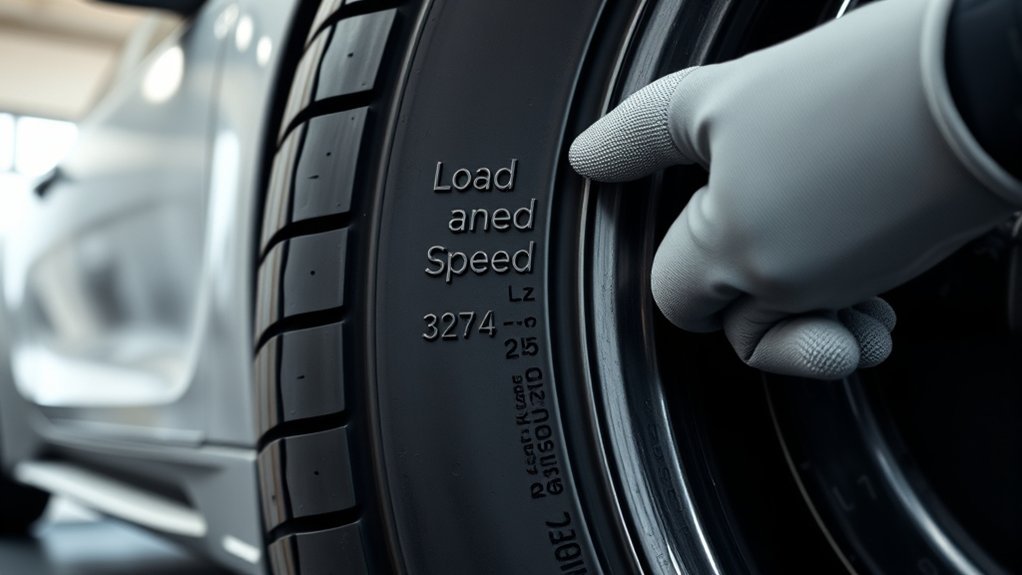
Load and speed ratings work as a pair because a tire has to support both your vehicle’s weight and the speed it’s built to handle. Your load rating shows the maximum it can carry—100 means 1,764 pounds per tire—while speed ratings, like H, define the safe ceiling at 130 mph under ideal conditions. When you match them, you protect the tire’s overall structure, preserve handling, and keep performance within the manufacturer’s limits. Choosing the right tires, such as all-season tires, ensures that both the load and speed ratings are appropriately met for your driving needs.
| Rating | Meaning | Effect |
|---|---|---|
| Load rating | Weight capacity | Supports vehicle mass |
| Speed ratings | Maximum safe speed | Controls heat and stress |
| Both together | Balanced design | Keeps handling stable |
If one tire is rated lower than the others, it sets the system’s overall limit. You get freedom only when each tire can carry the load and manage the pace your driving demands.
Is 100H Right for Your Vehicle?
To determine whether 100H fits your vehicle, check the owner’s manual or tire placard for the required load index and speed rating. The “100” load index supports 1,764 pounds per tire, so you need to verify that this meets or exceeds your vehicle’s load capacity requirements. The “H” rating covers speeds up to 130 mph, so it’s suitable only if that matches or exceeds your factory specification. Additionally, choosing the right tires can enhance safety and performance for your vehicle.
Vehicle Fitment Needs
Whether a 100H tire is right for your vehicle depends on your manufacturer’s specified load index and speed rating requirements. Check your vehicle’s owners manual and tire placard before you approve tire fitment. A 100 load index supports 1,764 pounds per tire, while the H speed rating allows 130 mph. If your original equipment calls for these values, you can maintain the engineered handling, stability, and safety your vehicle was built for.
- Verify the load index matches spec
- Confirm the speed rating meets or exceeds OEM
- Compare size and fitment details exactly
- Avoid lower-rated replacements
When you choose correctly, you protect performance and preserve your freedom to drive with confidence.
Load Capacity Match
A 100H tire carries a load index of 100, which means it can support about 1,764 pounds per tire, so you should compare that capacity against your vehicle’s GVWR and the load index listed on the owner’s manual or tire placard. Check that the tire size also matches your wheel setup and suspension demands. If the required load capacity exceeds 1,764 pounds per tire, choose a higher load index; if it meets or exceeds the spec, 100H can be a valid match. Don’t install a tire with a lower maximum load than your vehicle requires, because that can reduce handling precision and raise failure risk. The H speed rating is separate, but you still need the correct load index first.
Speed Rating Suitability
Once you’ve confirmed the load index fits your vehicle, check the speed rating next: the “H” in 100H means the tire is approved for speeds up to 130 mph under ideal conditions. That speed rating works for many cars, but you’ve got to compare it with your manufacturer’s tire specifications. If your vehicle calls for a higher speed rating, don’t downgrade; a lower speed rating can reduce handling precision and safety. Choose 100H when it matches your load index, road use, and driving conditions. It’s a practical, technically sound option for controlled performance and everyday freedom.
- Verify OEM tire specifications
- Match load index to axle demand
- Confirm higher speed capability if needed
- Avoid lower speed rating substitutions
Can You Upgrade or Downgrade Tire Ratings?
Upgrading to a higher load or speed rating is generally acceptable, and it can improve performance and safety as long as the tire still fits your vehicle’s specifications. When you upgrade, you’re choosing extra capacity in the load index or a higher speed rating than the factory minimum, and that’s usually fine if clearance, dimensions, and inflation needs remain correct. Downgrading isn’t recommended, because a lower load index or speed rating can reduce safety, handling, and overall performance. If you must downgrade, the replacement tire still has to meet the manufacturer’s minimums shown on the tire placard. Never assume mixed ratings are equal; the whole set performs only as well as the lowest-rated tire installed. For freedom with responsibility, match the tire rating to your vehicle, your driving demands, and the road conditions you actually face. Always consult a trained tire professional before changing ratings to confirm compatibility and safe operation. Additionally, understanding UTQG ratings can help you make informed decisions about tire durability and performance.
Risks of Mismatched Tire Ratings
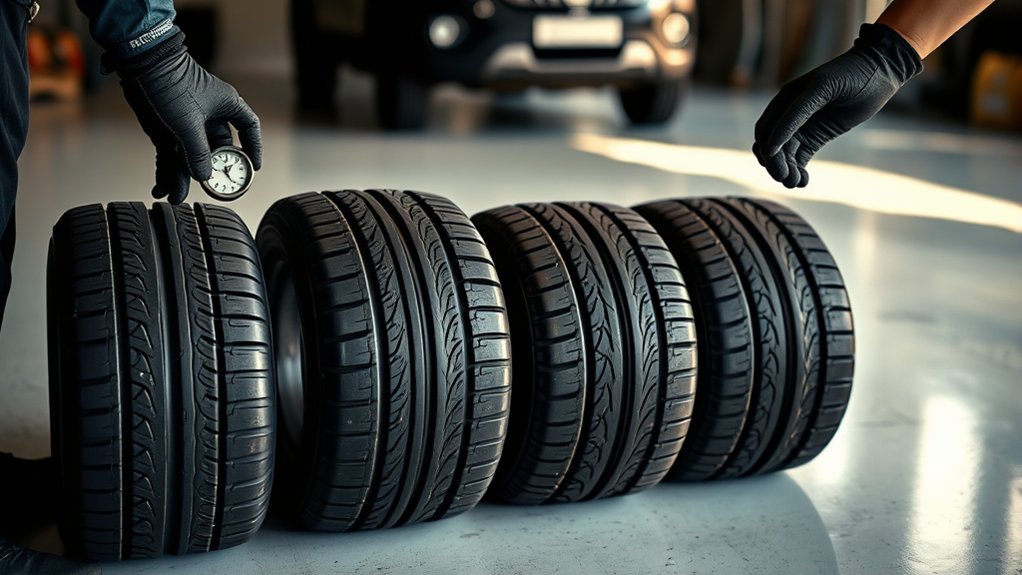
When you mix tires with different speed ratings, the vehicle’s overall performance is only as strong as the lowest-rated tire, which can compromise handling, braking consistency, and grip. If you run mismatched tires, you reduce safety and invite unpredictable response in emergency maneuvers. Lower speed-rated tires on the front axle can promote oversteer, so you may lose control sooner in a corner. A lower load index can also stress the tire carcass when load and speed rise together. Uniform tire ratings help you keep traction, steering, and braking behavior aligned across all four contact patches.
- Check every tire’s speed ratings before installation.
- Avoid mixing mismatched tires unless a tire professional approves it.
- Match load capacity and speed capability to your driving demands.
- Replace in sets when possible to preserve uniform tire ratings.
For liberated driving, choose consistency: it keeps your vehicle stable, predictable, and ready to respond when the road changes. Choosing the right tires is essential for maintaining safety and performance, ensuring your vehicle can handle various driving conditions effectively.
Frequently Asked Questions
What Tire Rating Is Better, H or V?
V is better if you want higher Tire performance, stronger Handling characteristics, and faster Speed ratings. It’s rated for 149 mph, while H tops out at 130 mph, so you’ll get more grip and sharper response. H can still suit you if you value ride comfort and don’t need extra speed. Check your vehicle’s Load capacity specs first, because the right rating also affects Tire durability and safety.
What Is the Difference Between 100T and 100H Tires?
100T and 100H tires share the same load index, so you’re supporting up to 1,764 pounds per tire either way. The difference is the speed rating: T is rated to 118 mph, while H reaches 130 mph. That small split can improve tire performance, handling, and safety considerations in demanding driving conditions. If your vehicle calls for H, don’t downgrade; match or exceed the original spec.
What Does 235 55R18 100H Mean?
235 55R18 100H tells you the tire specifications: 235 mm width, 55% sidewall ratio, radial construction, and 18-inch wheel fitment. You’ve got a load index of 100, so it can carry 1,764 pounds when properly inflated, and an H speed rating, meaning 130 mph max. These ratings affect tire performance and tire safety, so you should match them to your vehicle’s needs and never downgrade.
What Does the 100H Mean on a Tire?
100H is a tire’s load and speed code—an absolute universe of meaning in two characters. The 100 load index tells you the tire’s load capacity is 800 kg, or 1,764 lbs, per tire. The H speed index means you can safely drive up to 130 mph under rated conditions. Keep tire pressure correct, and you’ll protect tire longevity, performance factors, and handling while avoiding overload or overspeed damage.
Conclusion
In short, when you see 100H on a tire, you’re looking at a load index of 100 and an H speed rating. That means the tire can support the proper weight and handle speeds up to 130 mph under specified conditions. You might think any higher-rated tire is always better, but that isn’t true. Your best choice is the one that matches your vehicle’s requirements, so you keep ride quality, safety, and performance in balance.

Related Articles

Does AAA Do Tire Repair? Services, Limits & Member Benefits
Does AAA do tire repair? Discover which fixes qualify, what AAA members save, and when replacement or towing is the safer choice.
Read More
Which Tire Doesn’t Move When a Car Turns Right? The Real Answer
Following a right turn, one tire seems to barely move—find out which one and why the answer is more surprising than you’d expect.
Read More
What Is a Tire Mobility Kit? How to Use It in an Emergency
A tire mobility kit can save you in a roadside emergency, but using it wrong may leave you stranded when it matters most.
Read More