What Is a Tire? Complete Guide to Types, Parts & How They Work
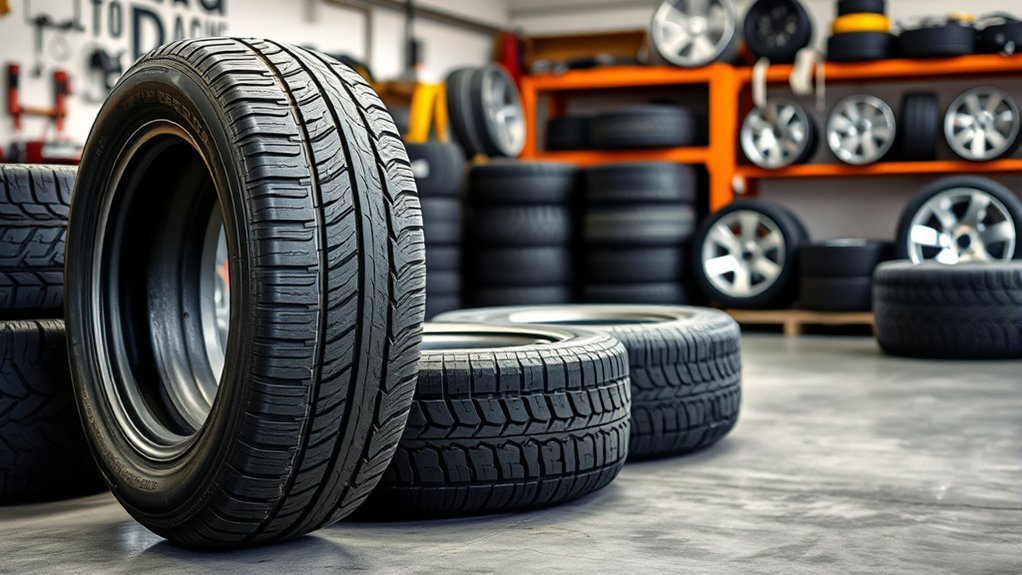
A tire is the rubber component that connects your vehicle to the road, giving you traction, stability, braking control, and ride comfort. You’ll find common types like all-season, winter, all-terrain, and specialty tires, each built for different conditions. Key parts include the tread, sidewall, bead, body ply, and innerliner. Tires grip through friction and contact patch design. If you keep going, you’ll see how construction, sizing, ratings, and maintenance affect safety and performance.
Key Takeaways
- A tire is a rubber covering on a wheel that provides traction, supports weight, and absorbs road shocks.
- Common tire types include all-season, winter, all-terrain, and specialty tires for different climates and driving needs.
- Tires are built from tread, sidewall, bead, body ply, and innerliner, each serving a specific structural purpose.
- Tire performance depends on grip, size, load index, speed rating, pressure, and tread depth.
- Regular maintenance, including pressure checks, rotation, and inspections, helps prevent wear, damage, and unsafe driving conditions.
What Is a Tire?
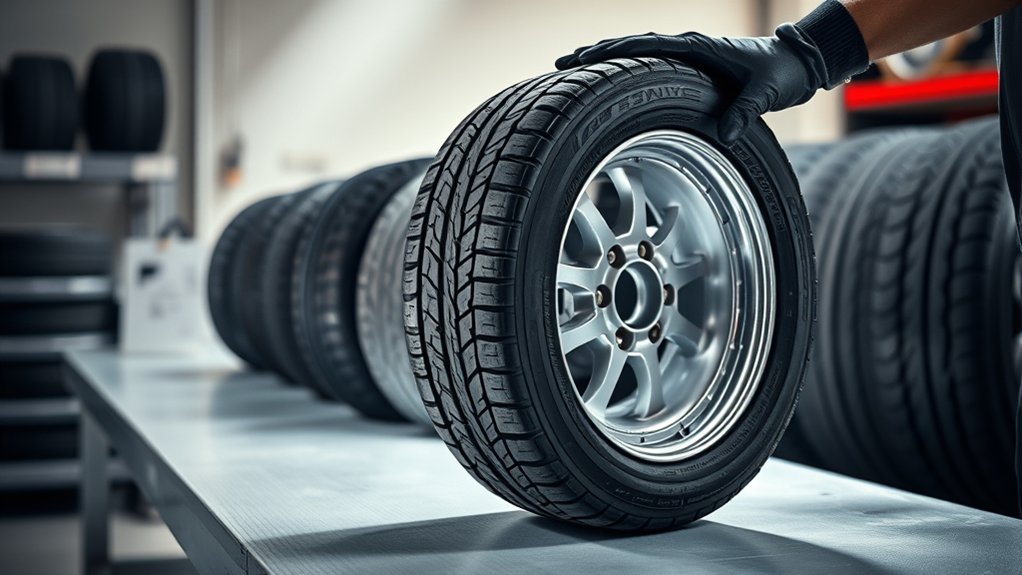
A tire is the rubber covering that encases a wheel, giving your vehicle traction, stability, and protection for the wheel itself. You rely on this engineered ring to support weight, transmit steering inputs, and absorb road irregularities. Modern tire technology combines synthetic and natural rubber with fabric and steel to create a structure that resists heat, flexes under load, and preserves control. The small contact patch, about the size of your palm, is where grip happens, so every compound and belt choice affects safety and handling. You can’t ignore maintenance: correct pressure and tread depth help you retain fuel efficiency, extend service life, and keep braking predictable. When you understand what a tire does, you take command of your mobility and refuse unnecessary risk on the road. Additionally, selecting the right all-season tires can significantly enhance your vehicle’s performance and safety in various driving conditions.
Common Tire Types
You’ll usually choose between all-season tires and seasonal tires, depending on how consistently you need traction across changing road and temperature conditions. All-season tires give you balanced performance in varied weather, while winter tires use specialized compounds and tread gaps to improve grip below 7°C on snow and ice. Beyond that, specialty categories like high-performance, mud-terrain, and electric vehicle tires optimize handling, off-road traction, or efficiency for specific use cases. For instance, all-season tires like the Fullway HP108 provide reliable performance in both wet and dry conditions.
All-Season Vs Seasonal
When choosing between all-season and seasonal tires, the key difference is how each is engineered for specific driving conditions. all-season tires give you balanced traction in dry, wet, and light snowy conditions, so you can drive confidently in moderate climates without swapping sets often. seasonal tires, including winter and summer tires, target narrower demands: winter tires use deeper treads and softer compounds for snow and ice, while summer tires sharpen handling and responsiveness in warm, dry weather. all-season tires often last 50,000 to 70,000 miles, whereas winter tires can wear faster because their rubber stays pliable. You should match tire choice to your climate, driving habits, and vehicle needs to maximize safety, control, and efficiency.
Specialty Tire Categories
Specialty tires are built to solve specific driving challenges, so their tread, compound, and construction vary by use case. When you choose specialty tire categories, you match rubber to conditions, not marketing. Winter tires use deeper tread and wider gaps to bite into snow and ice, and they work best below 7°C. All-terrain tires balance off-road traction with stable highway handling, giving you flexible control. Mud-terrain tires use aggressive lugs and large voids for muddy ground, though they can lose efficiency on pavement. High-performance tires support speeds up to 270 km/h and sharpen cornering stability. Electric vehicle tires manage heavy battery weight, instant torque, and lower rolling resistance, so you keep range and precision.
Main Parts of a Tire
A tire is built from several key parts that work together to support the vehicle, hold air, and deliver traction. You can think of its main types of components as a coordinated system, not isolated pieces. The tread is the outer rubber layer that contacts the road and uses designed patterns for specific driving conditions. The sidewall shields the tire from damage and displays size, load, and rating information you need to choose and maintain it correctly. The bead uses steel wires to lock the tire onto the wheel rim and keep air sealed in place. Inside, the body ply’s cords, usually polyester, nylon, or steel, give strength and flexibility under load. The innerliner forms an air-retaining barrier, reducing leaks and helping preserve stable pressure for reliable performance. Additionally, the symmetrical tread design contributes to reliable wet traction and steady dry handling.
How Tires Grip the Road
Tires grip the road through friction created where the tread meets the surface, and that grip depends on the tire’s design, materials, and pressure. You rely on the contact patch, a small area roughly the size of your palm, to transmit steering, braking, and acceleration forces. A well-engineered tread pattern uses grooves and sipes to evacuate water from this zone, so the rubber can keep engaging the pavement instead of floating on a film. That matters most when you want control in rain or on slick surfaces. Rubber composition also shapes grip: harder compounds resist wear, while softer, more flexible blends conform better to road texture. Tire pressure must stay in range, too. Under-inflation and over-inflation both shrink effective contact and weaken traction. When you maintain proper pressure and choose the right tread pattern, you get predictable handling and the freedom to move with confidence. Additionally, understanding all-season tire performance is vital for ensuring your tires meet diverse driving conditions throughout the year.
Tire Construction and Materials
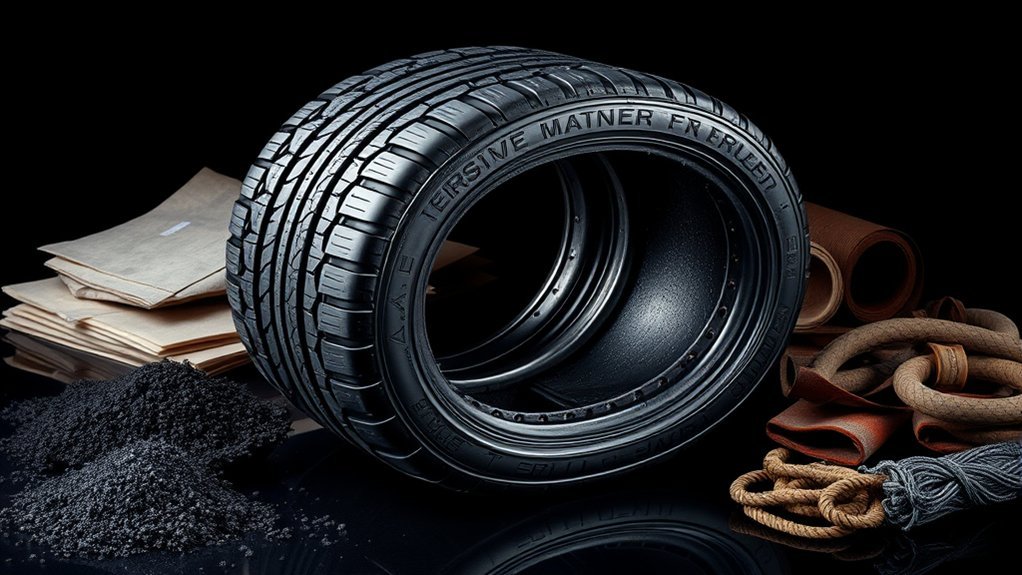
When you examine a tire, you’ll see a layered structure that includes the tread, sidewall, belts, and bead, each serving a specific mechanical function. You’ll also find key materials such as natural rubber, synthetic polymers, fabric cords, and steel, which balance flexibility, strength, and durability. Tire construction then splits into radial and bias designs, and each layout changes how the tire handles grip, wear, fuel economy, and rough surfaces. Additionally, the materials used in tire construction contribute to material recovery and separation techniques, ensuring that valuable components are reclaimed during the recycling process.
Tire Layer Structure
Inside a tire, layered materials work together to deliver traction, strength, and air retention. In the tire layer structure, you get a tread that grips the road, a body ply that supports load, and an innerliner that holds pressure inside the casing. The tread manages contact and wear, while the body ply, usually polyester or nylon, helps you maintain shape under inflation stress. Steel belts sit beneath the tread in many designs, adding stability, sharper handling, and better wear resistance, especially when you drive hard. Manufacturers also tune rubber compounds to balance durability, traction, and heat resistance for different conditions. That layered design gives you control, reliability, and freedom to move confidently.
Key Tire Materials
At the core of a tire, a carefully balanced mix of synthetic rubber, natural rubber, fabric, and steel wire gives you durability, grip, and load-carrying strength. In tire manufacturing, engineers blend styrene-butadiene rubber and other polymers to improve wear resistance, wet traction, and heat control. Textile cords add structural support, while steel belts stabilize the tread and sharpen handling under load. The rubber compounds also protect the carcass from road stress and flex fatigue. You benefit from materials chosen to deliver safe performance, lower rolling resistance, and longer service life. Regulators also limit certain additives and monitor materials to reduce harmful emissions and micro-plastic pollution, so your tire performs well without ignoring environmental accountability.
Radial Vs Bias Constructions
Tire performance depends not only on compound materials but also on how those materials are arranged in the carcass. In a radial tire, body ply cords run straight across the tread, so you get lower rolling resistance, better fuel economy, stronger grip, and a smoother ride. Steel belts usually reinforce the tread, boosting stability and wear resistance. Bias tires use diagonal cord layers, and you may prefer them when you need traction on rough, uneven terrain. They often feel stiffer and create more rolling resistance, and they can wear faster because they use fewer layers. For your vehicle, the right construction shapes handling, durability, and efficiency, so choose the design that matches how you drive and where you demand freedom to go.
Radial vs. Bias Tires
Radial tires use body ply cords that run straight across the tire, which gives you better grip, lower rolling resistance, and improved fuel efficiency. When you choose radial tires, you get a larger road footprint, so you’ll notice stronger wet traction, steadier handling, and better stability at speed. That makes them the standard for most modern vehicles, especially when you want precise control and less energy waste. Additionally, radial tires are often praised for their extended tread life, making them a popular choice among drivers seeking longevity.
Bias tires use diagonal ply cords, and they can serve you well when you need durability and flexible conformity on rough, irregular ground. They often deliver useful traction on uneven surfaces, but they usually create more rolling resistance, which costs efficiency.
If you drive on pavement and value responsive performance, radial tires usually give you the edge. If your work or freedom takes you off-road, bias tires can offer the toughness you need. Choose the construction that matches your terrain, not the one that limits you.
Tire Sizes and Ratings
You can read a tire size code like P215/65R15 to identify the tire type, section width, aspect ratio, construction, and wheel diameter. You’ll also need to check the load index and speed rating, because they tell you how much weight the tire can carry and how fast it can safely run. Understanding these markings helps you choose tires that match your vehicle’s specifications, performance needs, and safety requirements. Additionally, knowing the OEM tire sizes for your vehicle ensures proper fitment and performance.
Understanding Tire Size Codes
Decoding a tire sidewall starts with its size code, such as P215/65R15: the “P” identifies a passenger tire, “215” is the width in millimeters, “65” is the aspect ratio, “R” means radial construction, and “15” is the wheel diameter in inches. You read tire size codes to match your vehicle and keep control over fitment.
| Code part | Meaning |
|---|---|
| P215 | Passenger tire, 215 mm wide |
| 65R15 | 65% sidewall, radial, 15-inch wheel |
A lower aspect ratio means a shorter sidewall, which can sharpen handling and stability. After the size, you may also see load index and speed rating, but those belong to the next layer of selection. By decoding these marks, you choose compatible tires with confidence and freedom.
Speed And Load Ratings
After the size code, the next markings to check are the tire’s speed and load ratings, which tell you how fast it can safely run and how much weight it can carry. Speed ratings use letters from A to Z; A covers very low speeds, while Z means over 240 km/h, so you can match the tire to your vehicle’s performance needs. Load ratings use a numerical index that maps to a specific weight capacity, letting you confirm the tire can support your vehicle safely. When you read both ratings together, you gain control over safety, handling, and durability. Manufacturers often publish a load index chart, and you should use it to choose tires that free your vehicle to perform without risking overload or heat failure.
How Tires Affect Safety and Fuel Economy
Tires play a direct role in both vehicle safety and fuel economy because their inflation, tread condition, and construction affect traction, handling, braking, and rolling resistance. When you keep tire pressure at the recommended level, you reduce flexing, improve stability, and can boost fuel efficiency by up to 3%. Under-inflation increases rolling resistance, and that wastes energy every mile. Good tread depth also matters: it helps you grip wet pavement, lowers hydroplaning risk, and keeps control in adverse weather. Tire type changes stopping performance too; winter tires can cut braking distances by up to 30% on icy roads compared with all-season tires. Because rolling resistance can account for 5% to 15% of fuel use in passenger vehicles, the right tire helps you drive farther with less fuel. You gain safer handling and more efficient motion when you choose tires that match your conditions and vehicle needs. Additionally, the 3PMSF certification indicates a tire’s readiness for severe winter conditions, enhancing performance in challenging weather.
Tire Maintenance Tips
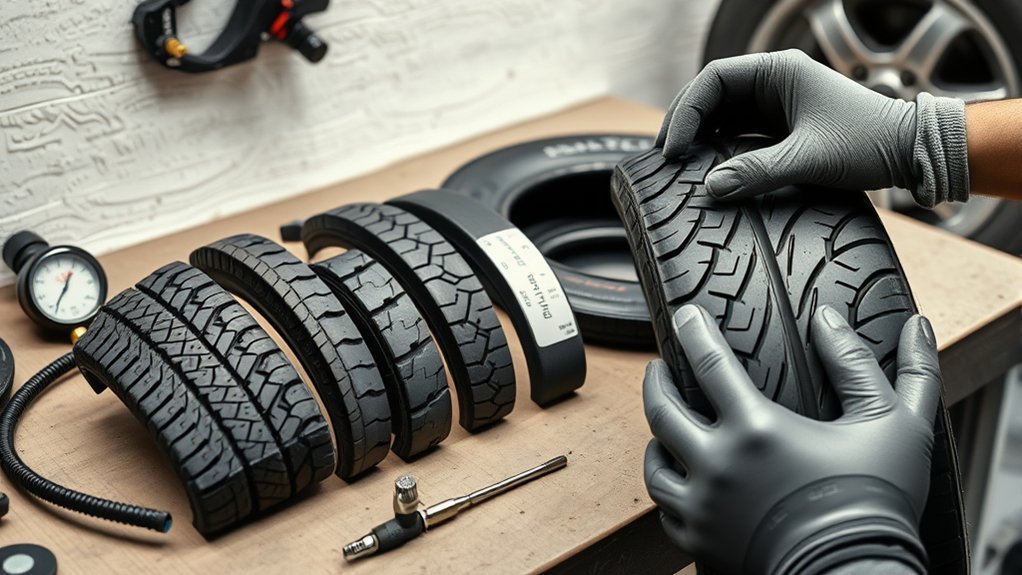
Keep your tires in top condition with a simple maintenance routine that protects safety, performance, and tire life. These tire maintenance tips start with pressure checks: verify inflation at least monthly and before long trips, because correct pressure improves fuel economy and reduces wear. Rotate your tires every 5,000 to 7,500 miles so each position carries load more evenly and delivers consistent handling. Inspect tread depth with the penny test; if you can see all of Lincoln’s head, your tread is too shallow for reliable traction. Watch alignment and balance closely, since misalignment creates uneven wear and dulls steering response. Look for bulges, cracks, or lodged debris during each inspection, and schedule a professional evaluation if you find any damage. By staying proactive, you control maintenance instead of letting wear dictate performance. Additionally, consider the tread depth of your tires, as it directly influences traction and safety in various driving conditions.
When to Replace Tires
When should you replace your tires? Replace tires when tread reaches 2/32 inch, the legal minimum in many regions, because traction drops sharply and stopping distances rise. You should also act on damage, age, and pressure loss before failure limits your freedom to move safely.
- Measure tread depth at multiple points.
- Inspect for cracks, bulges, or one-sided wear.
- Replace tires after 6 years, even if tread looks fine.
- Replace any tire with an unrepairable puncture or structural damage.
Under-inflated tires wear faster, overheat, and can fail early, so check pressure regularly and correct it to spec. Uneven wear can signal alignment problems, which you should diagnose promptly to avoid wasting usable tires. If you see cords, severe vibration, or recurring air loss, don’t delay. Timely replacement keeps your vehicle stable, efficient, and ready for the road ahead. Additionally, consider the treadwear warranty offered by various tire brands, as it can provide insights into the expected lifespan of your tires.
Frequently Asked Questions
What Are the Two Meanings of Tire?
You use tire in two ways: as a noun, it means a rubber covering on a wheel that boosts traction and protects the rim; as a verb, it means you exhaust or fatigue someone. Tire History shows both uses persisting in English, and Merriam-Webster records each sense precisely. In technical writing, you’ll distinguish the component from the action, so your meaning stays clear and your communication stays sharp, direct, and liberating.
What Is a Tire vs. a Wheel?
A tire is the rubber ring that grips the road; a wheel is the metal rim that supports it. You ride on tires, not wheels, because tires deliver traction, cushioning, and control, while wheels carry the tire and attach to your suspension. Tire Evolution improved tread, compounds, and safety, giving you better handling and efficiency. You can choose tires for freedom, but wheels mainly provide structure and strength for your vehicle.
Is a Wheel a Tire?
No, a wheel isn’t a tire; you need both for a rolling assembly. You mount the tire onto the wheel, and the wheel supports the tire’s bead while you get road contact from the tire, not the rim. In Tire Construction, you’ll see that the wheel provides structure for steering and suspension, while the tire delivers traction, grip, and shock absorption. You can’t swap their roles.
Is Tire a Word for Tired?
No, you don’t use “tire” as a direct word for “tired.” You’d say tire as a verb, meaning to exhaust, and tired as the adjective for fatigue. If you want a Tired Synonym, use worn out, fatigued, or drained. In American English, “tire” and “tyre” also differ by spelling, not meaning. You can choose precise words that fit your message and resist confusion.
Conclusion
In the end, you can see that a tire is more than a rubber ring; it’s a precision component that supports load, transfers force, and helps you stay in control. A common statistic shows that underinflated tires can reduce fuel economy by about 3%, so pressure matters. If you inspect tread, sidewalls, and wear regularly, you’ll extend tire life and improve safety. When you understand how tires work, you make smarter driving and maintenance decisions.

Related Articles
What Does ST Mean on a Tire? Load, Speed & Rating Guide
JDiscover what ST means on a tire, plus load, speed, and rating details that could change your trailer’s safety and performance.
Read More
What Are the Little Hairs on a New Tire? Spews Explained
Go beyond the weird little hairs on new tires and discover what they are, why they appear, and whether they really matter.
Read More
Is It ‘Tyre’ or ‘Tire’? American vs. British English Explained
A quick guide to “tyre” vs. “tire” reveals the surprising difference—and one easy rule could save your writing from confusion.
Read More