What Does ZR Mean on a Tire? Load, Speed & Rating Guide
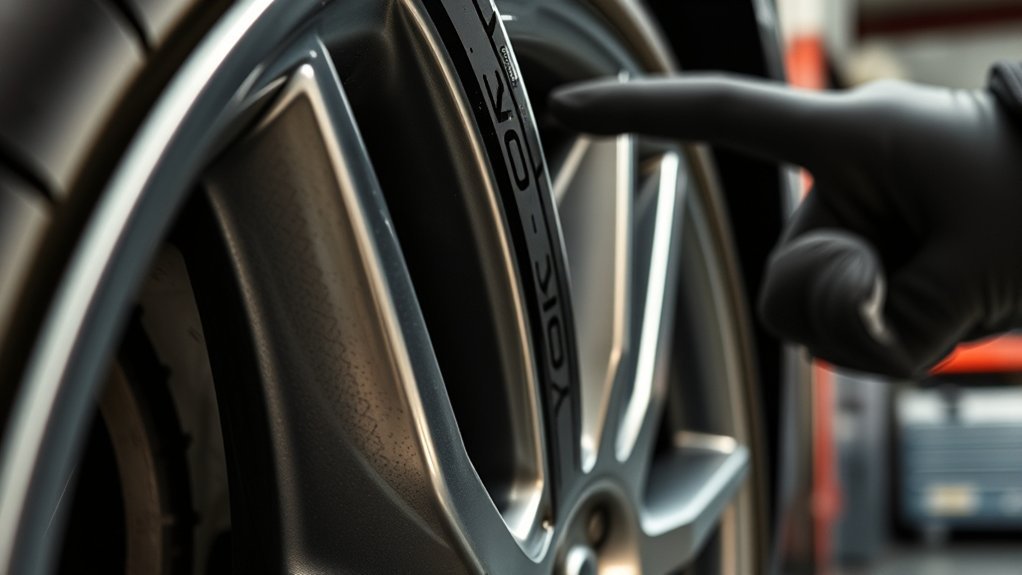
ZR on a tire means it’s built for high-speed performance, typically above 149 mph (240 km/h), with reinforced construction for better grip and stability. You’ll often see ZR paired with W or Y speed ratings, which refine the tire’s top speed capability. The load index still matters, because it tells you how much weight each tire can carry safely. If you want to match the right tire to your vehicle, the details below can help.
Key Takeaways
- ZR on a tire means it is built for high-speed performance, typically above 149 mph.
- The final speed rating letter, like W or Y, shows the tire’s exact maximum speed capability.
- The load index tells you how much weight each tire can safely carry.
- ZR tires use stiffer construction and special compounds for better grip, stability, and cornering.
- Mixing ZR and non-ZR tires can cause uneven handling, so match all tires to the vehicle’s specifications.
What Does ZR Mean on a Tire?
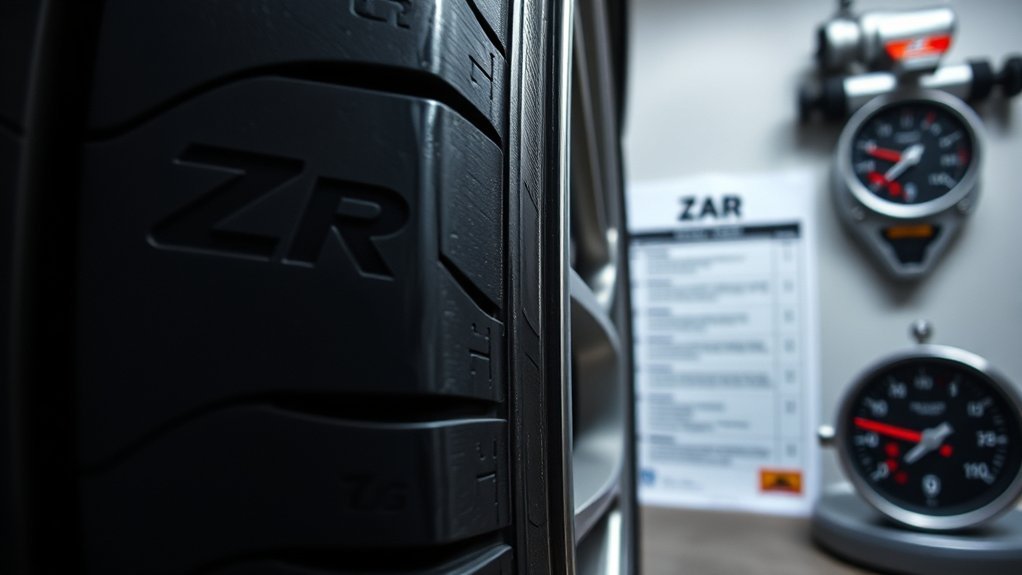
ZR on a tire tells you the tire is built for high-speed performance, specifically for speeds above 149 mph (240 km/h). You’ll see the ZR speed rating on tires made for performance vehicles that demand precise grip and stability when you drive hard. The designation signals a tire size and construction tuned for liberation from ordinary limits, with advanced rubber compounds that improve traction and heat resistance. Reinforced sidewalls help the tire stay composed during aggressive cornering, while modern tread patterns support control in warm conditions. You may also see an added letter, such as W or Y, which refines the maximum speed rating beyond the ZR marking. In practice, ZR tires suit sports and luxury vehicles because they deliver high-speed performance, responsive handling, and stable cornering. If you want a tire that matches a driver’s need for control, ZR identifies a serious performance-focused option. Additionally, selecting tires with appropriate treadwear ratings ensures longevity and performance under high-speed conditions.
How ZR Tire Ratings Work
Understanding the ZR marking helps you read the rest of the tire code correctly, especially the speed letter that follows the load index. ZR tells you the tire’s speed rating exceeds 149 mph, so you’re looking at rubber built for serious pace. On high-performance tires, that rating supports sharper cornering, stronger stability, and more controlled response when you push hard. Manufacturers use advanced compounds and aggressive tread patterns to improve grip, but those performance characteristics can shorten tread life compared with standard tires. In modern tire labels, ZR works as a category, while the final letter sets the maximum speed the tire can safely sustain. That means you shouldn’t treat ZR as a single fixed limit. Instead, you should match the tire’s full specification to your vehicle’s demands, driving style, and freedom to move fast with confidence. Additionally, it’s important to consider tire performance in rain and snow as it can directly impact safety and handling in varying conditions.
How to Read ZR, W, and Y Markings
You can read the ZR marking as the baseline indicator that the tire’s speed capability exceeds 149 mph, which marks it as a high-performance design. The W and Y symbols then narrow that range, with W rated to 168 mph and Y to 186 mph, so you can match the tire to the vehicle’s speed demands. In a size code like P275/40ZR17 93Y, ZR identifies the construction class, 93 is the load index, and Y is the speed rating. Additionally, all-season tires typically provide reliable traction in various conditions, making them a practical choice for everyday driving.
Zr Marking Basics
Speed markings tell you a tire’s performance ceiling, and ZR is the clue that the tire is rated for speeds above 149 mph (240 km/h). When you read the tire sidewall, you’ll see ZR tied to the speed rating and, in many sizes, placed before the load index and speed symbol. That placement tells you the tire’s high-speed rating at a glance. Use the load index chart to confirm the tire still supports your vehicle’s weight, because speed capability and load capacity work together. ZR tires are built for performance, so you get sharper handling and stronger traction when you demand more from the machine. If you want freedom on the road, choose a tire whose markings match your vehicle’s real operating needs and safety requirements.
W And Y Symbols
When a tire sidewall shows ZR, the W or Y symbol that follows tells you the exact speed capability: W means up to 168 mph (270 km/h), while Y supports up to 186 mph (300 km/h). You’re reading a speed rating, not a vague label, so you can match the tire to real performance demands. A W symbol suits aggressive driving and many high-performance tires, while a Y symbol gives you even more margin for sustained speed and stability. Because ZR marks tires rated above 149 mph (240 km/h), you should use these codes to guide tire selection with precision. When you choose correctly, you protect handling, confidence, and control.
Reading Tire Size Codes
| Marking | Meaning | Use |
|---|---|---|
| 225 | Width | Tire size |
| 45 | Aspect ratio | Sidewall height |
| ZR | High-speed rating | Above 149 mph |
| 94 | Load index | Load capacity |
| Y | Speed rating | Up to 186 mph |
ZR shows high-speed capability, not construction. The final letter, like W or Y, gives the exact appropriate speed rating for your driving needs.
Where the Load Index Fits In
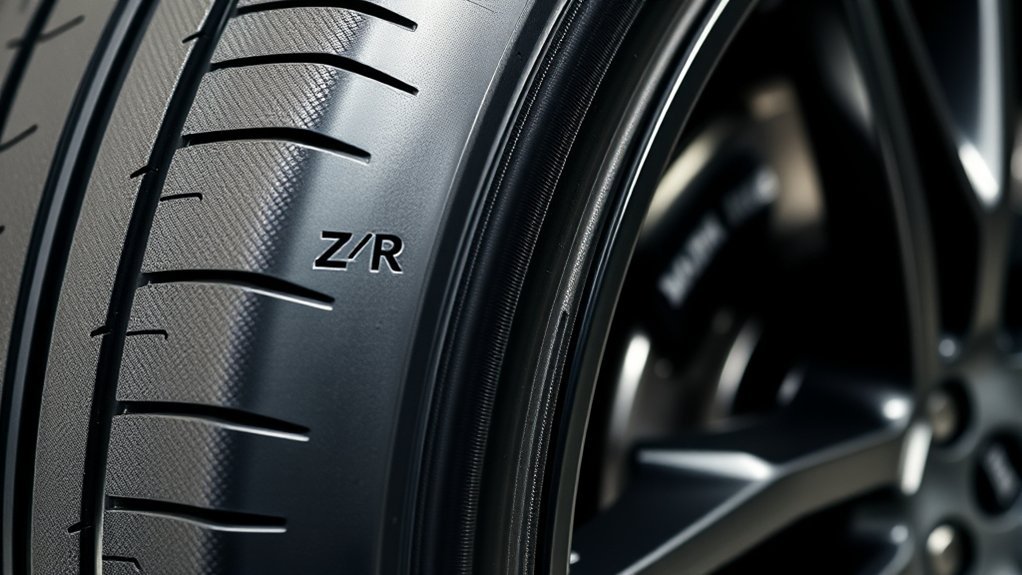
The load index appears as the numerical code on the tire sidewall that tells you the maximum weight each tire can safely carry. You’ll usually see it after the tire size and speed rating, like 205/60R15 91V. That 91 is the load index, and it means 1,356 lbs, or 615 kg, per tire. The scale runs from 0 to 279, with each number tied to a defined weight. When you choose a tire for a ZR setup, don’t treat the load index as optional; it directly affects maximum load capacity and safe handling. You need a load index that meets or exceeds your vehicle’s requirement because under-spec tires can wear faster, build excess heat, and fail under stress. In practice, you’re matching tire size, speed rating, and load index so the tire can support your vehicle without sacrificing control. That balance gives you confident, liberated driving. Additionally, selecting tires with a suitable treadwear warranty can enhance your overall value and peace of mind.
ZR Tires vs. R Tires
When you compare ZR tires with R tires, you’ll see the biggest difference in speed and handling: ZR tires can exceed 149 mph and use performance-focused compounds and tread, while R tires top out at 106 mph and prioritize everyday stability. You’ll also notice a tradeoff in comfort and noise, since R tires usually ride quieter and smoother than more aggressive ZR designs. In tread life and cost, R tires often last longer and cost less over time, whereas ZR tires typically wear faster and suit high-performance use. Additionally, the tread pattern of ZR tires is often designed for maximum grip, similar to the aggressive designs seen in off-road tires like the Venom Trail Hunter ATS.
Speed And Handling
ZR tires are built for high-speed stability, so they can handle speeds above 149 MPH (240 km/h) with reinforced sidewalls and advanced rubber compounds that improve traction, cornering, and braking. When you ask what ZR mean, you’re looking at a speed rating built for high speeds, not relaxed everyday driving. You get superior handling because the tire’s speed rating reflects stronger construction and more precise response under load. R tires, by contrast, top out at 106 MPH (170 km/h) and emphasize dependable comfort for commuting. If you want sharper steering and harder braking on open roads or track sessions, ZR gives you more control. If you value simpler daily use, R keeps things practical. Don’t mix them; differing limits can upset balance and reduce safety.
Comfort And Noise
Comfort levels differ sharply between ZR and R tires because their designs prioritize different goals. When you choose ZR tires, you’re trading some comfort for sharper grip, so you’ll often hear more road noise and feel more vibration. Their performance tread and stiffer construction help high-speed stability, but they can make the ride feel harsher. R tires do the opposite: they use more flexible sidewalls and quieter tread patterns to improve comfort and reduce road noise for daily commuting. If you want a smoother, more relaxed drive, R tires usually fit better. ZR tires can also feel less consistent as tread life shortens, especially in cold conditions, which can further affect ride quality.
Tread Life And Cost
Although ZR tires deliver stronger performance, they usually wear out faster, averaging about 48,000 miles compared with up to 65,000 miles for R tires. You’ll see the trade-off in tread life and cost: ZR tires use aggressive compounds and tread patterns, so they demand tighter maintenance, especially in colder weather. R tires give you steadier wear, lower cost, and better value for daily driving.
- ZR tires: faster tread wear
- R tires: longer tread life
- High-performance tires: higher purchase cost
- Maintenance: weekly checks, rotations every 5,000–7,500 miles
If you want liberation through performance, choose ZR tires; if you want economy and reliability, choose R tires.
When You Actually Need ZR Tires
You actually need ZR tires when your vehicle is built for sustained high-speed performance and you regularly drive at speeds above 149 mph (240 km/h), such as on highways, in spirited driving, or on a track. ZR tires pair with speed ratings like W, Y, or Z, and they’re engineered as high-performance tires for precise driving needs. Their advanced compounds and reinforced sidewalls improve traction, cornering, and stability when load, heat, and speed rise together. If your car was designed for this envelope, these tires deliver the control and safety you expect when you push hard and drive free. Choosing the right tires based on performance requirements is crucial for maximizing your vehicle’s capabilities.
Choose ZR tires when you want the chassis to respond cleanly at speed and you need consistent handling from one run to the next. They suit sports cars and track use best. Expect shorter tread life than standard tires, so you’ll need regular pressure checks and maintenance to preserve performance and safety.
Can You Mix ZR and Non-ZR Tires?
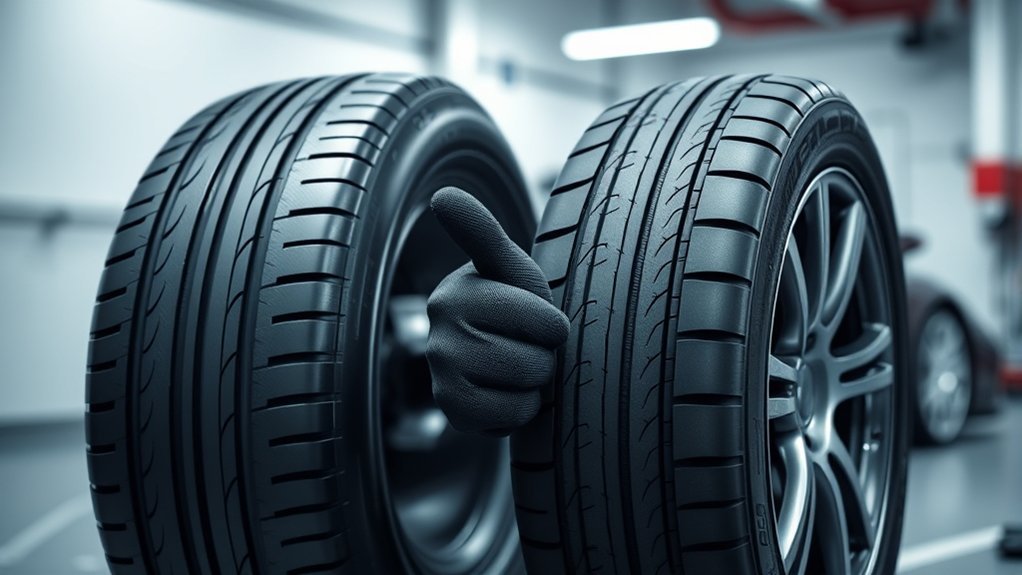
Mixing ZR and non-ZR tires can create uneven handling, especially when you’re driving fast or making hard cornering inputs. ZR tires use construction and compounds built for speeds above 149 mph, while non-ZR options may carry lower speed ratings, so mixing tires can reduce handling performance and upset balance. For clean control, you should match all four tires to the vehicle’s recommended speed ratings and safety standards.
- Check each tire’s speed rating.
- Compare tread and compound differences.
- Watch for uneven wear and traction loss.
- Ask a tire specialist before installing mixed sets.
If you mix ZR tires with non-ZR tires, you may feel inconsistent response in braking, steering, and grip. That tradeoff isn’t freedom; it’s risk. Keep your setup coherent so you can drive with confidence and preserve the performance your car was built to deliver. Additionally, consider the run-flat capabilities of your tires, as they can enhance safety in case of a puncture.
How to Read Tire Size Codes
A tire size code packs the key specs into a compact sequence such as 225/45R17 91V. You read it left to right: 225 is the tire width in millimeters, 45 is the aspect ratio, and 17 is the rim diameter in inches. The letter R tells you the tire uses radial construction, so the cords run perpendicular to the tread for flexibility and control. After the size, the load index shows how much weight each tire can carry; 91, for example, means 1,356 pounds. The final letter is the speed rating, and it sets the maximum speed capability; V equals 149 mph, or 240 km/h. On ZR tires, the ZR marking signals speeds above 149 mph, while the ending letter, such as W or Y, gives the exact maximum speed capability. Once you decode tire size codes, you can read performance limits with confidence and precision, without guesswork. Understanding load index specifications can help ensure your tires meet your vehicle’s requirements.
How to Choose the Right Tire for Your Vehicle
Now that you can decode tire size and speed markings, choosing the right tire for your vehicle comes down to matching those specs to your owner’s manual and driving demands. You should verify tire size notation, then confirm the load index and speed rating meet or exceed factory guidance. For liberation on the road, choose the tire that fits your mission, not ego.
- Check the manual for the required speed rating and load index.
- Choose ZR tires or other high-performance tires only if you drive fast or hard.
- Use R-rated options for daily driving when comfort and efficiency matter.
- Keep proper inflation and avoid mixing speed ratings across axles.
If your commute stays calm, R tires usually deliver better ride quality. If you demand sharper response, ZR tires can support higher speeds, but only when the full package matches your vehicle. Always inspect tread, load, and pressure before you drive. Additionally, consider tire selection criteria to ensure optimal performance for your driving conditions.
Frequently Asked Questions
Is ZR Tire Better Than R?
ZR’s better if you need speed, grip, and sharp control; R’s better if you want comfort, lower ZR cost, and easier daily use. You’ll get stronger ZR benefits, ZR performance, ZR traction, and ZR handling in high-speed ZR applications, but you’ll also accept faster wear and tighter maintenance. If you drive calmly, R tire freedom may suit you more. Don’t mix them; mismatched setups can destabilize handling and reduce safety.
Can You Mix R and Zr Tires?
You shouldn’t mix R and ZR tires; their speed ratings can differ by over 43 mph, which changes tire performance fast. You’ll create safety concerns because the handling characteristics, tread design, and sidewall stiffness won’t match. In changing weather conditions, that mismatch can worsen braking and cornering. Even if the cost comparison tempts you, use a uniform set to keep control, stability, and confidence on every drive.
What Is the Difference Between R17 and Zr17 Tyres?
R17 tires give you everyday comfort, durability, and lower cost, while ZR17 tires boost tire performance, handling characteristics, traction capabilities, and heat resistance for high-speed driving conditions. You’ll get softer compounds and more aggressive tread with ZR17s, but they usually wear faster and cost more. If you want liberation from limits and sharper control, choose ZR17; if you want dependable commuting, R17 fits better. Don’t mix them on one axle.
What Is the Lifespan of Zr-Rated Tires?
ZR-rated tires usually last about 48,000 miles, though your results’ll vary with driving style and climate. You’ll get strong performance benefits, sharper handling characteristics, and better temperature resistance, but softer compounds increase tread wear. Use tire maintenance tips like weekly pressure checks and rotations every 5,000–7,500 miles to extend life. In colder conditions, store them properly. Keep cost considerations in mind, since durability’s lower than on R-rated tires.
Conclusion
In the end, you don’t need to guess what ZR means—it tells you the tire is built for higher-speed performance and must be read with the full load index and speed rating. If you match the tire code to your vehicle’s needs, you’ll avoid costly mistakes and keep things running smoothly. Don’t let the fine print trip you up; the right tire choice depends on the whole specification, not just one letter.

Related Articles
What Does LT Mean on a Tire? Load, Speed & Rating Guide
A quick guide to LT tire meaning, load, speed, and ratings reveals what matters most for your truck or SUV.
Read More
How Heavy Is an SUV Tire? Weight Guide by Size & Type
It’s surprisingly important: discover how much an SUV tire really weighs by size and type before you choose the wrong one.
Read More
Motorcycle Tire Pressure Chart: Best PSI Guide
Discover ideal PSI ranges for road, track, and wet motorcycle tires — practical tips and adjustments await to optimize grip and safety.
Read More