Can You Drive on a Flat Tire? Risks, Distance Limits & What to Do

You shouldn’t drive on a flat tire except a few feet to clear traffic or reach safety. Continuing can overheat the tire, destroy the sidewall, bend the rim, and reduce steering and braking control. If you have a run-flat tire, follow the maker’s limit, usually about 50 miles at reduced speed. Turn on hazards, slow down, and stop as soon as it’s safe. The next steps depend on the tire type and damage.
Key Takeaways
- Driving on a flat tire is unsafe because it reduces control and increases crash risk.
- Ordinary tires should only be moved a few feet to reach safety or clear traffic.
- Continuing to drive can damage the sidewall, rim, suspension, and TPMS.
- If you have a run-flat tire, follow manufacturer limits, usually up to 50 miles at reduced speed.
- Stop immediately, use hazards, and call roadside assistance or replace the tire right away.
Can You Drive on a Flat Tire?
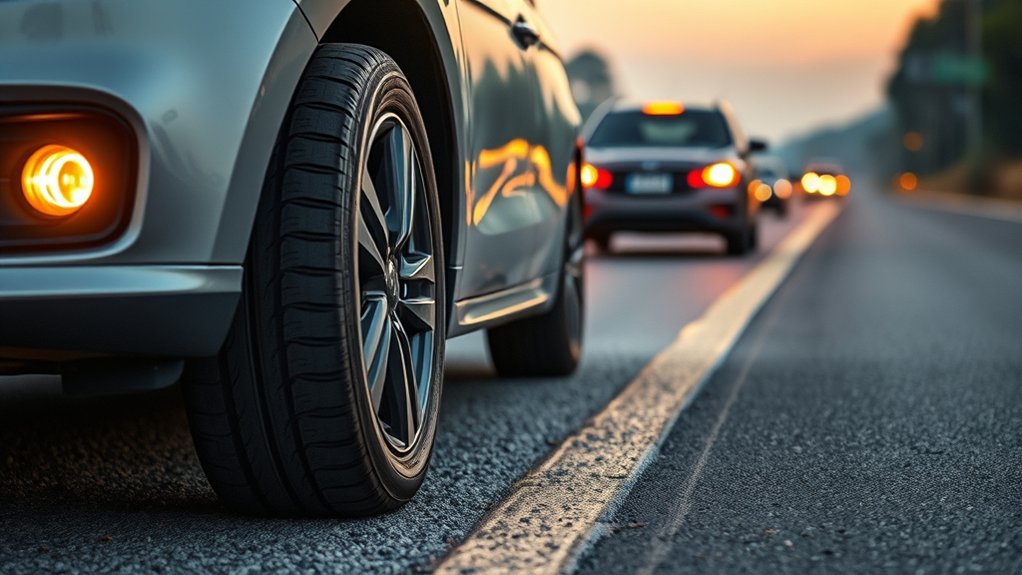
Can you drive on a flat tire? Usually, you shouldn’t. A flat tire is one of those failures that turns normal control into a strain on every system. You can move a few feet to clear traffic or reach a safer shoulder, but that’s it. Beyond that short distance, you risk losing stability, especially while steering, braking, or accelerating. At speed, wet pavement or wind can make the vehicle harder to command, and you’ll need more space to respond.
Turn on your hazard lights immediately, then inspect the tire for visible damage. If the tire’s fully flat, don’t keep driving to “test” it. Continued movement can force the rim into the road surface and can damage the sidewall beyond repair, pushing you toward full replacement instead of a simple fix. The practical choice is to stop, secure the area, and get assistance. Additionally, tire selection plays a crucial role in ensuring your vehicle handles properly under various conditions.
What Happens to Your Tire and Wheel
When you drive on a flat tire, the sidewall can collapse and suffer irreversible damage, so it usually can’t be repaired. The wheel rim can then contact the road directly, which can bend, crack, or break the wheel. You’ll also increase friction and heat, raising the risk of shredding or a sudden blowout. This situation is similar to the impact of tire quality on vehicle performance, emphasizing the importance of maintaining your tires in good condition.
Tire Sidewall Damage
Driving on a flat tire can quickly destroy the sidewall, because the tire’s structure is no longer supporting the vehicle and the rim can contact the road directly. That’s tire sidewall damage, and it usually means the tire can’t be safely repaired. You may also trigger heat buildup, which speeds shredding and weakens control.
| Symptom | Cause | Result |
|---|---|---|
| Cracks or tears | Sidewall flexing | Full replacement |
| Smoke or odor | Friction heat | Rapid failure |
| TPMS errors | Structural damage | Inaccurate readings |
| Pulling or vague steering | Loss of support | Reduced control |
If you keep driving, you raise accident risk and lose dependable braking. Stop as soon as possible, inspect the tire, and replace it if the sidewall shows damage.
Wheel And Rim Risks
A flat tire doesn’t just damage the rubber; it puts the wheel and rim at risk too. When you keep driving, the wheel rim can hit the road directly, and that impact can bend, crack, or break it. Those rim risks get worse fast because the tire can’t cushion the load. You’ll also stress the suspension, which can throw alignment out of spec and strain nearby components. At the same time, your TPMS may take damage, so you lose accurate pressure warnings and add safety problems. Repairing a damaged wheel, suspension, or sensor can cost far more than stopping early. If you want control, freedom, and lower repair bills, pull over immediately and protect the wheel system.
How Far Can You Drive on a Flat Tire?
How far can you drive on a flat tire? In practice, only a few feet. You should move your vehicle just far enough to clear traffic and reach a safe shoulder, driveway, or parking area. Most experts advise limiting flat tires to a few yards because every rotation can grind the rim, stress the suspension, and throw off alignment. If you keep going, you don’t gain control; you lose it. The only common exception is a run-flat tire, and even then you should follow the manufacturer’s limit, often about 50 miles at no more than 50 mph. That’s a contingency, not a license to keep driving freely. For ordinary tires, the smarter move is to stop, call roadside assistance, or install a spare tire. Protect your vehicle, protect your options, and don’t let a minor failure become a major repair. Additionally, using dedicated winter tires can reduce risks during adverse conditions.
When a Flat Tire Is Too Dangerous
A flat tire becomes too dangerous when you lose traction, steering control, and braking response, especially at higher speeds or in poor weather. If you keep driving, you can destroy the rim, overload the suspension, and trigger heat buildup that may cause a blowout or tire shredding. In that situation, don’t drive farther than a few feet to a safe spot; if you can’t do that, tow it instead. Additionally, having a reliable spare tire kit can help you manage unexpected tire issues more effectively.
Immediate Safety Risks
If you keep driving on a flat tire, the wheel can contact the road directly, which can bend or crack the rim, strain the suspension, and throw the vehicle out of alignment. These immediate safety risks make driving on a flat unacceptable.
- Check tire pressure and stop if it’s near zero.
- Slow down; low traction reduces steering, acceleration, and braking control.
- Avoid wet or icy roads, where grip drops fast.
- Move only a few feet to a safe shoulder, then call roadside assistance.
Friction builds heat quickly, and that heat can trigger a blowout without warning. You don’t need to accept that danger. Take preventable measures now: park, secure the vehicle, and replace the tire before you move again.
Damage Beyond Repair
Driving on a flat tire can quickly turn a repairable problem into a total replacement, because the sidewall can be shredded, the internal structure can collapse, and the rim can be damaged beyond safe use. Once that happens, you’ve got damage beyond repair, not a routine patch. A flat tire flexes violently, builds heat, and can separate its layers fast. If you keep rolling, you also risk ruining the wheel rim and skewing TPMS readings, which can hide new pressure loss. That’s not freedom; that’s avoidable failure. Even a short drive can trigger a blowout or fire, making control unpredictable. For your safety and your vehicle’s integrity, treat structural damage as a hard stop. Check the tire, assess the rim, and replace parts that’ve crossed the line.
Tow Instead Of Drive
Once a flat tire has moved beyond a safe repair, towing becomes the safer choice. You should tow instead of drive when the sidewall is shredded, the wheel is exposed, or you’re unsure whether it’s a run-flat. Even a few blocks can damage the rim, suspension, and TPMS, and can knock alignment out of spec.
- Stop moving if control feels unstable.
- Inspect for wheel, bead, or sidewall damage.
- Call roadside assistance or a tow service.
- Secure the vehicle before any further motion.
This choice protects your vehicle and your freedom from avoidable repair bills. Community guidance is consistent: when the tire’s integrity is gone, towing minimizes risk, preserves components, and keeps you safer than forcing the car forward.
What to Do Right After a Flat Tire
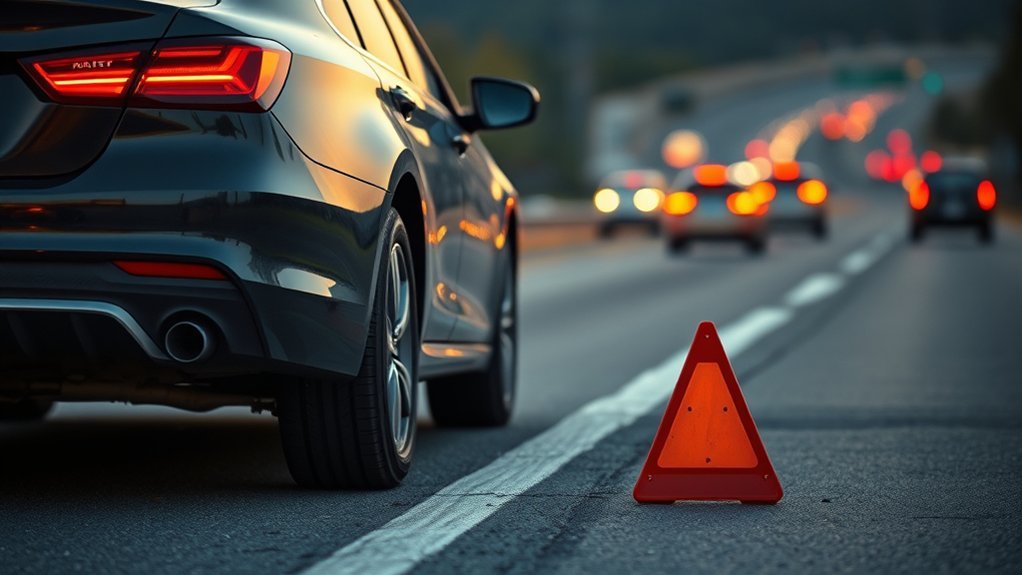
The moment you notice a flat tire, switch on your hazard lights to warn surrounding drivers and make your vehicle more visible. Then slow down smoothly and move to a safe, level spot if you can do so without damaging the wheel. Once stopped, inspect the tire closely. Look for visible punctures, sidewall damage, or a sagging profile so you can tell whether you’re dealing with a slow leak or a full flat. If you’ve got the skill and tools, fit a spare tire or use a repair kit as a temporary measure. Don’t force a fix you can’t control. If you’re unsure, call roadside assistance and let a professional handle it. Afterward, schedule a tire inspection or replacement immediately. That keeps you mobile, protected, and in command of your own journey. Consider using a GlueTread SXS Tire Patch Kit for quick repairs on sidewall damage while on the go.
Can You Drive on Run-Flat Tires?
Yes—if your vehicle has run-flat tires, you can usually keep driving after a loss of air pressure, but only for a limited distance and at reduced speed, typically up to 50 miles at no more than 50 mph. That gives you mobility when a blowout would otherwise trap you.
- Check your TPMS immediately; it should alert you to pressure loss.
- Keep your speed low and avoid hard braking or sharp turns.
- Head straight to a tire shop; don’t treat the tire as roadworthy.
- Replace or inspect the tire after any run-flat event.
Run-flat tires use reinforced sidewalls to carry load when deflated, so you’re safer during an emergency. Some models also use self-sealing compounds to close small punctures. Expect a firmer ride than with standard tires, since the construction is stiffer. Use the freedom they offer, but respect the limits: they’re a short-term mobility solution, not a license to keep driving indefinitely.
How Run-Flat Tires Work
Run-flat tires keep working after a puncture because their structure, not just their air pressure, carries the load. When you choose run-flat tires, you get reinforced sidewalls that hold the vehicle up long enough to keep moving. Many let you travel up to 50 miles at 50 mph, which gives you control instead of roadside paralysis. Some run-flat tires also use a self-sealing compound that closes small punctures before air escapes fully. Additionally, these tires are engineered to provide drive-on protection for a set distance, enhancing safety during emergencies.
| Type | Support method | Benefit |
|---|---|---|
| Self-supporting | Reinforced sidewalls | Temporary mobility |
| Support ring | Rubber ring under tread | Added load support |
| Self-sealing | Sealant layer | Blocks small leaks |
| Both | Limited air-loss tolerance | Safer emergency driving |
| Tradeoff | Stiffer construction | Less comfort, higher cost |
You’ll usually feel a firmer ride, and you may face fewer size choices. Still, run-flat tires can help you keep moving with purpose when freedom matters most.
When to Repair or Replace a Flat Tire
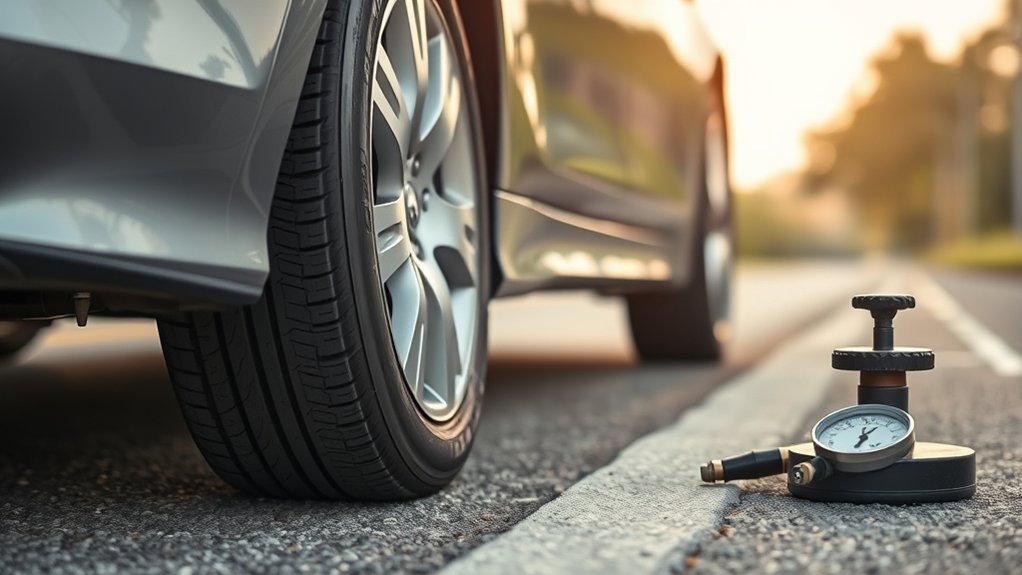
- Inspect the puncture location.
- Measure the hole size.
- Check for sidewall damage.
- Ask a technician to verify safety.
If you drove on the tire while it was flat, hidden internal damage may make it unsafe even when the outside looks fine. Multiple repairs also weaken the tire’s reliability, and worn tread often ends the tire’s service life. You deserve a setup that lets you move freely without gambling on a failing carcass. A professional technician can confirm whether the tire meets repair standards or whether replacement is the only responsible option. Additionally, consider the tire’s performance characteristics, as these can influence its longevity and safety after a flat.
How to Prevent Flat Tires
You can prevent many flats by checking tire pressure at least once a month with a gauge and inflating each tire to the manufacturer’s specified PSI. You should also rotate your tires every 5,000 to 8,000 miles so they wear evenly and stay less prone to failure. These two maintenance steps reduce under-inflation, uneven wear, and the risk of a flat. Additionally, investing in affordable RAV4 tires can enhance your vehicle’s overall performance and minimize the likelihood of tire-related issues.
Check Tire Pressure
Checking tire pressure regularly is one of the simplest ways to prevent flats and keep your vehicle safe. When you check tire pressure, use a reliable gauge at least once a month, and match the manufacturer’s recommended PSI. Proper inflation keeps tread wear even, supports handling, and cuts rolling resistance, so you don’t waste fuel or control.
- Measure tires when they’re cold.
- Compare readings to the door placard.
- Add or release air as needed.
- Inspect for cracking, bulging, or cuts.
These checks let you spot damage before it turns into a flat or blowout. By staying on top of pressure, you keep your tires stable, your drive efficient, and your mobility freer and safer.
Rotate Tires Regularly
Rotating your tires every 5,000 to 8,000 miles helps prevent uneven wear and lowers the risk of flats caused by premature tire failure. When you rotate tires regularly, you spread load and abrasion across all four tires, which improves handling, traction, and vehicle stability. Follow your manufacturer’s rotation pattern exactly; it’s engineered for your drivetrain and tire design. Skip this maintenance, and you invite faster tread loss, weak spots, and a higher chance of a roadside flat. Stay ahead of failure by tracking mileage and scheduling rotation with every other oil change if that matches your interval. This simple, disciplined step protects your freedom on the road, extends tire life, and cuts replacement costs while keeping your vehicle safer and more responsive.
Why Towing Is Usually the Safest Choice
Towing is usually the safest choice because driving on a flat tire can quickly damage more than the tire itself. When you choose towing, you protect the wheel from bending or cracking, and you avoid extra strain on your suspension. That keeps you in control and prevents avoidable repair bills. The risk of a complete blowout also climbs fast when you keep rolling on low pressure, so towing gives you a cleaner, safer exit from the roadside problem.
Towing is the safest choice, protecting your wheel, suspension, and wallet from costly flat-tire damage.
- Protect the rim from direct road contact.
- Reduce suspension stress and alignment damage.
- Lower blowout risk before the tire fails completely.
- Ensure inspection and replacement for hidden damage.
Some drivers try adding air and limping home, but that approach isn’t reliable. Towing lets you move without guessing, preserve vehicle integrity, and get back on the road with real freedom. Additionally, tire maintenance tips can help prevent such situations from arising in the first place.
Frequently Asked Questions
How Long Can You Drive on a Fully Flat Tire?
You can drive on a fully flat tire only a few feet, and you shouldn’t rely on it at all. Keep speed as low as possible while you move to a safe spot, because every rotation increases Tire Damage, rim wear, and suspension stress. Heat builds fast, and the tire can shred or fail. Stop immediately, inspect the wheel, and call roadside assistance or change the tire if you can.
Can I Drive 2 Miles on a Flat Tire?
No, you shouldn’t drive 2 miles on a flat tire. A flat can’t carry your vehicle’s load, and just 2 miles can bend a rim or damage suspension, turning a quick fix into a costly repair. Tire Safety data shows damage can start within a few hundred feet. If you’ve got run-flats, check the sidewall and drive only as specified. Otherwise, stop, park safely, and call roadside assistance.
Can I Drive My Car if One Tire Is Flat?
No, you shouldn’t drive your car with one tire flat. You’ll lose traction, control, and braking performance, and you can cause rim, suspension, and Tire Damage fast. If you must move it, roll only a few feet to a safer spot, then stop. Turn on hazards, inspect the tire, and call roadside assistance or replace it. Driving farther only deepens damage and narrows your repair options.
How Far Can One Drive With a Flat Tire?
You can usually drive only a few feet on a flat tire, just enough to move to a safe spot. Don’t travel miles; you’ll likely damage the wheel, suspension, and brake components. For Tire Safety, stop immediately, inspect the tire, and call roadside assistance if you’re unsure. If you’re dealing with a run-flat tire, you may get farther, but standard tires aren’t meant for extended driving once pressure’s gone.
Conclusion
You should not keep driving on a flat tire unless you have no safer option. Even a short distance can damage the sidewall, wheel, brakes, and suspension, turning a simple puncture into a wallet-draining repair. If the tire loses pressure fast, the car pulls hard, or you hear grinding, stop immediately. Use your spare, inflate if safe, or call for towing. Acting quickly keeps a small problem from becoming a catastrophe.

Related Articles
What Does a Low Tire Look Like? How to Spot an Underinflated Tire
A low tire looks flattened and sagging, but subtle signs can reveal more—learn what else to watch before it becomes a bigger problem.
Read More
How to Tell If a Tire Is Good: Tread, Age & Wear Check Guide
Learn how to spot a good tire by checking tread, age, and damage—then discover the warning signs most drivers miss.
Read More
What Does 91H Mean on a Tire? Load, Speed & Rating Guide
What does 91H mean on a tire, and why does it matter for safety, handling, and replacement choices?
Read More