You should not drive on a flat tire except to move out of immediate danger. If the tire has lost most or all air pressure, slow down smoothly, turn on your hazard lights, and pull as far away from traffic as you safely can. A standard tire is not built to carry the vehicle without air, and continued driving can damage the sidewall, wheel, suspension, and braking control. Run-flat tires are the main exception, but even they have strict speed and distance limits.
Quick Answer
No, you should not keep driving on a standard flat tire. Move only far enough to clear traffic or reach a safe shoulder, then stop. If you have run-flat tires, follow your owner’s manual and tire maker’s limit, commonly up to 50 miles at up to 50 mph.
Key Takeaways
- A standard flat tire should only be moved far enough to get out of immediate danger.
- Driving on a flat can destroy the sidewall, bend the rim, affect control, and turn a repairable puncture into a replacement.
- Run-flat tires may allow limited driving, often up to 50 miles at up to 50 mph, but the tire and vehicle instructions control.
- A puncture is usually repairable only when it is in the tread area, no larger than 1/4 inch or 6 mm, and professionally inspected from inside.
- If the tire is shredded, the wheel is exposed, the car feels unstable, or you cannot stop safely, call roadside assistance or emergency help.
At a Glance
| Time Required | 5–15 minutes to stop safely and assess the tire; longer if you change a spare or wait for roadside assistance. |
| Difficulty | Easy to stop and inspect; moderate to change a tire safely; unsafe if you are on a narrow shoulder or in heavy traffic. |
| Tools Needed | Hazard lights, owner’s manual, tire gauge, spare tire or inflator kit, jack, lug wrench, wheel-lock key if equipped, gloves, and flashlight. |
| Cost | A professional tire repair is usually far cheaper than replacing a tire, wheel, TPMS sensor, or suspension part damaged by driving on the flat. |
Can You Drive on a Flat Tire?
Usually, no. You can move a vehicle with a flat tire only as far as needed to clear traffic, leave an active lane, or reach a safer shoulder, driveway, parking lot, or other flat stopping area. That is not the same as driving home, driving to a shop, or testing whether the tire will “make it.”
A flat tire reduces the tire’s ability to support the vehicle. The car may pull to one side, steering may feel heavy, and braking distance can increase. At highway speed, rain, wind, or rough pavement can make the vehicle harder to control. If the tire is fully flat, every wheel rotation can pinch the sidewall, generate heat, and bring the rim closer to the road surface.
Warning: Do not drive miles on a standard flat tire. If the vehicle is unstable, the tire is shredded, the wheel is exposed, or you are stopped in a dangerous traffic location, call roadside assistance or emergency services instead of trying to continue.
Turn on your hazard lights, ease off the accelerator, keep both hands on the wheel, and move out of traffic only when it is safe. Do not slam the brakes or make a sharp lane change. Once stopped, set the parking brake and check the tire from a safe location away from traffic.
Good tire selection helps with normal handling, but no standard tire is meant to be driven normally after it has lost the air pressure needed to carry the vehicle.
What Happens to Your Tire and Wheel
When you drive on a flat tire, the tire’s sidewall can fold under the weight of the vehicle. That repeated folding can damage the tire’s internal structure, even if the outside still looks repairable. If the tire collapses far enough, the rim may contact the road directly, which can bend or crack the wheel and add stress to nearby suspension and brake components.
Tire Sidewall Damage
Sidewall damage is one of the biggest reasons a flat tire becomes a replacement instead of a repair. A sidewall carries load and flexes constantly. Once it is cut, shredded, pinched, or overheated, it usually cannot be restored safely for passenger-car or light-truck use.
| Symptom | Likely Cause | What It Usually Means |
|---|---|---|
| Cracks, cuts, or tears | Sidewall flexing under load | Replace the tire |
| Smoke, burning smell, or rubber dust | Heat and friction | Stop immediately |
| Bulge or bubble | Internal separation or impact damage | Do not drive on it |
| Pulling or vague steering | Loss of tire support | Move only to safety |
Do not treat sidewall damage like a simple nail hole in the tread. The U.S. Tire Manufacturers Association recommends considering repair only when the damage is limited to the tread area and the puncture is no greater than 1/4 inch or 6 mm.
Wheel and Rim Risks
A flat tire does not just damage rubber. It also puts the wheel and rim at risk. When the tire no longer cushions the wheel, the rim can hit the road, potholes, or debris directly. That impact can bend the rim, crack the wheel, damage the bead seat where the tire seals, and affect ride quality even after a new tire is installed.
Driving on a flat can also strain the suspension and knock the alignment out of spec. If the vehicle has a direct TPMS sensor mounted at the valve stem, wheel and tire damage may also affect the sensor. That is why stopping early is usually cheaper than trying to limp home.
How Far Can You Drive on a Flat Tire?
With a standard tire, the safest answer is: only far enough to get out of immediate danger. That may be a few feet, a short roll to the shoulder, or the nearest safe pull-off. It should not be two miles, several blocks, or “just to the shop” unless there is no safer emergency option.
Every rotation on a fully flat tire can crush the sidewall and bring the rim closer to the road. If you keep going, you increase the chance of tire shredding, wheel damage, loss of control, and a repair bill that costs far more than a tow.
In 2024, NHTSA reported 511 deaths in tire-related crashes, which is why tire pressure, tread condition, and fast action after a flat matter.
The main exception is a run-flat tire. Some run-flat tires are designed to keep the vehicle mobile after pressure loss, commonly up to 50 miles at up to 50 mph. That limit is not universal. Always follow the vehicle owner’s manual, the tire sidewall markings, and the tire maker’s instructions.
Dedicated winter tires can improve cold-weather traction, but they do not make it safe to continue driving on a standard tire once it is flat.
When a Flat Tire Is Too Dangerous
A flat tire becomes too dangerous to drive on when the vehicle no longer tracks straight, the steering feels unstable, the tire is visibly shredded, the wheel is exposed, or you cannot move without entering fast traffic. Poor weather, darkness, narrow shoulders, bridges, curves, and hills all raise the risk.
Immediate Safety Risks
If a tire goes flat while you are moving, your first job is control. Keep both hands on the wheel, ease off the accelerator, and avoid sudden braking. Signal or use hazards as appropriate, then move out of traffic only when you can do so safely.
- Turn on hazard lights when it is safe to do so.
- Slow down gradually; do not slam the brakes.
- Steer smoothly toward a safe, flat stopping area.
- Stop as far from traffic as possible.
- Set the parking brake and move passengers away from traffic.
If you are stuck in a live lane, cannot reach a shoulder, or feel unsafe exiting the vehicle, stay belted if that is the safer option and call emergency services.
Damage Beyond Repair
A repairable puncture can become a replacement if you drive on the flat long enough to damage the sidewall or inner liner. Hidden internal damage matters because a tire can look acceptable from outside and still be unsafe under load.
Replace the tire instead of repairing it if the sidewall is cut, the shoulder is damaged, cords are visible, the tire has been driven while fully flat, the puncture is too large, or the tire has worn-out tread. A professional should remove the tire from the rim and inspect the inside before approving a permanent repair.
Note: Tire sealant and inflator kits are temporary emergency tools. They may help you reach service in some puncture situations, but they are not the same as a permanent internal tire repair.
Tow Instead of Drive
Choose towing instead of driving when the tire is shredded, the rim has touched the road, the car is hard to control, the spare is missing or flat, the wheel lock key is missing, or the flat happened in an unsafe roadside location.
- Stop moving if control feels unstable.
- Check whether the wheel, bead, shoulder, or sidewall is damaged.
- Call roadside assistance if you cannot safely install a spare.
- Ask for a tow if the vehicle has no usable spare or the technician says it is unsafe to drive.
A spare tire kit can help in emergencies, but only if the spare is properly inflated, the jack is correct for the vehicle, and the tire change can be done away from traffic on firm, level ground.
What to Do Right After a Flat Tire
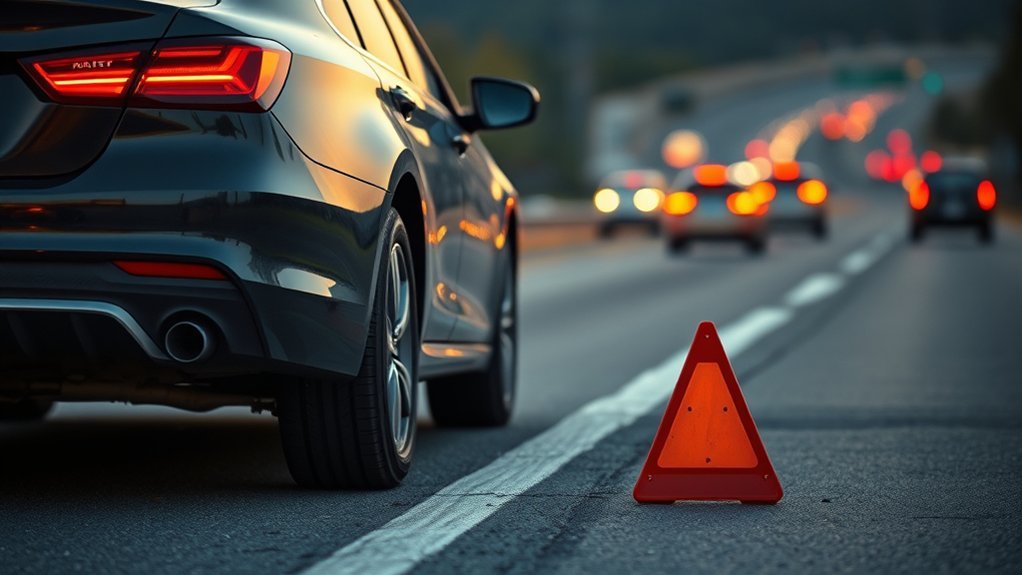
The moment you suspect a flat tire, stay calm and make the vehicle predictable. A loud thump, vibration, sudden pull, low-pressure warning, or flapping sound can all mean the tire is losing air fast.
- Grip the wheel and slow down gradually. Avoid hard braking or sharp steering.
- Turn on hazards. Make your vehicle easier for other drivers to see.
- Pull over safely. Choose a flat, firm area away from traffic if possible.
- Set the parking brake. Keep the vehicle from rolling before inspecting or changing anything.
- Move passengers to safety. Keep them away from traffic and out of the work area.
- Check your equipment. Find the spare, jack, lug wrench, owner’s manual, and wheel-lock key if needed.
- Use roadside assistance when conditions are unsafe. Do not change a tire on a narrow shoulder, soft ground, blind curve, or active lane.
If the vehicle has no spare, check the owner’s manual. Some newer vehicles use run-flat tires or an inflator/sealant kit instead. If the kit is expired, missing, or unsuitable for the damage, call for a tow.
Pro Tip: Check your spare tire pressure before you need it. A flat spare turns a simple roadside tire change into a tow.
Do not use an off-road sidewall patch as a permanent passenger-car tire repair. Products such as a GlueTread SXS Tire Patch Kit are marketed for specific off-road uses, but passenger-car and light-truck sidewall damage should be handled by replacing the tire.
[Products Worth Considering]

This self-service tire repair nail kit includes 60 pieces (30 small + 30 large) to help seal punctures quickly without needing an auto shop visit. The nails are designed to fit different hole sizes and provide a tight connection with sealing glue to help prevent air and water intrusion. Suitable for cars, motorcycles, trucks, and other vehicles, it’s an easy, efficient way to patch roadside tire damage.

TireJect Off-Road Tire Sealant Kit provides 5-in-1 sealing to help fix tread punctures up to 3/8", sidewall punctures up to 3/8", bead leaks, slow leaks, and minor dry rot on low-speed tires. It permanently seals with liquid rubber, recycled tire particles, and Aramid fibers, making it ideal for flats caused by thorns, nails, and screws. The included dispensing cap attaches to the valve stem for a no-mess installation, along with a metal valve core remover tool and valve stem cap. This kit is for off-road use only.

This spare tire tool kit is designed for the 2004 to 2018 Ford F-150 to help you loosen and tighten wheel lug nuts and manage the spare tire and provided jack functions from underneath the vehicle. It includes the lug nut wrench and extension pieces plus a convenient storage carrying case for organized transport. The jack itself is not included.
Can You Drive on Run-Flat Tires?
Yes, if your vehicle actually has run-flat tires and the tire maker allows continued driving after pressure loss. Many self-supporting run-flat tires use reinforced sidewalls to help carry the vehicle temporarily after a puncture. Pirelli, for example, says its run-flat technology can allow driving within 50 miles at a maximum speed of 50 mph before changing the tire.
- Confirm the vehicle has run-flat tires; do not assume.
- Check the TPMS warning and owner’s manual.
- Keep speed low and avoid hard braking, potholes, and sharp turns.
- Drive directly to a tire shop or safe service location.
- Have the tire inspected or replaced after the run-flat event.
Run-flat capability is a short-term mobility feature, not permission to drive normally. Heat, load, road conditions, and the amount of pressure loss can affect whether the tire remains usable.
How Run-Flat Tires Work
Run-flat tires keep the vehicle mobile because their structure supports load after pressure loss. The most common design is a self-supporting tire with reinforced sidewalls. Some tire systems use support rings, and some tires use sealant layers for small punctures, but the exact design depends on the tire.
| Type | Support Method | Main Benefit |
|---|---|---|
| Self-supporting | Reinforced sidewalls | Temporary mobility after pressure loss |
| Support ring | Ring supports the tire from inside | Load support after deflation |
| Self-sealing | Sealant layer closes small punctures | Slows or prevents air loss from minor tread punctures |
| Tradeoff | Stiffer construction | May cost more and ride firmer |
Run-flat tires can provide drive-on protection, but only inside the tire maker’s limits. If you are unsure whether your tires are run-flats, check the tire sidewall, owner’s manual, or tire invoice before relying on that feature.
When to Repair or Replace a Flat Tire
A flat tire can sometimes be repaired, but only under specific conditions. According to industry repair guidance, the tire should be removed from the wheel and inspected inside and out before a permanent repair is approved.
A repair may be possible when:
- The puncture is in the tread area only, not the sidewall or shoulder.
- The puncture injury is no larger than 1/4 inch or 6 mm.
- The tire has not been driven long enough while flat to damage the inner liner or sidewall.
- The repair does not overlap a previous repair.
- The tire still has safe tread depth and no visible structural damage.
- A proper plug-and-patch repair is installed from inside the tire.
Replace the tire if the sidewall is damaged, cords are showing, the shoulder is punctured, the tread is too worn, the tire has a bulge, the puncture is too large, or a technician finds internal damage. Goodyear’s repair guidance also limits repair to tread-area punctures no larger than 1/4 inch and excludes sidewall or shoulder damage.
The tire’s performance characteristics matter, but repair safety comes first. A tire that fails repair standards should be replaced even if it still has some tread left.
[Products Worth Considering]

The Gurduenon scissor car jack tire changing kit is designed for quick flat-tire replacement with a lifting capacity of 2.5 tons and a scissor-lift range sized for many vehicles. The complete emergency set includes a ratchet wrench, lug wrench, gloves, a pencil tire pressure gauge, and a storage bag for convenient trunk or garage use. Universal compatibility makes it suitable for cars, SUVs, and other vehicles roadside assistance needs.

Vigorder rubber cement glue delivers superior adhesion and cures quickly within about 30 seconds for seamless rubber bonding. Once cured, it helps provide a strong, durable, waterproof seal that holds up to vehicle weight, pressure, and heat. Suitable for cars, motorcycles, trucks, bicycles, and off-road tires, it’s designed for emergency patch and maintenance repairs.

The Dr.Roc spare tire tool kit helps you release, lower, or raise your spare tire with reliable extension tools and a lug nut wrench. It is made from rustproof automotive-grade steel and includes an organized carry case for convenient storage. Designed for compatibility with select GM models from the late 1990s through 2019, it uses upgraded extension components to install and remove spare tires with less hassle.
How to Prevent Flat Tires
You cannot prevent every nail, pothole, or road hazard, but you can reduce the risk of flats by keeping tires properly inflated, checking tread, rotating tires when recommended, and replacing damaged or aged tires before they fail.
Check Tire Pressure
Check tire pressure at least once a month when tires are cold, including the spare. Use the PSI listed on the driver’s door placard or in the owner’s manual, not the maximum pressure printed on the tire sidewall. NHTSA says proper tire pressure affects safety, durability, and fuel consumption, and that TPMS is not a substitute for regular pressure checks.
- Measure pressure before driving or after the vehicle has been parked for at least three hours.
- Compare each tire to the recommended cold PSI.
- Add or release air as needed.
- Inspect for cuts, bulges, cracks, nails, and uneven wear.
- Recheck after temperature swings or long trips.
Rotate Tires Regularly
Rotating tires helps reduce irregular wear, which can extend tire life and preserve handling. NHTSA recommends checking the owner’s manual for the correct rotation pattern and rotating every 5,000 to 8,000 miles if the vehicle manufacturer recommends it.
Not every tire setup can be rotated the same way. Some vehicles use different front and rear tire sizes or directional tires. Follow the owner’s manual or ask a tire technician for the correct pattern.
Affordable replacement options, such as affordable RAV4 tires, can help keep a vehicle roadworthy, but no tire should be kept in service if it is damaged, underinflated, or worn beyond safe limits.
Why Towing Is Usually the Safest Choice
Towing is usually the safest choice when the tire is fully flat, visibly damaged, or unsafe to change at the roadside. A tow prevents further wheel damage, avoids rim-to-road contact, and removes the guesswork when you do not know whether the tire or wheel is still safe.
Towing may feel inconvenient, but it can protect the wheel, suspension, TPMS sensor, and your safety when a flat tire is no longer safe to move on.
You may be able to drive again after installing a properly inflated spare tire, but remember that temporary “donut” spares are for short-term emergency use only. Many are limited to about 50 mph and roughly 50 to 70 miles, but your owner’s manual is the final authority.
Some tire maintenance tips can reduce the chance of a flat, but when a flat happens, safe stopping and proper inspection matter more than saving a few minutes.
[Products Worth Considering]

The JACO FlowPro Tire Inflator measures, inflates, and airs down tires up to 100 PSI with battery-free operation and ±2% accuracy after calibration. It features a glowing pressure dial for night visibility, a heavy-duty steel build with a hybrid hose, and a precision push-to-inflate thumb trigger. The patented Lightning Air Chuck locks on for a secure seal, and the kit includes quick-connect hardware for easy inline use with your air compressor.

This car D-wheel lock nut key provides an anti-theft solution for D-shaped wheel lock bolts, helping keep your wheels secure. It features a flower-shaped internal pattern that resists micro-adjustment theft while allowing removal and mounting of compatible locking nuts. Made for reliable performance under high torque, it’s easy to use with standard socket wrench turning for quick tire maintenance and emergency repairs.
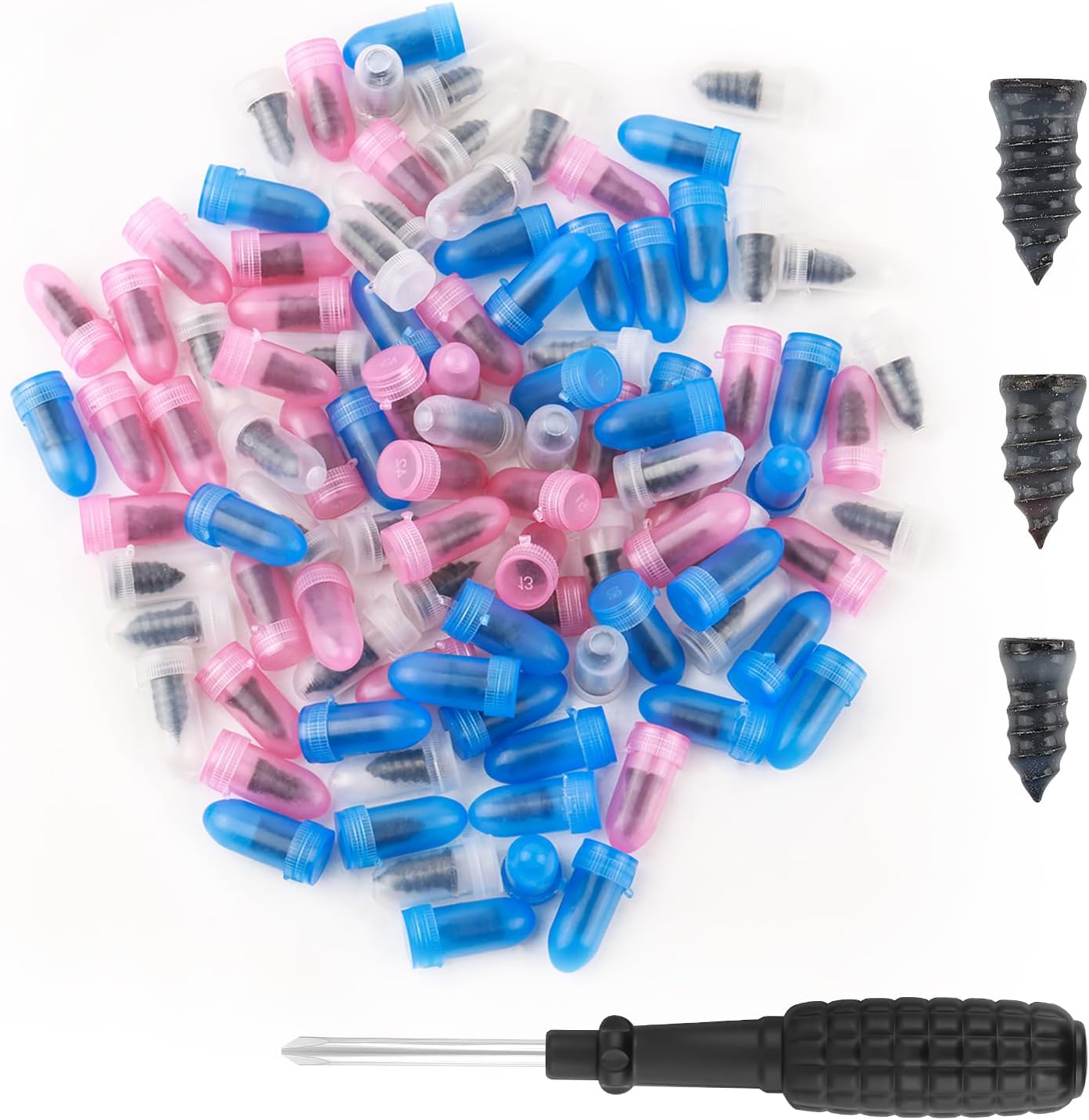
This 100-piece tire repair screw plug kit provides a fast, self-service solution for punctures on the road. Choose the correct plug size, insert it into the break, and screw it in to help seal the puncture and temporarily restore tire pressure. Thickened threads and rubber-wrapped plugs improve bite and sealing while remaining compact and easy to carry.
Frequently Asked Questions
How long can you drive on a fully flat tire?
On a standard tire, only long enough to move out of immediate danger. Do not drive to a shop or home on a fully flat tire. Stop safely, install a usable spare if conditions are safe, or call roadside assistance.
Can I drive 2 miles on a flat tire?
No, you should not drive 2 miles on a standard flat tire. That distance can damage the tire sidewall, rim, alignment, suspension, and TPMS sensor. The safer option is to stop, use a spare if you can do so safely, or call for a tow.
Can I drive my car if one tire is flat?
You can move it only far enough to reach safety. A flat tire reduces traction, steering response, and braking control. Once stopped, do not continue until the tire is replaced with a usable spare, professionally repaired, or the vehicle is towed.
How far can one drive with a flat tire?
For a standard tire, only as far as necessary to get out of traffic or immediate danger. For a run-flat tire, follow the tire maker and owner’s manual. A common limit is up to 50 miles at up to 50 mph, but that varies by tire and vehicle.
Can a flat tire be repaired after driving on it?
Sometimes, but only if a technician removes the tire from the wheel and finds no internal damage. If the sidewall, shoulder, inner liner, or bead is damaged, replacement is the safer choice.
What should I do if my car has no spare tire?
Check the owner’s manual to see whether the vehicle has run-flat tires or a sealant/inflator kit. If there is no usable emergency option, the damage is too severe for sealant, or the roadside location is unsafe, call roadside assistance for a tow.
Conclusion
You should not keep driving on a flat tire unless moving a short distance is the only way to get out of immediate danger. A standard flat tire can quickly lose sidewall strength, damage the rim, reduce steering and braking control, and turn a simple puncture into a costly replacement. Run-flat tires offer limited mobility, but only within the tire maker’s speed and distance limits. When in doubt, stop safely, use a properly inflated spare if conditions allow, or call for roadside assistance.
Sources
- NHTSA TireWise — tire pressure, tread, rotation, TPMS, tire-related crash data, and blowout safety guidance.
- U.S. Tire Manufacturers Association: Tire Repair Basics — tread-only repair area, 1/4 inch / 6 mm puncture limit, internal inspection, and plug-plus-patch repair guidance.
- Goodyear Tire Repair — repair qualifications, including tread-area-only damage, maximum puncture size, and no sidewall or shoulder repairs.
- Pirelli Run Flat Technology — run-flat speed and distance guidance.
- AAA: How to Change a Tire — safe pull-over, hazard lights, parking brake, spare tire tools, temporary spare limits, and roadside assistance guidance.