
When and How to Replace a Honda Accord TPMS Sensor
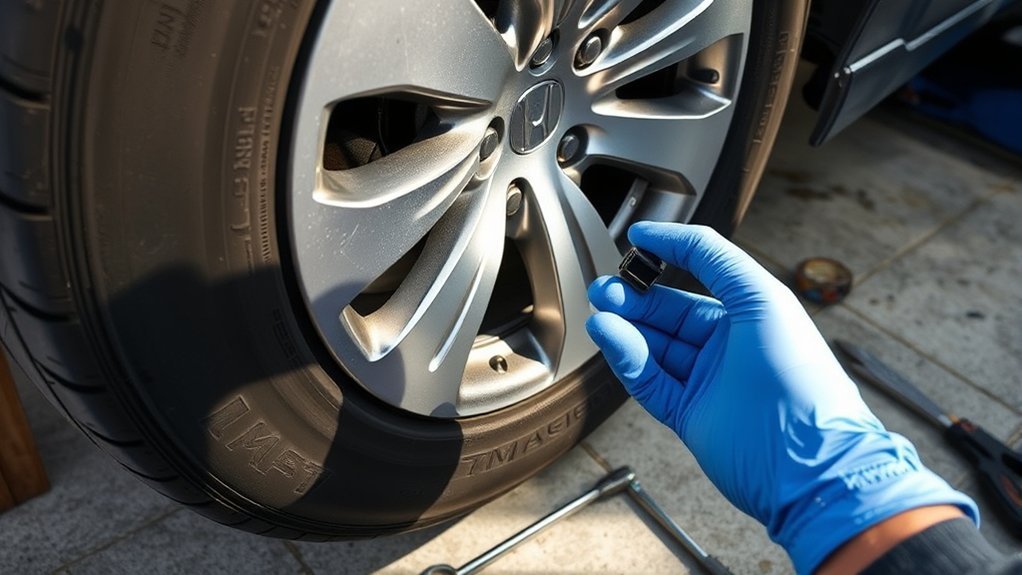
A Honda Accord TPMS warning light does not always mean the sensor is bad. Start with a cold tire-pressure check, inspect for leaks, and confirm whether your Accord uses a direct sensor system or an indirect calibration system. Replace a TPMS sensor only when the warning pattern, scan-tool data, age, damage, or service history points to sensor failure.
Quick Answer
Replace a Honda Accord TPMS sensor when the TPMS light flashes then stays on, the sensor will not read on a TPMS tool, the valve stem is damaged or corroded, or the sensor battery has failed. Check cold tire pressure and recalibrate first, because low pressure or a slow leak can trigger the same warning.
Key Takeaways
- Check all tires with a gauge before replacing a TPMS sensor; TPMS is a warning system, not a substitute for monthly pressure checks.
- A flashing TPMS light that turns solid usually points to a system malfunction, not just low tire pressure.
- Older direct TPMS systems use wheel-mounted sensors; many later Accord systems use indirect calibration through vehicle settings.
- Sensor replacement usually requires tire dismounting, a new valve service kit, inflation to the correct cold pressure, and wheel balancing.
- After sensor replacement, register the sensor ID or run the correct calibration process for your model year.
At a Glance
| Time Required | 15–30 minutes for basic pressure checks and calibration; 45–90 minutes for shop-level sensor replacement and wheel balancing. |
| Difficulty | Easy for pressure checks and calibration; moderate to advanced for direct sensor replacement because the tire must come off the wheel. |
| Tools Needed | Accurate tire-pressure gauge, air source, owner’s manual, TPMS scan or trigger tool for direct systems, tire machine, valve service kit, torque tool, and wheel balancer. |
| Cost | Varies by sensor type, model year, shop labor, and whether the tire is already off the wheel during tire service. |
Check Tire Pressure Before Replacing a TPMS Sensor
Before you blame the sensor, check the tire pressure when the tires are cold. Use the pressure listed on the driver-side tire information label or in your Honda owner’s manual, not the maximum pressure printed on the tire sidewall.
The National Highway Traffic Safety Administration says TPMS warns only when a tire is significantly underinflated, so you should still check tire pressure monthly with an accurate gauge. Check all four road tires, and check the spare tire if your Accord has one.
Pro Tip: If the TPMS light comes on during a cold morning and turns off after driving, check the pressure anyway. Temperature changes can drop tire pressure enough to trigger a warning before the tire warms up.
[Products Worth Considering]
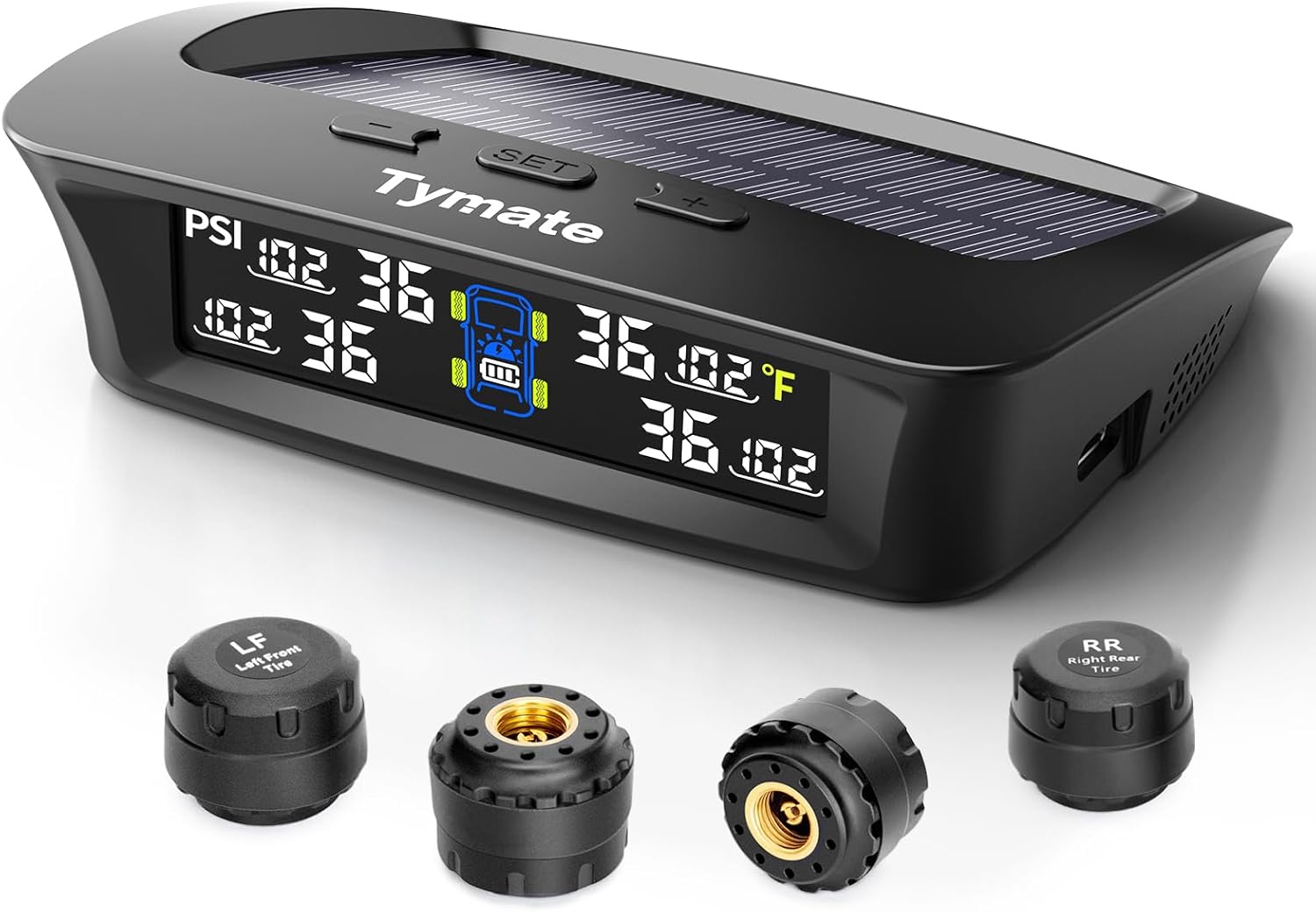
The Tymate TM3 RV TPMS delivers real-time tire pressure monitoring from 0 to 144 PSI with accurate readings and dependable wireless communication. It includes four external sensors with pre-pairing, six alarm modes for rapid leak, pressure extremes, temperature, and signal loss, plus an easy-reference setup for alert thresholds. Solar and USB-C charging help keep the display powered, while the color LCD and adaptive backlight improve visibility for safer driving and towing.

EVOULTES heavy duty tire inflator with an integrated gauge delivers accurate pressure readings from 10–120 PSI, helping you inflate, deflate, and check tires in one tool. The 16.5-inch extended dual-head air chuck with swivel base reaches hard-to-access dual wheel valves on trucks and RVs. A brass trigger core and side-mounted air release valve make operation smooth, with standard 1/4" NPT threading and quick-connect compatibility for easy setup.

The AstroAI 2 pack air chucks provide a heavy-duty, closed-flow locking design that helps keep air flowing during inflation while securely attaching to the valve stem. Built with 250 PSI rated brass components and compatible with Schrader valves, they feature 1/4" female NPT threads for a wide fit with common inflators. The straight tip and locking clip make filling tires and monitoring pressure more convenient.
How to Identify When to Replace Your TPMS Sensor

You may need a new Honda Accord TPMS sensor when the warning light stays on after you confirm the tires are inflated correctly, or when the TPMS light flashes for about a minute and then remains solid. Federal TPMS rules require malfunction warnings when the system cannot detect or report tire-pressure problems as intended.
For direct TPMS systems, also look for a sensor that does not respond to a TPMS scan tool, a dead sensor battery, a cracked sensor body, corrosion around the valve stem, a leaking valve seal, or a damaged sensor after tire service. Diagnostic trouble codes can also point to a specific wheel position or sensor ID issue.
Do not assume repeated low-pressure alerts automatically mean the sensor failed. A nail, bead leak, cracked valve stem, bent wheel, loose valve core, or seasonal temperature change can trigger real low-pressure warnings. Fix pressure loss first, then retest the system.
TPMS is a backup warning system. Your safest first step is still a cold tire-pressure check with a gauge.
Direct vs. Indirect TPMS on a Honda Accord
A direct TPMS uses a pressure sensor mounted inside each wheel, usually attached to the valve stem. If one sensor fails, a technician can replace that sensor, register its ID, and confirm the system reads it correctly.
An indirect TPMS does not use individual pressure sensors inside the wheels. It estimates pressure changes through wheel-speed and vehicle sensor data. If your Accord uses an indirect system, replacing a “TPMS sensor” at the valve stem may not apply. Instead, you usually correct tire pressure and run the calibration process from the vehicle controls.
Because Accord procedures vary by model year, trim, and market, confirm the system type before buying parts. The owner’s manual is the safest source for the exact reset, calibration, or relearn method for your car.
Step-by-Step Guide: Replacing Your TPMS Sensor
Replacing a TPMS sensor on a direct TPMS Honda Accord is a tire-service job. You can check pressure and start calibration at home, but sensor replacement usually needs tire equipment.
Warning: Do not break the tire bead, remove a tire, or inflate a tire/wheel assembly without proper equipment and training. A damaged TPMS valve or poorly seated tire can leak air and create a safety risk.
| Step | Action |
|---|---|
| 1 | Confirm your Accord uses direct TPMS and verify the correct replacement sensor for your model year, wheel type, and frequency. |
| 2 | Remove the wheel, deflate the tire, and break the bead carefully so the sensor and valve stem are accessible. |
| 3 | Remove the old valve-mounted sensor, inspect the valve hole, and install the new sensor with a fresh seal, washer, cap, and valve core as required. |
| 4 | Tighten the sensor hardware to the sensor maker’s specification, then reseat the tire bead and inflate the tire to the correct cold pressure. |
| 5 | Check for leaks at the valve stem and bead, then balance the wheel before reinstalling it on the vehicle. |
| 6 | Register the new sensor ID or run the correct TPMS calibration process for your Accord, then road test and confirm the light stays off. |
If the TPMS warning returns after the road test, scan the system again. A persistent warning can mean the wrong sensor, an unregistered sensor ID, low tire pressure, a leak, a receiver issue, or a calibration that did not complete.
Troubleshooting Common TPMS Sensor Problems
Use the light pattern to narrow the problem before replacing parts. A solid TPMS or low-pressure light usually means one or more tires are underinflated. A flashing light that turns solid usually means the system has detected a malfunction.
- Light turns on after a cold night: Check cold pressure and adjust each tire to the door-label pressure.
- Light stays on after inflation: Recheck pressure with a reliable gauge and inspect for leaks, nails, valve damage, or bead leaks.
- Light flashes, then stays on: Scan for TPMS faults and check sensor communication, sensor ID registration, and system calibration.
- Light appears after new tires or wheels: Confirm the wheels, sensors, and tire sizes are compatible with your Accord’s TPMS system.
- One wheel never reads on a scan tool: Suspect a dead sensor battery, damaged sensor, or wrong replacement sensor.
For more background on warning lights and sensor faults, see this guide to TPMS light causes and solutions. You can also compare symptoms with broader TPMS basics in this article on what a tire pressure monitoring system does.
[Products Worth Considering]
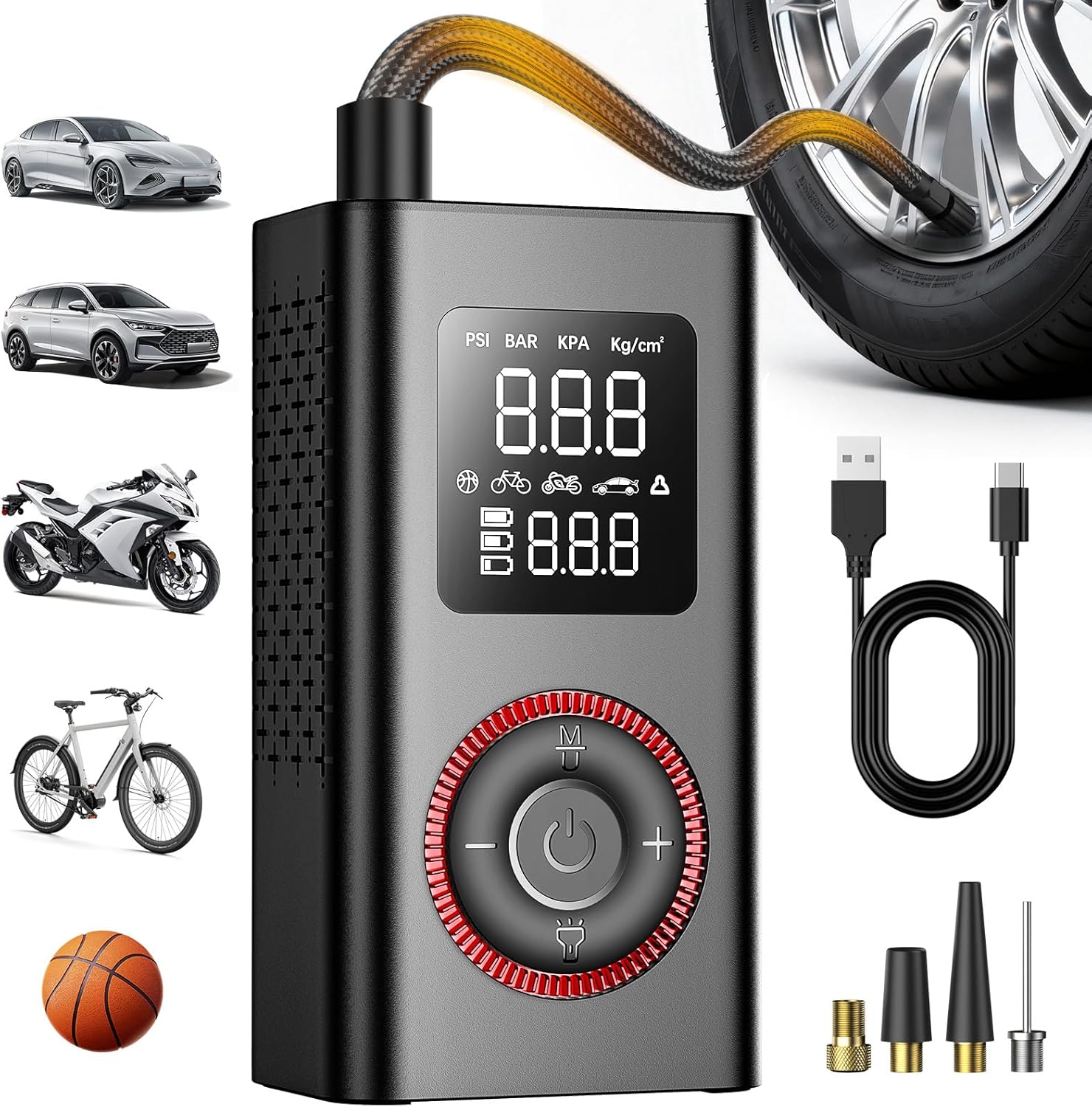
This portable tire inflator delivers fast, efficient inflation with a maximum 150 PSI rating and accurate pressure control for cars, motorcycles, bikes, and more. It features preset modes with automatic shutoff to help prevent overinflation, plus a real-time digital gauge and bright LED light for roadside use. Powered by a rechargeable 6000mAh battery with Type-C charging and a USB output, it’s also useful as an emergency power source for devices.

The Fanttik X10 Pro is a cordless portable tire inflator that reaches up to 150 PSI and can inflate an R15 tire in about 35 seconds for quick roadside or home top-ups. With AccuInFlate auto-stop and smart start/stop controls, it helps maintain accurate pressure and frees your hands once the target is reached. A high-visibility digital display and preset modes make it easy to set and monitor inflation for cars, motorcycles, bikes, and balls.
How to Properly Recalibrate Your TPMS?
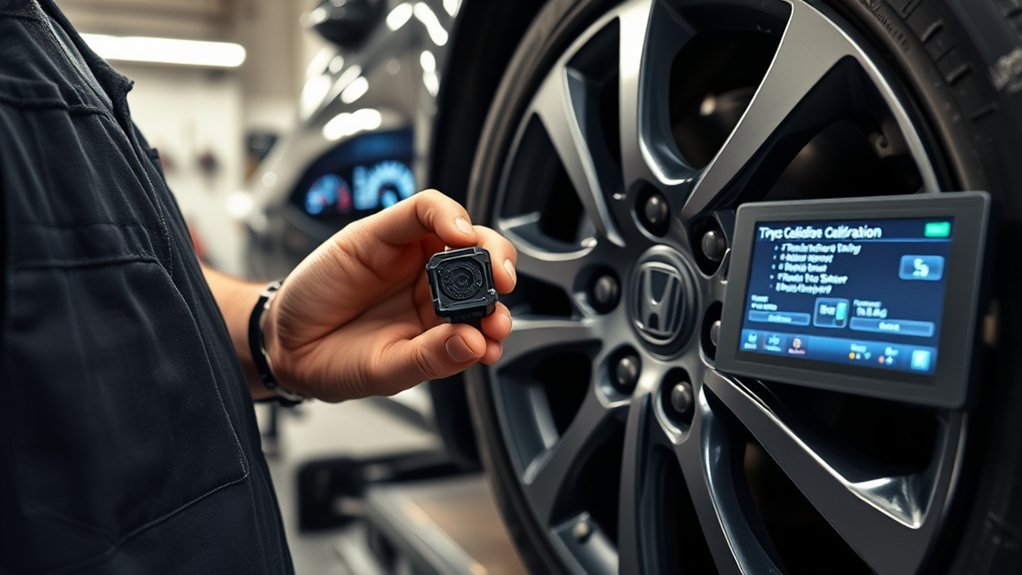
You should recalibrate or relearn TPMS after correcting tire pressure, rotating tires, replacing tires, replacing wheels, or replacing a direct TPMS sensor. The exact method depends on your Accord’s system.
| System Type | What to Do |
|---|---|
| Direct TPMS | Use a TPMS scan or trigger tool and, when required, an OBD-compatible procedure to register the new sensor ID. Then drive the vehicle as directed by the tool or manual. |
| Indirect TPMS | Set all tires to the correct cold pressure, start calibration through the vehicle menu or TPMS button, and drive normally while the system learns the baseline. |
If the light remains on after recalibration, do not keep resetting it. Check tire pressure again, inspect for a slow leak, and scan for TPMS faults. A reset can hide the symptom for a short time, but it will not fix a damaged sensor, wrong sensor ID, weak sensor battery, or leaking tire.
For more reset guidance, compare your symptoms with this guide on how to reset a TPMS light.
When to Call in a Honda Pro for Help
Call a Honda technician or tire professional if the TPMS light flashes and then stays on, the system stores TPMS fault codes, or the warning returns after correct inflation and calibration. Professional service also makes sense when you are replacing tires, changing wheels, or dealing with valve corrosion.
A shop can scan each sensor, confirm battery status where supported, register new sensor IDs, test for leaks, and verify wheel balance. For direct TPMS systems, this is especially important after sensor replacement because the vehicle must recognize the new sensor.
Extreme temperature changes can still affect pressure readings, so do not skip the basic pressure check. If you need a comparison article for another vehicle platform, this guide to temperature changes and TPMS problems explains the same pressure-change principle.
Frequently Asked Questions
How long do Honda TPMS sensors last?
Direct Honda TPMS sensors often last about 5 to 10 years, but battery life varies by sensor design, mileage, temperature, and driving conditions. If one original sensor fails because of age, the other sensors may be near the end of their life too.
Can I replace only one TPMS sensor on my Honda Accord?
Yes, you can replace one failed direct TPMS sensor if the other sensors still work. If all sensors are the same age and one battery has failed, ask the shop whether replacing the full set during tire service would save labor later.
Do all Honda Accords have TPMS sensors in the wheels?
No. Some Accords use direct TPMS sensors mounted inside the wheels, while many later systems use indirect TPMS that estimates pressure changes through wheel-speed data. Confirm your model year and system type before ordering parts.
Why is my TPMS light still on after replacing a sensor?
The new sensor may not be registered, the wrong sensor may have been installed, the tire may still be low or leaking, or the system may need a completed relearn or calibration drive. Scan the TPMS system and verify cold tire pressure again.
Should I recalibrate TPMS after rotating Honda Accord tires?
Yes, recalibrate or relearn the system after tire rotation if your owner’s manual calls for it. This helps the system learn the current tire positions, pressure baseline, or wheel-speed pattern after service.
Conclusion
Replacing a Honda Accord TPMS sensor starts with good diagnosis. Check cold tire pressure, inspect for leaks, understand whether your Accord uses direct or indirect TPMS, and watch the warning-light pattern. If a direct sensor is dead, damaged, corroded, or unresponsive, replace it with the correct part and complete the proper relearn or calibration.
If tire dismounting, sensor registration, or repeated warning lights are involved, a Honda technician or tire professional is the safer choice. A working TPMS helps warn you about dangerous underinflation, but your regular tire-pressure checks still do the most to protect tire life, handling, and road safety.
Sources
- NHTSA TireWise: Tire Safety Ratings and Awareness — supports monthly tire-pressure checks, cold-pressure guidance, TPMS warning meaning, and the reminder that TPMS is not a substitute for regular tire maintenance.
- eCFR 49 CFR 571.138: Tire Pressure Monitoring Systems — supports federal TPMS warning and malfunction indicator requirements.
- Honda Owner’s Manual Search — supports checking model-year-specific Accord TPMS calibration, reset, and tire-pressure instructions.

Related Articles
How Tall Is a 305 70 R17 Tire? Exact Height, Width & Dimensions
Curious how tall a 305 70 R17 tire really is—and whether it fits your truck?
Read More
Can-Am Defender Tire Size Guide: Stock Specs & Upgrade Options
Just how big can you go on a Can-Am Defender before mods become necessary?
Read More
How Tall Is a 275 65 20 Tire? Exact Height, Width & Dimensions
Check the exact height, width, and hidden fitment effects of a 275/65R20 tire before you buy or upgrade.
Read More