
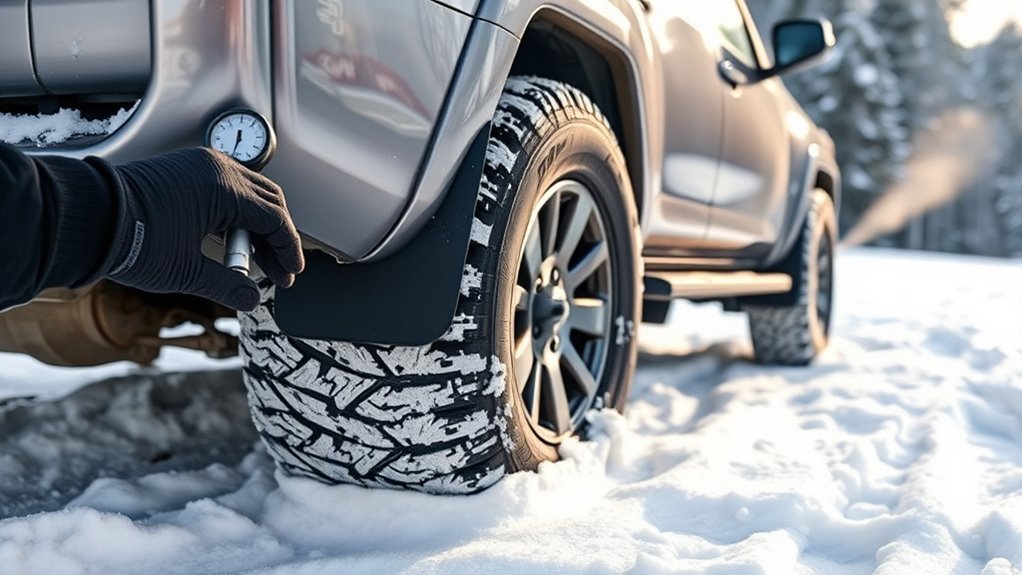
Your Toyota 4Runner’s safest tire pressure in snow depends on where you are driving. For normal winter roads, icy pavement, slush, packed snow, and highway travel, use the cold PSI printed on your driver-side door-jamb placard. Airing down is only a low-speed off-road tactic for deep, soft snow, and you must reinflate before returning to pavement.
Quick Answer
For street snow, keep your 4Runner tires at the vehicle manufacturer’s recommended cold pressure on the door placard. Do not automatically drop to 25 PSI for winter roads. Air down only for low-speed off-road deep snow, reduce pressure gradually, avoid sharp maneuvers, and reinflate before driving on pavement.
Key Takeaways
- Use the door-jamb placard PSI for normal winter road driving, including ice, slush, packed snow, and highway travel.
- Airing down can help flotation in deep off-road snow, but it reduces stability, heat capacity, steering response, and bead security.
- Cold weather lowers tire pressure, so check all four tires and the spare when the tires are cold.
- Winter tires and properly fitted chains do more for winter safety than guessing at a lower PSI.
At a Glance
| Time Required | 5–10 minutes for a pressure check; longer if fitting chains or reinflating after trail use |
| Difficulty | Easy for road-pressure checks; moderate for safe off-road airing down |
| Tools Needed | Accurate tire gauge, portable inflator or compressor, valve caps, chain gloves, flashlight, and your owner’s manual |
| Cost | $10–$25 for a gauge; $40–$150+ for a portable inflator; more for winter tires or quality chains |
Set Your 4Runner to the Door-Placard PSI for Winter Roads
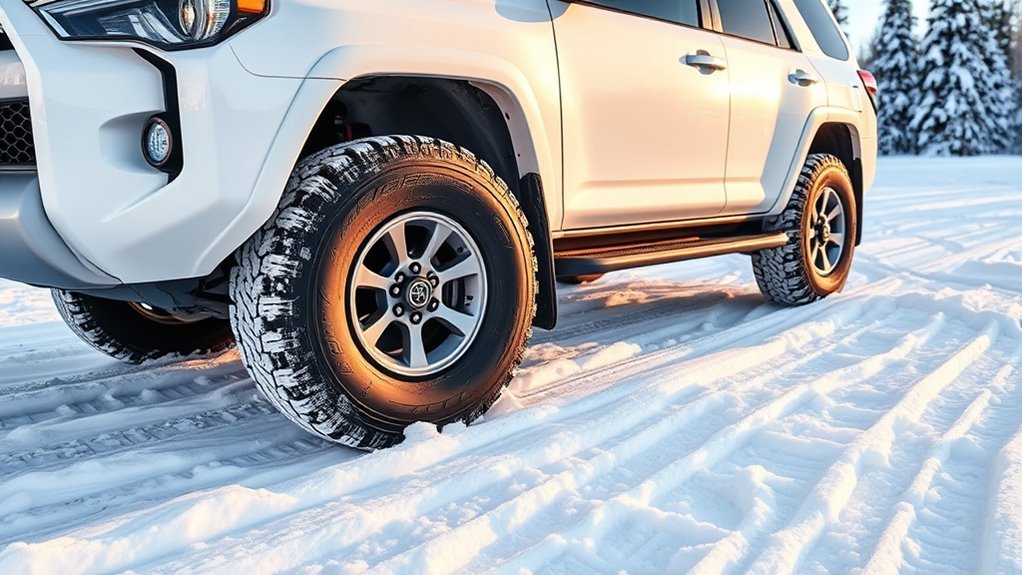
For normal snow driving in your 4Runner, start with the recommended cold tire pressure on the driver-side door-jamb placard, not a random lower number from an off-road forum. The National Highway Traffic Safety Administration explains that the correct tire pressure is the vehicle manufacturer’s recommended cold PSI, usually listed on the door label or in the owner’s manual.
That matters because snow does not mean every road needs a bigger tire footprint. On plowed roads, icy pavement, slush, and packed snow, underinflation can make your 4Runner feel vague, increase sidewall flex, build heat, reduce stability, and worsen tire wear. If your placard lists different front and rear pressures, follow the placard. If it lists the same pressure front and rear, keep them equal unless a tire professional gives you a load-based reason to change.
Warning: Do not use 25 PSI as a default winter-road setting. A pressure that low may be useful only in limited off-road deep-snow situations, and it should never be used for highway speeds unless your vehicle, tire, load, and tire professional specifically allow it.
When to Air Down—and When Not To
Airing down means intentionally reducing tire pressure to let the tire deform and spread its contact patch. That can help in deep, soft, off-road snow where flotation matters. It is not the right default for icy roads, slush, plowed pavement, or fast driving.
| Condition | Recommended PSI Approach | Why |
|---|---|---|
| Plowed roads, slush, ice, highway snow | Use the door-jamb placard cold PSI | Maintains stability, braking response, tire shape, and load capacity |
| Packed snow on public roads | Use the door-jamb placard cold PSI | Packed snow still needs predictable steering and braking, not soft sidewalls |
| Deep, soft, off-road snow | Air down only in small steps, drive slowly, and reinflate before pavement | A larger footprint can help flotation, but low PSI raises tire and wheel risks |
| Tire chains installed | Use placard PSI unless your manual or chain maker says otherwise | Proper tire shape helps chain fit, clearance, and tension |
A number such as 30 PSI front and 25 PSI rear should not be treated as a universal snow setting. At most, that kind of pressure split belongs in the “trail-only deep snow” conversation, and even then it depends on tire size, tire construction, vehicle weight, wheel width, load, speed, and driver experience.
Products Worth Considering

The Airmoto portable tire inflator quickly and accurately fills car, truck, SUV, motorcycle, and bicycle tires up to 120 PSI with auto shut-off when your target pressure is reached. Its large LCD, multi-unit pressure display, and digital gauge make it easy to dial in settings and verify readings, while the built-in LED flashlight helps in low light. The included polyurethane hard carrying case and storage mesh pocket keep the inflator and accessories protected and organized.
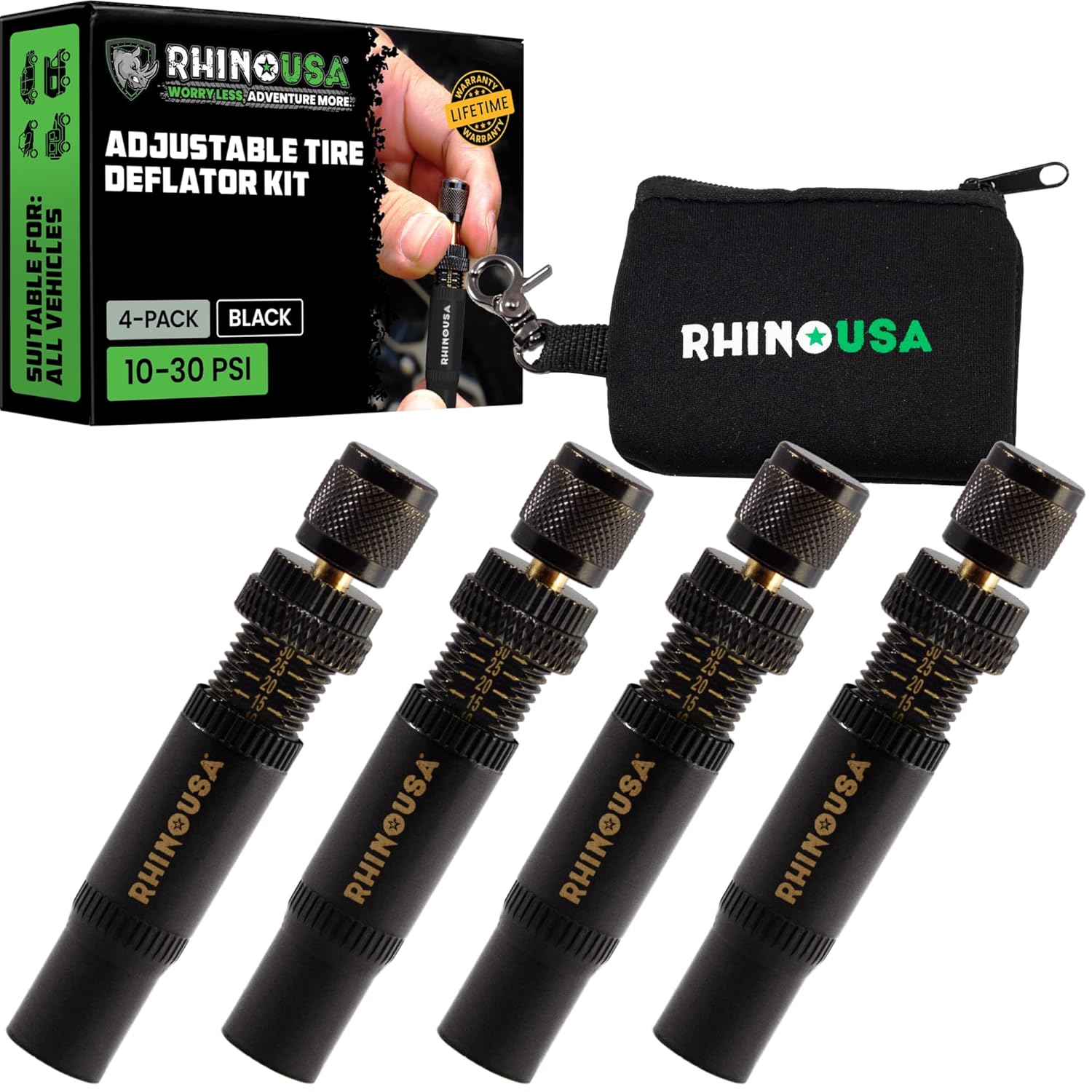
Use the Rhino USA adjustable tire deflators to air down all four tires at once by screwing one deflator onto each valve stem, letting you step away while the tires reach your preset pressure. Each deflator independently adjusts across a 10–30 PSI range with laser-etched indicators for quick setup and verification, making it ideal for beach, sand, and rocky off-road trails.

Milton S-921 pencil tire pressure gauge helps you maintain optimal tire pressure for passenger cars with accurate readings in PSI and kPa. It features a built-in deflator valve for convenient pressure adjustments, plus a single chuck head and nylon indicator bar for easy use on the go. Built from durable plated brass and designed for reliable performance, it’s a practical road trip and cold-weather maintenance tool.
Why Your 4Runner Loses Pressure in Cold Weather
Cold air lowers tire pressure because the air inside the tire contracts. A common rule of thumb is about 1 PSI for every 10°F temperature change. That means a tire set correctly in a warm garage can read several PSI lower outside on a cold morning.
The fix is not to underinflate for winter. The fix is to check the tires cold and bring them back to the recommended cold PSI. Toyota’s tire-pressure guidance recommends checking before driving or after the vehicle has been parked long enough for the tires to cool. The NHTSA-hosted temperature bulletin also explains the 1 PSI per 10°F rule and recommends setting pressure to the specified placard pressure in cold conditions.
Cold weather can make a properly inflated tire look low overnight. Check it cold, adjust it to the placard, and recheck after major temperature swings.
How to Check 4Runner Tire Pressure Before Snow
Use this quick process before a storm, a mountain drive, or a long winter trip:
- Park long enough for a cold reading. Check before driving or after the 4Runner has sat for at least three hours.
- Find the correct PSI. Read the tire and loading information label on the driver-side door jamb. If your tires are not the original size or type, ask a tire professional for the correct pressure.
- Use a real gauge. TPMS is helpful, but it is not a replacement for an accurate hand gauge.
- Check all four tires and the spare. The spare is easy to forget and may not be shown on the TPMS display.
- Adjust to the placard PSI. Add air if the tires are low. If they are high while cold, release air carefully and recheck.
- Reinstall valve caps. They help keep snow, ice, water, and grit away from the valve cores.
Pro Tip: Keep a compact inflator in the cargo area during winter. It lets you correct pressure after a cold snap and reinflate after low-speed trail use before you return to pavement.
Adjust Pressure for Highway Speeds vs. Deep Snow
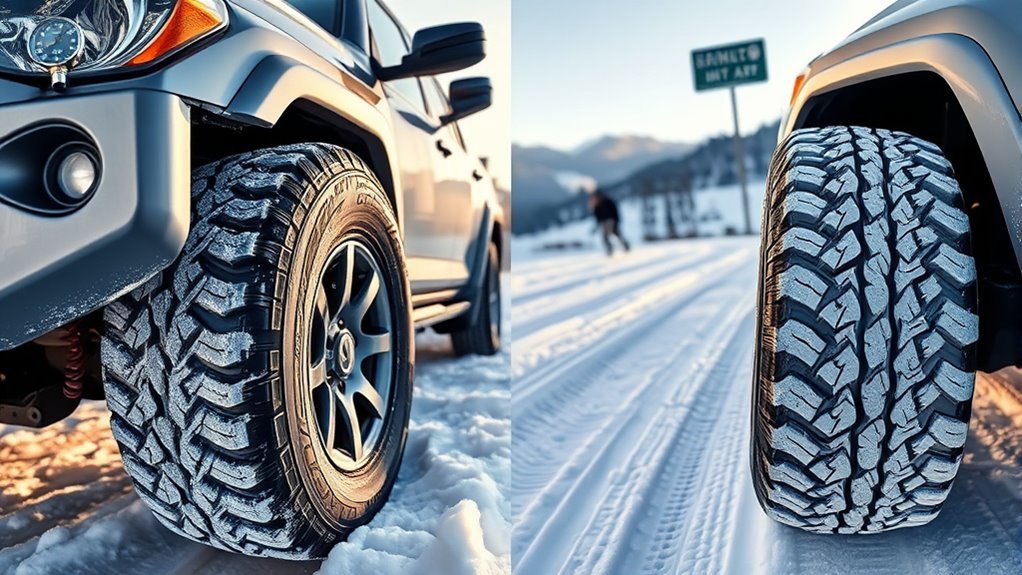
Highway speeds and deep off-road snow require opposite tire-pressure priorities. On the highway, you need stable sidewalls, predictable steering, proper load capacity, and lower heat buildup. That means placard PSI. In deep off-road snow, you may need flotation, which can mean carefully airing down for a short section at low speed.
If you air down off-road, reduce pressure gradually instead of jumping straight to a very low number. Watch for sidewall bulge, steering delay, wheel impacts, and bead security. Avoid sharp turns, sudden braking, high speed, and rocks hidden under snow. Once you are back on a maintained road, reinflate to the placard PSI before continuing.
Warning: Never drive highway speeds on tires aired down for deep snow. Low pressure increases sidewall flex and heat, and it can damage the tire or cause a loss of control.
Inspect Your Spare and Chains Before Storms
Your spare tire, chains, and winter kit should be checked before the weather turns bad. NHTSA winter-driving guidance recommends inspecting tires, tread, sidewalls, damage, and the spare before winter trips.
Products Worth Considering

Monitor tire tread wear with a smart, color-coded depth gauge that shows clear condition ranges at a glance. The bar is range marked for fast, easy readings, helping you maintain safer traction and performance. Each gauge is portable with a pocket clip, and the set includes 20 units for daily use and sharing.

Upgrade your Toyota’s wheels with durable aluminum alloy valve stem caps that help protect valve cores from corrosion and direct exposure to road grime, clay, water, and snow. Rubber rings improve sealing to help prevent air leakage and maintain stable tire pressure for safer driving. These caps are easy to install or remove without tools and add a unique, stylish look to your car.

This ALL-TOP auto-stop tire deflator valve kit lets you air down off-road tires quickly without watching pressure, automatically stopping when your preset PSI is reached. Each valve is individually calibrated for reliable performance with an acceptable +/- 2 PSI tolerance. The adjustable deflator range covers 10 to 30 PSI and includes four valves plus valve caps and a zipper pouch for easy setup on trucks, SUVs, RVs, UTVs, and powersports.
Spare Tire Readiness
Follow this spare-tire checklist before a storm:
- Check the spare tire pressure with a gauge, not just by sight.
- Inspect the sidewall for cracking, bulges, cuts, and weathering.
- Confirm the spare can be lowered, removed, and installed with the tools in your 4Runner.
- Replace an aged, cracked, or damaged spare before you need it in freezing weather.
Chain Inspection Checklist
Chains can help in severe conditions, but only if they fit your exact tire size and are installed correctly. Toyota’s 4Runner winter-driving guidance says to use snow tires on all wheels and to follow tire-chain precautions, including the chain speed limit or 30 mph, whichever is lower, on applicable vehicles.
| Chain Check | What to Do |
|---|---|
| Fitment | Confirm the chains match your tire size and your owner’s manual allows them on your wheel/tire package. |
| Condition | Look for broken links, rust, damaged cables, bent hooks, or missing tensioners. |
| Practice | Install them once in your driveway before you have to do it in snow. |
| Retensioning | Drive a short distance, stop safely, and recheck tension as directed by the chain maker. |
When Your 4Runner Needs Winter Tires, Not Just Pressure Changes
Pressure adjustments cannot turn an all-season tire into a winter tire. If you regularly drive in freezing temperatures, mountain snow, packed snow, or ice, dedicated winter tires are the better upgrade. Winter tires use rubber compounds and tread designs made for cold, snow, and ice, while many all-season tires harden as temperatures drop.
For the best winter setup, run four matching winter tires, keep them at the correct cold placard pressure, and use chains only when required or when conditions demand them. If you use LT tires, oversized tires, beadlock-style wheels, or a heavily loaded 4Runner, get pressure guidance from the tire manufacturer or a qualified tire shop.
Note: Tire pressure should be chosen for the tire, load, speed, and surface. A modified 4Runner on LT tires may need different pressure than a stock 4Runner on original-size passenger tires.
Products Worth Considering

These universal tire valve stem caps help protect valve cores from dust, debris, and moisture while helping maintain stable tire pressure. The corrosion-resistant metal construction and sealed design provide reliable protection in road grime, mud, and winter conditions. Twist-on installation makes them quick to fit on cars, SUVs, trucks, and motorcycles.

Measure tire tread depth quickly and accurately with this LUMITECO dial gauge that reads in 1/32" increments up to 14/32". The color-coded green/yellow/red zones make it easy to judge tire wear and know when replacement is needed. A rugged, compact design with a protective pouch helps keep the gauge ready for use on cars, trucks, motorcycles, and more.

The TOOLITIN floor bike pump delivers high pressure performance with an easy-to-read gauge so you can dial in the right tire pressure for safer rides. It is compatible with both Presta and Schrader valves and features a stable, durable design for efficient pumping. Suitable for road, MTB, and hybrid tires as well as inflating sports balls and other inflatables, it also includes ball and bladder needles and convenient accessory storage.
Frequently Asked Questions
What PSI should I run in my 4Runner tires in snow?
For normal road snow, use the cold PSI on your driver-side door-jamb placard. That is the safe default for icy roads, slush, packed snow, and highway driving. Only air down for low-speed off-road deep snow, and reinflate before returning to pavement.
Is 25 PSI too low for a 4Runner in winter?
For normal winter roads, yes, 25 PSI is usually too low unless your specific placard, tire, or tire professional says otherwise. It can increase sidewall flex and reduce stability. It may be used only as a controlled off-road deep-snow setting with low speeds, careful driving, and reinflation afterward.
Should I air down my 4Runner tires on icy roads?
No. Icy pavement needs predictable steering, braking, and tire shape. Use the placard PSI, slow down, increase following distance, and rely on winter tires or approved chains when conditions require more traction.
Why does my tire pressure drop when it gets cold?
Air contracts as temperature drops, so tire pressure falls in cold weather. A useful rule of thumb is about 1 PSI per 10°F. Check pressure when the tires are cold and adjust back to the recommended placard PSI.
Is 40 PSI okay for winter tires on a 4Runner?
Do not choose 40 PSI just because it is winter. Use the vehicle placard pressure unless your tire, load, or tire professional requires a different setting. The number on the tire sidewall is a maximum limit, not your normal recommended driving pressure.
Do winter tires matter more than lowering PSI?
Yes. Winter tires are designed with cold-weather rubber and tread patterns for snow and ice. Lowering pressure cannot copy the compound, siping, and tread design of a true winter tire.
Conclusion
For a Toyota 4Runner in snow, the safe default is simple: use the cold tire pressure on the door-jamb placard for road driving. Do not automatically drop to 30 PSI front and 25 PSI rear unless you are in a low-speed off-road deep-snow situation and understand the risks. Check pressures cold, inspect the spare and chains, use winter tires when conditions justify them, and always reinflate before returning to pavement.
Sources
- NHTSA Tire Safety Ratings and Awareness — backs up using the manufacturer’s recommended cold tire pressure and checking all tires, including the spare.
- NHTSA Winter Weather Driving Tips — backs up winter tire inspection, cold-weather pressure loss, spare-tire checks, and winter-road caution.
- Toyota: How to Check Tire Pressure — backs up checking tires cold, using the owner’s manual/door label, and the safety risks of low or high pressure.
- Toyota 4Runner Winter Driving Tips — backs up 4Runner-specific snow tire and chain precautions.
- Tire Rack Winter / Snow Tires — backs up winter tire compound and tread benefits in cold, snow, and ice.