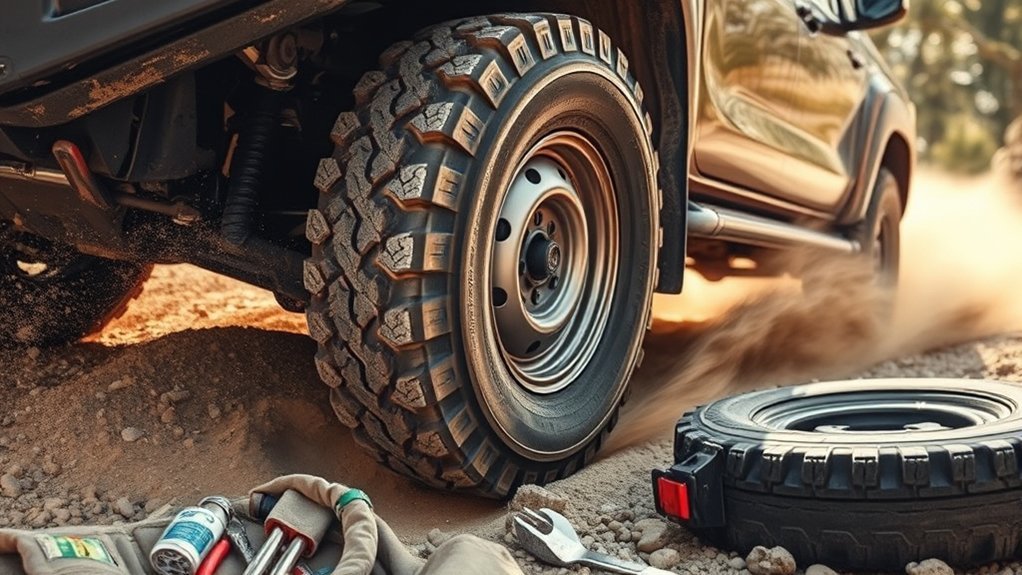
Tires on your Toyota Hilux can blow out when heat, load, damage, or age weakens the tire faster than it can safely carry the truck. Underinflation, overloading, worn tread, road hazards, sidewall cuts, and old rubber are the biggest risks. The safest routine is simple: check cold tire pressure, stay within your Hilux load limits, inspect tread and sidewalls, and slow down after hard impacts or off-road driving.
Quick Answer
Toyota Hilux tire blowouts usually happen because of underinflation, overloading, worn or aging tires, road hazards, poor repairs, or heat buildup during long loaded trips. Prevent them by using the cold tire pressure on your door placard or owner’s manual, checking tread and sidewalls monthly, and replacing damaged tires before driving again.
Key Takeaways
- Do not rely on a generic PSI range. Use the cold tire pressure listed on your Hilux tire placard or owner’s manual.
- Underinflation is dangerous because it increases flexing, heat, sidewall damage, and tire failure risk.
- Overloading, towing, and uneven cargo placement can overload individual tires even when the truck feels stable.
- Replace tires with cracks, bulges, exposed cords, tread separation, or tread worn to 2/32 inch.
- If a blowout happens, hold the wheel firmly, avoid slamming the brakes, gradually slow down, and pull over only when safe.
At a Glance
| Time Required | 10–15 minutes for a monthly tire check; longer after towing, off-road driving, or a hard impact. |
| Difficulty | Easy for pressure and visual checks; professional help needed for sidewall damage, bulges, vibration, or suspected internal damage. |
| Tools Needed | Accurate tire pressure gauge, tread depth gauge or penny, flashlight, valve caps, and your Hilux tire placard or owner’s manual. |
| Cost | Usually $0–$20 for basic gauges; tire repair or replacement costs vary by tire size, load rating, and damage. |
What Is a Tire Blowout and Why Should You Care?
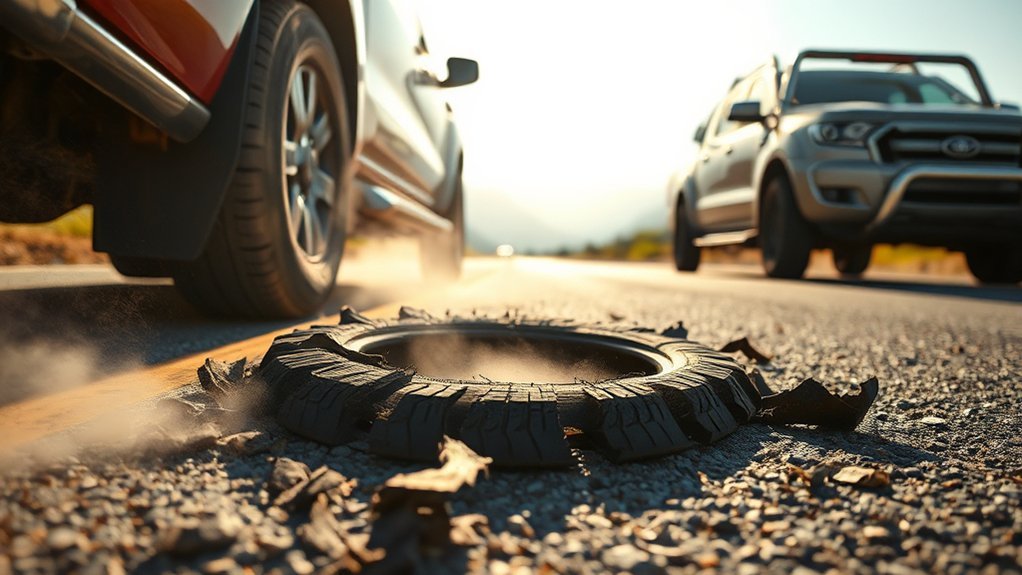
A tire blowout is a rapid loss of air pressure that can make your Hilux pull hard to one side, shake, or become difficult to control. It is more sudden than a slow leak, and it can be especially dangerous at highway speed, while towing, or on rough roads.
According to the National Highway Traffic Safety Administration, poor tire maintenance, including low pressure and missed rotation, can lead to a flat tire, blowout, or tread separation. NHTSA also reports that 511 people died in U.S. tire-related crashes in 2024.
Your tires are the only contact point between your Hilux and the road. A five-minute pressure and sidewall check can prevent a failure that happens in seconds.
7 Common Causes of Tire Blowouts in Toyota Hilux
The Hilux is built for work, towing, rough roads, and off-road use, but those same jobs put extra stress on tires. These are the seven causes you should check first.
- Underinflation: Low pressure lets the sidewall flex too much. That flexing builds heat, weakens the tire, and can lead to sudden failure.
- Overloading: Cargo, passengers, accessories, and trailer tongue weight can push the truck beyond its rated limits or overload one tire.
- Low tread or uneven wear: Worn tread reduces grip and leaves less rubber to resist heat, punctures, and impact damage.
- Aging rubber: Old tires can crack, harden, or separate internally even if the tread still looks acceptable.
- Road hazards: Potholes, rocks, sharp debris, curb strikes, and ruts can bruise the tire structure or cut the sidewall.
- Wrong tire or poor repair: A tire with the wrong size, load index, speed rating, or unsafe plug/patch repair can fail under Hilux loads.
- Heat, speed, and long loaded trips: Hot roads, highway speed, towing, and low pressure multiply heat buildup inside the tire.
Warning: Do not keep driving on a tire with a bulge, exposed cords, deep sidewall cut, tread separation, or repeated pressure loss. Install the spare only if you can do it safely away from traffic, or call roadside assistance.
How Do Tire Blowouts Differ From Flat Tires?
A blowout and a flat tire both involve air loss, but they feel different behind the wheel. A flat tire often loses air slowly, while a blowout happens suddenly and can make the vehicle harder to control.
| Feature | Tire Blowout | Flat Tire |
|---|---|---|
| How it happens | Sudden pressure loss, often with noise, vibration, or a hard pull. | Slow air loss from a leak, puncture, valve issue, or rim problem. |
| Driving feel | Unstable and urgent, especially at speed. | Often more gradual, though still unsafe if ignored. |
| Damage level | Usually severe, with sidewall, bead, or tread damage. | May be repairable if the puncture is small and in the tread area. |
| Best response | Hold the wheel, avoid hard braking, stabilize, and pull over safely. | Slow down, pull over safely, and inspect before driving farther. |
| Repairability | Usually requires replacement. | May be repairable after professional inspection. |
How Underinflation Leads to Tire Blowouts
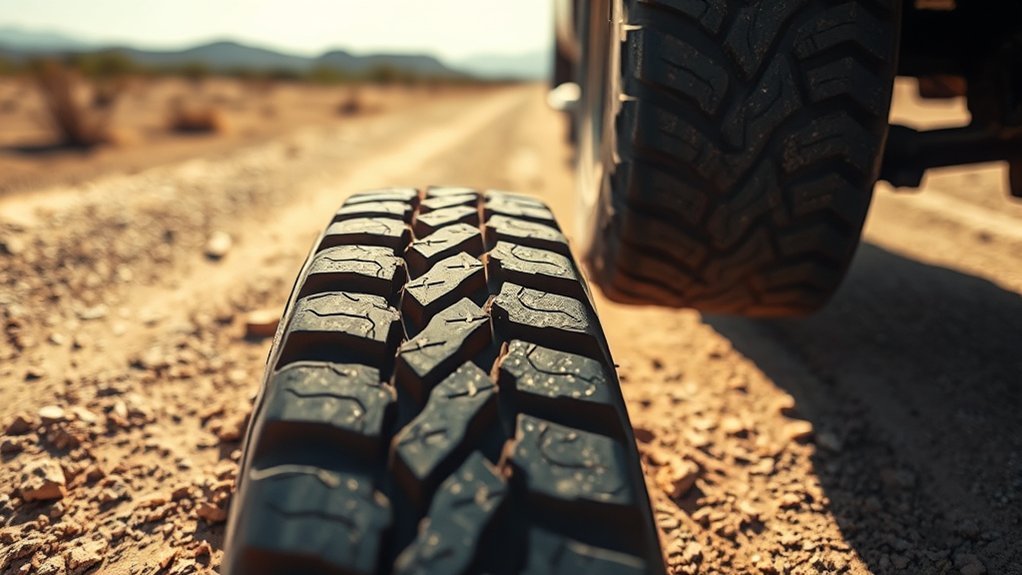
Underinflation is one of the biggest tire blowout risks because the tire must carry the same load with less air support. The sidewall bends more than designed, which creates heat and weakens the tire structure.
Use the cold tire pressure shown on your Hilux tire information placard or owner’s manual. Do not use the maximum pressure printed on the tire sidewall as your normal target. Toyota says the correct pressure specs are listed on the driver’s door jamb sticker, in the owner’s manual, or in online manuals specific to the vehicle.
NHTSA recommends checking all tires, including the spare, at least once a month when the tires are cold. “Cold” means the vehicle has not been driven for at least three hours. This matters because driving heats the tire and temporarily raises the pressure reading.
Pro Tip: Check pressure before the first drive of the day. If you air up warm tires after highway driving, recheck them later when they are cold.
How Temperature Changes Affect Hilux Tire Pressure
Tire pressure changes with weather. AAA notes that tire pressure can drop about 1 PSI for every 10°F drop in temperature. That means a pressure that was correct in warm weather can become low after a cold night or seasonal temperature swing.
Heat can create the opposite problem. A tire may show higher pressure after highway driving or after sitting in direct sun. That does not mean you should bleed air from a hot tire unless it is above the vehicle maker’s recommended range after proper cold-pressure checks. Use a gauge and the Hilux placard, not guesswork.
How Overloading Causes Tire Blowouts
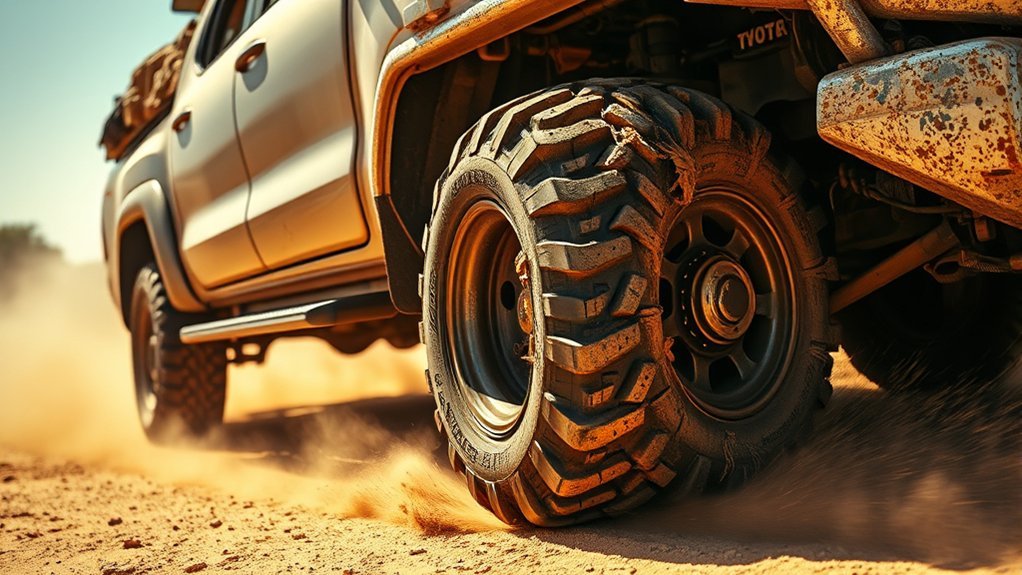
Overloading your Toyota Hilux puts extra stress on the tires, suspension, brakes, and wheel bearings. The risk rises when the load is uneven, the tire pressure is low, or the truck is towing in hot weather.
Use the exact payload, gross vehicle mass or GVWR, gross combination mass, and towing limits for your model year, market, cab style, drivetrain, and trim. Toyota Australia notes that Hilux towing capacity depends on variant and equipment, which is why a single number does not apply to every truck.
- Count all weight: passengers, cargo, accessories, canopy, tools, fuel, recovery gear, and trailer tongue weight.
- Balance the load: keep heavy cargo low and secure so one tire is not carrying too much of the load.
- Match the tire rating: replacement tires should meet or exceed the original load index and speed rating.
- Recheck pressure before towing: follow the Hilux placard or manual instructions for load conditions.
Identifying the Risks of Aging Tires
Aging tires can become risky even when they still have visible tread. Rubber hardens over time, and heat, sun exposure, ozone, storage conditions, and off-road use can speed up cracking or internal separation.
Look for the DOT or manufacture date code on the sidewall. The last four digits show the week and year of manufacture. For example, “3121” means the tire was made in the 31st week of 2021. If your Hilux uses older tires, inspect them more often and ask a qualified tire professional whether replacement is due.
Replace a tire immediately if you see sidewall cracks, bulges, blisters, deep cuts, exposed cords, tread separation, or repeated air loss. Transport Canada warns that tires with deep cuts, cracks, blisters, or bulges are potentially dangerous and should be replaced.
How Road Hazards Contribute to Tire Blowouts
Road hazards can damage a tire instantly or weaken it for a later blowout. Potholes can bruise the internal belts. Sharp rocks can cut sidewalls. Debris can puncture the tread. A curb strike can damage the bead or rim and cause slow air loss.
This matters even more on a Hilux used for work sites, gravel roads, trails, farms, and rough shoulders. After a hard impact or off-road drive, inspect each tire before the next highway trip.
- Check for sidewall cuts, bulges, bubbles, and missing rubber.
- Remove stones trapped in tread grooves if they are easy to dislodge.
- Look for nails, screws, glass, or wire in the tread area.
- Check the rim edge for dents that could cause bead leaks.
- Recheck pressure the next morning to catch slow leaks.
Tire Maintenance Tips for Toyota Hilux
Good tire maintenance is the best blowout prevention plan. Build the routine around pressure, tread, damage, rotation, and load control.
| Maintenance Task | Frequency | What to Do |
|---|---|---|
| Cold tire pressure check | Monthly, before long trips, before towing, and after major temperature changes | Use an accurate gauge and inflate to the Hilux placard or owner’s manual pressure. |
| Tread depth check | Monthly | Replace tires worn to 2/32 inch, and consider earlier replacement for wet, muddy, or off-road use. |
| Sidewall and tread inspection | Monthly and after off-road driving | Look for cuts, bulges, cracks, blisters, exposed cords, punctures, or tread separation. |
| Tire rotation | Follow the owner’s manual; NHTSA notes 5,000–8,000 miles if recommended by the manufacturer | Rotate only if your tire sizes and vehicle setup allow it. |
| Alignment and balancing | When tires wear unevenly, the truck pulls, or vibration appears | Have a qualified shop inspect alignment, balance, suspension, and wheel condition. |
| Load check | Before hauling or towing | Confirm payload, towing, and tire load ratings for your exact Hilux model and tire setup. |
[Products Worth Considering]

This tire inflator with pressure gauge delivers long-lasting performance with a durable rubber-protected gauge and sturdy build. The longer hose and 360 swivel air chuck help you seal the valve securely and keep your hands free while measuring, inflating, or deflating. It’s battery-free for reliable use and provides ±2 PSI accuracy in the mid-range for most typical tires, with universal compatibility for 1/4 NPT compressor outputs.

Monitor tire tread wear with a smart, color-coded depth gauge that shows clear condition ranges at a glance. The bar is range marked for fast, easy readings, helping you maintain safer traction and performance. Each gauge is portable with a pocket clip, and the set includes 20 units for daily use and sharing.

Measure tire tread depth quickly and accurately with this LUMITECO dial gauge that reads in 1/32" increments up to 14/32". The color-coded green/yellow/red zones make it easy to judge tire wear and know when replacement is needed. A rugged, compact design with a protective pouch helps keep the gauge ready for use on cars, trucks, motorcycles, and more.
Warning Signs Your Hilux Tire Is at Risk
Most blowouts feel sudden, but many tires show warning signs first. Stop and inspect the tire if you notice any of these symptoms:
- New vibration through the steering wheel, seat, or floor.
- A thumping, flapping, or rhythmic noise from one wheel.
- Truck pulling to one side on a straight road.
- Repeated pressure loss in the same tire.
- Sidewall bulge, blister, crack, or exposed cord.
- Tread that looks wavy, separated, chopped, or unevenly worn.
- TPMS warning light or sudden low-pressure reading.
Note: A tire pressure monitoring system can warn you about low pressure, but it does not replace monthly checks with a gauge. NHTSA says TPMS is not a substitute for regular tire maintenance.
[Products Worth Considering]

The SAFELIFE dial tire tread depth gauge measures tread depth in 1/32 inch increments with clear, easy-to-read 2-inch dial face. Color zones using a traffic light system help you quickly judge whether tread is low, marginal, or ample for safer driving. Built with a durable zinc cast body and a metal detect probe for precise, comfortable use across cars, motorcycles, trucks, and buses.
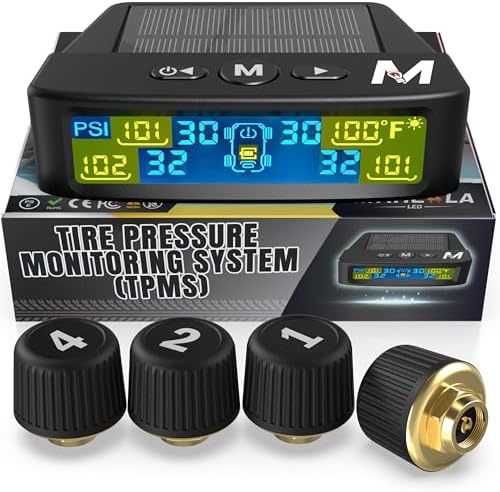
Marcala’s TPMS set of four sensors helps you monitor tire pressure and temperature in real time while driving, with updates every second. The bright color LCD uses auto-dimming for easy viewing, powered by dual solar and USB charging, and offers six alarm modes. Built for trailers, RVs, campers, trucks, and towing setups, the sensors support monitoring 1-4 wheels up to 98 PSI with IP67 waterproof protection.

Accurately measure tire tread depth with a calibrated gauge marked from 0 to 1 inch in 1/32 inch increments. The color-coded bar helps you quickly identify tread condition ranges, supporting safe driving for trucks, motorcycles, automobiles, and passenger vehicles.
How to Handle a Tire Blowout Safely
Even with careful maintenance, a blowout can still happen. Your first goal is to keep the Hilux balanced and controllable.
- Hold the steering wheel with both hands. Keep your eyes on the direction you want the truck to go.
- Do not slam the brakes. Hard braking can make the vehicle harder to control.
- Maintain speed briefly if it is safe. Avoid a sudden lift off the accelerator, then gradually ease off.
- Correct the steering gently. Keep the truck as straight as possible while it stabilizes.
- Slow down gradually. Signal or use hazard lights when you can do so safely.
- Pull off the road only when safe. Choose a wide shoulder, parking lot, or exit instead of stopping in an active lane.
- Inspect from a safe position. Do not stand near traffic. If the location is unsafe, stay clear and call roadside assistance.
Warning: Never change a tire on a narrow shoulder beside fast traffic if you cannot work safely. Move away from the roadway and call professional help.
How Regular Inspections Enhance Tire Safety
Regular inspections help you catch small problems before they become tire failures. They also help you spot patterns that point to deeper issues, such as alignment trouble, suspension wear, bad shocks, or incorrect pressure.
[Products Worth Considering]
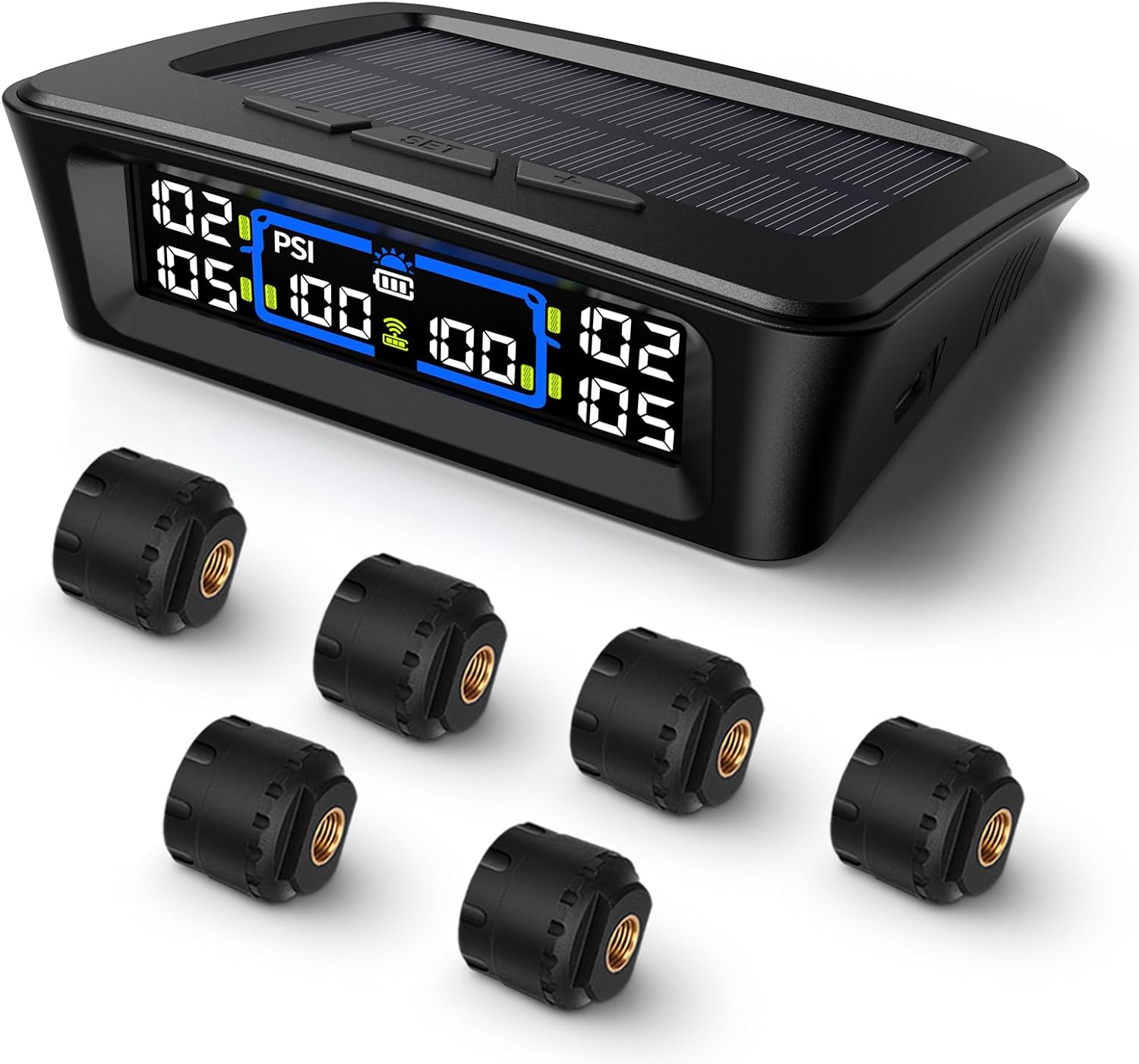
The Tymate TM12 RV TPMS delivers real-time tire pressure and temperature monitoring with a stable 433Hz display for safer long-distance driving. It supports simultaneous monitoring across vehicle and trailer zones, includes six alarm modes for pressure, temperature, leakage, battery, and signal loss, and features easy DIY installation with auto calibration. Power is supplied via USB-C charging or solar recharging, with a wide 0–144 PSI range and up to 50 ft signal coverage for RVs and towable trailers.

Steelman white tire marking crayons provide high-contrast, semi-permanent marks for repairing and inspecting tires and equipment. They write on wet or dry, smooth or coarse surfaces including rubber, metal, glass, and wood, making them ideal for puncture location and damage outlining. The lead- and zinc-free crayons resist weather and fading yet wipe away when you no longer need the marks.

Measure tyre tread depth precisely with a digital gauge that reads in both MM and inches, helping you monitor safe driving conditions. The large LCD screen is easy to operate, and the compact tool fits for cars, trucks, and motorcycles. It provides high accuracy with a 0-25.4mm range and includes a 1-year warranty for added peace of mind.
Key Inspection Benefits
- Better control: Properly inflated tires improve steering, braking, and stability.
- Lower blowout risk: Pressure, tread, and damage checks reduce the chance of sudden tire failure.
- Longer tire life: Rotation, alignment, and correct inflation reduce uneven wear.
- Safer towing and hauling: Load checks help each tire stay within its rated capacity.
Early Damage Detection
Use a flashlight and check the inside and outside sidewalls when possible. Damage on the inner sidewall is easy to miss, especially after a pothole hit or trail drive.
| Inspection Type | What to Look For | Why It Matters |
|---|---|---|
| Visual sidewall check | Cracks, cuts, bulges, blisters, exposed cords | Sidewall damage is usually not safely repairable. |
| Tread check | Low tread, uneven wear, embedded objects, tread separation | Worn or separated tread raises blowout and traction risks. |
| Pressure check | Cold PSI compared with the Hilux placard/manual | Low pressure increases flexing and heat buildup. |
| Road-test feel | Pulling, vibration, wobble, thumping, harshness | Changes can point to tire, wheel, alignment, or suspension issues. |
Optimal Tire Performance
Your Hilux tires perform best when the pressure, tread, size, and load rating match the job. If you switch tire sizes, add heavy accessories, tow often, or drive off-road, ask a qualified tire professional to confirm that your tire load rating and pressure setup still fit the truck’s use.
Frequently Asked Questions
How do you prevent a Toyota Hilux tire from blowing out?
Check cold tire pressure monthly, use the pressure on the tire placard or owner’s manual, stay within load limits, inspect tread and sidewalls, rotate tires as recommended, and replace tires with cracks, bulges, exposed cords, or tread worn to 2/32 inch.
What tire pressure should I use on a Toyota Hilux?
Use the cold tire pressure listed on your Hilux tire information placard or owner’s manual. The correct pressure can vary by model year, tire size, market, load, and front or rear axle. Do not use a generic PSI range or the sidewall maximum as your normal target.
Can I drive after hitting a pothole if the tire still holds air?
You should inspect the tire and wheel first. A pothole can bruise the tire internally, bend the rim, or create a slow leak. If you see a bulge, cut, vibration, or pressure loss, stop driving on that tire and have it inspected.
Are old tires dangerous even if the tread looks good?
Yes. Tires can age, crack, harden, or separate internally even with usable tread. Check the manufacture date code, inspect for cracking or bulges, and follow the tire maker’s and vehicle maker’s replacement guidance.
Does TPMS prevent tire blowouts?
TPMS helps warn you when pressure is significantly low, but it does not replace monthly checks with a pressure gauge. It also may not warn you about sidewall cuts, aging, uneven wear, or sudden impact damage.
Conclusion
A Toyota Hilux tire blowout is rarely just “bad luck.” Most risks build from low pressure, excess load, worn tread, aging rubber, impact damage, heat, or the wrong tire for the job. Check your tires cold, use the Hilux placard or owner’s manual, inspect after rough roads, and treat bulges or sidewall damage as a stop-driving warning. A few minutes of tire care can protect your truck, your cargo, and everyone riding with you.
Sources
- NHTSA TireWise — tire pressure, tread depth, tire maintenance, blowout response, and tire-related crash safety data.
- Toyota: How To Check Tire Pressure — where to find correct vehicle tire pressure and why manufacturer specs matter.
- Transport Canada: Riding on Air — tire inspection, tread wear indicators, cracks, bulges, and rotation guidance.
- Toyota Australia Hilux Owner’s Manual Portal — model-specific Hilux owner manual reference.
- Toyota Australia Hilux — current Hilux towing and variant-limit context.
- AAA: Tire Pressure and Temperature Change — seasonal pressure change rule of thumb.