Butyl Rubber Tube: Properties, Uses & Selection Guide
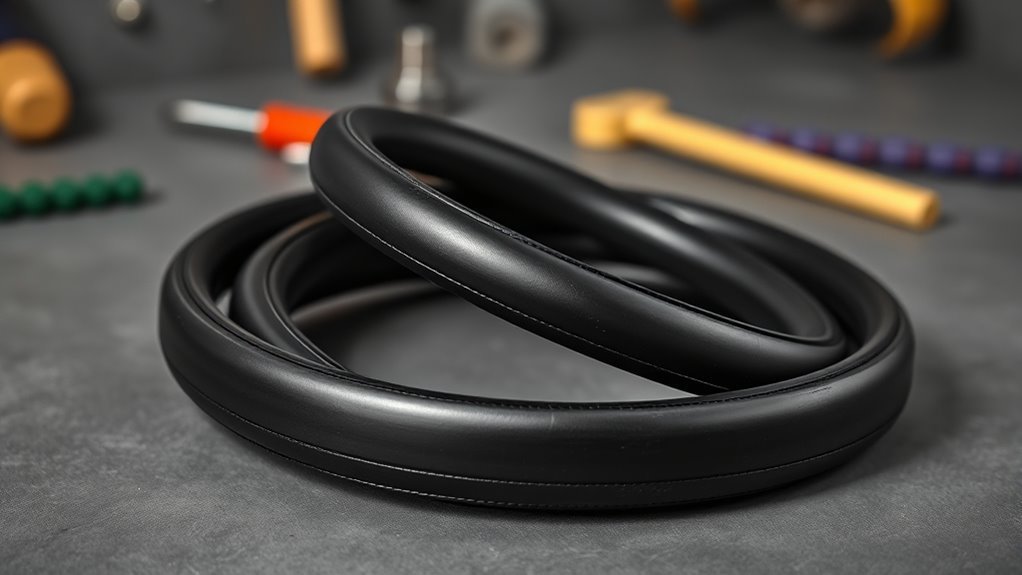
A butyl rubber tube is tubing made from isobutylene-isoprene rubber (IIR), a synthetic elastomer valued mainly for its very low gas permeability, weather resistance, and vibration damping. It is especially useful when air or gas retention matters, but standard butyl is generally a poor choice for continuous contact with petroleum oils, fuels, and many hydrocarbon solvents. Temperature capability, pressure rating, dimensions, hardness, and chemical compatibility depend on the exact compound and tube construction, so the supplier datasheet should control the final specification.
Last updated: August 18, 2026
Quick Answer: What Is a Butyl Rubber Tube?
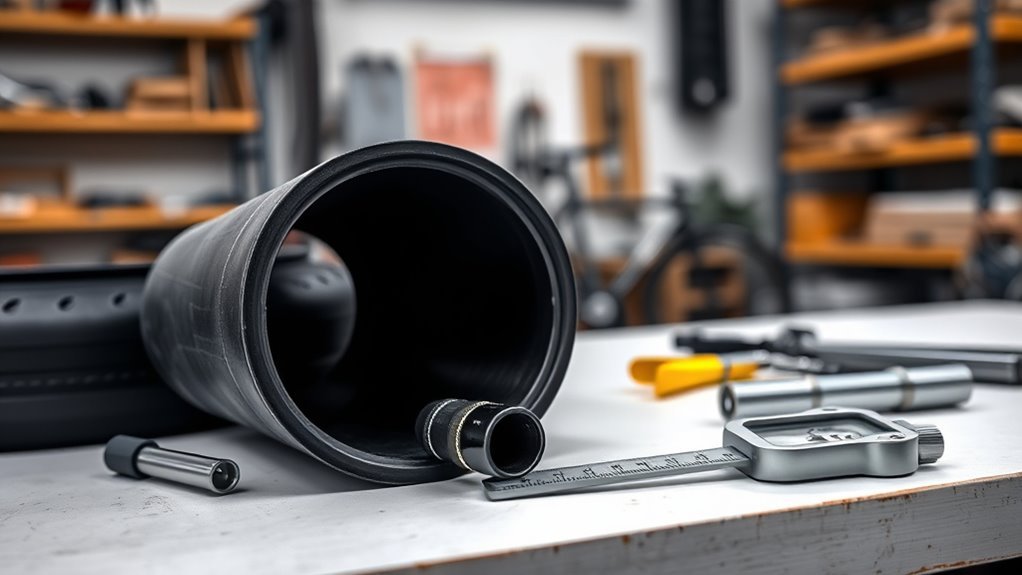
Butyl rubber tubing is made from a highly saturated synthetic rubber known as IIR. Its biggest advantage is its ability to slow the passage of air, water vapor, and other gases. That makes it useful for pneumatic bladders, gas-transfer lines, airtight seals, and other applications where ordinary rubber may allow too much permeation.
Butyl also resists ozone, oxidation, sunlight, and many inorganic acids and alkalis. Its main limitation is poor compatibility with many petroleum oils, fuels, and hydrocarbon solvents. Service temperature is not universal: for example, one commercial IIR tubing product is rated around −30°C to +100°C with +140°C allowed only for short exposure, while other butyl compounds publish different limits. See the Reichelt IIR tubing specification and Trelleborg butyl material guidance.
| Selection factor | What to know about butyl rubber tubing |
|---|---|
| Gas retention | A major strength; butyl has very low permeability to air and many gases. |
| Weather and ozone | Generally strong resistance to ozone, oxidation, sunlight, and weathering. |
| Acids and alkalis | Often suitable for many inorganic acids and alkalis, but compatibility must be checked against concentration and temperature. |
| Oil and fuel | Standard butyl is generally a poor choice for petroleum oils, fuels, and many hydrocarbon solvents. |
| Temperature | Compound-specific. Do not treat a single temperature range as universal for all butyl tubing. |
| Pressure | Determined by the finished tube or hose design, dimensions, reinforcement, fittings, temperature, and manufacturer rating, not by the word “butyl” alone. |
[Products Worth Considering]

This tire repair kit provides fast emergency puncture repair without removing the tire from the rim, helping you get back on the road quickly. Its screw plug system is designed for punctures in both tread and sidewall and includes a complete patch plug tool set with essential accessories. A portable storage bag makes it easy to carry for cars, trucks, SUVs, motorcycles, and heavy-duty applications.

This tire repair patch tool kit helps you quickly seal small punctures using upgraded mushroom plugs and a built-in roller system that presses for even penetration. The tungsten buffing wheel and HSS twist drill bits prepare the damaged surface for stronger adhesion, while the crown-angle friendly plugs are designed to keep water and debris out. Ideal for puncture repairs on many vehicle types, from cars and trucks to bikes and scooters.

Wykodra tire plugs provide quick vulcanizing repairs for tubeless tires, helping you seal punctures and get back on the road. The industrial-strength rubber creates a long-lasting, leak-resistant bond and is designed for emergency fixes without removing the tire. Choose between two standard plug sizes with color-matched options for small to larger damage across many vehicles and off-road uses.
What Is a Butyl Rubber Tube and How It’s Made
Butyl rubber is a copolymer made mainly from isobutylene with a small amount of isoprene. The isoprene introduces limited unsaturation that provides sites for curing. Industrial butyl rubber is produced through low-temperature cationic polymerization, compounded with fillers and curing ingredients, shaped into the required product, and then cured to establish its final elastomeric properties.
Composition And Chemistry
Standard butyl rubber is commonly described as a highly saturated isobutylene-isoprene copolymer, or IIR. Commercial formulations contain mostly isobutylene and a comparatively small amount of isoprene. The highly saturated backbone contributes to butyl’s strong resistance to oxygen, ozone, and weathering, while its molecular structure helps limit gas diffusion.
The exact composition and final performance are formulation-dependent. Fillers, plasticizers, cure systems, hardness, and other compounding choices can change tensile behavior, flexibility, chemical compatibility, and service temperature. For that reason, the properties of a finished butyl tube should be taken from its product datasheet rather than inferred only from the base polymer.
Cationic Polymerization Process
Commercial butyl rubber is produced by cationic copolymerization of isobutylene with a small amount of isoprene at very low temperature. Low-temperature operation helps suppress chain-transfer reactions and supports the high molecular weight required for useful elastomeric properties. Industrial processes commonly use strongly acidic initiating systems, including aluminum-based systems.
A detailed review of the chemistry and commercial approaches is available in Advances in butyl rubber synthesis via cationic polymerization.
Extrusion And Vulcanization
For extruded tubing, manufacturers first prepare a butyl compound containing the base elastomer plus the fillers, process aids, and cure system required for the intended performance. The compound is forced through a die that creates the tube’s inner and outer geometry.
The shaped rubber is then cured, or vulcanized, to create crosslinks between polymer chains. Cure conditions and formulation influence hardness, elasticity, dimensional stability, tensile properties, and permeability. Finished tubing must therefore be specified by its actual inner diameter, outer diameter, wall thickness, hardness, tolerance, temperature rating, and pressure or vacuum rating where applicable.
Physical and Chemical Properties of Butyl Rubber Tubes
The defining property of butyl rubber is low gas permeability. It also offers strong weather and ozone resistance and useful damping behavior. Chemical performance is more selective: butyl often performs well with water, many inorganic acids, alkalis, and polar media, but standard IIR is generally unsuitable for prolonged exposure to petroleum oils, fuels, and many hydrocarbon solvents.
Chemical Resistance Profile
Butyl rubber is commonly selected for environments involving water, moisture, ozone, many acids, and many alkalis. Trelleborg describes IIR as highly resistant to mineral acids, alkalis, and aqueous acids while specifically advising against contact with oils and hydrocarbon solvents. Chemical suitability still depends on concentration, temperature, exposure duration, and the exact compound.
Do not treat “chemical resistant” as a blanket compatibility rating. Before carrying a process fluid, compare the exact chemical, concentration, operating temperature, pressure, and cleaning chemicals against the tube manufacturer’s compatibility data. This is particularly important for solvents, fuels, oils, oxidizers, and mixtures whose composition may change during use.
Thermal And Weather Stability
Butyl rubber generally offers strong resistance to ozone, oxidation, sunlight, and weathering, which is one reason it performs well in outdoor seals and gas-retention applications. Temperature capability, however, varies by compound and product construction.
For example, commercial IIR tubing from Reichelt lists a range of approximately −30°C to +100°C, with +140°C permitted only for short exposure. Parker describes butyl material with low-temperature flexibility around −59°C and heat resistance around 120°C, while other engineered butyl products publish different limits. These values illustrate why a designer should use the rating for the exact product instead of applying one universal temperature range to all butyl rubber tubes.
Mechanical And Elastic Properties
Butyl rubber combines low gas permeability with high damping capacity, making it useful where vibration or shock needs to be absorbed. Its relatively low resilience means that it dissipates mechanical energy rather than rebounding as strongly as some other elastomers.
Tensile strength, elongation, tear resistance, compression behavior, and hardness vary widely with compounding. A commercial tubing example lists 60 Shore A hardness, elongation above 550%, and other product-specific mechanical properties, but those figures should not be assumed for every butyl tube. Use the finished-product datasheet when performing load, deformation, sealing-force, or fatigue calculations.
Advantages and Limitations for Tube Applications
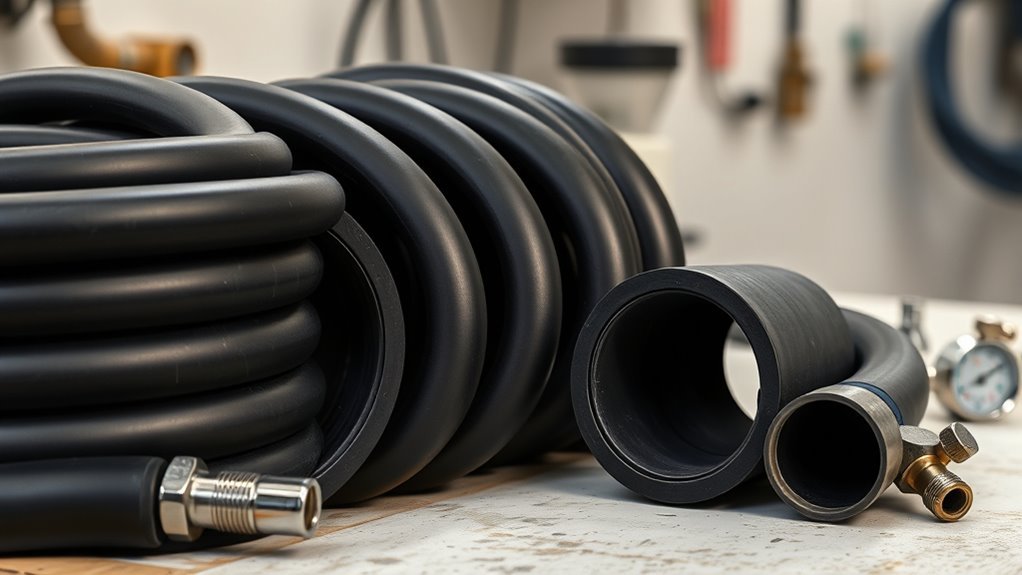
Butyl tubing is strongest when gas retention, weather resistance, moisture resistance, and damping matter more than resistance to petroleum hydrocarbons.
| Application condition | Selection guidance |
|---|---|
| Air or gas must be retained | Strong fit. Low gas permeability is butyl’s main advantage. |
| Outdoor ozone and weather exposure | Strong fit. Butyl generally resists ozone, oxidation, and weathering well. |
| Many inorganic acids or alkalis | Potential fit. Verify concentration, temperature, and compound-specific compatibility. |
| Petroleum oil, gasoline, or hydrocarbon solvents | Poor fit for standard IIR. Select another compatible elastomer unless the exact compound is specifically rated for the fluid. |
| High working pressure | Requires product-level verification. Material name alone does not establish a pressure rating. |
| Extreme temperature | Requires product-level verification. Continuous and short-term limits can differ substantially. |
Manufacturing also matters. Air entrapment, inconsistent extrusion, poor cure control, or incorrect dimensions can reduce the performance of otherwise suitable butyl compounds. For critical applications, specify acceptance criteria for dimensions, hardness, leakage, pressure, chemical compatibility, and aging rather than relying on material name alone.
How Do You Choose the Right Butyl Rubber Tube?
Choose a butyl rubber tube by matching the finished product specification to the actual environment. Start with the fluid or gas being carried, then verify temperature, dimensions, pressure or vacuum requirements, hardness, movement, fittings, and regulatory requirements.
- Fluid or gas compatibility: identify every process fluid, cleaning fluid, lubricant, and contaminant that can contact the tube.
- Inner and outer dimensions: confirm inner diameter, outer diameter, wall thickness, and tolerances from the supplier.
- Pressure or vacuum rating: use the finished tube or hose rating. Do not calculate allowable pressure from “butyl rubber” alone.
- Temperature: distinguish continuous operation from short-duration excursions and verify both against the product datasheet.
- Hardness and flexibility: make sure the compound bends, seals, or clamps correctly for the installation.
- Weather exposure: account for ozone, sunlight, moisture, and outdoor aging.
- Regulatory requirements: medical, pharmaceutical, food, laboratory, and other controlled applications may require specific compound certifications rather than generic IIR.
For critical systems, document leak-rate, pressure, dimensional, chemical-exposure, and aging requirements and validate the selected tube under representative operating conditions before full production.
Common Uses for Butyl Rubber Tubes, Inner Tubes, and Related Products
Butyl appears in several products because its low permeability helps retain air or other gases. It is important, however, to distinguish butyl tubing, removable tire inner tubes, and bonded tire inner liners.
- Industrial and laboratory tubing: butyl tubing may be selected for air, carbon dioxide, gas-transfer, vacuum, or chemical-service applications when the specific product is compatible with the medium.
- Tire inner tubes: butyl is widely used in removable inner tubes because it retains air well and offers useful aging resistance.
- Tubeless-tire inner liners: modern tubeless tires use a low-permeability inner liner bonded to the tire structure. Butyl and halobutyl materials are used for this air-barrier role. Read more in the TubeTyre guide to tire inner-liner materials.
- Hoses and bladders: butyl-based compounds can be used where low permeability, weather resistance, or damping is important, subject to the finished product’s pressure and chemical ratings.
Butyl rubber as a material also appears in products that are not tubes. ExxonMobil lists applications including tire components, hoses, adhesives, sealants, and general rubber goods. Butyl and halobutyl compounds are also used for pharmaceutical stoppers and closures, where low permeability and sealing behavior are valuable. These molded closures should not be confused with butyl tubing. See ExxonMobil’s butyl application overview and Parker’s overview of IIR and medical applications.
If your question is specifically about bicycle tube material rather than industrial tubing, see Butyl vs. Latex Inner Tubes.
[Products Worth Considering]
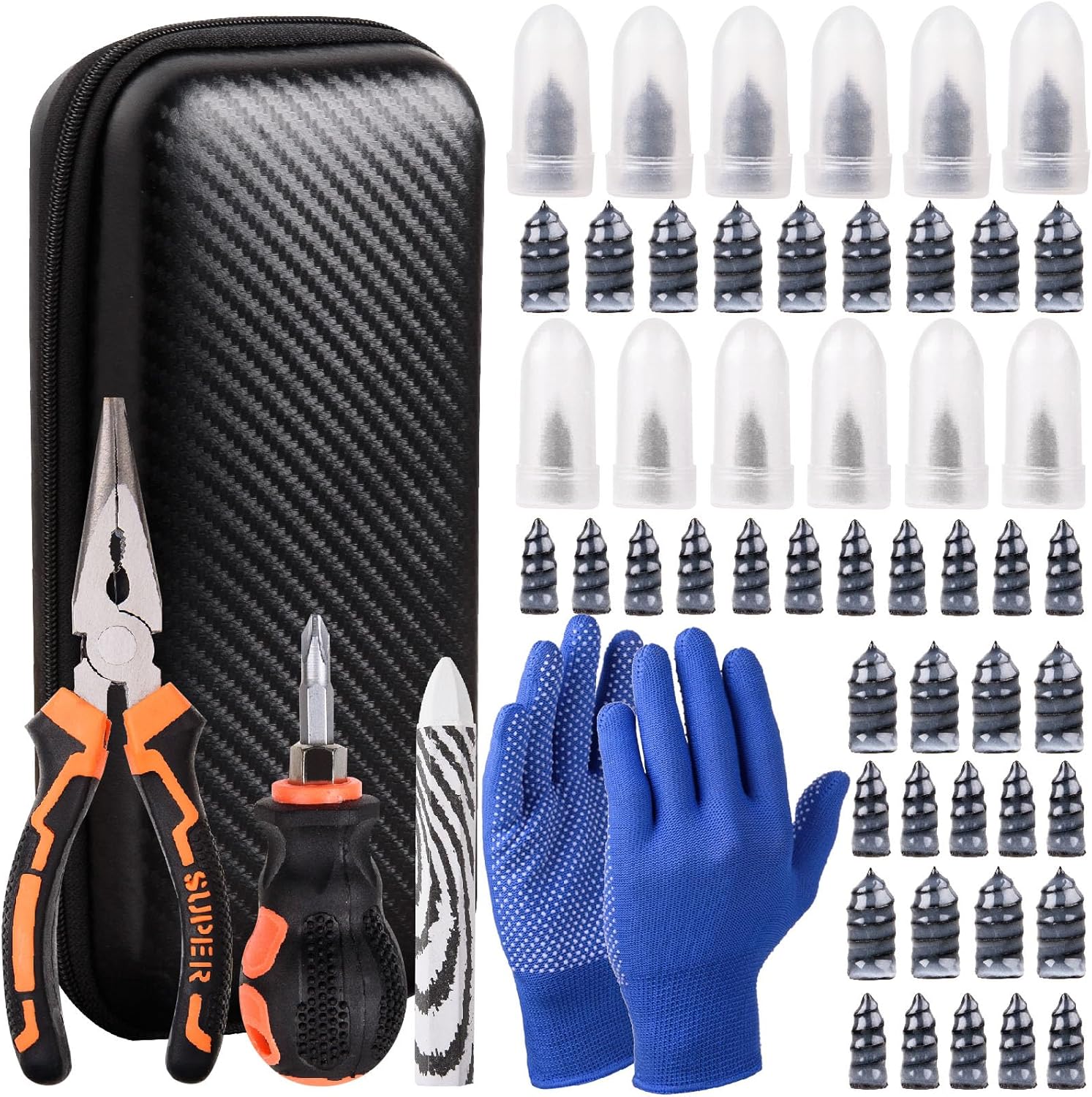
This tire sidewall puncture repair kit fixes flats fast without removing the tire, helping you get back on the road in minutes. It includes self-tapping repair nails, essential tools, gloves, and a portable storage bag for convenient roadside use. Designed for tubeless tires, it helps create a tight, leak-resistant seal for cars, motorcycles, trucks, SUVs, and ATVs.
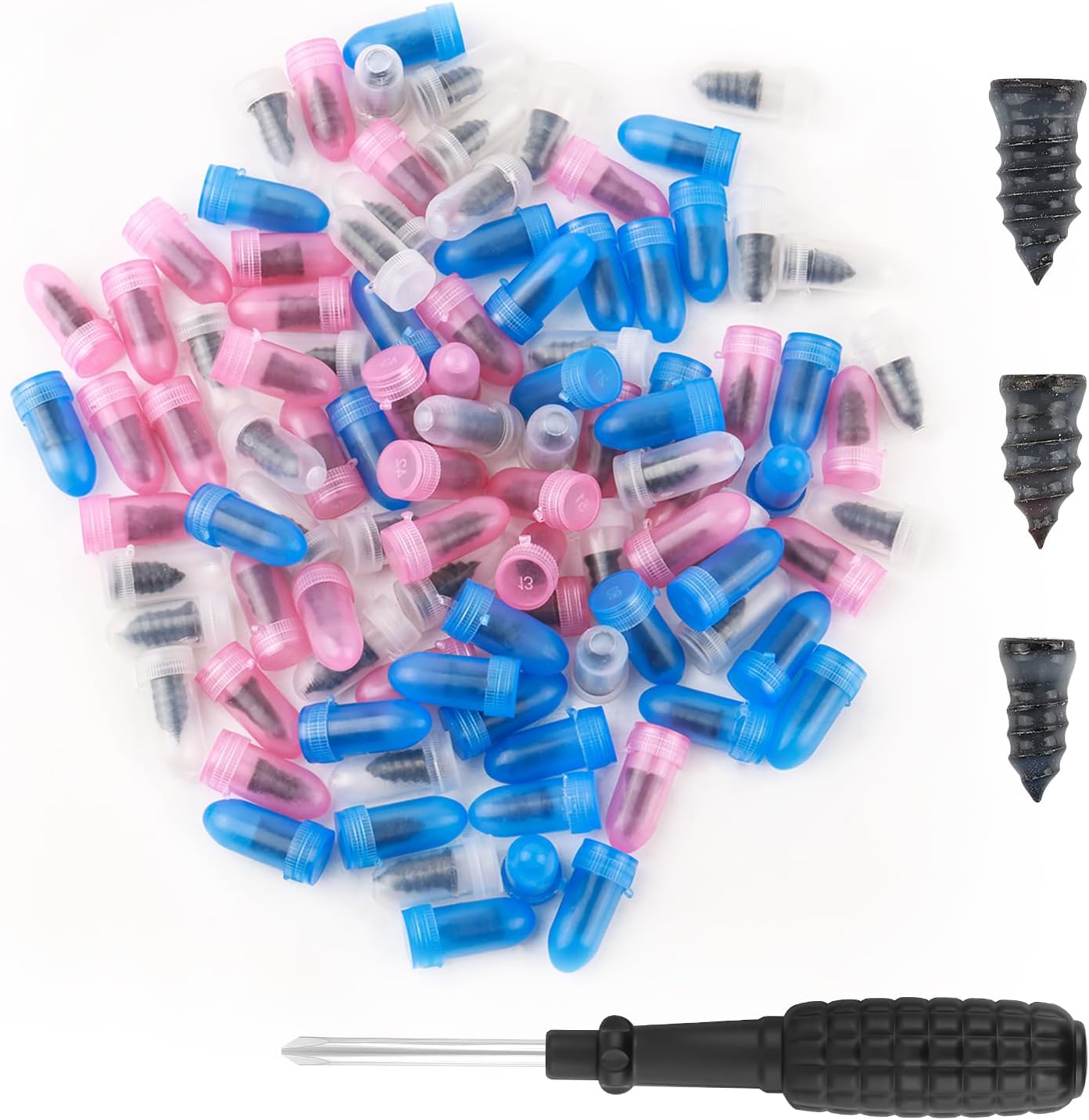
This 100-piece tire repair screw plug kit provides a fast, self-service solution for punctures on the road. Choose the correct plug size, insert it into the break, and screw it in to help seal the puncture and temporarily restore tire pressure. Thickened threads and rubber-wrapped plugs improve bite and sealing while remaining compact and easy to carry.
Standard Butyl vs. Chlorobutyl and Bromobutyl
Standard butyl rubber (IIR) is the base isobutylene-isoprene elastomer. Chlorobutyl (CIIR) and bromobutyl (BIIR) are halogenated forms developed to modify curing and compatibility while retaining strong air-barrier performance.
ExxonMobil notes that chlorobutyl can provide improved compression set and heat, ozone, and flex-fatigue resistance compared with regular butyl, while bromobutyl offers faster and more stable curing. These materials are important in tire and pharmaceutical applications, but their properties should not be substituted automatically for those of standard IIR. Specify the exact polymer family and finished compound required by the application.
Care, Installation, and Lifespan Tips
There is no universal service-life or replacement interval for all butyl rubber tubes. Life depends on formulation, temperature, pressure, chemical exposure, flexing, installation, storage, ozone exposure, and the criteria established by the equipment or tubing manufacturer.
- Inspect regularly: look for cracking, cuts, swelling, blistering, hardening, softening, abrasion, distortion, or leakage.
- Avoid incompatible fluids: standard butyl should not be assumed compatible with petroleum oil, fuel, or hydrocarbon-solvent exposure.
- Protect stored tubing: keep it clean, dry, and away from unnecessary heat, sunlight, ozone-generating equipment, and chemicals that can attack the compound.
- Avoid installation damage: use correct fittings and tools and do not pinch, twist, stretch, or cut the tube during assembly.
- Test suspected leaks: use an application-appropriate leak test and follow the manufacturer or equipment procedure.
- Replace by condition and specification: replace tubing when it fails inspection, leakage, pressure, flexibility, dimensional, or manufacturer-defined service criteria instead of applying an unsupported calendar interval.
For vehicle tires, use the pressure specified by the vehicle or tire-system manufacturer and check pressure regularly. Tire maintenance guidance from the U.S. National Highway Traffic Safety Administration emphasizes proper cold inflation pressure and regular inspection.
Recycling, Alternatives, and Environmental Considerations
Vulcanized butyl rubber is more difficult to recycle than an uncrosslinked thermoplastic. Vulcanization creates a three-dimensional crosslinked network that cannot simply be melted and remolded. End-of-life methods can include grinding into crumb, reclaiming, devulcanization, incorporation of recovered rubber into new compounds, and thermal routes such as pyrolysis.
Research specifically on used butyl inner tubes has demonstrated recovery and reuse approaches, but recycled material can have different processing and mechanical properties from virgin rubber. A 2024 review of waste vulcanized rubber describes the crosslinked structure as a central recycling challenge and discusses physical, chemical, biological, devulcanization, and pyrolysis routes. See the Materials Advances review of vulcanized-rubber recycling.
Material substitution should also follow the application rather than a generic environmental ranking. If butyl’s low gas permeability is not required, another elastomer may offer better oil resistance, temperature capability, mechanical performance, recyclability pathway, or supplier availability. Compare total service life, failure risk, required maintenance, and end-of-life options before changing materials.
| End-of-life route | Key consideration |
|---|---|
| Grinding / crumb reuse | Reuses vulcanized rubber as particulate material rather than restoring it to virgin polymer. |
| Devulcanization / reclaiming | Attempts to break or modify the crosslinked network so material can be reused in rubber compounds. |
| Pyrolysis | Thermally converts waste rubber into gas, liquid, and solid fractions rather than directly remolding the original tube. |
| Material substitution | May reduce another environmental or performance burden, but only if the alternative still satisfies the application. |
Frequently Asked Questions
What Is Butyl Rubber Used For?
Butyl rubber is used where low gas permeability, weather resistance, or damping is important. Common examples include tire inner tubes, tubeless-tire inner liners, hoses, bladders, seals, adhesives, waterproofing products, and pharmaceutical closures. Not every butyl application is a tube, and each finished product has its own specifications.
How Long Does Butyl Rubber Last?
There is no universal lifespan for butyl rubber tubing. Service life depends on the compound, temperature, pressure, chemical exposure, UV and ozone exposure, flexing, storage, installation, and inspection criteria. Use the tubing or equipment manufacturer’s replacement guidance instead of a generic year-based interval.
What Is a Butyl Rubber Tube?
A butyl rubber tube is tubing made from isobutylene-isoprene rubber, or IIR. Its main advantages are very low gas permeability, strong ozone and weather resistance, and useful vibration damping. Its exact temperature, pressure, and chemical ratings depend on the finished compound and tube construction.
Is Butyl Rubber Resistant to Oil and Gasoline?
Standard butyl rubber is generally not recommended for prolonged contact with petroleum oils, gasoline, and many hydrocarbon solvents. If hydrocarbons are present, verify the exact compound against the manufacturer’s chemical-resistance data or select an elastomer designed for that fluid.
What Temperature Can Butyl Rubber Tubing Handle?
There is no single temperature range for every butyl rubber tube. One commercial IIR tubing product publishes approximately −30°C to +100°C with +140°C only for short exposure, while other butyl compounds have different ratings. Use the continuous and short-term limits for the exact finished product.
Can Butyl Rubber Tubes Be Recycled?
Used butyl tubes can enter specialized rubber-recovery processes, but vulcanized butyl cannot normally be melted and remolded like a thermoplastic. Recycling routes can include grinding, reclaiming, devulcanization, reuse in rubber compounds, and pyrolysis, depending on local facilities and the condition of the waste material.
Conclusion
Choose butyl rubber tubing when low gas permeability, weather resistance, moisture resistance, or damping is a primary requirement. Do not assume that all butyl tubes share the same temperature, pressure, chemical, dimensional, or service-life limits. Standard IIR also deserves particular caution around petroleum oils, fuels, and hydrocarbon solvents.
Before specifying a tube, verify the exact compound, inner and outer dimensions, wall thickness, hardness, operating temperature, pressure or vacuum rating, chemical compatibility, fittings, and any required regulatory certification. Those product-level details determine whether a butyl rubber tube is appropriate for the actual system.

Related Articles
Are Premium Tires Worth the Extra Money?
Worth the extra money? Premium tires promise more grip, comfort, and longevity—but the real tradeoff may surprise you.
Read More
What Are OE Tires? Original Equipment Explained
Discover what OE tires really mean and why choosing the right replacement could change everything for your car’s ride, handling, and safety.
Read More
305 Tire Size Explained: How Big Is It?
I explain how big a 305 tire really is—and why the exact fit can surprise you.
Read More