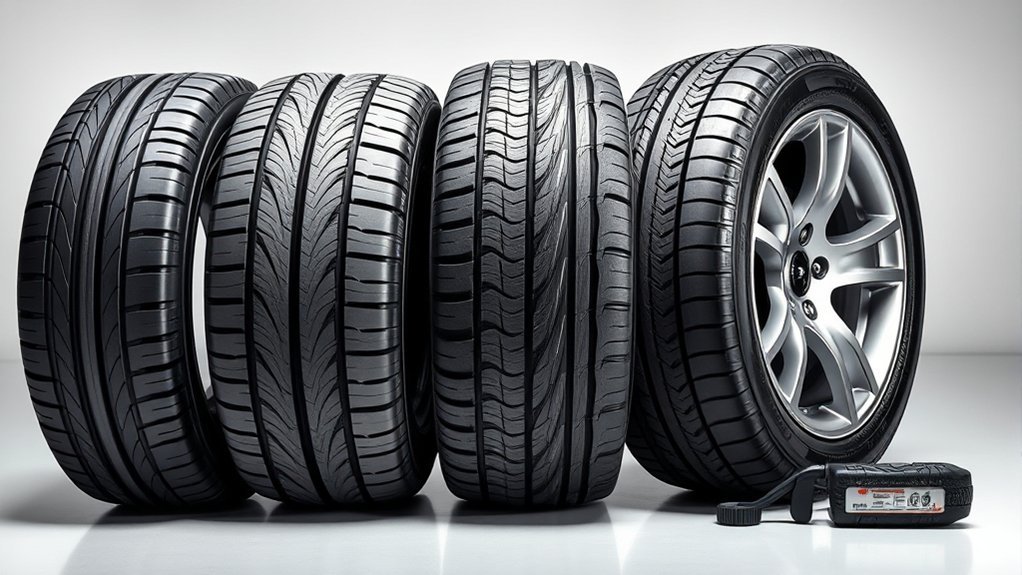
A passenger tire is built for everyday vehicles such as cars, minivans, crossovers, and many smaller SUVs. It focuses on a smooth ride, predictable handling, low road noise, and dependable traction on paved roads. The right choice depends on your vehicle’s tire placard, climate, load needs, speed rating, and how you drive.
Quick Answer
A passenger tire is a tire designed for standard passenger vehicles, not heavy-duty hauling. It usually prioritizes comfort, quietness, fuel efficiency, and all-around road traction. Before buying one, match the tire size, load index, speed rating, and tire type to the vehicle’s Tire and Loading Information Label.
Key Takeaways
- Passenger tires are made for cars, minivans, crossovers, and lighter SUVs that need everyday comfort and paved-road traction.
- The safest replacement tire is the size, load index, and speed rating recommended on your vehicle’s door-jamb tire label or owner’s manual.
- All-season tires are versatile, but dedicated winter tires are the better choice for deep snow, ice, and extended freezing conditions.
- Passenger tires and LT tires are not interchangeable by guesswork; load capacity, inflation pressure, and vehicle use must match.
- Replace passenger tires when tread reaches 2/32 inch, damage appears, air loss or vibration develops, or the tire has aged beyond the tire or vehicle manufacturer’s guidance.
At a Glance
| Time Required | 10–20 minutes to check your tire label, sidewall size, tread depth, DOT date code, and tire category before shopping. |
| Difficulty | Easy for basic inspection; use a tire professional for installation, balancing, repair, or uncertain damage. |
| Tools Needed | Tire pressure gauge, tread depth gauge or penny, flashlight, owner’s manual, and access to the driver-side door-jamb tire placard. |
| Cost | Inspection is free if you do it yourself; replacement cost depends on size, brand, tire category, installation, balancing, valve stems, and disposal fees. |
What Is a Passenger Tire?
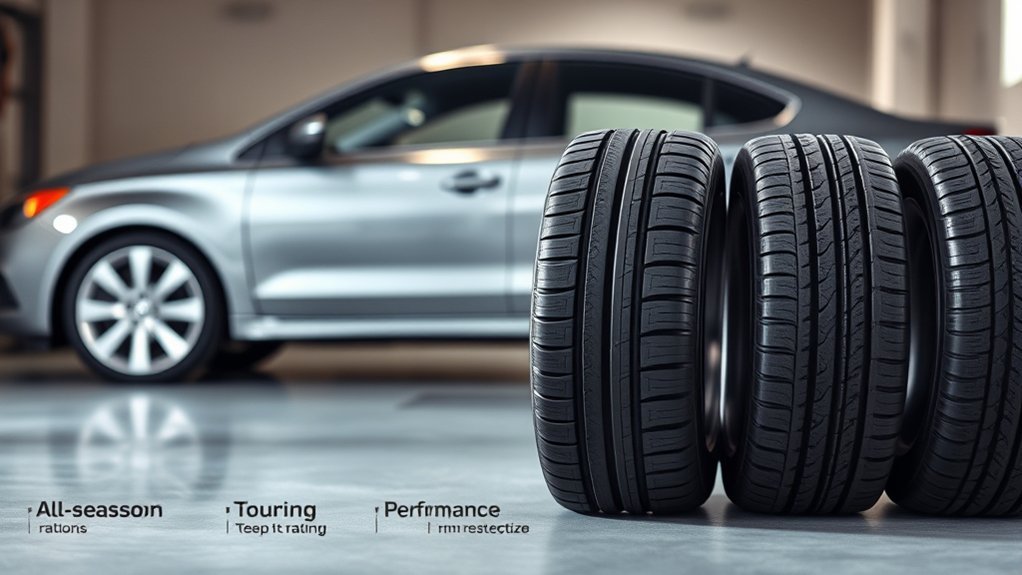
A passenger tire is a road tire designed for vehicles that carry people and light cargo, rather than heavy work loads. You will usually see these tires on sedans, hatchbacks, coupes, minivans, crossovers, and many smaller SUVs. Many use a P-metric size, such as P215/65R15, where the “P” indicates passenger-vehicle use.
Passenger tires usually use a lighter, more comfort-focused construction than heavy-duty truck tires. That helps them ride quietly, respond smoothly, and provide balanced wet and dry traction during normal commuting, errands, highway trips, and family driving. They are not the right choice for heavy towing, commercial hauling, or vehicles that require LT-rated tires.
Note: “Passenger tire” does not mean a tire for the passenger side of the car. It describes the tire category and intended vehicle use.
The safest starting point is always the Tire and Loading Information Label on the driver-side door edge or doorjamb, plus your owner’s manual. That label tells you the original tire size and recommended cold inflation pressure. From there, you can compare tire performance ratings, tread patterns, warranties, and real-world reviews without guessing on fitment.
Passenger Tire Types and Tread Patterns
Passenger tires come in several categories. The best one depends on your climate, driving style, road surface, comfort expectations, and fuel goals. A quiet touring tire may be perfect for highway commuting, while a performance tire may suit a sport sedan driver who wants sharper steering.
| Passenger Tire Type | Best For | Main Tradeoff |
|---|---|---|
| All-season | Daily driving in mixed dry, wet, and light winter conditions. | Not as strong as winter tires in deep snow or ice. |
| Touring | Quiet highway driving, comfort, and longer tread life. | May feel less sharp than a performance tire. |
| Performance | Sharper steering, stronger grip, and sportier response. | Often shorter tread life, firmer ride, or higher cost. |
| Summer | Warm-weather grip and responsive handling. | Not designed for freezing temperatures, snow, or ice. |
| Winter / snow | Cold weather, snow, slush, and ice traction. | Can wear faster and feel softer in warm weather. |
| Low rolling resistance | Drivers focused on fuel economy or electric-vehicle range. | Performance varies by model, so compare braking, traction, and treadwear ratings. |
All-season tires often carry an M+S marking, which means mud and snow capability, but that does not make them equal to dedicated winter tires. If you regularly drive in deep snow, ice, or long stretches below freezing, look for a winter tire with the three-peak mountain snowflake symbol and follow your vehicle manufacturer’s guidance.
Warning: Do not choose a tire only because it fits the wheel diameter. The full size, load index, speed rating, and recommended pressure must match the vehicle’s requirements.
Tread pattern also matters. Symmetric tread designs often support quiet, long-wearing daily use. Asymmetric patterns can balance dry handling and wet grip. Directional patterns may help move water away from the tire, but they need correct mounting and rotation. If you are comparing model-specific options, user feedback can help, but it should never replace the tire label, independent testing, or professional fitment advice.
[Products Worth Considering]

Measure tire tread depth quickly and accurately with this LUMITECO dial gauge that reads in 1/32" increments up to 14/32". The color-coded green/yellow/red zones make it easy to judge tire wear and know when replacement is needed. A rugged, compact design with a protective pouch helps keep the gauge ready for use on cars, trucks, motorcycles, and more.

The 22800 wheel stud installer makes replacing wheel studs quick and secure, saving time and effort during tire service. It uses a ratchet or impact wrench to pull new studs firmly into place, helping when existing studs are too long. Compatible with most automotive wheels and light-duty truck wheel studs, it’s designed for easy, tool-assisted installation.

The SAFELIFE dial tire tread depth gauge measures tread depth in 1/32 inch increments with clear, easy-to-read 2-inch dial face. Color zones using a traffic light system help you quickly judge whether tread is low, marginal, or ample for safer driving. Built with a durable zinc cast body and a metal detect probe for precise, comfortable use across cars, motorcycles, trucks, and buses.
Understanding Tire Size, Load, and Speed Ratings
A tire size such as P215/65R15 95H tells you more than the tire’s width. The sidewall code describes the intended vehicle type, width, sidewall height, construction, wheel diameter, load capacity, and speed capability. The Tire Industry Association sidewall guide is a useful reference for understanding these markings.
| Marking | Meaning | Why It Matters |
|---|---|---|
| P | Passenger-vehicle tire category. | Helps identify the tire’s intended use. |
| 215 | Approximate tire width in millimeters. | Affects fit, contact patch, and clearance. |
| 65 | Aspect ratio; sidewall height is 65% of width. | Affects ride comfort, handling, and overall diameter. |
| R | Radial construction. | Standard construction for most modern passenger tires. |
| 15 | Wheel diameter in inches. | Must match the wheel size. |
| 95 | Load index. | Shows the tire’s rated load capacity when used correctly. |
| H | Speed symbol. | Indicates the tire’s speed capability under proper conditions. |
Load index and speed rating are part of the tire’s service description. Choose a replacement tire that meets or exceeds the vehicle manufacturer’s required load and speed rating unless the owner’s manual, tire placard, or tire professional gives a safe alternative.
You may also see UTQG ratings for treadwear, traction, and temperature. The Uniform Tire Quality Grading system helps compare passenger tires, but it is not a complete prediction of real-world mileage. Driving style, alignment, pressure, road surface, climate, and maintenance all affect wear. When comparing all-season tire performance, look at UTQG together with wet braking, comfort, road noise, warranty terms, and trusted reviews.
Pro Tip: Also check the DOT Tire Identification Number. For tires made in 2000 or later, the final four digits show the week and year of manufacture, such as 2910 for the 29th week of 2010.
Passenger Tires vs. LT Tires
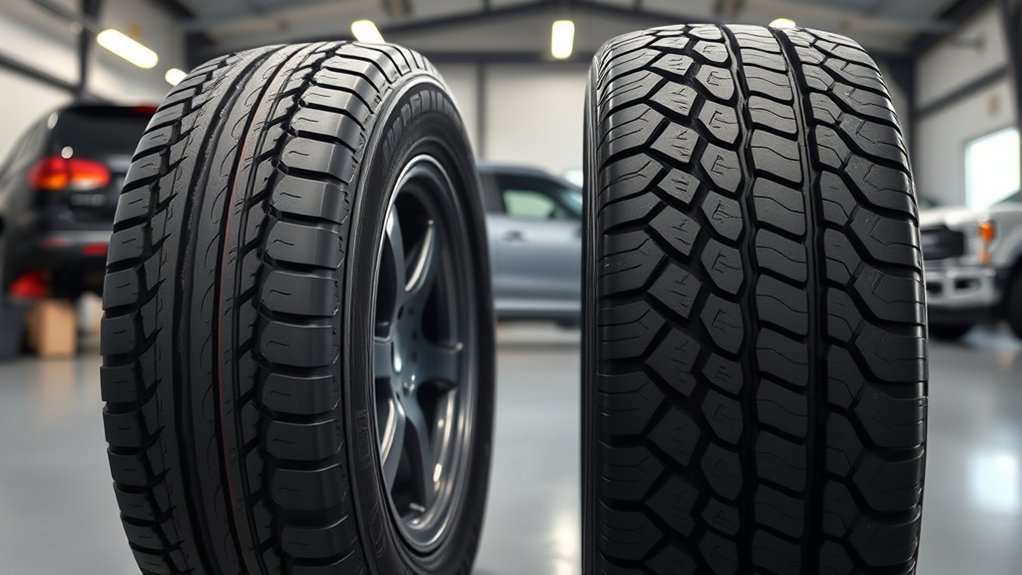
Passenger tires and LT tires serve different jobs. Passenger tires are designed for comfort, handling, efficiency, and everyday road use on lighter vehicles. LT tires are built for light trucks, some large SUVs, heavy loads, towing, hauling, and tougher service conditions.
The key difference is not just “thicker rubber.” It is the tire’s load capacity, inflation requirements, service description, construction, and intended use. LT tires may use reinforced construction and higher load ranges, but that does not automatically make them better for a car or crossover. On a lighter vehicle, an LT tire can ride harsher, weigh more, reduce fuel efficiency, and change handling.
On the other side, installing passenger tires on a vehicle that requires LT tires can overload the tire, increase heat buildup, and raise the risk of failure. When comparing passenger and LT options, start with the vehicle placard and owner’s manual, then confirm fitment with a qualified tire professional. This matters even more when towing, hauling, or driving in severe heat, rough roads, or heavy rain where traction in wet conditions and correct load capacity both affect safety.
NHTSA reported 511 traffic fatalities in tire-related crashes in 2024. Choosing the correct tire type, size, pressure, and load rating is a safety decision, not just a comfort upgrade.
[Products Worth Considering]

Milton S-921 pencil tire pressure gauge helps you maintain optimal tire pressure for passenger cars with accurate readings in PSI and kPa. It features a built-in deflator valve for convenient pressure adjustments, plus a single chuck head and nylon indicator bar for easy use on the go. Built from durable plated brass and designed for reliable performance, it’s a practical road trip and cold-weather maintenance tool.

This tire inflator with pressure gauge delivers long-lasting performance with a durable rubber-protected gauge and sturdy build. The longer hose and 360 swivel air chuck help you seal the valve securely and keep your hands free while measuring, inflating, or deflating. It’s battery-free for reliable use and provides ±2 PSI accuracy in the mid-range for most typical tires, with universal compatibility for 1/4 NPT compressor outputs.
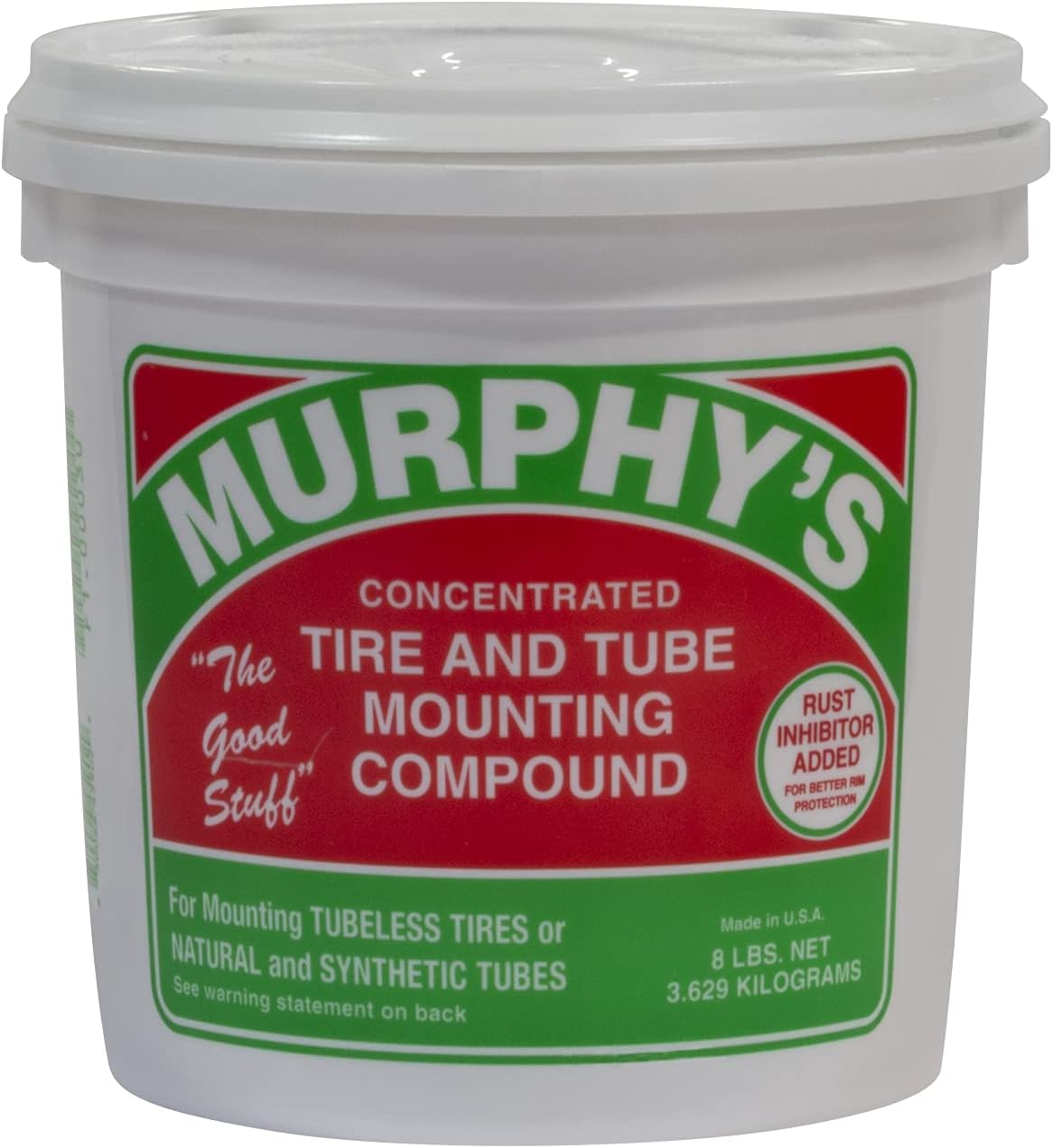
A concentrated tire and tube mounting compound designed to help simplify mounting rubber tires and tubes on passenger, semi truck, construction, and OTR applications. Its ultra-thick formula packs beads effectively and includes rust inhibitors to help protect against corrosion during use.
How to Choose the Right Passenger Tire
To choose the right passenger tire, follow a simple order: confirm the required size, match the load and speed rating, pick the tire category for your climate, then compare tested performance, warranty, comfort, and price.
[Products Worth Considering]

Accurately measure tire tread depth with a calibrated gauge marked from 0 to 1 inch in 1/32 inch increments. The color-coded bar helps you quickly identify tread condition ranges, supporting safe driving for trucks, motorcycles, automobiles, and passenger vehicles.

Keep your tires properly inflated with this analog VONDIOR tire pressure gauge, designed for fast, easy readings without batteries. The swiveling, two-axis hose and large glow dial help you measure at any tire angle with instant visibility. Built with a protective rubber shield, it supports durable, low-maintenance use for cars and trucks.

Measure tyre tread depth precisely with a digital gauge that reads in both MM and inches, helping you monitor safe driving conditions. The large LCD screen is easy to operate, and the compact tool fits for cars, trucks, and motorcycles. It provides high accuracy with a 0-25.4mm range and includes a 1-year warranty for added peace of mind.
Driving Needs
Start with how you actually drive. A daily commuter may want a quiet touring or all-season tire. A driver in mountain snow may need winter tires. A sport sedan owner may prefer performance tires. A hybrid or EV driver may care more about low rolling resistance and road noise.
Road surface matters too. Smooth highways, broken pavement, gravel driveways, heavy rain, hot climates, and freezing mornings all affect tire choice. If your tires regularly carry passengers, luggage, or cargo, pay close attention to load index and inflation pressure rather than choosing only by tread pattern.
Tire Type Match
Match the tire type to the vehicle’s requirements first, then to your preferences. For passenger cars, minivans, and smaller SUVs, check the Tire and Loading Information Label for the recommended size and pressure. Then confirm that any replacement tire has a proper load index and speed rating.
All-season tires are the common default for many drivers because they balance comfort, wet grip, tread life, and light winter capability. Performance tires are better for steering response and grip, but they may wear faster. Low rolling resistance tires can support better fuel economy, especially when properly inflated. Tire warranties can help you compare expected durability, but a treadwear warranty is not a promise that every driver will get the same mileage.
Check the Placard Before the Price
Do not start with the cheapest tire or the most aggressive-looking tread. Start with the tire placard and owner’s manual. Confirm:
- Original tire size or approved alternate sizes
- Recommended cold tire pressure
- Load index and speed rating requirements
- Whether front and rear tire sizes differ
- Any special instructions for AWD, hybrid, EV, run-flat, or performance models
Compare Performance and Warranty
Once the fit is correct, compare wet braking, dry handling, ride comfort, road noise, treadwear, rolling resistance, and warranty terms. For wet climates, do not sacrifice wet traction for a small price difference. For long highway trips, comfort and noise may matter more. For high-mileage drivers, treadwear and rotation requirements become important.
Install and Maintain the Right Way
New passenger tires should be mounted, balanced, and inflated by a qualified shop. Ask whether your vehicle needs a TPMS reset, alignment check, new valve stems, or a specific rotation pattern. If your vehicle has all-wheel drive, keeping tire circumference matched can be especially important, so follow the owner’s manual before replacing only one tire.
How to Maintain Passenger Tires After Buying Them
A good passenger tire can still perform poorly if it is underinflated, overloaded, misaligned, damaged, or rotated incorrectly. NHTSA recommends checking tire pressure at least once a month when tires are cold, meaning the vehicle has not been driven for at least three hours. The correct pressure is the vehicle manufacturer’s placard pressure, not the maximum pressure molded on the tire sidewall.
- Check pressure monthly: Include the spare if your vehicle has one. TPMS is helpful, but it is not a substitute for regular checks.
- Inspect tread monthly: Look for uneven wear, shallow tread, embedded objects, cracks, bulges, cuts, or exposed cords.
- Rotate as directed: Follow the owner’s manual. NHTSA notes that if the manufacturer recommends rotation, many vehicles use a 5,000–8,000 mile interval.
- Balance and align when needed: Vibration, pulling, or uneven wear can point to balance or alignment problems.
- Register new tires: Registration helps tire manufacturers contact you if a recall affects your tires.
Proper inflation also supports fuel economy. FuelEconomy.gov notes that keeping tires inflated to the proper pressure can improve gas mileage and that underinflated tires can reduce fuel economy.
Note: If a tire has a puncture, do not rely on a plug-only repair. USTMA says a proper repair requires removing the tire, inspecting the inside, and using both a rubber stem or plug and an innerliner patch.
When to Replace Passenger Tires
You should replace passenger tires when tread depth reaches 2/32 of an inch, when treadwear indicators are flush with the tread, or when the penny test shows the top of Lincoln’s head. At that point, the tire no longer has enough tread for safe wet-road performance.
Also replace a tire if you see cracks, bulges, cuts, exposed cords, sidewall damage, repeated air loss, or severe uneven wear. If the vehicle vibrates, pulls, or suddenly feels unstable, stop relying on that tire until a professional inspects it. Internal damage is not always visible from the outside.
Age matters too. Tires can degrade over time because of heat, sunlight, storage, load, inflation pressure, road hazards, and use. Some vehicle and tire manufacturers recommend replacing tires that are six to 10 years old, regardless of treadwear. Check the DOT/TIN date code and follow the most conservative guidance from your tire manufacturer, vehicle manufacturer, and tire professional.
Warning: Do not use an old spare tire as a normal replacement for worn passenger tires. Spares age too, and compact temporary spares have strict speed and distance limits listed by the vehicle manufacturer.
If you drive in heavy rain, snow, or mountain areas, consider replacing before the legal minimum if traction has clearly dropped. Tread depth, tread design, rubber condition, pressure, and age all work together. For deeper detail on inspection, tread depth is one of the first checks to make.
Frequently Asked Questions
What is the difference between a tire and a passenger tire?
A tire is any rubber-and-fabric structure mounted to a wheel to support a vehicle. A passenger tire is a specific category made for everyday passenger vehicles such as cars, minivans, crossovers, and many small SUVs. It usually focuses on ride comfort, quietness, efficiency, and normal road traction rather than heavy-duty hauling.
Why are they called passenger tires?
They are called passenger tires because they are designed for vehicles that mainly carry passengers and light cargo. The name separates them from LT tires, commercial tires, trailer tires, motorcycle tires, and other specialty tire categories.
What is the difference between a passenger tire and a crossover tire?
Many crossover tires are still passenger-type tires, but they may be tuned for the weight, ride height, and use of crossover SUVs. Some emphasize highway comfort, while others add stronger tread blocks or light all-terrain capability. Always match the exact size, load index, speed rating, and pressure listed for your crossover.
Does passenger tire mean passenger side?
No. Passenger tire describes the tire category, not the side of the vehicle. A passenger tire can be installed on any wheel position if it is the correct size, type, direction, and rotation position for the vehicle.
Can I use LT tires instead of passenger tires?
Only if the tire size, load rating, pressure requirements, wheel compatibility, and vehicle manufacturer guidance allow it. LT tires are built for heavier service, but they can make a lighter vehicle ride harsher and may affect fuel economy and handling. Ask a qualified tire professional before switching categories.
Are all-season passenger tires good enough for snow?
All-season passenger tires can handle light winter conditions, but they are not the same as winter tires. If you drive in deep snow, ice, mountain passes, or long periods below freezing, dedicated winter tires with the three-peak mountain snowflake symbol are usually the safer choice.
Conclusion
Choosing the right passenger tire starts with the vehicle, not the tire rack. Check the door-jamb label and owner’s manual, then match the tire size, load index, speed rating, pressure, and category to your climate and driving needs. A good passenger tire can make your car quieter, smoother, safer, and more efficient, but only if it is correctly fitted and maintained.
Inspect your tires monthly, replace them at 2/32 inch tread or sooner if damaged, and pay attention to age, vibration, pressure loss, and uneven wear. When in doubt, ask a qualified tire professional before driving on a questionable tire.
Sources
- NHTSA TireWise — tire size, pressure, tread depth, tire ratings, aging, TPMS, and tire safety guidance.
- Tire Industry Association: Reading a Tire Sidewall — tire size, load index, speed symbol, DOT/TIN date code, and UTQG explanation.
- U.S. Tire Manufacturers Association: Tire Care & Safety — pressure, tread, rotation, alignment, age, tire registration, and replacement considerations.
- USTMA Tire Repair Basics — proper puncture repair procedures for passenger and light truck tires.
- FuelEconomy.gov: Keeping Your Vehicle in Shape — tire pressure and fuel economy guidance.