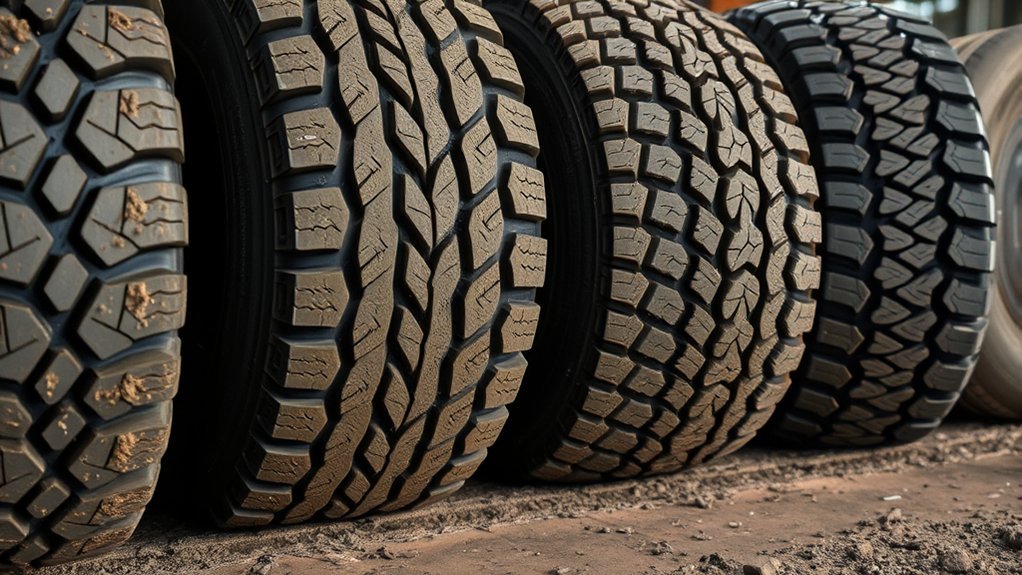
Truck tire tread patterns affect traction, steering feel, tread wear, noise, rolling resistance, and performance on wet or loose surfaces. Rib treads are commonly used where highway stability and even wear matter. Lug and rib-lug designs add biting edges for drive and mixed-service traction. Directional, asymmetric, and block designs solve other handling or weather needs. The best choice depends on more than appearance: you also need to match the tire to its axle position, load, route, speed, climate, and manufacturer-approved application.
Quick Answer
For highway trucks, rib-style treads commonly favor stable steering, even wear, and rolling efficiency. Lug patterns favor drive traction on loose or demanding surfaces, while rib-lug designs balance road stability with extra bite. Directional, block, and asymmetric designs serve more specialized needs. Always choose by axle position, load, route, weather rating, and the tire manufacturer’s application guidance.
Key Takeaways
- Rib treads are commonly used for highway, steer, and trailer applications where directional stability, even wear, ride comfort, and rolling efficiency are priorities.
- Lug treads use blocks and open grooves to create biting edges for drive traction, torque transfer, braking, and demanding mixed-service conditions.
- Rib-lug treads combine continuous ribs with traction blocks, making them useful when a truck moves between pavement, gravel, dirt, and work sites.
- Directional tread is designed to rotate in a specified direction; some directional designs also use angled channels to improve water evacuation.
- Asymmetric tread uses different inner and outer tread zones, but it is less important as a heavy-truck classification than steer, drive, trailer, and all-position suitability.
- Tread pattern alone does not determine safety or fuel economy. Tire construction, compound, inflation, load, alignment, axle position, speed rating, and service application also matter.
Truck Tire Tread Pattern Types
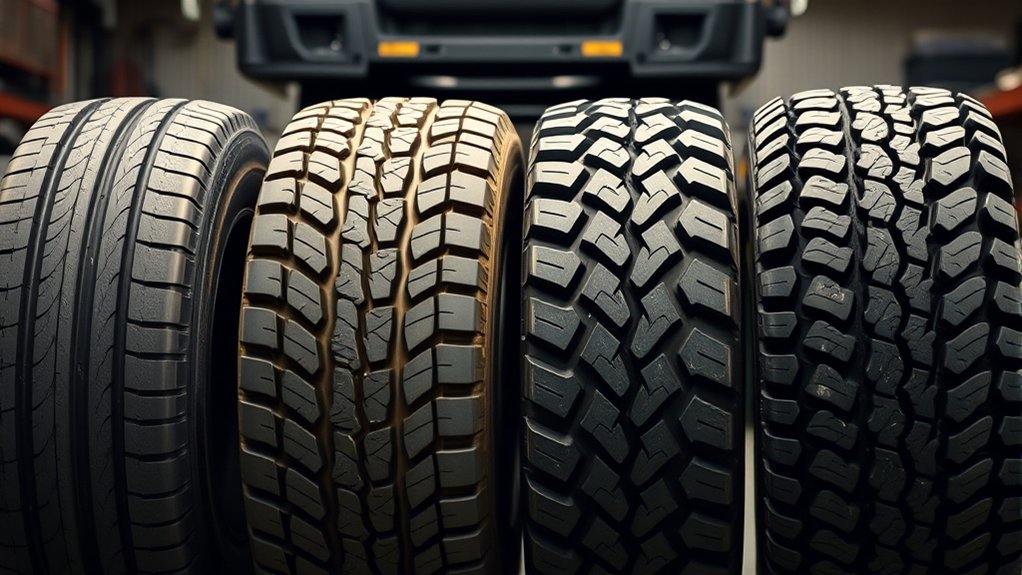
Truck tire tread patterns can be grouped by the way their ribs, blocks, grooves, and sipes meet the road. Common forms include rib, lug, rib-lug, block, directional, and asymmetric designs. These descriptions explain tread geometry; they are not the same as axle-position categories such as steer, drive, trailer, or all-position tires.
Lug patterns use blocks and open grooves to create extra biting edges for traction in demanding conditions. Rib-lug patterns blend continuous ribs with traction blocks. Asymmetric patterns divide the tread into different zones, while directional tread is designed to rotate in one specified direction.
Rib patterns generally use grooves that run around the tire’s circumference. They are widely associated with highway, steer, and trailer service because they can support directional stability, even wear, ride comfort, and rolling efficiency. However, the exact performance depends on the complete tire design rather than the tread shape alone.
You should match tread geometry to the work the tire performs. Groove depth, block spacing, siping, compound, casing construction, inflation pressure, axle load, and operating environment all affect traction, steering response, tread wear, heat, and service life.
[Products Worth Considering]

ETENWOLF T300 is a calibrated digital tire pressure gauge for accurate readings from 3 to 200 PSI across light and heavy-duty vehicles. It includes thermal compensation for reliable performance in extreme cold or heat, with an auto shut-off to extend battery life and an LED for easier reading. The sturdy design supports rugged everyday use, making it ideal for pickups, RVs, and industrial applications.

The SAFELIFE dial tire tread depth gauge measures tread depth in 1/32 inch increments with clear, easy-to-read 2-inch dial face. Color zones using a traffic light system help you quickly judge whether tread is low, marginal, or ample for safer driving. Built with a durable zinc cast body and a metal detect probe for precise, comfortable use across cars, motorcycles, trucks, and buses.

Accurately measure tire tread depth with a calibrated gauge marked from 0 to 1 inch in 1/32 inch increments. The color-coded bar helps you quickly identify tread condition ranges, supporting safe driving for trucks, motorcycles, automobiles, and passenger vehicles.
Parts of a Truck Tire Tread
- Ribs: Raised circumferential bands that can help maintain stable road contact and predictable steering.
- Blocks or lugs: Individual tread elements that create biting edges for acceleration, braking, and loose-surface traction.
- Grooves: Channels between tread elements that provide space for water, mud, snow, and debris to move through the pattern.
- Sipes: Narrow cuts in ribs or blocks that create extra edges and can improve traction in specific wet, snow, or low-grip applications.
- Shoulders: The outer tread areas, which influence cornering support, scrub resistance, and wear.
- Voids: The open space between tread elements. More open tread can improve self-cleaning and loose-surface bite but may increase noise or rolling losses depending on the design.
Tread Pattern vs. Axle Position
A truck tire’s tread pattern tells you how the tread is arranged, while its axle-position designation tells you where the manufacturer intends the tire to work. Commercial tire selection should begin with the required size, load capacity, service application, and axle position.
| Position | Main Priorities | Common Tread Approach |
|---|---|---|
| Steer | Steering response, stability, even wear, wet control | Often rib or rib-based designs |
| Drive | Torque transfer, acceleration, braking, traction | Often lug, block, or traction-oriented designs |
| Trailer | Rolling efficiency, scrub resistance, stable wear | Often rib or trailer-specific designs |
| All-position | Versatility across approved positions | Model-specific rib, mixed, or traction designs |
Pro Tip: Do not choose a commercial truck tire from tread appearance alone. Confirm that the exact tire model, size, load range, speed capability, and axle position are approved for your truck and service application.
Rib Treads for Highway Driving
Rib treads use continuous or nearly continuous circumferential ribs that help a tire track predictably on paved roads. That makes rib-style designs common in highway, steer, trailer, and some all-position applications.
They can also support low rolling resistance and even wear, although tread compound, casing construction, inflation, load, and operating conditions are equally important. A rib pattern by itself does not guarantee better fuel economy.
Because the tread is less aggressively blocked than many traction-oriented patterns, well-designed rib tires can also provide a smooth, relatively quiet ride on paved routes.
Highway Stability
When you prioritize highway stability, rib tread can offer an advantage because its circumferential ribs maintain continuous road contact and resist excessive tread-block movement.
This design suits driving that demands precise steering control and predictable handling at sustained road speeds. A properly matched rib tire can track steadily, resist irregular wear, and provide the consistent steering feel fleets expect from steer and highway applications.
Even wear is especially important in high-mileage service because irregular shoulder or rib wear can shorten useful tread life long before the entire tread is worn out.
For fleet use, the combination of directional stability, predictable wear, comfort, and rolling efficiency makes rib tread a practical option when the manufacturer approves the tire for the intended axle and route.
Low Rolling Resistance
Rib-based tread designs are often used in commercial tires that prioritize low rolling resistance, but tread geometry is only one part of the equation. Rubber compound, casing construction, tire size, inflation pressure, load, temperature, and axle position also affect the energy lost as a tire rolls.
The U.S. EPA’s SmartWay program verifies specific low-rolling-resistance tires for specified Class 8 tractor-trailer applications and axle positions rather than treating every tire with a certain tread shape as equally efficient.
If fuel economy is a priority, compare complete tire models and confirm their approved axle position instead of choosing a tire simply because the tread looks smooth or ribbed.
Quiet, Smooth Ride
Rib tread patterns can deliver a quiet, smooth ride on long paved routes because continuous ribs generally create less aggressive tread-block movement than widely spaced off-road lugs.
On dry pavement, an appropriate rib design can provide predictable handling at speed while maintaining steady contact across the tread face. Manufacturers may also vary groove shape, shoulder design, block stiffness, and tread pitch to manage noise and irregular wear.
If your routes stay mostly paved, a highway-oriented rib tire can provide a useful balance of steering response, comfort, mileage, and efficiency. Check the complete tire specification rather than assuming all rib tires perform the same way.
Lug Treads for Off-Road Traction
Lug treads are built around traction blocks and open grooves that create biting edges for acceleration and braking. They are especially common on drive tires and severe- or mixed-service applications where a truck encounters dirt, gravel, mud, job sites, or other low-grip surfaces.
Deep, widely spaced lugs can provide room for mud and loose material to move through the tread, helping the tire continue to bite instead of packing solid. The tradeoff is that an aggressive open pattern may produce more noise, tread movement, or rolling resistance than a highway-focused design.
Do not assume that the lug pattern itself makes a tire puncture-resistant. Severe-service tires may combine aggressive tread with specialized compounds, reinforced casing or belt packages, and other features intended to resist cutting, chipping, or penetration.
| Feature | Typical Effect |
|---|---|
| Deep traction blocks | Create biting edges for acceleration and braking |
| Open voids | Give mud, loose material, and debris room to escape |
| Supported tread blocks | Help control block movement under load |
| Severe-service construction | May add model-specific cut, chip, or penetration resistance |
Lug tread works best when traction is a higher priority than minimum rolling resistance or highway quietness. Construction, vocational, agriculture-related hauling, and on/off-road fleets are common examples, but the exact tire still needs to match the vehicle, axle, load, and speed.
[Products Worth Considering]

Monitor tire tread wear with a smart, color-coded depth gauge that shows clear condition ranges at a glance. The bar is range marked for fast, easy readings, helping you maintain safer traction and performance. Each gauge is portable with a pocket clip, and the set includes 20 units for daily use and sharing.

Measure tire tread depth quickly and accurately with this LUMITECO dial gauge that reads in 1/32" increments up to 14/32". The color-coded green/yellow/red zones make it easy to judge tire wear and know when replacement is needed. A rugged, compact design with a protective pouch helps keep the gauge ready for use on cars, trucks, motorcycles, and more.

Check tire pressure with the Milton S-925 pencil gauge built for trucks, RVs, and bicycles. It features a single-head chuck with a built-in deflator valve, and it displays readings in both PSI and kPa for convenient use. The gauge is designed for accurate, repeatable pressure checks within its working range.
Rib-Lug Treads for Mixed Use
Rib-lug treads combine rib-style road contact with block or lug elements that add biting edges. This makes them useful for trucks that spend meaningful time on both paved and loose surfaces.
The rib sections can help maintain on-road stability, while the traction elements help when the truck moves onto gravel, dirt, uneven work sites, or other lower-grip surfaces.
Grooves and voids can also give water and loose material a path through the tread. Actual wet traction, however, depends on the complete tread design, tread depth, rubber compound, inflation, vehicle speed, and road conditions.
Mixed-Surface Grip
Mixed-surface grip matters when a truck regularly moves between pavement and rough ground. Rib-lug tread patterns are designed for that compromise.
The ribs help maintain road contact while deeper blocks or lugs provide additional biting edges on loose or uneven terrain. This can make the design useful for regional delivery, construction support, utility trucks, and mixed-service fleets.
A balanced amount of open tread gives dirt, gravel, and water space to move without making the tire as aggressive as a dedicated severe off-road pattern.
For fleet operations, the goal is not maximum performance on every surface. It is predictable performance across the surfaces the truck actually encounters.
On-Road Stability
When you need a tire that handles both pavement and rough ground, rib-lug tread designs offer a practical middle ground.
The rib sections can support directional stability and controlled steering on paved routes, while lug elements add traction when the road becomes loose or uneven.
Some mixed-service designs also target rolling efficiency and regular wear, but those benefits are model-specific. Do not assume that every rib-lug tire will match a dedicated line-haul tire for fuel economy or highway noise.
For mixed-use hauling, selecting the right compromise is more useful than choosing the most aggressive tread available.
Off-Road Durability
Off-road durability depends on tread design, tread compound, casing, belts, sidewall protection, inflation, load, and the hazards on the route.
A rib-lug design can provide useful traction on gravel, dirt, mud, or rutted surfaces while maintaining better directional behavior on pavement than a highly open off-road pattern.
Wide channels may also help release mud, stones, or other debris. Some commercial severe-service tires add stone ejectors, cut-resistant compounds, or reinforced construction to protect the casing, but those features must be confirmed for the individual tire model.
Rigid or supported tread blocks can improve stability under torque and load. Compound selection then balances wear, heat, traction, rolling resistance, and durability.
For mixed-duty trucks, the best tire is the one designed for the actual percentage of on-road versus off-road service—not simply the tire with the deepest-looking tread.
Block Treads for Traction
Block tread uses individual tread blocks separated by interconnected grooves. Depending on the tire, this layout can create many biting edges for braking, acceleration, wet traction, or snow traction.
Block tread is common in traction-oriented tire designs because the blocks can flex and engage uneven surfaces. Sipes may be added to increase the number of gripping edges, while tie bars or interlocking features can limit excessive block movement.
The tradeoff is that highly segmented tread can generate more movement, noise, or irregular wear if the tire is poorly matched to the route, inflation pressure, axle, or torque load. Always check the manufacturer’s intended application.
Directional Treads for Wet Roads
A directional tread is a tire designed to rotate in one specified direction. Many directional designs use angled or sweeping grooves, and some are engineered to move water efficiently through the contact area. However, water evacuation is a performance feature of the individual design, not the definition of every directional tire.
On a tire designed for wet-road performance, channels and grooves can help water escape from the footprint so the tread can maintain useful pavement contact. Tread depth, inflation pressure, vehicle speed, water depth, load, and road drainage also affect hydroplaning risk.
Because the pattern is engineered around a specific direction of rotation, directional tires should be installed according to the rotation arrow on the sidewall and the tire manufacturer’s instructions.
If a directional tire is mounted against its specified rotation direction, it may not deliver the handling, traction, wear, drainage, or noise performance the manufacturer intended. Have an incorrectly mounted tire corrected rather than assuming the tread will work normally in either direction.
Note: A directional arrow tells you how the tire should rotate. An asymmetric tire may instead have sidewall markings such as “Inside” and “Outside.” Some tires can be both directional and asymmetric, so follow every mounting instruction on the sidewall.
Asymmetric Treads for Cornering Control
Asymmetric tread patterns use different tread features across the inner and outer portions of the tire. For example, one zone may emphasize water evacuation while a more rigid shoulder zone supports cornering loads.
This layout is common in performance-oriented passenger and light-truck tires. It can also appear in other applications, but for heavy commercial trucks, steer, drive, trailer, all-position, route, load, and service designation are usually more useful starting points than choosing a tire simply because it is asymmetric.
On a properly engineered asymmetric tire, outer shoulder blocks can help resist tread squirm during cornering while inner channels manage water. The exact benefit depends on the tire rather than the asymmetric label alone.
Asymmetric tires must be installed with the manufacturer’s designated side facing outward. Rotation options can also be limited by tire size, axle position, directionality, and vehicle configuration.
Wet, Snow, and Weather Performance
No tread shape guarantees good performance in every weather condition. Wet traction depends on the complete tread design, tread depth, compound, load, pressure, speed, and amount of water on the road.
For snow service, check the actual sidewall markings and manufacturer specifications. An M+S marking is not the same as a Three-Peak Mountain Snowflake (3PMSF) marking. A 3PMSF-marked tire has met a standardized severe-snow traction performance requirement.
Note: If your route regularly includes severe winter conditions, do not select a tire from an aggressive-looking tread alone. Check the manufacturer’s winter rating, 3PMSF status where applicable, axle suitability, load capacity, and local chain or winter-equipment requirements.
Tread Depth, Pressure, and Irregular Wear
The best tread pattern cannot perform properly if the tire is worn out, underinflated, overloaded, misaligned, or damaged.
Warning: For U.S. commercial vehicles covered by 49 CFR 393.75, tires on the front wheels of a bus, truck, or truck tractor must have at least 4/32 inch of tread in a major tread groove. Other covered tires generally require at least 2/32 inch. The regulation also prohibits operation with conditions such as exposed belt or ply material, tread or sidewall separation, a flat or audible leak, or certain cuts exposing structural material.
Check tread depth in the major grooves and inspect the complete tire for cuts, bulges, exposed material, separations, unusual wear, embedded objects, or other damage.
Inflation pressure is equally important. Underinflation increases tire deflection and heat and can contribute to irregular wear and higher rolling resistance. Overinflation can also change the footprint and wear pattern. Use the pressure specified for the tire, axle load, and vehicle application rather than guessing from appearance.
Irregular tread wear may indicate more than a tire problem. Alignment, suspension components, wheel-end condition, bearing adjustment, brake issues, mismatched dual tires, or incorrect inflation can create shoulder wear, cupping, diagonal wear, heel-and-toe wear, and other patterns.
If wear appears rapidly or unevenly, correct the mechanical or inflation problem before simply installing another tire of the same tread design.
Choosing the Right Truck Tread
Which truck tread pattern fits your route, load, and climate? Start by matching the whole tire to the job rather than choosing by tread appearance or purchase price.
Rib designs often suit highway-oriented steer and trailer service. Lug or block designs commonly support drive traction and demanding surfaces. Rib-lug designs provide a compromise for mixed service. Directional and asymmetric layouts may add model-specific handling, drainage, wear, or traction benefits.
[Products Worth Considering]

Black Magic Tire Wet delivers a deep wet-look shine that makes tires appear dark, rich, and freshly detailed. Its long-lasting formula helps resist rain, dust, and road grime for weeks of glossy protection, not days. Apply by spraying onto clean, dry tires—no buffing or wiping required—with a low-sling design to reduce splatter on paint and wheels.
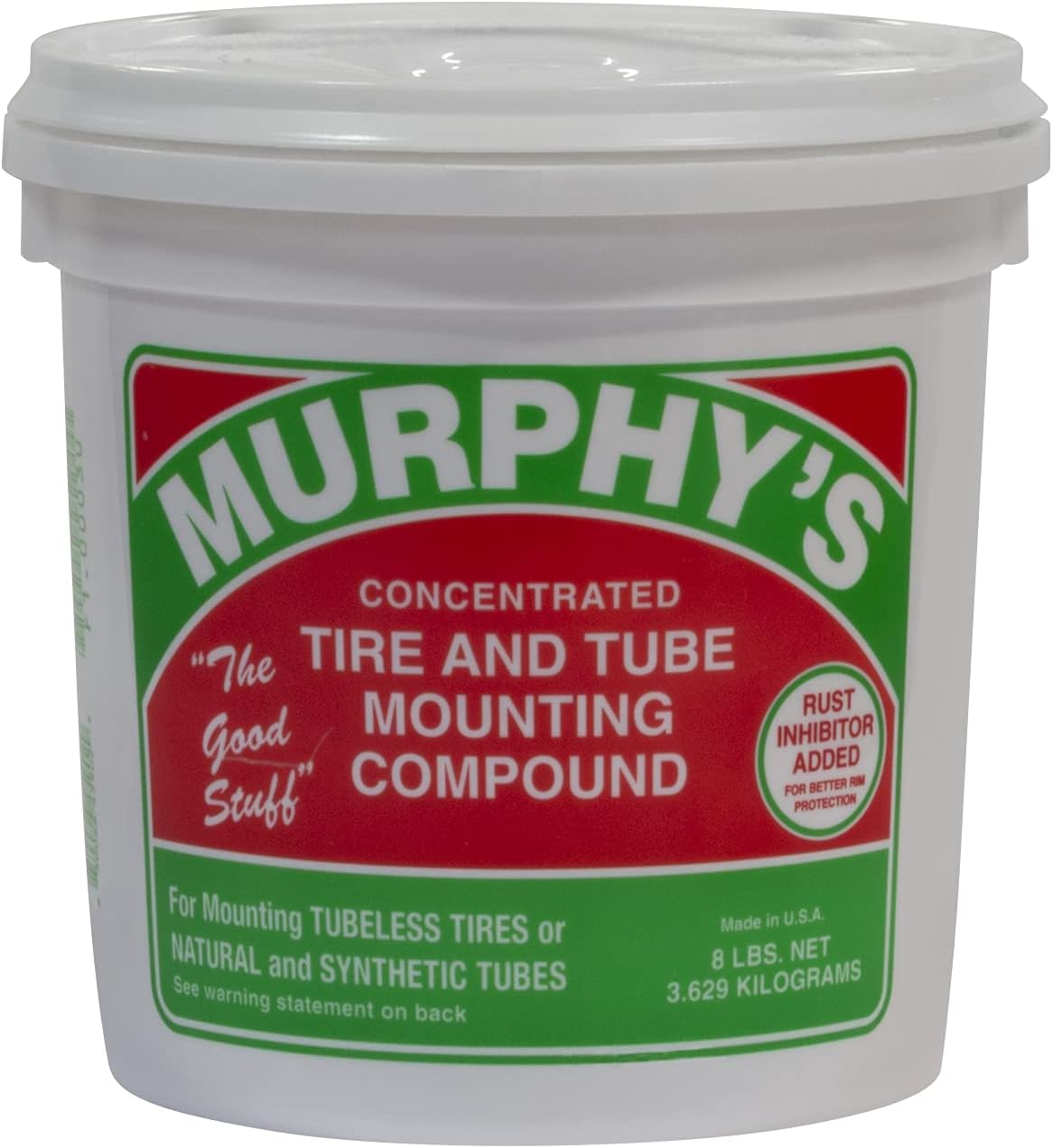
A concentrated tire and tube mounting compound designed to help simplify mounting rubber tires and tubes on passenger, semi truck, construction, and OTR applications. Its ultra-thick formula packs beads effectively and includes rust inhibitors to help protect against corrosion during use.

Add style while helping protect your tire valve stems with handmade crystal rhinestone caps and a durable plastic insert. These caps resist corrosion and help keep out rain, snow, and muddy water, extending tire life. Textured non-slip design makes them easy to grip for quick install and removal when checking tire pressure.
How to Choose Step by Step
- Confirm tire size and load requirements. Use the vehicle, axle, wheel, and tire manufacturer’s specifications.
- Identify the axle position. Determine whether you need a steer, drive, trailer, or approved all-position tire.
- Define the service application. Separate line-haul, regional, urban/pickup-and-delivery, vocational, and on/off-road use.
- Estimate the surface mix. A truck that spends 95% of its time on pavement needs a different compromise from one that enters mud or gravel every day.
- Prioritize performance. Decide whether traction, mileage, fuel efficiency, cut resistance, wet control, snow performance, scrub resistance, or retreadability matters most.
- Check weather requirements. Look at the tire’s wet, winter, M+S, or 3PMSF specifications rather than judging only by groove shape.
- Verify speed and application limits. Severe-service tires may have different speed or operating restrictions from line-haul tires.
- Check rolling-resistance credentials if fuel economy matters. For Class 8 long-haul applications, verify the specific tire model and axle position on EPA SmartWay information rather than assuming a tread family is automatically low rolling resistance.
- Consider casing and retread strategy. Fleets that retread tires should evaluate casing durability and retread compatibility as part of lifetime cost.
- Inspect pressure and wear regularly. The correct tread pattern cannot compensate for chronic underinflation, overloading, poor alignment, or worn suspension components.
| Typical Use | Pattern to Consider | What to Verify |
|---|---|---|
| Highway and long-haul | Rib or highway-optimized design | Axle position, rolling resistance, mileage, wet performance |
| Drive traction | Lug or block tread | Torque, braking traction, weather rating, wear |
| Mixed pavement and job sites | Rib-lug or mixed-service design | Cut/chip resistance, traction, road mileage, speed limits |
| Unpaved or severe service | Aggressive lug or severe-service tread | Casing protection, cut resistance, speed rating, axle approval |
| Frequent rain | Model with strong wet-performance design | Wet traction, tread depth, mounting direction, pressure |
| Severe snow | Snow-rated traction design | 3PMSF where applicable, axle position, local requirements |
You should also account for axle load and regional climate. Heavier loads require the correct load-carrying capacity and inflation, while different routes place different demands on tread wear, heat, traction, and durability.
If you balance those variables, you can select a tread that supports safety, efficiency, traction, and wear life without sacrificing the performance your application needs.
Frequently Asked Questions
What are the main types of truck tire tread patterns?
Common tread geometries include rib, lug, rib-lug, block, directional, and asymmetric patterns. Do not confuse those shapes with tire application categories such as highway, all-terrain, winter, steer, drive, trailer, or all-position tires.
What do different tread patterns mean?
Different patterns change the number, direction, and stiffness of the tread’s contact elements and voids. That can influence traction, water and debris evacuation, steering response, noise, tread wear, and rolling resistance. The final result also depends on compound, casing, inflation, load, and tire application.
What are the different types of truck tires by axle position?
Commercial truck tires are commonly classified as steer, drive, trailer, or all-position tires. Steer tires prioritize steering and stability, drive tires must transfer engine torque and braking forces, and trailer tires need stable free-rolling performance and resistance to scrub and irregular wear. All-position tires are approved for multiple positions specified by the manufacturer.
Which tire pattern is best?
There is no single best pattern. Rib designs often suit highway stability and mileage needs; lug or block patterns favor traction; and rib-lug designs suit mixed service. Choose the exact tire by axle position, load, route, weather, speed, manufacturer rating, durability needs, and operating cost.
What is the minimum legal tread depth for a commercial truck in the U.S.?
Under 49 CFR 393.75, front tires on a bus, truck, or truck tractor must have at least 4/32 inch of tread in a major groove. Other covered tire positions generally require at least 2/32 inch. State rules or operating policies may impose additional requirements.
Does tread pattern affect truck fuel economy?
Yes, tread design can influence rolling resistance, but it is only one factor. Compound, casing, tire size, inflation, axle load, speed, and operating conditions also matter. For Class 8 long-haul trucks, EPA SmartWay verifies specific low-rolling-resistance tire models and approved axle positions.
Sources
- 49 CFR 393.75 — Tires — U.S. commercial-vehicle tread-depth and tire-condition requirements.
- Bridgestone Commercial: How to Choose the Best Commercial Truck Tires — axle position, service application, rib and lug designs, traction, wear, and selection factors.
- U.S. EPA SmartWay: Low Rolling Resistance Tire Technologies — verified low-rolling-resistance commercial tires, axle positions, inflation, and fuel-efficiency guidance.
- NHTSA TireWise — tire pressure, tread, alignment, rotation, wear, and general tire-safety guidance.
- Michelin Commercial Tires: X Multi Z2 — commercial-tire 3PMSF and severe-snow performance information.
Conclusion
The right truck tire tread pattern helps you balance grip, tread life, steering control, durability, noise, and rolling efficiency. Rib treads are widely suited to highway-oriented work, while lug and block treads provide stronger biting edges for demanding traction. Rib-lug, directional, and asymmetric designs each serve different performance goals.
But the tread pattern is only part of the decision. Match the tire to its steer, drive, trailer, or all-position application, then verify load capacity, pressure, speed capability, road surface, weather rating, tread depth, casing durability, and manufacturer guidance. When the tire fits both the axle and the job, you get safer, more predictable performance and a better chance of controlling long-term tire costs.