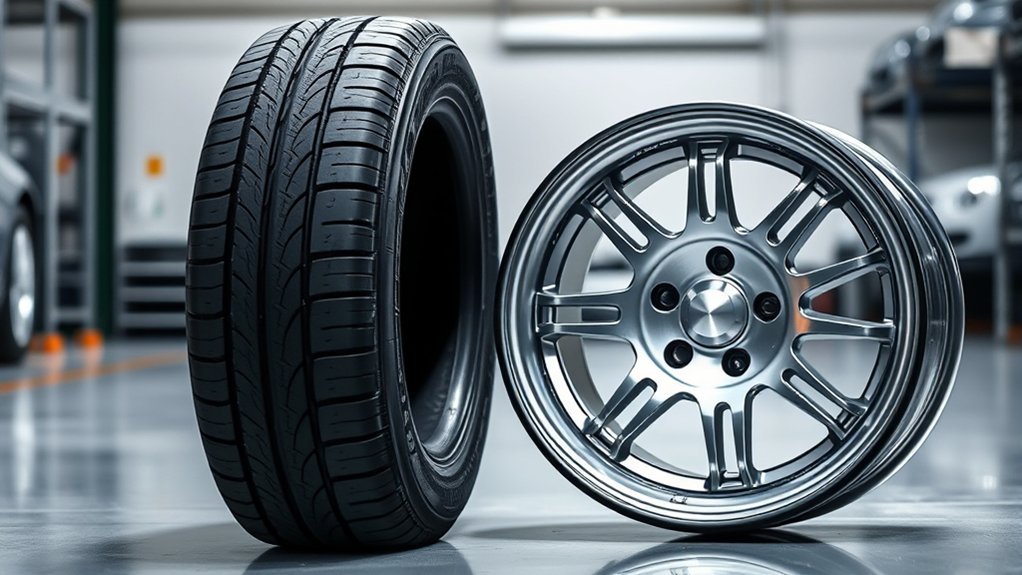
Most tire listings do not include a rim or wheel unless the seller clearly says the tire is mounted on a wheel or the item is a complete wheel-and-tire package. A product photo may show a mounted tire even when only the tire is for sale, so check the written product details, quantity, specifications, and included components before you buy.
Quick Answer
No. A tire-only listing normally includes the tire, not the wheel or rim. You get both only when the seller clearly describes a wheel-and-tire package, mounted assembly, or complete set. Because photos are not proof of what ships, confirm quantity, wheel specs, mounting, balancing, TPMS hardware, and lug hardware before paying.
Key Takeaways
- A listing for a tire normally means the rubber tire only unless the seller specifically includes a wheel or rim.
- Product photos can show a mounted tire for illustration, so use the title, specifications, quantity, and “what’s included” section as your guide.
- Wheel-and-tire packages vary: mounting, balancing, TPMS sensors, lug hardware, valve stems, center caps, and hub rings may be included or may cost extra.
- Correct fitment involves more than diameter. Check tire size, load index, speed rating, wheel width, bolt pattern, center bore, offset, and load capacity where applicable.
- Old wheels can often be reused if they are compatible, structurally sound, and able to seal and mount the new tires correctly.
Do Tires Come With Rims?
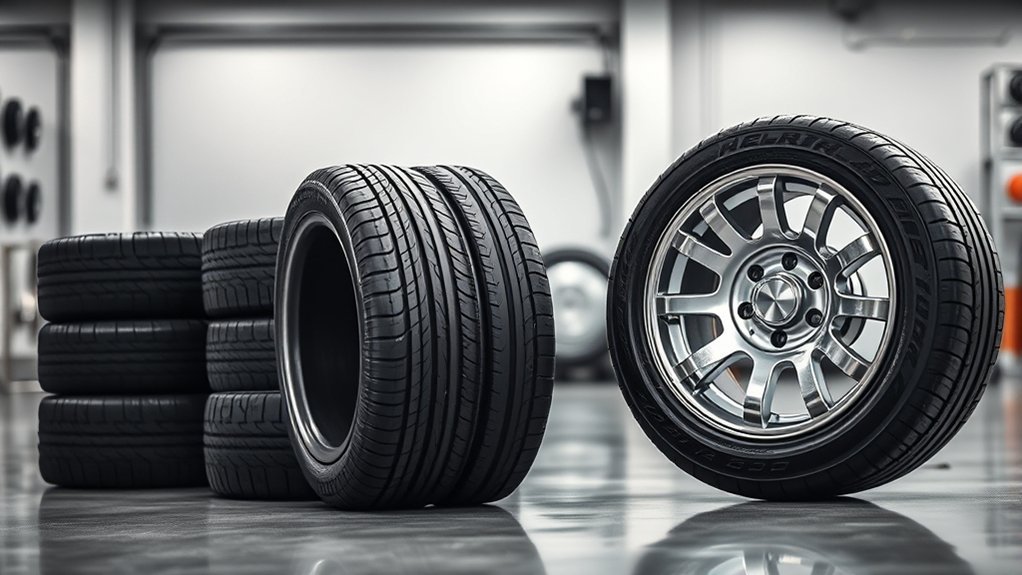
Usually, no. When a retailer lists a tire by itself, the price normally covers the tire rather than a wheel or rim. You should expect both parts only when the listing clearly uses wording such as wheel and tire package, mounted wheel and tire, or complete wheel-and-tire assembly.
Do not rely on the main product photo. Retailers may use a mounted tire in advertising or fitment illustrations even when the actual SKU is for a tire only. Read the product title, item quantity, specifications, and included-items section before ordering.
Treat the written listing as the source of truth. A picture of a tire mounted on a wheel does not prove the wheel is included.
If anything is unclear, ask the seller whether the price includes the wheel, mounting, balancing, valve stems, TPMS hardware, lug hardware, or any other installation parts. That simple check can prevent returns and unexpected installation costs.
Pro Tip: Look for a specific item count such as “4 tires,” “4 wheels,” or “4 mounted wheel-and-tire assemblies.” Do not assume that a photo showing four items means the listing includes four.
Tires vs. Rims vs. Wheels
The terms tire, rim, and wheel are often mixed together in everyday shopping, but they describe different parts.
The tire is the rubber component that contacts the road. The rim is the outer wheel area where the tire bead seats. The wheel is the complete metal structure that includes the rim area and center or spokes and mounts to the vehicle hub.
Retailers sometimes use “rim” as another word for the entire wheel, so always check the specifications rather than relying on terminology alone. Bridgestone’s tire terminology guide describes the bead, bead seat, rim diameter, rim width, balancing, and other related terms.
Tires Grip The Road
Tires are the flexible components that provide the contact patch between your vehicle and the road. They support vehicle load, absorb road impacts, and provide traction for accelerating, braking, and cornering.
Tire type, size, construction, load capacity, tread design, and condition can all affect ride quality and handling. When replacing tires, use the size recommended by your vehicle manufacturer unless an approved alternative has been specified.
The National Highway Traffic Safety Administration recommends checking the owner’s manual or the Tire and Loading Information label on the driver-side door area for the correct tire size.
Rims Hold The Tire
The rim portion of a wheel supports the tire bead and provides the surfaces where the tire seats and seals. Rim diameter and width must be compatible with the tire being installed.
A wheel also has vehicle-specific requirements that are separate from tire size, including mounting dimensions and load capacity. For that reason, finding a tire and a wheel with the same advertised diameter does not automatically mean the complete assembly fits your vehicle.
Wheels can often last through several sets of tires if they remain compatible and structurally sound. Bent, cracked, badly corroded, or otherwise damaged wheels may need repair by a qualified specialist or replacement.
Wheels Combine All Parts
The wheel is the metal assembly that the tire mounts onto and that attaches to the vehicle hub. Depending on the design, it includes the rim area, center section, and spokes or other structural elements.
When you buy a replacement wheel, you need more than the correct diameter. Important specifications can include wheel width, bolt pattern, center bore, offset, and load rating.
When a compatible tire is professionally mounted and balanced on a compatible wheel, the two components become a tire-and-wheel assembly that can then be installed on the vehicle with the correct hardware and torque procedure.
Why Tires and Rims Are Sold Separately
Tires and wheels are commonly sold separately because they have different replacement cycles, specifications, styles, and price ranges. Your tires may need replacement because of tread wear, damage, aging, or changing driving needs while your existing wheels remain usable.
There is no single mileage at which every tire must be replaced. Tire life depends on tire design, vehicle use, maintenance, road conditions, damage, tread depth, and age. NHTSA advises replacing tires when they are worn to the minimum tread depth or show damage and notes that some vehicle and tire manufacturers recommend replacement after a specified number of years even when tread remains.
| Factor | Tires | Wheels / Rims |
|---|---|---|
| Replacement timing | Based on tread, condition, damage, age, and manufacturer guidance | Usually replaced for damage, corrosion, incompatibility, or a desired change |
| Compatibility | Size, load index, speed rating, type, and vehicle requirements | Diameter, width, bolt pattern, center bore, offset, load rating, and clearance |
| Cost | Varies by size, construction, brand, and performance category | Varies by size, material, design, finish, and load capacity |
| Primary role | Traction, load support, braking, ride, and road contact | Supports the tire and attaches the assembly to the vehicle |
| Retail benefit | Lets buyers choose the exact tire category and specification needed | Lets buyers keep existing wheels or select a different design or fitment |
Buying the parts separately therefore gives you control over fit, appearance, performance, and budget without forcing you to replace a component that is still usable.
What’s Included in a Wheel and Tire Package
A wheel and tire package combines compatible tires and wheels in one purchase, but there is no universal package standard. One seller may include four mounted and balanced assemblies, while another may charge separately for mounting, balancing, TPMS sensors, valve stems, lug hardware, or other accessories.
Always verify the exact quantity and included services before comparing package prices.
Products Worth Considering

These M14x1.5 closed-end chrome lug nuts are a one-piece replacement designed for secure fitment on compatible GM, Ford, and select Chrysler/Dodge models. Featuring a 60-degree conical seat and anti-rust chrome plating, they help resist corrosion and maintain a bright look for everyday driving. Built for long-term durability, they include OEM-style part references and are backed by 12 months of support.

Upgrade your wheels with MIKKUPPA closed-end lug nuts designed for reliable fit and corrosion resistance. The one-piece, cold-forged and heat-treated steel construction helps resist rust and stripping, while the integrated finish delivers a durable black appearance. Built to OEM standards with a conical 60-degree seat, these nuts provide a secure solution for compatible Ford, Honda, Jeep, and Chevrolet models.

Monitor tire tread wear with a smart, color-coded depth gauge that shows clear condition ranges at a glance. The bar is range marked for fast, easy readings, helping you maintain safer traction and performance. Each gauge is portable with a pocket clip, and the set includes 20 units for daily use and sharing.
Package Components
A package can include some or all of the following:
- Tires and wheels: Confirm the exact quantity and the model, size, and specifications of each.
- Mounting: The tires may arrive installed on the wheels, or mounting may be a separate service.
- Balancing: The assemblies may arrive balanced. NHTSA states that new tires should be balanced when they are installed.
- TPMS equipment: Compatible sensors may be included, offered as an option, transferred from an existing wheel set, or unnecessary at the wheel if the vehicle uses an indirect TPMS design.
- Valve stems: These may be included with mounting or sold separately depending on the wheel and TPMS setup.
- Lug nuts or bolts: Hardware may be included when the new wheel requires a different seat style or size, but never assume it is part of the package.
- Center caps and hub-centric rings: These may be supplied with certain wheels or fitments but are not universal package components.
A vehicle-specific package can make the buying process easier, but you should still confirm all fitment specifications before installation.
Add-Ons And Services
Retailers may offer mounting, balancing, TPMS installation, TPMS programming or relearn assistance, new valve stems, lug hardware, road-hazard coverage, or installation appointments as package add-ons.
Some of these services may be bundled into the advertised price and others may appear only at checkout. Compare the complete delivered-and-installed price rather than comparing the headline package price alone.
Note: NHTSA states that passenger cars, light trucks, and vans from model year 2008 onward are required to have TPMS. Direct systems use pressure sensors, while indirect systems can use wheel-speed and other vehicle data. A second wheel set may therefore require compatible sensors on some vehicles but not on every vehicle.
How to Check Tire and Rim Listings Before Buying
When checking a tire or wheel listing, do not stop at the product photo. Read the listing from top to bottom and confirm exactly what you are buying.
- Identify the item type. Look for “tire only,” “wheel only,” “wheel and tire package,” or similar wording.
- Check the quantity. Determine whether the price is for one item, a pair, or a set of four.
- Confirm the tire specification. Match the required tire size and appropriate load and speed ratings to your vehicle requirements.
- Confirm the wheel specification. Check diameter, width, bolt pattern, center bore, offset, and load rating where applicable.
- Read the mounting and balancing details. “Mounted” does not automatically mean “balanced.”
- Check TPMS details. Find out whether compatible sensors are included, optional, transferable, or require programming or relearning.
- Check installation hardware. Confirm whether lug nuts or bolts, hub rings, center caps, and valve hardware are included if your setup needs them.
- Read return and fitment policies. This is especially important for custom wheel sizes or modified vehicles.
Photos showing tires mounted on wheels are helpful for visual reference, but the written description should match what you expect to receive. Contact the seller before ordering if the listing leaves any component unclear.
| Listing Term | What It Usually Means | What to Confirm |
|---|---|---|
| Tire Only | One tire without a wheel | Quantity, size, load/speed rating, installation charges |
| Wheel / Rim Only | Wheel without a tire | Diameter, width, bolt pattern, offset, center bore, load rating |
| Mounted | Tire installed on the wheel | Whether balancing and TPMS are also included |
| Mounted & Balanced | Tire mounted on the wheel and assembly balanced | TPMS, lug hardware, hub rings, and vehicle-specific setup |
| Set of 4 Wheels & Tires | Four wheels and four tires | Whether they arrive mounted, balanced, and equipped with needed hardware |
Products Worth Considering

Steelman white tire marking crayons provide high-contrast, semi-permanent marks for repairing and inspecting tires and equipment. They write on wet or dry, smooth or coarse surfaces including rubber, metal, glass, and wood, making them ideal for puncture location and damage outlining. The lead- and zinc-free crayons resist weather and fading yet wipe away when you no longer need the marks.

Upgrade your wheels with MIKKUPPA M12x1.5 mag seat lug nuts built for secure, corrosion-resistant performance. These closed-end chrome lug nuts are a direct replacement for select Toyota models, including Camry, Corolla, RAV4, Sienna, Avalon, Highlander, Matrix, Venza, and Prius. Triple-chromium plating and cold-forged, heat-treated steel help deliver strength for daily driving and replacement needs.

Measure tire tread depth quickly and accurately with this LUMITECO dial gauge that reads in 1/32" increments up to 14/32". The color-coded green/yellow/red zones make it easy to judge tire wear and know when replacement is needed. A rugged, compact design with a protective pouch helps keep the gauge ready for use on cars, trucks, motorcycles, and more.
Tire and Wheel Fitment Checklist
Correct fitment means more than finding a tire and wheel with the same diameter. Before buying, verify both the tire requirements and the wheel requirements for your vehicle.
- Vehicle-approved tire size: Start with the Tire and Loading Information label or owner’s manual. NHTSA recommends using the original tire size or another size recommended by the vehicle manufacturer.
- Load index: The replacement tire must provide adequate load-carrying capacity. USTMA advises using the size, load index, and speed-rating designation recommended by the vehicle or tire manufacturer.
- Speed rating: Follow the vehicle or tire manufacturer’s replacement specification rather than choosing only by price or appearance.
- Wheel diameter: The tire’s rim-diameter designation must match the wheel bead-seat diameter.
- Wheel width: A tire must be approved for the wheel width on which it will be mounted.
- Bolt pattern: The number and spacing of the wheel mounting holes must match the vehicle.
- Center bore: The wheel must correctly locate on the vehicle hub, directly or with an appropriate approved fitment solution.
- Offset and clearance: The wheel must sit in the proper position without unwanted contact with suspension, brake, steering, or body components.
- Wheel load rating: The wheel must have sufficient capacity for the vehicle application.
- TPMS compatibility: Check whether your vehicle uses direct sensors, an indirect system, or vehicle-specific programming requirements.
- Lug hardware: Use the correct lug nut or bolt type, thread specification, and seating style for the wheel and vehicle.
The U.S. Tire Manufacturers Association advises using replacement tires with the size, load index, and speed-rating designation recommended by the vehicle or tire manufacturer.
Warning: Do not install a tire on an incompatible wheel or use a tire or wheel with insufficient load capacity. Wrong sizing or fitment can affect mounting security, clearance, handling, and vehicle safety. When specifications are uncertain, have a qualified tire or wheel professional verify the combination before installation.
Products Worth Considering

Accurately measure tire tread depth with a calibrated gauge marked from 0 to 1 inch in 1/32 inch increments. The color-coded bar helps you quickly identify tread condition ranges, supporting safe driving for trucks, motorcycles, automobiles, and passenger vehicles.

This professional wheel and rim cleaning brush set lifts brake dust, grime, and dirt with soft, scratch-free microfiber and synthetic wool fibers. The rim brush bends up to 360 degrees for easy access to hard-to-reach areas around spokes, lips, and faces. Ideal for thorough cleaning of car, truck, motorcycle, bicycle, RV, and more wheel and tire surfaces.

Autel MX TPMS sensors combine 315MHz and 433MHz in a single easy-to-install press-in design for faster tire service. They support wireless programming with strong signal performance, and the sensors are clone-able for streamlined replacement. Built for reliability and tested to SAE standards, each sensor includes a series number for quality control.
What “Mounted and Balanced” Actually Means
Mounted means the tire has been installed onto the wheel. Balanced means the tire-and-wheel assembly has been checked for uneven mass distribution and correction weights have been added as needed so it can rotate more smoothly.
NHTSA states that new tires should always be balanced when installed. Bridgestone likewise defines balance as uniform mass distribution around the tire-and-wheel assembly’s axis of rotation.
However, “mounted and balanced” does not automatically mean the package includes TPMS sensors, lug nuts or bolts, hub-centric rings, center caps, or every vehicle-specific installation step. Some direct TPMS systems also need sensor registration or relearning after a wheel change.
Before treating a package as ready to bolt onto the vehicle, verify every included component and any required setup procedure.
When to Reuse Old Rims or Replace Them
If your existing wheels are structurally sound and compatible with the new tires and vehicle, you can often reuse them instead of buying a complete new wheel-and-tire package.
Inspect the wheels carefully before installing new tires.
- Look for cracks, bends, severe corrosion, damaged bead-seat areas, elongated lug holes, or other structural damage.
- Confirm the wheel diameter and width are compatible with the new tire.
- Confirm the bolt pattern, center bore, offset, load rating, and vehicle clearance remain correct.
- Check whether corrosion or damage could prevent the tire from sealing correctly.
- Replace wheels that are structurally damaged, badly warped, or otherwise unsafe for continued use.
- Have a qualified professional inspect questionable wheels before mounting new tires.
Minor cosmetic scratches do not automatically make a wheel unusable, but structural damage is different. A bent or damaged wheel can contribute to vibration, sealing problems, uneven tire wear, or poor vehicle behavior.
Reusing a good wheel can save money. Reusing a damaged or incompatible wheel is not worth the risk.
Frequently Asked Questions
Is $600 for 4 Tires Good?
It can be, but price alone cannot tell you whether a set is a good value. Compare the exact tire size, tire type, load and speed ratings, brand, warranty, installation, balancing, disposal fees, taxes, and any included services. A $600 set may be inexpensive for one vehicle but unsuitable or poor value for another.
Is It Cheaper to Buy Rims and Tires Together?
Sometimes, but not always. Compare the complete package price with the cost of separate tires, wheels, mounting, balancing, TPMS sensors, valve hardware, lug hardware, shipping, and installation. Rebates and seasonal promotions can also change which option costs less.
Should You Buy Tires With Rims?
A complete wheel-and-tire set can make sense if your current wheels are damaged, you want different wheels, or you want a separate seasonal setup that can be swapped as complete assemblies. If your existing wheels are safe and compatible, buying tires alone is often the simpler option.
Do You Have to Get New Tires When You Get New Rims?
No. Existing tires can sometimes be moved to new wheels if the tires are still safe to use and their size is approved for the new wheel diameter and width. The new wheels must also fit the vehicle correctly. Have the tires professionally mounted and balanced after the change.
Does “Tire Only” Mean the Rim Is Not Included?
Usually, yes. A listing marked “tire only” normally means you are buying the rubber tire without a wheel. Check the written description and included-items section before ordering because product images may still show the tire mounted on a wheel.
Are TPMS Sensors Included With Wheel-and-Tire Packages?
Not necessarily. Some packages include compatible sensors, some offer them as an extra-cost option, and some expect you to transfer existing sensors. Vehicles with indirect TPMS may not use pressure sensors inside each wheel. Check your vehicle and the seller’s package details.
Can Any Tire Fit a Wheel With the Same Diameter?
No. Matching rim diameter is only one requirement. The tire must also be suitable for the wheel width and provide the correct load and performance specifications. The wheel itself must fit the vehicle’s bolt pattern, center bore, offset, clearance, and load requirements.
Does “Mounted and Balanced” Mean the Package Is Ready to Install?
It means the tires are installed on the wheels and the assemblies have been balanced, but other items may still be needed. Confirm TPMS sensors, lug nuts or bolts, hub rings, center caps, vehicle-specific torque requirements, and any TPMS programming or relearn procedure before installation.
Conclusion
So, do tires come with rims? Usually not. A normal tire listing generally covers the tire itself unless the seller specifically identifies the product as a wheel-and-tire package or mounted assembly.
Before buying, confirm the item quantity, tire specifications, wheel specifications, mounting and balancing, TPMS equipment, and required installation hardware. If your current wheels are compatible and structurally sound, you can often reuse them with new tires. If you buy a complete package, verify every component rather than assuming the product photo or package name tells the whole story.
Sources
- National Highway Traffic Safety Administration — TireWise — tire sizing, replacement, balancing, tread, aging, and TPMS guidance.
- U.S. Tire Manufacturers Association — Replacing Tires — replacement tire size, load-index, and speed-rating guidance.
- U.S. Tire Manufacturers Association — Tire Care Essentials — tire inspection, tread, inflation, rotation, alignment, and TPMS guidance.
- Bridgestone — Tire Terminology — definitions for tire beads, rim dimensions, load ratings, balancing, and related wheel-and-tire terms.