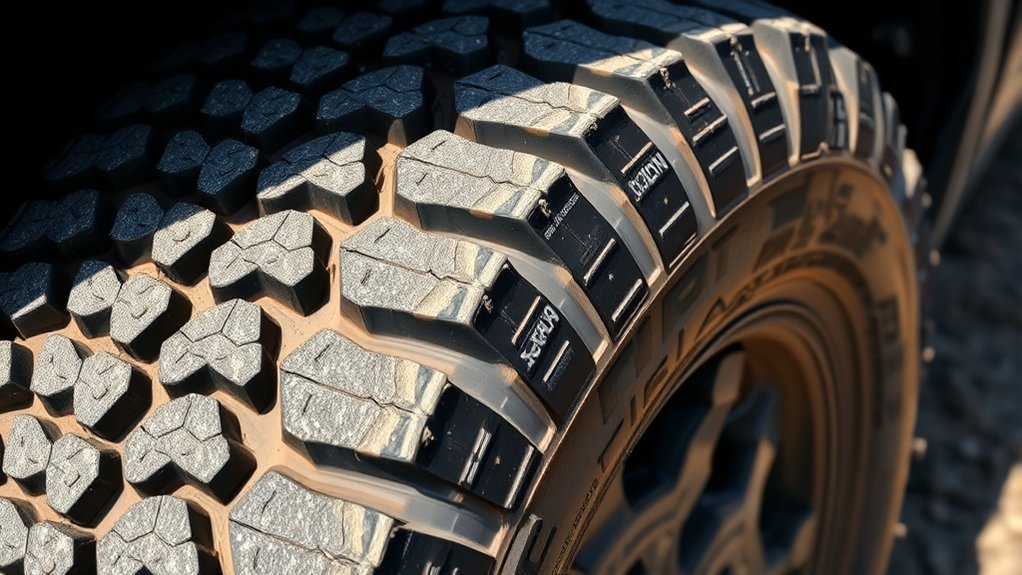
Tire feathering on a Toyota Tundra usually points to an alignment, pressure, load, tire, or suspension problem that needs attention before the wear gets worse. You can often spot it by running your hand across the tread. One direction feels smoother, while the opposite direction feels sharp, rough, or saw-toothed.
Quick Answer
Toyota Tundra tires feather when tread blocks scrub the road unevenly, usually from out-of-spec alignment, incorrect cold tire pressure, worn steering or suspension parts, heavy loads, or aggressive cornering. Check tread depth and pressure first, replace unsafe tires, then schedule an alignment and suspension inspection.
Key Takeaways
- Feathering feels smooth in one direction and rough, sharp, or saw-toothed in the other direction.
- Toe alignment is one of the most common causes, but pressure, rotation, suspension wear, load, and driving style can also contribute.
- Do not use one universal PSI number for every Tundra. Use the Tire and Loading Information Label on your driver-side door jamb or your Toyota owner’s manual.
- Rotate tires based on your Toyota maintenance guide, commonly around 5,000 to 8,000 miles when recommended, or sooner if uneven wear starts.
- If you see cords, bulges, deep cracks, rapid pressure loss, severe vibration, or tread worn to 2/32 inch, replace the tire instead of trying to “wear it even.”
At a Glance
| Time Required | 10 to 15 minutes for a driveway inspection; longer if a shop checks alignment, balance, and suspension |
| Difficulty | Easy inspection, but alignment and suspension diagnosis should be done by a qualified technician |
| Tools Needed | Tire pressure gauge, tread depth gauge or penny, flashlight, and alignment printout from a shop |
| Cost | Free for basic inspection; shop costs vary for alignment, balancing, suspension repair, or tire replacement |
What Is Tire Feathering and How Do You Spot It?
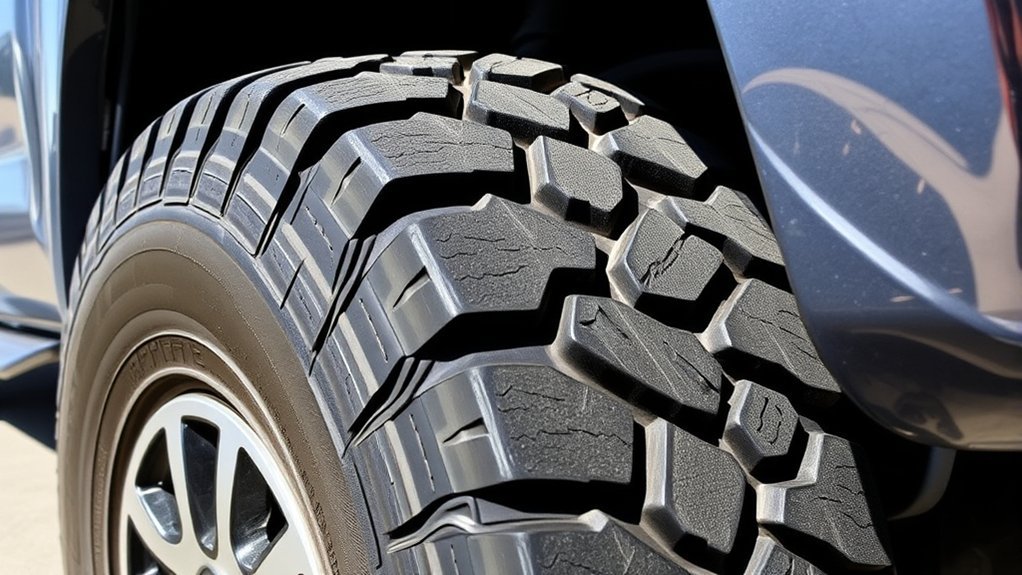
Tire feathering is an uneven tread pattern where each tread rib or block wears lower on one edge and higher on the opposite edge. When you slide your hand across the tread, it may feel smooth one way and rough the other way. Bridgestone describes feather-edge wear as tread ribs that are smoother on one side and sharper on the other, often from alignment settings such as excessive toe or caster.
On a Tundra, you may notice feathering on the front tires first because the front tires handle steering, braking load, and much of the cornering force. Rear tires can feather too, especially if the truck tows, carries heavy payloads, has worn suspension parts, or has alignment issues after a lift, leveling kit, aftermarket wheel change, or tire-size change.
Note: Feathering is not the same as cupping or one-sided shoulder wear. Feathering feels like sharp tread edges. Cupping looks like scalloped dips around the tread. One-sided shoulder wear often points more toward camber, pressure, load, or cornering problems.
Top Causes of Tire Feathering in Your Tundra
Most feathering starts when the tire does not roll straight and evenly across the road. The tire still turns, but the tread blocks scrub slightly sideways with every rotation. Over thousands of miles, that small scrub can create sharp edges and a humming tire noise.
| Cause | What It Does | Best Fix |
|---|---|---|
| Incorrect toe alignment | Scrubs the tread blocks as the tire rolls forward | Get an alignment and ask for the before-and-after printout |
| Wrong cold tire pressure | Changes the contact patch and can speed uneven wear | Use the Tundra’s door-jamb label or owner’s manual, not the sidewall maximum |
| Delayed rotation | Lets one tire position carry the same steering and braking stress too long | Follow the Toyota maintenance schedule and rotate sooner if uneven wear appears |
| Worn steering or suspension parts | Allows tire angles to change while driving | Inspect tie rods, ball joints, control-arm bushings, shocks, struts, and wheel bearings |
| Heavy towing or payload | Adds heat and load to the tread, especially if pressure is low | Stay within payload limits and use the pressure guidance for your exact truck and load |
| Aggressive cornering or braking | Increases shoulder scrub and heat | Use smoother steering, braking, and throttle inputs |
How to Check Tundra Tire Feathering at Home
Start with the truck parked on a flat surface. Let the tires cool for at least three hours before checking pressure, because cold pressure gives the most accurate reading. NHTSA says proper tire pressure should come from the Tire and Loading Information Label or owner’s manual, and pressure should be checked when the tires are cold.
- Look across the tread face. Use a flashlight and compare the inside shoulder, center tread, and outside shoulder.
- Run your hand over the tread. Move from inside to outside, then outside to inside. Feathering usually feels rougher in one direction.
- Check all four tires. If only one front tire is feathered, suspect alignment, tire position, or a worn component on that corner. If all tires show odd wear, check pressure, rotation history, load, and tire type.
- Measure tread depth. Replace any tire worn to 2/32 inch. A tread-depth gauge is best, but the penny test can give a quick warning sign.
- Check for damage. Look for exposed cords, sidewall bulges, deep cracks, punctures, missing chunks, or uneven shoulder wear.
- Watch for vibration or noise. Feathered tires can hum, growl, or vibrate, especially on smooth pavement.
Warning: Do not keep driving on a tire with exposed cords, a bulge, deep cracks, rapid pressure loss, severe vibration, or tread worn to 2/32 inch. Replace unsafe tires and have the truck inspected before highway driving, towing, or hauling.
[Products Worth Considering]

Measure tire tread depth quickly and accurately with this LUMITECO dial gauge that reads in 1/32" increments up to 14/32". The color-coded green/yellow/red zones make it easy to judge tire wear and know when replacement is needed. A rugged, compact design with a protective pouch helps keep the gauge ready for use on cars, trucks, motorcycles, and more.

The Ziopetru adjustable magnetic wheel alignment tool helps you check and restore camber and caster positioning after removing and reinstalling undercarriage components. With a clear leveling/bubble measurement system and an easy zeroing adjustment knob, it supports precise horizontal angle checking. The strong magnetic base mounts to metal surfaces for convenient use at home on cars, motorcycles, trucks, vans, and SUVs.

Monitor tire tread wear with a smart, color-coded depth gauge that shows clear condition ranges at a glance. The bar is range marked for fast, easy readings, helping you maintain safer traction and performance. Each gauge is portable with a pocket clip, and the set includes 20 units for daily use and sharing.
The Role of Tire Maintenance: Why It Matters
Tire maintenance matters because your Tundra’s tires carry the truck, steer it, brake it, and absorb road impacts. NHTSA warns that poor tire maintenance, including not enough air and failure to rotate tires, can lead to flat tires, blowouts, or tread separation. It also says rotation, balance, and alignment can help tires last longer.
NHTSA reported 511 traffic deaths in tire-related crashes in 2024, which is why tire pressure, tread depth, rotation, balance, and alignment should be part of routine truck maintenance.
For rotation, use the schedule in your Toyota maintenance guide or owner’s manual. NHTSA says that if the vehicle manufacturer recommends rotation, many vehicles use a 5,000 to 8,000 mile interval, or sooner if uneven wear appears. Toyota’s owner resources also direct owners to vehicle-specific manuals and maintenance information, which is important because Tundra trims, model years, tire sizes, and load ratings differ.
Do not use the maximum pressure molded into the tire sidewall as your everyday pressure setting. That number is not the same as Toyota’s recommended cold inflation pressure for your truck. Use the driver-side Tire and Loading Information Label, your Toyota owner’s manual, or a Toyota dealer when tire size, load, or trim details are unclear.
Pro Tip: Keep the alignment printout, tire rotation date, pressure readings, and tread-depth notes in your glove box or phone. If feathering returns, that record helps a shop find whether the issue is alignment, pressure, suspension, or tire position.
Why Tire Alignment Is Key to Tire Life
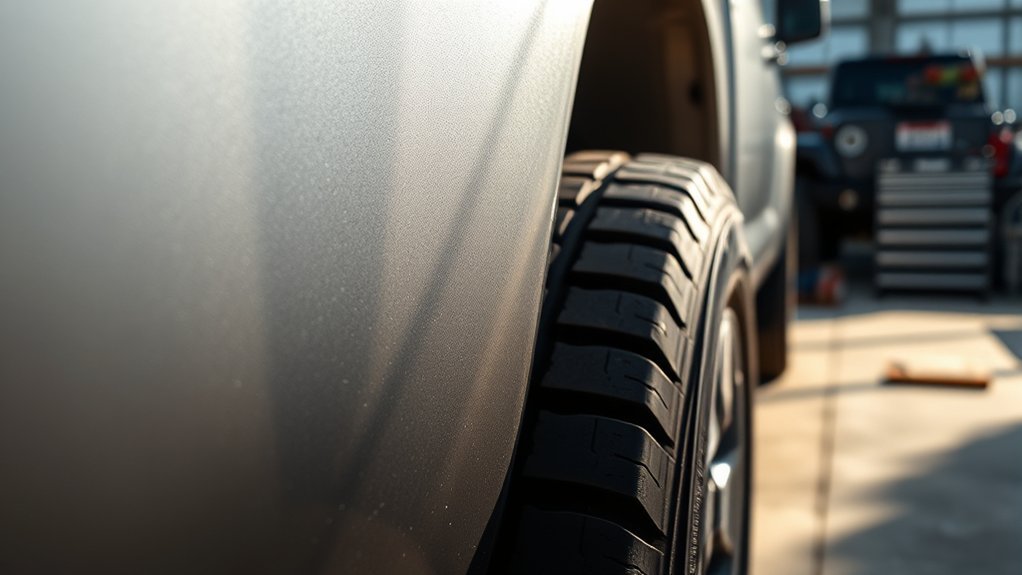
Alignment sets the angles of the wheels so the tires meet the road correctly. On a Tundra, the most important numbers to ask about are toe, camber, and caster. Toe problems often create feathering because the tire points slightly inward or outward while it rolls forward.
Ask the alignment shop for a before-and-after printout. The printout should show whether the truck was outside Toyota specifications and which angles were corrected. This matters even more if your Tundra has a lift kit, leveling kit, aftermarket wheels, larger tires, worn suspension parts, or frequent towing use.
How to Read the Alignment Printout
You do not need to become an alignment technician, but you should know what the printout tells you. The “before” column shows how the truck arrived. The “after” column shows what the shop corrected. Green numbers usually mean the angle is within the machine’s stored specification, while red numbers usually mean it is outside the target range.
- Toe: The first number to question when tires show feathered edges or saw-tooth tread feel.
- Camber: More likely to show up as inside- or outside-shoulder wear if it is far out of range.
- Caster: Helps steering stability and can affect how the truck tracks, especially after suspension changes.
- Steering wheel center: Ask the shop to center the wheel so the truck does not drive straight with the wheel crooked.
Schedule an alignment inspection when you notice feathering, the steering wheel sits off-center, the truck pulls, the tires make a new humming noise, you hit a curb or pothole hard, you install new tires, or suspension parts get replaced. A rotation alone may move the noise to another corner, but it will not fix the angle that caused the feathering.
How Driving Style Affects Tundra Tire Wear
Your driving style can speed up feathering once alignment, pressure, or suspension is already off. A full-size truck has more weight to control than a small car, so sharp steering, hard braking, and fast cornering place extra load on the front tire shoulders.
Driving Speed Impact
High speeds and fast turns increase heat and scrub across the tread. If your commute includes cloverleaf ramps, tight parking garages, gravel roads, or curvy rural roads, inspect the front tire shoulders more often. Feathering may start quietly as a faint hum before the tread feels sharp by hand.
Cornering Techniques Matter
A smoother steering input helps the tire roll instead of scrub. Slow down before the turn, brake in a straight line when possible, and ease back into the throttle as the truck exits the corner. This will not correct a bad alignment, but it can reduce how quickly uneven wear gets worse.
| Driving Style | Impact on Tires | Better Habit |
|---|---|---|
| Sharp cornering | Extra shoulder scrub | Slow before the turn and steer smoothly |
| Hard braking | More load on front tires | Brake earlier and avoid last-second stops |
| Fast ramp driving | Heat and outer-edge wear | Reduce speed on long curved ramps |
| Ignoring tire pressure | Poor contact patch and uneven wear | Check all tires monthly when cold |
Load and Weight Factors
Payload and towing can also affect tire wear. Extra weight changes how the tread contacts the road, and low pressure under load can build heat quickly. Before hauling or towing, check the Tire and Loading Information Label, stay within the truck’s payload rating, and verify cold pressure with a gauge.
If your Tundra regularly tows, carries tools, runs larger tires, or uses a lift or leveling kit, ask the alignment shop whether the truck’s setup changes the target alignment approach. A modified truck may need more frequent checks than a stock daily driver.
What to Do After You Find Feathered Tires
Once you confirm feathering, fix the cause before you spend money on new tires. New tires can feather again if the alignment, pressure, balance, or suspension problem remains.
- Check cold tire pressure. Use the driver-side Tire and Loading Information Label or your Toyota owner’s manual. Do not use the maximum pressure printed on the tire sidewall as your normal setting.
- Inspect tread depth and damage. Replace unsafe tires before rotating or aligning.
- Review your rotation history. If the tires are safe, rotate them according to the Toyota pattern and schedule for your tire type.
- Get an alignment inspection. Ask the shop to check toe, camber, caster, steering-wheel centering, and the condition of steering and suspension parts.
- Balance the tires if vibration is present. Feathering is mainly an alignment or wear-pattern issue, but imbalance can add vibration and uneven wear.
- Inspect suspension and steering parts. Worn shocks, bushings, ball joints, tie rods, or wheel bearings can cause wear to return.
- Recheck after 500 to 1,000 miles. Look for new rough edges, noise, vibration, or pressure loss.
[Products Worth Considering]

The Topeak SmartGauge D2 delivers precise digital tire pressure readings for bikes, motorcycles, and sports equipment up to 250 psi (17 bar). Its rotating SmartHead works with both Presta and Schrader valves, so you can check pressure quickly without adapters. The LCD display makes it easy to read results in psi, bar, or kg/cm² with an included CR2032 battery for immediate use.

The SAFELIFE dial tire tread depth gauge measures tread depth in 1/32 inch increments with clear, easy-to-read 2-inch dial face. Color zones using a traffic light system help you quickly judge whether tread is low, marginal, or ample for safer driving. Built with a durable zinc cast body and a metal detect probe for precise, comfortable use across cars, motorcycles, trucks, and buses.

Accurately measure tire tread depth with a calibrated gauge marked from 0 to 1 inch in 1/32 inch increments. The color-coded bar helps you quickly identify tread condition ranges, supporting safe driving for trucks, motorcycles, automobiles, and passenger vehicles.
Can Feathered Tires Be Saved?
Some mildly feathered tires can keep running after the cause is fixed, but the tread will not instantly become smooth again. Rotation may reduce noise over time if the tire is still safe. Severe feathering, exposed cords, sidewall damage, deep cracking, or low tread depth means replacement is the safer choice.
| What You Find | Best Next Step |
|---|---|
| Mild sharpness, safe tread depth, no vibration | Correct pressure, rotate if allowed, align the truck, and recheck soon |
| Loud humming, vibration, or fast wear | Have a tire shop inspect balance, alignment, suspension, and tire condition |
| Cords, bulges, cracks, pressure loss, or 2/32 inch tread | Replace the tire before highway driving, towing, or hauling |
Best Practices for Selecting Tires to Prevent Feathering
The right tires can help, but tire selection alone will not cure bad alignment or worn suspension parts. Choose tires that match your Tundra’s size, load rating, speed rating, wheel size, and driving use. For the correct size and load information, check the Tire and Loading Information Label, the owner’s manual, or a Toyota dealer.
- Match the truck’s load needs. A tire that is not rated for your Tundra’s weight, towing, or payload use can wear faster and handle poorly.
- Choose the right tire type. Highway-terrain tires often ride quieter on pavement. All-terrain tires can suit gravel, dirt, and work use, but aggressive tread blocks may create more noise if rotation or alignment is neglected.
- Avoid mixing worn and new tires carelessly. Big tread-depth differences can affect handling, traction, and rotation choices.
- Balance new tires when installed. NHTSA recommends balancing new tires and using qualified alignment service to maximize tire life.
- Recheck alignment after modifications. Lift kits, leveling kits, larger tires, and aftermarket wheels can change tire angles and steering geometry.
[Products Worth Considering]

These universal tire valve stem caps help protect valve cores from dust, debris, and moisture while helping maintain stable tire pressure. The corrosion-resistant metal construction and sealed design provide reliable protection in road grime, mud, and winter conditions. Twist-on installation makes them quick to fit on cars, SUVs, trucks, and motorcycles.

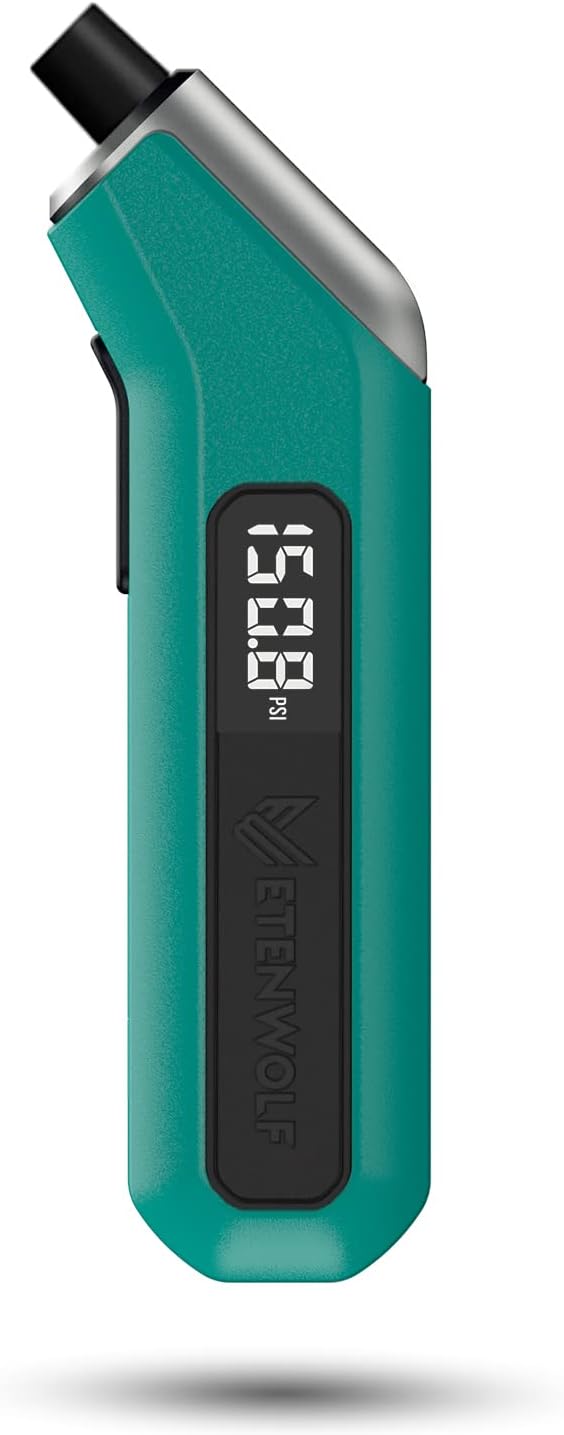
ETENWOLF T300 is a calibrated digital tire pressure gauge for accurate readings from 3 to 200 PSI across light and heavy-duty vehicles. It includes thermal compensation for reliable performance in extreme cold or heat, with an auto shut-off to extend battery life and an LED for easier reading. The sturdy design supports rugged everyday use, making it ideal for pickups, RVs, and industrial applications.

Measure tyre tread depth precisely with a digital gauge that reads in both MM and inches, helping you monitor safe driving conditions. The large LCD screen is easy to operate, and the compact tool fits for cars, trucks, and motorcycles. It provides high accuracy with a 0-25.4mm range and includes a 1-year warranty for added peace of mind.
Frequently Asked Questions
How do you stop feathering tires on a Toyota Tundra?
Stop the cause first. Check cold tire pressure from the door-jamb label, inspect tread depth, rotate the tires if they are safe, and schedule a wheel alignment. If feathering returns, have the shop inspect steering and suspension parts such as tie rods, ball joints, bushings, shocks, and wheel bearings.
Is tire feathering always an alignment problem?
No. Alignment, especially toe, is a common cause, but feathering can also come from incorrect pressure, delayed rotation, worn suspension parts, heavy loads, poor balancing, or aggressive driving. A proper diagnosis should check the tire, wheel, alignment, pressure, and suspension together.
Can you keep driving on feathered tires?
You may be able to drive briefly if the feathering is mild, tread depth is safe, pressure holds, and there are no bulges, cords, cracks, or strong vibrations. Do not ignore the problem. Feathering can worsen noise, reduce tire life, and hide a deeper alignment or suspension issue.
Will rotating tires fix feathering?
Rotation may slow uneven wear if the tire is still safe, but it does not fix the cause. If the alignment is out, pressure is wrong, or a suspension part is worn, the tire can keep feathering in its new position. Correct the cause before expecting rotation to help.
What tire pressure should a Toyota Tundra use?
Use the cold tire pressure listed on your specific Tundra’s Tire and Loading Information Label or in your Toyota owner’s manual. The correct PSI can vary by model year, tire size, trim, and load. Do not assume one pressure setting works for every Tundra.
Does tire feathering cause road noise?
Yes. Feathered tread can create a humming, growling, or droning sound that often gets louder on smooth pavement. Rotation may move the noise to another corner, but alignment, pressure, balance, and suspension issues still need to be checked.
Can an alignment fix tires that are already feathered?
An alignment can fix the angle that caused the wear, but it cannot instantly restore worn tread. Mild feathering may become less noticeable after rotation and normal driving. Severe feathering, unsafe tread depth, cords, bulges, cracks, or vibration may require tire replacement.
Is feathering the same as tire cupping?
No. Feathering feels like sharp tread edges when you run your hand across the tire. Cupping looks like scalloped dips around the tread and often points to balance, shock, strut, wheel, or suspension problems.
Conclusion
Tire feathering on a Toyota Tundra is usually a warning sign, not just a cosmetic tread issue. The most likely causes are alignment, cold tire pressure, rotation habits, suspension wear, heavy loads, or aggressive driving. Start with a simple tread and pressure check, then get a professional alignment inspection if the wear pattern is clear.
The safest approach is to fix the cause before replacing tires. Use the tire pressure label or owner’s manual, rotate on schedule, ask for an alignment printout, and inspect suspension parts when feathering returns. That process protects your tires, improves ride quality, and helps your Tundra stay safer under daily driving, towing, and hauling.
Sources
- NHTSA TireWise — tire pressure, tread depth, rotation, TPMS, alignment, and tire-safety guidance
- Bridgestone Tire Tread Wear & Causes — feather-edge wear, heel/toe wear, alignment, toe, caster, and inflation-pressure causes
- Toyota Manuals and Warranties — vehicle-specific owner’s manual and maintenance information
- ToyotaCare & Maintenance Plans — Toyota maintenance-plan and scheduled-maintenance resources