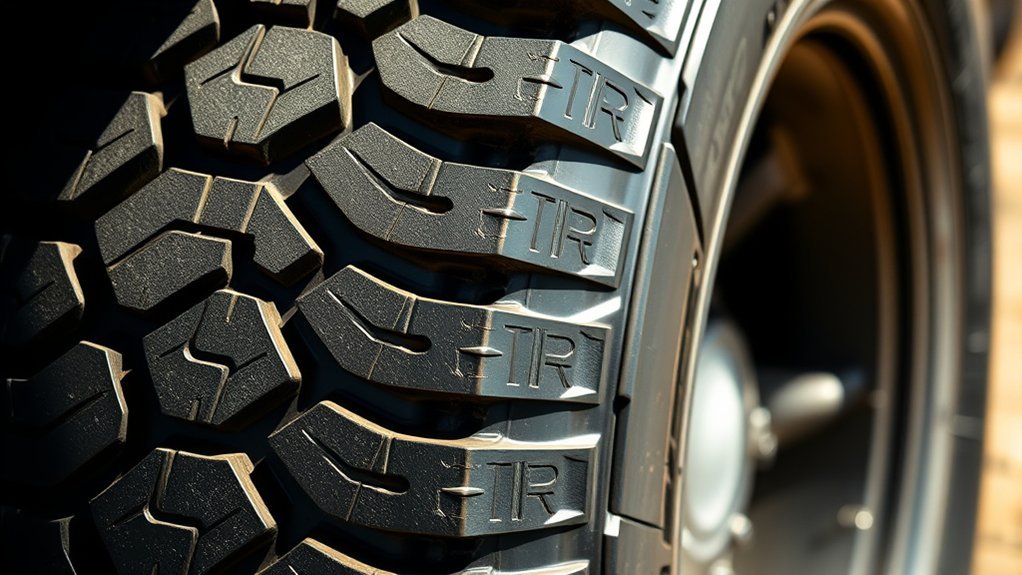
The tire void ratio is the share of open grooves and spaces in a tire tread compared with the rubber blocks that touch the road. On a Toyota Hilux, it matters because many owners use the same truck for rain, towing, work sites, gravel, mud, and daily highway driving. More void helps move water, mud, and stones away from the tread. More rubber contact helps dry-road stability, steering response, and braking feel.
Quick Answer
A higher tire void ratio usually improves mud, gravel, loose-surface, and wet-weather clearing, while a lower void ratio usually improves dry-road contact and steering response. For a Toyota Hilux, the best choice depends on how you drive: highway, mixed use, towing, or serious off-road work.
Key Takeaways
- Tire void ratio is a tire-design feature, not one fixed Toyota Hilux specification.
- High-void tread patterns clear water, mud, gravel, and debris better, but they can feel noisier or less precise on dry pavement.
- Low-void tread patterns put more rubber on the road, improving dry grip and stability, but they are less suited to deep mud or loose terrain.
- Tread depth, cold tire pressure, load, speed, tire compound, and alignment affect traction as much as the void pattern.
At a Glance
| Time Required | About 10 minutes for a monthly tire check; longer after mud, gravel, towing, or a hard off-road trip |
| Difficulty | Easy for inspection; professional help needed for damage, uneven wear, vibration, or alignment issues |
| Tools Needed | Cold tire pressure gauge, tread-depth gauge or wear indicators, flashlight, gloves, and the Hilux tire placard or owner’s manual |
| Cost | Usually free if you already have a gauge; a basic pressure or tread-depth gauge is inexpensive |
Understanding Tread Void and Tire Void Ratio
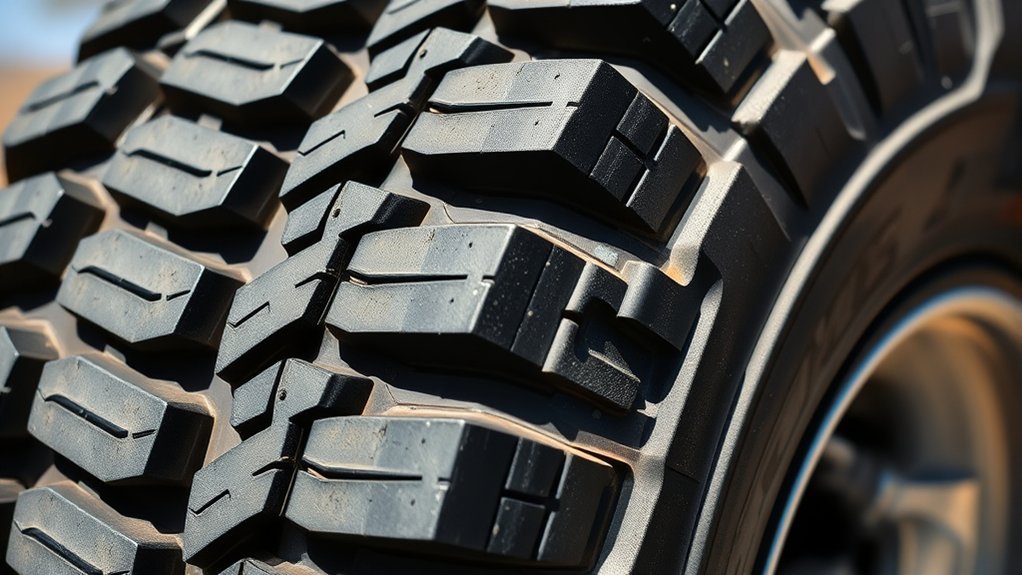
Tread void means the open space between the tread blocks. These spaces include circumferential grooves, lateral grooves, shoulder channels, and gaps between lugs. The tire void ratio describes how much of the tread footprint is open space compared with solid rubber.
A tire with large open gaps is often called a high-void tire. Mud-terrain and aggressive all-terrain tires use more open space so the tread can bite into loose ground and clear packed mud. A tire with smaller gaps is a lower-void tire. Highway-terrain and many road-focused tires use more continuous rubber so the tire feels steadier on dry pavement.
This is why one Hilux can feel very different from another even if both trucks are mechanically similar. The tread pattern, tire size, load rating, pressure, tread depth, and rubber compound all change how the vehicle grips the road.
Note: There is no single “Toyota Hilux void ratio.” The void ratio comes from the specific tire fitted to the truck. Always match tire size, load rating, speed rating, and inflation pressure to your Hilux owner’s manual, tire placard, and local regulations.
Balancing Wet Grip and Dry Handling in the Toyota Hilux
Wet grip and dry handling need different tread priorities. In rain, the tread must move water out from under the tire. Tire Rack explains hydroplaning resistance as the tire’s ability to keep water from lifting the tread away from the road at speed. Recent hydroplaning research also looks at groove dimensions and the tire’s ability to evacuate water before lift forces build.
On dry pavement, the tire does not need as much open space for water or mud. More rubber on the road can help the Hilux feel more stable when braking, cornering, or carrying a load. Michelin’s tire glossary describes how tread designs can combine grooves for water evacuation with larger outer tread blocks for handling.
For daily Hilux driving, the best answer is usually a balanced highway-terrain or all-terrain tire, not the most aggressive tread available. Choose more void only when your driving really demands loose-surface grip, mud clearing, or off-road traction.
Warning: A high-void tread does not make a Hilux immune to hydroplaning. Slow down in standing water, avoid sudden steering or braking, and replace worn or damaged tires before they become unsafe.
[Products Worth Considering]

Measure tyre tread depth precisely with a digital gauge that reads in both MM and inches, helping you monitor safe driving conditions. The large LCD screen is easy to operate, and the compact tool fits for cars, trucks, and motorcycles. It provides high accuracy with a 0-25.4mm range and includes a 1-year warranty for added peace of mind.

Monitor tire tread wear with a smart, color-coded depth gauge that shows clear condition ranges at a glance. The bar is range marked for fast, easy readings, helping you maintain safer traction and performance. Each gauge is portable with a pocket clip, and the set includes 20 units for daily use and sharing.

Measure tire tread depth quickly and accurately with this LUMITECO dial gauge that reads in 1/32" increments up to 14/32". The color-coded green/yellow/red zones make it easy to judge tire wear and know when replacement is needed. A rugged, compact design with a protective pouch helps keep the gauge ready for use on cars, trucks, motorcycles, and more.
How Tire Void Ratio Affects Hilux Performance
The tire void ratio affects how the Hilux grips, clears debris, wears, sounds, and responds through the steering wheel. Think of it as a trade-off between self-cleaning and rubber contact.
[Products Worth Considering]

The SAFELIFE dial tire tread depth gauge measures tread depth in 1/32 inch increments with clear, easy-to-read 2-inch dial face. Color zones using a traffic light system help you quickly judge whether tread is low, marginal, or ample for safer driving. Built with a durable zinc cast body and a metal detect probe for precise, comfortable use across cars, motorcycles, trucks, and buses.

Accurately measure tire tread depth with a calibrated gauge marked from 0 to 1 inch in 1/32 inch increments. The color-coded bar helps you quickly identify tread condition ranges, supporting safe driving for trucks, motorcycles, automobiles, and passenger vehicles.

These aluminum alloy tire valve stem caps with an O-ring seal help protect valve stems from corrosion while adding a clean, stylish look to your vehicle. The universal fit works across cars, trucks, motorcycles, bicycles, and more, making them an easy upgrade for everyday driving and off-road use. Installation is quick, and the included four-pack keeps all your tires dressed and protected.
High-void tread patterns
A high-void tire has larger spaces between tread blocks. This helps the tire dig into mud, gravel, sand, and loose soil. It also gives water, stones, and debris more room to escape from the contact patch. The trade-off is that the tire may be louder on the highway, may feel less sharp on dry pavement, and may wear faster if used mostly on sealed roads.
Low-void tread patterns
A low-void tire has more continuous rubber across the tread face. This often improves dry-road stability, steering response, braking feel, and ride comfort. The trade-off is reduced self-cleaning in mud, clay, and loose rock. If the tread packs with mud, the tire can lose bite quickly.
Balanced all-terrain tread patterns
Many Hilux owners are best served by a moderate all-terrain tire. These tires use enough void to handle gravel roads, wet worksites, and light mud, while still keeping enough rubber on the road for daily driving. This balance is usually better for a Hilux used for commuting, family use, light towing, and weekend trails.
The right tread pattern is not the most aggressive one. It is the one that matches your surface, speed, load, and weather most of the time.
How to Choose the Right Void Ratio for Your Hilux
Start with where your Hilux spends most of its time. A tire that is excellent in deep mud may be the wrong choice for long highway drives. A quiet road tire may be the wrong choice for wet clay, farm tracks, or rocky work sites.
| Main Hilux Use | Best Tread Direction | Why It Works |
|---|---|---|
| Mostly highway and town driving | Lower to moderate void | More rubber contact, quieter ride, better dry-road stability |
| Rain, gravel, and light off-road use | Moderate all-terrain void | Good balance of wet clearing, gravel bite, and daily comfort |
| Mud, clay, farm tracks, and worksites | Higher void with open shoulders | Better self-cleaning and loose-surface traction |
| Towing or carrying heavy loads | Correct load-rated tire first, void ratio second | Load capacity, pressure, heat control, and stability matter most |
Before buying, check the tire size and load rating listed on your Hilux tire placard and in the Toyota owner’s manual finder. Toyota also notes that recommended pressures are vehicle-specific and are listed in the handbook or driver-side door area.
[Products Worth Considering]
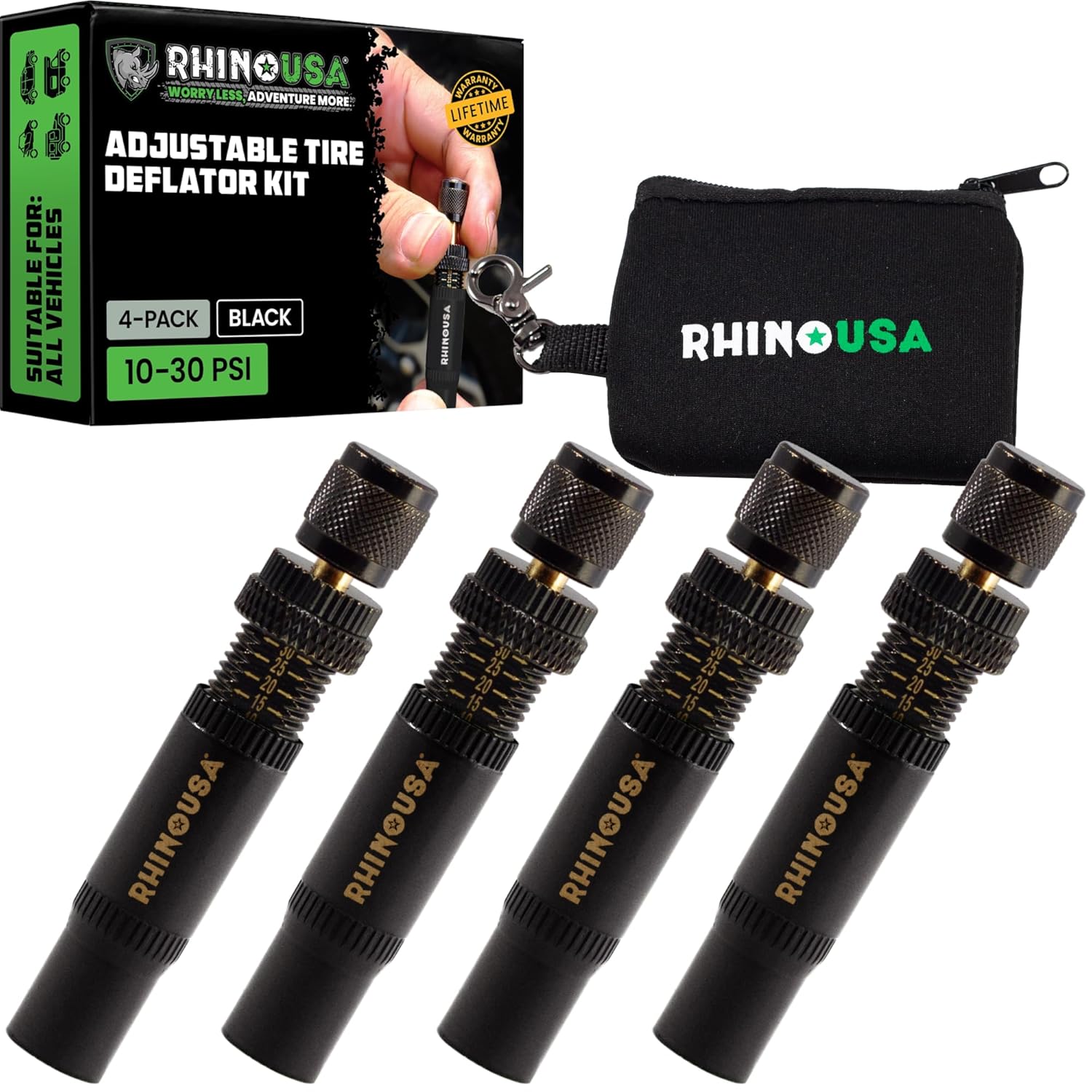
Use the Rhino USA adjustable tire deflators to air down all four tires at once by screwing one deflator onto each valve stem, letting you step away while the tires reach your preset pressure. Each deflator independently adjusts across a 10–30 PSI range with laser-etched indicators for quick setup and verification, making it ideal for beach, sand, and rocky off-road trails.
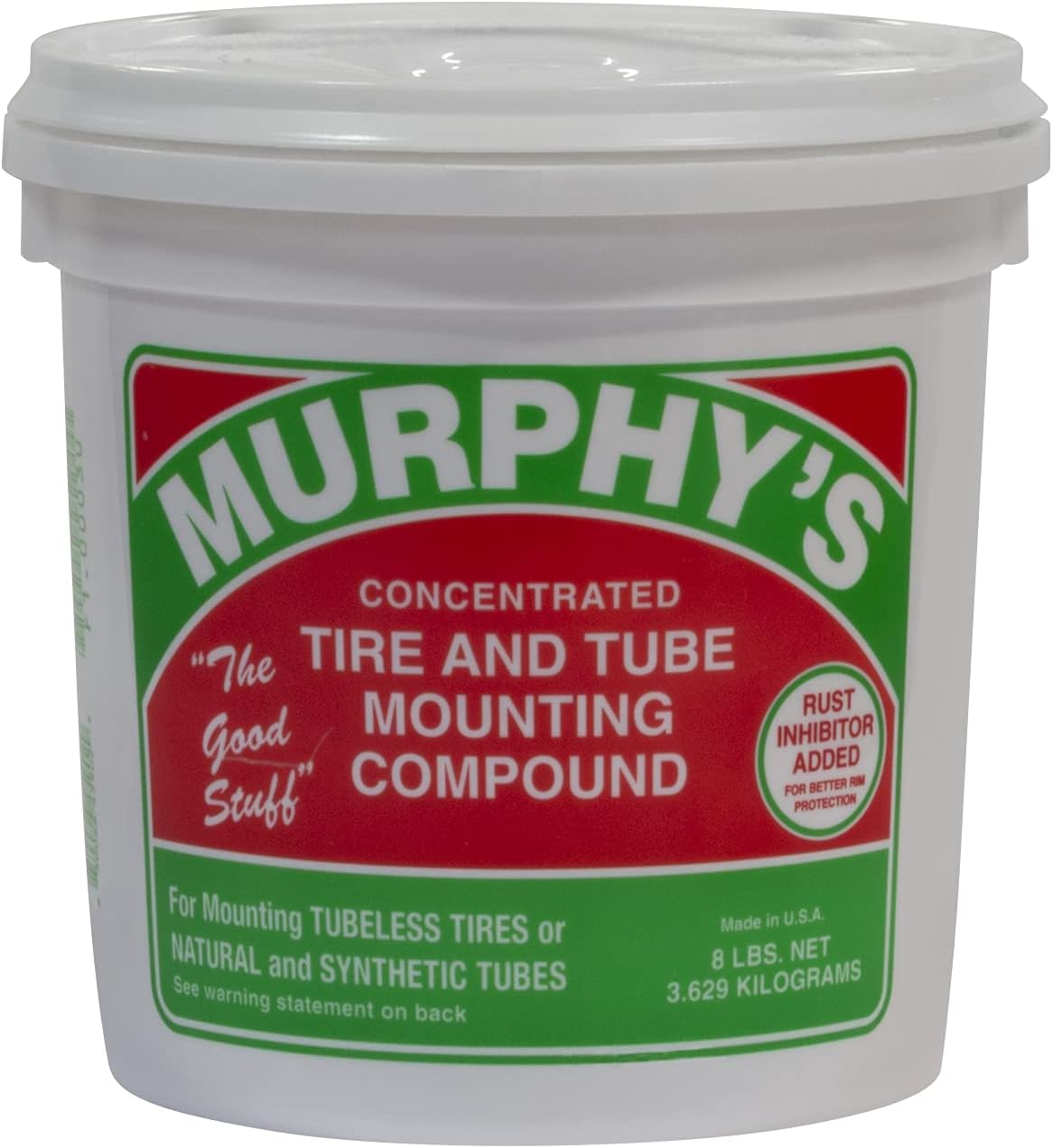
A concentrated tire and tube mounting compound designed to help simplify mounting rubber tires and tubes on passenger, semi truck, construction, and OTR applications. Its ultra-thick formula packs beads effectively and includes rust inhibitors to help protect against corrosion during use.

The Topeak SmartGauge D2 delivers precise digital tire pressure readings for bikes, motorcycles, and sports equipment up to 250 psi (17 bar). Its rotating SmartHead works with both Presta and Schrader valves, so you can check pressure quickly without adapters. The LCD display makes it easy to read results in psi, bar, or kg/cm² with an included CR2032 battery for immediate use.
How to Recognize Signs of Tire Wear
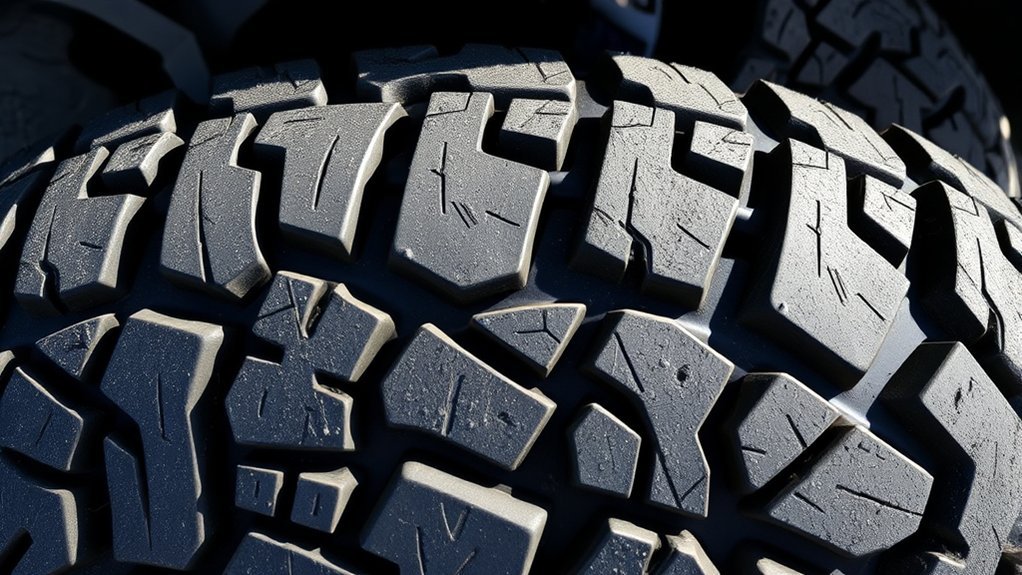
Good tread voids only help when the tire still has enough tread depth and the tread blocks are wearing evenly. A worn tire has less space to move water and debris, so wet grip and off-road bite can drop sharply.
- Check the tread wear indicators. When the bars are level with the tread, the tire is at or near the replacement point.
- Measure tread depth. Many built-in wear indicators are around 2/32 inch or 1.6 mm. Replace immediately at this point, and sooner if wet traction is poor or damage is visible.
- Look for uneven shoulder wear. Wear on one edge can point to alignment, camber, suspension, or pressure problems.
- Look for center wear. Heavy center wear can be linked to over-inflation or long highway use with an unsuitable pressure.
- Look for both-edge wear. Wear on both outer shoulders can be linked to under-inflation, overloading, or aggressive cornering.
- Check for cuts, cracks, cords, bulges, punctures, and stones. Damage in the tread voids can reduce grip or lead to tire failure.
Warning: Do not keep driving on a tire with exposed cords, a sidewall bulge, deep cuts, repeated pressure loss, severe vibration, or heavy uneven wear. Have the tire and wheel inspected by a qualified tire professional.
Tire Maintenance Tips for Your Hilux
While ensuring your Toyota Hilux tires remain in top condition might seem straightforward, effective maintenance is essential for maximizing traction, tire life, and safety. Use the table below as a practical routine.
| Maintenance Task | Frequency | Why It Matters |
|---|---|---|
| Check cold tire pressure | Monthly, before long trips, and before towing or heavy loads | Wrong pressure changes the contact patch, heat build-up, wear pattern, and hydroplaning risk |
| Inspect tread voids for stones, mud, and debris | After gravel, mud, construction sites, or off-road driving | Packed debris reduces self-cleaning and can damage tread blocks |
| Measure tread depth and check wear indicators | Monthly, and before wet-season or off-road trips | Low tread depth reduces water evacuation and loose-surface grip |
| Rotate tires | Follow the Hilux manual or tire maker; if no interval is listed, many tire makers use about 5,000 miles | Rotation helps even out tread wear across the set |
| Check alignment and balance | If the Hilux pulls, vibrates, wanders, or shows uneven wear | Poor alignment can ruin tread blocks and reduce traction |
| Confirm tire size, pressure, and load rating | Before replacing tires or changing tire type | A pickup used for towing or payload needs the correct tire rating, not just the right tread look |
Use the cold pressure listed on the Hilux tire placard or in the owner’s manual, not the maximum pressure printed on the tire sidewall. The Toyota tyre pressure guide explains that pressure recommendations vary by vehicle and are listed in the handbook or driver-side door area.
Pro Tip: If your Hilux sees both highway and off-road use, inspect the tread voids after every trail day. Removing stones and packed mud helps protect tread blocks and keeps the tire’s self-cleaning channels open.
Common Mistakes That Reduce Hilux Traction
- Choosing tread by appearance only: Aggressive lugs may look capable, but they can be noisier and less stable for mostly highway driving.
- Ignoring tire pressure after adding load: Towing, tools, passengers, and canopy weight can change tire heat and handling.
- Running worn all-terrain tires in rain: Once the grooves lose depth, the tire cannot clear water as well.
- Mixing different tread patterns on the same axle: Different grip levels can make braking and cornering less predictable.
- Forgetting the spare: The spare should also be inspected for pressure, age, and damage.
Frequently Asked Questions
What is the void ratio of a tire?
The void ratio of a tire is the amount of open tread space compared with the amount of rubber tread block in the footprint. Larger grooves and lug gaps mean a higher void ratio. Smaller grooves and more continuous rubber mean a lower void ratio.
Is a higher void ratio always better for a Toyota Hilux?
No. A higher void ratio is better for mud, gravel, loose soil, and debris clearing, but it is not always better for dry roads, noise, steering response, or tread life. For mixed Hilux use, a balanced all-terrain tire is often more practical than a full mud-terrain tire.
Does tire void ratio affect hydroplaning?
Yes, but it is only one factor. More groove space can help move water away from the contact patch, but hydroplaning risk also depends on tread depth, tire pressure, vehicle speed, standing water depth, road texture, and tire load.
How much tread depth is safe for rain and off-road driving?
Replace tires immediately when they reach the built-in wear indicators or about 2/32 inch / 1.6 mm. For frequent rain, towing, or off-road use, do not wait until the minimum point if wet grip, braking, or self-cleaning has clearly declined.
Can I mix different tread patterns on my Hilux?
Avoid mixing different tire types or tread depths on the same axle. For predictable braking and handling, use matching tires in the correct size, construction, load rating, and speed rating. If replacing only two tires, ask a tire professional where they should be fitted for your drivetrain and conditions.
How often should I check Hilux tire pressure?
Check cold tire pressure at least monthly, before long trips, and before towing or carrying heavy loads. Use the pressure listed on the Hilux tire placard or owner’s manual, because the right pressure depends on tire size, vehicle load, and market specification.
Conclusion
Understanding the tire void ratio helps you choose better tires for your Toyota Hilux. Higher void patterns suit mud, gravel, wet worksites, and loose terrain. Lower void patterns suit dry pavement, highway stability, and quieter daily driving. The safest choice is the tread pattern that matches your normal driving, fitted in the correct Hilux size and load rating, inflated to the correct cold pressure, and replaced before wear or damage reduces traction.
Sources
- NHTSA TireWise — tire safety ratings, wet traction grading, and tire safety guidance
- Toyota UK Owner’s Manual Finder — manufacturer reference for checking vehicle-specific Hilux owner information
- Toyota Tyre Pressure and Size Guide — guidance on vehicle-specific tire pressure and where to find pressure information
- Bridgestone Tire Maintenance and Safety Manual — tire pressure checks, rotation guidance, tread wear indicators, and tire damage inspection
- Michelin Tire Glossary — tread design terms, grooves, water evacuation, and handling concepts
- Sensors: Real-Time Hydroplaning Risk Estimation — hydroplaning risk discussion involving groove dimensions and water evacuation capacity