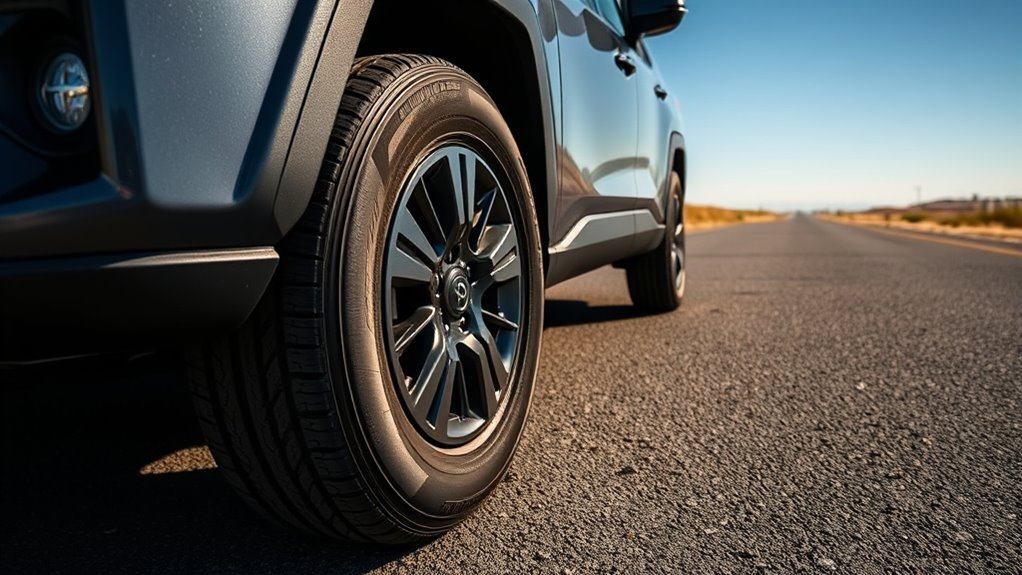
Summer tires can make a Toyota RAV4 feel more precise in warm weather, but they are not the right choice for every driver. They make the most sense if you live where temperatures stay warm, you want sharper paved-road handling, and you are willing to trade some tread life and cold-weather flexibility for better warm-road grip.
Quick Answer
Use summer tires on a RAV4 only when temperatures consistently stay above about 45°F. They can improve warm dry and wet grip, steering response, and braking feel, but they wear faster than many all-season tires and should not be used on snow, ice, or near-freezing roads.
Key Takeaways
- Best use case: warm-climate pavement driving, highway trips, mountain roads, and drivers who want more responsive handling than standard touring all-season tires.
- Temperature rule: switch away from summer tires before regular morning temperatures fall into the 40s, and never use them on snow or ice.
- Fitment rule: match the size, load index, and speed rating shown on your RAV4 door-jamb tire placard or Toyota owner information.
- Maintenance rule: check cold pressure monthly and before long trips, rotate at the Toyota-recommended interval, and inspect tread depth and sidewalls often in hot weather.
At a Glance
| Time Required | 30–60 minutes for a tire shop install; 10 minutes for pressure and tread checks |
| Difficulty | Easy if installed by a tire shop; moderate if using a dedicated wheel-and-tire set at home |
| Tools Needed | Tire pressure gauge, tread depth gauge, torque wrench if changing wheels, and a safe jack setup if rotating at home |
| Cost | Varies by size and brand; budget for tires, mounting, balancing, TPMS service, and possible seasonal storage |
Summer Tires for a RAV4: When They Make Sense

Fit performance summer tires to your RAV4 when your normal driving conditions are warm and mostly free of frost, snow, and ice. Summer tires use tread compounds and patterns built for warm pavement, so they can deliver crisper steering, stronger cornering grip, and confident braking in warm rain compared with many basic all-season touring tires.
The trade-off is simple: summer tires are more specialized. They are not designed for winter traction, they can become stiff in cold weather, and they often wear faster than long-mileage all-season tires. NHTSA classifies summer tires as warm-weather tires that are not designed for below-freezing temperatures or snow and ice.
Warning: Do not treat summer tires as “better all-seasons.” If your RAV4 sees frost, slush, snow, ice, or regular temperatures in the 40s, use all-season, all-weather, or winter tires instead.
Summer vs. All-Season Tires on a RAV4
For most RAV4 owners, the real decision is not “summer tires or bad tires.” It is summer tires vs. quality all-season or all-weather tires. The best choice depends on climate and driving style.
| Category | Summer Tires | All-Season Tires |
|---|---|---|
| Warm dry grip | Usually stronger, especially with performance compounds | Good, but often less sharp |
| Warm wet grip | Can be excellent if tread depth is healthy | Good and more balanced across seasons |
| Cold weather | Poor once temperatures fall into the 40s | Better for cool mornings and mild winters |
| Snow and ice | Not suitable | Limited; winter tires are still best for real winter |
| Tread life | Often shorter | Often longer, especially touring tires |
| Best driver | Warm-climate driver who values handling | Daily driver who wants one practical year-round set |
Choose summer tires if you want a more connected feel and your climate supports them. Choose all-season or all-weather tires if you want convenience, longer treadwear, and safer flexibility when temperatures swing.
[Products Worth Considering]

The Continental Grand Prix 5000 is an allround road bike tire engineered for faster rolling, improved ride comfort, and enhanced puncture protection. It features a Vectran Breaker cut-protection layer, Lazer Grip micro-profile tread for confident cornering control, and Active Comfort Technology to damp vibration for smoother rides. BlackChili compound optimizes grip and speed for everyday performance and long-lasting confidence.

Monitor tire tread wear with a smart, color-coded depth gauge that shows clear condition ranges at a glance. The bar is range marked for fast, easy readings, helping you maintain safer traction and performance. Each gauge is portable with a pocket clip, and the set includes 20 units for daily use and sharing.

Measure tire tread depth quickly and accurately with this LUMITECO dial gauge that reads in 1/32" increments up to 14/32". The color-coded green/yellow/red zones make it easy to judge tire wear and know when replacement is needed. A rugged, compact design with a protective pouch helps keep the gauge ready for use on cars, trucks, motorcycles, and more.
How Heat Affects RAV4 Tire Grip, Wear, and Braking
Heat changes tire behavior in two ways. First, warm pavement helps a summer tire compound work as intended, which improves grip and steering feel. Second, long drives, heavy loads, underinflation, rough pavement, and aggressive cornering can build extra heat inside the tire and speed up wear.
Do not bleed air out of a hot tire just because the reading is higher after driving. NHTSA tire guidance says the correct pressure is the vehicle manufacturer’s cold inflation pressure, measured after the vehicle has been parked for at least three hours or before the tire has warmed from driving.
The correct RAV4 tire pressure is the cold PSI listed by Toyota on the door-jamb placard or in the owner information, not the maximum pressure printed on the tire sidewall.
In hot weather, inspect more often. Underinflation can raise tire temperature and increase the risk of failure, while overinflation can make the ride harsher and concentrate wear in the center of the tread. Heat also makes existing damage more serious, so sidewall bulges, cuts, deep cracks, exposed cords, or repeated pressure loss are reasons to stop using the tire and have it inspected.
Which Summer Tires to Choose for Your RAV4: Size, Load Rating, and Compound
Start with fitment, not brand hype. Many late-model RAV4 trims use sizes such as 225/65R17, 225/60R18, or 235/55R19, but your specific RAV4 may differ by year, trim, drivetrain, wheel package, and market. Check your driver-side door-jamb tire placard and the Toyota owner manual resources before ordering.
Match these items before comparing tread designs:
- Tire size: Use the OEM size or a manufacturer-approved alternative so the speedometer, ABS, traction control, and AWD system work as intended.
- Load index: Do not go lower than the placard or original tire rating. A RAV4 is heavier than a small sedan, especially in hybrid and AWD trims.
- Speed rating: Match or exceed the original rating unless a tire professional confirms a safe alternative for your use.
- UTQG ratings: The U.S. treadwear, traction, and temperature grades can help compare tires. NHTSA explains that higher treadwear numbers indicate slower relative wear, while temperature grades show heat resistance.
- Tread pattern: For daily RAV4 use, choose a street summer tire with strong wet evacuation, not a track-focused tire with minimal water channels.
Note: Some famous ultra-high-performance summer tires are not made in every RAV4 size. Do not force the wrong size just to get a specific model. The correct fitment is more important than the logo on the sidewall.
[Products Worth Considering]

Measure tyre tread depth precisely with a digital gauge that reads in both MM and inches, helping you monitor safe driving conditions. The large LCD screen is easy to operate, and the compact tool fits for cars, trucks, and motorcycles. It provides high accuracy with a 0-25.4mm range and includes a 1-year warranty for added peace of mind.

The SAFELIFE dial tire tread depth gauge measures tread depth in 1/32 inch increments with clear, easy-to-read 2-inch dial face. Color zones using a traffic light system help you quickly judge whether tread is low, marginal, or ample for safer driving. Built with a durable zinc cast body and a metal detect probe for precise, comfortable use across cars, motorcycles, trucks, and buses.
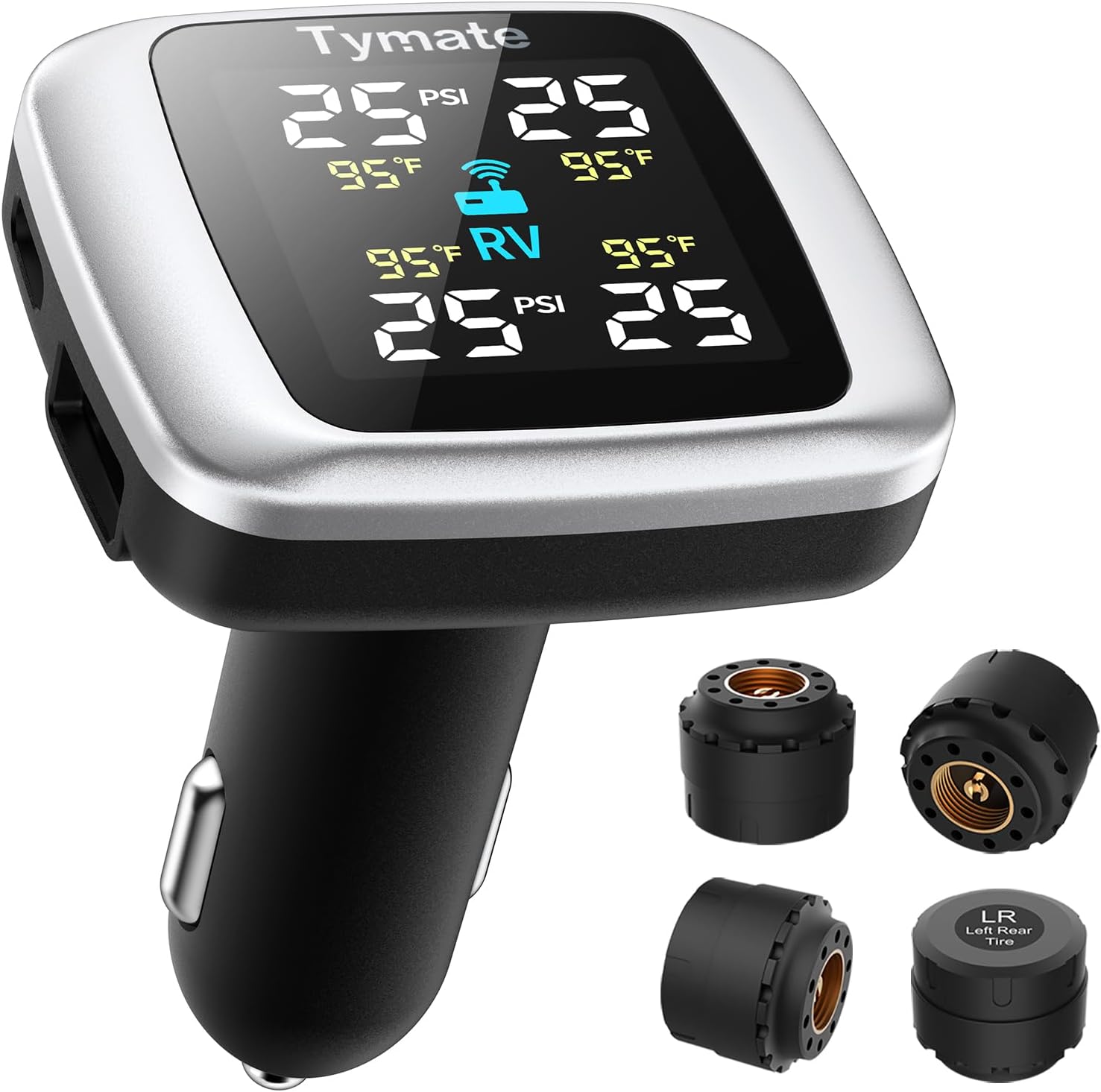
Tymate TM7 is a wireless tire pressure monitoring system that delivers real-time pressure and temperature readings for safer driving. It includes four external sensors, a bright color LCD display with adjustable backlight, and six alarm modes for high/low pressure, fast leakage, high temperature, and sensor signal or battery issues. The system covers a wide 0–144 PSI range and plugs into your vehicle’s cigarette lighter socket for quick DIY setup.
Best Driving Conditions for Summer Tires on a RAV4
Summer tires are at their best when the road is warm, the weather is dry or rainy but not cold, and the driver values steering response. They suit:
- Warm-climate commuting where winter temperatures rarely drop into the 40s.
- Highway driving where stable handling and wet-road confidence matter.
- Spirited paved-road driving where the RAV4 owner wants sharper turn-in.
- Seasonal two-set setups: summer tires for warm months and winter or all-weather tires for cold months.
They are a poor match for mountain winters, shoulder seasons with freezing mornings, ski trips, muddy trail use, or anyone who wants one tire set for the full year. If your RAV4 is your family road-trip vehicle, climate flexibility may matter more than peak grip.
How to Set Up and Maintain Summer Tires on a RAV4

Start by setting tire pressure to the RAV4 manufacturer’s cold specification. On many RAV4 configurations this is in the low-to-mid 30 PSI range, but the door-jamb placard is the final authority. Use a calibrated gauge before driving, especially before long trips, towing, or heat waves.
| Task | Specification |
|---|---|
| Tire pressure | Use the Toyota door-jamb cold PSI; commonly about 33–36 PSI depending on trim and tire size |
| Pressure check | At least monthly, before long trips, and before heavy-load driving |
| Rotation interval | Follow Toyota service guidance; NHTSA lists 5,000–8,000 miles if recommended by the vehicle manufacturer |
| Minimum tread | Replace by 2/32 inch at the latest; consider earlier replacement for wet-weather confidence |
| Storage | Cool, dry, clean, and away from direct sun, ozone sources, and petroleum products |
Use the same tire model, size, and tread depth range on all four corners, especially on AWD RAV4 models. A mismatched tire can create uneven grip and may stress drivetrain components. If one tire is damaged and the other three are significantly worn, ask a tire professional whether the replacement should be shaved, paired, or replaced as a full set.
Pro Tip: Keep a dedicated summer wheel-and-tire set if you swap seasonally. It protects the tire beads from repeated mounting, speeds up seasonal changes, and lets you store the off-season set correctly.
[Products Worth Considering]

The Trivd Frol 1/2" air impact wrench delivers high performance torque up to 1500 ft-lbs with a twin hammer impact mechanism for strong, balanced blows. It features an ergonomic grip, compact lightweight design, and quick-stop control with 3 forward speeds up to 8000 RPM plus a reverse speed. Built for demanding automotive repair and tire shop work, the rear exhaust helps keep debris away from the surface.

The TYAMATE TM8 solar-powered wireless TPMS delivers real-time tire pressure and temperature monitoring with six alarm modes for safer driving. A vibrant color LCD display shows readings clearly while windshield mounting keeps it hands-free and easy to read. With a wide 0–87 PSI range, strong 433.92 MHz signal transmission, and quick sensor pairing, it’s ideal for RV, sedan, SUV, MPV, and truck use.

Milton S-921 pencil tire pressure gauge helps you maintain optimal tire pressure for passenger cars with accurate readings in PSI and kPa. It features a built-in deflator valve for convenient pressure adjustments, plus a single chuck head and nylon indicator bar for easy use on the go. Built from durable plated brass and designed for reliable performance, it’s a practical road trip and cold-weather maintenance tool.
Step-by-Step Summer Tire Checklist for a RAV4
- Confirm the season. Install summer tires only when regular driving temperatures stay above about 45°F and cold-weather trips are not on the calendar.
- Read the placard. Check the driver-side door-jamb label for tire size, load rating, and cold PSI.
- Inspect before installation. Look for cracks, bulges, punctures, uneven wear, and old DOT date codes before the tires go on the vehicle.
- Mount and balance correctly. New tires should be balanced when installed, and directional tires must face the correct rotation direction.
- Set cold pressure. Inflate to the Toyota placard PSI when the tires are cold.
- Recheck after installation. Drive gently, listen for vibration, and recheck pressure after the tires have cooled.
- Track wear. Measure tread depth in several grooves across each tire, then rotate and align as needed to keep wear even.
Troubleshooting Hot-Weather Issues and When to Replace Your Summer Tires
Hot-weather tire problems usually show up as pressure changes, vibration, uneven wear, noise, or reduced wet grip. Do not ignore those signs. Summer tires may feel excellent when new, but they still need the same safety checks as any other tire.
- Measure: Check cold tire pressure and compare it with the door-jamb placard. Recheck later if the tire was hot when measured.
- Inspect: Scan the tread and sidewalls for cuts, cracking, bulges, exposed cords, embedded objects, cupping, feathering, or center/edge wear.
- Diagnose: Center wear often points to overinflation, shoulder wear can point to underinflation or hard cornering, and feathered wear often points to alignment issues.
- Act: Rotate, balance, or align when wear patterns appear. Replace tires immediately if they show bulges, deep cracks, exposed cords, repeated pressure loss, or tread at 2/32 inch.
For wet summer driving, do not wait until the legal minimum if braking confidence has dropped. More tread depth helps move water away from the contact patch, so a tire that is technically legal can still feel poor in heavy rain.
Common Mistakes to Avoid With RAV4 Summer Tires
- Buying the wrong category: Track-oriented summer tires are not ideal for a daily-driven RAV4 in heavy rain.
- Ignoring load rating: A tire that fits the wheel is not automatically rated for the vehicle.
- Mixing tire types: Do not run summer tires on one axle and all-season tires on the other.
- Using them too late in the year: Tire Rack notes that summer performance compounds can lose flexibility as temperatures drop into the 40s.
- Trusting TPMS alone: TPMS warns after pressure is significantly low. It is not a substitute for a monthly manual pressure check.
- Forgetting tire age: NHTSA notes that some vehicle and tire manufacturers recommend replacement after six to 10 years, regardless of tread depth.
Frequently Asked Questions
Can you drive summer tires in 40 degree weather?
You can physically drive on them, but you should avoid it. Around the 40s, many summer tire compounds lose flexibility, which can reduce traction and increase stopping distance. If your RAV4 regularly sees 40°F mornings, all-season, all-weather, or winter tires are safer choices.
What is a disadvantage of a performance summer tire?
The biggest disadvantage is narrow weather range. Performance summer tires can grip very well in warm conditions, but they usually wear faster than touring all-seasons and are unsafe for snow, ice, and near-freezing roads.
Are summer tires worth it on a Toyota RAV4?
They are worth it if you live in a warm climate and want sharper paved-road handling. They are not worth it if you want maximum tread life, one set of tires for all seasons, or reliable traction in cold weather.
What PSI should RAV4 summer tires use?
Use the cold tire pressure listed on your RAV4 driver-side door-jamb placard or Toyota owner information. Many RAV4 trims are around the low-to-mid 30 PSI range, but trim, tire size, drivetrain, and model year can change the correct number.
Can I use summer tires year-round on a RAV4?
Only in climates that stay warm year-round and do not see frost, snow, or ice. If your area has real winter weather or frequent cold mornings, use all-season, all-weather, or winter tires instead.
Conclusion
Summer tires can sharpen a RAV4’s steering and warm-weather grip, but they are a specialized upgrade, not an all-weather solution. Use them when temperatures stay warm, choose the correct size and load rating, keep pressure at Toyota’s cold PSI specification, and inspect tread and sidewalls regularly. If your RAV4 sees cold mornings, snow, ice, or mixed seasons, a quality all-season, all-weather, or winter setup is the smarter and safer path.
Sources
- NHTSA TireWise tire safety guide — supports tire pressure, tread depth, rotation, tire age, TPMS, tire type, and UTQG guidance.
- Toyota RAV4 manuals and warranties — supports using Toyota owner information for model-specific tire specifications.
- Toyota RAV4 tire inflation pressure owner information — supports checking the correct RAV4 cold tire pressure through Toyota owner resources.
- Tire Rack: summer performance tires in cold temperatures — supports the cold-temperature caution for summer tire compounds.
- Michelin North America: summer tires in wintery climates — supports the warning that summer tires are designed for warm-weather use.