
How Tires Handle in Heat: Summer Performance for Your RAV4

Your RAV4’s tires work harder in summer because hot pavement, highway speed, cargo weight, and incorrect PSI all add heat. The safest routine is simple: check pressures when the tires are cold, set them to the Tire and Loading Information label on the driver-side doorjamb, inspect for tread or sidewall damage, and rotate on schedule. Do not use the sidewall maximum as your normal target; that number is the tire’s maximum pressure, not Toyota’s recommended cold pressure for your RAV4.
Quick Answer
For summer driving, check your Toyota RAV4 tire pressure cold in the morning and set each tire to the PSI printed on the driver-door placard. Many modern RAV4 trims are in the low-to-mid 30 PSI range, but the placard on your vehicle is the correct target.
Key Takeaways
- Tire pressure changes with temperature, so check PSI when tires are cold, before the sun and driving heat raise the reading.
- Use the RAV4’s driver-door Tire and Loading Information label, not the maximum PSI molded into the tire sidewall.
- Do not bleed air from hot tires just because the reading is higher after driving; recheck and adjust when cold.
- Replace tires with bulges, exposed cords, tread separation, deep cracking, or tread at 2/32 inch; plan earlier replacement for heavy summer rain.
- Rotate every 5,000 to 7,500 miles, or sooner if you see uneven wear, vibration, pulling, or frequent hot-weather pressure loss.
At a Glance
| Time Required | 10–15 minutes for a pressure and tread check |
| Difficulty | Easy |
| Tools Needed | Accurate tire pressure gauge, air inflator, tread depth gauge or penny, flashlight |
| Cost | Usually $10–$30 for a good gauge; air may be free or low-cost |
How Heat Affects RAV4 Tire Pressure and Grip

Hot weather affects your RAV4 in two ways. First, outside temperature changes the air pressure inside the tire. A common rule of thumb is that tire pressure changes about 1 PSI for every 10°F change in air temperature, although the exact amount varies by tire, load, and driving conditions. Second, driving itself heats the tire, which can temporarily raise the reading even more.
That is why NHTSA recommends checking tire pressure when tires are cold, meaning the vehicle has not been driven for at least three hours. A cold reading gives you the real baseline. A hot reading taken after highway driving may look high even when the tire was correct that morning.
NHTSA reports that poor tire maintenance can lead to flats, blowouts, and tread separation, and that 511 people died in tire-related crashes in 2024.
Over-inflation and under-inflation hurt the tire in different ways. Too much pressure can reduce the contact patch, make the ride harsher, and increase the chance of impact damage from potholes or sharp edges. Too little pressure lets the sidewall flex more, which builds heat, increases rolling resistance, reduces fuel economy, and can damage the tire from the inside.
Warning: Never set your RAV4 tires to the maximum PSI printed on the tire sidewall unless that number also matches Toyota’s placard pressure. The sidewall number is a tire limit, not the normal vehicle pressure target.
[Products Worth Considering]

The JACO FlowPro Tire Inflator measures, inflates, and airs down tires up to 100 PSI with battery-free operation and ±2% accuracy after calibration. It features a glowing pressure dial for night visibility, a heavy-duty steel build with a hybrid hose, and a precision push-to-inflate thumb trigger. The patented Lightning Air Chuck locks on for a secure seal, and the kit includes quick-connect hardware for easy inline use with your air compressor.

This portable cordless tire inflator delivers up to 160 PSI with fast 17 L/min airflow to help you quickly top up tires and get back on the road. It features dual power mode, running on a 21V rechargeable battery or a 12V DC adapter for convenient roadside use. An automatic shut-off with digital pressure gauge helps prevent overinflation, and a built-in LED light improves visibility in low-light conditions.

EVOULTES heavy duty tire inflator with an integrated gauge delivers accurate pressure readings from 10–120 PSI, helping you inflate, deflate, and check tires in one tool. The 16.5-inch extended dual-head air chuck with swivel base reaches hard-to-access dual wheel valves on trucks and RVs. A brass trigger core and side-mounted air release valve make operation smooth, with standard 1/4" NPT threading and quick-connect compatibility for easy setup.
RAV4 Summer PSI: Morning Checks and Exact Pressure Targets
The exact summer PSI for your RAV4 is the cold inflation pressure printed on the Tire and Loading Information label on the driver-side door edge or B-pillar. Toyota’s owner information and NHTSA both point drivers to that label or the owner’s manual for the correct vehicle-specific pressure. Many recent RAV4 models fall around 33–35 PSI cold, but trim, tire size, model year, hybrid/gas configuration, and wheel package can change the correct number.
| Situation | What to Do |
|---|---|
| Cold morning check | Set each tire to the PSI on the driver-door placard. |
| Hot reading after driving | Do not bleed air only because the reading is higher. Recheck cold later. |
| Pressure is low when cold | Add air until it reaches the placard PSI. |
| Pressure is high when cold | Release small amounts of air and recheck until it matches the placard. |
| Aftermarket tire size or wheels | Confirm the correct load rating and pressure with a qualified tire professional or Toyota dealer. |
For summer, a weekly pressure check is a smart habit, especially before highway trips, towing, rough roads, or a long drive with cargo. At minimum, follow NHTSA’s monthly check recommendation and inspect all tires, including the spare if your RAV4 is equipped with one.
Pro Tip: Keep a digital gauge in the glove box and check PSI before the first drive of the day. Gas-station gauges can be worn or inaccurate, and checking after driving can make a good tire look overinflated.
How to Check and Adjust RAV4 Tire Pressure Correctly
- Park overnight or wait at least three hours. Cold tires give the most accurate reading.
- Find the placard PSI. Open the driver door and read the Tire and Loading Information label.
- Remove the valve cap. Keep it clean and reinstall it after checking to help keep dirt and moisture out of the valve.
- Press the gauge straight onto the valve stem. A brief hiss is normal, but a long hiss means the gauge is not sealed correctly.
- Add air if low. Add a small amount, then recheck. It is easier to add more than to correct a large overfill.
- Release air if high while cold. Press the valve stem briefly, then measure again.
- Repeat for all four tires. If your RAV4 has a spare, check it too because it may not be monitored by TPMS.
- Watch for repeat loss. A tire that keeps dropping pressure may have a nail, bead leak, valve issue, cracked wheel, or other damage.
The Tire Pressure Monitoring System is helpful, but it is not a replacement for a gauge. Toyota notes that tire pressure should be checked regularly with a gauge because TPMS alerts only when pressure is critically low or outside the system’s threshold.
How to Spot Heat Damage: Tread, Sidewall, and Uneven Wear
Heat speeds up tire wear, but damage is not always obvious from the driver’s seat. Walk around the RAV4 and inspect each tire in good light. Look across the full tread width, then check both sidewalls where you can see them.
- Cracks between tread blocks: Fine surface aging may be common on older tires, but deep cracks or exposed material require professional inspection.
- Bulges, bubbles, knots, or soft spots: These can signal internal separation and should be treated as unsafe.
- Missing chunks or peeling tread: This can point to tread separation, impact damage, or severe heat stress.
- One-sided wear: Often linked to alignment, worn suspension parts, or incorrect camber/toe settings.
- Center wear: Often linked to chronic over-inflation.
- Both-edge wear: Often linked to chronic under-inflation or overloading.
- Cupping or scalloping: Can be caused by worn shocks, imbalance, alignment problems, or skipped rotations.
Under U.S. federal inspection standards for passenger vehicles, tire tread must be at least 2/32 inch deep. That is the minimum replacement point, not the best wet-weather target. If you drive through frequent summer storms, plan replacement before the tread reaches the legal minimum because shallow tread has less room to move water away from the contact patch.
Note: Check tire age, too. The last four digits of the DOT Tire Identification Number show the week and year the tire was made. Heat, sunlight, storage, and low mileage can age tires even when tread depth still looks acceptable.
Driving and Maintenance Habits to Extend Summer Tire Life

Good tire care is not just about adding air. Your driving habits, cargo weight, rotation schedule, alignment, and wheel balance all affect how much heat your RAV4 tires build on summer roads.
- Rotate on schedule. Toyota’s maintenance guidance recommends tire rotation every 5,000 to 7,500 miles to equalize wear, depending on driving conditions.
- Slow down on damaged pavement. Potholes, curbs, and debris can bruise the tire structure, bend wheels, or create slow leaks.
- Avoid repeated hard braking and sharp cornering. Aggressive driving adds tire heat and scrubs tread faster.
- Keep cargo within the vehicle rating. Extra weight creates more heat and load on the tire. Use the RAV4’s door label and owner’s manual for load limits.
- Fix pulling or vibration early. A shake at speed can point to imbalance, tire damage, bent wheels, or suspension problems.
- Check alignment after impacts. If the RAV4 pulls, the steering wheel sits off-center, or tread wears unevenly, schedule an alignment inspection.
If your RAV4 has a direct tire pressure display, remember that the shown values can differ slightly from a hand gauge and can change with temperature. After tire rotation or tire replacement, follow your model’s owner’s manual for TPMS initialization or tire position learning. Toyota’s RAV4 tire section notes that TPMS does not replace routine pressure checks and that tire pressure changes with temperature.
[Products Worth Considering]
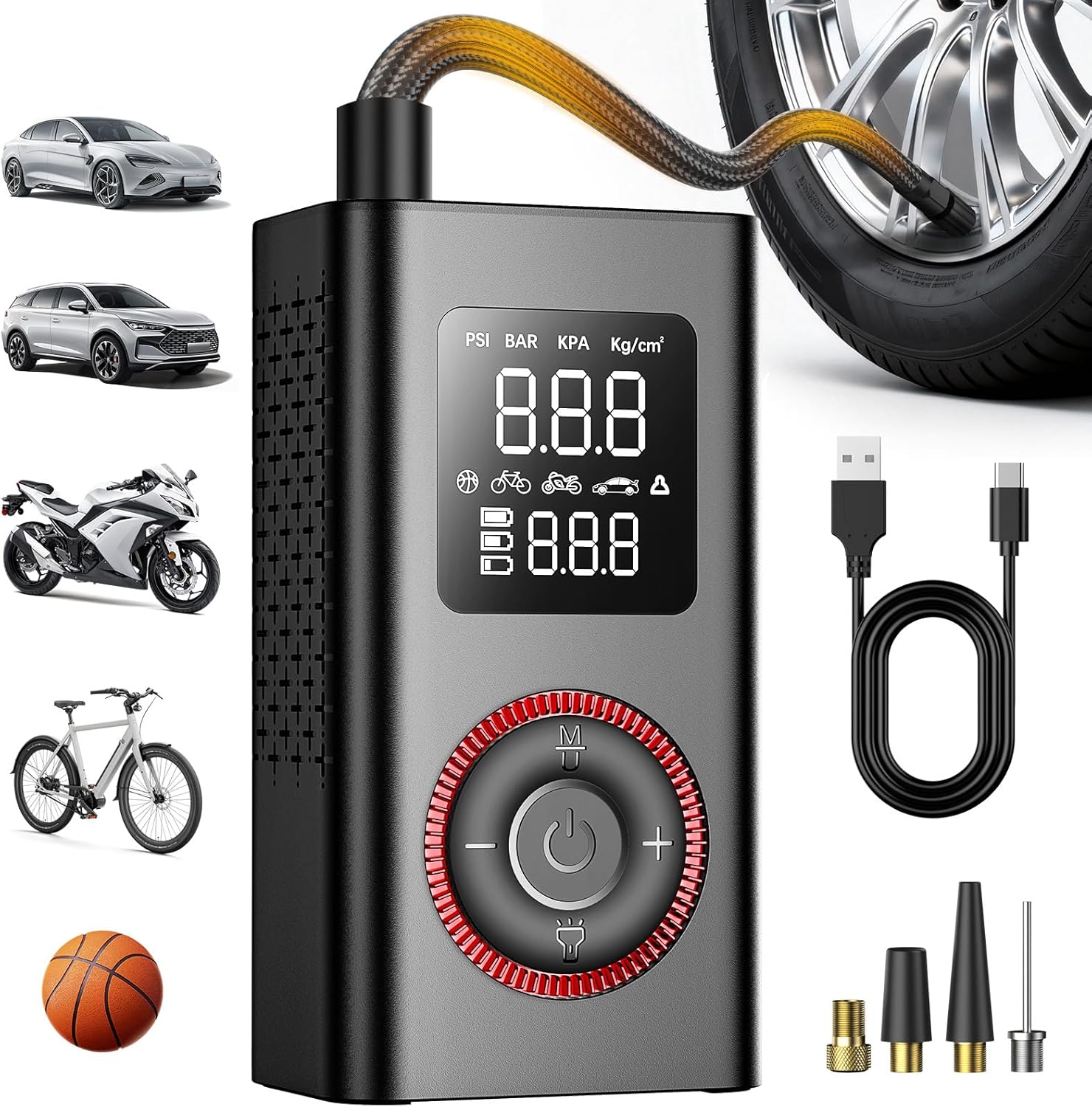
This portable tire inflator delivers fast, efficient inflation with a maximum 150 PSI rating and accurate pressure control for cars, motorcycles, bikes, and more. It features preset modes with automatic shutoff to help prevent overinflation, plus a real-time digital gauge and bright LED light for roadside use. Powered by a rechargeable 6000mAh battery with Type-C charging and a USB output, it’s also useful as an emergency power source for devices.

The AstroAI L7 Air Tire Inflator refills car tires quickly with up to 150PSI max pressure and a fast 1-minute inflation claim. It includes 5 preset modes for car, motorcycle, bicycle, balls, and manual use, along with an auto shutoff to help prevent overinflation. Designed for convenience, it features a digital gauge with unit switching, a top LED light with multiple modes, and USB-C/USB ports for backup power.
Best Tires and Accessories for Reliable RAV4 Summer Performance
The best tire for a RAV4 depends on your wheel size, load index, speed rating, climate, noise preference, and whether you drive mostly highways, city roads, gravel, or wet summer pavement. Start with the exact tire size and load rating on the driver-door label or the tire sidewall, then choose a tire that matches or exceeds the original equipment load and speed requirements.
For summer reliability, look for these tire features:
- Correct size, load index, and speed rating for your RAV4 trim and wheel package.
- Strong wet traction for summer storms and hot-road braking.
- Good heat resistance. NHTSA explains that passenger tires carry temperature resistance grades of A, B, or C under the Uniform Tire Quality Grading system.
- Touring or all-weather design if you want quiet daily driving plus wet-road confidence.
- All-terrain design only if you regularly drive gravel, dirt, or rough access roads and accept possible tradeoffs in noise and fuel economy.
Examples of reputable RAV4-friendly tire lines to compare include Michelin CrossClimate 2 for all-weather touring, Bridgestone WeatherPeak for year-round touring traction, Continental TrueContact Tour 54 for all-season comfort and tread life, and Goodyear Assurance WeatherReady 2 for all-weather grip. Confirm exact fitment before buying because RAV4 tire sizes vary by year and trim.
Useful accessories are simple: an accurate gauge, a compact 12V inflator, metal or quality plastic valve caps, a tread depth gauge, and a small flashlight. A portable inflator is especially helpful on road trips because summer heat can turn a slow leak into a trip-ending problem.
Summer Tire Pressure Mistakes to Avoid
- Bleeding air from hot tires after a drive. Heat raises the reading temporarily. If the tires were correct cold, bleeding them hot can make them underinflated the next morning.
- Relying only on TPMS. A warning light may not appear until a tire is already significantly low.
- Using the tire sidewall maximum as the target. Always use Toyota’s placard pressure for normal driving.
- Ignoring one tire that keeps losing air. Repeated loss usually means a leak or damage that needs inspection.
- Skipping valve caps. Dirt and moisture can affect the valve stem and contribute to slow leaks.
- Mixing tire types on the same axle. Keep tires matched by size, construction, and performance category, especially on AWD models.
Frequently Asked Questions
What temperature can summer tires handle?
There is no single outside-air temperature limit for every summer tire. Summer tires are designed for warm-weather grip, but they are not meant for snow, ice, or freezing conditions. In hot weather, the bigger safety factors are correct cold PSI, proper load, speed, tread depth, and the tire’s heat resistance rating.
What are the best all-season tires for a Toyota RAV4?
Good RAV4 all-season or all-weather options include Michelin CrossClimate 2, Bridgestone WeatherPeak, Continental TrueContact Tour 54, and Goodyear Assurance WeatherReady 2, depending on your size and driving needs. The best choice is the one that matches your RAV4’s tire size, load index, speed rating, climate, and budget.
Should I lower my RAV4 tire pressure in summer?
No. Do not lower pressure below Toyota’s recommended cold PSI just because it is summer. Set the tires to the placard pressure when cold. If the pressure is high only after driving or sitting in the sun, wait and recheck when cold before adjusting.
How often should I check RAV4 tire pressure in hot weather?
Check at least once a month, and more often during heat waves, road trips, towing, or heavy cargo use. A weekly cold check in summer is a good habit because temperature swings, nails, valve leaks, and curb impacts can change pressure quickly.
Why does my RAV4 TPMS light come on in the morning and turn off later?
Cooler morning air can lower tire pressure enough to trigger the warning, then pressure may rise as the tires warm while driving. Check all tires with a gauge when cold and set them to the placard PSI. If the light keeps returning, inspect for leaks or tire damage.
When should I replace RAV4 tires for summer driving?
Replace tires at 2/32 inch tread depth, or sooner if you drive in heavy rain and wet traction is declining. Replace immediately if you see bulges, exposed cords, tread separation, deep cracks, or repeated pressure loss that cannot be repaired safely.
Conclusion
Summer tire care for a Toyota RAV4 comes down to cold PSI, consistent inspections, and calm driving habits. Check tire pressure in the morning, match the driver-door placard, keep valve caps installed, and inspect tread and sidewalls for cracks, bulges, cupping, exposed cords, or uneven wear. Rotate every 5,000 to 7,500 miles, fix alignment problems early, and choose tires that match your RAV4’s size, load rating, and climate. Those small checks help protect grip, fuel economy, tread life, and control when hot pavement puts your tires under extra stress.
Sources
- NHTSA TireWise — cold pressure checks, TPMS guidance, tread depth, tire ratings, aging, and tire safety data
- Toyota 2025 RAV4 Tires Owner Information — RAV4 tire checks, TPMS notes, pressure changes with temperature, and tire rotation/initialization guidance
- Toyota 2025 RAV4 Hybrid Tire Inflation Pressure — manufacturer guidance for tire inflation pressure and incorrect inflation effects
- Toyota Scheduled Maintenance Guide — 5,000 to 7,500 mile tire rotation interval
- 49 CFR § 570.9 Tires — minimum tread depth and tire damage inspection standards
- Firestone Summer Driving and Tire Pressure — practical explanation of PSI changes with temperature

Related Articles

Toyota RAV4 TPMS Reset: Easy Steps That Work
Unlock the secrets to resetting your Toyota RAV4's TPMS effortlessly—discover the essential steps to ensure your tires are always safe.
Read More
Toyota RAV4 Tire Rotation: DIY Steps & Pattern
Take control of your Toyota RAV4's tire maintenance with our simple DIY rotation guide—discover the best steps for optimal performance and longevity!
Read More
Mix Tire Brands on a Toyota RAV4? Expert Guide
Keeping your RAV4 safe? Learn when mixing tire brands risks traction, ABS/TCS and AWD damage — and what exact matches you must insist on.
Read More