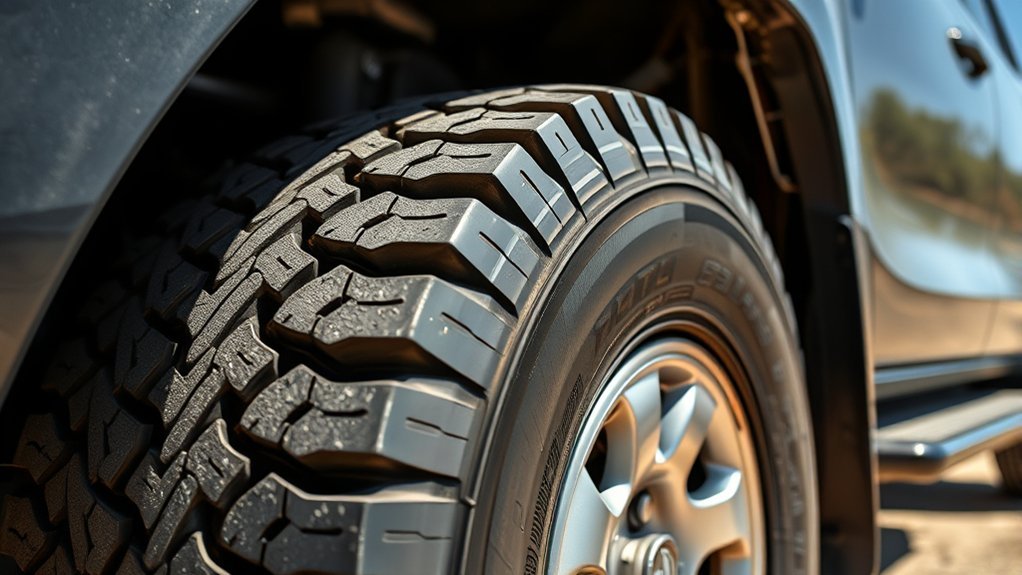
Steel-belted radial tires can be a strong fit for a Toyota Hilux because they balance highway comfort, load support, tread stability, and everyday durability. The right choice still depends on your Hilux model, tire placard, payload, towing needs, terrain, and climate. Use this guide to understand how these tires work, how they compare with other tire types, and how to choose and maintain them safely.
Quick Answer
Steel-belted radial tires are usually a smart choice for a Toyota Hilux because their radial casing and steel belt package help improve tread stability, handling, ride comfort, and wear. For the safest fit, match the tire size, load index, speed rating, and cold inflation pressure listed on your Hilux tire placard or owner’s manual.
Key Takeaways
- A steel-belted radial tire is not just “a tire with steel”; it uses radial casing cords plus steel belts under the tread to stabilize the contact patch.
- For a Toyota Hilux, tire size, load index, speed rating, and tire pressure matter more than brand name alone.
- All-terrain tires suit most mixed Hilux use, while mud-terrain tires trade road comfort and tread life for stronger off-road bite.
- Steel belts improve tread-area strength, but they do not make the sidewall puncture-proof.
- Check tire pressure cold, rotate tires on schedule, inspect tread depth monthly, and replace tires with exposed belts, bulges, cracks, or unsafe tread.
At a Glance
| Time Required | 10–20 minutes for a monthly tire check; longer if you are comparing replacement tires |
| Difficulty | Easy for inspection and pressure checks; moderate for choosing the best replacement tire |
| Tools Needed | Accurate tire-pressure gauge, tread-depth gauge or penny, flashlight, air compressor or service-station air pump |
| Cost | Inspection is free; replacement tire cost varies by size, load rating, brand, and tread type |
Understanding Steel-Belted Radial Tires: Construction and Function
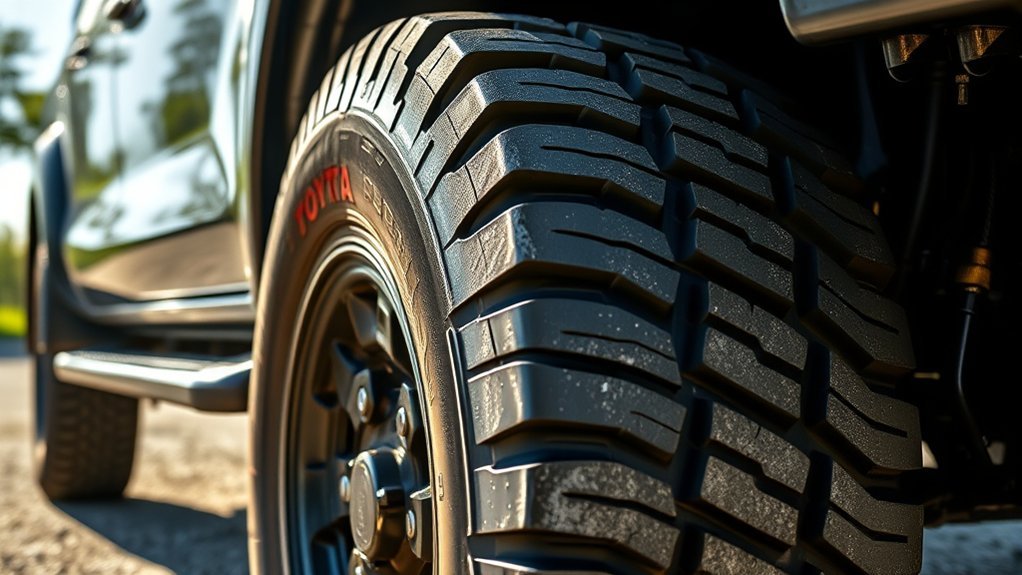
A steel-belted radial tire combines two important construction features. First, the tire uses radial casing cords that run across the tire from bead to bead. Second, it uses steel belts under the tread area to stabilize the tread and help the tire keep a flatter, more controlled contact patch on the road.
This matters on a Toyota Hilux because the Hilux is often used for mixed work: commuting, carrying gear, towing, gravel roads, and weekend trails. A well-matched radial tire can feel smoother on pavement than an old-style bias-ply tire while still offering good tread support for load-carrying and stable handling.
Steel belts also help the tread area resist deformation, which can support more even wear and predictable steering. The U.S. Tire Manufacturers Association explains that steel wire is used in tire belts and beads, and that belts under the tread help stiffen the casing and improve wear performance and handling.
Note: The “R” in a size such as 265/65R17 means radial construction. It does not automatically tell you whether the tire is the best choice for towing, mud, winter driving, or heavy payloads.
Top Advantages of Steel-Belted Radial Tires for Toyota Hilux Owners
When chosen correctly, steel-belted radial tires give Toyota Hilux owners a practical blend of road comfort, durability, and control. The biggest benefits are not magic; they come from how the casing, tread, belts, rubber compound, and sidewall are engineered to work together.
[Products Worth Considering]

Measure tire tread depth quickly and accurately with this LUMITECO dial gauge that reads in 1/32" increments up to 14/32". The color-coded green/yellow/red zones make it easy to judge tire wear and know when replacement is needed. A rugged, compact design with a protective pouch helps keep the gauge ready for use on cars, trucks, motorcycles, and more.

Keep your tires properly inflated with this analog VONDIOR tire pressure gauge, designed for fast, easy readings without batteries. The swiveling, two-axis hose and large glow dial help you measure at any tire angle with instant visibility. Built with a protective rubber shield, it supports durable, low-maintenance use for cars and trucks.

The SAFELIFE dial tire tread depth gauge measures tread depth in 1/32 inch increments with clear, easy-to-read 2-inch dial face. Color zones using a traffic light system help you quickly judge whether tread is low, marginal, or ample for safer driving. Built with a durable zinc cast body and a metal detect probe for precise, comfortable use across cars, motorcycles, trucks, and buses.
Better Road Stability and Handling
The steel belt package helps stabilize the tread as it meets the road. On a Hilux, that can make steering feel more predictable during highway driving, cornering, braking, and carrying moderate loads. It is especially noticeable compared with older bias-ply designs, which usually flex differently and can feel harsher on pavement.
Smoother Ride for Daily Driving
Radial construction lets the sidewall flex while the tread area stays more stable. That helps absorb small road impacts and can reduce vibration on long drives. If your Hilux spends most of its time on paved roads, a highway-terrain or mild all-terrain steel-belted radial will usually feel quieter and more comfortable than an aggressive mud-terrain tire.
Improved Tread Wear and Heat Control
Modern radial tires are designed to manage heat better than many bias-ply tires. Less excessive heat can help tire life, especially at highway speeds. Proper inflation matters here: FuelEconomy.gov notes that keeping tires properly inflated can improve gas mileage by 0.6% on average and up to 3% in some cases.
Tire design and maintenance both affect fuel use. NHTSA estimates that a 10% reduction in tire rolling resistance can improve vehicle fuel economy by about 1–2%, while proper tire pressure also helps safety and tread life.
Stronger Tread Area, but Not Invincible Sidewalls
Steel belts can improve tread-area durability and help resist some punctures through the tread. However, they do not make the tire indestructible. Sharp rocks, low-pressure impacts, sticks, and potholes can still damage sidewalls, beads, and shoulders. For rocky trails, look for tires with reinforced sidewall features and an all-terrain or mud-terrain pattern designed for that use.
Warning: Never choose a tire only because it is steel-belted. For a Hilux, the replacement tire must match the correct size and meet or exceed the original load index and speed rating. A tire with the wrong rating can affect handling, braking, load capacity, and safety.
Steel-Belted Radial Tires vs. Other Tire Types: A Comparison
Choosing the right tires for your Toyota Hilux involves more than comparing “steel-belted” against “non-steel-belted.” Most modern light-truck and SUV tires are radial, and many include steel belts. The real decision is which tire category, load rating, tread pattern, and rubber compound fit your driving.
| Tire Type | Best For | Main Trade-Off |
| Highway-terrain radial | Daily driving, highway trips, light loads, quiet ride | Less grip in mud, deep gravel, and rough trails |
| All-terrain radial | Mixed road use, gravel, camping, farms, mild trails | More road noise and rolling resistance than highway tires |
| Mud-terrain radial | Mud, ruts, loose dirt, rocky tracks, more serious off-road use | Noisier, heavier, often shorter tread life on pavement |
| Winter or all-weather radial with 3PMSF marking | Cold regions, snow, slush, winter mountain roads | May wear faster in hot weather; not always ideal for heavy off-road use |
| Bias-ply tire | Specialty trailers, some agricultural or extreme low-speed applications | Usually harsher on road and less suitable for modern Hilux highway use |
For most Hilux owners, the decision comes down to highway-terrain, all-terrain, or mud-terrain radials. If your Hilux is a work truck that spends most of its time on sealed roads, a highway-terrain or commercial-rated road tire may be best. If you split time between pavement, gravel, and trails, an all-terrain tire is often the most balanced option. If you regularly drive mud, ruts, rocks, and steep tracks, a mud-terrain tire can help, but you should expect more noise and less comfort on road.
[Products Worth Considering]

Accurately measure tire tread depth with a calibrated gauge marked from 0 to 1 inch in 1/32 inch increments. The color-coded bar helps you quickly identify tread condition ranges, supporting safe driving for trucks, motorcycles, automobiles, and passenger vehicles.

Monitor tire tread wear with a smart, color-coded depth gauge that shows clear condition ranges at a glance. The bar is range marked for fast, easy readings, helping you maintain safer traction and performance. Each gauge is portable with a pocket clip, and the set includes 20 units for daily use and sharing.
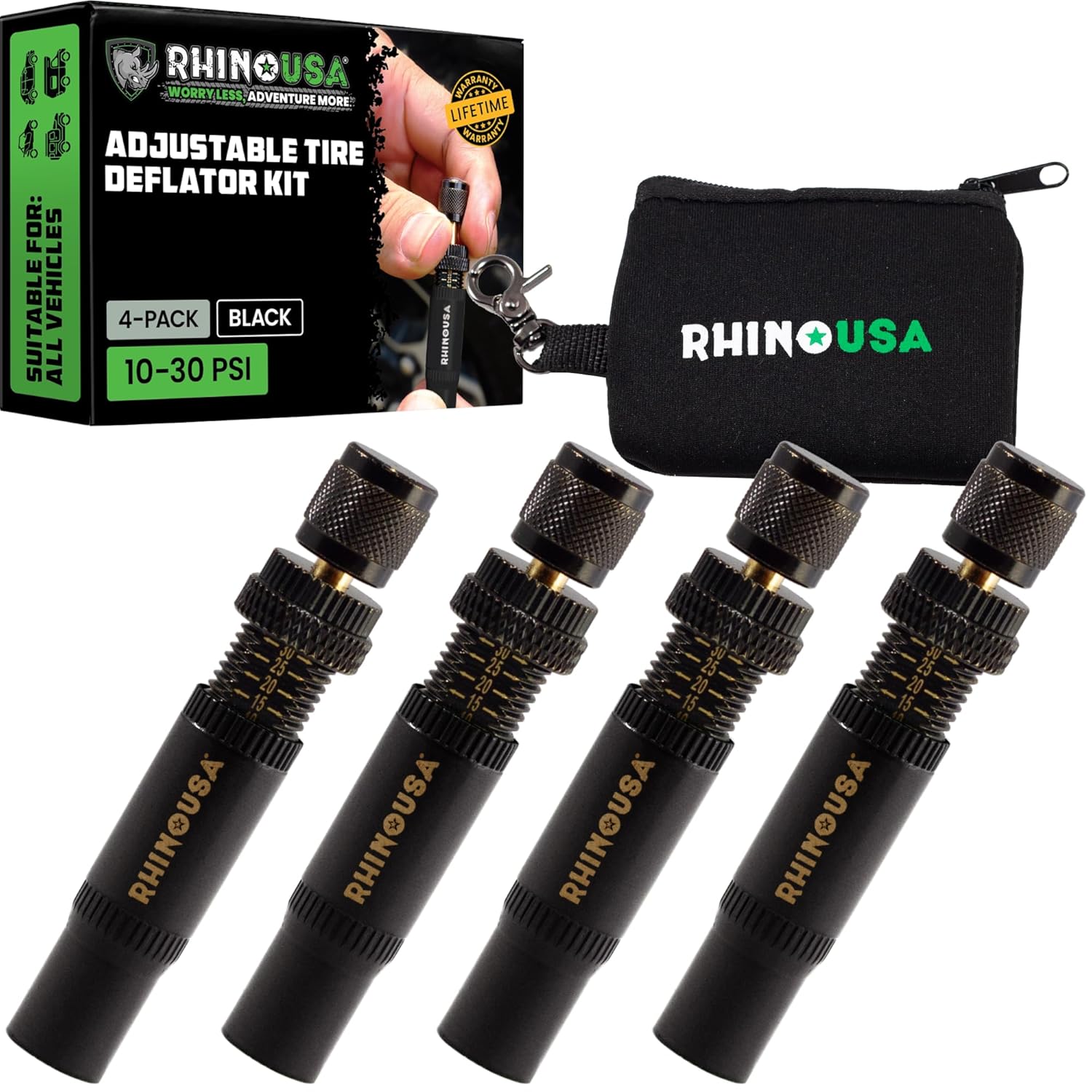
Use the Rhino USA adjustable tire deflators to air down all four tires at once by screwing one deflator onto each valve stem, letting you step away while the tires reach your preset pressure. Each deflator independently adjusts across a 10–30 PSI range with laser-etched indicators for quick setup and verification, making it ideal for beach, sand, and rocky off-road trails.
Finding the Best Steel-Belted Radial Tires for Your Off-Road Adventures
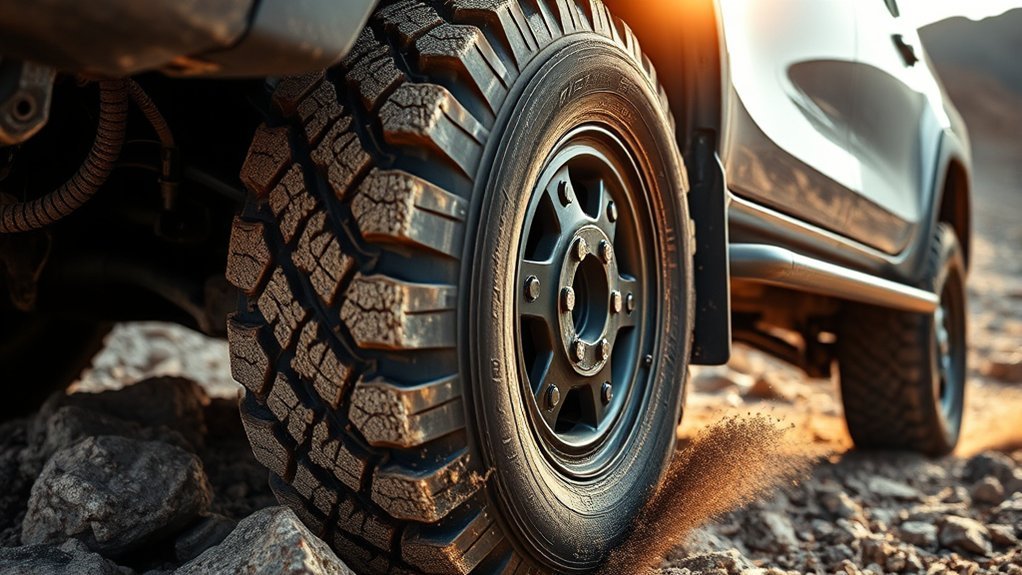
For off-road adventures in your Toyota Hilux, the best steel-belted radial tire is the one that matches your terrain without ruining daily drivability. A tire that is excellent in mud may be loud and heavy on the highway. A quiet highway tire may struggle for grip on wet clay or loose rock. Start with how you actually use the truck.
[Products Worth Considering]
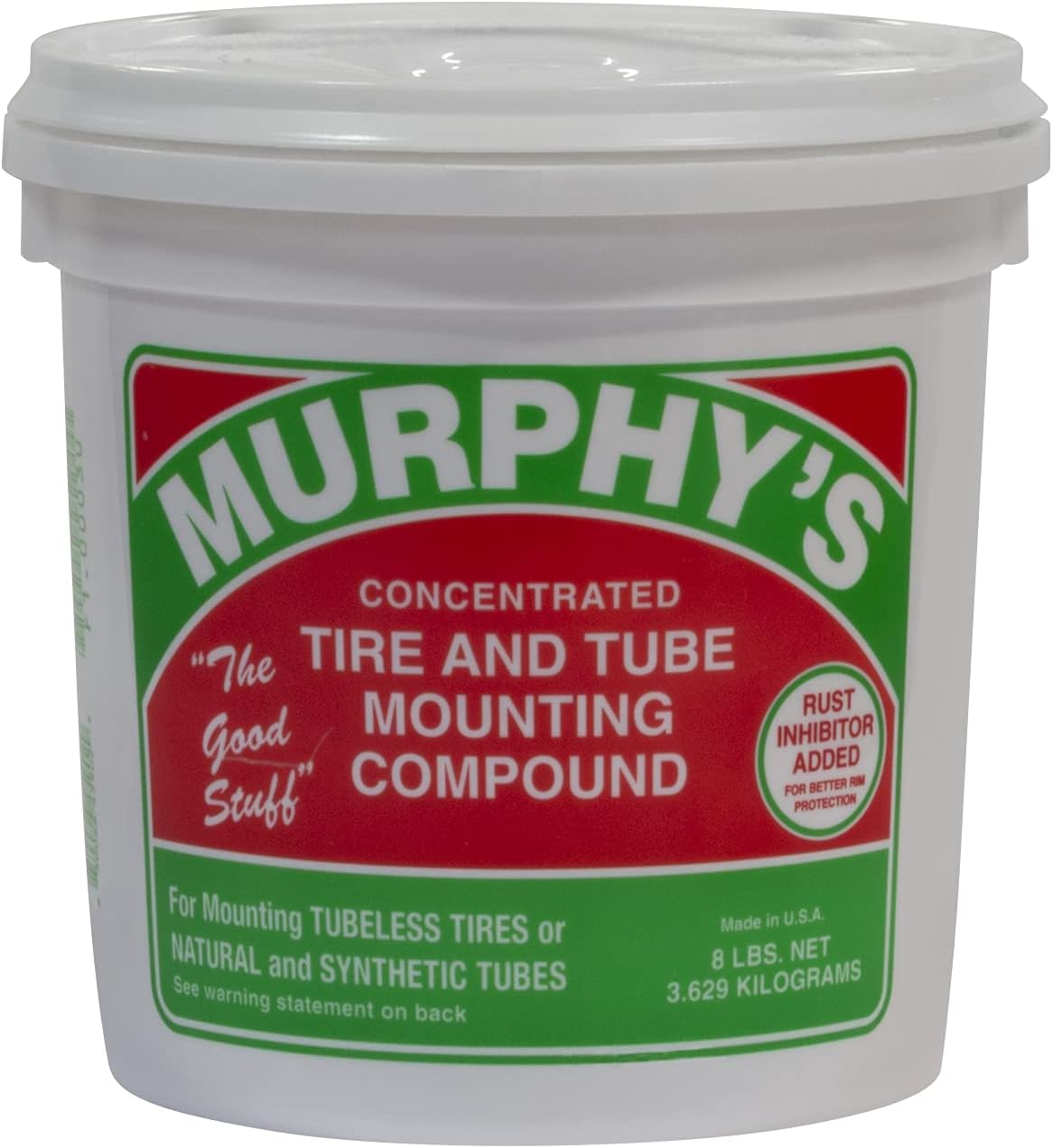
A concentrated tire and tube mounting compound designed to help simplify mounting rubber tires and tubes on passenger, semi truck, construction, and OTR applications. Its ultra-thick formula packs beads effectively and includes rust inhibitors to help protect against corrosion during use.

This digital tire pressure gauge with built-in inflator helps you accurately check and adjust tire pressure for safer driving and better fuel efficiency. It supports multiple units (PSI, KPA, BAR, KG/CM²) and reads within 1% for reliable results. The 3-in-1 design inflates, deflates, and measures, with a quick-connect air chuck and compatible hose setup for cars, trucks, SUVs, RVs, and motorcycles.

TP-M13W combination repair unit kit includes wrapped stems with matching patches for fast, reliable tire repairs. It’s suitable for both radial and bias ply tires and is designed for chemical or heat vulcanization. Gray vulcanizing gum with blue backing helps create a strong bond, with the stem portion wrapped for added effectiveness.
How to Choose the Right Hilux Tire
- Check the tire placard first. Look on the driver’s door edge, doorjamb, or your owner’s manual for the original size and recommended cold pressure. NHTSA explains that the vehicle manufacturer’s placard or owner’s manual is the correct source for tire size and pressure guidance.
- Match the load index. The load index is the tire’s load-carrying code. If your Hilux carries tools, camping gear, water, fuel, or tow equipment, do not downgrade the load rating.
- Match the speed rating. The speed rating must be suitable for your vehicle and driving. Toyo Tires’ safety guide states that replacement tires should have a load-carrying capacity and speed rating that meets or exceeds the original equipment tires.
- Choose the tread for your terrain. Highway tread is best for quiet road use, all-terrain tread suits mixed driving, and mud-terrain tread is for tougher off-road work.
- Consider sidewall strength. Steel belts are under the tread; off-road sidewall protection depends on the tire’s sidewall design, construction, and intended use.
- Check winter needs. If you drive in snow or icy mountain conditions, look for a tire with the Three-Peak Mountain Snowflake symbol. Michelin notes that 3PMSF certifies that a tire meets industry standards for severe snow traction.
Pro Tip: Take a clear photo of your Hilux tire placard before shopping. Compare the tire size, load index, speed rating, and cold pressure against every replacement option before you compare prices or tread designs.
What About Larger Tires?
Many Hilux owners consider larger tires for clearance, appearance, or off-road traction. A modest size change can still affect speedometer accuracy, fuel use, steering feel, braking, suspension clearance, wheel-arch clearance, and spare-wheel fitment. Larger tires can also rub under compression or when steering at full lock.
If you change from the factory size, confirm that the new tire and wheel combination clears the suspension and bodywork, keeps a safe load rating, and remains legal in your region. Also check whether the spare tire still fits and whether the wheel offset is suitable.
Caring for Your Steel-Belted Radial Tires for Optimal Performance
Caring for your steel-belted radial tires is essential if you want your Toyota Hilux to handle, brake, tow, and ride properly. Maintenance is simple, but it needs to be consistent.
1. Check Tire Pressure Cold
Check all tires, including the spare, at least once a month and before long trips. For the most accurate reading, check pressure when the tires are cold, meaning the truck has not been driven for at least three hours. Do not use the maximum pressure printed on the tire sidewall as your normal inflation pressure; use the Hilux tire placard or owner’s manual.
Warning: Underinflation can cause heat buildup, poor handling, uneven wear, and tire failure. Overinflation can reduce comfort, grip, and impact protection. Always adjust pressure to the vehicle manufacturer’s cold-pressure recommendation unless a tire professional gives a load-specific adjustment.
2. Rotate on Schedule
Rotate your tires according to the Hilux owner’s manual or tire manufacturer’s guidance. If your manual recommends rotation and the tires are the same size front and rear, a common interval is about every 5,000 to 8,000 miles. Rotate sooner if you see uneven wear, feathering, cupping, or vibration.
3. Inspect Tread Depth and Wear Patterns
Tire tread provides the grip that helps your Hilux accelerate, corner, and stop. NHTSA says tires are not safe and should be replaced when tread is worn down to 2/32 of an inch. For wet roads, gravel, towing, and off-road use, many drivers choose to replace earlier because deeper tread helps water evacuation and loose-surface grip.
Look for these warning signs:
- Wear bars flush with the tread
- Uneven shoulder wear
- Cupping or scalloped tread blocks
- Cracks in the tread or sidewall
- Bulges, bubbles, cuts, or exposed belt material
- Repeated air loss from the same tire
4. Balance and Align When Needed
If your Hilux pulls to one side, vibrates at speed, or wears one tire faster than the others, schedule a balance and alignment check. Off-road impacts, potholes, curb strikes, and heavy loads can knock alignment out and shorten tire life.
5. Clean After Mud, Sand, and Salt
After mud, beach driving, salted roads, or clay tracks, rinse the tires, wheels, brakes, and underbody. Packed mud can hide sidewall cuts and throw wheel balance off. Salt and sand can also accelerate corrosion around wheels and suspension parts.
6. Be Careful When Airing Down Off-Road
Airing down can improve traction and comfort on sand, corrugations, and rocky tracks, but it also increases sidewall flex and heat. Use a quality pressure gauge, drive slower, avoid sharp steering inputs, and reinflate before returning to highway speeds. Carry a compressor if you regularly leave sealed roads.
Frequently Asked Questions
How often should I rotate my steel-belted radial tires?
Follow your Toyota Hilux owner’s manual first. If tire rotation is recommended and all four tires are the same size, a common interval is every 5,000 to 8,000 miles, or sooner if you notice uneven wear.
What is the ideal tire pressure for Toyota Hilux tires?
The correct pressure is the cold inflation pressure listed on your Hilux tire placard or in the owner’s manual. It can vary by model year, tire size, market, and load. Do not use the maximum PSI printed on the tire sidewall as your everyday pressure.
Can I use steel-belted radial tires in winter conditions?
Yes, but construction alone is not enough. For snow, slush, and icy roads, choose winter or all-weather tires with the Three-Peak Mountain Snowflake symbol. Many all-terrain tires are good on gravel and dirt but are not equal to dedicated winter tires on ice.
How do I know when to replace my tires?
Replace tires when tread reaches 2/32 of an inch, when treadwear indicators are flush, or when you see exposed belts, sidewall bulges, deep cuts, cracking, repeated pressure loss, or uneven wear that cannot be corrected. For wet roads and off-road use, replacing before the legal minimum is often safer.
Are there specific brands recommended for Toyota Hilux tires?
There is no single best brand for every Hilux. Reputable brands such as Bridgestone, Michelin, Goodyear, Toyo, Yokohama, BFGoodrich, and others make suitable tires, but the model matters more than the logo. Choose by size, load index, speed rating, terrain, wet grip, noise, tread life, and warranty.
Are all steel-belted radial tires good for off-roading?
No. A highway-terrain steel-belted radial may be excellent on pavement but weak in mud or rocks. For off-road use, look for an all-terrain or mud-terrain pattern, suitable load rating, strong sidewall design, and good chip-and-cut resistance.
Can I mix radial and bias-ply tires on my Hilux?
Avoid mixing radial and bias-ply tires on the same vehicle. Mixing tire construction, size, tread pattern, or load rating can affect handling and braking. Use a matched set unless your owner’s manual or a qualified tire professional gives specific guidance.
Do steel belts stop all punctures?
No. Steel belts help reinforce the tread area, but nails, sharp rocks, impact damage, and sidewall cuts can still cause punctures or tire failure. Inspect your tires after rough tracks and repair or replace damaged tires promptly.
Conclusion
Steel-belted radial tires can improve the way your Toyota Hilux rides, handles, carries load, and wears over time, but only when you choose the right tire for your exact vehicle and driving conditions. Start with the tire placard, match the correct size and ratings, choose the tread pattern for your terrain, and maintain pressure, rotation, tread depth, and alignment. With the right setup, your Hilux will be safer, smoother, and better prepared for both daily driving and off-road adventures.
Sources
- NHTSA TireWise — tire pressure, tire placard, tread depth, rotation, aging, and tire safety guidance
- FuelEconomy.gov: Keeping Your Vehicle in Shape — tire inflation and fuel economy impact
- U.S. Tire Manufacturers Association: Tires 101 — tire materials, steel belts, tread support, and tire construction basics
- Michelin: Major Tire Innovations — radial tire construction and steel-belted radial background
- Toyo Tires Commercial Safety Warnings — load index and speed rating replacement guidance
- Toyota Australia HiLux Owner’s Manual — model-specific owner guidance for HiLux operation and maintenance