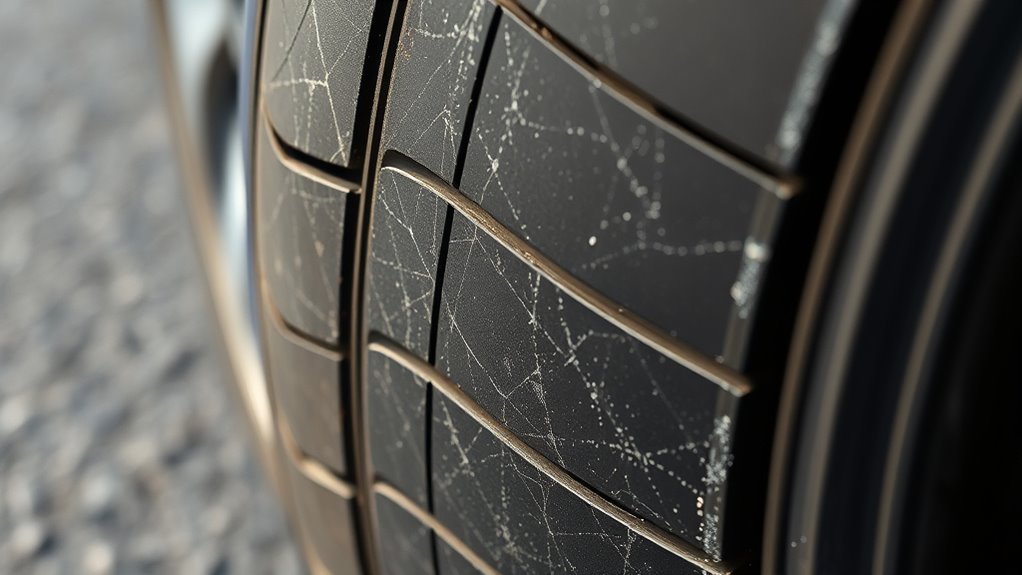
A cracked tire sidewall can fail without warning. What looks like a surface flaw can hide a structural break that causes a sudden blowout at speed. This guide covers what causes sidewall cracks, how to spot dangerous ones, and exactly when you need to replace the tire.
Quick Answer
Sidewall cracks form when rubber ages, dries out, and loses flexibility due to UV exposure, ozone, temperature swings, and improper inflation. Minor surface hairlines may be safe to monitor, but deep cracks, exposed fabric, or cracks on tires older than five years require professional inspection or immediate replacement. Sidewall damage cannot be patched — only center-tread repairs meet industry safety standards.
What Causes Tire Sidewall Cracks and Dry Rot?
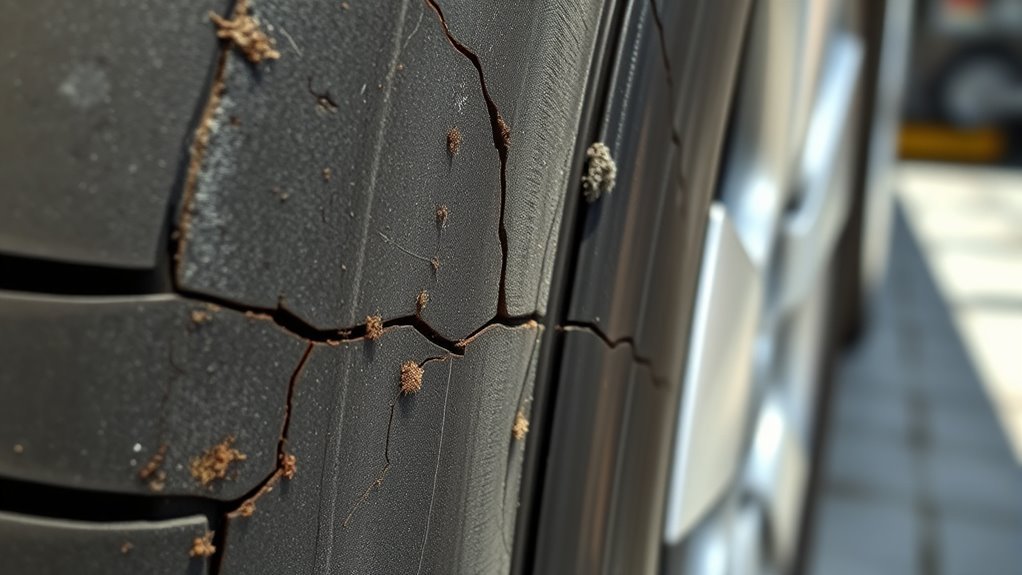
Rubber ages through a chemical process called oxidation. Oxygen and ozone attack the polymer chains in the rubber compound, making the material brittle over time. This gradual breakdown is called dry rot, and hairline cracks on the sidewall are its first visible sign.
UV exposure speeds this process. Sunlight degrades rubber faster than shade storage does, which is why tires on vehicles parked outdoors crack sooner. Freezing temperatures and humidity swings break down the compound further at a molecular level.
Improper inflation makes things worse. Underinflation causes the sidewall to flex more than it should on every rotation, creating small stress fractures. Overinflation concentrates load on a smaller contact area and stiffens the sidewall unnaturally. Chemical exposure from road salt, oils, and brake fluid weakens the rubber compound directly.
Treat tires as safety-critical components. Most manufacturers recommend a professional inspection after five years and replacement by ten years, even when tread depth looks adequate.
How to Spot Dangerous Sidewall and Tread Cracks Quickly
Run your hands along each sidewall and the tread edge. You can feel cracks that eyes miss in low light. Look for hairline fissures and any visible gap between the tread and sidewall. Note the depth and length of anything you find.
Run your hands along sidewalls and tread; note crack depth and length, and seek help if fabric shows.
Check more carefully after a freeze-thaw cycle and on tires older than five years, since both conditions accelerate cracking. The difference between a safe tire and a dangerous one comes down to depth:
- Surface hairlines with no depth — monitor at your next service interval
- Cracks you can feel the edge of with a fingernail — get a professional assessment soon
- Cracks that expose fabric, cords, or steel belts — stop driving and replace immediately
- Multiple cracks clustering near each other — treat as a structural concern, not a cosmetic one
- Bulges or bubbles adjacent to cracks — a sign of internal separation; replace without delay
Document what you find with a photo. If structural elements are visible, limit driving to what’s necessary to reach a tire professional.
When You Must Replace a Cracked Tire
Replace any tire that shows deep or widespread cracking, exposed fabric, or exposed steel belts. These are signs of structural failure. A tire in this condition can blow out suddenly, with no further warning.
For surface cracks without depth, carry out a regular safety check and document whether the cracks grow. Any increase in length or depth means replacement before the next long trip. Don’t wait for the tire to fail.
Tire age matters independently of crack severity. Most major manufacturers, including Michelin and Bridgestone, recommend a professional inspection after five years and replacement by ten years regardless of how the tread looks.
Replace the tire immediately if any of these apply:
- Cords or steel belts are visible through a crack
- A bulge appears next to or near cracks
- Cracks spread noticeably between inspections
- The sidewall shows a spoke-like pattern of radiating cracks
- Rapid or recurring pressure loss accompanies visible cracking
[Products Worth Considering]

Measure tire tread depth quickly and accurately with this LUMITECO dial gauge that reads in 1/32" increments up to 14/32". The color-coded green/yellow/red zones make it easy to judge tire wear and know when replacement is needed. A rugged, compact design with a protective pouch helps keep the gauge ready for use on cars, trucks, motorcycles, and more.

Monitor tire tread wear with a smart, color-coded depth gauge that shows clear condition ranges at a glance. The bar is range marked for fast, easy readings, helping you maintain safer traction and performance. Each gauge is portable with a pocket clip, and the set includes 20 units for daily use and sharing.

Measure tyre tread depth precisely with a digital gauge that reads in both MM and inches, helping you monitor safe driving conditions. The large LCD screen is easy to operate, and the compact tool fits for cars, trucks, and motorcycles. It provides high accuracy with a 0-25.4mm range and includes a 1-year warranty for added peace of mind.
How to Find Your Tire’s Age Using the DOT Code
Every tire has a DOT code stamped on the sidewall. The last four digits tell you when the tire was made. The first two digits are the week of manufacture and the last two are the year. For example, “2419” means the 24th week of 2019.
Find the code starting with “DOT” on the inner or outer sidewall. If the tire is older than five years and shows any cracking, schedule a professional inspection. If it’s older than ten years, replace it.
Can Sidewall or Shoulder Damage Be Repaired Safely?
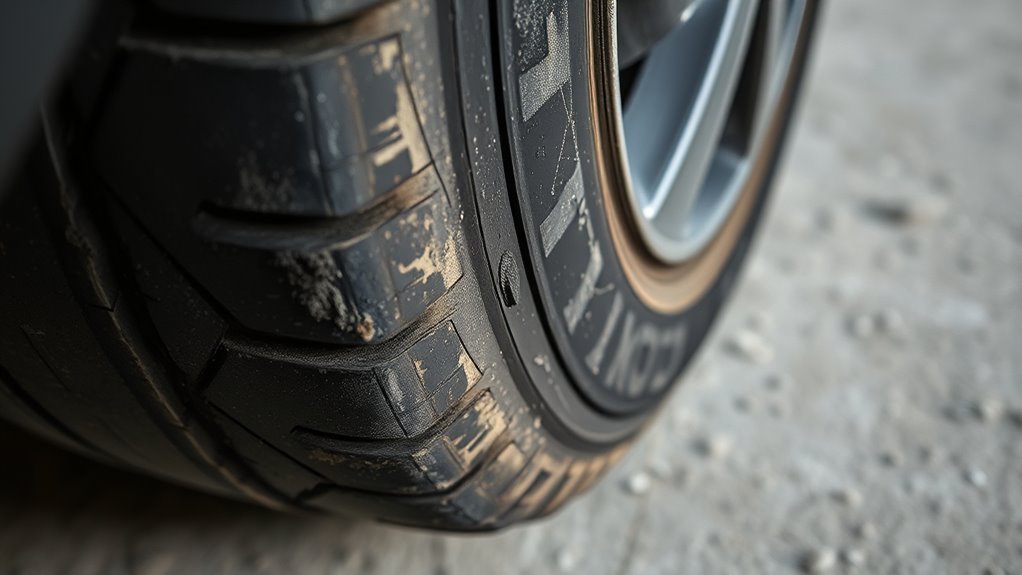
No. According to the U.S. Tire Manufacturers Association (USTMA), accepted repair methods apply only to the center tread area. Sidewalls and shoulders sit outside the repairable zone entirely.
Punctures over 1/4 inch, especially in those areas, are unsafe to fix under any circumstance. Attempting a patch or plug on a sidewall removes structural integrity from the one part of the tire that flexes most under load. The risk of blowout rises significantly.
Most drivers can’t reliably assess whether a tire is safe without specialized tools. Get a professional inspection before making a decision, and prioritize replacement when damage affects the sidewall or shoulder. A tire professional can give you a definitive assessment — don’t rely on visual inspection alone for borderline cases.
[Products Worth Considering]
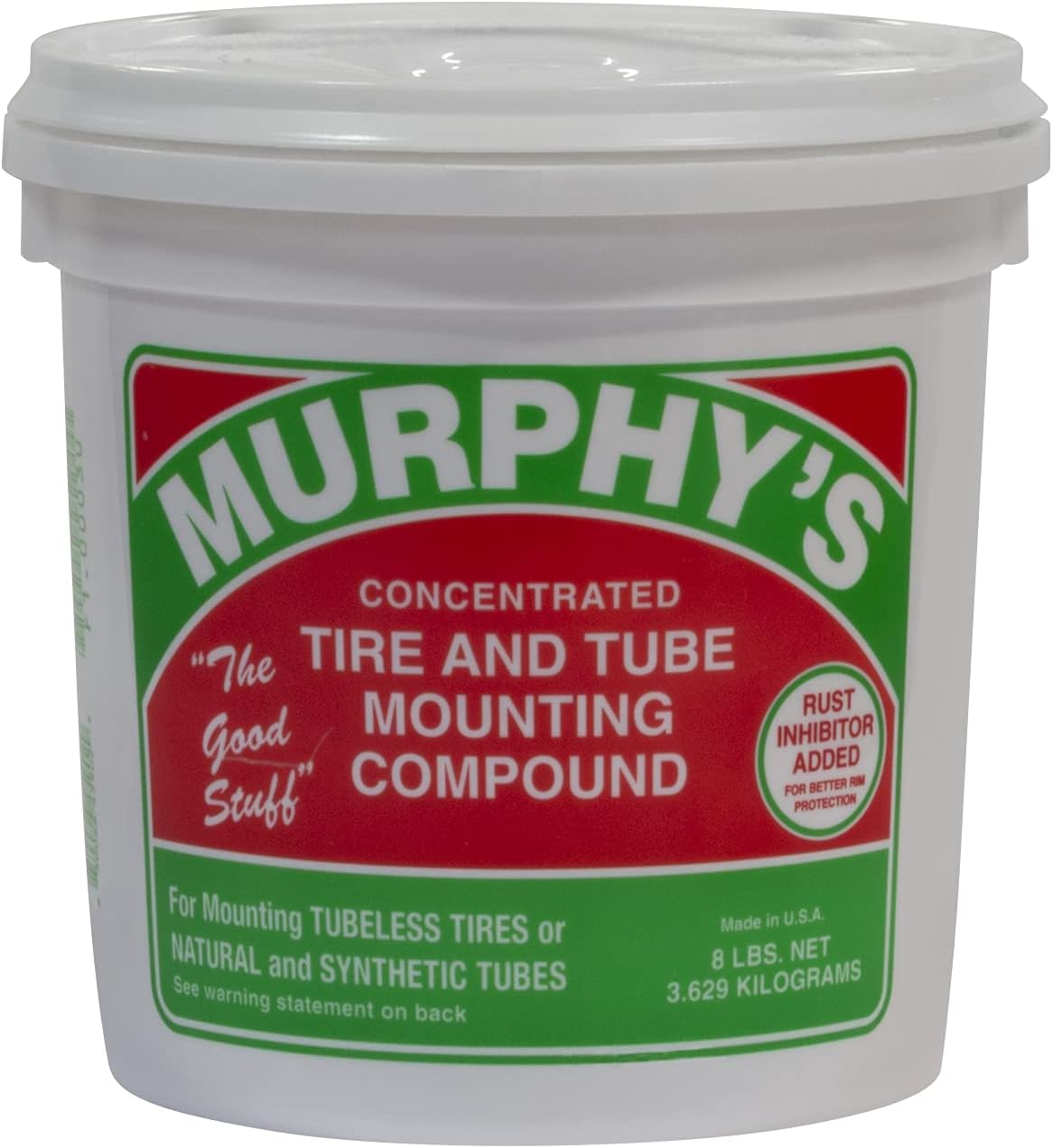
A concentrated tire and tube mounting compound designed to help simplify mounting rubber tires and tubes on passenger, semi truck, construction, and OTR applications. Its ultra-thick formula packs beads effectively and includes rust inhibitors to help protect against corrosion during use.

Vigorder rubber cement glue delivers superior adhesion and cures quickly within about 30 seconds for seamless rubber bonding. Once cured, it helps provide a strong, durable, waterproof seal that holds up to vehicle weight, pressure, and heat. Suitable for cars, motorcycles, trucks, bicycles, and off-road tires, it’s designed for emergency patch and maintenance repairs.

Accurately measure tire tread depth with a calibrated gauge marked from 0 to 1 inch in 1/32 inch increments. The color-coded bar helps you quickly identify tread condition ranges, supporting safe driving for trucks, motorcycles, automobiles, and passenger vehicles.
How to Prevent Tire Sidewall Cracks: Storage, Inflation, and Care
You can’t stop rubber from aging, but you can slow it down significantly. Controlling where and how you store tires, what you clean them with, and how you inflate them all make a measurable difference.
One common mistake: petroleum-based tire dressings and “shine” sprays can accelerate cracking by stripping the rubber’s natural protective oils. Use water-based tire protectants only, or skip dressings altogether. A clean dry sidewall ages better than a chemically treated one.
| Action | Frequency | Benefit |
|---|---|---|
| Store tires in shade or under cover | Continuous | Reduces UV degradation |
| Use tire covers for long-term outdoor parking | Long-term | Blocks UV and ozone exposure |
| Clean off road salt, mud, and chemical residue | After exposure | Prevents chemical breakdown |
| Drive periodically on stored vehicles | Weekly or monthly | Keeps rubber flexible |
| Check and adjust tire pressure cold | Weekly | Minimises sidewall stress |
| Use water-based protectant only | Occasional | Avoids chemical damage from petroleum products |
[Products Worth Considering]

The SAFELIFE dial tire tread depth gauge measures tread depth in 1/32 inch increments with clear, easy-to-read 2-inch dial face. Color zones using a traffic light system help you quickly judge whether tread is low, marginal, or ample for safer driving. Built with a durable zinc cast body and a metal detect probe for precise, comfortable use across cars, motorcycles, trucks, and buses.

Steelman white tire marking crayons provide high-contrast, semi-permanent marks for repairing and inspecting tires and equipment. They write on wet or dry, smooth or coarse surfaces including rubber, metal, glass, and wood, making them ideal for puncture location and damage outlining. The lead- and zinc-free crayons resist weather and fading yet wipe away when you no longer need the marks.
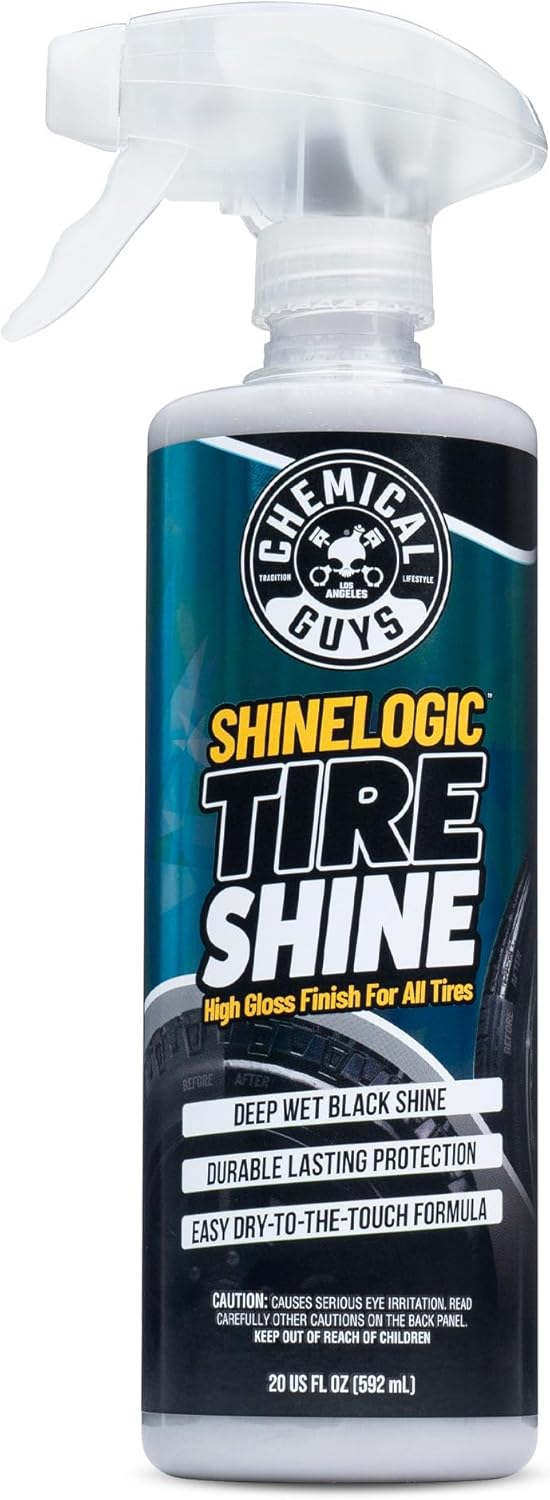
Chemical Guys ShineLogic Tire Shine delivers a deep wet black, high-shine finish for rubber tires with a sleek look. It’s designed for durable, one-step application with minimal drips, streaks, or runs, and it helps produce effortless, long-lasting shine. Choose aerosol or trigger spray for easy use on cars, trucks, motorcycles, RVs, and more.
When to Get a Professional Tire Inspection and What to Expect
Get a professional inspection any time you spot sidewall cracks, feel a bulge, or notice the tire losing pressure faster than normal. Don’t wait on tires older than five years that show brittleness — a technician can catch internal damage that you can’t see from the outside.
Visual Inspection Basics
A technician will inspect the sidewall, tread, and shoulders for cracking, wear, and any deterioration that affects safety. They’ll measure crack depth and length and flag anything where inner materials are visible. They’ll also verify that tire pressure matches manufacturer specs and check the tire’s age code.
- Sidewall, tread, and shoulder examined for cracking and deterioration
- Crack depth and length measured — exposed inner materials trigger immediate replacement
- Tread wear checked for uniformity and remaining depth
- Tire pressure compared against manufacturer specification
- DOT date code read to confirm tire age and flag older units for closer review
Structural and Internal Checks
Surface cracks can mask deeper problems. A technician will probe for internal separation, check whether cords and belts show through any crack, and assess dry-rot patterns across the full carcass. They’ll review the tire’s inflation history where possible to identify chronic underinflation or overload damage.
These checks determine whether you need replacement or whether the tire can continue safely. Don’t skip this step on any tire showing visible cracking or on any tire that’s passed the five-year mark.
Frequently Asked Questions
How Much Sidewall Cracking Is Acceptable?
Minor surface hairlines with no depth are worth monitoring but don’t require immediate action. Anything you can feel the edge of, any crack that exposes material, or any crack that has grown since you last checked it means you need a professional assessment. Don’t accept cracks that deepen, multiply, or show inner fabric.
Is It Safe to Drive on a Tire With a Crack in the Sidewall?
Not without inspection. Shallow surface cracks may be safe short-term, but you can’t tell from the outside whether the structure underneath has weakened. If cracks expose cords or have grown since you last checked, stop driving on that tire and replace it.
When to Worry About Sidewall Damage?
Worry when cracks grow between inspections, when they expose fabric, or when they appear on tires older than five years. Any of those conditions warrants a professional check. Replace immediately if structural integrity looks compromised.
Should I Replace My Tires if They Are Cracked?
Replace tires with deep cracks, expanding cracks, or any crack that exposes material. For minor surface cracking on tires under five years old, get a professional assessment and monitor closely. When in doubt, replace — a tire blowout costs far more than a new set of tires.
Conclusion
The most important thing to take away: sidewall damage can’t be patched, and a tire that looks fine from a distance can fail without warning. Check your tires regularly by touch as well as sight, find your DOT date code, and replace any tire that shows deep cracking, exposed material, or a manufacturing date older than ten years. Start with a five-minute sidewall check this week — it’s the fastest way to know where you stand.